Raspberry Companion Plants: What to Plant and Avoid
Find the best raspberry companion plants for pollinators, pest observation, and soil cover—plus spacing rules and disease risks that make some neighbors a bad fit.
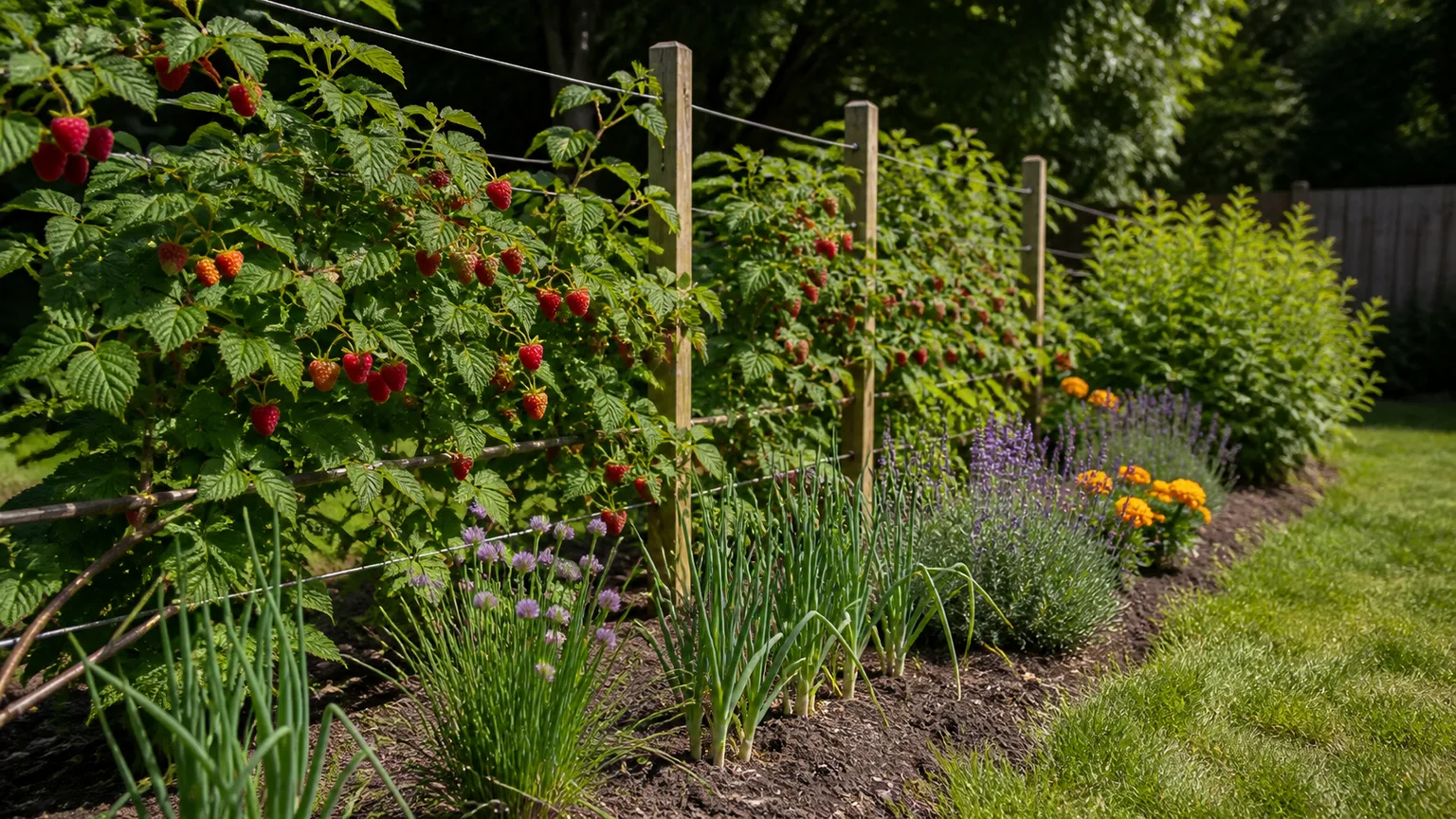
The best raspberry companion plants do one of four useful jobs: provide flowers for insects, occupy a low edge without crowding the canes, protect bare soil between plantings, or give you another crop without creating a disease or maintenance problem. They do not magically feed raspberries, cure wilt, or guarantee that a pest will stay away.
Start with the raspberry bed itself. Raspberries need sun, drainage, air movement, and a clear path for pruning and picking. Once those basics are right, add a small number of companions that fit the space and the way you actually garden. A tidy row of chives and a pollinator-friendly border can be more valuable than a crowded “guild” of a dozen plants competing for water.
What Companion Planting Actually Does
Companion planting is a planning tool, not a strict botanical partnership. You place plants together because their growth habits, bloom times, or management needs fit—not because the raspberry plant requires a particular neighbor to survive. A low herb can make productive use of the sunny strip beside a trellis, while a flowering plant can offer nectar when raspberry flowers are open and help keep insect activity visible around the patch.
The strongest benefit is often indirect. Flowers can make a bed more attractive to pollinating and predatory insects, a living cover can reduce exposed soil and erosion, and an edible edge can give you more harvest from the same footprint. These are sensible garden functions, but the result depends on weather, local insects, plant density, and whether you keep the bed accessible.
Be skeptical of any list that says a companion “repels” a specific insect as if the effect were guaranteed across a whole garden. Fragrant foliage may make a plant less obvious to some pests, and a trap crop may draw insects to a plant you can monitor, but neither is a substitute for scouting. Even the practical companion lists from Home for the Harvest and Gardening Know How are most useful when treated as idea banks rather than promises.
Build the Raspberry Bed First
Sun, drainage, airflow, and soil
Choose the raspberry location before choosing its neighbors. A site with full sun and moving air helps foliage dry after rain, while soil that drains freely prevents the wet-root stress that makes many berry problems harder to manage. Amend compacted soil before planting, but do not bury the crown in an attempt to create a richer bed; raspberries need organic matter and moisture without stagnant water.
Raspberries are usually happiest in slightly acidic, fertile soil, often around pH 5.5 to 6.5, but a soil test is more useful than adjusting pH because a companion list said to do so. Blueberries are a good example of why. They generally need a more strongly acidic root zone than raspberries, so putting both in one amended bed forces one crop to accept a compromise. Give each fruit its own soil zone instead.
Airflow matters even more as the canes fill in. A companion that looks harmless in May can create a damp wall at the base of the row by July. Leave enough bare or mulched ground that you can see the lower canes, remove suckers, pull weeds, and notice a sick plant before its leaves are hidden.
Keep roots and canes accessible
Raspberry roots spread beyond the original planting hole, and the canes produce new shoots that quickly change the geometry of a bed. Plant companions on the outside of the row or in a narrow strip between trellis posts, not directly against the crown. Keep mulch a few inches away from each cane base and avoid turning the whole bed into an unbroken carpet.
Use the same practical test for every proposed neighbor: Can you water the raspberry roots deeply without flooding the companion? Can you prune and pick without stepping on it? Can you pull it out if it becomes diseased or invasive? If the answer is no, the plant may be attractive but it is not a good raspberry companion for that location.
Best Companions by Function
Alliums for a low, harvestable edge
Garlic, onions, leeks, and chives are among the easiest companions to fit beside raspberries. They stay relatively low, tolerate a sunny edge, and give you an edible harvest while their flowers can provide forage for insects. Chives are especially useful in a small garden because a clump can be cut back, divided, and kept in a defined spot rather than allowed to run through the bed.
The reason to plant an allium is not that its scent forms an invisible force field around every berry. Think of it as a low-maintenance, low-profile neighbor that adds diversity and may make the bed less attractive to some browsing or chewing pests. Keep monitoring the raspberry leaves, especially when Japanese beetles or aphids are active in your area.
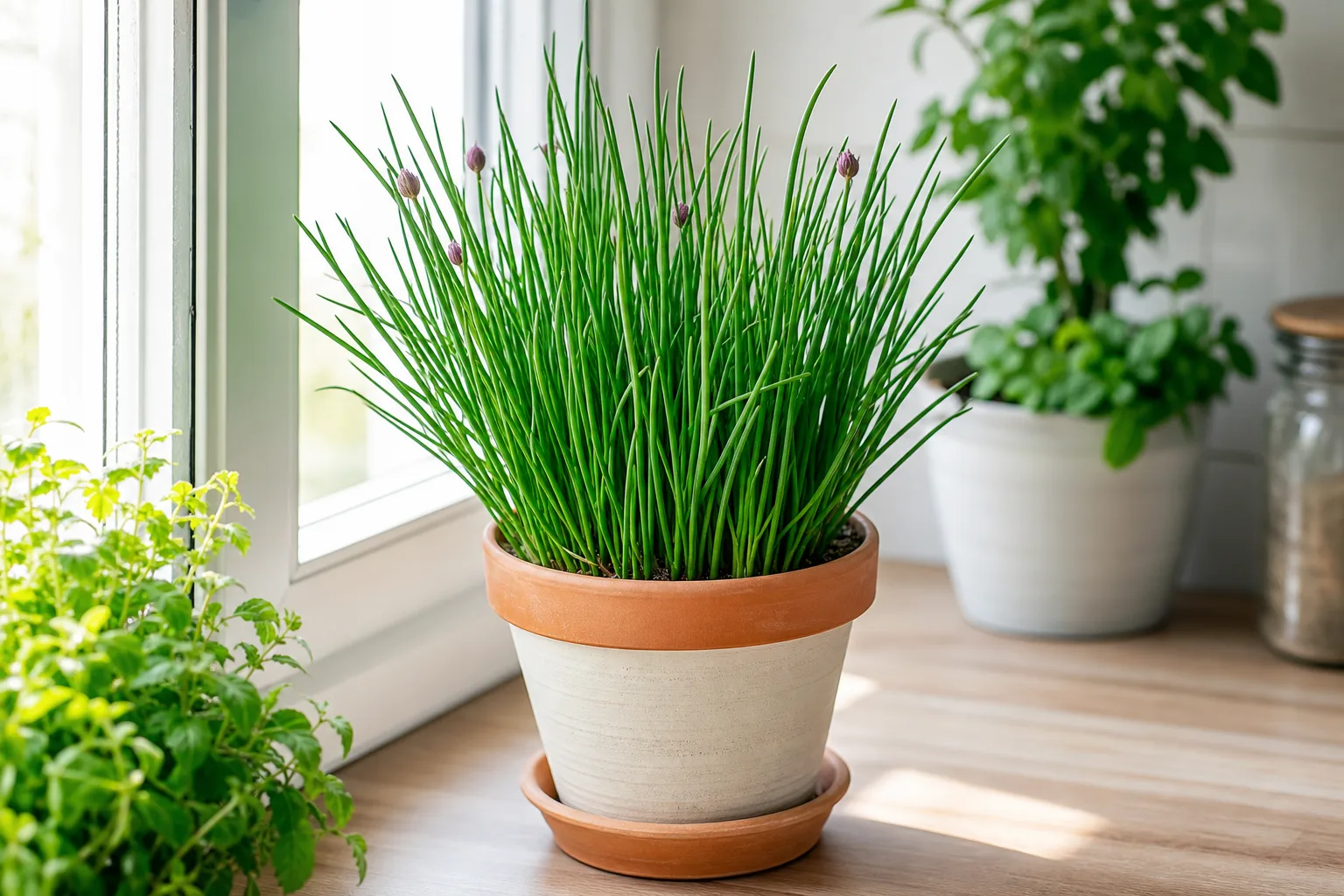
Garlic can be planted along the outer edge where it will not be trampled during cane work. Choose a position that still receives the sun it needs, and remember that harvesting garlic disturbs soil. If you plan to pull bulbs just as raspberries are carrying fruit, keep the garlic row outside the main root zone so you do not damage raspberry roots while digging.
Flowering herbs and flowers for beneficial insects
Lavender, yarrow, chamomile, nasturtiums, and calendula can make a raspberry patch more useful to pollinators and easier to observe. Lavender and yarrow suit a dry, sunny border; chamomile stays more delicate; nasturtiums can spill along an outer edge; and calendula offers a long run of bright flowers in mild conditions. Choose one or two based on your climate and the soil you already have rather than planting all of them.
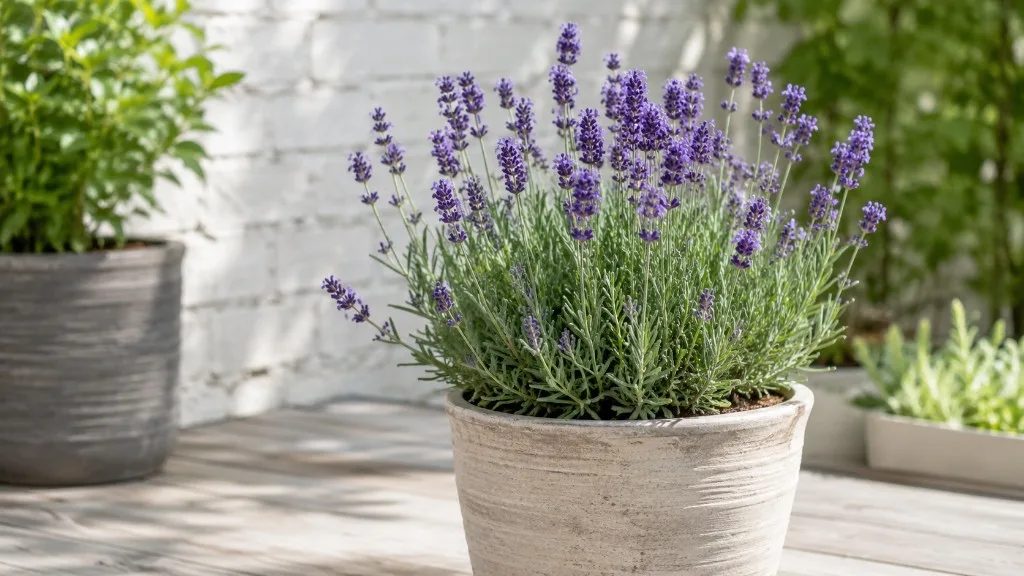
These plants work best as border companions, not as a dense understory. Put lavender where the soil drains sharply and where its mature mound will not shade the lowest raspberry canes. Place taller flowers outside the sunward side only if they will not cast afternoon shade across the row. A flower that attracts beneficial insects but blocks air movement is a poor trade.
Nasturtiums deserve a special note because gardeners use them as both a flowering companion and a possible trap crop. If aphids collect on the nasturtiums, that may give you an obvious scouting point, but it also means you must decide whether to remove the affected leaves, manage the colony, or accept the damage. Do not let a “trap” plant become a bridge for pests into the raspberry canopy.
Raspberries often produce fruit with help from visiting insects even when a cultivar is capable of setting fruit on its own. A flowering companion will not fix a patch that lacks sun or has poor cane pruning, but a succession of open flowers can make the bed part of a more active garden habitat. Avoid broad-spectrum insecticide sprays during bloom, and always follow the label of any product you use around edible crops.
Cover crops for vacant or preplant soil
Cover crops are different from permanent companions. Buckwheat, spring oats, clover, rye, peas, and other manageable covers are most useful before the raspberry bed is planted or in a clearly separated alley that you can mow or terminate. They protect soil, suppress weeds, and add organic residues when cut at the right stage.
For a new bed, grow a cover crop for one season if the soil needs structure and the planting schedule allows it. Cut or mow it before seed matures, then give the residue time to break down. A cover crop that sets seed next to young raspberry plants becomes another weed-management task, and a vigorous cover that is turned under too late can compete for moisture while it decomposes.
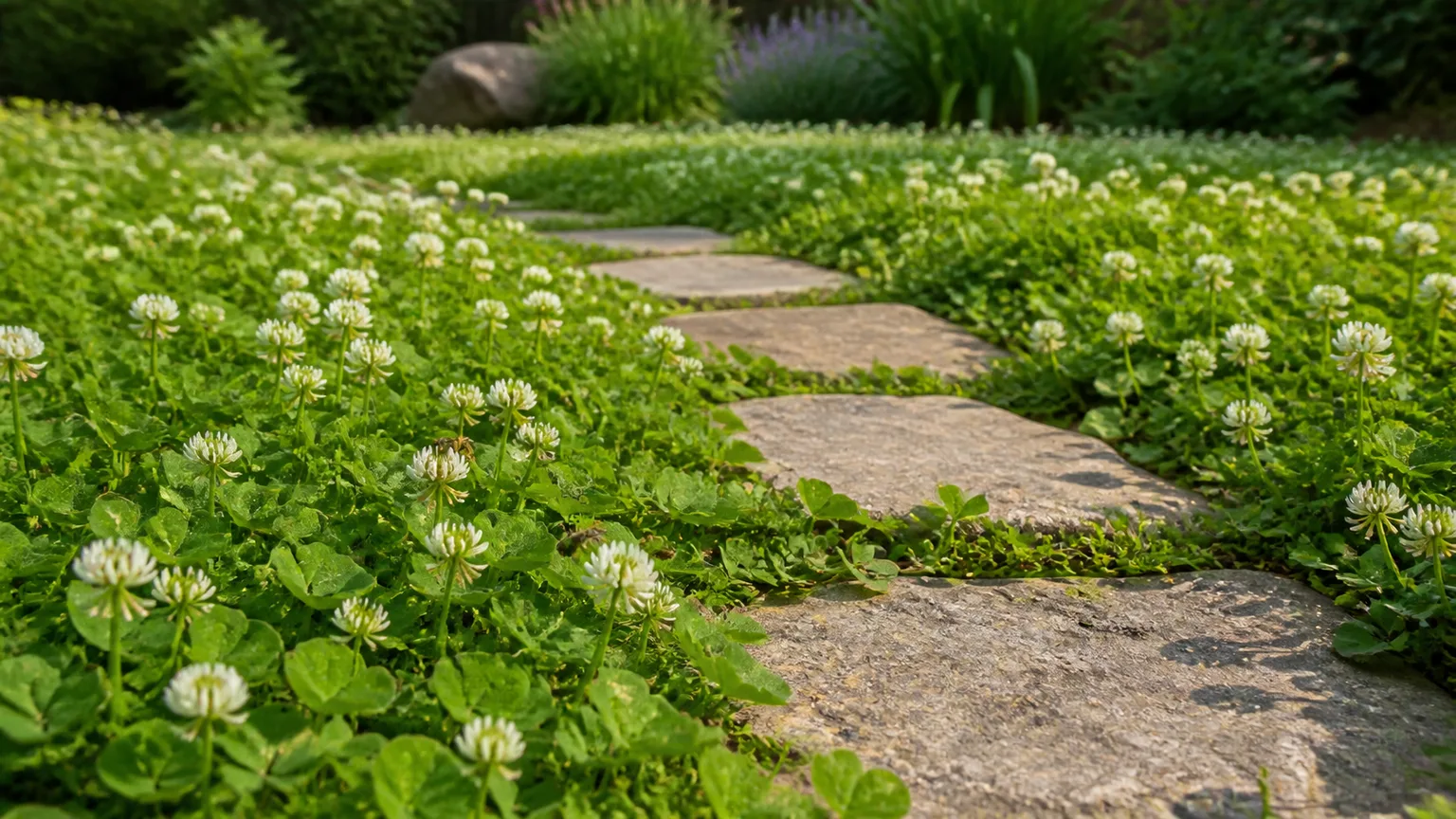
Clover can function as a low living cover, but it is not automatically free fertilizer for the raspberry row. Its roots still use water, its flowers may attract insects that you need to monitor, and it can spread beyond the strip you intended. Keep it mowed or clipped before heavy seed production and leave an open ring around raspberry crowns.
Buckwheat is useful for a short warm-season cover because it establishes quickly and flowers for insects, but it is a seasonal soil-management crop, not a permanent “plant it and forget it” companion. Oats can protect bare ground after harvest in regions where they will grow before cold weather. The practical choices depend on your planting date, winter climate, and ability to terminate the cover cleanly.
Marigolds and other plants with specific caveats
Marigolds are easy to place in the outer edge of a raspberry patch, and their flowers provide color and insect activity that makes scouting more interesting. Some marigold species and dense plantings are used in nematode-management programs, but a few plants around a raspberry crown should not be presented as a cure for every soil pest. If you have a diagnosed nematode problem, use a locally appropriate rotation or cover-crop plan rather than relying on a decorative border.
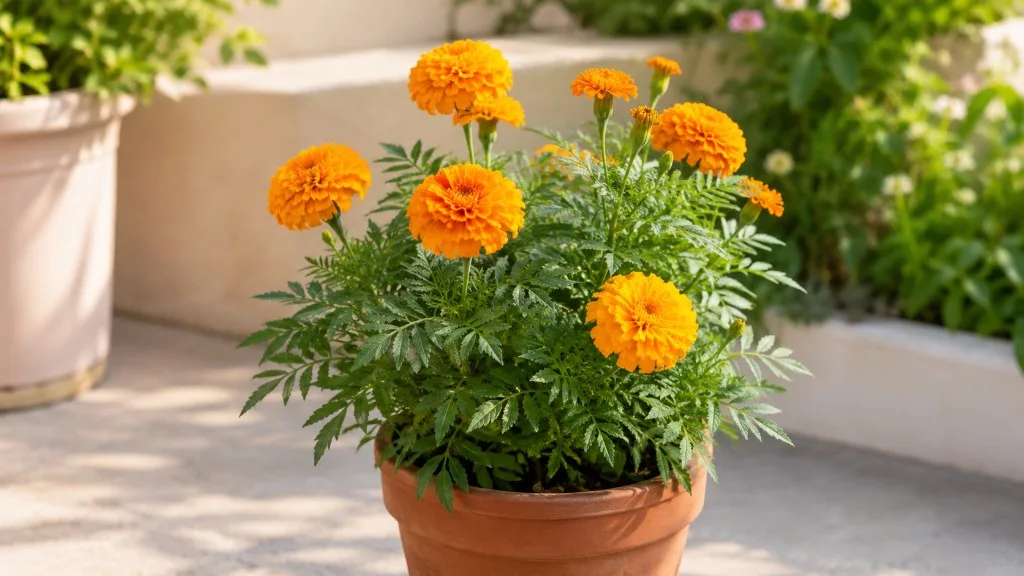
Turnips and other fast leafy crops may be used as trap crops in some gardens, but the trade-off is clear: you are deliberately growing a plant that can attract an insect. Use one only when you will inspect it often and know what you will do if the target pest arrives. A “trap” that is ignored can increase the local pest population instead of protecting the raspberries.
Sunflowers, borage, and other tall flowering plants can support pollinators, but place them where they will not shade the canes or fall across the trellis. A branching sunflower is a better visual companion than a wall of tall stems planted on the sunny side of a narrow row. If you want sunflowers near raspberries, put them north of the bed in the Northern Hemisphere, or outside the direction from which your strongest sunlight reaches the canes.
Plants to Keep Away
The most important “bad companion” decision is often about soil history, not what is currently growing beside the canes. A plant may look compatible above ground while its roots and debris leave behind a pathogen risk. Other plants are simply too competitive, too invasive, or too different in soil requirements to share the raspberry root zone.
Nightshades and Verticillium risk
Keep tomatoes, potatoes, peppers, and eggplant out of the raspberry bed and avoid planting raspberries directly into soil that recently held these crops. They are not bad because raspberries dislike their leaves touching; the concern is that several nightshades can be hosts for Verticillium wilt, a soilborne disease that can affect raspberries.
The disease is especially important for black raspberries, although red raspberries can also be affected. Penn State Extension explains that Verticillium fungi have a wide host range and that disease risk rises in heavy soils and after cool, wet springs. UC IPM lists tomatoes, potatoes, strawberries, eggplant, peppers, and other susceptible crops or weeds among sites that may carry the pathogen.
Do not treat a four-year rule as a guarantee that a site is safe. The fungus can persist in soil for years, the exact risk depends on the crop history and local conditions, and weeds such as nightshade, pigweed, or lambsquarters can also be part of the problem. Cornell’s Berry Diagnostic Tool advises that black raspberries are most susceptible, that the disease is common after potatoes and tomatoes, and that diagnosis should be confirmed with a laboratory test.
If a garden bed has a known history of Verticillium wilt, choose another location rather than trying to hide the problem under a companion planting scheme. Remove diseased plants and roots carefully, control host weeds, improve drainage, and ask your local extension service about a rotation suited to your soil and climate. Fungicide sprays on established plants are not a dependable fix for this soilborne disease; Ohio State University Extension notes that fungicides are ineffective for control and recommends disease-free nursery stock.
Strawberries and other cane fruits
Strawberries are tempting raspberry companions because they are low and make good use of open ground. The problem is that both crops can be affected by root and soil diseases, and a dense strawberry mat can hide the lower raspberry canes, retain moisture at the crown, and make it harder to find runners or damaged tissue. I would place strawberries in a separate bed or in a container near the patch rather than weaving them through the raspberry row.
Use similar caution with blackberries, boysenberries, and gooseberries. They are not automatically incompatible in every garden, but grouping several bramble fruits tightly together creates a larger shared zone for pests, disease scouting, pruning, and irrigation. Separate blocks give you more control over sanitation and make it easier to replace one crop without disturbing the others.
The same logic applies to wild raspberries or blackberries growing at the edge of a property. Do not assume wild canes are harmless because they fruit well. They can carry pests or viruses, and unmanaged growth can touch or overlap cultivated plants. Remove problem canes where legal and practical, or create enough separation that you can inspect each planting independently.
Fennel, mint, and aggressive spreaders
Mint is a classic example of a plant that may be useful nearby but troublesome in the same bed. Its scent and flowers can be attractive, but its runners can move into the raspberry root zone and become difficult to remove without disturbing the canes. Grow mint in a container with a drainage hole, and set the pot outside the raspberry row so its stems cannot root into the soil.
Fennel is another plant I would keep separate. Its mature size, self-seeding habit, and strong presence can overwhelm a small berry border, and claims about allelopathy are often broader than the evidence supports. You do not need to prove that fennel poisons a raspberry bed to make a practical decision: the plant is tall, difficult to keep in a narrow strip, and not worth the management conflict.
Avoid any companion that spreads faster than you are willing to edit. A plant that needs constant cutting, produces hidden runners, or collapses into the canes after rain has failed its job even if its flowers are attractive. In a raspberry patch, easy removal is a real compatibility trait.
Spacing Rules That Prevent New Problems
There is no single correct companion distance because a chive clump, lavender mound, nasturtium vine, and sunflower have completely different mature sizes. Use these starting rules, then adjust for the variety and your soil:
| Companion type | Practical starting placement | Why |
|---|---|---|
| Chives, onions, garlic, or leeks | 12–18 inches from the nearest raspberry crown | Leaves room for root access and harvest without crowding the cane base. |
| Marigolds, calendula, or chamomile | 18–24 inches from the crown or along the outside edge | Keeps flowers visible and reduces a damp, hidden understory. |
| Lavender or yarrow | 24–36 inches from the row, depending on mature width | Prevents a woody mound from shading canes or blocking the path. |
| Nasturtiums | Outside the row, with stems directed away from the trellis | Prevents vines from climbing into the canes and gives you a scouting point. |
| Sunflowers or other tall flowers | Outside the sunward side; farther if they branch widely | Avoids shade, fallen stems, and competition for water. |
| Clover or a cover crop | In a managed strip with a bare ring around each crown | Keeps living roots and seed production under control. |
Treat the measurements as a buffer, not a promise. A raspberry sucker appearing between the companion and the trellis is a reason to thin or move the companion, not a reason to squeeze plants closer. In narrow beds, a companion row outside the trellis is usually safer than filling the strip under the canes.
The most important distance is the one that lets you reach the fruit. A raspberry bed should have a path or open edge where you can pick ripe berries without brushing through wet foliage. Harvest access also matters for sanitation: ripe fruit left to mold, dead floricanes, and fallen leaves are easier to remove when the ground is not packed with stems.
A Copyable Raspberry Companion Layout
For a small home patch, use a simple two-zone design. Put the raspberries in one trellised row with a clean, mulched strip beneath the canes. Along the sun-facing outside edge, plant a repeating rhythm of chives or garlic, then leave gaps for access. At the row ends, use lavender, yarrow, or a compact flowering annual where the mature plants will not block the path.
Keep the tallest plants on the side that does not cast afternoon shade across the berries. In the Northern Hemisphere, that usually means placing sunflowers or tall borage to the north of the raspberry row, not between the row and the southern sky. If the bed is hemmed in by a fence, test the shadow at midday before adding a tall companion; a bright plant can still reduce berry production if it steals the best light.
Here is a workable pattern for a row with three to five raspberry plants:
- Install the trellis and establish the raspberry spacing first.
- Leave a clear crown-and-cane zone under the wires, with mulch kept off the bases.
- Plant one low allium cluster between or just outside the trellis posts, not at every crown.
- Put two or three flowering plants at the sunny outer edge, leaving room for their mature width.
- Keep any mint in a container and any cover crop in an alley or temporary strip.
- Mark the bed on paper so you know which plants were present if a disease appears later.
This layout gives every plant a defined job. The raspberry row remains the productive center, alliums provide an edible edge, flowers create bloom diversity, and the open ground lets you see whether the canes are healthy. It also gives you a place to remove a companion without uprooting the entire bed.
Seasonal Timing: What to Plant and When
Before planting raspberries: use a cover crop only if the site needs it and you can terminate it cleanly. Buckwheat is suited to a warm-season window; oats, rye, clover, or peas may fit cooler periods. Mow or cut before seed matures, incorporate or remove the residue according to your soil plan, and allow enough time for the bed to settle. Do not plant raspberries into a tangle of living cover roots and expect the new canes to win the competition.
At raspberry planting time: install the trellis, test drainage, and set the companions at their mature-size distance. Choose nursery stock from a reputable source and keep the crown at the recommended depth for the plant. If the site previously held tomatoes, potatoes, peppers, eggplant, strawberries, or diseased brambles, treat that history as a reason to pause and investigate rather than adding more plants to dilute the risk.
During flowering and fruiting: inspect the canes and companions at least weekly. Look beneath leaves, along the cane bases, and inside dense foliage. Pick ripe berries promptly, remove diseased or dead material according to local guidance, and keep irrigation aimed at the soil rather than spraying the canopy. A companion plant that attracts insects is doing its job only if you are willing to observe what arrives.
After harvest: remove spent floricanes when appropriate for your raspberry type, control new suckers outside the row, and decide whether the companion should stay. A short-lived annual can be pulled before it becomes a pest habitat; a clover or oat strip can be mowed; a woody lavender mound can be lightly shaped without pushing clippings into the raspberry crowns. This is also a good time to record which plants shaded the row or competed for water.
Before winter: keep the bed open enough for air movement and sanitation. Do not use a late cover crop that will remain tall and wet against the canes. If the soil is bare outside the managed mulch ring, a temporary cover may help with erosion, but protect the raspberry crowns and maintain a clear path for winter inspection.
When a Companion Plant Is Not the Fix
If raspberries are wilting, turning yellow, producing small fruit, or failing to establish, adding marigolds or garlic is not the first response. Check the soil moisture, drainage, light, cane age, pruning, nutrition, and recent crop history. A crowded root zone can make the symptoms worse by making it harder to identify the original problem.
Verticillium wilt is a good example of where companion planting reaches its limit. The disease can cause lower leaves to yellow, wilt, and fall, and black raspberry canes may develop a bluish cast. Symptoms can resemble water stress or other cane problems, so do not diagnose from one leaf. Cornell recommends laboratory confirmation, while extension guidance emphasizes clean planting stock and avoiding sites with a known disease history.
Companions also cannot correct a raspberry cultivar that is poorly suited to your winter, a row planted in deep shade, a crown sitting in saturated soil, or a trellis that allows canes to collapse into one another. In those situations, the best companion may be more space. Remove the crowded plant, correct the site, and give the raspberries the conditions they need before rebuilding the border.
Use companion plants as small, testable additions. Plant one defined strip, take notes for a season, and judge success by observable outcomes: easier harvests, more continuous flowers, fewer weeds, cleaner soil access, or a healthier-looking bed. If a plant creates more pruning, pest pressure, shade, or root disturbance than value, it is not earning its place.
Conclusion
The best raspberry companions are the ones you can keep in bounds while preserving the conditions raspberries need: sun, drainage, airflow, and access. Start with garlic, chives, onions, or leeks for a low edible edge; add lavender, yarrow, chamomile, nasturtiums, calendula, or a carefully placed marigold for flowers and observation; and use clover, oats, buckwheat, or rye as managed cover crops rather than permanent filler.
Keep tomatoes, potatoes, peppers, eggplant, strawberries, and related brambles out of the raspberry root zone when disease history makes the pairing risky. Keep mint and fennel separate because their growth habits create more work than benefit. The result should be a raspberry row that is easy to inspect and harvest—not a crowded collection of plants that hides the canes you are trying to protect.



