Organic Strawberry Pest Control for 5 Common Pests
Identify slugs, bud weevils, tarnished plant bugs, spittlebugs, and sap beetles, then choose organic controls that fit each pest and protect pollinators.
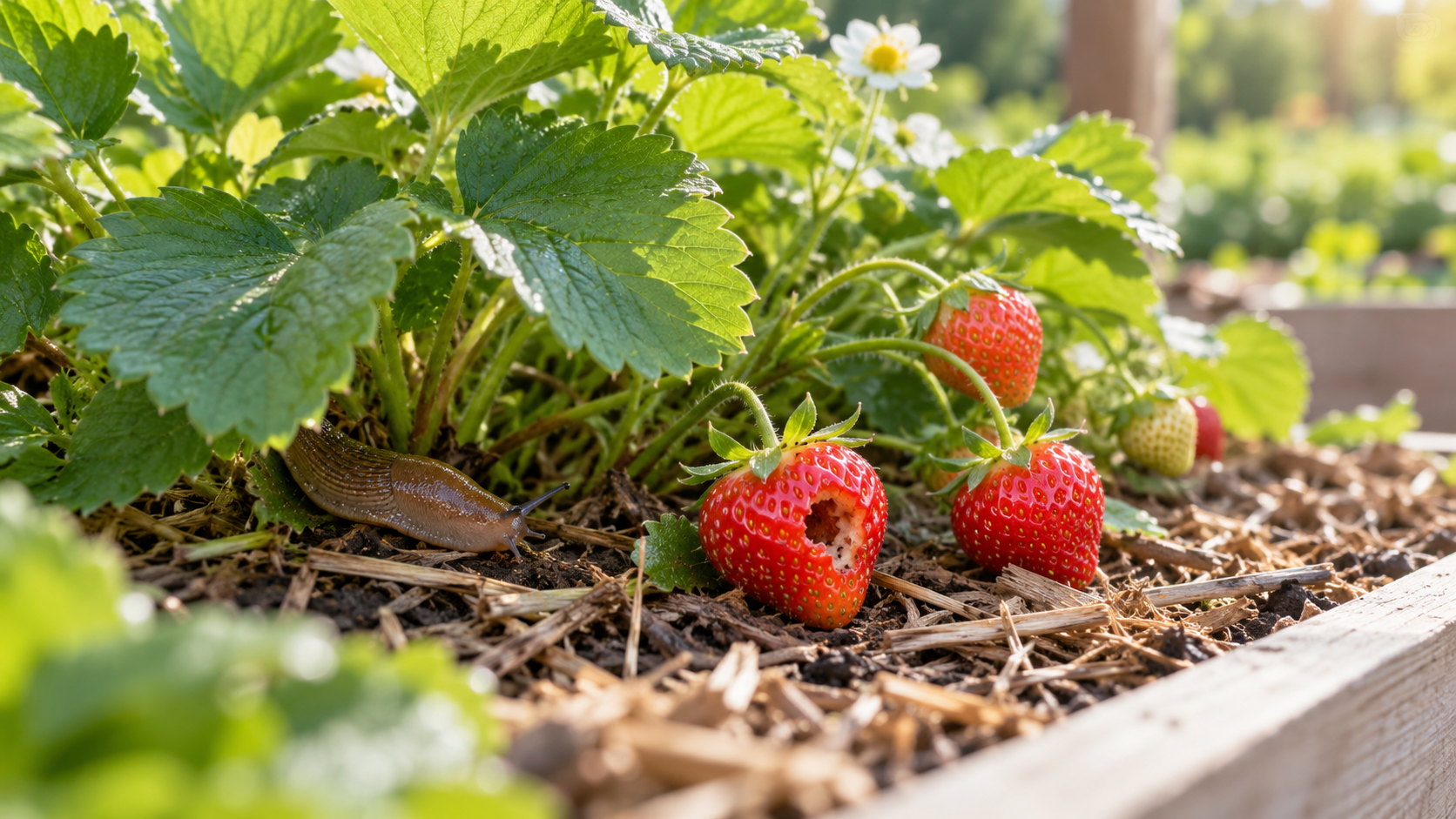
A strawberry with a hole, a blossom dangling from its stem, or a misshapen tip can point to very different causes. Treating all three as “bugs” is how gardeners end up spraying the wrong target, missing the pest that is still feeding, or exposing pollinators without protecting the crop.
The useful first move is to match the damage to the plant stage and look for the pest itself. For five common strawberry problems—slugs, bud weevils, tarnished plant bugs, spittlebugs, and sap beetles—organic control usually starts with inspection, sanitation, and physical removal. A spray is a narrow, last-step option, not a substitute for diagnosis.
Diagnose the Damage Before Reaching for a Spray
Look at the whole plant before deciding what to do: leaves, flower buds, developing berries, ripe fruit, and the ground beneath the canopy. Note whether damage appeared before bloom, during fruit set, or as berries began to ripen. The University of Minnesota’s strawberry fruit-damage guide separates slug holes, sap-beetle holes, and bird pecks—three injuries that can look similar from a quick glance.
| What you see | Likely lead to check | First useful action |
|---|---|---|
| Deep hole in a berry, often with slime nearby | Slug | Inspect after dusk or just before sunrise; remove hiding places |
| Small hole or hollow in ripe, soft, or overripe fruit; tiny beetles inside | Sap beetle | Pick and discard damaged and overripe berries promptly |
| Wedge-shaped puncture or a piece missing, with scraps nearby | Bird | Use bird-safe netting or another physical exclusion method |
| Dry, clipped flower bud hanging from its stem | Strawberry bud weevil | Remove clipped buds and inspect unopened flower clusters |
| Small, uneven “catfaced” berry | Tarnished plant bug | Inspect flowers and young fruit for active nymphs |
| White froth clustered around a stem | Spittlebug nymph | Part the foam, rinse the insect away, then assess plant vigor |
Use plant stage and damage pattern to narrow it down
Slugs feed at night or in damp, shaded periods, and the feeding can leave a small deep hole in either green or ripe fruit. A dried silvery trail is a strong clue, but no slime does not prove that a slug was absent; check beneath leaves, boards, pots, and mulch at the time the pest is active. Birds usually leave a more angular peck or missing wedge, sometimes with bits of berry nearby.
Bud weevils announce themselves before you see a berry. The female punctures an unopened flower bud and clips the stem below it, so the bud droops, dries, and may fall. Tarnished plant bug injury shows up later as a berry that fails to fill evenly: the developing seeds and surrounding tissue were damaged while the fruit was forming, so a misshapen berry is a record of earlier feeding, not proof that an insect is still on it.
Sap beetles are most likely when fruit is ripening and there are soft, damaged, or forgotten berries in the patch. They are attracted to fermenting fruit and can be difficult to spot because adults may drop or hide when disturbed. A foam mass, by contrast, is a visible shelter made by a spittlebug nymph. It is not a fungus or an egg cluster, and it does not mean the plant needs to be sprayed.
Build a Low-Spray Strawberry Pest Plan
Use the same sequence for every suspected pest: confirm the sign, remove what you can reach, make the planting less hospitable to repeat damage, and check again before escalating. This is practical integrated pest management: it reserves pesticides for a confirmed, consequential problem and uses the least disruptive effective option first. The Savvy Gardening guide to vegetable pests similarly separates prevention, physical controls, and organic products instead of treating a product as the opening move.
Keep the patch open enough to inspect and pick. Pull weeds that crowd the row, remove dead foliage and rotting fruit, and avoid leaving boards, dense debris, or piles of pots beside the plants where slugs can shelter during the day. Do not strip every flower or remove every harmless insect; the goal is to reduce the specific pest’s food and cover while preserving pollinators and predators.
Set a small baseline before intervention. Once or twice a week, check a few plants at the bed’s edge and center, look under leaves, inspect new flower trusses, and turn over one or two suspect berries. Record the date, pest sign, and how many plants show it. That quick note helps distinguish a one-off damaged fruit from a pattern worth managing, and it tells you whether a control actually reduced new injury.
Slugs and Snails: Target the Night Shift
Slugs leave ragged leaf holes and, more importantly for a berry patch, deep holes in fruit that can make it unfit to harvest. Look for them after rain or in the evening, then inspect the underside of leaves, damp mulch, boards, and the soil surface. NC State Extension’s strawberry slug guidance notes that slugs hide by day, thrive under moist conditions, and that a board or bait trap can confirm activity but rarely controls a damaging population by itself.
Hand-pick slugs during an evening walk or lift a board placed near the row in the afternoon and remove any slugs sheltering beneath it. Keep the bed weeded, clear fallen leaves and other hiding places, and water the root zone as needed without keeping the planting constantly wet. Do not deprive strawberries of needed water; the aim is to avoid unnecessary prolonged surface moisture and cover, not to drought-stress the plants.
Mulch is a trade-off, not an automatic slug remedy. Clean straw can keep fruit off bare soil, but a thick, damp layer can also provide shelter. Keep it loose enough to inspect beneath, avoid piling it against crowns, and remove berries that have fallen into it. If the patch stays humid and hidden, thin or pull back the mulch around fruiting plants and compare new damage over the next week.
A shallow board or a beer/yeast trap can tell you whether slugs are present, but it should not be mistaken for population control. Traps need frequent checking, can attract more slugs into the vicinity, and do not reach the ones hidden elsewhere. Diatomaceous earth is unreliable once wet and must be kept dry to act as a barrier, which is difficult in a fruiting bed exposed to irrigation, dew, and rain. If damage remains frequent after sanitation and hand removal, consider only a slug bait whose label specifically allows use on strawberries; NC State notes that iron-phosphate products are available for organic production, but product labels and local guidance determine where and how any bait may be used.
Strawberry Bud Weevils: Remove Clipped Buds Early
The strawberry bud weevil, often called the strawberry clipper, attacks flower buds before they open. The most useful sign is a wilted or dangling bud clipped partway down its stem; you may also see a tiny feeding puncture or an adult beetle sheltering among unopened buds. Because the injury removes a potential flower, it can reduce the coming crop even when leaves look healthy.
Inspect the first flower clusters as they emerge, especially along bed edges near shrubs, woods, or hedges. Pick off clipped buds and remove them from the planting rather than leaving them beneath the plants. A fallen bud can contain the developing insect, so bagging it or disposing of it away from the bed is a more dependable choice than tossing it into a cool, shallow compost pile.
Do not spray merely because one bud has been clipped. Bud-weevil numbers vary by season and location, and the bud protects the immature insect inside it. The University of Massachusetts Extension small-fruit guide describes clipping, scouting before bloom, and significant year-to-year variation; it also notes that research has supported tolerating more injury than older rules of thumb suggested. For a home patch, track whether fresh clipped buds continue to appear before considering a labeled treatment or asking a local extension office about regional thresholds.
Floating row cover can exclude adult weevils when installed before they reach the plants, but it is a preventive barrier, not a cure for adults already inside. Check plants before covering, secure the edges, and plan to open or remove the cover when flowers need pollinator access. If you use covers, make them part of the planting calendar instead of laying them over a flowering bed and assuming pollination will proceed normally.
Tarnished Plant Bugs: Protect Fruit While It Forms
Tarnished plant bugs feed on buds, flowers, and the developing seeds of strawberries. The result can be a small, uneven, or catfaced berry with one side that did not expand properly. By the time the misshapen fruit is obvious, that berry will not straighten if you spray; any decision to intervene has to be based on live insects on current flower clusters, not old fruit damage alone.
Look for small, quick-moving green nymphs in the flower trusses and around young fruit, especially during the period from bud formation through fruit set. Tap a flower cluster over a white plate or sheet to make tiny nymphs easier to see. White sticky cards can help track adult activity, but they catch beneficial insects too and do not, by themselves, tell a home gardener when control is justified.
Commercial thresholds depend on region, cultivar, production system, and sampling method. The UMass guide describes sampling flower clusters and explains why a trap count is not the same thing as a treatment threshold. A 2024 University of Minnesota trial on organic day-neutral strawberries found differences in tarnished plant bug counts and fruit damage among tested organic insecticide programs, but those results apply to that crop system and trial—not every home bed or every product. The University of Minnesota Extension report advises growers to treat only when populations exceed the relevant threshold and to follow legal product labels.
Start with removal of weeds immediately crowding the strawberry row and regular checks of new clusters. Avoid broad, indiscriminate spraying around blossoms: flowering strawberries attract pollinators, and a product described as organic can still harm non-target insects. If repeated scouting shows active nymphs and substantial new fruit injury, ask your local extension service which options, timing, and threshold apply to your area before using a pesticide.
Spittlebugs: Remove Foam, Then Judge the Damage
Spittlebug nymphs create a blob of frothy foam on stems, often low on the plant. Part it gently and you may see a small, soft-bodied nymph inside. Heavy feeding can reduce vigor, but a few foam masses are usually more alarming in appearance than in consequence; the UMass Extension strawberry insect guide says spittlebugs seldom cause significant damage and that rain or irrigation often washes away the froth.
Rinse the foam away with a firm stream of water and look for the nymph. Remove it by hand if visible, then check nearby crowns and stems over the next several days. If plants remain vigorous and no new masses appear, stop there. This response is more proportionate than an insecticide application that may hit beneficial insects while adding little protection to the crop.
If the planting has many foam masses and weak or stunted plants, inspect for other causes before blaming the spittlebugs. Crowded growth, dry roots, waterlogged soil, or a different pest can produce more meaningful stress. A count of foam by itself is a poor reason to escalate; pair it with new damage or reduced growth and seek local extension help if the diagnosis is uncertain.
Sap Beetles: Sanitation Beats Bait
Sap beetles feed on overripe, decaying, or damaged berries, and their small holes can resemble slug feeding. Look for tiny oval beetles in the cavity or on fruit that has softened or fermented. Once damaged fruit is left in the bed, it becomes a food source that draws more beetles and can expose otherwise sound berries nearby.
Pick ripe fruit promptly and remove all overripe, moldy, fallen, or damaged berries from the patch. Do not leave culls in the aisle or toss them just outside the bed; take them away from the planting and discard them. After rain, check under leaves and mulch for fruit that has fallen out of sight. In a small garden, this simple sanitation routine is more dependable than trying to spray beetles as they move between hidden fruit and the soil.
NC State Extension describes rotten-fruit removal as the most important control for strawberry sap beetles and the only effective organically acceptable approach currently listed in its strawberry guidance. Its sap beetle publication notes that rotten fruit can attract adults and larvae and that bait fruit is used for monitoring in some production settings. A bait bowl beside a home bed may lure beetles toward the crop, so do not treat that technique as a guaranteed trap-and-kill solution.
The University of Minnesota’s fruit-hole diagnosis is particularly useful when you cannot find the beetle: slugs can make a deeper hole in green or ripe berries, birds leave wedge-shaped pecks or scraps, and sap beetles usually appear as ripe fruit is being harvested. Identify the pattern before changing your watering or applying anything to the leaves.
Row Covers, Traps, and Beneficial Insects
Floating row cover can stop flying or crawling insects from reaching a clean bed, but it works only if the pest has not already been enclosed with the plants. Install it before the vulnerable stage or before adult activity, secure the edges, and inspect the plants first. Strawberries rely on pollinators for dependable fruit development, so remove or lift the cover when flowers are open unless you have a locally suitable pollination plan.
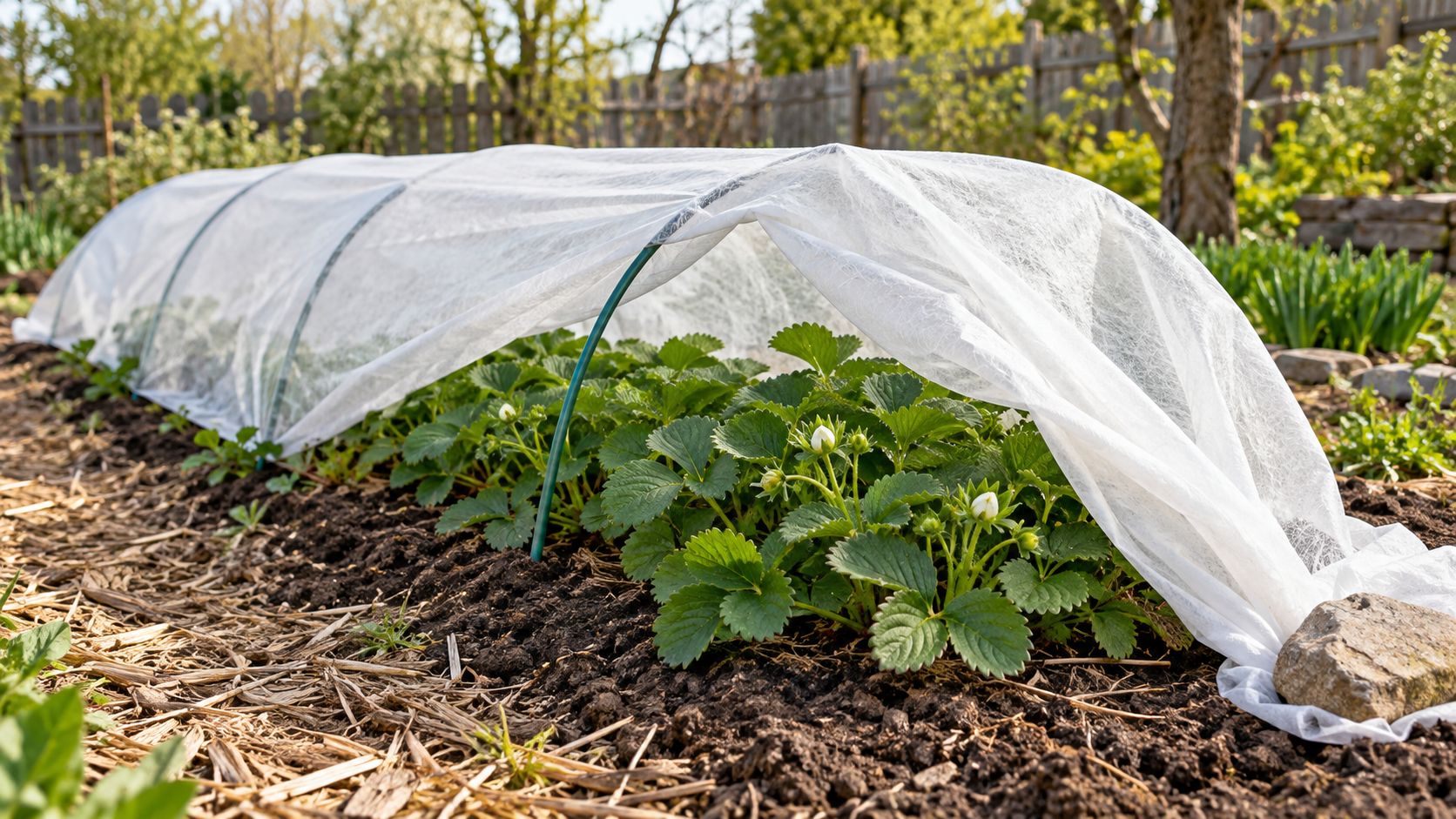
An insect barrier is most useful when it goes over a clean strawberry row before bloom and before pests arrive.
Sticky traps have a narrower job: monitoring. A white card may help a grower observe tarnished plant bug adults, but it can catch other insects and should not replace tapping flower clusters or checking the plants. Likewise, a board trap can show slug activity while removing only a portion of the population. Use traps to answer “what is active here?” rather than assuming they will protect every berry.
Flowering plants near a vegetable garden can provide pollen and nectar that beneficial insects use, and the Savvy Gardening guide discusses this as part of a broader organic garden plan. That is a long-term habitat choice, not a quick fix for a patch already losing buds or fruit. Preserve flowering plants and avoid broad sprays where possible, but do not expect companion planting to repel every pest or compensate for spoiled fruit, a dense bed, or a missing inspection routine.
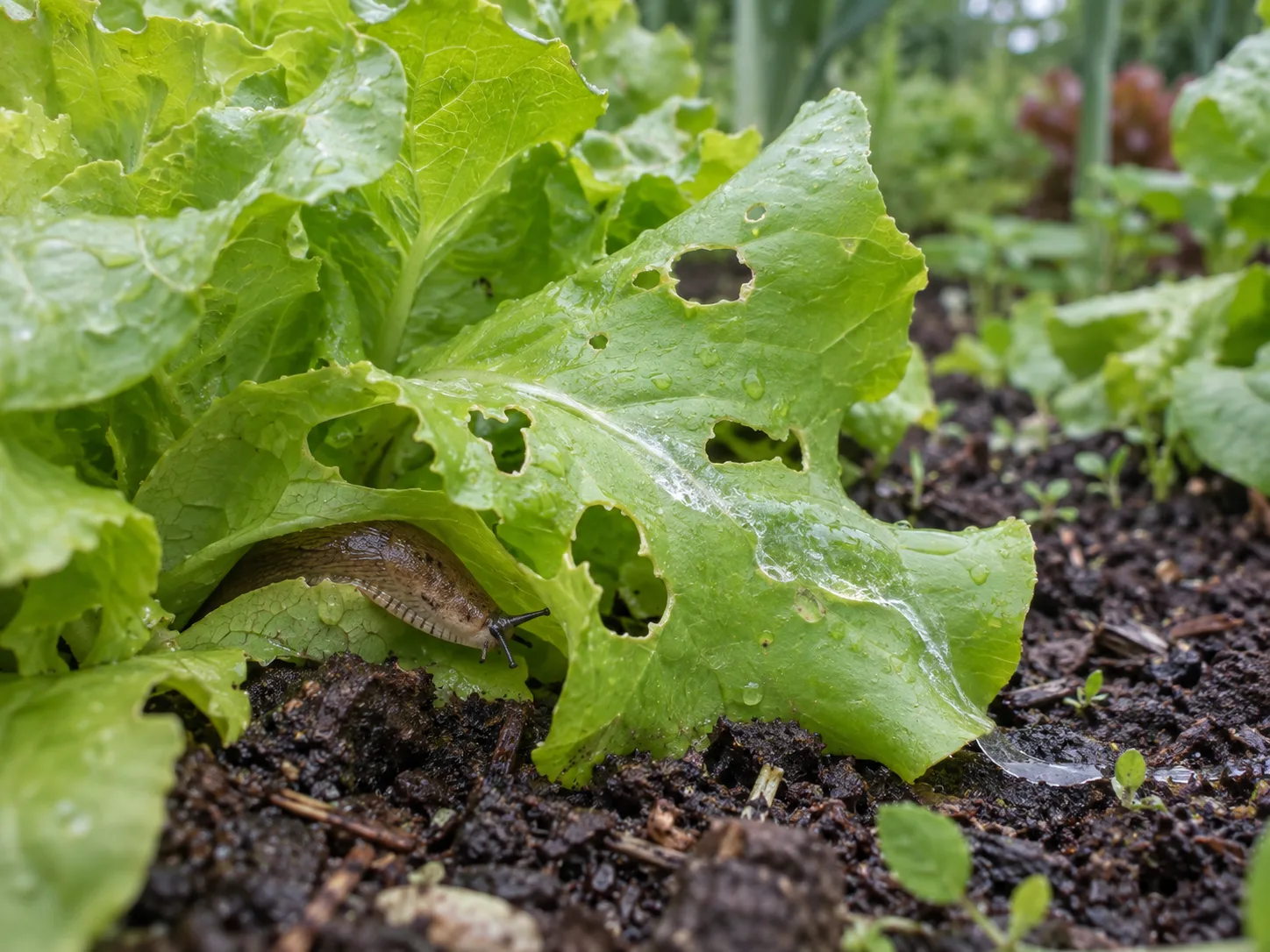
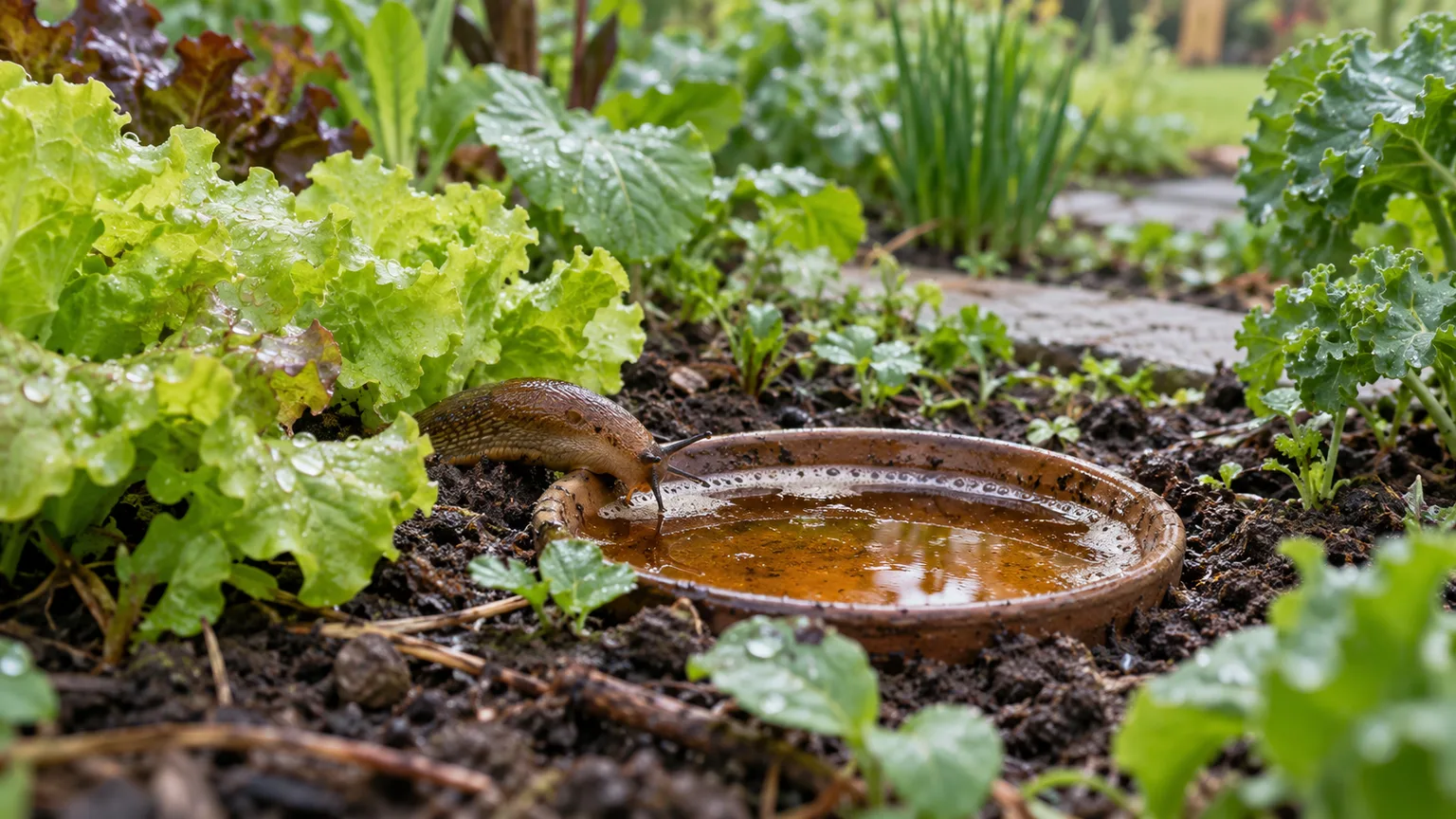
A slug and fresh chewing damage are stronger evidence than holes alone; check the strawberry row after dark to confirm activity.
Do Organic Sprays Help Strawberry Plants?
Sometimes, but “organic” describes a production or product category, not a guarantee of safety, effectiveness, or suitability for every pest. A product may be accepted in one certified-organic system and still require careful timing, protective equipment, a harvest interval, or avoidance around flowering plants. Always read the exact label before using a pesticide on an edible crop; the label must list strawberries and the target pest or use, and local rules may be more restrictive.
Insecticidal soap is a contact spray. It can affect certain exposed, soft-bodied insects only when coverage reaches them, so it is not a reliable answer for slugs, weevils protected inside buds, sap beetles feeding in fruit, or nymphs sheltered by foam. The word “soap” on a dish detergent bottle does not make it insecticidal soap. Household detergents and improvised concentrations can injure leaves or fruit, and they do not provide a researched strawberry label or harvest interval.
Some organic programs use products based on pyrethrins, neem oil, or azadirachtin against tarnished plant bugs. The Minnesota trial is helpful because it shows that efficacy can differ among materials and combinations; it is not a universal recommendation to spray home strawberries on a weekly schedule. Use product choice and timing only with current local extension guidance and the label, and avoid applications when pollinators are visiting flowers. The University of Minnesota researchers specifically emphasize treatment thresholds and timing that minimizes pollinator exposure.
For most home gardeners, sprays are a poor match for the most common clues in this guide: slugs are not insects, spittlebugs are often tolerable, and sap beetles are best managed by removing the fruit that feeds them. A narrow, correctly identified infestation of a susceptible insect is the exception. If you cannot identify the pest or find a label that names the crop and use, do not guess.
Home Remedies to Skip
Do not dust the whole bed with salt, pour vinegar onto soil, spray concentrated garlic or hot-pepper mixtures, or scatter an untested “barrier” around every plant. These approaches are often promoted as natural, but they can damage foliage, alter the soil surface, repel beneficial visitors, or simply fail when rain and irrigation arrive. A control is useful only if it reliably reduces the target pest without creating a new problem.
Diatomaceous earth is sometimes suggested for slugs because its dry particles can irritate their soft bodies. In an open strawberry planting, the dry barrier is difficult to maintain through dew, rain, and watering, and it must be applied again after becoming wet. It is not a dependable replacement for checking under cover, removing fruit and debris, or using a properly labeled bait when local guidance supports one.
Also skip a blanket spray “just in case.” A pesticide cannot repair a catfaced berry, bring a clipped flower back, or remove sap beetle larvae from fruit already damaged. Identify a live target, check whether the product is labeled for that target on strawberries, and apply only if the expected benefit is worth the disruption.
A Practical Seven-Day Plan During Fruiting
You do not need a complicated scouting log for a small patch. Use a seven-day loop that keeps ripe fruit from becoming pest food while revealing whether damage is continuing:
- Harvest ripe berries. Pick fruit as it colors fully, and remove berries that are soft, leaking, moldy, or overripe.
- Check the canopy. Look at leaves and stems for ragged chewing, foam, webbing, or a visible insect; inspect both the edge and middle of the bed.
- Inspect new clusters. Before flowers open, check for clipped buds. From bloom through young fruit, tap several clusters over a white plate if catfacing appears.
- Look under cover. Turn over a suspect berry, lift a leaf, and check under a board or loose mulch where slugs shelter.
- Remove what you confirm. Pick off clipped buds, hand-remove slugs or visible spittlebugs, and take damaged fruit away from the bed.
- Make one targeted adjustment. Thin damp hiding places, secure a preventive cover before bloom, or continue harvesting more often. Do not change several practices at once if you want to learn which one helped.
- Recheck the same signs. After several days, look for new—not old—damage. If it has stopped, keep the routine; if it continues, record where and when it appears and ask a local extension service about the next step.
This routine follows a basic principle shared by extension and experienced horticulture writers: regular inspection is what makes a low-impact control work. The archived BBC Gardening advice on preventing pest problems also emphasizes checking plants routinely and using nonchemical methods such as hand removal before turning to products. In a backyard patch, a few minutes with a notebook and a bowl for damaged fruit can be more useful than owning several sprays you cannot confidently match to a pest.
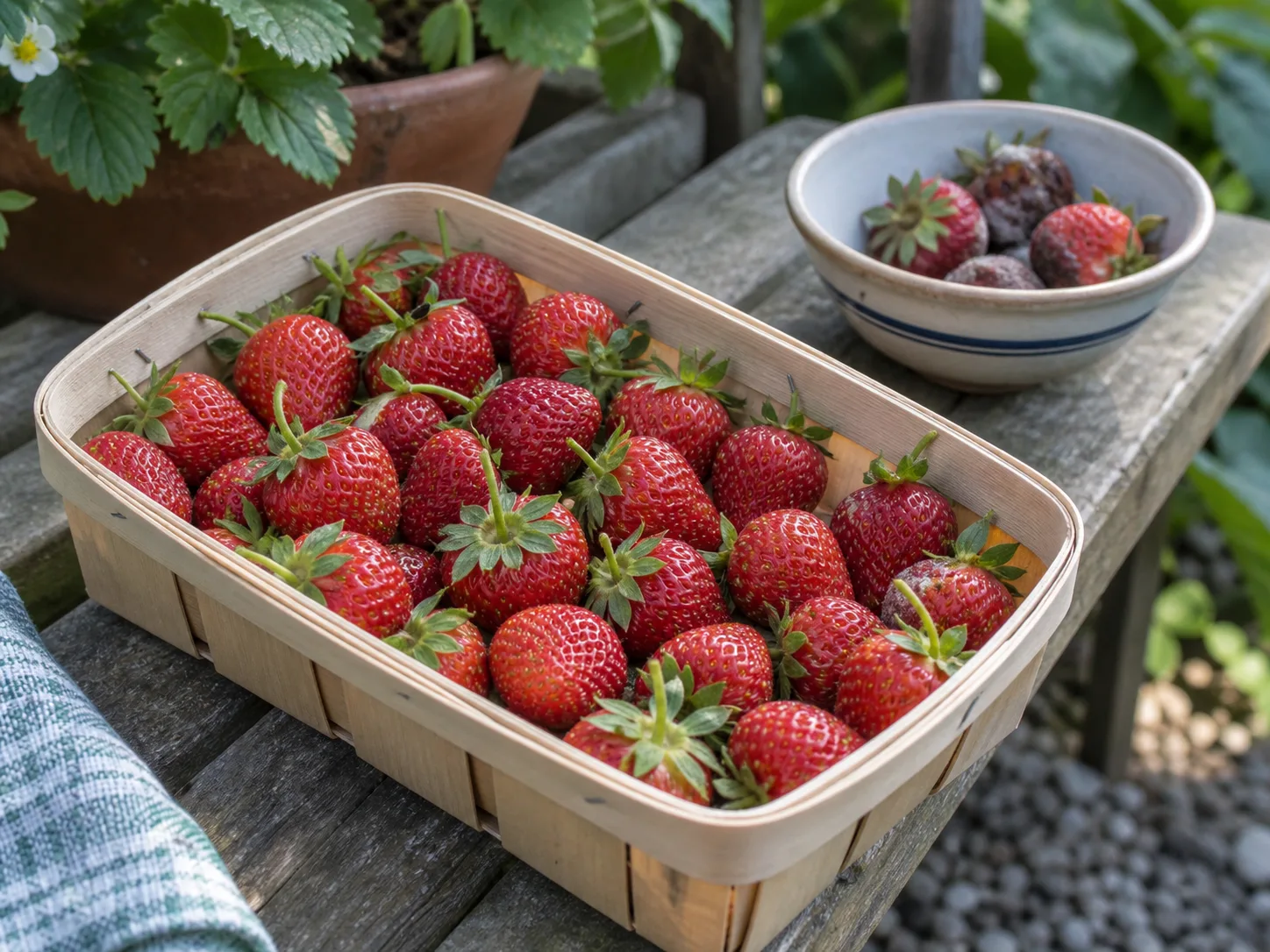
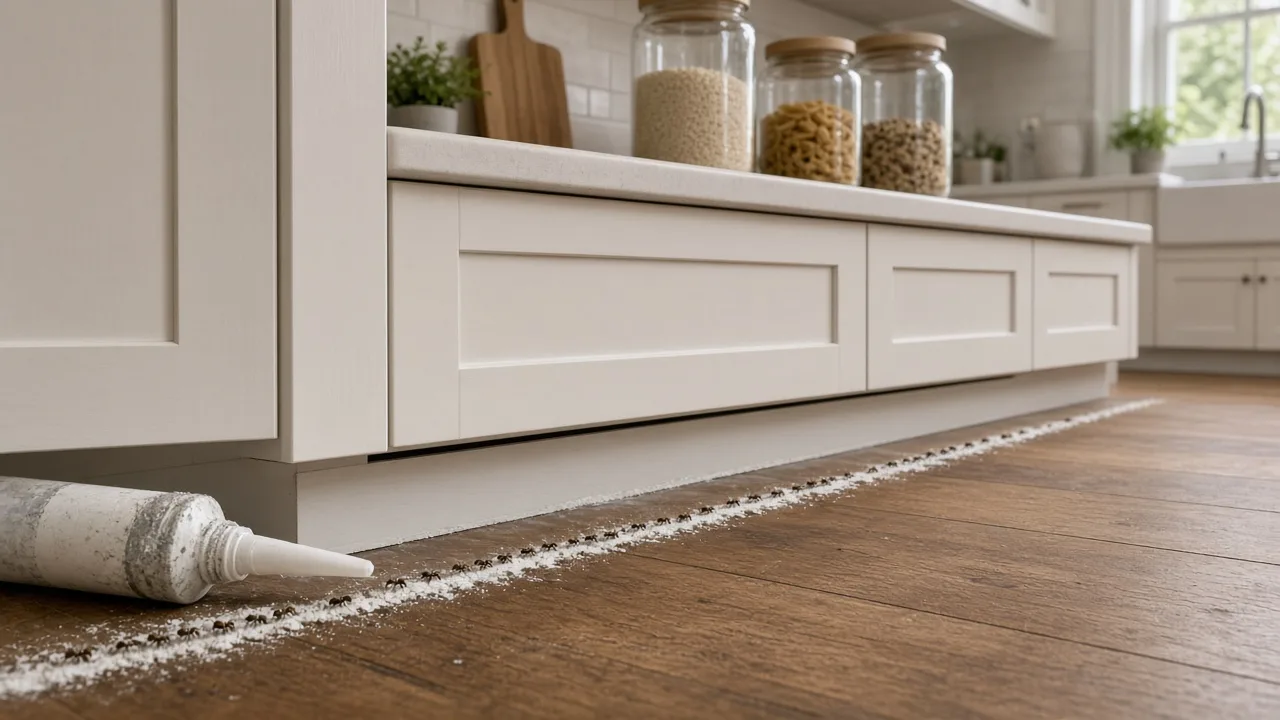
Harvest promptly and remove spoiled or damaged berries from the planting so they do not feed sap beetles.
Keep the Patch Productive After Harvest
Continue sanitation after the main crop. Remove overripe fruit, clear dead leaves and fallen debris, and thin crowded plants enough to reach the soil surface. If a slug problem repeats, make the change before the next fruiting period: locate damp refuges, improve access for inspection, and plan an early-season board check rather than waiting for the first damaged berry.
Use the prior season’s notes to plan a barrier or planting adjustment. If bud clipping was concentrated on an edge next to a hedge, focus checks there the following spring and consider a pre-bloom cover if your planting and pollination schedule allow it. If sap beetles appeared only when harvests were skipped, more frequent picking may solve the problem without a pesticide. If berries repeatedly catface, monitor flower clusters when they are forming instead of waiting until the fruit is mature.
The effect of mulch and bed design depends on local weather. A 2026 University of Minnesota Extension study of organic day-neutral strawberries found differences in insect damage and marketable yield among mulch treatments in its Minnesota and Wisconsin trials. It does not mean one mulch is best for every home patch; it reinforces that mulch can change pest pressure and harvest cleanliness, so judge it by how your own bed drains, dries, and stays accessible.
Damage These Five Pests Do Not Explain
Not every hole is a slug or beetle, and not every misshapen strawberry signals a pest. Birds leave distinctive pecks; tiny maggots or fruit that softens prematurely may point to a different fruit pest; pale or bronzed fruit can have causes other than tarnished plant bug. If the clues in this guide do not fit, take a clear photo of the whole plant and close-up damage, note your location and the date, and ask a local extension office for identification before applying a product.
Likewise, yellow, spotted, or collapsing leaves may reflect disease, water stress, or nutrient problems rather than insect feeding. A correct diagnosis matters especially in an edible crop because an off-label spray can leave the harvest unprotected and create avoidable exposure. Keep the question narrow—“what is making these holes?” or “what caused these clipped buds?”—and provide the damaged plant part, recent weather, and whether you found a pest.
Conclusion
Organic strawberry pest control works best when it starts with the clue, not a bottle. Check whether the injury is on leaves, unopened buds, or ripe fruit; look for slime, clipped stems, foam, tiny beetles, or fresh nymphs; then use the response that fits: remove slug shelter, pick off clipped buds, monitor flower clusters, rinse away harmless spittlebug masses, or clear overripe fruit for sap beetles.
Harvest promptly, keep the patch open enough to inspect, and use row covers before pests arrive while allowing flowers access to pollinators. If a confirmed insect problem keeps causing new damage, consult local extension guidance and the exact pesticide label before treating. That sequence protects the crop while preserving the beneficial insects that help a garden stay resilient.