How to Grow and Care for Obedient Plant (False Dragonhead)
Grow obedient plant (false dragonhead) for late-summer flowers. Get advice on planting, watering, division, seed, and keeping this vigorous native in bounds.
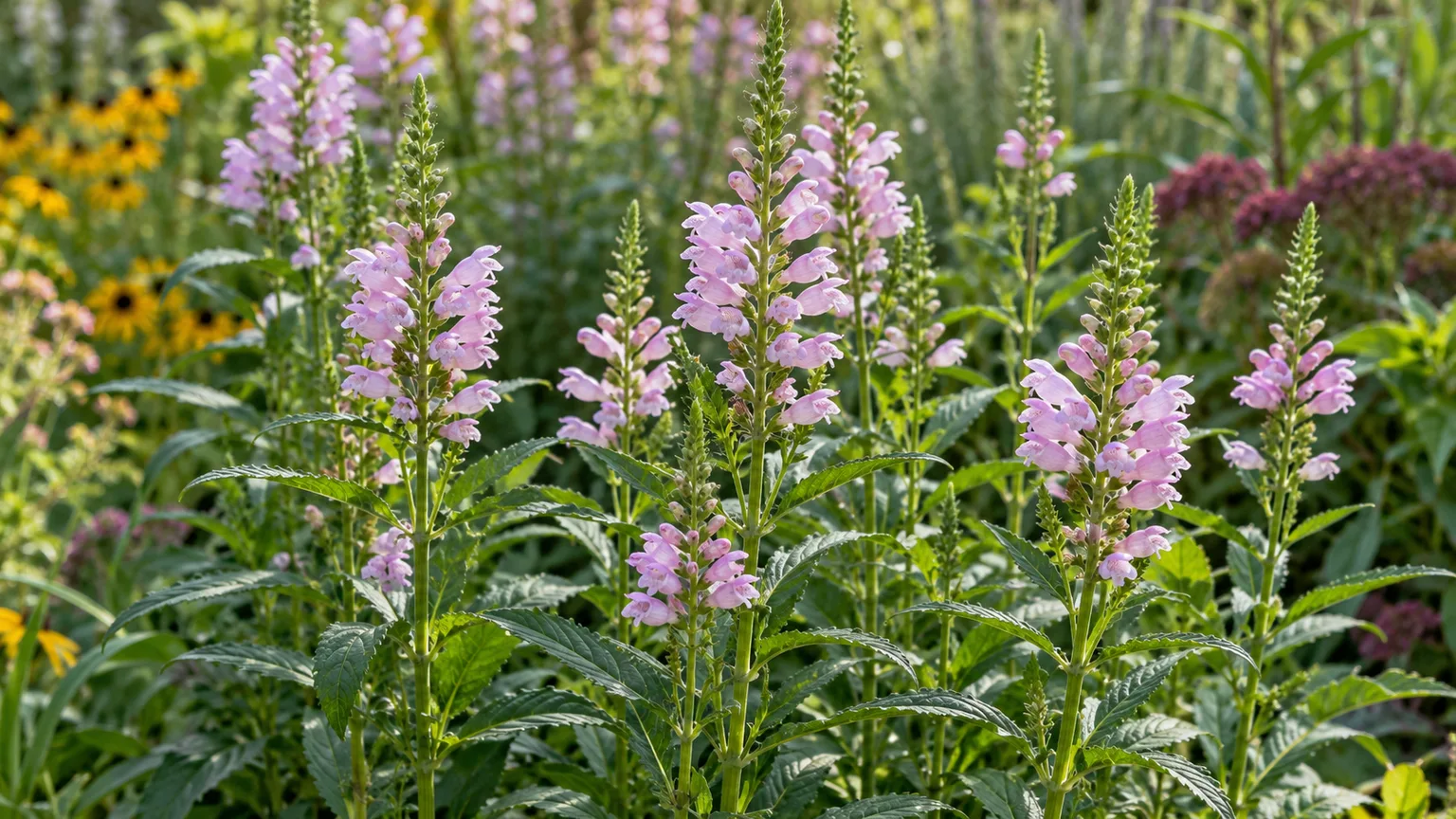
Obedient plant (Physostegia virginiana) is a hardy flowering perennial with upright spikes of pink, lavender, or white blooms. It is straightforward to grow in sun and moist soil, but its underground rhizomes can carry the plant beyond its original clump. Before planting, decide whether that vigor suits the space: it is useful in a rain garden or naturalized bed where it can spread, while a compact cultivar or a different perennial may be easier in a narrow mixed border.
The basic recipe is full sun to partial shade, soil that stays moderately moist but drains, and enough room for a plant that can reach about 3 to 4 feet tall and 2 to 3 feet wide. Give it a sunny site for stronger stems, water newly planted divisions until established, and check its edges regularly.
Obedient plant care at a glance
| Care factor | What to provide |
|---|---|
| Botanical name | Physostegia virginiana |
| Type | Herbaceous perennial in the mint family |
| Light | Full sun to partial shade; more sun usually means sturdier growth and better flowering |
| Soil | Average to moderately fertile; moist and well-drained, with tolerance for occasional wetness |
| Water | Keep new plants evenly moist; after establishment, water deeply when rainfall does not keep the root zone from drying |
| Mature size | Commonly about 3 to 4 feet tall and 2 to 3 feet wide; cultivar and site matter |
| Bloom | Mid- to late summer into early fall, with local timing varying |
| Spread | Clumps expand through underground rhizomes and may self-seed |
| Maintenance | Monitor edges, divide vigorous clumps, and cut old stems back in winter or early spring |
| Garden use | Best where a naturalizing perennial or rain-garden plant can occupy space |
The range in published mature sizes reflects differences in cultivar, climate, soil, and growing conditions. Penn State Extension lists a 36-inch plant, while the Morton Arboretum describes a typical 3- to 4-foot height and 2- to 3-foot spread. Plan for a generous clump, then check the nursery label for the selection you are buying. North Carolina State Extension and Morton Arboretum also describe its moist-soil preference and vigorous growth.
Is obedient plant right for your garden?
Choose obedient plant when you want late-season color, upright flower spikes, and a perennial that can fill open ground. Bees, butterflies, and hummingbirds visit the flowers, and the native species is a useful option for a pollinator or rain garden when it is appropriate for your region. It can also be cut for bouquets. A broad sunny bed, a stream edge, or a moist naturalized planting gives the species room to do what it does well.
Think twice before putting the standard species between slow-growing neighbors or beside a small path. Its rhizomes can send new shoots outside the original crown, particularly where soil is moist and fertile. The issue is usually garden vigor, not proof that the plant is legally or ecologically invasive. Native range is regional: a plant native to parts of eastern and central North America is not automatically the right native choice for every garden. Check a local extension or native-plant resource if regional provenance matters.
A useful decision rule is to assess three things before you plant: how much ground the plant can occupy, whether you can inspect its edges, and whether spreading stems would crowd other plants. If you cannot give it room or contain it, select a clump-forming cultivar or another perennial with a more predictable footprint.
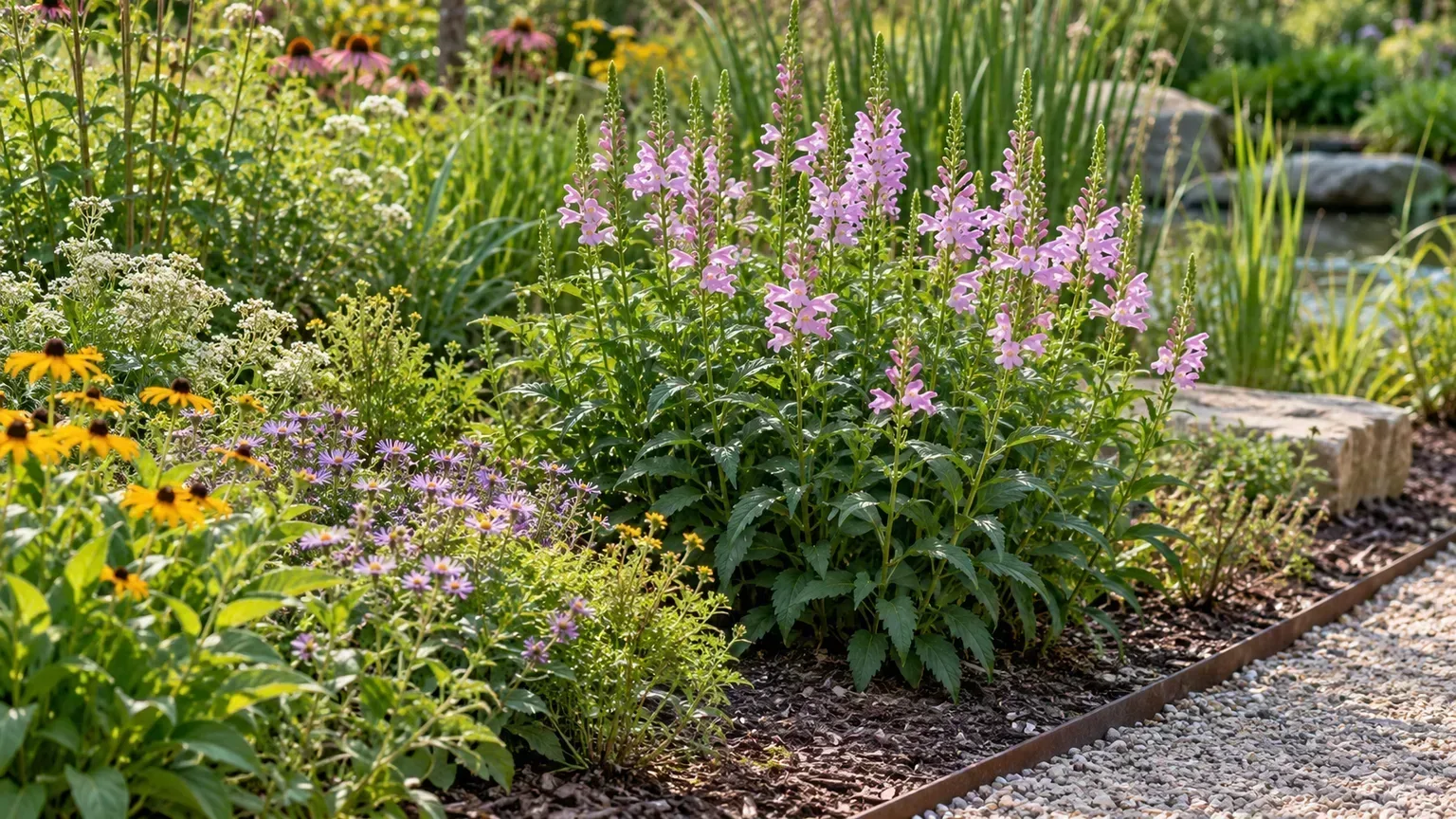
How to identify Physostegia virginiana
The botanical name helps distinguish the plant from other flowers sold under related common names. Physostegia virginiana is a member of Lamiaceae, the mint family. It grows upright, often with several stems from a clump. Look for opposite pairs of lance-shaped leaves with toothed margins, and a square stem that is easiest to feel by gently rolling a young stem between your fingers rather than cutting it. The flower stalk ends in a spike of small tubular, two-lipped flowers.
Pink, lavender, and white are common flower colors. Individual blossoms open progressively from the lower portion of the spike upward, so one stem can carry open flowers, buds, and spent blooms at the same time. The name “obedient” refers to the traditional observation that a flower can be moved to a new position on the spike. This response varies, and a flower may spring back; treat it as a botanical curiosity, not a reliable cut-flower shaping trick. The Royal Horticultural Society profile describes it as an erect, rhizomatous perennial with opposite toothed leaves and terminal flower spikes.
The plant’s natural habitat offers a good guide to garden conditions. It occurs in moist meadows, damp thickets, seeps, and open woodland margins. It can grow in a garden bed that is not a wetland, but a hot, dry position may cause stress, while permanently waterlogged ground can create root problems for many perennials. Think of “moisture-loving” as a preference for consistent soil moisture, not a mandate to keep the roots submerged.
Choose sun, soil, and moisture for sturdy growth
Give the plant plenty of light
Full sun is the most reliable setting for compact stems and abundant flowers. Partial shade is tolerated, and a little afternoon shade can be welcome where summers are especially hot, but heavy shade often leaves tall stems reaching toward light and flowering less freely. If the plant leans, first assess the number of hours of direct sun and whether neighboring shrubs or trees have gradually shaded the bed.
A sunny site does not eliminate flopping if the plant is very tall, planted in rich moist soil, or exposed to wind and heavy rain. Use a discreet ring support before flower spikes become top-heavy, or place the plant among sturdy companions that do not smother it. North Carolina State Extension notes that stems can flop in rich soils, shade, or heat and that taller plants may need staking.
Aim for moist but well-drained soil
Obedient plant grows in average soil and is not known to need a special acidic mix. North Carolina State Extension lists a broad range of soil textures and pH conditions; the RHS similarly lists clay, loam, and sand and accepts acidic, alkaline, or neutral soil. Drainage and moisture matter more than chasing a particular pH number. Do not lime or acidify soil unless a soil test and your wider planting plan call for it.
The species tolerates wet sites and occasional flooding, which helps explain its use in rain gardens. That does not mean every plant should sit in standing water. A rain garden has different elevations and wetness zones: place it where moisture matches the selected plant and the water drains on an appropriate schedule. In an ordinary border, improve structure with organic matter only when needed, and avoid planting into a compacted puddle that stays saturated long after rain.
Plant obedient plant
Plant nursery-grown divisions in spring or early fall when the soil is workable and the weather is not severely hot or dry. Set each plant at the same depth it grew in its pot, firm soil around the root ball, and water it thoroughly. If you are planting the spreading species, mark the clump’s intended boundary or install a suitable barrier before roots fill the bed. Spacing depends on the cultivar and design: allow at least the expected mature width, and give the species room to form a broad clump rather than placing it shoulder-to-shoulder with small perennials.
A practical layout is to put obedient plant toward the rear or center of a larger island bed, with robust neighboring plants around it and an accessible edge for inspection. Avoid tucking it behind a fixed fence or into a bed where runners can disappear into groundcover. Use the plant label for local hardiness guidance; sources commonly place it in zones 3 to 9, but a zone rating cannot account for local humidity, drainage, summer heat, or whether a particular cultivar is offered.
After planting, apply a light mulch layer to reduce moisture swings, keeping it away from the crown. Check moisture every few days during the first several weeks, then lengthen the interval as new growth confirms establishment. Watering frequency depends on rainfall, soil texture, heat, and wind, so use the soil itself to decide rather than a universal weekly schedule.
Control spreading before it crowds neighbors
Obedient plant spreads by underground rhizomes, and it can also produce seed. The clump may look well behaved above ground while new shoots appear a short distance away. Penn State Extension notes that it can spread aggressively in moist sites; the Morton Arboretum profile records both rhizomes and self-seeding. This growth is why it works in a naturalized planting and why it surprises gardeners who expected one tidy clump.
Inspect the perimeter during the growing season, especially after rain and during active growth. Pull small unwanted shoots while the soil is damp, removing the connected root or rhizome as completely as practical. For a larger escape, use a spade to cut around the edge and lift unwanted growth; check again later because small missed sections may resprout. Do not rely on deadheading alone to contain rhizomes, since removing flowers addresses seed, not underground expansion.
If the plant has already mixed with valuable perennials, work in short sections rather than digging the entire bed indiscriminately. Identify the obedient plant’s stems and follow the runner outward before cutting. Once an area is cleared, replant promptly or mulch it so bare soil does not invite weeds. Divide and replant only the healthy sections you want to keep; discard unwanted material where it cannot root again.
Pick a less vigorous cultivar for a small border
‘Miss Manners’ is a white-flowered selection that the Chicago Botanic Garden notes forms a clump instead of taking over neighboring plants. That makes it a better candidate for a more restrained planting, though any plant’s behavior still depends on conditions and should be monitored. White Flower Farm also describes ‘Variegata’ as less vigorous than other Physostegia selections. Check the label carefully: cultivar names, mature dimensions, and availability vary by nursery.
A compact or clump-forming cultivar is not the same as a sterile plant or a maintenance-free guarantee. Leave access around it and inspect for seedlings or rhizomes. If you want a plant that will remain precisely within a narrow edging line, choose another species rather than expecting pruning to stop underground growth.
Water and fertilizer after establishment
Water new plants often enough to keep the root zone from drying while roots establish. Once growth is steady, obedient plant tolerates some dry spells, but it flowers and grows more reliably when soil moisture is reasonably even. During drought, soak the soil around the base instead of giving frequent shallow splashes. Check beneath the mulch with a finger or trowel: if the soil is still moist below the surface, wait; if it is dry through the root zone, water.
Do not interpret the plant’s rain-garden tolerance as a need for daily watering. Sandy soil dries faster than clay, and a newly planted clump needs more attention than an established one. In a container, water whenever the mix begins to dry and ensure excess water drains freely. Keep the potting mix from turning bone dry in hot weather, but do not leave the pot standing in a saucer of water.
Skip routine fertilizer if the plant has healthy foliage and flowers. Rich, fertile conditions can support vigorous growth, and fertilizer will not solve poor light, a crowded root zone, or improper moisture. If growth is weak, first check light, moisture, root competition, and whether the plant is still establishing. If a nutrient issue remains plausible, use a soil test before adding a specific nutrient. Yellow leaves alone are not enough evidence to diagnose a deficiency.
Deadhead, cut flowers, and support stems
For a longer-looking display, remove individual faded spikes after most of their flowers have finished. This tidies the plant and reduces seed production, although it will not stop rhizomes from spreading. If you want seedlings or seed to share, leave a few stems to mature and collect seed when the heads are dry. Flowers open from the bottom upward, so a spike with fresh upper buds can still be worth keeping.
For a vase, cut stems when the lower flowers have opened and the upper buds still show color. Place them in clean water and remove foliage that would sit below the waterline. Stems can be tall, so cut selectively rather than stripping the whole clump if you still want flowers in the garden.
If stems bend, they may remain bent rather than springing upright. Stake tall stems early, before the flower spikes weigh them down, or use a low grow-through support that is hidden by foliage. Give the plant more sun at the next opportunity and avoid overfeeding. [White Flower Farm recommends pinching plants back by about half in late spring when flopping is recurring; this can be a useful trial in a sunny bed, but it changes the plant’s height and may shift the timing of flowers. Try it on part of a clump before applying it to every stem.
Prune and prepare the plant for winter
Obedient plant is herbaceous: aboveground stems die back after the growing season, while the root system survives winter in suitable climates. You can leave stems standing through winter if they add structure or hold seed for wildlife, then cut them down near ground level in late winter or early spring before new growth is crowded. The RHS growing profile recommends cutting old stems back in winter. Use clean pruners and remove diseased foliage rather than leaving it among new shoots.
Fall cleanup is also reasonable when the bed needs tidying, but there is no need to remove healthy stems immediately after flowering. Keep any mulch loose and modest; do not pile a wet, compacted layer over the crown. In colder regions, the plant’s hardiness depends on local conditions and cultivar, but it is generally listed for USDA zones 3 through 9. A container is more exposed to winter temperature swings than a plant in the ground, so choose a hardy cultivar and protect the pot from severe exposure or move it to an unheated sheltered location where it remains cold and dormant.
Divide mature clumps to refresh and contain them
Divide a clump when it has grown beyond its allotted space, become congested, or produced enough new shoots that you want to establish a second planting. North Carolina State Extension recommends spring or fall division and notes that rich, moist sites may need division every year or two to keep the species contained. Do not divide by a rigid calendar if the clump is healthy and still within bounds. The aim is to maintain a manageable footprint and vigorous sections, not to disturb the roots every year.
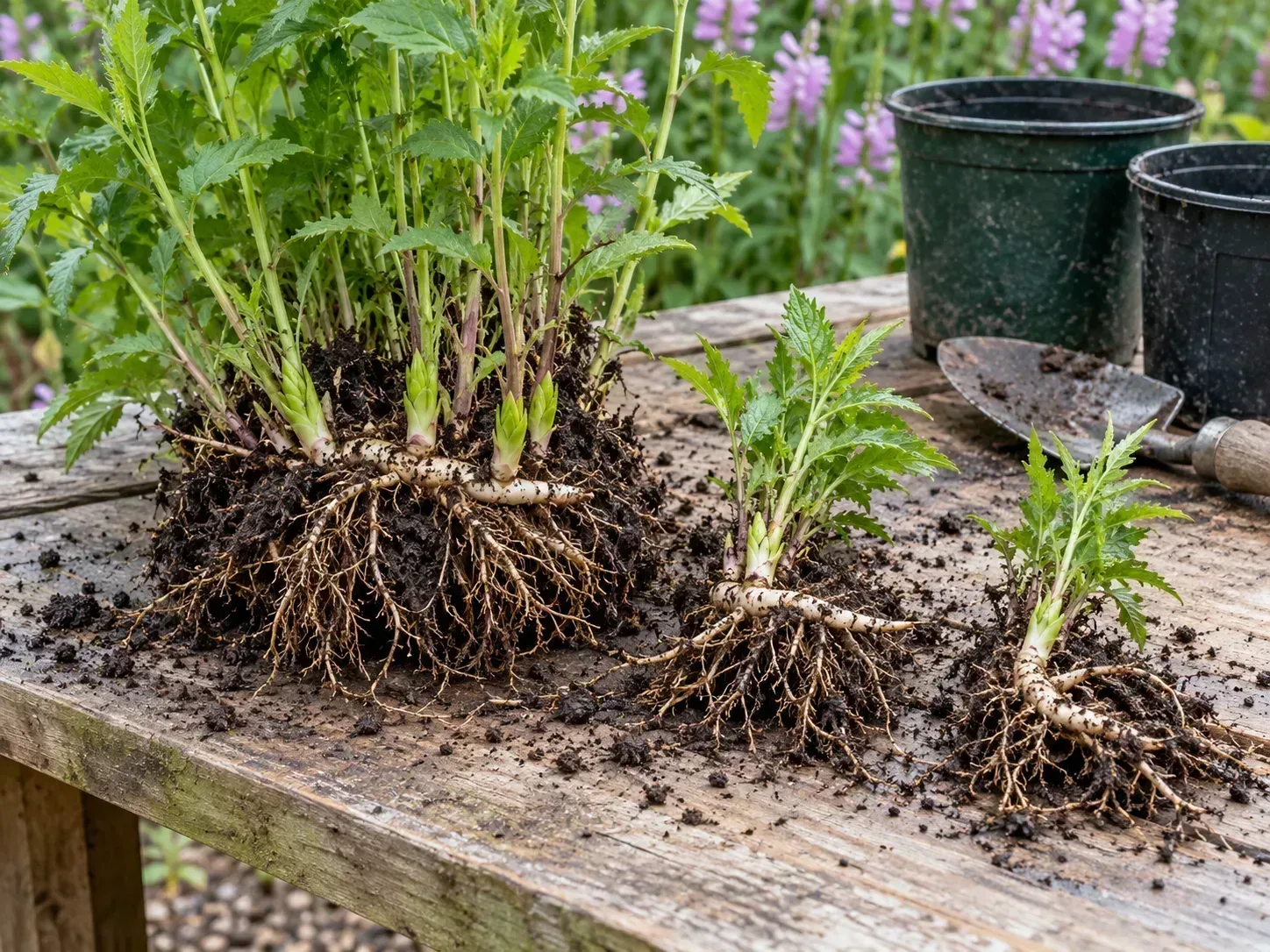
Divide the clump in spring or fall
- Choose a cool day when the soil is moist enough to dig but not waterlogged. For a summer-flowering perennial, early spring before vigorous growth or fall after flowering are practical windows; in regions with harsh winters, spring gives new divisions a longer settling-in period.
- Cut around the section you want to lift with a spade or garden fork, keeping the tool just outside the crown to preserve as many roots as possible. If containment is the goal, dig the edge you need to remove rather than lifting the whole plant.
- Shake or brush away loose soil until you can see the crown, roots, and rhizomes. Separate the clump into pieces that each have live buds or shoots and a healthy root section. Discard damaged or mushy material and do not leave unwanted pieces in the bed.
- Replant the divisions promptly at their former depth, spacing them for the cultivar’s mature size. Water thoroughly and keep the soil evenly moist while they reestablish. Mark the boundary and inspect for stray shoots through the next growing season.
The Royal Horticultural Society’s division guide advises dividing summer-flowering perennials in spring or fall while they are not in active growth; its propagation guidance recommends that each division have a shoot and its own root system. If a clump is too large to lift comfortably, divide it in place in sections over more than one season.
Grow obedient plant from seed
Seed is useful when you want several plants for a large naturalized area or want to observe the plant from its early stages. It is slower and less predictable than buying a named cultivar, and seedlings may not keep the traits of a cultivar selected for flower color or clumping habit. For a named selection, division is the more reliable way to retain the parent plant’s characteristics.
Let a few flower spikes dry on the plant if you want seed. Collect the dry heads, separate the small seeds, and store them in a labeled paper envelope in a cool, dry place until sowing. A simple approach is to sow outdoors in fall so natural winter conditions provide the cold period. For spring sowing, the Old Farmer’s Almanac recommends cold stratifying seed in a refrigerator for about 60 days, then surface sowing it in moist seed-starting mix. Follow the seed supplier’s directions if they differ, because seed lots and cultivars can vary.
Keep the mix lightly moist, not saturated, and give seedlings bright light after they emerge. Germination and growth take time; do not assume a tray has failed after only a few days. Pot seedlings on when they are large enough to handle, then harden them off before planting outside after frost risk has passed. Label each seedling batch and allow room for mature plants to spread. If you do not want volunteers, deadhead before seed heads dry and scatter.
Use containers and rain gardens selectively
A large container can make inspection and removal of new shoots easier, but it is not a zero-maintenance containment system. Choose a durable pot with drainage holes and enough depth and width for a vigorous perennial; keep it from drying out in summer and check the drainage openings for roots. If you set a pot into the ground, rhizomes may eventually escape through drainage holes, so inspect the pot and surrounding soil. A container on a patio or hard surface makes that escape less likely, but winter roots are more exposed to cold than roots in the earth.
A rain garden can be a good fit because the species tolerates moist soil and occasional flooding, and its late-season flowers support visiting pollinators. Site it according to how long water remains after storms, not just the fact that the planting area is called a rain garden. Avoid planting a species that is not regionally appropriate simply because it is sold as a native perennial. The Penn State Extension rain-garden profile lists obedient plant for moist and saturated conditions but also notes its aggressive spread in moist sites. Give it room, inspect edges, and combine it with plants strong enough to share the space.
Troubleshoot pests, spots, yellow leaves, and flop
A few aphids may gather on soft tips or flower stems. Inspect new growth and, if the colony is small, dislodge insects with a firm stream of water. Avoid spraying open flowers or using a broad-spectrum pesticide around pollinators. Slugs and snails may feed on young growth in damp gardens; look for irregular holes and check under nearby debris before treating the entire bed.
Leaf spots have several possible causes and should be diagnosed by pattern, not by color alone. North Carolina State Extension notes susceptibility to blackspot fungal disease, while the RHS profile lists fungal and bacterial rots among possible diseases. Remove a few badly affected leaves, water at soil level where practical, and improve air circulation by thinning crowded stems. Do not compost diseased leaves unless your local composting system reaches reliable heat. If spotting spreads rapidly or stems collapse, ask a local extension office to help identify the problem before applying a fungicide.
Yellow lower leaves may simply be older foliage or a response to drought; Illinois Wildflowers notes that lower leaves can yellow and fall during drought. Widespread yellowing in wet soil, especially with soft or dark roots, suggests a drainage problem rather than a reason to add fertilizer. Check the soil several inches down, look for recent weather extremes, and see whether the yellowing is confined to older leaves or affects new growth. Correct the growing condition first and observe new growth before deciding that a nutrient is missing.
If flower stems flop, compare the plant’s light, height, soil fertility, and exposure. More sun, less excessive fertility, early staking, or the late-spring pinching approach described by White Flower Farm may help. If blooms are sparse, consider whether the plant is shaded, newly planted, or not yet at its natural bloom season; do not feed it heavily in response to one season with fewer flowers. A young clump may take time to establish, and flowering dates shift with region and weather.
Follow a simple seasonal care calendar
- Spring: Remove old stems before new shoots are crowded. Divide or plant nursery stock while the soil is workable. Mark the intended edge, replenish a light mulch layer if needed, and set supports before stems grow tall.
- Late spring and early summer: Check light and soil moisture as growth accelerates. Pull stray shoots while small. If the clump habitually flops, test a light pinch on part of the planting or install supports before the flower spikes form.
- Mid- to late summer: Watch for drought stress in dry weather, inspect for aphids and leaf spots, and enjoy the flower spikes as they open from bottom to top. Water deeply when the root zone dries rather than following a fixed weekly schedule.
- After flowering and in fall: Divide overgrown clumps after flowering if your climate leaves time for roots to settle. Deadhead if you do not want seed, or leave selected heads for collection. Sow seed outdoors in fall if you want natural cold exposure.
- Winter: Leave sound stems for structure if desired, then cut them down in winter or early spring. In a pot, shelter the root ball from severe temperature swings while keeping the plant dormant.
Use these as seasonal checkpoints, not a universal date list. A warm southern garden, a northern garden with an early freeze, and a wet coastal site will reach the same stages at different times.
Conclusion: match the plant to its space
Obedient plant is at its best when the garden can accommodate its upright late-summer flowers and rhizomatous growth. Give it sun to part shade, evenly moist but draining soil, and room—or select a clump-forming cultivar when the border is smaller. Water new plants while they establish, skip routine fertilizer, and manage spread with early edge checks and timely division. A little planning before planting prevents most of the work that follows.