How to Grow and Care for Nippon Daisies Year-Round
Grow Nippon daisies in sun and well-drained soil, prune for sturdy stems, divide mature clumps, and solve common bloom, container, and winter-care problems.
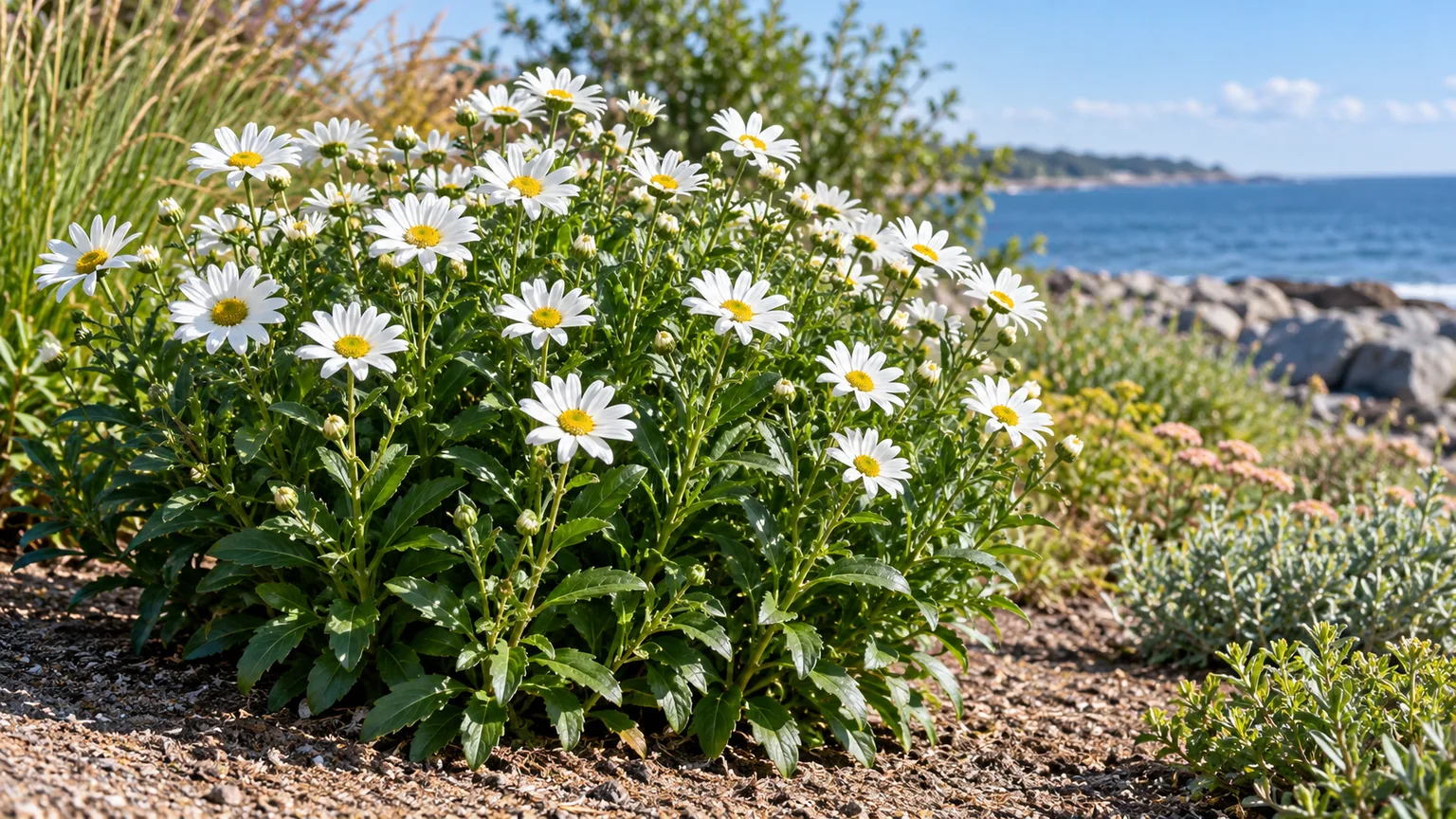
Nippon daisies are late-season perennials for a sunny spot where water drains freely. Give a new plant regular moisture while it roots in; after establishment, it handles dry spells better than soggy soil. A light spring cleanup keeps the clump presentable, while repeated pinching is an optional way to shorten tall stems if you can stop before flower buds form.
The most common disappointment is not a complicated disease. It is planting this 1.5- to 3-foot plant in shade or wet ground, feeding it as if more fertilizer means more flowers, or pruning it late enough to remove the buds. Once you understand those trade-offs, this plant is a straightforward way to extend a perennial border into fall.
What a Nippon Daisy Looks Like Through the Seasons
The botanical name is Nipponanthemum nipponicum. You may see the same plant sold as Nippon daisy or Montauk daisy; older references also use Chrysanthemum nipponicum or Leucanthemum nipponicum. It belongs to the aster family, Asteraceae, and comes from coastal Japan. The Royal Horticultural Society’s plant profile lists those older names as synonyms, while the North Carolina Extension Gardener Plant Toolbox profile identifies Nippon and Montauk daisies as common names.
In spring and summer, the plant builds a dense mound of thick, glossy, oblong leaves with toothed edges. The stems rise from a perennial crown, and a mature clump often reaches about 18 to 36 inches tall and wide. The Missouri Botanical Garden Plant Finder describes 2- to 3-inch flower heads with white rays and green centers; the centers can look more yellow as the flowers mature.
The flowers open late in the season, often in September and October in the St. Louis garden where the Missouri Botanical Garden records its bloom period. Your calendar may shift earlier in a warm climate or later after a cool spring, so use local bud formation and frost timing rather than expecting an exact date. Many garden references place Nippon daisies in USDA Zones 5 to 9, but a zone range describes winter cold tolerance, not the plant’s ability to live in waterlogged soil.
The name “Montauk” reflects its association with the Long Island community, while “Nippon” points back to Japan. The plant has naturalized in parts of the northeastern United States, but its native range is Japanese coastal habitat; a familiar place name should not be mistaken for proof that it is native across North America. It is also commonly used as a fall garden perennial and cut flower because its bright daisy form appears after many summer flowers have faded.
Choose a Site That Stays Sunny and Dry
Site choice has a bigger effect on the plant’s shape and flowering than a complicated feeding plan. Look for an open border, a raised bed, a slope, or a rock-garden edge where rainwater moves away instead of pooling around the crown. Leave space for the plant to reach its mature width; a crowded clump stays damp longer and is harder to keep upright.
Light: Favor Open Sun, With Relief in Extreme Heat
Aim for at least six hours of direct sun a day. NC State’s plant profile classifies Nippon daisy as a full-sun plant, while the Missouri Botanical Garden notes that it tolerates light shade in hot climates. That exception is useful in places with intense afternoon heat, but it does not mean a north-facing or deeply shaded bed will produce a compact plant with a reliable fall display.
Check the sun that actually reaches the plant during the growing season. A tree that leafs out after spring may shade a bed that looked bright in March, and new construction or a growing hedge can change exposure over time. If an established clump has stopped blooming while leaves remain lush, record the hours of direct sun before reaching for fertilizer.
Soil: Fix Drainage Before Adding Amendments
Nippon daisies tolerate ordinary garden soil, including sandy or loamy ground, if excess water can drain away. Their coastal origin is a clue to the conditions they accept: NC State notes moderate salt tolerance and use in drought-tolerant coastal plantings, and the Missouri Botanical Garden recommends average, dry, well-drained soil. Neither source says that the plant needs a special acidic mix or a highly fertile bed.
Test the site after steady rain. If water sits there into the next day, plant on a raised mound or in a raised bed, or choose a different location. Do not put a layer of gravel in the bottom of a planting hole as a substitute for fixing the surrounding soil; water can still collect at the boundary between the amended hole and dense soil around it.
Work a modest amount of finished compost into poor soil to improve its structure, not to turn the bed into a rich, constantly moist planting mix. In heavy clay, improve a broad area or raise the planting surface rather than creating a small pocket of loose soil that can become a bathtub. The goal is dependable drainage with enough organic matter to support roots, not a specific pH number.
Plant and Space Nippon Daisies
Plant nursery-grown clumps in spring after the soil is workable or in early fall while there is still time for roots to settle before the ground freezes. Spring planting gives the plant a full growing season to establish; fall planting can work where autumn remains mild, but do not wait until the clump is pushing new growth into a hard freeze. The Missouri Botanical Garden and NC State both describe it as a perennial suited to full-sun borders and well-drained sites.
Water the nursery pot before planting so the root ball is evenly moist. Dig a hole as deep as the pot and about twice as wide, loosen circling roots gently, and set the crown level with the surrounding soil rather than burying the stems. Backfill, firm the soil lightly, and water slowly to settle air pockets; if the soil sinks, add a little more around the sides without covering the crown. Harvest to Table’s Nippon daisy guide also recommends spring or fall planting and spacing plants about 3 feet apart.
Give plants about 3 feet between centers when you want each mature mound to keep its own outline. You can plant closer for a faster visual grouping, but expect more competition, less air movement, and a greater chance that lower stems disappear behind neighboring growth. A small perennial or ornamental grass in front can screen the naturally bare lower stems later in the season, a planting use noted by the Missouri Botanical Garden.
Water by Establishment Stage, Not by the Calendar
For the first growing season, water deeply when the upper few inches of soil begin to dry. The aim is to moisten the root ball and the soil around it, then let excess water drain; frequent shallow sprinkling encourages surface roots and keeps the crown wet without helping the plant establish a broad root system.
Once established, Nippon daisies are drought tolerant and often need supplemental water only during a long dry spell. Check the soil before watering rather than responding to a hot afternoon wilt immediately: leaves can droop briefly in heat even when the root zone still holds moisture. If the soil is dry several inches down and the plant remains limp in the morning, give it a thorough soak and reassess.
Reduce watering when cool autumn weather arrives. A mature plant in naturally dry soil may need little or no irrigation when rainfall is regular, while a container dries more quickly because it has less soil volume. Persistent wetness is a stronger warning than a missed watering; yellowing throughout the plant, soft stems at the base, and a sour smell around the roots call for a drainage check before another drink.
Prune for Compact Growth Without Losing Fall Buds
Nippon daisies do not need a formal haircut every month. A useful default is to remove dead stems in late winter or early spring, then make one modest shaping cut as fresh growth lengthens if the clump needs a shorter, fuller outline. The Missouri Botanical Garden’s guidance says new growth may be cut back slightly in spring to maintain compactness and encourage a bushier form.
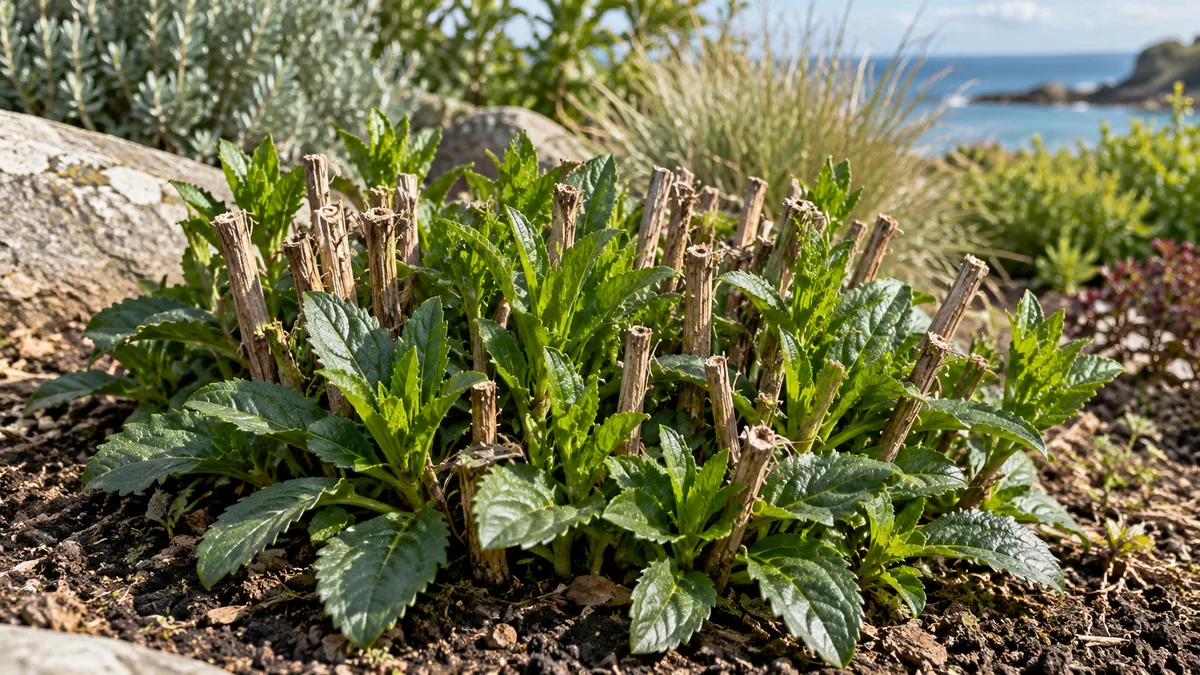
Make clean cuts just above a set of leaves or a healthy outward-facing shoot, and avoid cutting into the crown. Use clean, sharp pruners so stems are not crushed. If the previous season’s stems remain upright and look tidy, you can leave them through winter and cut them back after the worst cold has passed; if they are broken or diseased, remove them sooner and dispose of the affected material.
Choose Light Spring Shaping or an Early Pinching Routine
There is more than one way to manage height, and the right choice depends on your climate, the plant’s vigor, and whether you value a low mound or early flowers. Some horticultural guides recommend cutting plants to about 6 inches in early spring and pruning again in midsummer; others recommend pinching new tips through early summer. Those are more intensive schedules, not a requirement for every garden. HGTV’s Montauk daisy guide and Epic Gardening’s care article describe those stronger options.
For a first-year plant or a short growing season, begin with light spring shaping and watch how the stems hold up. If the clump becomes tall and loose, pinch the growing tips once or twice while shoots are still leafy and well before flower buds are visible. Pinching encourages side branching but delays flowering; stop early enough that the plant has time to form buds and mature them before local frost.
Repeated shearing can produce a compact mound, but every cut removes growing tips that may otherwise flower. If you choose the stronger spring cutback, avoid stacking it with repeated late-summer pruning, heavy feeding, or a division in the same season. Change one practice at a time so you can see which adjustment improves stem strength without pushing bloom past your frost window.
Fertilize Sparingly and Deadhead for Tidiness
A healthy Nippon daisy in ordinary soil usually does not need a routine fertilizer schedule. Too much available nitrogen can push soft leafy growth that is more likely to lean, while the flowers do not need a special “bloom booster” to appear. If the bed is genuinely poor, topdress lightly with mature compost in spring; if growth is already lush and floppy, skip fertilizer and check sun, drainage, and pruning history first.
Deadheading is optional. Snip fading flower heads back to a leaf or branching point when you want a neater plant or to discourage seed formation. The Missouri Botanical Garden notes that removing spent heads can promote additional bloom, but deadheading cannot make an exhausted plant flower indefinitely or compensate for shade and late pruning.
If you leave some flowers standing, the seed heads can remain as winter texture until you tidy the bed in late winter. Removing every faded flower is a design choice, not a requirement for the plant’s survival. Clean up diseased or badly damaged stems, but healthy old stems are not a reason to disturb the root crown before cold weather.
Know When to Expect the Flowers
Nippon daisies are valued for late-summer and fall flowers, commonly September into October in temperate regions. The Missouri Botanical Garden’s profile records September–October bloom in its local garden, while NC State labels it a late-summer and fall bloomer. Heat, latitude, spring growth, and the timing of any pinching shift the date.
A plant that makes healthy foliage but no buds is giving you a useful clue. First check whether it receives six or more hours of sun and whether you pinched it late; then consider whether excess fertilizer encouraged leaves instead of sturdy flowering stems. Do not add phosphorus automatically: a soil test is a better way to learn whether the bed actually lacks a nutrient.
The flowers are simple, white rays around a yellow-green center and usually measure about 2 to 3 inches across. They show best when the plant is not crowded behind taller neighbors. The stems can be tall and the lower leaves may thin as flowering begins, so plan the surrounding border to hide the base without shading the upper half of the clump.
Divide Mature Clumps to Keep Them Vigorous
Division is the most dependable way to make another plant and renew an aging clump. The Missouri Botanical Garden and NC State recommend dividing every two to three years to maintain vigor, but use the plant’s condition as the trigger: a bare or woody center, a ring of growth around the edge, or fewer flowering stems can indicate that the clump is ready. Divide healthy plants during spring growth, when you can see where viable shoots emerge.
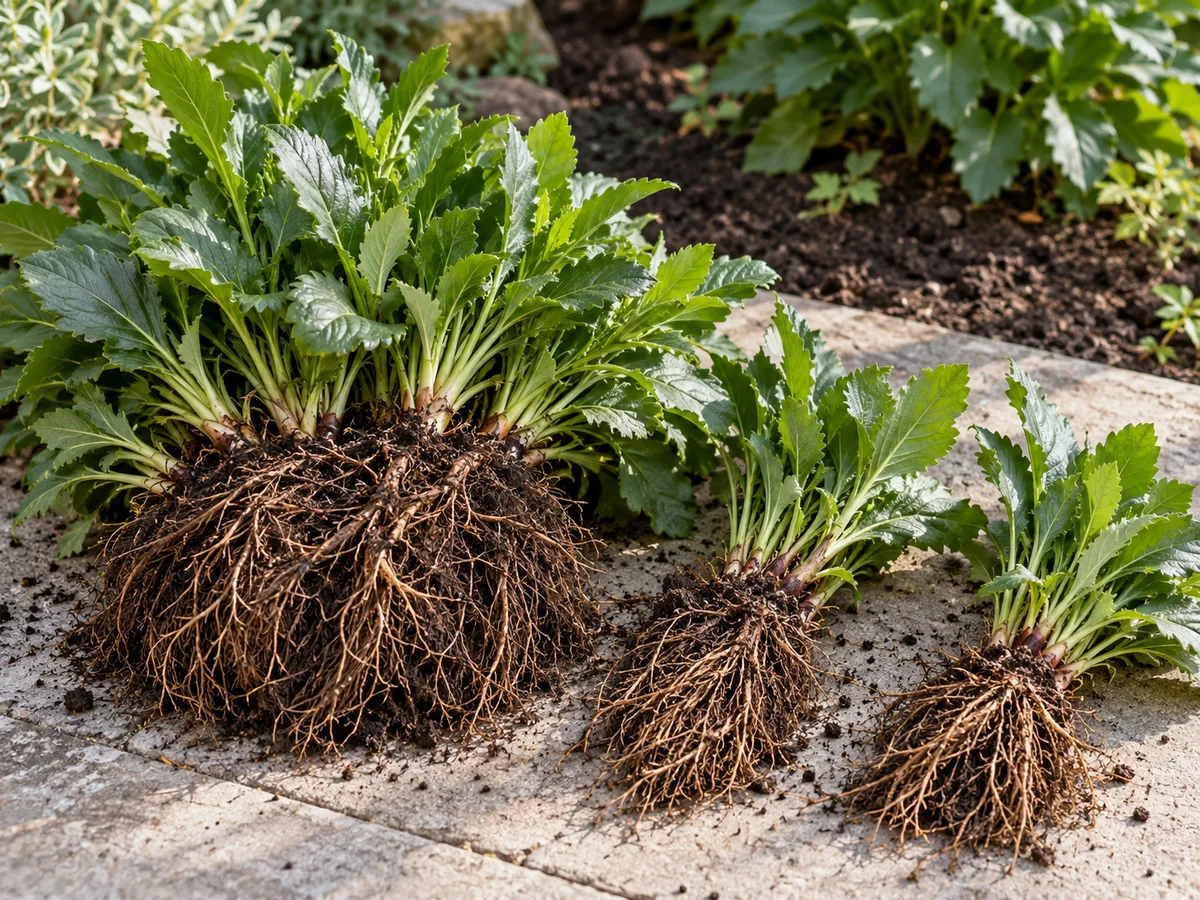
Water the plant several hours before lifting so the root ball is less brittle. Use a spade or garden fork to loosen soil around the outer edge, lift the clump with as much root as you can manage, and shake or wash away enough soil to see the crowns. Pull apart small clumps by hand or cut a dense root mass with a clean spade or knife.
Keep divisions that have several healthy shoots or buds and a firm, substantial root section. Discard the dead, mushy, or fully woody middle rather than planting a piece that has roots but no living crown. Replant the divisions promptly at their original depth, water them in, and keep the soil evenly moist while new roots establish; a division may flower less the first season as it repairs roots.
If you want to make plants from cuttings, take nonflowering shoots in spring or early summer and root them in a clean, free-draining propagation medium. That method takes more monitoring and may be less dependable than division for a home gardener. Division remains the simplest choice when the goal is a healthy, mature plant that looks like the parent.
Grow Nippon Daisies in Containers
A container suits a patio or a garden with unsuitable native soil, but it does not remove the plant’s need for sun and drainage. Choose a heavy pot roughly 24 inches wide or larger for a long-term clump, with several open drainage holes and enough depth for a substantial root ball. Smaller pots can hold a young plant temporarily, but the soil dries faster and a 2- to 3-foot flowering mound may become top-heavy.
Fill the pot with a quality outdoor potting mix that drains freely. Do not put gravel or broken pottery in the bottom; those materials do not create better drainage through the mix and reduce the volume available to roots. Place the crown at the same depth it had in the nursery pot, water until moisture exits the holes, and empty any saucer so the pot is not left standing in water.
Check container moisture more often than bed moisture, especially in windy weather and during flowering. Water thoroughly when the top layer is dry, then wait for the mix to drain before watering again. Feed only if container growth is weak and the potting mix is depleted; use a label-directed, modest rate rather than repeatedly adding fertilizer.
A crowded container clump will eventually need dividing or a larger pot. If roots circle densely, water runs through without wetting the mix, or the center becomes congested, lift and divide in spring. For a one-season fall display, a nursery plant can be used in a large decorative container, but a perennial pot still needs winter protection.
Protect the Roots Through Winter
In the ground, Nippon daisies die back or lose their foliage as winter approaches. The established crown is generally hardy in Zones 5 to 9 when planted in soil that drains well. Do not mistake normal frost damage for a reason to dig up a sound root system; remove dead stems after the coldest weather or wait until new spring growth shows where the crown is alive.
Container roots are more exposed to cold than roots in the ground. In a cold-winter region, move the pot against a sheltered wall or into an unheated garage after dormancy, or insulate the pot with a protective wrap and mulch around the container. Keep the soil from drying into a hard block, but do not water so often that the roots stay saturated.
Avoid bringing a dormant outdoor perennial into a warm living room as a houseplant. Warmth can disrupt dormancy and encourage weak growth when outdoor light is inadequate. Return a sheltered pot outside gradually as temperatures moderate, and resume spring watering when the mix begins to dry and new growth appears.
Troubleshoot Changes Before Treating Them
Start with the pattern and timing of the symptom. A few lower leaves changing color as the plant prepares to bloom is different from a whole clump yellowing in spring, and one leaning stem is different from a plant that has split apart at the base. Check sun exposure and how quickly the soil drains before changing the fertilizer or applying a product.
Lower Leaves Yellow or Drop
Lower foliage may yellow, brown, and fall away as the plant matures and prepares for its fall flowers. The Missouri Botanical Garden notes that Nippon daisies tend to lose their lower leaves and suggests placing smaller perennials in front to screen the stems. If the upper leaves remain firm and the crown is healthy, this seasonal thinning is often a display issue rather than a crisis.
If yellowing affects leaves throughout the clump, inspect the soil and stem bases. Persistently damp soil, soft or blackened stems, or a plant that declines after heavy rain points toward root or stem stress; improve drainage and remove collapsed tissue. A drought-stressed plant may also yellow, but the soil will be dry rather than waterlogged, so check before watering.
Stems Lean or the Center Opens
Flopping often reflects a mismatch between growth and support. Shade, rich soil, excess fertilizer, crowding, and missed early-season shaping can all contribute to tall, weak stems. Improve light and drainage first; then use a modest spring pinch in the following season rather than trying to rescue a plant with severe cuts after buds have formed.
A mature center that has become woody or hollow may need division rather than another haircut. Divide the healthy outer sections, discard dead material, and replant where air can move around the clump. Temporary staking can protect flowers after a storm, but it will not correct the underlying conditions that caused the stems to lean.
Prevent Disease With Airflow and Careful Watering
Serious pest and disease problems are uncommon, but persistently wet soil and crowded foliage can encourage leaf spots or stem rot. The Missouri Botanical Garden’s plant profile lists leaf spots, stem rots, and leaf miners as infrequent problems. That is a reason to monitor the plant, not a reason to spray on a schedule.
Water the soil rather than wetting foliage late in the day, remove fallen diseased leaves, and thin crowded growth so air can move through the plant. If spots spread quickly or stems collapse, remove the affected material and reassess drainage; avoid composting visibly diseased debris. A pesticide or fungicide is not a substitute for correcting persistent wetness, and any product used should be labeled for the exact plant and problem.
Aphids or mites can occasionally appear on stressed plants, but identify the pest before choosing a control. A close inspection of the undersides of leaves and new shoots can separate insect damage from ordinary seasonal yellowing. For a small, localized problem, begin with physical removal and better growing conditions before considering a labeled treatment.
Use the Late Flowers in a Border or Vase
Nippon daisies work near the middle or back of a sunny border, where their fall flowers can rise above lower front plants. The Missouri Botanical Garden suggests planting smaller perennials in front because lower stems can become bare. Choose companions that share the same sun and drainage needs, and leave enough room that they do not shade or crowd the daisy mound.
The plant is also used as a cut flower, and its stems can last well in arrangements. Cut a few flowers when they are fully open and place them in clean water; test one stem indoors before harvesting a large bunch because the plant can have a noticeable musky odor. Keep enough flowers on the clump for a visible display and pollinators rather than stripping the plant in one cut.
Nippon daisies can tolerate dry conditions after establishment and moderate salt exposure, which makes them useful in some coastal or low-water borders. They are not a universal solution for every beach garden: salt spray, wind, and drainage vary by site, and the plant still needs adequate sun and a stable root zone. Treat those tolerances as advantages at a suitable site, not permission to ignore local conditions.
Conclusion
For dependable Nippon daisy care, start with a sunny, fast-draining site and water regularly only while new roots establish. After that, keep feeding modest, use a light spring trim as the default, and reserve repeated pinching for vigorous plants that have enough season left to bloom. Divide crowded clumps every few years, and protect container roots where winters are severe.
A little lower-leaf loss in late summer can be normal. When the whole plant yellows, rots, flops, or fails to bud, check water, light, crowding, and pruning timing in that order before adding fertilizer or treatment. Those simple checks let the plant do what it does best: carry fresh white flowers into the quieter weeks of the garden year.



