How to Grow and Care for Manjula Pothos Successfully
Grow Manjula pothos with practical advice on filtered light, watering by dry-down, pot size, pruning, propagation, and keeping pets safe for healthy growth.
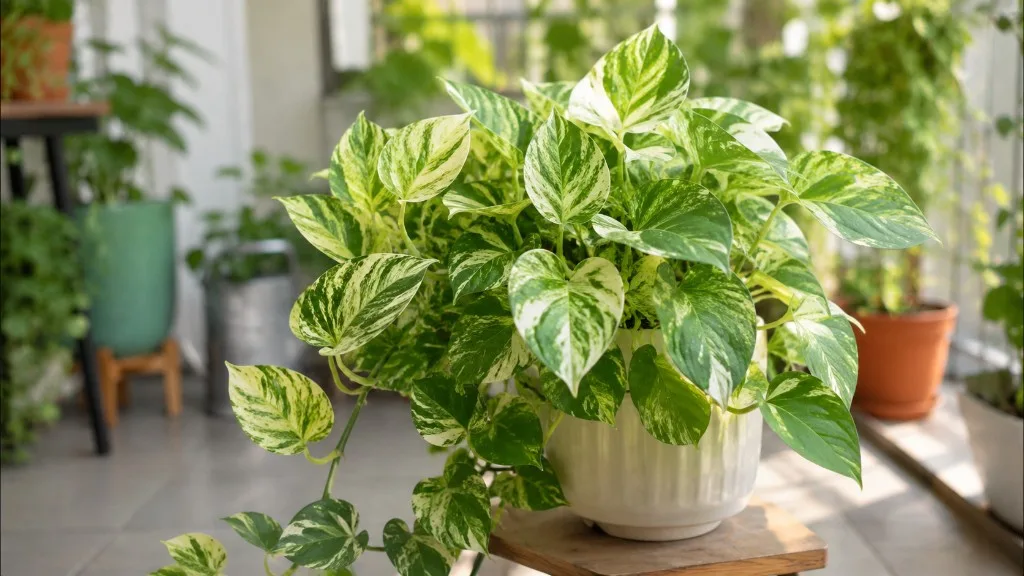
Manjula Pothos is a foliage plant for people who want the pattern more than the speed. Its broad, softly wavy leaves carry irregular cream, white, and green patches, while its compact growth makes a young plant look full before its stems begin to trail. Give it enough filtered light to produce patterned new leaves, then let the potting mix—not a calendar—tell you when to water.
The main tradeoff is simple: the pale leaves are the feature, but they have less green tissue than an all-green pothos. A dim corner can keep Manjula alive while gradually producing smaller, greener growth; pushing it into harsh sun to compensate can scorch the cream areas. A good care routine avoids both extremes and accepts a slower pace than Golden Pothos.
This guide starts with what distinguishes the cultivar, then explains the practical choices that matter most: placement, watering, pot size, shaping, and how to interpret changes in new growth. Those checks are more useful than following a fixed weekly schedule that may not fit your room.
Start with plant identity, not the care label
Manjula is a variegated cultivar of pothos, generally identified botanically as Epipremnum aureum ‘Manjula’. Its most noticeable traits are broad heart-shaped leaves, gently undulating edges, and irregular marbling or blotches rather than a uniform stripe pattern. Individual leaves can differ substantially: one may be mostly green with a cream splash, while the next carries a larger pale field. That variation is part of the plant’s appearance, not proof that it is reverting.
The cultivar’s growth habit is as useful to recognize as its color. A young plant often forms a compact mound with short gaps between leaves; as stems lengthen, they become semi-trailing and can spill over a shelf or basket. A plant patent record for the selection HANSOTI14 describes compact, mounding-to-trailing growth, short internodes, broad leaves, and marbled green and yellow-green variegation. Its measurements came from greenhouse-grown plants, so use that record to understand the trait combination—not to predict the exact size or pace of a houseplant in your home.
That naturally restrained growth can be mistaken for a problem. If the leaves are firm, the stems are not collapsing, and the plant produces occasional healthy new leaves, slow extension is not automatically a signal to fertilize or repot. Manjula is a decorative cultivar, not a fast coverage vine; trying to force rapid length with extra fertilizer or frequent watering can create weak growth and stressed roots without improving its pattern.
Tell Manjula apart from nearby pothos cultivars
Retail labels and photos can blur the differences among variegated pothos. Compare several mature leaves and the overall habit rather than judging from one small cutting: juvenile leaves are smaller, and low light can reduce the contrast that makes cultivars easy to identify. North Carolina State Extension describes several common pothos cultivars, while the plant patent record compares HANSOTI14 with N’Joy and Pearls and Jade on foliage size, shape, and habit.
| Cultivar | Useful visual clue | Typical design tradeoff |
|---|---|---|
| Manjula | Broad, softly wavy leaves with patchy cream, white, and green marbling | Sculptural foliage and a slower, fuller start |
| Marble Queen | Pointed heart-shaped leaves with more even white-and-green marbling | Strong contrast, but often a more trailing look |
| N’Joy | Smaller leaves with clearer blocks of green and cream or white | Neat, compact presentation; leaf markings can look sharply divided |
| Pearls and Jade | Smaller leaves with irregular pale areas and green flecks | Fine detail at close range, less broad leaf surface |
| Golden Pothos | Green leaves with yellow or gold variegation | Faster, more forgiving trailing growth, but a different color palette |
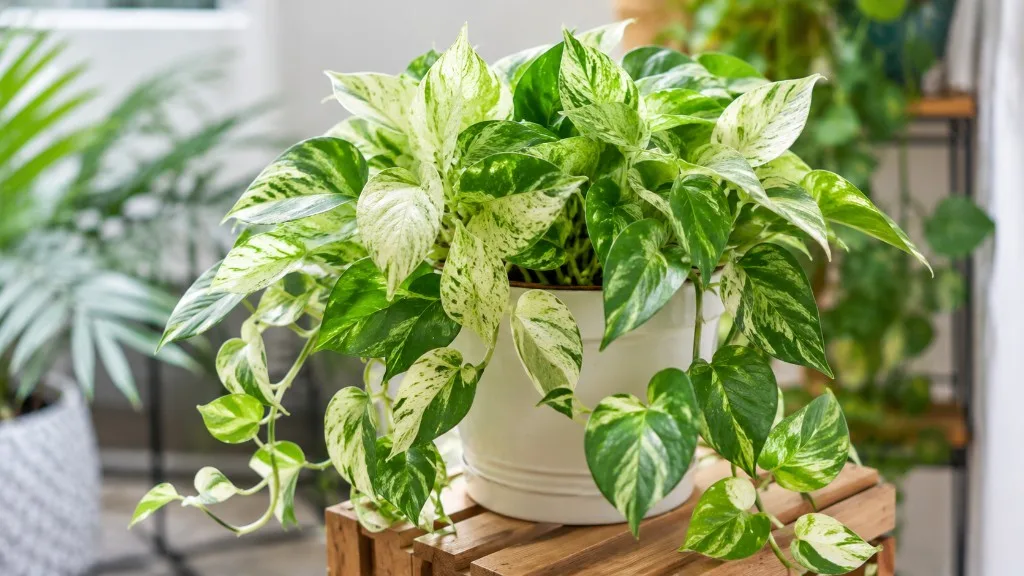
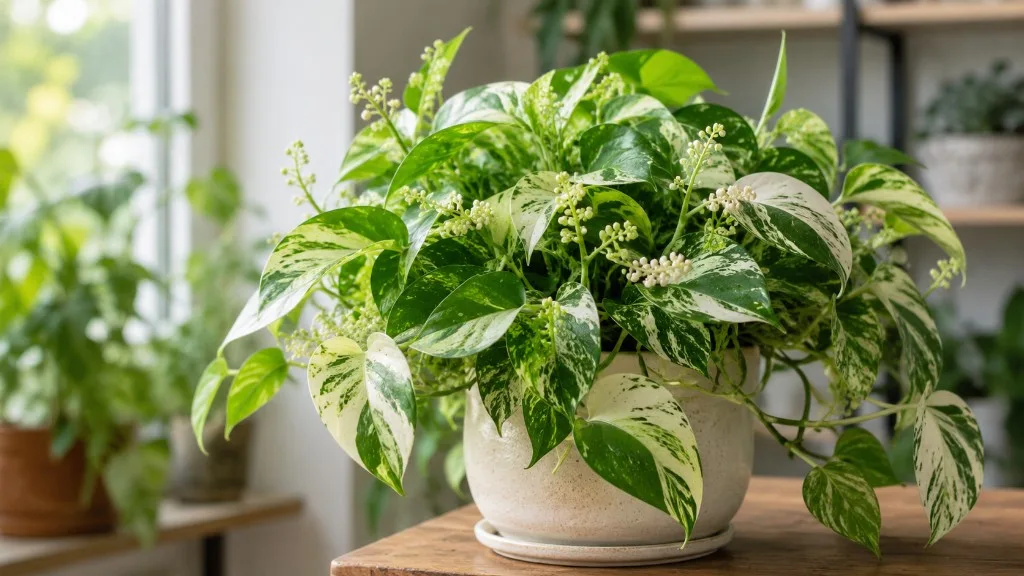
Do not use a care label alone to diagnose a plant. Some retailers group several white-variegated selections under broad labels, and the intensity of variegation shifts with light. If the leaf shape, margin, and growth habit consistently disagree with the tag, treat the plant as an unidentified variegated pothos until you can compare it with a reliable cultivar reference.
Place it where light supports its pattern
Bright, indirect light is the best starting point for Manjula. An east-facing window often gives gentle morning light; a bright south- or west-facing room can work when the pot sits back from the glass or the sun is filtered by a sheer curtain. North Carolina State Extension notes that pothos tolerates low light but may lose variegation, and the Royal Horticultural Society recommends bright light while avoiding direct sun. Manjula’s large pale patches make that balance especially visible.
A dim room does not have to kill the plant, but it changes what you are asking it to do. Growth slows, new leaves may be smaller and greener, and a pot that used to dry in a week may stay damp longer because the plant is using less water. If your priority is a patterned Manjula, move it gradually toward a brighter window rather than leaving it in a dark corner simply because pothos is often called a low-light plant.
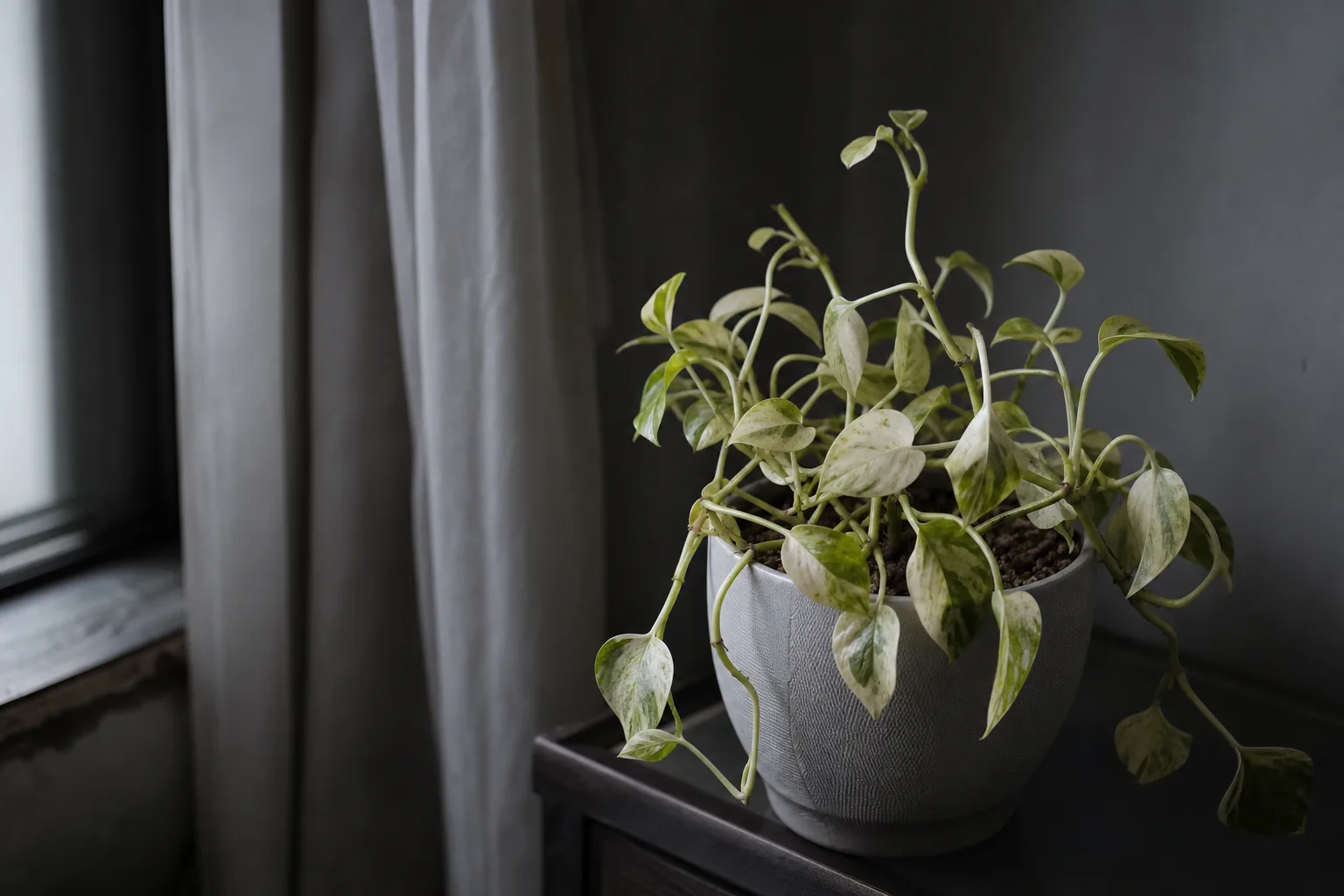
Watch for direct sun on the leaves as the seasons change. Gentle morning sun may be tolerated after a gradual adjustment, but hot afternoon sun through glass can bleach or brown the cream areas. Those damaged sections will not turn green again; move the plant out of the beam and wait for healthy new leaves instead of pruning every leaf with a small mark.
To compare a location over time, take a photo of the newest leaves when you move the plant, then look at the next two or three leaves as they open. Consistently smaller, greener leaves and longer gaps between them suggest the plant would benefit from more usable light. If the exposed side develops pale, dry patches, reduce the direct sun before increasing exposure elsewhere.
Water only after checking the root zone
Water Manjula when the upper layer of potting mix has dried and the pot feels lighter than it did just after watering. In a small nursery pot, feel roughly the top inch or two; in a deeper pot, check more than just the surface so you do not mistake a dry crust for a dry root zone. Penn State Extension and the RHS both advise letting pothos mix approach dryness and warn that prolonged wetness can damage roots.
When the plant is ready, water the whole root ball until excess runs from the drainage holes, then empty the saucer or cachepot. A small splash every few days wets only part of the mix and makes it harder to tell whether the center is actually dry. If water races down the pot wall but the root ball remains dry, soak the pot slowly in several passes and confirm that the mix re-wets rather than repels water.
Avoid copying the interval from another pothos, even if it sits nearby. Light, pot diameter, pot material, root density, room temperature, and mix texture all change the dry-down. Manjula’s slower, compact growth can mean lower water use than a vigorous Golden vine in otherwise similar conditions, but that is only a reason to check more carefully—not a fixed rule that Manjula always needs less water.
A simple routine is to check the plant, not to water it: touch the mix, lift the pot, and look at the leaves together. A lightweight pot with dry mix and limp leaves supports watering; a heavy pot with damp mix and drooping leaves points away from thirst. Wait and investigate if the signs disagree. Extra water cannot repair roots that are already oxygen-starved.
Build an airy mix and choose a pot that fits
Use a quality houseplant potting mix that holds some moisture but drains freely. A dense, fine mix can remain wet around a slow-growing root system, especially in a dim room or oversized pot. If your current mix compacts or stays wet for many days, blend it with a coarse component such as perlite, pumice, or fine orchid bark so water can drain and air can return to the root zone.
The pot needs unobstructed drainage holes. A decorative cachepot is fine if the plant sits in an inner pot that drains; empty any water that collects below it after watering. Avoid garden soil in an indoor container because it is heavier and less predictable than a formulated potting medium.
A larger pot is not automatically an upgrade. Extra wet mix around a small root ball can stay saturated long after the plant has used the water it needs. Choose a container that leaves modest space around the roots, and size up only when the root system has filled much of the existing pot or the mix dries unusually quickly despite appropriate light and watering.
Keep the room warm; do not chase humidity
A comfortable, stable room is generally suitable for indoor Manjula. Penn State Extension places common pothos temperatures around 60–80°F, and the RHS recommends a warm position away from cold drafts and direct heat. Keep the leaves from touching cold winter glass, and avoid placing the pot beside a heating or air-conditioning vent that repeatedly blasts the foliage.
Manjula does not need a steamy room to grow well. The RHS growing guide notes that epipremnums tolerate ordinary home humidity, so do not move the plant into a dim bathroom only to raise humidity. If your room is very dry and leaf edges repeatedly crisp despite sound watering and safe light, a room humidifier can help the surrounding plants; routine misting is brief and does not reliably change room humidity.
Use fertilizer as a small seasonal input
Feed only when the plant is actively producing growth. A balanced houseplant fertilizer used according to its label during brighter, warmer months is usually enough; reduce or pause feeding when winter light slows growth. The RHS suggests monthly feeding during the growing season, while Penn State gives a more frequent schedule for general pothos. For a slow cultivar in an indoor pot, the conservative choice is to follow the product label and begin at the lower end of its directions rather than stacking frequent doses.
Fertilizer will not restore variegation lost to low light, revive rotten roots, or make a compact cultivar grow like Golden Pothos. Do not feed a plant in soggy mix or one that has just been repotted into fresh, fertilized potting medium. If the leaf tips brown after repeated feeding or a pale crust appears on the mix, pause fertilizer and review drainage and salt buildup before adding more.
Decide whether to trail, mound, or train it upward
Manjula’s form gives you several options. A compact plant can sit on a side table or shelf while young; once its stems lengthen, a hanging basket or high shelf lets them trail. Because growth is relatively measured, it can also suit a small trellis or support when you want an upright display, though training does not guarantee that the leaves will become dramatically larger indoors.
If you want a fuller pot rather than longer vines, keep the light adequate and shorten overextended stems just above a node. That cut may encourage growth from a nearby node, but a bare stretch of stem will not refill instantly. You can root healthy cuttings and add them back to the same pot for a fuller-looking arrangement; that is more reliable than repeatedly pinching every growing tip before the plant has established.
The support itself also changes maintenance. Trailing stems are easy to inspect and prune, while a moss or coir pole needs enough room and occasional attention to keep the plant attached. Choose the shape you can maintain, not the one that requires constant tying, dampening, or rearranging in a spot with poor light.
Prune and propagate from nodes
A pothos stem cutting needs a node—the point where a leaf and aerial root emerge—to produce a new vine. A single detached leaf may stay green for a time in water, but without a node it cannot make a replacement stem. Use clean scissors, cut just below a healthy node, and keep at least one node available for rooting; a cutting with two or three nodes gives you flexibility when one section is damaged.
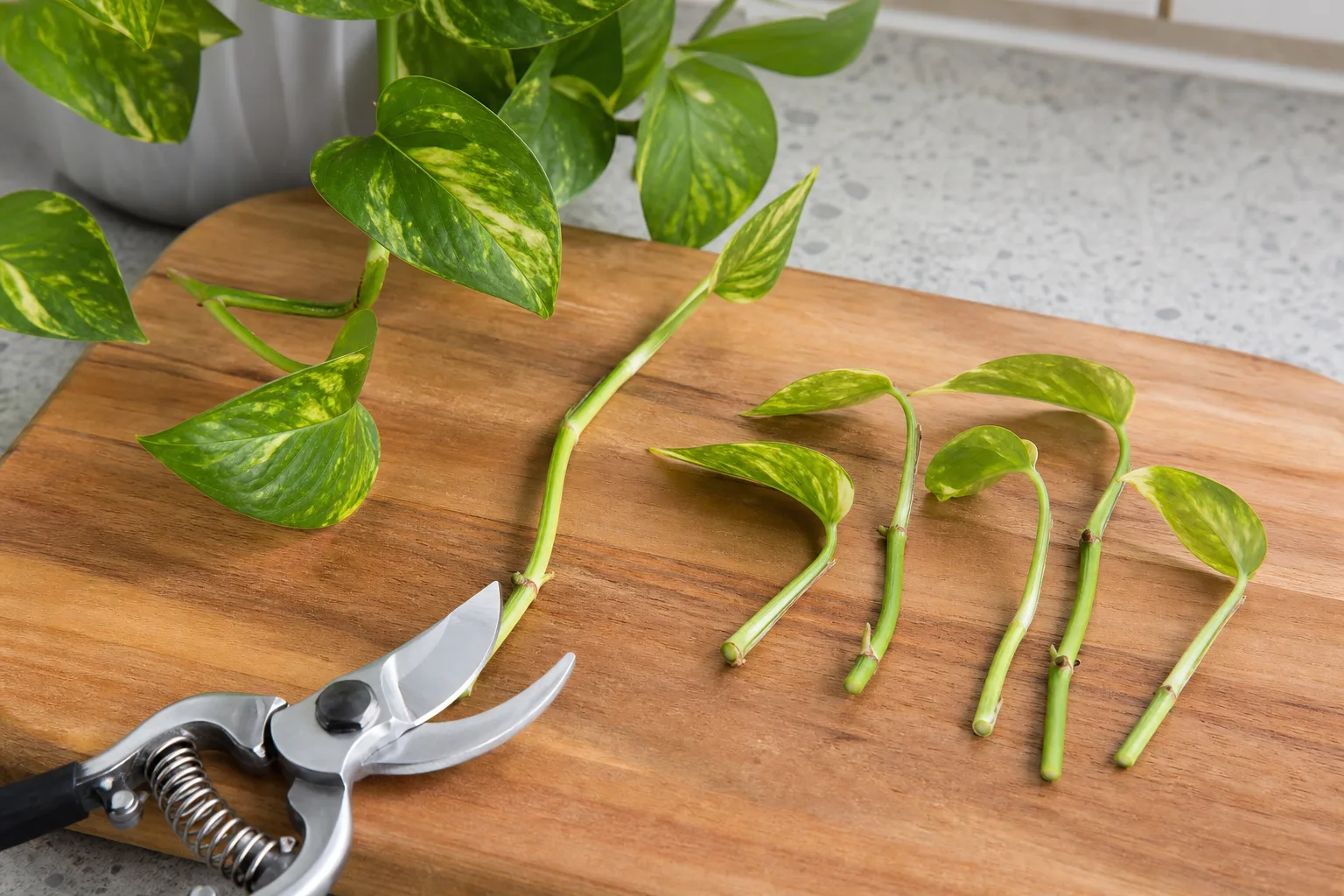
To root a cutting in water, remove leaves that would sit below the waterline and place the node in clean water in bright, indirect light. Refresh the water when it becomes cloudy or drops, and pot the cutting once it has several healthy roots rather than waiting for a tangled mass. For a soil start, tuck a node into evenly moist, airy mix and keep the medium lightly moist while roots establish; waterlogged soil can rot the cutting before it roots.
Take cuttings from stems that show the leaf pattern you want to preserve. The cultivar’s variegation is carried through vegetative propagation, but the amount of cream on each new leaf can still vary with growing conditions. A cutting from a mostly green reverted runner may keep producing greener growth, so select a visibly variegated section if you want the new plant to resemble its parent.
Penn State Extension notes that pothos cuttings root readily, and Joy Us Garden’s practical growing guide also illustrates node-based water propagation. Rooting time depends on warmth, light, and the cutting itself, so use new root growth as your cue rather than expecting every cutting to be ready on the same day.
Repot when the root system—not the calendar—asks
Manjula can stay in its nursery pot while it is growing steadily and the mix still drains normally. Consider repotting when roots circle densely, emerge from drainage holes, the root ball lifts out as a solid mass, or the plant repeatedly dries very fast despite appropriate care. Roots peeking from one hole alone do not always mean an urgent repot is needed.
When you do repot, move up only one modest pot size and use fresh, airy mix. Loosen only roots that are tightly circling or damaged; do not tear apart a healthy root ball for cosmetic reasons. Set the plant at roughly its former depth, water enough to settle the mix, and allow excess to drain before returning it to its usual spot.
Spring or early summer is a convenient time because indoor plants tend to resume growth as light increases, but root trouble should not wait for a preferred month. If the mix is sour, the roots are mushy, or the plant is declining in persistently wet soil, inspect it promptly. Otherwise, avoid repotting an otherwise healthy plant just because a calendar says a year has passed.
Troubleshoot changes by checking conditions in order
Begin with three questions: Is the mix wet or dry below the surface? Is the plant getting bright, indirect light without a hot beam? Are the stems and roots firm? These observations narrow the likely cause far better than treating every yellow or drooping leaf as the same problem. Check one factor at a time so you can tell whether a change helped.
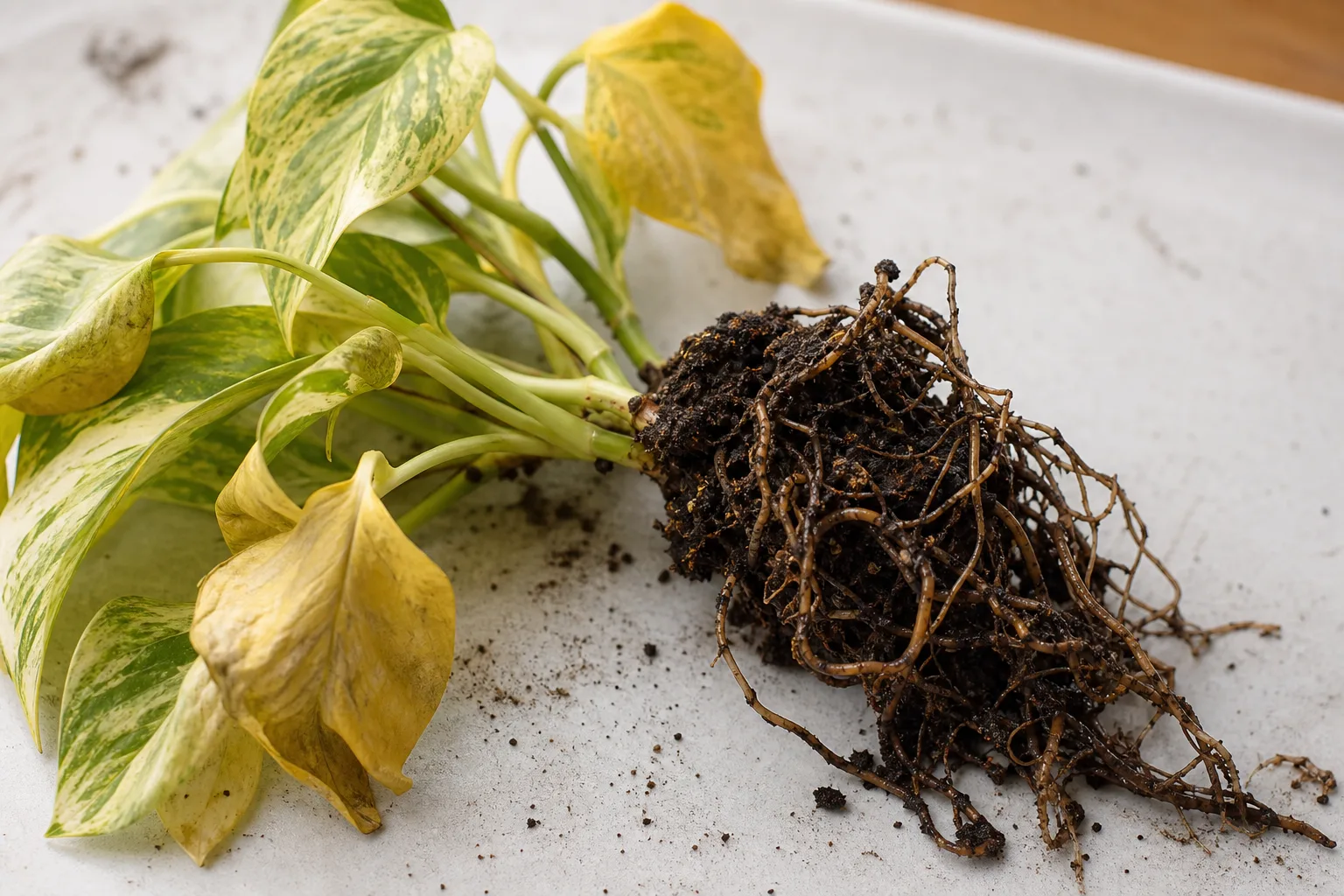
A few older leaves may yellow and fall as stems mature. Several yellow leaves together, especially with wet mix, a sour smell, or soft stems at the soil line, warrant a closer root check. If roots are dark and mushy rather than firm, remove the plant from saturated mix, trim only clearly damaged tissue with clean scissors, and repot into fresh medium that drains; do not add fertilizer during recovery.
Faded leaves, stretch, and slow growth
When new leaves become smaller, greener, and farther apart, assess light before adding fertilizer. Low light is a common cause of lost variegation in pothos, as both NC State Extension and the RHS explain. Move the plant toward a brighter indirect location in stages, then give it several new leaves to show whether the change is working; existing leaves will not recolor.
If growth pauses in winter, the plant may simply be responding to shorter days and cooler rooms. Check for cold drafts and soggy soil, but do not try to force new leaves with extra water or feed. A healthy, slow Manjula can grow more slowly than the more vigorous cultivars sold under the same broad pothos label.
Yellow leaves, brown patches, and limp vines
One yellowing older leaf is less concerning than several leaves changing together. Yellow leaves plus a wet pot point toward excess moisture or root stress; limp leaves plus a very light pot and dry mix make thirst more likely. If the symptoms do not match the moisture check, look for direct sun, a recent temperature shock, or pests before watering again.
Brown areas are clues, not a diagnosis. Crisp patches on the window-facing side suggest sun or heat exposure, while a few dry tips can follow inconsistent watering, very dry indoor air, or fertilizer salts. Inspect leaf undersides and stem joints for fine webbing, cottony clusters, sticky residue, or small scale-like bumps. Isolate an infested plant, rinse pests away when practical, and use only a treatment labeled for indoor plants if further control is needed.
Epic Gardening’s pothos problem guide describes how watering, direct light, cold, fertilizer, and pests can produce overlapping leaf damage. That overlap is why checking the pot and the plant’s placement first is more dependable than treating color alone as a diagnosis.
Keep the plant out of reach of chewing pets
Treat Manjula as unsafe for pets that chew houseplants. The ASPCA lists Golden Pothos, Epipremnum aureum as toxic to dogs and cats because it contains insoluble calcium oxalates; reported signs include oral irritation, drooling, vomiting, and difficulty swallowing. Manjula belongs to the same species group, so do not assume its variegation makes it safer.
Place the pot where a cat cannot reach trailing stems and where a dog cannot pull leaves from a low stand. A hanging planter helps only if the vines do not dangle within reach. Wear gloves if the plant’s sap irritates your skin, and contact a veterinarian or animal poison-control service promptly if a pet chews a meaningful amount or shows symptoms; do not try home treatments unless a professional instructs you.
Adapt the routine to the season
In spring and summer, increasing daylight usually supports more active growth. This is the time to inspect whether the plant needs pruning, a support, or a modest pot increase, and to resume light feeding only if new leaves are developing. Keep the plant’s placement stable rather than repeatedly moving it in search of a perfect window.
As autumn and winter light weakens, growth and water use often slow. Check the mix less by the old calendar and more by its current dry-down, especially if the plant is several feet from a window or sits in a cool room. Do not compensate for slower winter growth by watering more often; the plant may be using less water, not asking for more.
Heating season can create two opposite stresses in one room: dry air near a radiator and cold glass at night. Keep leaves clear of both, and rotate the pot periodically so one side does not lean toward the only window. If the newest leaves stay well patterned and the roots remain healthy, there is no need to chase a tropical greenhouse climate indoors.
Conclusion: judge care by new growth and steady roots
Successful Manjula care is a set of balanced decisions: bright filtered light for good patterning, a pot that drains, and watering after the mix has begun to dry. Expect a compact start and measured trailing growth, not the speed of Golden Pothos. Pick a cultivar by its leaf form and variegation, then adjust the routine to the plant and room you actually have.
When something changes, start with the root zone, the light reaching the newest leaves, and the condition of the stems. That sequence helps distinguish thirst from root stress and a naturally slow plant from a struggling one. Give Manjula the stable conditions its foliage rewards, and let healthy new leaves—not a rigid timetable—confirm that your choices are working.



