Mammillaria Cactus Care: Light, Soil, Water, and Winter Rest
Keep a Mammillaria compact and healthy with species-aware advice on sunlight, watering, winter rest, pests, repotting, and propagation, indoors or out.
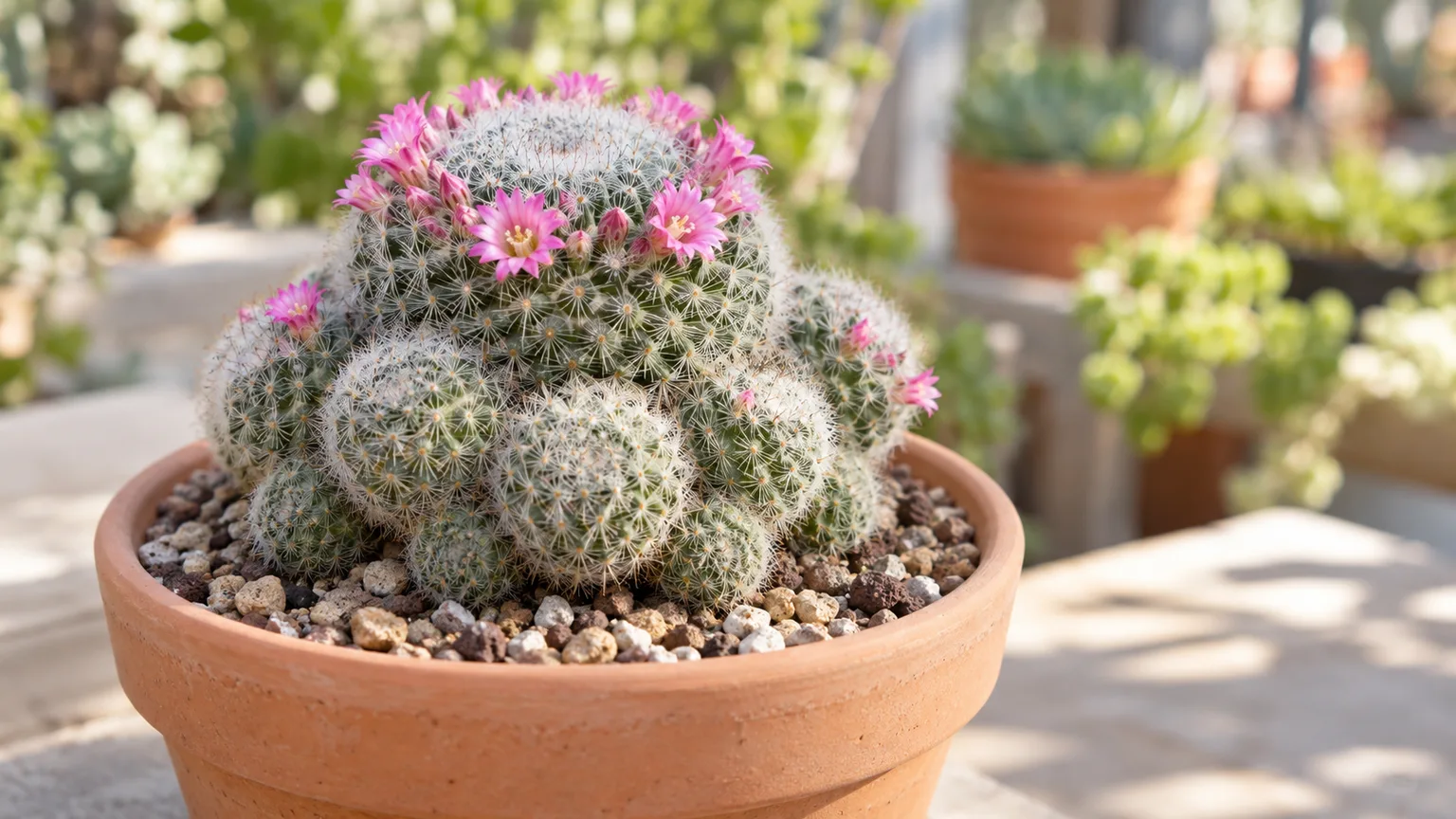
Mammillaria cacti are small enough for a sunny windowsill, varied enough to keep a collector interested, and often quick to reward good care with a ring of flowers. The name covers a large genus, though, not one identical plant. A compact, woolly globe and a cluster of narrow stems may both be Mammillaria, but they can differ in growth rate, sun tolerance, bloom season, and cold response.
For most potted plants, the reliable foundation is bright light, a pot with an open drainage hole, gritty mix, and a thorough drink only after the root zone has dried. The seasonal adjustment matters just as much: a cool plant at rest uses little water, while one kept warm and bright may continue to grow. Use the advice below as a baseline, then refine it when you can identify the species.
Start by identifying the kind you own
Mammillaria is a genus in the cactus family. Its members usually have rounded or short cylindrical stems with small raised tubercles arranged in spirals; spines grow from the areoles on those tubercles. Some species form one globe, some branch into a clump, and others make low mounds. Flowers are typically small and funnel-shaped, often forming a halo near the crown. North Carolina State Extension currently lists 147 accepted species, but plant counts can shift as taxonomists revise names and synonyms. The range of forms is the practical point: a generic care label cannot tell you everything about your individual plant. NC State Extension
Retail labels are often incomplete or incorrect, according to the Mammillaria Society’s houseplant guide. If a tag only says “cactus,” photograph the plant and compare its stem shape, spines, flowers, and any offsets with a reliable species reference. A confirmed name helps with outdoor hardiness and flowering expectations. Until then, keep the cactus in a container so you can move it out of harsh weather, and avoid assuming that a plant sold as easy will tolerate frost or weeks of damp soil.
Give it bright light, but acclimate gradually
Choose the brightest practical location: a sunny south- or east-facing window, a bright greenhouse, or a sheltered outdoor spot with several hours of sun. Mammillaria generally grow best in full sun to bright direct light; hot afternoon sun can be too intense, especially behind glass or for a plant that was raised under shade cloth. NC State Extension and Horticulture.co.uk both emphasize strong light while recognizing the need for protection from hot sun.
Watch the plant as you change its position. If it has been in a dim store or an indoor corner, do not place it straight into all-day outdoor sun. Begin with bright shade, then add a little gentle morning sun at a time over a couple of weeks. If the plant develops a bleached patch on the side facing the window, move it back from the glass or add a sheer curtain during the hottest hours. A hard tan scar is different from soft rot: sunburn is dry and corky, while rot tends to feel soft or collapse.
Indoor plants need enough light to keep new growth compact. A Mammillaria that stretches toward a window or produces unusually narrow, pale growth is not asking for extra water; it needs more light. Rotate the pot a quarter turn every week or two if growth leans strongly in one direction, but pause rotation if it is in bud and you want to keep the display steady. Outdoors, a light-colored pot can warm more slowly than a dark one, but shade the container during a heat wave if the root ball is getting hot.
Build an open, fast-drying root zone
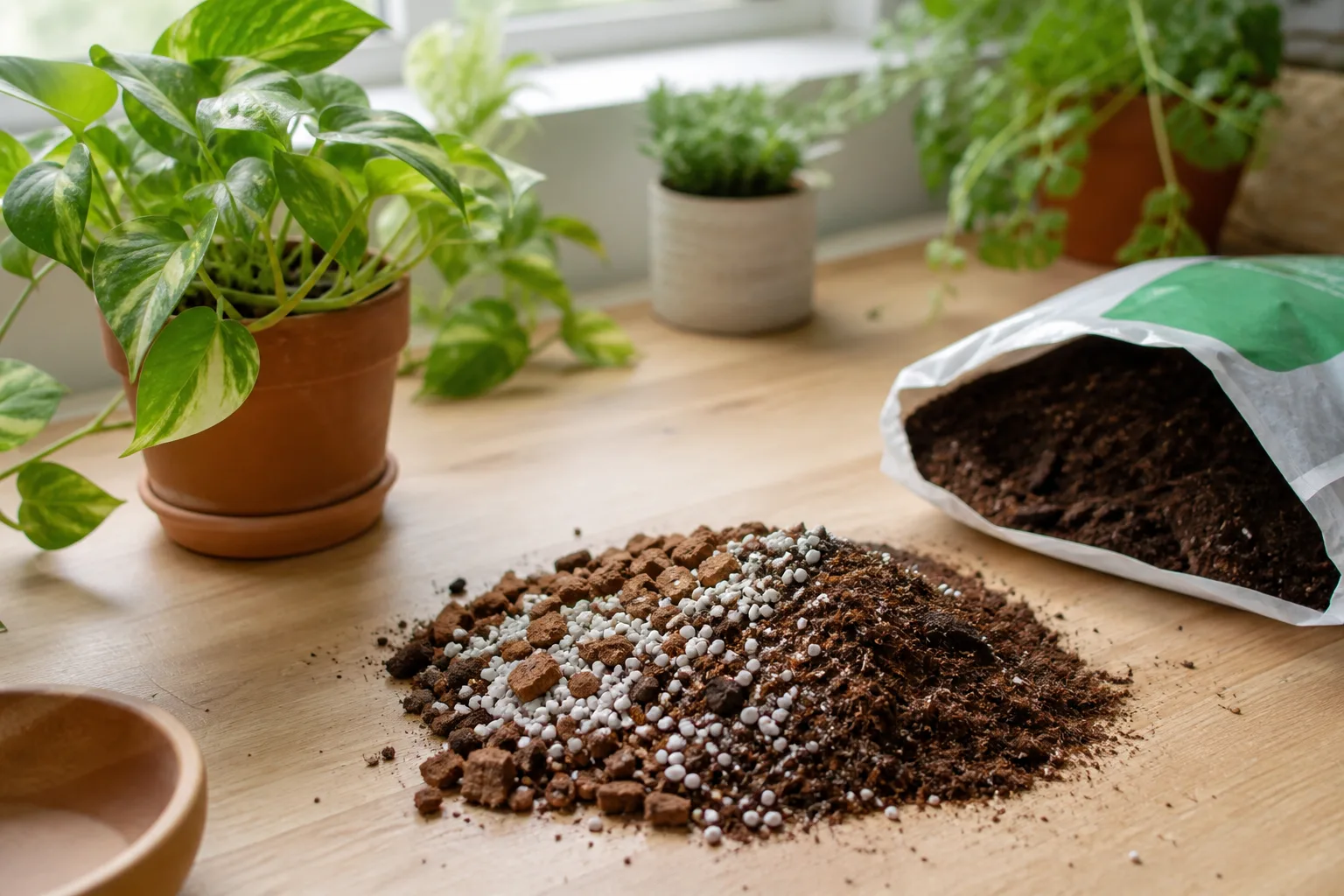
Use a commercial cactus mix only if it drains freely in your conditions. Some bagged mixes contain enough fine peat, coir, or compost to remain wet for too long in a cool room. Improve a moisture-retentive mix by blending in a substantial mineral fraction, such as pumice, perlite, lava rock, or coarse horticultural grit. The goal is a loose structure with air spaces, not a precise recipe. The right ratio depends on particle size, pot material, indoor temperature, and how quickly your plant uses water.
The Royal Horticultural Society’s Mammillaria profile recommends standard cactus compost for M. prolifera, while experienced growers interviewed by Horticulture.co.uk caution against ordinary moisture-retentive compost. If your mix dries unevenly or stays damp well after watering, increase the mineral component next time. Avoid very fine sand: it can fill air spaces instead of improving drainage.
Choose a pot with an open drainage hole, only slightly wider than the root mass. A very large pot holds more wet mix around a small plant and takes longer to dry. Unglazed terracotta can help the sides dry, but material is secondary to drainage and pot size. Do not add a layer of stones at the bottom as a substitute for a drainage hole; water still collects above that layer. Set the plant at its former depth and keep the stem base above the mix rather than burying it.
Water thoroughly during growth, then let the mix dry
Watering “sparingly” is easy to misunderstand as giving small sips. During active growth, water the whole root ball, let excess run from the drainage hole, and empty the saucer. Then wait until the mix has dried through before watering again. This wets roots evenly without leaving them in stagnant moisture. The RHS general cactus guide and the Mammillaria Society both describe a growing-season watering period followed by a drier winter rest; the exact interval changes with season and growing conditions.
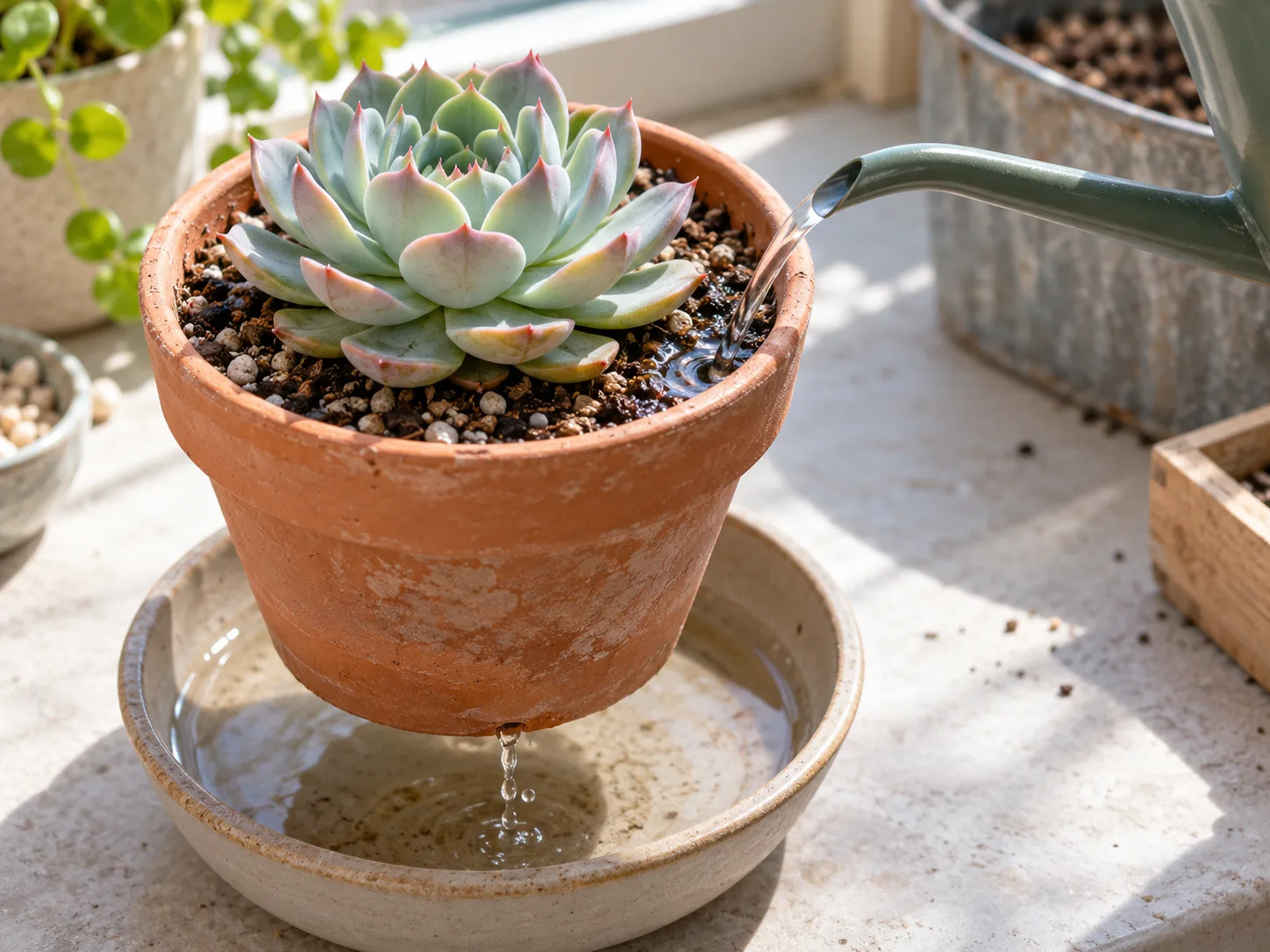
Active-season watering
In warm, bright weather, the pot may dry in days or in a couple of weeks. Neither interval is a rule. A small terracotta pot in sun dries faster than a large plastic pot in a cool room; a dense cluster may use more water than a single dormant globe. Check the mix below the surface. A wooden skewer inserted near the pot wall is useful when spines make finger tests awkward: if it comes out damp or cool with particles stuck to it, wait. Lift the pot after watering and again when dry to learn its weight. These checks are more useful than watering every Saturday.
When the mix is dry through and the plant is in growth, water until runoff, then drain it. Do not mist the spines or keep the surface constantly damp. A few dry days after a complete watering are safer than repeated small amounts that wet only the top while the lower root zone stays stale. If water beads over a very dry mix and runs down the pot edge, apply it slowly in two passes so the medium can absorb it. If the mix remains wet for many days, fix the drainage or move the pot to a warmer, brighter, more ventilated position before increasing the wait between waterings.
Winter rest
Many Mammillaria slow down in cooler, dimmer months. Keep a plant that is resting cool but frost-free, and reduce water sharply; some growers withhold it entirely during a cool rest. North Carolina State Extension gives a winter range of about 45–55°F (7–13°C) and recommends suspending water during dormancy. The RHS general guidance similarly recommends cooler conditions and minimal or no watering for most indoor cacti, with just enough to prevent severe shriveling if needed. These are not contradictory routines so much as different rest conditions: a cool cactus in a dry, airy mix needs far less water than a warm plant still making growth.
Do not water by calendar if your cactus sits above a radiator or under strong grow lights and keeps growing. Conversely, do not water a cold, inactive plant because its surface looks dusty. If it is severely wrinkled, confirm the mix is completely dry and the roots are sound before giving a modest drink. If the soil is wet and the base is soft, more water will accelerate the problem. Resume regular soak-and-dry watering only when brighter days bring visible active growth.
Keep it warm, ventilated, and frost-free
For active growth, a typical warm room is suitable; NC State Extension lists roughly 70–80°F (21–27°C) as a preferred growing range. Many species tolerate cooler nights, and a cooler winter rest can support flowering, but do not treat that as permission to expose an unknown potted plant to freezing temperatures. The genus spans many species and hardiness differs; the conservative choice is to bring containers under cover before frost.
Good air movement helps the potting mix dry and lowers the chance of fungal or bacterial problems. Do not seal Mammillaria in a humid terrarium or crowd it into a stagnant corner. A greenhouse can work if it has ventilation and water does not linger around the base. Outdoors, shelter a potted plant from prolonged cold rain as much as from frost: a wet root ball in chilly weather is more dangerous than a brief dry spell.
Feed only when new growth is underway
Mammillaria can grow in modest soil and do not need heavy feeding. If the plant is healthy and producing new growth, apply a cactus fertilizer at a diluted label rate during the active season. A low-nitrogen formula is a sensible choice because strong nitrogen feeding can encourage soft growth that does not match the plant’s compact habit, as outlined in Gardener’s Path’s Mammillaria guide. The Royal Horticultural Society recommends monthly feeding during the growing season for cacti generally; its M. prolifera profile suggests feeding every two or three weeks while in growth. These schedules vary by product and species, so follow the label and err on the weaker side rather than combining several feeds.
Do not fertilize dry roots, a newly repotted cactus, or a plant that is dormant, rotting, pest-stressed, or not growing. Fertilizer will not compensate for weak light or waterlogged mix. If you choose not to feed, that is usually fine; revise the mix at repotting rather than pushing growth with extra nutrients.
Encourage flowers by respecting the seasonal cycle
Flowers depend on species, age, light, and the preceding season. Many Mammillaria form small flowers in a ring near the top; the bloom season varies, and some plants may need time to mature before flowering. NC State Extension notes that blooms often begin in the second year of growth, but that is a general observation, not a promise for every nursery plant. The plant may also be too young, mislabeled, recently moved, or short on light.
The most reliable approach is to provide strong light during active growth, keep roots healthy, and allow a cooler, drier winter rest if the species and your home conditions support it. This signals a seasonal cycle without forcing it. A warm windowsill may not offer the same rest as a cool sunroom, yet flowers can still appear under good light. Do not keep the plant bone-dry in a hot room for months to force buds, and do not flood it with fertilizer; either can stress rather than help. If it flowers, avoid a sudden change in location or watering while the buds develop.
Pick a species that fits your space
The genus includes solitary globes, clustering cylinders, hairy forms, and cacti with hooked or straight spines. A few commonly cultivated examples help set expectations:
- Mammillaria elongata has narrow, finger-like stems that form clusters. It stays relatively compact and is a practical choice when you want a branching silhouette.
- Mammillaria hahniana forms rounded stems with abundant white hairs and can produce pink or magenta flowers. Its woolliness makes it especially important to keep the crown airy and free of trapped debris.
- Mammillaria bocasana has fine white hairs and hooked central spines; the spines can be difficult to see among the wool. Handle it with extra care.
- Mammillaria plumosa is covered in feather-like white spines. The soft look is deceptive: avoid rubbing the plant or pressing it against skin.
These are examples, not interchangeable care labels. The NC State profile describes several types, while Gardener’s Path gives additional species-specific size and cultivation notes. Ask for a botanical name when buying and compare the adult size, sun needs, and minimum temperature before choosing a planting location. Some Mammillaria populations are threatened by wild collection, so choose nursery-propagated plants from a responsible seller rather than cacti removed from habitat.
Repot when the roots or mix give a reason
Mammillaria grow slowly, so annual repotting is rarely necessary. Repot if roots fill the pot, the plant is unstable, the mix has broken down and stays wet, or you need to inspect a suspected root problem. Spring or early active growth is a useful time because the plant has a growing season ahead. NC State Extension notes that repotting may be needed about every two to three years, but the condition of the roots and mix matters more than the calendar.
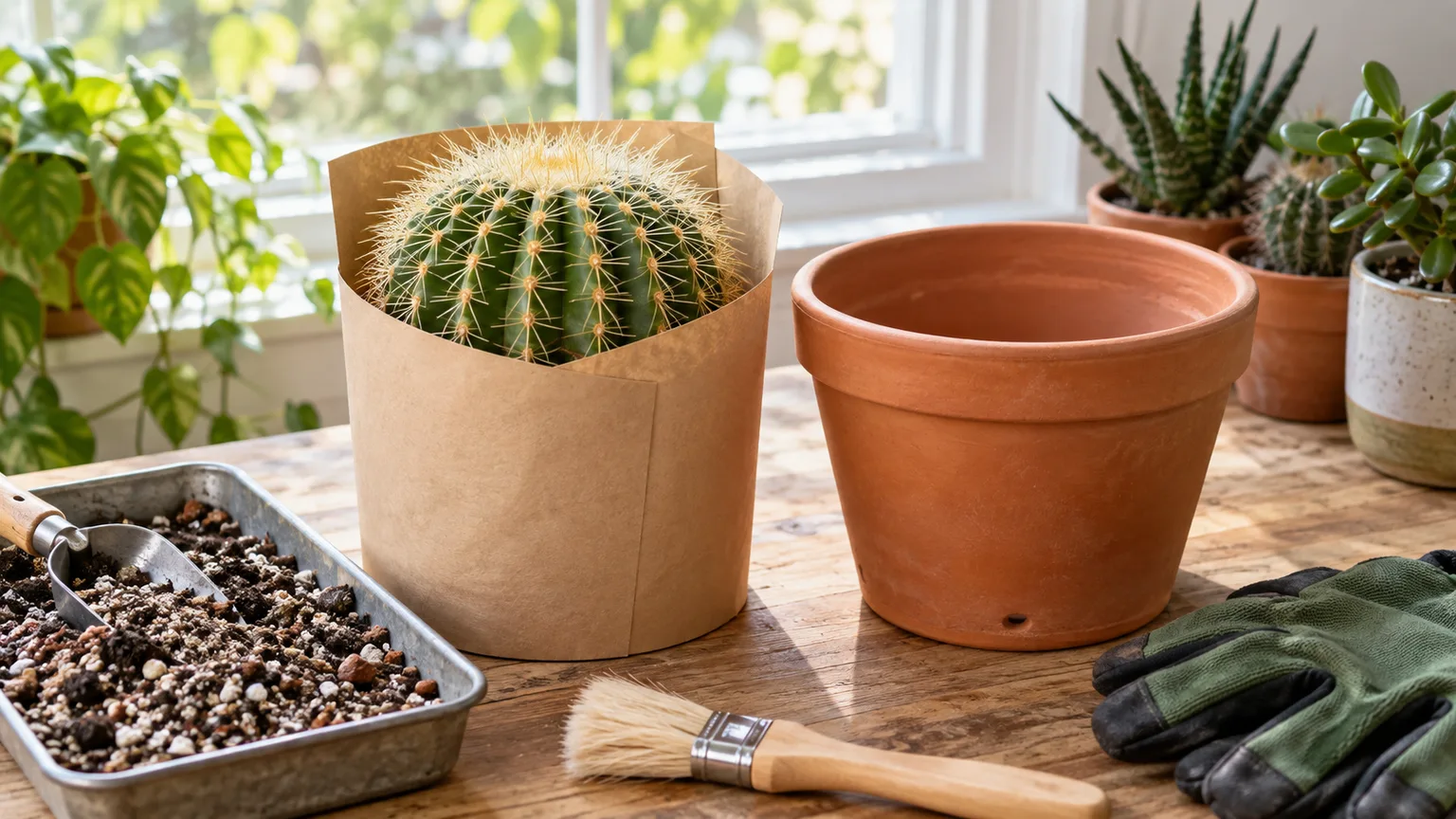
Work with dry mix so it falls away from roots more easily. Use a folded strip of cardboard or several layers of newspaper to support the plant, or use long tongs for a sturdy specimen. Do not grab a woolly Mammillaria in a gloved fist; fine spines can pass through fabric and hooked spines can snag. Ease it out by tipping the pot and supporting the root ball. Trim only roots that are dead, hollow, or clearly rotten, using a clean blade. Put it into a pot just large enough for the roots, then wait several days before watering so any damaged roots can dry and seal.
North Carolina State Extension describes Mammillaria as non-toxic to humans and pets, but the sharp spines can still injure skin, eyes, mouths, and paws. Keep the plant out of reach of children and animals that chew or knock over pots. A non-toxic label is not a reason to handle it casually.
Divide offsets carefully
Many Mammillaria make offsets, or pups, around the parent stem; some species do not. Wait until an offset is large enough to handle without crushing it, preferably with visible roots or a firm base. Wearing eye protection and using a folded paper guard or tongs, gently twist off a loosely attached pup. If it will not separate cleanly, use a sterile knife rather than pulling hard and tearing the parent.
Set the offset in a shaded, dry place until the wound has callused. That may take several days and can take longer for a larger cut. Place it shallowly in dry, gritty mix, keep it warm in bright indirect light, and wait to water until it has begun to anchor or show new growth. The new plant has little root mass, so a large pot and repeated watering are especially risky. Gradually introduce brighter light once it is established. This slow start reduces rot and sun stress better than trying to make the offset grow quickly.
Grow from seed when you want many plants
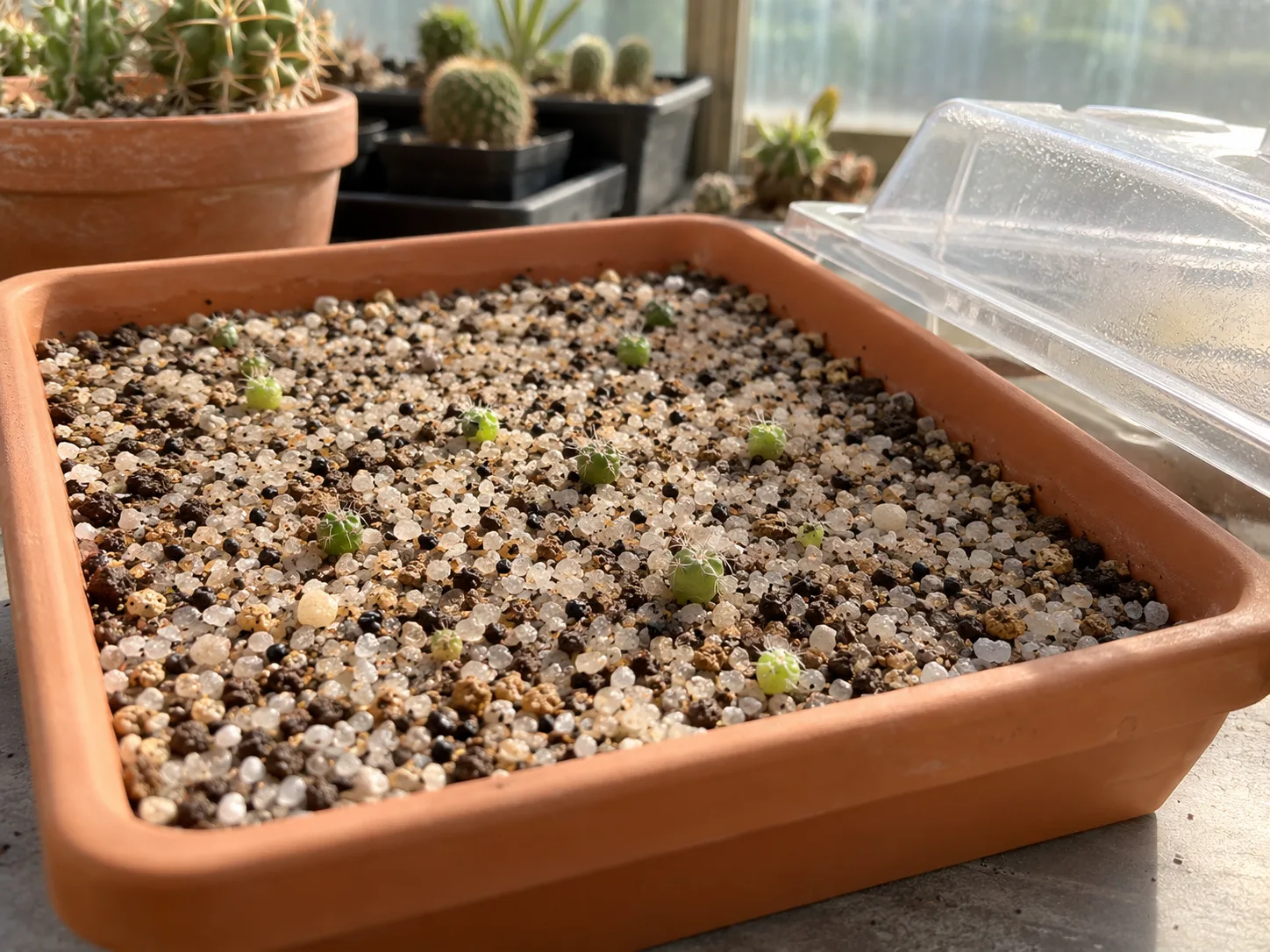
Seed is slower than offsets but lets you raise several plants and may be the only option for a species that does not pup. Sow fresh seed in a clean, shallow container with drainage, using a fine but free-draining cactus seed mix. Scatter seed on the surface and cover only lightly if the seed supplier’s directions call for it; very small seeds need light to germinate.
Moisten the mix evenly, then cover the container with a clear lid or bag to hold humidity. Keep it warm and bright but out of direct midday sun, checking for condensation and mold. Seedlings need more consistent moisture than established cacti, so do not apply the adult dry-down rule to a covered seed tray; Gardener’s Path likewise advises keeping germinating seed and seedlings damp but not soggy. Vent the cover as seedlings emerge, and remove it gradually as they strengthen. The RHS profile gives 19–24°C as a seed-sowing range for M. prolifera; other species may germinate at different rates. Prick seedlings out only when they are large enough to move without crushing, then increase light gradually.
Check for pests and disease before symptoms spread
Inspect between tubercles and around the base, where pests can hide under spines or wool. Mealybugs look like small white cottony clusters; they may also live on roots, where they are easy to miss. Scale can appear as fixed brown or pale bumps, while spider mites may leave fine stippling or webbing. UC IPM recommends checking crevices and notes that mealybugs commonly infest succulents and can cause stunting and yellowing.
Isolate a plant as soon as you suspect a pest. For a small mealybug problem, remove visible insects with a damp cotton swab or gentle water stream, then inspect again in a few days. If using a horticultural oil or insecticidal soap, choose a product labeled for your plant and indoor use, and test a small area first; hairy spines and tender tissue may react differently from smooth leaves. Root mealybugs require removing the plant from its pot and examining the root ball. Discard badly infested plants if treatment is not working rather than exposing the collection.
Rot is usually associated with roots staying wet, a cold damp mix, or an injury. A different but less common issue is cactus anthracnose: the Texas Plant Disease Handbook lists Mammillaria among the affected genera and describes moist light-brown rot with pink pustules. Isolate a suspect plant, avoid splashing water between specimens, and remove badly affected tissue with a clean tool. The handbook notes that there is no satisfactory control; do not assume a copper spray will cure an established infection.
Diagnose shape, color, and texture together
A single color change rarely identifies the cause. Check whether the tissue is firm or soft, whether the change is limited to the sunny side or base, how long the mix stays damp, and whether pests are visible. Compare current growth with older growth: a cactus can keep a permanent scar after the original stress has passed.
Soft or wet brown tissue
Softness at the base, a collapsing stem, or a sour-smelling mix points to root or stem rot. Stop watering and unpot the cactus to inspect its roots. Healthy roots are firm; rotten ones are dark and mushy. Remove affected roots with a clean blade and let wounds dry before planting in fresh, dry mix. If rot has spread through the crown or main stem, recovery may not be possible. Brown tissue that is dry and hard, particularly on the sun-facing side, is more consistent with a healed sunburn scar; improve shade during the hottest hours and acclimate future sun exposure gradually.
Stretched, pale growth
New growth that is narrower, lighter, or leaning toward a window usually means the plant is not receiving enough usable light. Move it closer to a bright window or add a grow light, but increase exposure step by step. The stretched section will not become round again; judge whether the new growth is more compact over time. Avoid trying to correct etiolation with extra fertilizer or water, which can make weak growth worse.
Yellowing or shriveling
Yellowing is a symptom, not a diagnosis. If the base is soft and the mix remains wet, check for overwatering and root loss. If the cactus is firm but has pale patches on the hottest side, review sun exposure and acclimation. A dry, wrinkled plant may need water during active growth, but confirm the mix is dry and the roots are not rotten first. Also inspect for cottony pests in crevices and look for cold exposure. Change one condition at a time so you can tell whether the plant responds.
Conclusion: use dry roots as the steady rule
Start with a bright position, a pot that drains, and a gritty mix; those basics solve more problems than a complicated care calendar. Water fully during active growth once the root zone is dry, then provide a cooler, drier rest when your species and indoor conditions allow it. If growth stretches, improve light; if stems soften, investigate roots and drainage before adding water or fertilizer.
Mammillaria can be forgiving, but the genus is diverse. Keep a new plant in a movable pot until you know its light and temperature limits, handle the spines with care, and use a confirmed species name whenever possible. With those checks, a compact cactus can stay healthy for years and flower when its own seasonal rhythm is right.