How to Get Rid of Clothes Moths: A Step-by-Step Guide
Learn how to get rid of clothes moths with label-safe washing, dry cleaning, freezing, vacuuming, and a clear plan for rugs and stored wool.

If you have found small holes in a wool sweater, do not start by spraying the closet. The feeding stage is usually a tiny larva hidden in a fold, under a rug, or inside a dusty seam; the adult moth you notice may be only a clue that a nearby food source has been left undisturbed. To stop the damage, treat the textile and clean the place where the larvae are living, then protect clean items so new moths cannot reach them.
The practical order is simple: confirm the pest, isolate suspect fabrics, clean or treat each item according to its care label, vacuum likely hiding places, and monitor for new signs. This sequence protects delicate clothes and helps avoid a common dead end: killing a few flying adults while larvae remain in the closet, carpet, or upholstery.
The Fastest Safe Plan for Clothes Moths
For a small, confirmed infestation, start with these actions:
- Bag affected items before moving them. Keep each suspect garment or textile contained while you sort and inspect.
- Check every nearby animal-fiber item. Look at wool, cashmere, mohair, fur, feathers, felt, silk blends, rugs, and upholstered furniture, especially items stored in dark, quiet places.
- Treat salvageable textiles. Use hot washing and drying only when the care label allows; send delicate or valuable pieces to a dry cleaner that handles wool and similar fabrics.
- Empty and clean the storage area. Vacuum cracks, shelf edges, baseboards, carpet margins, and furniture undersides. Remove the vacuum debris outdoors.
- Seal clean items and monitor. Store cleaned, fully dry textiles in a container or bag that closes completely. A species-specific pheromone trap can help show whether adult moth activity continues.
Do not treat an entire home as infested because you saw one small moth. Focus first on fabrics with holes, webbing, cases, or repeated adult activity, then widen the inspection to adjacent closets and rugs. If you find larvae in several rooms, suspect a large rug or upholstered piece, or cannot safely clean a valuable textile, bring in a pest or textile-care professional.
Confirm That Clothes Moths Are the Problem
The two common clothes moths are the webbing clothes moth (Tineola bisselliella) and the casemaking clothes moth (Tinea pellionella). Adults are small, buff or gold-colored, and often avoid light. The larvae are pale caterpillars with darker heads; unlike adults, they feed on the materials. A webbing clothes moth larva feeds in silk webbing or a tunnel, while a casemaking larva carries a small silken case made with fibers from its food.
Look for more than a moth flying through a room. Stronger clues include fine silk in garment folds, a small portable case attached to wool, granular droppings that resemble the textile’s color, and irregular surface damage on animal fibers. Virginia Cooperative Extension notes that larvae can pupate away from the food source in protected cracks, so a cocoon or wandering larva on a wall may be some distance from the damaged item (Virginia Cooperative Extension).
Not every hole means moths. Carpet beetle larvae also damage natural fibers, but they are visibly hairy and their activity often leaves shed skins; clothes moth larvae are smooth and may leave silk. A large moth near a lamp may be an outdoor species, and a pantry moth points to stored food rather than wool. If identification is uncertain, take a clear photo of the insect and the damage, then compare it with an extension diagnostic guide before applying any pesticide.
Read the Damage Before You Treat the Room
Clothes moth larvae use keratin, a protein in animal materials such as wool, fur, hair, and feathers. They may also feed on silk blends and on debris or food residues caught in fabric. Soiled cuffs, collars, underarms, food spills, pet hair, and lint give larvae both suitable material and shelter. The Illinois Department of Public Health explains that clothes moths favor natural animal fibers and items contaminated by food, body fluids, or other organic matter (Illinois Department of Public Health).
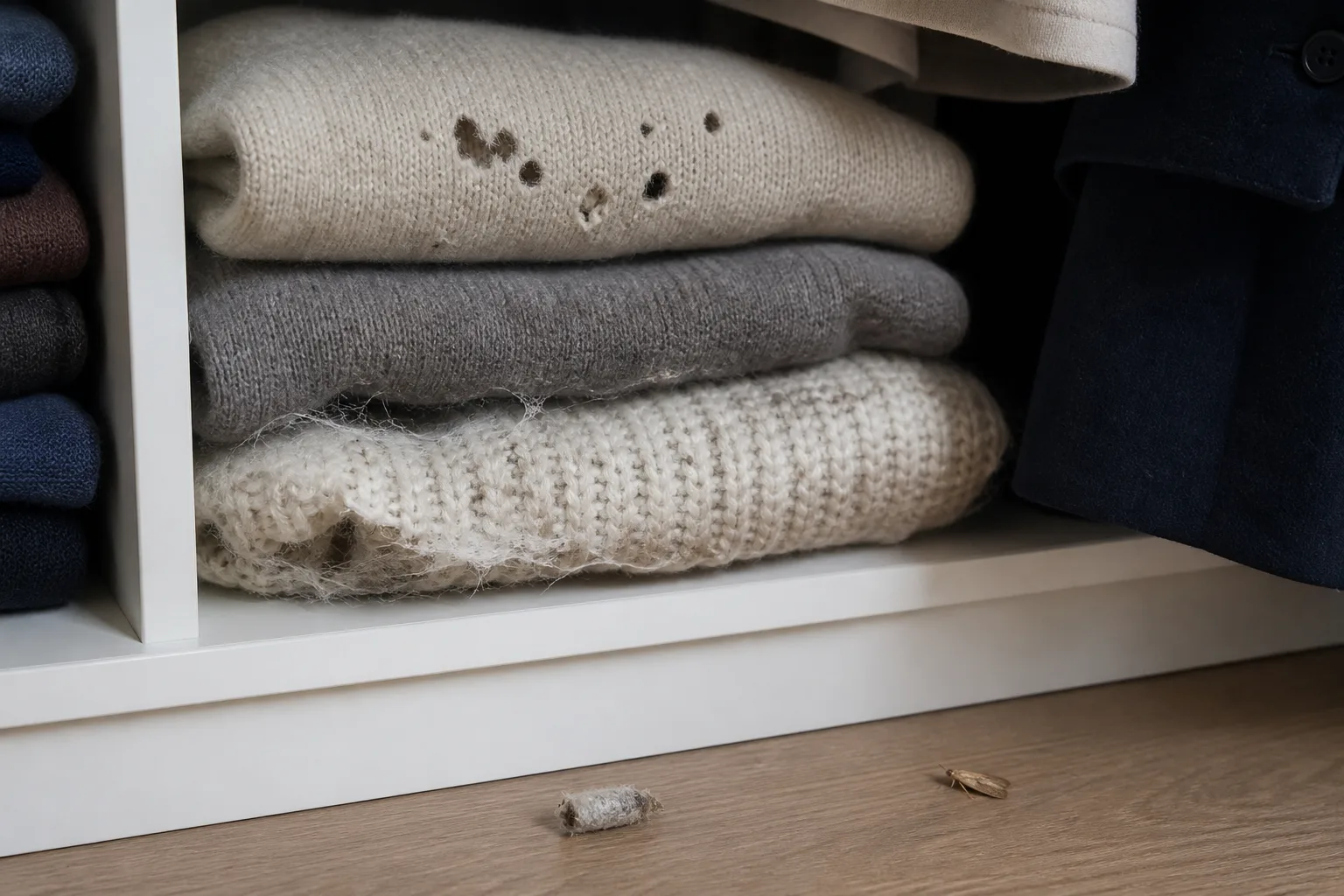
Damage tends to concentrate where fabric rests against another surface or stays folded and untouched: sweater seams, coat collars, rug edges, the underside of a wool rug, felt pads, feather pillows, and the back of a closet shelf. Check the item’s underside and seams rather than only its visible face. If you find holes in cotton or synthetic cloth, inspect for wool blends, stains, pet hair, and carpet beetle larvae before concluding that clothes moths are responsible.
The moth’s life cycle explains why one cleanup may not end sightings immediately. Virginia Tech reports eggs hatching in roughly four to 21 days and a life cycle of about 65 to 90 days under the conditions described in its guide; development can take longer when conditions are unfavorable, as Illinois public-health guidance notes. That means you may see an adult emerge after treating the obvious sweater if a hidden case or untreated textile remains elsewhere.
Contain the Infestation During the First 24 Hours
Use a clean plastic bag or lidded bin to move suspect clothes from the closet to a bright work area. Bag items one at a time rather than carrying an open armful through the home. This keeps loose larvae, cases, and debris from dropping along the route. If the item is damp or musty, keep it separate from clean textiles and avoid sealing it away for long-term storage until it is cleaned and fully dry.
Work through one storage area at a time. Take photos of damage, note where you found larvae or cases, and sort items into three groups: washable, dry-clean or specialist-care, and items that may be discarded. Check both sides of folded pieces and all pockets, cuffs, collars, hems, and seam allowances. For coats and dresses, inspect under collars and around linings; for a rug, check the underside and the area beneath furniture.
Do not shake an infested item over a bed or floor. If you choose to brush a garment, do it outdoors over a surface that can be cleaned, then bag the debris. A heavily damaged item that cannot be saved can be placed in a sealed bag and taken directly to an outdoor trash container; repairable holes do not require discarding the garment once its infestation has been treated.
Treat Garments Without Damaging Them
The goal is to kill or remove every life stage from the textile while preserving its shape, dye, finish, and structure. Pick the treatment by the care label and the value of the piece, not by a blanket rule that “hotter is better.” Dry cleaning is often the lowest-risk route for a valuable wool suit, lined coat, silk blend, or heirloom item; washable daily clothing may be simpler to process at home.
If a garment is valuable, fragile, embellished, or already weakened by moth damage, call the cleaner before treatment and tell them you suspect clothes moths. Ask whether they can handle a pest-infested textile and whether the item’s construction or trim needs special care. Keep suspect items bagged during transport and tell the shop which pieces need treatment so they can follow their own handling procedure.
Machine-Wash and Dry Only What the Care Label Allows
For washable items, use the warmest wash and dryer settings permitted by the label. Heat can kill larvae, but the hot-water setting or dryer can also shrink wool, felt a knit, distort elastic, fade dye, or damage bonded trims. Do not put a “dry clean only” sweater into a hot wash just to chase a temperature; a professional cleaning is a safer option. Extension sources recommend cleaning suspect woolens and following the garment’s care directions rather than treating every fabric the same way (Virginia Cooperative Extension; Purdue Extension).
Clean the full garment, not only the visible hole. Pay attention to seams, pockets, cuffs, underarms, collars, and folded edges where eggs or larvae could remain. Once washed, dry the item completely using a label-safe method before storing it. A damp sweater sealed in a bin can develop odor or mildew and defeats the point of careful storage.
Dry-Clean, Steam, or Brush Delicate Items Carefully
Dry cleaning is a strong choice for wool jackets, cashmere, silk, fur, and garments with linings or details that are difficult to wash safely. Tell the cleaner about the suspected infestation so the item is handled as a pest treatment rather than an ordinary stain job. Once the textile returns, inspect it and store it separately in a clean, sealed container until you have finished cleaning the closet.
Steam can help on a surface that the steam actually reaches, but a handheld steamer is not a substitute for a full garment treatment when larvae may be tucked into thick seams, linings, or dense folds. Test for colorfastness and follow the fabric maker’s care directions; some trims, adhesives, and finishes do not tolerate direct heat or moisture. Brushing both sides of a washable or sturdy textile can dislodge cases and debris, but do it outdoors and follow with a reliable cleaning method. A household iron or oven is risky for a garment unless the label specifically supports the heat and the person using it can control the temperature throughout the item.
Use Freezing With Realistic Temperature Expectations
Freezing is useful for items that cannot be washed, but the duration depends on how cold the freezer gets and how quickly the entire item reaches that temperature. Place each dry item in a sealed freezer-safe bag, press out excess air without crushing the textile, and leave space around it so cold air can circulate. Keep it bagged while it returns to room temperature; opening a cold bag too early can let condensation form on the fabric.
Published guidance is not perfectly uniform because temperatures, item size, and exposure times differ. Illinois public-health guidance says a freezer around 5°F may require weeks, while cold storage around −20°F can eliminate pests in roughly two to seven days depending on the item. Consumer guidance from Wirecutter recommends a much colder freezer exposure and counting the time after the item reaches freezing temperature; Better Homes & Gardens also describes a week at 0°F or colder (Illinois Department of Public Health; Wirecutter; Better Homes & Gardens).
For a household freezer, verify its actual setting with a thermometer and use a conservative, extended exposure rather than assuming a quick overnight freeze is enough. If the item is bulky, tightly packed, or irreplaceable, a freezer may be an uncertain choice; ask a textile conservator, cleaner, or pest professional about a controlled cold treatment. After thawing, inspect and brush off any cases or webbing outdoors, then seal the clean item away from the untreated closet.
Clean the Closet and Other Hidden Food Sources
Remove clothing and storage boxes so you can see the full surface. Vacuum the closet floor, corners, shelf edges, drawer tracks, baseboards, cracks, and the top of closet rods. Look behind or beneath low furniture and in the corners of storage chests. Larvae may feed on lint, pet hair, dead insects, and scraps of natural fibers in addition to a garment, so a clean-looking sweater does not mean the surrounding area is clear.
Inspect rooms adjacent to the closet if signs recur. Clothes moths can be found under a wool rug, in carpet margins, beneath furniture, inside old upholstered chairs, or near stored feathers, felt, and fur. Illinois public-health guidance recommends searching less obvious sites such as attics, crawlspaces, and places where animal nests or dead insects may accumulate; Virginia Tech likewise calls out the underside of rugs and furniture as protected feeding areas (Illinois Department of Public Health; Virginia Cooperative Extension).
Vacuum Seams, Rug Edges, and Upholstery Methodically
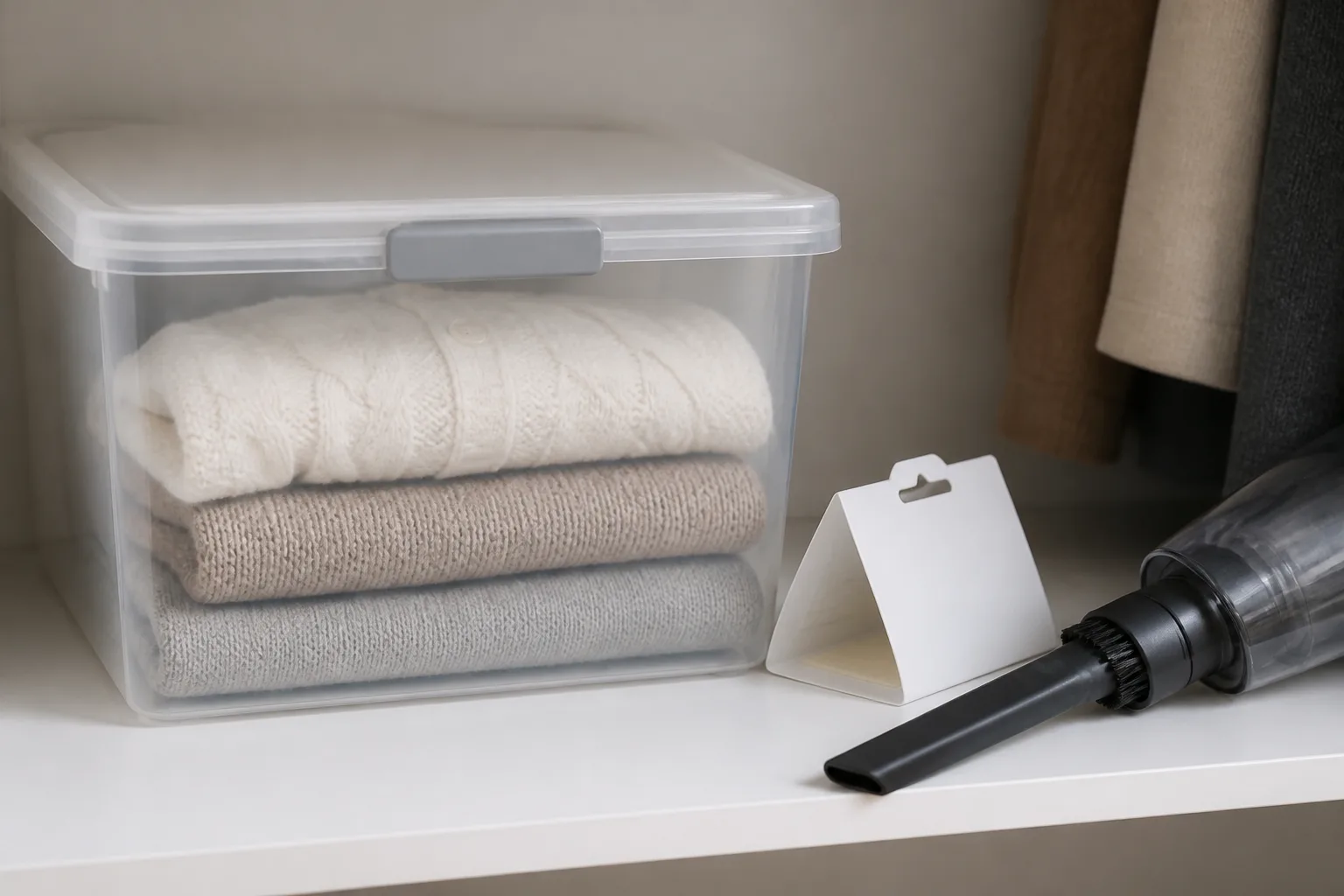
Use a crevice tool along shelf joints, baseboards, closet corners, under drawer lips, and the edges of wall-to-wall carpet. Move lightweight furniture and vacuum beneath it. For a wool rug, inspect the underside and pad if you can lift it safely; vacuum both sides and the floor beneath it. On upholstered furniture, pay attention to seams, tufts, folds, and the space underneath the seat where hair and lint collect.
When finished, empty the vacuum canister into a bag outside and seal the debris before disposal. If your vacuum uses a disposable bag, remove it outdoors and replace it; clean reusable parts according to the manufacturer’s directions. A vacuum does not guarantee that every egg has been removed, which is why textile treatment and repeat inspection matter. Better Homes & Gardens similarly emphasizes emptying closets and cleaning crevices around stored fabrics, while extension guidance identifies vacuuming rugs and protected areas as part of control (Better Homes & Gardens; Virginia Cooperative Extension).
Use Pheromone Traps to Monitor, Not as a Cure
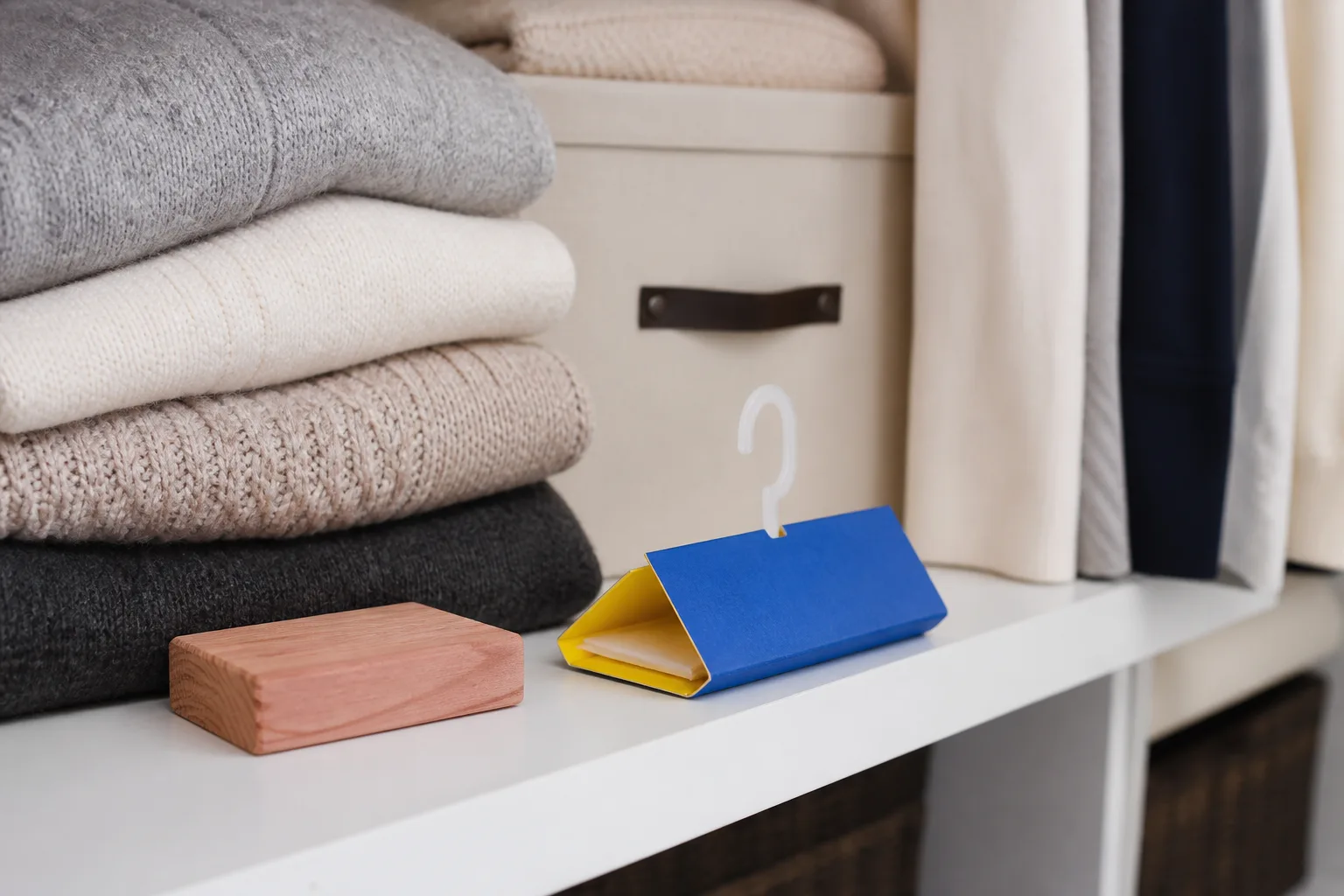
Buy a trap labeled specifically for clothes moths, not a pantry-moth lure, and place it where the label directs, typically in or near the suspected storage area. The pheromone attracts adult males of the targeted species to the adhesive surface. A catch tells you adult activity is present; no catch does not prove larvae or eggs are absent, because traps are species-specific and do not capture every life stage.
Use traps to compare activity across locations and to check whether it declines after cleaning. Record the date you set the trap and replace it on the product schedule. If moths collect in one closet but not another, revisit the textiles and hidden edges in the active closet first. Virginia Cooperative Extension says species-specific pheromone traps can detect and help control small populations of adult moths; Illinois public-health guidance describes them as tools for detecting new infestations, locating sources, and monitoring activity (Virginia Cooperative Extension; Illinois Department of Public Health).
Do not use a trap as your only treatment. It will not remove larvae feeding inside a sweater, under a rug, or in upholstery, and a trap designed for one species may not attract the other clothes moth. If trap catches continue after you have treated the textiles and cleaned the room, expand the inspection rather than adding more traps at random.
Mothballs, Cedar, and Sprays: What They Can and Cannot Do
Mothballs are pesticides that slowly release insecticide vapor. They work only under the conditions specified on the product label; many household labels require a tightly sealed container, not an open closet. The National Pesticide Information Center at Oregon State University warns that smelling mothballs means breathing their pesticide vapor, and that children or pets may be seriously harmed if they chew or swallow them (National Pesticide Information Center). If you choose a labeled mothball product, follow every label direction for amount, container, exposure, and airing garments afterward. Keep it away from children and animals, and never scatter mothballs around a room, under furniture, or in a drawer that is not sealed as directed.
Cedar blocks, cedar-lined chests, lavender, and other scented sachets are not dependable cures for an active infestation. A tight seal is what prevents a moth from reaching clean textiles; cedar scent can fade, and an aromatic sachet cannot kill larvae hidden in a seam or rug. Virginia Tech notes that cedar oil’s effect is limited and can stain fabric if applied directly. Avoid spraying essential oils or household mixtures on clothing; they can leave residue or damage dyes without treating a hidden source.
Broad sprays and total-release foggers are poor substitutes for cleaning. A surface application cannot reliably reach larvae inside folded cloth, rug backing, or furniture, and a product not labeled for fabric can stain or expose people and pets unnecessarily. If you use any pesticide, choose one labeled for the specific site and pest, follow the label exactly, and keep it off clothing unless the label explicitly allows that use. For most small infestations, targeted textile cleaning, vacuuming, and sealed storage are more direct steps.
When to Call a Pest or Textile-Care Professional
Call a pest-management professional when larvae or fresh damage appear in multiple rooms, when a large rug or fixed upholstery is affected, or when you have cleaned and treated the obvious textiles but continue to find new webbing or larvae. A professional can help confirm whether the culprit is a clothes moth, carpet beetle, or another pest and trace the infestation to a hidden food source. Ask what areas will be inspected, how the treatment reaches the infested material, and what preparation or time away from the room is required.
For valuable coats, antique textiles, fur, quilts, or fragile wool rugs, a textile conservator or specialist cleaner may be the better first call. Do not use home ovens, untested heat chambers, dry ice, or improvised chemical fumigation on a prized item. Controlled heat, cold, or fumigation may be used by trained professionals, but temperature and exposure have to match the object and the treatment method. If a professional recommends pesticide, request the product name and label directions, especially if children, pets, asthma, or delicate materials are concerns.
Prevent Clothes Moths From Returning
Prevention is mainly about removing food and keeping susceptible textiles inaccessible. Clean clothing before long-term storage, especially items worn close to the skin or stained by food. Brush or vacuum natural-fiber rugs, move furniture occasionally to expose protected edges, and keep closets free of lint, pet hair, and dead insects. Light and movement may make a quiet closet less attractive, but neither one protects a wool sweater the way a proper seal does.
Store Clean, Dry Natural Fibers Behind a Seal
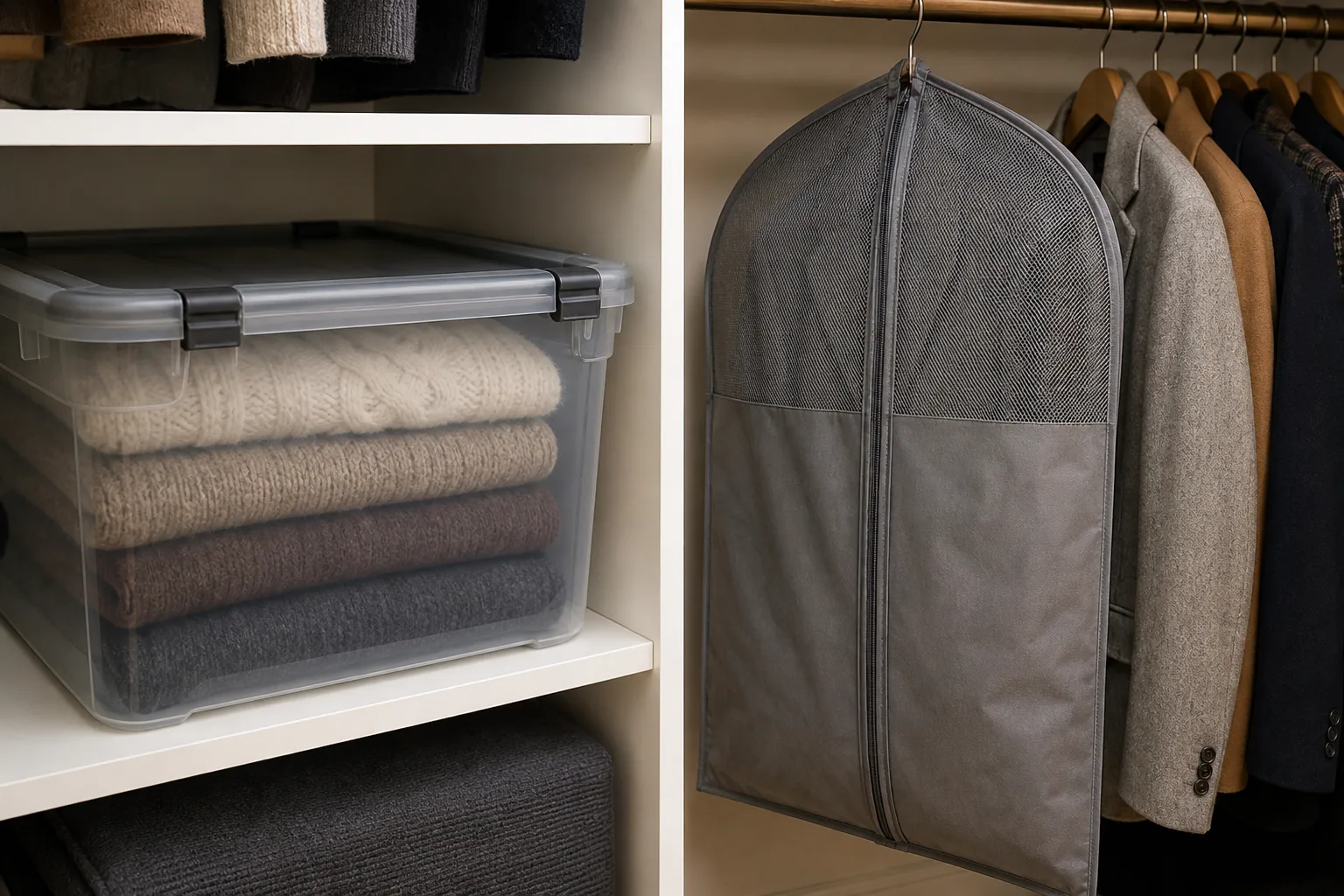
Before storing an item, wash it or have it dry-cleaned as the care label allows, then make sure it is completely dry. Put wool, cashmere, fur, feathers, felt, and vulnerable blends in a rigid bin with a tight lid or in an intact zippered bag that closes fully. Check the seal, seams, zipper ends, and corners; a decorative fabric garment bag or a cardboard box does not provide the same barrier. Keep storage containers off damp floors and away from pet hair or other debris.
Inspect Secondhand and Seasonal Items Before Storage
Inspect thrifted sweaters, vintage coats, rugs, blankets, and stored textiles before bringing them into a closet with clean clothes. Pay attention to cuffs, folded edges, pockets, linings, and the underside of rugs. If you find a case, webbing, or suspicious damage, keep the item isolated and use an appropriate cleaning method before storage. Do not put a newly purchased wool piece directly beside heirloom garments simply because it looks clean.
During the first few months after treatment, check suspect closets and stored fabrics weekly for fresh webbing, cases, larvae, or new holes. After activity stops, continue periodic checks when changing seasons and before putting woolens away. This routine is more useful than trying to make a closet smell strongly of cedar: it catches a missed source before damage spreads.
How to Tell Whether the Infestation Is Under Control
The strongest sign of progress is no new larval evidence: no fresh webbing, no new cases, no live larvae, and no new damage on clean, protected items. A single adult caught in a trap after treatment may have emerged from a missed pupa, so it is a reason to inspect rather than proof that the entire process failed. Conversely, an empty trap does not certify that an item is pest-free.
Set a baseline. Photograph existing holes, note which items were cleaned, and write down where you placed traps. Recheck the same seams and storage edges each week for about three months, roughly the length of the 65-to-90-day life cycle reported by Virginia Tech; keep monitoring longer if you continue seeing larvae or have a cool, quiet storage area where development may be extended. If new damage appears, isolate the affected piece and widen the search to nearby rugs, furniture, and stored textiles.
You do not need to throw away every wool item or fumigate the house to declare success. Treat the textiles with evidence of activity, clean the places that can support feeding, protect the items you have cleaned, and escalate only when the pattern shows that the source is broader than one closet.
Conclusion
To get rid of clothes moths, treat the hidden larvae and the places they feed—not just the adult moth you happen to see. Confirm the pest, isolate affected textiles, use care-label-safe washing or professional cleaning, vacuum likely reservoirs, and store clean natural fibers behind a complete seal. Pheromone traps can help you monitor adult activity, but they are only one part of the process.
Give the cleanup enough time to prove itself. Inspect for new webbing, cases, larvae, and damage over the next few months, and revisit rugs or upholstery if signs return. With a careful textile treatment, a thorough room clean, and protected storage, most small infestations can be managed without risking every garment in the closet.