Leopard Plant Care Guide: Light, Water, and Soil
Learn leopard plant care for beds or containers, from shade and watering to division, winter protection, slug damage, bloom timing, and seasonal fixes.
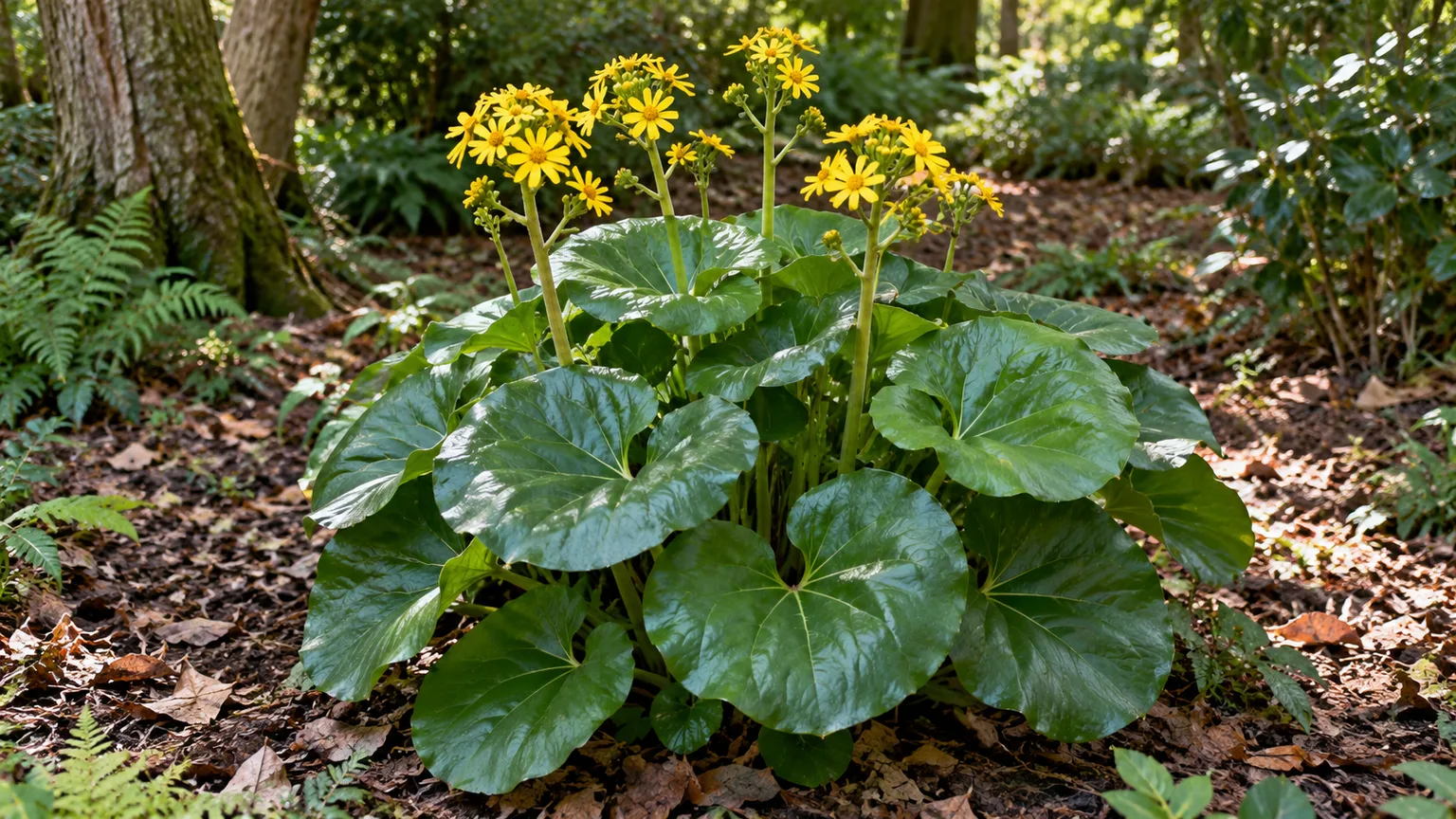
Leopard plant (Farfugium japonicum), sometimes sold under its former name Ligularia tussilaginea, is a shade-loving perennial grown for a low clump of large, glossy, rounded leaves and late-season yellow flowers. The common name can refer to spotted cultivars, but the ordinary species usually has solid green foliage.
Its natural home is moist woodland and streamside habitat in Japan and eastern Asia, so it does best where the soil stays evenly damp without becoming stagnant. NC State Extension and the Missouri Botanical Garden describe it as a clumping perennial for shaded, moisture-retentive sites.
The central care decision is a balance: give it more moisture than a drought-tolerant perennial, but do not leave its roots in a saturated planting hole or a pot of standing water. Strong midday sun and cold, drying wind can also damage the broad leaves. Get the site right first, then use the plant’s leaves and the soil under them to guide watering and seasonal care.
Leopard Plant at a Glance
| Feature | What to expect |
|---|---|
| Botanical name | Farfugium japonicum; formerly listed as Ligularia tussilaginea |
| Growth | Rhizomatous, clump-forming perennial; about 1–3 feet tall and 1–2 feet wide, depending on cultivar and conditions |
| Light | Partial shade to full shade; filtered light is a reliable starting point |
| Soil | Humus-rich, evenly moist, and well-drained; tolerates occasional wetness better than prolonged drought |
| Flowers | Yellow, daisy-like clusters on upright stalks; timing ranges from summer to late fall by climate |
| Cold range | Often listed for USDA Zones 7–10, but exposure, drainage, and cultivar affect winter survival |
Use the zone range as a starting point, not a guarantee for your exact garden. NC State lists the species for Zones 7a–9b, while the Missouri Botanical Garden gives Zones 7–10; both describe a shade plant that needs regular moisture.
The RHS plant profile also emphasizes moist but well-drained soil and protection from cold, drying winds. The difference in published ranges is a reminder to judge your microclimate, not just the number on a map.
Choose a Site That Stays Cool and Moist
Pick a place where the soil does not bake dry between rainstorms and where the large leaves are sheltered from strong wind. A north- or east-facing bed, the open shade beneath high tree branches, or the edge of a pond can work if water drains away after heavy rain. Avoid planting directly under thirsty trees if their roots will pull the soil dry; the shade may be right while the competition for water is not.
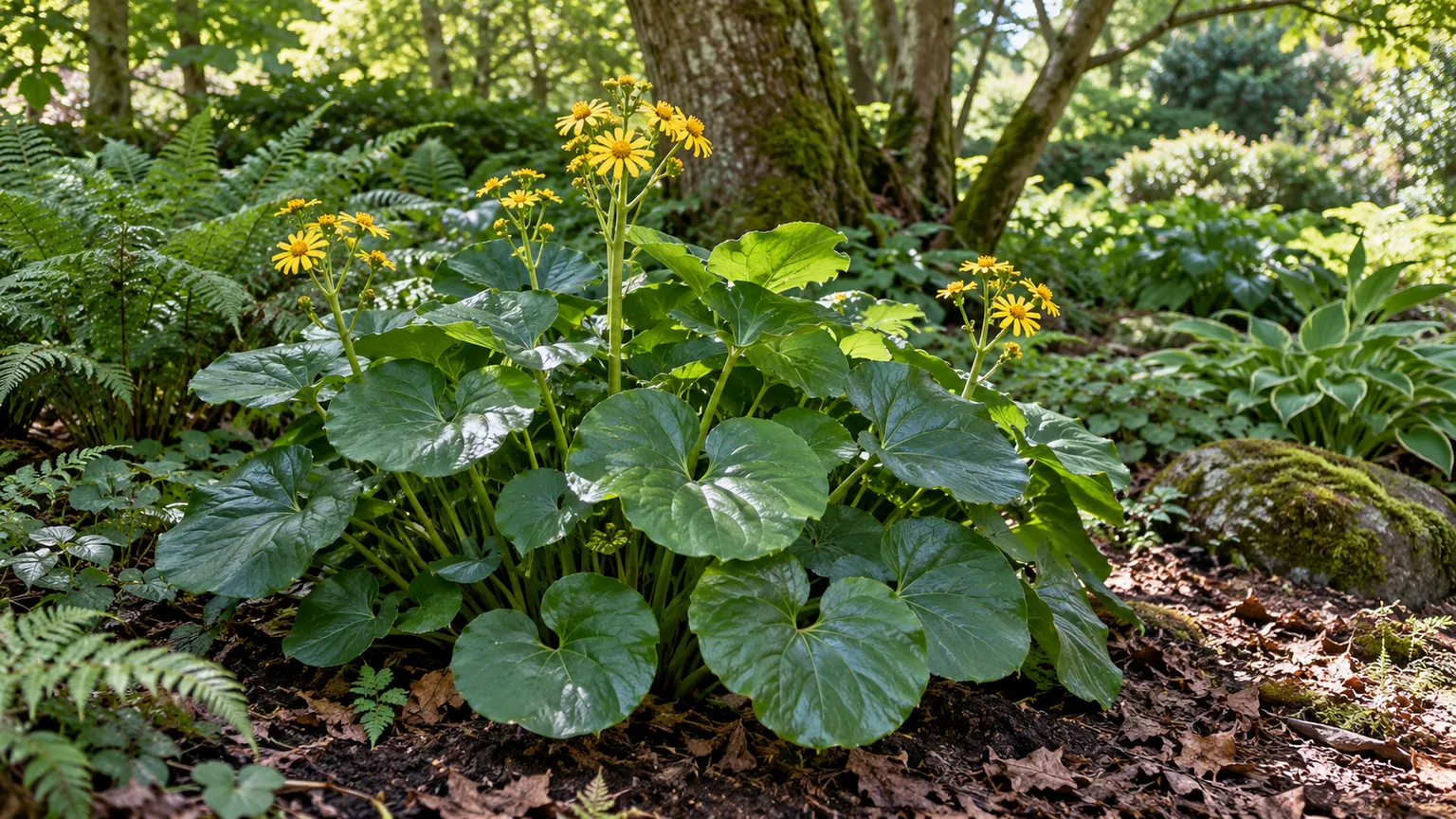
Leopard plant can look lush in a damp border, but “moisture-loving” does not mean it should sit in a puddle year-round. If a planting area stays waterlogged in winter, improve drainage with a raised bed or choose a different spot rather than adding more organic matter to a hole that already holds water. Gardening Know How likewise recommends a semi-shaded, protected location and consistent soil moisture, especially while a new plant establishes.
Light: Bright Shade With Gentle Sun
Start with partial shade or dappled light, especially in a hot-summer climate. The plant can tolerate deep shade, but the best garden site is often bright enough to keep new growth sturdy while shielding the leaves from hot afternoon rays. A little morning sun may be fine in a cool or mild region; it is not a reason to move a plant that is growing well.
Watch how the leaves respond before making a change. If they droop or develop dry, scorched patches during the afternoon and recover later, heat or sun exposure is a more likely problem than a need for more water.
If the plant is thin and produces few leaves in very deep shade, try a brighter position with filtered light rather than placing it in direct midday sun. The species’ large leaves lose water quickly in heat, and NC State notes that they can burn easily in sun.
Soil: Hold Moisture, Keep Air Moving
Aim for soil that is rich in organic matter, remains damp through warm weather, and still drains freely. A loam with compost or leaf mold usually offers a better balance than either sand that dries quickly or a compacted clay pocket that stays airless. The Missouri Botanical Garden recommends humusy, organically rich soil with medium moisture; NC State lists high-organic-matter soil that is moist or occasionally wet but well-drained.
Before planting, check the bed after a soaking rain. If water is still pooled the next day, improve the bed’s drainage or select another location.
If the soil is dry and crumbly a day after watering, add compost across the planting area and mulch after planting. Avoid correcting a large soil problem by filling only the planting hole with a different mix; that can create a wet or dry pocket around the root ball instead of improving the whole root zone.
Planting Leopard Plant Outdoors
Plant in spring after severe frost risk has passed, or in early fall where the plant has time to root before cold weather. Set the crown at the same depth it grew in its nursery pot, firm the soil gently, and water slowly until the root ball and the surrounding soil are both moist. If you are planting several, give each cultivar room for its mature spread; many plants reach roughly 1–2 feet across, while larger forms need more space.
A new plant needs more attention than an established clump. Check the root ball and nearby soil every few days during hot, dry stretches in the first growing season, since the nursery mix can dry at a different rate from the garden bed.
Water deeply when the root zone is beginning to dry, then let excess drain rather than giving small surface sprinkles. A 1- to 2-inch layer of compost or leaf mold around the plant helps reduce evaporation; keep it pulled slightly back from the crown so the base does not stay packed and wet.
Water by Soil Condition, Not Calendar
Keep the root zone evenly moist, especially during the first summer and when the plant is producing leaves or flower stalks. In a garden bed, press a finger into the soil several inches from the crown: if it is still cool and damp, wait; if the upper few inches are drying, water slowly at soil level. During hot weather, check more often, but do not automatically water every time the leaves droop.
That distinction prevents the most common watering mistake. A plant with dry soil needs a thorough soak; a plant that wilts in wet soil needs relief from heat, sun, or poor drainage, not another watering.
If water runs off the surface, apply it in two slow passes so it can soak in. In a container, water until it drains from the bottom, then empty the saucer. Reduce watering when growth slows in cool weather, but do not let a pot dry completely for a long stretch.
Feed and Mulch Without Overdoing It
If the bed is fertile and receives a spring layer of compost, extra fertilizer may not be necessary. A thin top-dressing of finished compost or leaf mold replenishes organic matter and helps steady soil moisture without forcing soft, fast growth. This plant is grown mainly for foliage, and a heavy dose of nitrogen can encourage leaves at the expense of a balanced display of flowers.
For a potted plant, use a quality potting mix and follow the product label if the mix contains a time-release fertilizer. If it does not, a modest dose of balanced fertilizer at the start of active spring growth is usually enough; stop feeding by late summer so the plant can slow down before winter.
More fertilizer will not correct yellowing caused by saturated soil, drought, or sun scorch. Diagnose the growing condition first, then feed only if the plant has been in the same container or depleted soil for a while.
Grow Leopard Plant in a Container or Indoors
Choose a wide, stable pot with several drainage holes and enough room for the clump to expand. A container around 12–16 inches across suits many young plants, but use the root ball and cultivar size as your guide rather than treating that measurement as a rule. Move up one pot size when roots fill the container or water passes through immediately; an oversized pot stays wet longer and can leave a small root system sitting in unused damp mix.
Use a moisture-retentive potting mix that still drains, and place the container in bright shade outdoors or in bright indirect light indoors. A pot dries faster than a garden bed in hot, windy weather, so check it more often during summer.
Indoors, do not set it in a dark corner just because it tolerates shade, and keep it away from hot afternoon glass or heating vents. Bring outdoor pots under cover before a hard freeze if your local winter is colder than the plant can handle; the roots in a container are more exposed to cold than roots in the ground.
Foliage and Flowers Through the Seasons
The foliage is the main show: large, leathery, rounded leaves that form a low clump, with flowers rising above them on separate stalks. Healthy leaves are firm and glossy, though a brief midday droop in hot weather does not necessarily mean the plant is dying. New leaves emerge from the crown, so protect that base when clearing old foliage or applying mulch.
Flower timing depends on climate. North Carolina State Extension describes blooms from summer into fall, while the RHS profile notes late autumn and early winter flowering in its UK conditions.
The useful expectation is a late-season display that may arrive earlier in warmer regions and later in cool ones. If the plant makes healthy leaves but no flowers, first consider its age, light, and whether it receives enough moisture during summer; do not assume that a single missed season means the plant is failing. Gardeners who value the leaves above the flowers can remove stalks as they appear, but that is a design choice rather than a health requirement.
Leopard Plant Varieties and What They Change
The standard species has solid green leaves; not every leopard plant has spots. ‘Aureomaculatum’ is a familiar gold-speckled cultivar, while other selections are valued for ruffled or crinkled edges, compact habits, or larger leaves.
The Gardenia profile for ‘Aureomaculatum’ describes its spotted foliage and shade-garden appeal. Check the nursery label for the cultivar’s mature width because size and leaf pattern can vary substantially.
Choose a cultivar for the space you actually have. A compact, ruffled form can work near a path or in a pot, while a larger selection makes a better focal plant in a broad, moist border.
Variegated foliage can brighten deep shade, but avoid exposing it to more sun simply because its leaves look lighter. The plant still needs the same protection from heat and dry soil, and the cultivar’s winter tolerance may not match the species’ listed range exactly.
Prune for Clean Growth
Routine shaping is unnecessary. Remove leaves that are fully yellow, torn, or collapsed by cutting their stalk close to the crown with clean pruners; leave partly green leaves in place because they are still supporting the plant. Cut spent flower stalks down after the blooms fade if you want a tidier clump or do not want seed to develop.
If a hard freeze damages the foliage, wait until the damage is clear and the worst cold has passed before removing it. The remaining leaves can help protect the crown during unsettled weather, and premature hard pruning can expose new growth if temperatures fluctuate. Do not shear the whole plant just to keep it compact; divide a crowded clump in spring instead of cutting away healthy foliage.
Divide a Leopard Plant Clump
Division is the dependable way to make more plants and refresh a crowded clump. The RHS recommends division in spring; wait until new growth makes the crown easy to see, then work on a cool day when the soil is moist but not muddy. Prepare the new planting spots first so the exposed roots do not dry while you look for a place to put them.
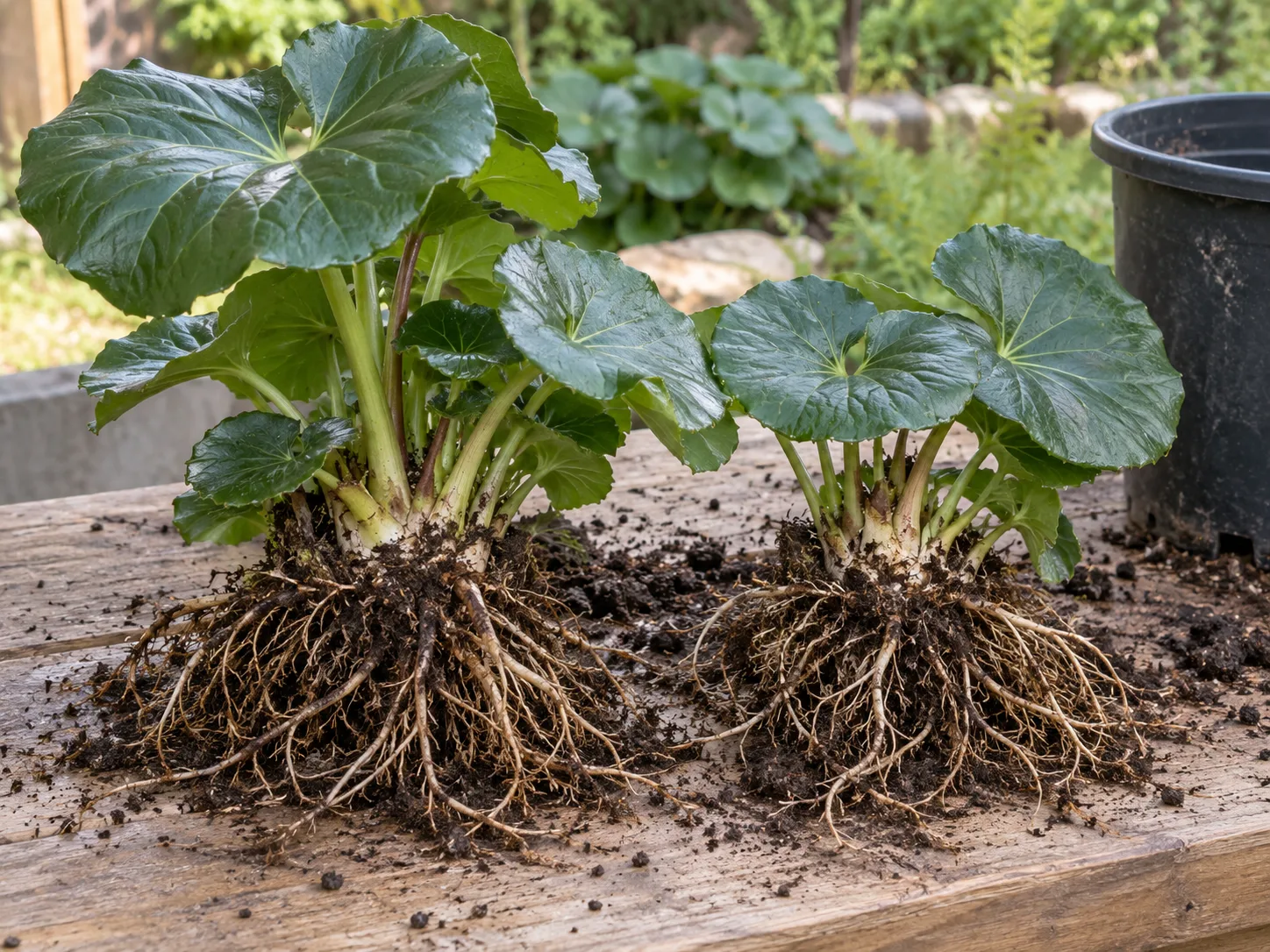
- Water the clump the day before if the soil is dry, then loosen a circle around it with a spade or garden fork.
- Lift the root mass with as much root attached as practical, supporting the plant from underneath rather than pulling on the leaves.
- Separate it into sections by hand or with a clean, sharp knife. Each piece needs a firm crown or growing point and a usable portion of roots; a loose leaf stalk without crown tissue will not become a new plant.
- Replant each division at its original depth, firm the soil, and water it in thoroughly.
- Keep the new divisions evenly moist while they re-establish, and provide shade from strong sun for the first few weeks if the weather is warm.
Smaller divisions take longer to fill out, while a larger section usually resumes growth sooner. Avoid dividing during a heat wave, drought, or immediately before a hard freeze; all three conditions make it harder for damaged roots to recover. The RHS guide to dividing perennials explains the same basic timing and replanting approach for clump-forming perennials.
Grow Leopard Plant From Seed
Seed is an option when you want several plants or want to raise a seedling from a flowering clump, but it is slower and less predictable than division. The RHS lists seed sowing in containers in winter or spring. Collect ripe seed after flowering, sow it in a clean seed-starting mix, and follow the seed supplier’s directions for covering and temperature because seed lots and cultivars can differ.
Keep the mix lightly moist, not soaked, and give seedlings bright indirect light after germination. Pot them on once they have several true leaves and can be handled without crushing the crown.
Harden them off before moving them outdoors, then plant after frost danger has passed. Seedlings may not come true to a named cultivar, especially if other Farfugium plants flowered nearby; choose division when you need to preserve a particular leaf pattern or growth habit.
Protect Leopard Plant in Winter
Leopard plant is often grown outdoors in USDA Zones 7–10, but published ranges differ and a sheltered site matters. The Missouri Botanical Garden notes that foliage can die back when temperatures fall to about 20°F, while the RHS describes the plant as somewhat tender and recommends protection from cold, drying winds. These references are not a promise that every plant will survive that temperature: cultivar, soil drainage, wind exposure, and how quickly cold arrives all affect the outcome.
In a borderline climate, plant in a sheltered spot and apply a loose winter mulch over the root zone after the soil cools, keeping the crown itself from being smothered. Pull mulch away as new growth begins in spring.
If you grow the plant in a pot, move it to a cool, bright, frost-free place before a hard freeze and water less while growth is slow. In colder regions, container growing is safer than leaving an expensive specimen exposed, but it still needs light and occasional moisture while dormant.
Troubleshoot Leopard Plant Problems
Start with the pattern, not a single leaf. A large tropical-looking leaf loses water quickly, so heat and dry wind can cause temporary droop even when the roots are not dry.
At the same time, the plant does not tolerate a long dry spell well, and saturated soil can deprive roots of oxygen. Check the soil, the time of day, and whether the symptoms affect one old leaf or most of the clump before changing care.
Wilt, Scorch, or Yellow Leaves
If leaves droop in hot afternoon sun but perk up by evening or morning, heat stress is likely. Give the plant more afternoon shade and reduce wind exposure; water only if the soil is also dry.
If the root zone is dry several inches down, give it a slow, thorough soak and add mulch. If the soil is already wet, do not keep pouring water on it; check drainage and move a container out of reflected heat.
Scorched patches or crisp edges usually point to direct sun, hot wind, or a combination of heat and dry soil. Yellow leaves are less specific: one older outer leaf can yellow naturally as it ages, while widespread yellowing with persistently wet soil suggests root stress.
Very deep shade can also leave a plant weak, but do not respond to yellowing by moving it straight into full sun. First remove obvious stress, then wait for new growth to show whether the correction helped.
Slug Damage and Stalled Growth
Irregular holes, ragged leaf edges, or a silvery trail point toward slugs or snails, which shelter in damp, shaded places and can chew the broad leaves overnight. Check under nearby pots, boards, and dense ground cover after dark or early in the morning.
Hand-pick pests when practical, reduce hiding places around the crown, and keep the area clean without stripping away the mulch that is helping the soil stay moist. NC State Extension and the RHS both identify slugs and snails as likely pests.
If growth stalls, check whether the clump has dried repeatedly, sits in compacted waterlogged soil, or is crowded by another plant before adding fertilizer. A healthy but slow-growing plant may simply be settling in after planting or recovering from winter. Correct the underlying condition and assess new leaves over the next several weeks rather than repeatedly disturbing the roots.
Keep Leopard Plant Out of the Kitchen
Treat leopard plant as an ornamental, not an edible or medicinal herb. The Hong Kong Hospital Authority’s clinical toxicology reference lists the whole plant as poisonous and identifies pyrrolizidine alkaloids among its toxic constituents. Do not use its leaves, stems, or flowers in food, tea, or home remedies, even if a gardening source elsewhere discusses culinary traditions.
Place the plant where young children and pets are not likely to chew it, and wash your hands after handling cut material if sap or plant debris is on your skin. The clinical reference is about human toxicology and does not establish a safe dose for a particular pet or person. If someone or an animal ingests any part, contact your local poison center, medical professional, or veterinarian for case-specific advice; do not try to induce vomiting unless they tell you to.
Conclusion
Leopard plant is easiest to grow when you match its two non-negotiables: shade from hot sun and soil that stays moist while draining. Give a new clump room, water by checking the root zone rather than the calendar, and use compost mulch instead of heavy feeding. In a marginal winter climate, protect the crown or keep the plant in a container you can shelter.
Once established, it asks for little routine pruning. Divide a mature clump in spring when you want more plants, and diagnose drooping or yellow leaves before watering or fertilizing again. That simple sequence—site first, soil check second, intervention last—keeps the broad foliage healthy and makes this bold shade perennial a reliable fit for the right garden.