How to Grow and Care for Indoor Cacti
From desert globes to rainforest holiday cacti, learn how to set up the right light, soil, watering, and winter routine for the plant you own.
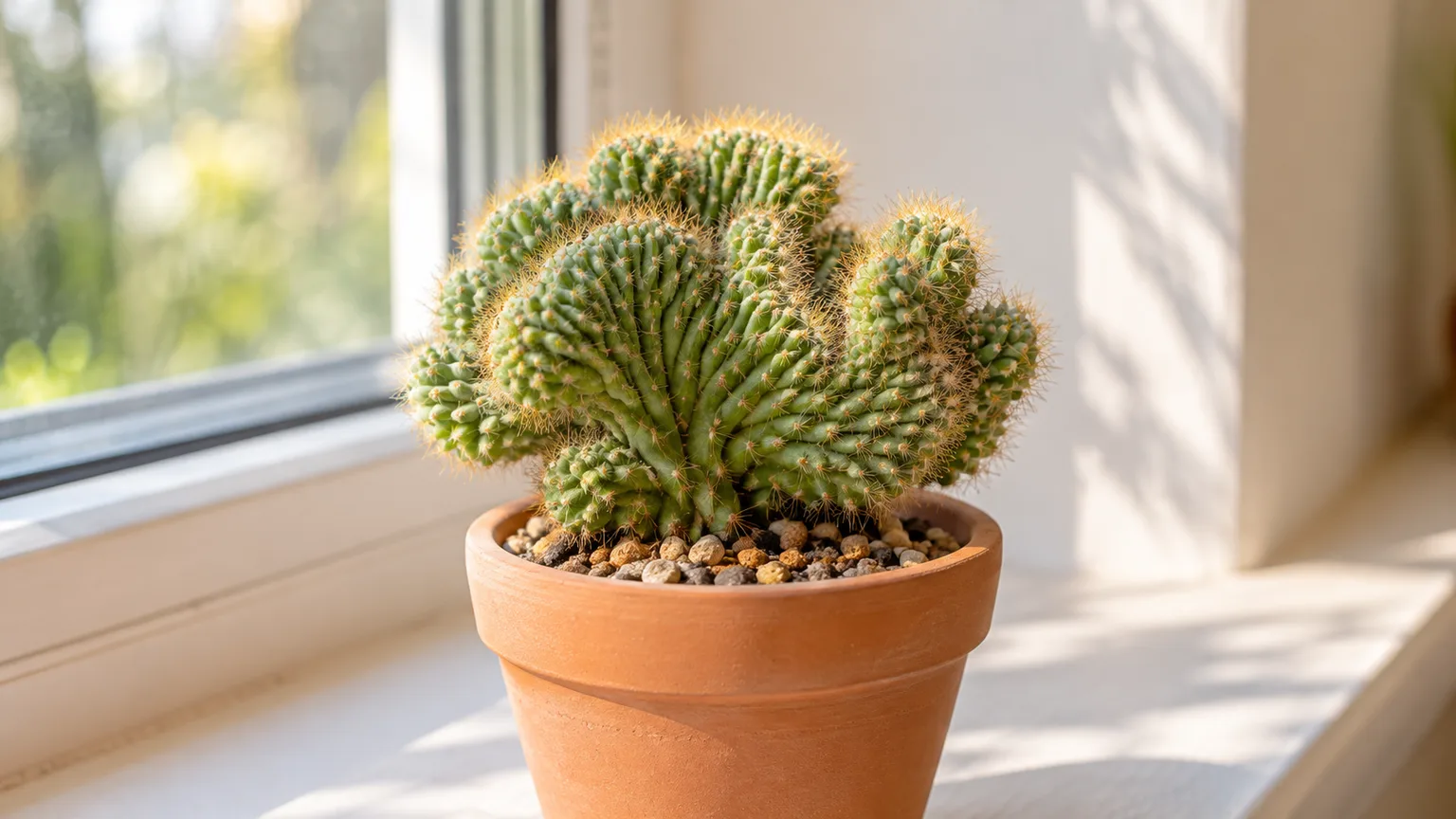
An indoor cactus usually needs bright light, a pot that drains, and a watering routine tied to how quickly its soil dries. The detail that changes the whole plan is the cactus itself: a desert barrel cactus and a rainforest Christmas cactus may share a family, but they do not want the same light or winter treatment.
Start by identifying the plant, then adjust light, soil, and watering to match its growth pattern. Most failures come from treating every cactus like a miniature desert plant, leaving the pot wet for too long, or moving a nursery-grown cactus into harsh sun all at once.
Identify Your Cactus Before Changing Its Care
“Cactus” describes a large and varied plant family, not one set of houseplant instructions. The familiar desert forms have fleshy stems, areoles (the cushion-like points that produce spines or flowers), and adaptations for long dry spells. Some cacti, however, grow on trees in tropical forests and have flatter, leaf-like segments or trailing stems.
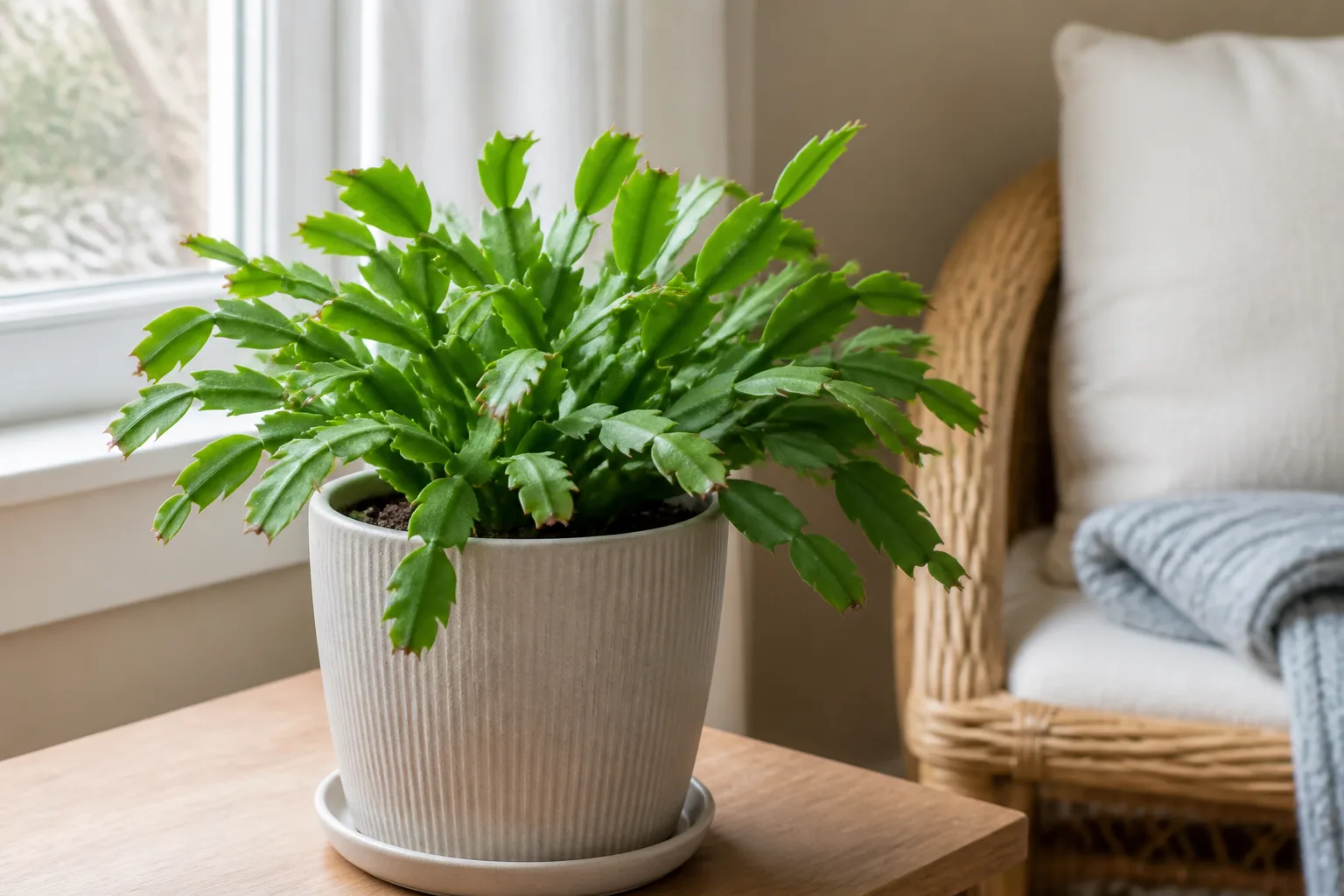
If the plant has upright, round, ribbed, or columnar stems and prominent spines, it is probably an arid-climate type. If it has flattened joints, scalloped segments, or long hanging stems, it may be an epiphytic cactus such as Schlumbergera, Rhipsalis, or Epiphyllum. A plant label or a photo-based identification from a botanical garden or extension service can help; do not rely on the common name alone.
Desert and forest cacti need different routines
Desert cacti generally want stronger light, a gritty medium, and a dry rest when growth slows in winter. Forest cacti usually prefer bright filtered light, a more organic but still free-draining mix, and more regular moisture while actively growing. Clemson Cooperative Extension makes this distinction in its indoor-cacti guidance, including the different needs of arid and rainforest groups.
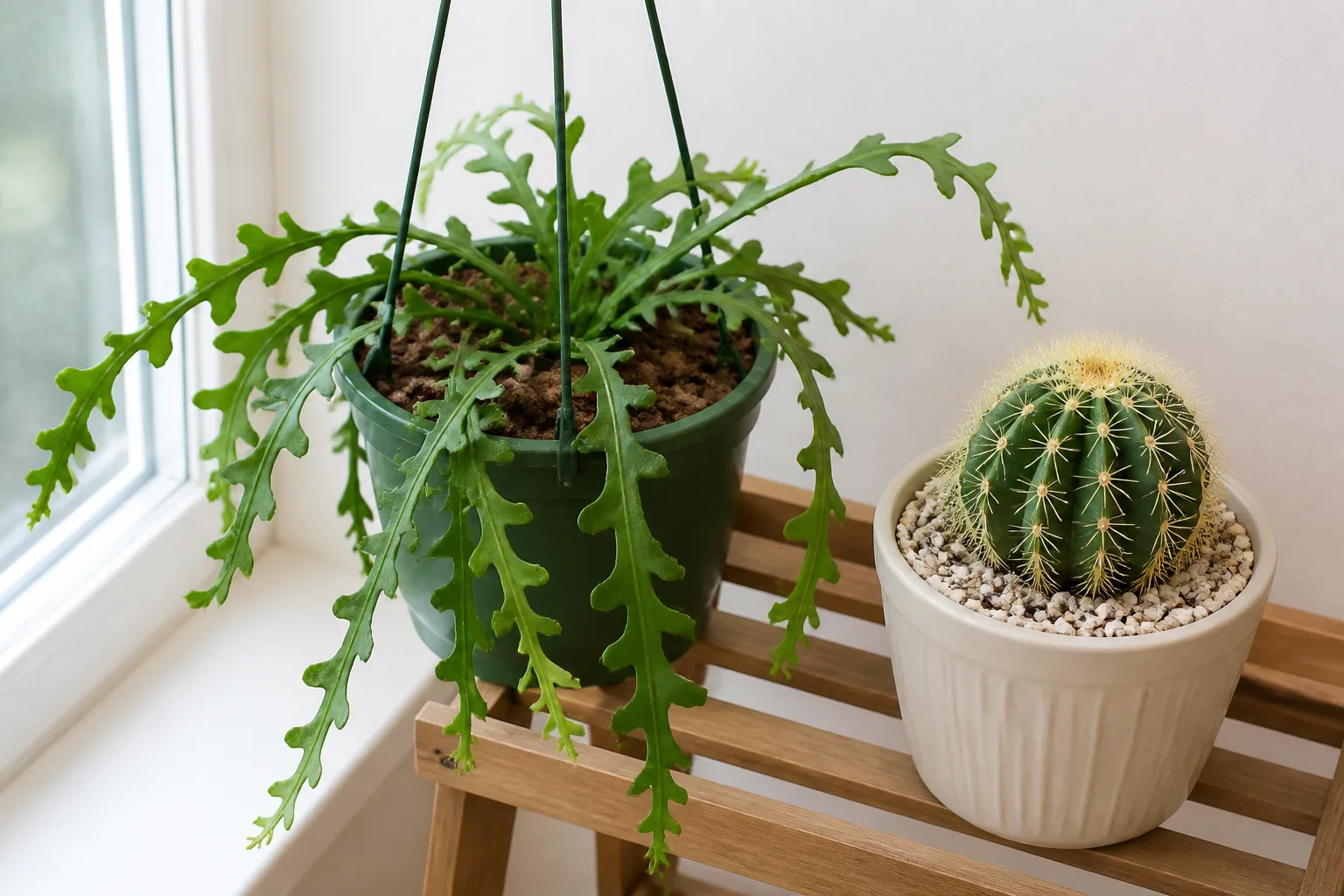
That distinction also explains why a universal rule such as “water every two weeks” can fail. A small cactus in a terracotta pot beside a warm window dries much faster than a large plant in a deep plastic pot in a cool room; a Christmas cactus in bloom has different needs again. Keep the nursery tag until you have confirmed the species or at least its growth type.
Give an Indoor Cactus Enough Light
For most desert cacti, the brightest practical window is the best starting point. A south- or west-facing window in the Northern Hemisphere often provides several hours of direct sun; an east-facing window may suit some smaller or less sun-tolerant plants. Window direction is only a rough guide: nearby buildings, trees, season, glass, and distance from the pane all change how much light reaches the plant.
Watch the newest growth. A desert cactus that is not getting enough light may produce narrow, stretched growth that leans toward the window, while a sudden increase in harsh sun can bleach, yellow, or scar tissue. Rotate the pot a quarter turn every week or two if one side leans, but do not keep moving the plant between very different locations.
If a sunny window is unavailable, a grow light can fill the gap. Position it according to the fixture maker’s distance and duration guidance, then watch the plant’s new growth over several weeks; a light meter or a phone app can help compare locations, but it cannot identify the needs of a particular species by itself. Epic Gardening’s indoor succulent advice also emphasizes bright placement and a grow-light option when a home lacks a suitable window.
Acclimate it before increasing direct sun
A cactus raised under greenhouse shade or store lighting may burn if you place it in direct afternoon sun on its first day home. Move it closer to the bright window in stages over about one to two weeks, or use a sheer curtain during the transition. If you are moving it outdoors for summer, begin in open shade and add morning sun gradually; bring it back inside before temperatures drop below the plant’s safe range.
Forest cacti are the exception to the “more direct sun is better” shortcut. They need good brightness but can scorch in intense midday light, so place them slightly back from a hot south- or west-facing pane or filter the sun. A plant becoming pale or red at the sunny side may be stressed, not simply “getting colorful.”
Choose the Right Pot and Cactus Soil
Use a pot with at least one open drainage hole. A decorative cachepot is fine as an outer cover, but lift the nursery pot out to water and let it drain before returning it. Never leave the root ball sitting in runoff; the air around cactus roots matters as much as the water they receive.
Most desert types do well in commercial cactus mix, but some bagged mixes hold more moisture than a warm, bright home can evaporate. If the mix stays wet for days, blend in a coarse mineral amendment such as pumice, perlite, or horticultural grit. The target is a mix that wets when watered but lets excess run through and dries at a reasonable pace, not a pot filled with pure gravel. The RHS recommends free-draining, gritty compost for houseplant cacti and describes mixing compost with grit or sharp sand in its growing guide.
Forest cacti generally tolerate more organic matter than desert forms, but their soil still needs drainage. Use a loose houseplant mix amended with orchid bark, perlite, or another aerating material rather than dense garden soil. Do not combine a rainforest cactus and a desert cactus in the same pot just because they look good together; their water and light preferences conflict.
Choose a pot only slightly wider than the root ball. Excess soil that the roots cannot use stays wet longer, especially in a cool or dim room. Terracotta can speed drying, which helps a desert cactus in a humid home but may force frequent watering in a hot, dry room; plastic or glazed pots retain moisture longer. Adjust the watering check to the container instead of assuming one pot material is always best.
Water According to Dry-Down, Not the Calendar
During active growth, water most desert cacti thoroughly, then let excess drain away. Wait until the mix has dried before watering again. A shallow sprinkle can wet only the surface, leaving much of the root ball dry, while repeated small sips keep the upper roots damp and never properly flush the pot. If the pot has a drainage hole, pour slowly until water exits, empty the saucer, and let the mix dry to the level appropriate for the species.
How long that takes depends on pot size, mix, light, temperature, airflow, and season. In a warm bright room a small pot may dry in days; in winter a larger pot in a cool room can stay damp for weeks. Clemson advises allowing desert cacti to dry slightly between growing-season waterings and to become much drier during dormancy. The RHS similarly recommends checking that the compost surface has dried before watering most indoor types, rather than following a fixed interval.
Check the root zone and empty the saucer
Do not judge only by the top crust of soil. Push a clean wooden skewer near the pot wall or feel the mix a little below the surface; if it comes out cool and damp, wait. You can also learn the pot’s dry weight by lifting it after a thorough watering and again after it dries. These checks are more useful than a calendar reminder because they reflect the actual container.
Forest cacti need more consistent moisture during active growth, but they still should not sit in soggy compost. Let the mix dry somewhat between waterings, then water again before the entire root ball remains bone-dry for long periods. A blooming or bud-forming holiday cactus may drop buds after abrupt changes in moisture, temperature, or location, so keep its routine steady while buds develop.
Give Desert Cacti a Seasonal Winter Rest
Many arid cacti slow down when winter brings shorter days and cooler temperatures. If the plant is in a cool, bright room and its growth has paused, reduce watering sharply and stop fertilizing. Give only enough water to prevent severe shriveling, if needed; a dormant cactus in a cold, damp pot is more vulnerable to rot than one that is allowed to rest.
Do not impose this desert schedule on every cactus. Christmas and Thanksgiving cacti often flower in fall or winter and need a different sequence of light, temperature, and moisture to set buds. The RHS separates winter-resting desert types from winter-flowering Schlumbergera and orchid cacti in its houseplant cacti guide. For those plants, follow species-specific seasonal advice rather than withholding water because “cacti don’t need water in winter.”
Manage Temperature and Humidity
Average indoor temperatures suit many common cacti during their growing season, provided the plant gets enough light and the potting mix drains. Keep it away from cold drafts, heat vents, radiators, and windows that become icy at night. A cool winter rest can encourage some desert species to flower, but do not expose a tropical forest cactus to cold in the name of dormancy.
Most desert cacti are comfortable in ordinary household humidity and do not need misting. Water on the plant body that remains in a poorly ventilated space can encourage spotting or rot, and misting does not replace root watering. Forest types tolerate or appreciate somewhat more humidity; if indoor air is very dry, group plants or use a room humidifier, while preserving airflow and keeping the soil from staying wet.
Fertilize Lightly During Active Growth
Cacti grow slowly and do not need heavy feeding. If the plant has been in the same mix for years or is actively producing new growth, use a cactus or low-nitrogen fertilizer at the label’s conservative rate during spring and summer. Apply it to already-moist soil rather than dry roots, and do not feed a dormant plant or one with suspected root damage.
Recommendations vary: Clemson describes monthly low-nitrogen feeding during the growing season, while RHS suggests a monthly liquid feed during its stated growing months. In a home, light and growth are better guides than the calendar alone. If the cactus is not growing, improving light or replacing exhausted mix may help more than adding fertilizer; excess salts can damage roots and create a white crust on the soil.
Repot Only When the Plant Needs It
Repot when roots fill the pot, the plant is unstable, the mix has broken down and remains wet, or you need to inspect a rotting root ball. A cactus does not need a larger container every spring simply because a year passed. Choose a pot just one size larger, and repot near the start of active growth when the plant can recover.
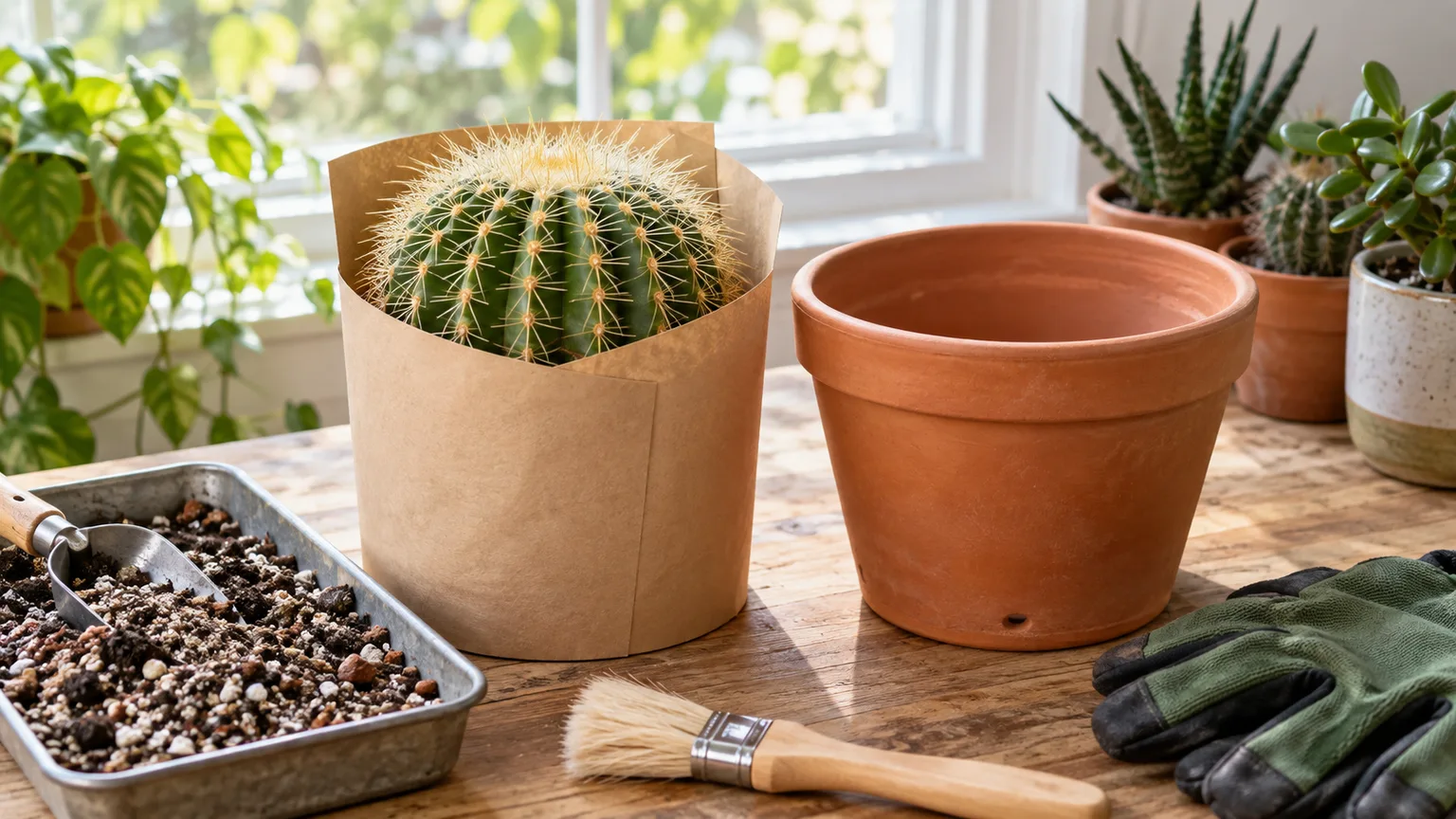
Wear thick gloves, use folded newspaper or kitchen tongs as a barrier, and avoid squeezing the stem. Bunny-ear prickly pear (Opuntia microdasys) has fine barbed glochids that can be difficult to see, so handle it as carefully as a plant with obvious long spines. Tip the pot on its side, loosen the root ball, remove loose old mix, and set the cactus at the same depth in fresh, dry mix.
After repotting, wait several days before watering so damaged roots can begin to seal. The exact delay depends on root disturbance and temperature; if you removed rotten roots, use a longer dry interval and do not return the plant to its old wet mix. A pot that is much too large is not a shortcut to faster growth—it increases the time that unused soil stays wet.
Prune and Propagate Without Injury
Most cacti need little or no routine pruning. Remove a dead flower or a clearly rotten section with a clean tool, but first determine whether the damage is limited or has reached the base. If the stem is soft and dark near the soil line, simply cutting a cosmetic tip may not save the plant; healthy tissue above the rot may be a candidate for a cutting if the species can be propagated that way.
Choose offsets, cuttings, or seed
Some clumping cacti make offsets, or pups, beside the parent plant. Once an offset is large enough to handle and has its own roots, separate it with a clean blade, let the wound dry and callus, then set it in dry cactus mix. Do not press a fresh cut into wet soil; moisture at an unhealed wound invites rot. Columnar or branching species may also root from a healthy stem cutting, but the cut end should callus before planting.
Use gloves and a folded newspaper barrier for spiny plants, and keep tools clean between cuts. Rooting hormone is optional for many cactus cuttings, not a universal requirement. The RHS recommends letting cuttings dry and callus before inserting them into a gritty mix, while Clemson lists offsets, cuttings, grafting, and seed as possible methods depending on the cactus.
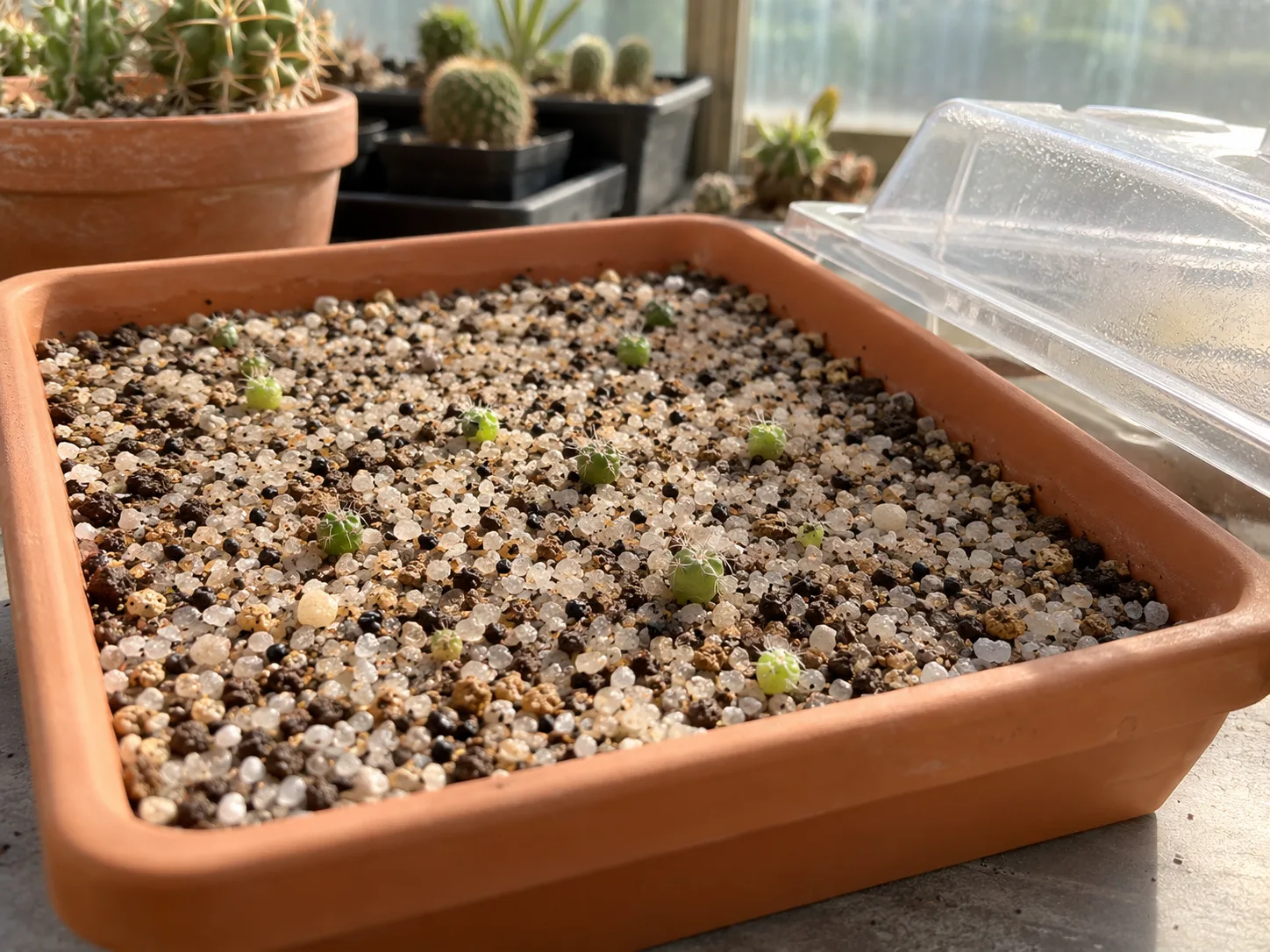
Growing cactus from seed is rewarding but slow. Use fresh or commercially supplied seed, a clean shallow container, and a fine, freely draining mix; many species germinate best in warm, bright conditions rather than direct hot sun. Keep the surface evenly moist while seedlings are tiny, ventilate a cover to limit mold, and transplant only when seedlings are large enough to handle. Unlike adult desert cacti, seedlings cannot tolerate the same long dry spells.
Encourage Flowers With the Right Seasonal Cue
Flowering depends first on the species and maturity of the plant. A young seedling may need years before it is old enough to bloom, and some plants sold as cacti are grown mainly for foliage. For arid cacti, strong light through the growing season and a cool, drier winter rest can help a mature plant form buds. A dim windowsill, warm nights all winter, or active winter watering may keep it growing vegetatively instead.
When a desert cactus has rested, resume watering gradually as days lengthen and new growth appears. Do not try to force flowers with extra fertilizer or a sudden blast of sun. Clemson’s extension guide notes the value of cool winter conditions for arid species; Gardeners’ World likewise explains that flowering patterns vary by species and season in its selection of cacti for growing.
Holiday cacti follow another calendar. Their buds respond to seasonal changes such as longer uninterrupted nights and cooler temperatures, and they need more regular moisture than an arid barrel cactus. Once buds appear, avoid moving the pot repeatedly or letting the mix swing from very wet to very dry. If a plant has not flowered, first check its identity, age, light, and seasonal routine instead of assuming it needs a stronger fertilizer.
Troubleshoot Growth and Root Problems
Change one condition at a time when possible. If a plant looks unwell, inspect the soil and stem before adding water or fertilizer; a stressed cactus can show similar symptoms for opposite reasons, and a quick extra watering can turn a recoverable problem into root rot.
Read stretching, shriveling, and soft spots
- Tall, narrow, leaning growth: New growth that is thinner than the older stem usually signals inadequate light. Move the plant closer to a bright window in stages or add a grow light. The old stretched section will not become compact again, but healthy new growth can.
- Wrinkling or a slightly shrunken body: This can mean the plant is using stored water, but check the mix before watering. If the root ball is dry and the plant is in active growth, water thoroughly and let it drain. If the soil is wet, shriveling may indicate root damage rather than thirst.
- Yellowing, brown patches, or a bleached side: Consider recent sun exposure, cold glass, and watering changes. Sunscald often appears on the exposed side after a sudden move into direct sun. Keep the plant in bright filtered light while it acclimates; scarred areas usually do not turn green again.
- Soft, dark, or collapsing tissue: Suspect rot, especially at the base or roots. Stop watering, remove the plant from the pot, and inspect the roots. Healthy roots are firm; black, mushy roots and a sour smell point to decay. Cut away affected tissue with a clean blade only if a firm, healthy portion remains, allow the cut to callus, and restart in fresh dry mix.
- White crust on the mix or pot: Mineral salts may be accumulating from fertilizer or hard water. Scrape away the crust and, during active growth, flush the mix only if drainage is excellent; otherwise repot into fresh porous mix. Reduce feeding rather than adding a corrective chemical.
The RHS lists overwatering, poor light, cold, and excessive humidity among common causes of cactus and succulent problems. Those clues overlap, so confirm the mix’s moisture and the plant’s recent conditions before choosing a fix.
Check for Pests Before They Spread
Inspect areoles, new growth, and the base of the stem every time you water. Mealybugs look like small white cottony clusters; scale insects appear as fixed bumps; spider mites may leave fine webbing and stippled or dusty-looking tissue. Isolate a plant with pests so insects do not move to neighboring houseplants.
For a small infestation, remove visible insects with a cotton swab or a gentle stream of water if the cactus can dry quickly afterward. Recheck every few days because eggs or hidden insects can survive an initial cleanup. If you use insecticidal soap or another pesticide, confirm that the product is labeled for the plant and pest, follow the label exactly, and test a small area first; spines and waxy surfaces can make coverage difficult. Discard a plant with a severe, spreading infestation if treatment would endanger the rest of the collection.
Beginner-Friendly Indoor Cacti to Consider
For a sunny windowsill, compact Mammillaria and Astrophytum are useful choices because many species stay manageable in pots and may flower when mature. Bunny-ear prickly pear offers distinctive pads but needs careful handling because of its fine glochids. A trailing Cleistocactus or rat-tail type can suit a hanging pot if you have enough light and room for long stems.
If your home has bright indirect light rather than strong direct sun, consider a forest cactus such as Schlumbergera or Rhipsalis instead of buying a desert barrel cactus and hoping it adapts to a dim shelf. Gardeners’ World’s cactus selection guide describes the range of compact globes, flowering forms, and columnar species available. Choose for the light you can provide and the mature size you can accommodate, not just the label “easy care.”
Conclusion
Indoor cactus care gets easier once you stop treating every cactus as the same plant. Identify whether yours is an arid desert type or a forest type, give it the brightest suitable light, use a pot with drainage, and water only after checking how much of the mix has dried.
Then match the seasonal routine to the plant: many desert cacti benefit from a cool, dry winter rest, while holiday cacti need their own flowering cycle. A cactus that stretches, shrivels, or softens is telling you to inspect light, moisture, and roots in that order—not to add water automatically. Make those small checks consistently and you can keep a cactus compact, healthy, and, when the species is ready, flowering indoors.