How to Grow and Care for the Queen Elizabeth Rose
Grow the tall, pink Queen Elizabeth rose with less guesswork. Get planting, watering, feeding, pruning, winter care, and troubleshooting advice for repeat blooms.
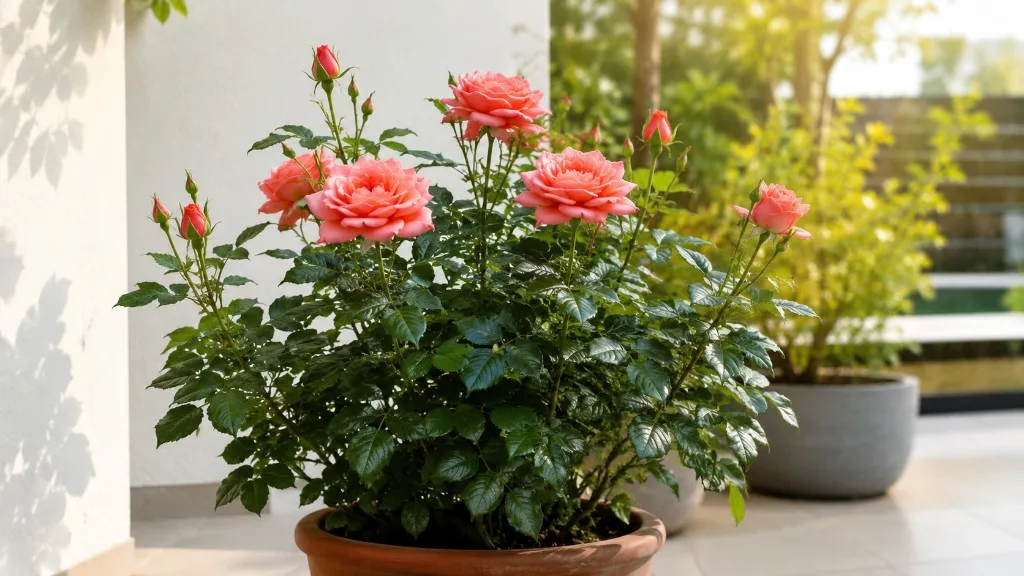
Queen Elizabeth is a tall, repeat-flowering rose with clear pink blooms and glossy, dark foliage. It can make a strong back-of-border specimen or a screen, but it needs more vertical room than a compact landscape rose. Give it sun, keep the root zone evenly supplied with water while it establishes, and prune according to the shape you want rather than cutting every cane to the same height.
Most care problems trace back to a few decisions: planting it where it gets too little sun, crowding it against other shrubs, keeping its leaves wet overnight, or feeding it late enough to encourage tender growth before winter. The steps below help you avoid those problems and adjust care to your soil, climate, and whether your plant is bare-root, container-grown, grafted, or growing in a pot.
Know Which Queen Elizabeth Rose You Have
Look for the cultivar name Rosa ‘Queen Elizabeth’. Some plant records index it as ‘Queen Elizabeth II’ or ‘The Queen Elizabeth’; the Royal Horticultural Society (RHS) lists these as synonyms for the same rose. The original selection is the tall pink bush, often described in North American references as the first Grandiflora. It was introduced in 1954 from a cross of ‘Charlotte Armstrong’ and ‘Floradora’; the blend is visible in its long stems and clustered blooms, a useful reminder that it carries traits associated with more than one rose class, as described in this Queen Elizabeth cultivar history. Classification is not completely consistent: the RHS groups its profile with floribunda or cluster-flowered bush roses. In practical terms, both descriptions point to a vigorous, upright, repeat-blooming bush with flowers on long stems—not a rose that needs to be trained like a rambler.
The familiar form has large, double pink flowers, dark leathery leaves, and a mild fragrance. A label that says “climbing Queen Elizabeth” refers to a climbing sport or related selection, which behaves differently and needs a support structure. Check the full plant label before buying; the words “Queen Elizabeth” alone may be used loosely in listings for pink roses, and a climbing plant should not be placed where you expect a freestanding shrub.
Mature-size descriptions vary. The RHS cultivar profile gives a broad range of about 5 to 8 feet tall and 3 to 5 feet wide; a breeder-based Gardenia.net profile lists a more compact 4-to-6-foot height, while a rose-growing guide from Minnetonka Orchards reports plants approaching 10 feet. Climate, rootstock, soil, and pruning all affect the result. Plan for a large rose and allow room to adjust after you see how it grows in your garden.
Choose a Site for Sunlight and Airflow
Give the rose at least six hours of direct sun, with more light generally supporting better flowering. A bright, open location also helps foliage dry after dew or rain. In a hot climate, some afternoon shade can reduce heat stress, but deep shade or competition from trees often produces long leafy canes with few flowers. Before planting, watch the site through the day rather than judging it from a single morning visit.
Avoid a pocket where water stands after rain or where air is trapped by a dense hedge. Roses tolerate a range of soils, but persistently wet roots and crowded foliage are a poor combination. Keep sprinklers from regularly soaking the leaves at night; if overhead watering is unavoidable, morning is the safer time because leaves have the day to dry. The RHS rose-growing guide recommends a sunny, open position and well-drained soil, while UC IPM’s black spot guidance notes that disease is more likely where leaves remain wet.
Leave Room for a Tall, Upright Bush
Set the rose where its mature height can be an advantage: at the back of a mixed border, along a boundary, or as a loose screen. Leave about 3 feet between Queen Elizabeth plants as a starting point, then increase spacing in humid regions or when neighboring plants have dense foliage. That space is useful for pruning and inspection as well as airflow. Avoid squeezing it beside a path if its mature canes will lean into the route or if you need frequent access to the wall or fence behind it.
It can be grown near a sturdy post or fence, but the regular bush does not need a trellis. If the plant you bought is the climbing selection, confirm its expected height and tie-in method with the nursery; do not assume a standard shrub will climb simply because its canes are long. A tall bush is easier to manage when it has open space around it than when it is forced against a support.
Prepare the Soil and Plant at the Right Time
Choose soil that drains freely yet holds enough moisture that the root zone does not dry to dust between waterings. Loam is convenient, but Queen Elizabeth can grow in clay or sandy soil when drainage and organic matter are improved. Work compost into a broad planting area instead of creating a small pocket of rich mix surrounded by hard soil; roots need to move outward into the native ground. Do not add lime or sulfur without a soil test. The RHS cultivar profile lists the rose for acid, neutral, and alkaline soils, so a precise pH adjustment is rarely the first thing to fix.
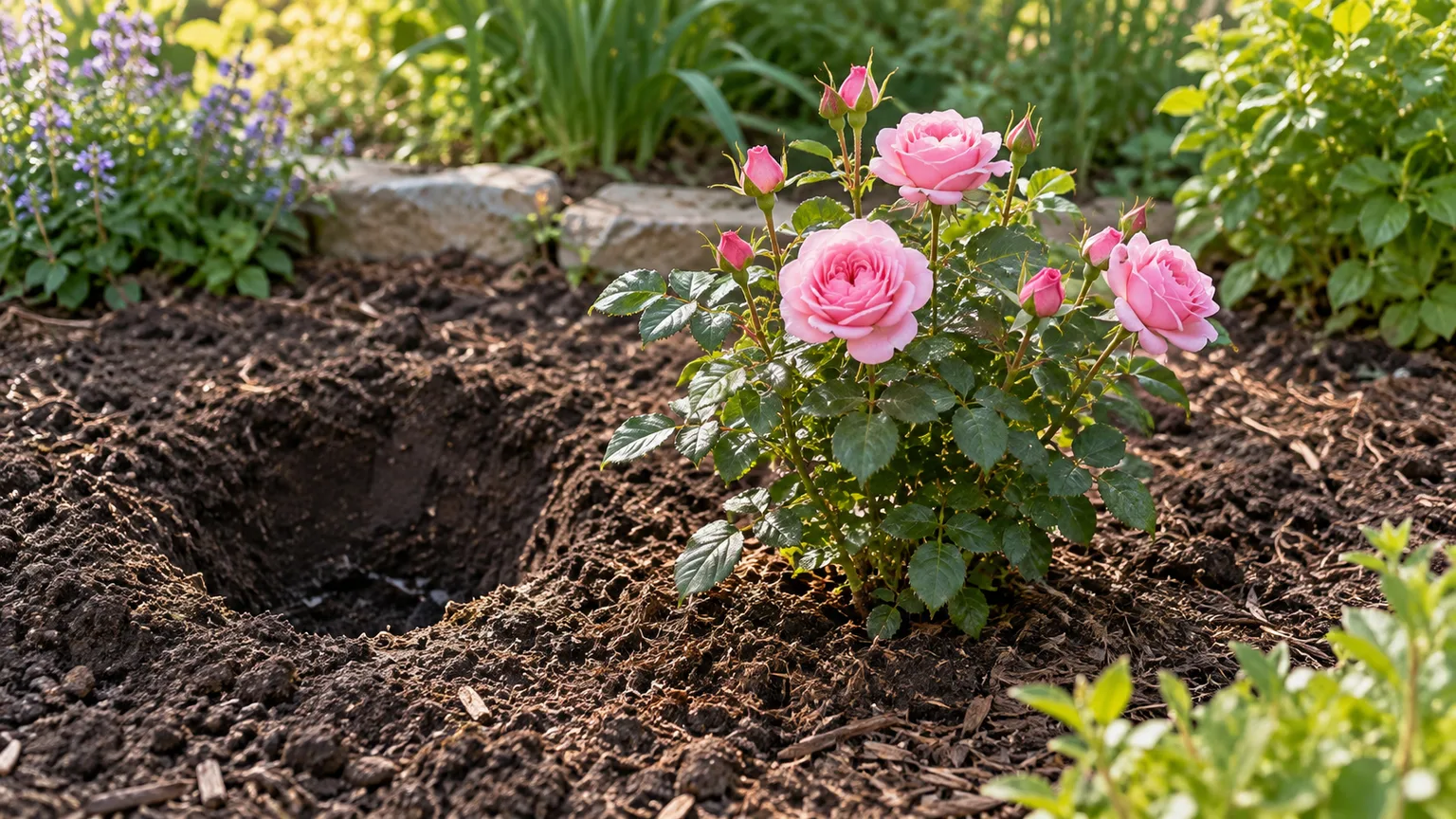
Dig a hole wider than the root spread and deep enough for the roots to sit naturally. Loosen compacted sides, remove damaged roots, and backfill with the soil you removed after incorporating a modest amount of well-rotted organic matter. Water slowly to settle the soil and eliminate large air gaps. Keep mulch a few inches away from the canes so the crown stays open to air. If replacing an old rose, choose a different spot or replace a substantial volume of soil; roses can establish poorly in ground where roses have grown before.
Match the Planting Method to the Season
Bare-root roses are sold dormant, usually in the cool season. Plant them soon after arrival while they are still dormant, as long as the soil is workable and not frozen or waterlogged. If weather delays planting, keep the roots protected from drying and follow the nursery’s storage instructions. Container-grown plants can be planted over a wider window, but avoid heat waves and dry ground; a newly planted rose needs reliable moisture while it forms roots beyond the nursery pot.
In cold-winter areas, spring planting gives a new shrub more time to establish before its first winter. In milder climates, autumn planting can work well if the plant has several weeks to root before hard freezes. These are useful regional patterns, not rigid calendar rules. The RHS planting guide recommends planting bare-root roses in late autumn or late winter to early spring and planting container roses when the ground is neither frozen nor very dry. Follow your local nursery’s advice for graft depth because planting practice varies with winter severity and rootstock.
Water Deeply and Adjust for Heat
Water newly planted roses thoroughly, then check the soil rather than following a fixed weekday schedule. Push a finger or trowel into the soil a few inches from the stem; if the root zone is dry below the surface, soak it slowly. A brief sprinkle wets the surface without encouraging deeper roots. Once the shrub is established, it may need little supplemental water in a rainy season, but hot, dry weather, sandy soil, and long periods without rain can change that quickly.
Apply water at the base so it reaches the roots while the leaves stay as dry as possible. An established rose in a border generally benefits more from a slow, deep soak during a dry spell than from frequent light watering. A container dries faster, especially when the plant is large or the pot sits in sun and wind; check it more often in summer and water when the upper layer has begun to dry, before the whole root ball becomes hard and dry. Make sure excess water can escape through the drainage holes. Soggy compost is not a substitute for consistent moisture.
The RHS rose-growing guidance advises watering newly planted roses regularly during their first few summers and watering established border roses during dry spells. It also notes that container roses may need water daily in hot weather. Treat that as a prompt to check, not a universal schedule: pot size, temperature, wind, and soil texture determine how quickly the root ball loses moisture.
Feed for Repeat Bloom, Not Excessive Foliage
Start with healthy soil and a layer of compost or other well-rotted organic mulch. If the rose is growing well and flowering normally, it may not need a complicated feeding program. Where growth is weak or the soil is poor, use a balanced rose or general-purpose fertilizer in spring as new growth begins, following the product label. A second light feeding after the first flush can support repeat flowering, particularly in nutrient-poor soil.
Avoid heavy nitrogen applications or repeated feeding simply because the plant is not blooming. Excess nitrogen can push soft leafy growth at the expense of flowers and can leave vulnerable growth late in the season. Stop feeding early enough that new shoots can harden before cold weather. The RHS rose-growing guide recommends spring feeding and a second feed in midsummer for repeat-flowering roses, with mulch to support soil structure and moisture. A healthy plant in fertile ground may need less; fertilizer cannot compensate for shade, waterlogging, or severe pruning at the wrong time.
Prune the Bush in Late Winter
Prune the established bush in late winter or early spring, when the worst cold has passed and buds are beginning to swell. In colder regions that may mean waiting later than a warm-climate pruning calendar suggests. Avoid a routine fall hard prune: late-season cuts can stimulate new shoots or leave exposed stems before winter. For a newly planted rose, focus first on removing damaged or dead growth and follow instructions for its planting stock rather than trying to shape it heavily in its first season.
Queen Elizabeth is vigorous, so the right amount of pruning depends on the job. A tall screen should retain more of its framework than a compact border shrub. Start by removing dead, broken, diseased, and rubbing stems; then open the center enough that light and air can reach the remaining canes. The RHS cultivar profile places the rose in its floribunda / cluster-flowered group, and its bush-rose pruning guide recommends pruning in late winter to early spring. The floribunda method cuts selected strong shoots to roughly 10 to 12 inches for a compact bush, while a light shaping cut can preserve more height.
Make a Clean Framework Cut
Use sharp bypass pruners and cut just above a healthy outward-facing bud, with a slight angle so water does not sit on the cut. Remove one of two canes that rub together, keeping the stronger and better-positioned one. If the middle is dense, thin a few old or weak canes at the base rather than shearing the outer surface into a tight ball. That open framework helps the foliage dry and makes it easier to spot problems. When cutting out diseased wood, disinfect the tool between cuts; University of Wisconsin–Madison Extension describes using 70% alcohol or a properly diluted bleach solution and recommends pruning in dry weather.
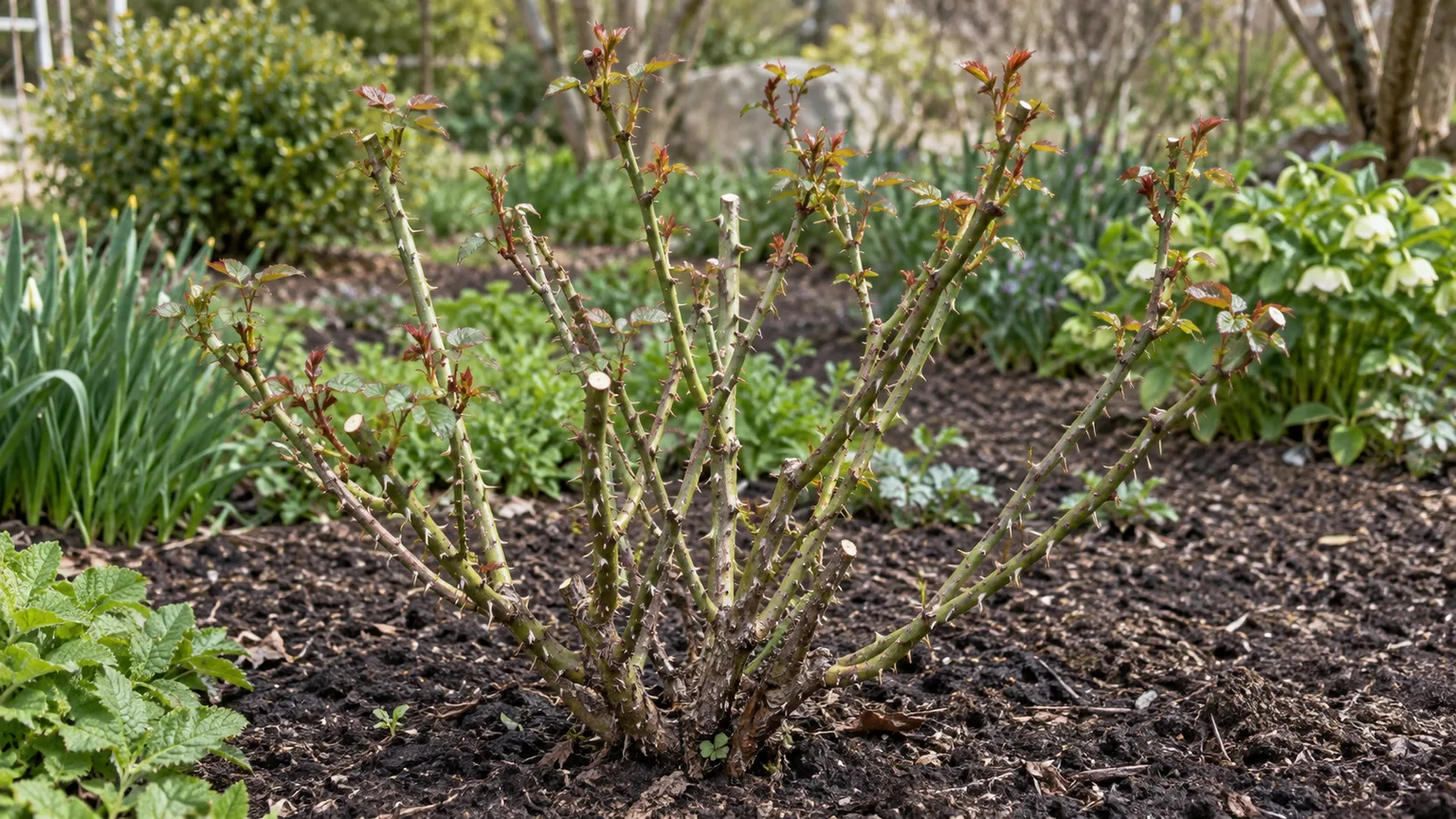
For a rose that has become too tall, shorten the strongest canes gradually rather than removing most of the plant in one year. For an overgrown, congested shrub, a more substantial renewal cut can be reasonable, but expect the next display to differ while it replaces older wood. If you are unsure whether the plant is a bush or climbing sport, wait to confirm its identity before using a hard bush-rose pruning method. When cutting out diseased wood, disinfect the tool between cuts; University of Wisconsin Extension describes using 70% alcohol or a properly diluted bleach solution and recommends pruning in dry weather.
Deadhead Between Flushes
Remove spent flowers during the bloom season if you want the shrub to put energy into more flowers instead of hips. Follow each flower stem down to a strong leaf and cut above an outward-facing bud. There is no need to cut deep into mature canes each time; repeated deep cuts can gradually reduce the size and shape you have worked to build. In late summer, stop deadheading if you want hips or want the plant to slow down before winter.
Deadheading can encourage a tidier repeat display, but it cannot create another flush when the plant lacks sun, moisture, or healthy new growth. Give the bush time to respond after a flush rather than feeding it heavily or pruning it again immediately. For cut flowers, remove only a few stems at once and keep enough leafy growth on the plant to support its next round of buds.
Diagnose Poor Blooming Before Adding Fertilizer
If a Queen Elizabeth rose produces leaves but few flowers, first check direct light. Less than six hours of sun, or shade that increases as nearby trees leaf out, is a common reason for sparse flowering. Next, consider the plant’s age and timing: a newly planted rose may spend its first season building roots, and a repeat-flowering bush naturally pauses between flushes. Wait for the next cycle if the foliage looks healthy and new buds are forming.
Then look at the recent care. Did a hard prune remove much of the flowering framework? Has the soil been dry for weeks, or is it saturated? Has the plant received frequent high-nitrogen fertilizer? Correct one likely cause at a time. Improve light or watering first; use fertilizer only if soil fertility or plant growth gives a reason. If flowers form but fail to open, inspect for thrips, rain-damaged buds, or flower balling rather than treating the plant for a nutrient deficiency without evidence.
Keep Leaves Healthy Through the Season
“Disease-resistant” means a rose may be less prone to certain diseases under comparable conditions; it does not mean that disease is impossible. Resistance varies by pathogen and local strain, and even a vigorous cultivar can lose leaves in a wet, crowded site. A Colorado rosarian writing for Gardening Know How makes the same practical point: disease-resistant roses still need pruning and thinning to maintain airflow. Start with spacing, base watering, and cleanup before reaching for sprays.
Check the lower leaves during humid or rainy stretches, because symptoms often appear there first. Remove fallen leaves from beneath the shrub, and do not leave visibly diseased foliage caught in the canopy. If the plant repeatedly defoliates despite good cultural care, ask a local extension service or rose society to confirm the diagnosis and recommend varieties or controls for your region. Different leaf spots can look alike, and treatment depends on the actual problem.
Recognize Black Spot and Powdery Mildew
Black spot usually appears as dark, round-to-irregular lesions on leaves, often with yellowing around them; affected leaves may drop early. The fungus survives on infected foliage and can spread when water splashes spores onto new leaves. UC IPM notes that infection is favored when rose leaves remain wet for hours. Avoid evening overhead watering, thin crowded growth, water at the soil line, and remove fallen leaves. These steps lower disease pressure but may not eliminate it during persistently wet weather.
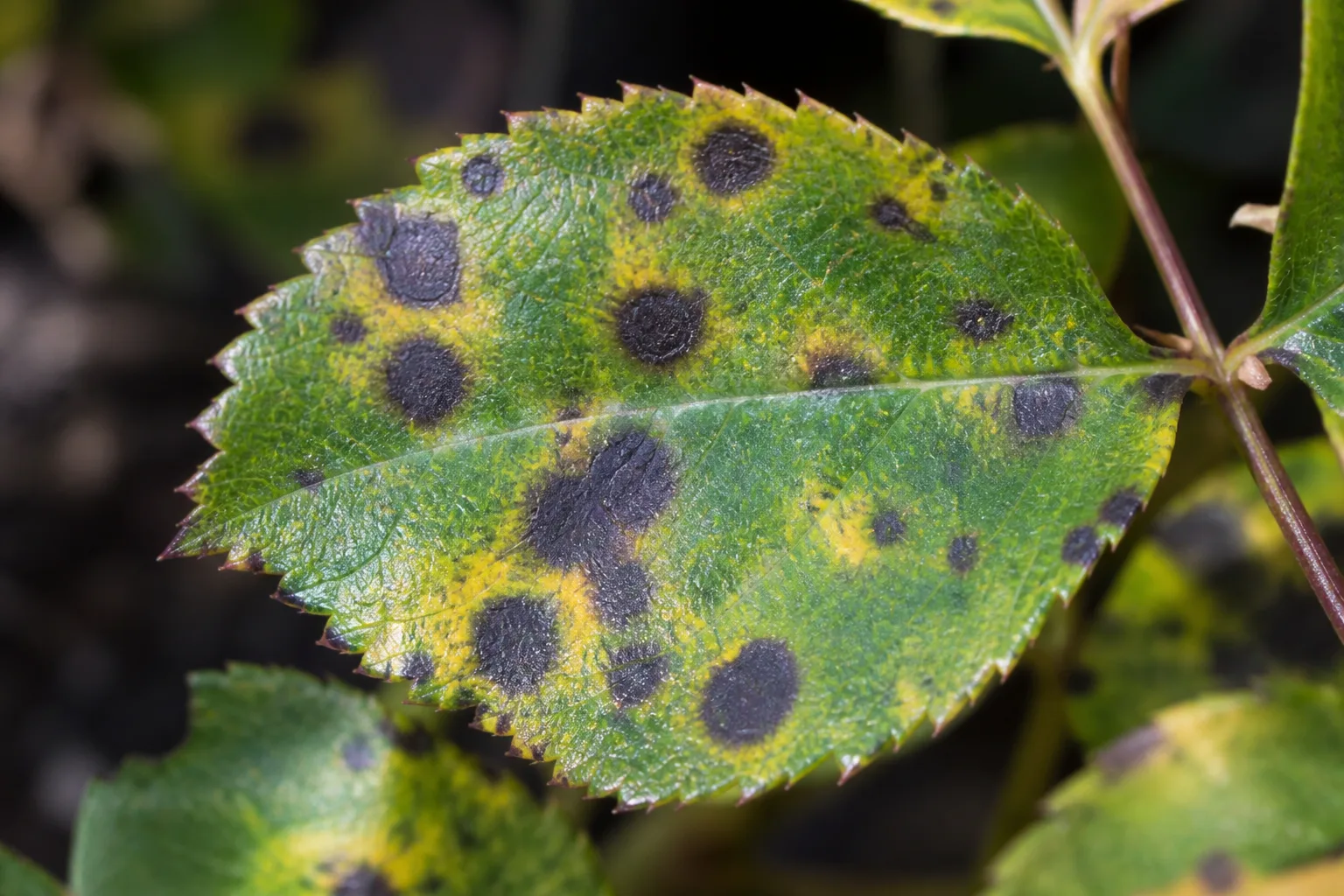
Powdery mildew looks more like a pale, powdery coating on leaves and tender shoots; it does not have the round black lesions and yellow halos typical of black spot. Cane dieback is different again: a stem dies from its tip or around a damaged section. Cut a dead cane back into healthy tissue during dry weather and dispose of the affected material. If symptoms spread quickly or you cannot identify them, take a clear sample or photographs to a local plant clinic before treating. Do not assume every yellow leaf is black spot; drought, waterlogged roots, and natural older-leaf turnover can also cause yellowing.
Manage Aphids, Beetles, and Cane Dieback
Aphids cluster on soft shoot tips and unopened buds. Check the undersides of young leaves and pinch off a small infested tip or rinse the insects from the plant with a gentle stream of water in the morning. A few aphids rarely justify broad treatment; lady beetles and other beneficial insects often feed on them. If a severe infestation persists, use only a product labeled for roses and follow its directions, taking care not to spray open flowers where pollinators are visiting.
Japanese beetles and similar chewing pests can skeletonize or hole leaves and flowers. Hand-pick visible beetles early in the day if numbers are manageable, and inspect new damage to distinguish active feeding from old scars. If entire canes are dying, look for winter injury, stem lesions, or a wound before assuming a foliar disease. Sanitize pruners after diseased cuts, and avoid moving wet, infected debris through the shrub. Good airflow will not cure every pest or disease, but it makes routine inspection and cleanup far easier.
Grow It in a Container Only If You Can Manage the Size
Queen Elizabeth can grow in a large container, but it is not a compact patio rose. The pot must be wide and deep enough for a substantial root system, heavy enough to resist tipping, and fitted with several unobstructed drainage holes. Use a quality potting mix intended for long-term container plants rather than garden soil, which can compact in a pot. Place it where the canes get sun and where you can reach the plant for pruning without blocking a walkway.
Container culture demands more frequent checks than a garden bed. The root ball heats and dries faster, nutrients wash out with watering, and roots in a pot experience colder temperatures than roots in the ground. Water when the mix begins to dry, feed modestly according to the product label during active growth, and consider repotting or refreshing the mix when roots fill the container. If you cannot move, insulate, or protect a large pot in winter, plant the rose in the ground instead.
Protect the Roots Through Winter
An established in-ground Queen Elizabeth rose is more insulated than one in a pot. In regions where it is reliably hardy, a mulch layer over the root zone is often enough; apply it after the soil cools and keep it off the canes. In colder or exposed sites, check local rose guidance for graft protection and winter mounding, because recommendations depend on the climate and whether the plant is grafted or own-root. Do not prune healthy stems heavily in fall simply to make the bush look tidy.
For a container, move the pot to a sheltered, unheated location or insulate the container once the plant is dormant. Keep the root ball from becoming bone dry, but do not leave it sitting in water. Do not bring the rose into a warm living room for winter; it needs the dormant season and is not a long-term indoor plant. In spring, uncover gradually and wait until the threat of severe cold has eased before carrying out the main pruning.
Propagate the Cultivar From Cuttings
Seed from a hybrid rose will not reliably produce a plant identical to the parent, so take a cutting if you want to preserve the cultivar. Use a healthy, nonflowering shoot and a clean blade; remove the bloom and lower leaves, then place the cutting in a moist, airy rooting medium. Keep it humid and bright but out of harsh direct sun while roots develop. The RHS rose-growing guide describes softwood cuttings in spring and hardwood cuttings in autumn through winter as options for roses, with the latter taking longer to root.
Not every cutting succeeds, and a cutting-grown plant may not match the growth behavior of a grafted nursery rose. Grafted roses combine the named top with a rootstock; a cutting grows on its own roots. Keep the new plant protected while roots establish, and do not rush it into a dry or exposed bed. If the source plant is patented or otherwise protected, check local propagation rules before selling or distributing new plants.
Use the Long Stems for Cutting and Screening
The rose’s tall canes and long flower stems make it useful as a back-of-border plant and as a source of cut flowers. Harvest in the cool part of the day when buds have begun to loosen but are not fully open. Use clean pruners, cut above a strong leaf, and avoid removing too much leafy growth from one side of the plant. The blooms are lightly scented, so plant it where visitors can enjoy them rather than relying on fragrance to fill a large garden.
Treat the stems as thorny even when a particular plant seems relatively smooth; thorniness can vary, and gloves make pruning and arranging safer. If you want a screen, allow the shrub to keep more height and renew a few old canes each year instead of cutting it into a low, uniform ball. If you want a compact border rose, prune more firmly in late winter and accept that the plant will need regular maintenance to stay within bounds.
Conclusion: Give the Rose Space, Then Prune With Purpose
Queen Elizabeth rose rewards a sunny, open site with repeated pink blooms and strong long stems. Its mature size is variable, so plan generously, keep the soil moist but freely drained, and water at the base when rain is not enough. The best routine is simple: feed only when growth calls for it, prune in late winter to preserve the shape you want, and remove fallen diseased leaves before they become a source of reinfection.
If the shrub is not thriving, check light, drainage, and airflow before changing fertilizer or applying a treatment. Disease resistance helps, but sound placement and timely care determine how well that resistance works in your garden. With those basics in place, this old-fashioned rose can be a dependable focal point for years.