Licorice Plant Care: Growing and Maintenance Guide
Learn how to grow licorice plant (Helichrysum petiolare) in beds and pots, with practical advice on light, watering, pruning, cuttings, and winter care.
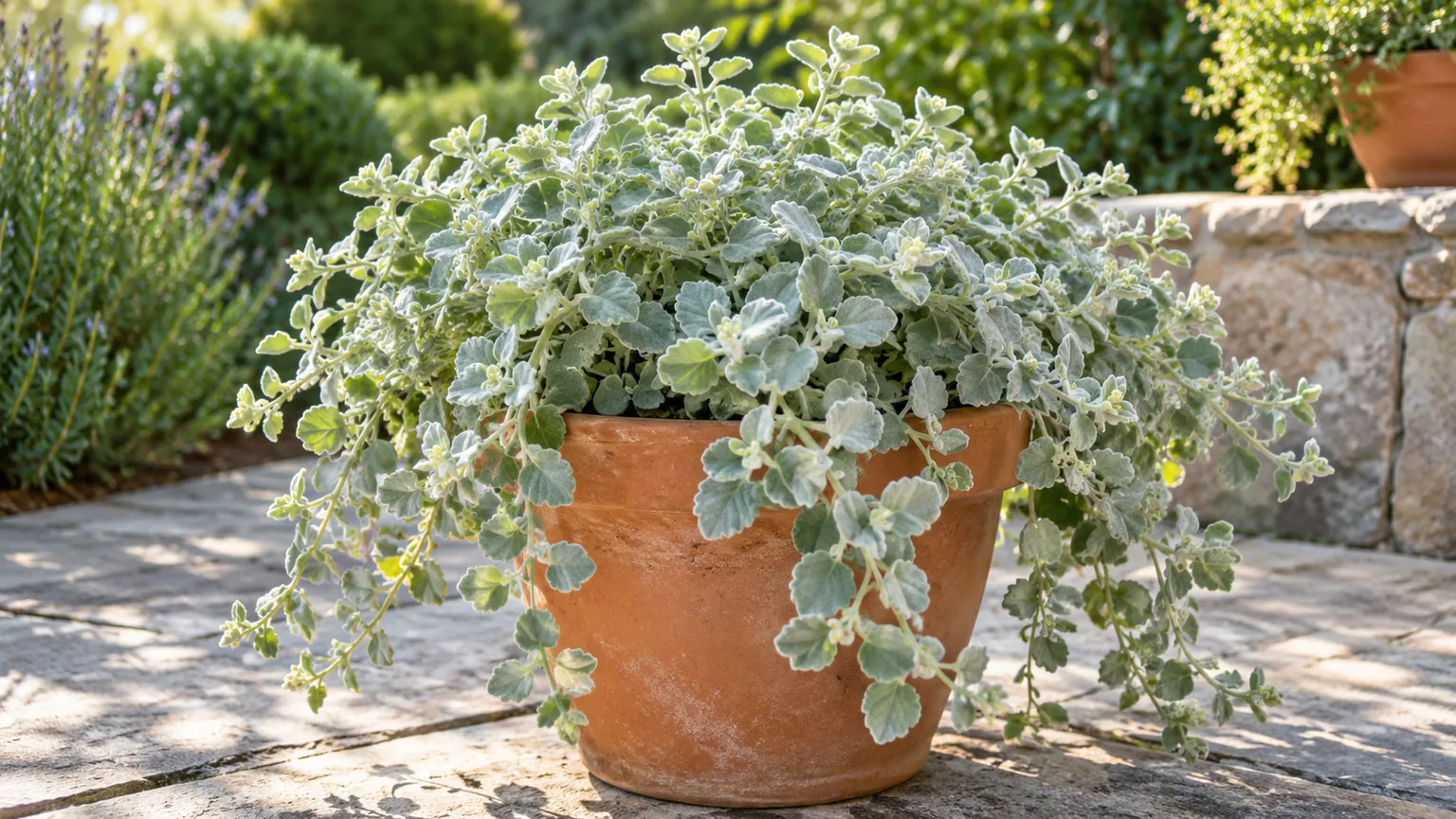
The ornamental licorice plant, Helichrysum petiolare, is grown for soft, silver-gray foliage that spills over a pot or knits into a low border. It is a South African subshrub in the daisy family, not the root crop used to make licorice candy. Give it bright light and fast-draining soil, then water according to the root zone rather than a preset calendar; the main ways to lose it are waterlogged roots and cold weather it cannot tolerate.
This plant is forgiving once established, but its size and winter behavior vary with cultivar and climate. The routine below helps you decide where to plant it, how much to water, when a trim is useful, and whether to treat it as a perennial or a seasonal spiller.
Is Licorice Plant the Same as Edible Licorice?
No. The ornamental plant discussed here is Helichrysum petiolare, in Asteraceae; the licorice root crop is Glycyrrhiza glabra, a different plant. The foliage may release a faint, sweet scent when warm or brushed, which explains the shared common name, but do not use this ornamental plant as a culinary substitute. Kew lists H. petiolare as an accepted species in the sunflower family, and HGTV explicitly distinguishes it from edible licorice (Kew Plants of the World Online; HGTV).
What Licorice Plant Looks Like and How It Grows
Look for round to broadly oval leaves with a dense coating of fine, silvery hairs. The pale foliage catches light, while flexible stems spread outward or trail down; small cream or yellowish flower clusters appear above the leaves but are not the main show. PlantZAfrica describes it as a vigorous, aromatic shrub from South Africa whose hairy leaves help reflect heat and reduce water loss (PlantZAfrica).
Expect a low plant that can spread much farther than it rises. Published mature dimensions range from roughly 1–2 feet tall and 3–4 feet wide to taller forms about 1–3 feet high; cultivar, pruning, and local growing conditions account for much of that variation (RHS plant profile; Gardenia). Give it room at the edge of a bed or choose a tall planter where the stems can hang freely instead of burying neighboring plants.
Cultivars can change the look: the usual form is silver-gray, while ‘Limelight’ is yellow-green and suits a different color scheme. A chartreuse cultivar is not a faded silver plant, and a smaller selection such as ‘Petite’ is more manageable in tight spaces. Check the nursery label for mature width rather than assuming every licorice plant has the same vigor.
Pick the Right Site for Your Climate
Licorice plant works best as a foliage accent in a sunny bed, a hanging basket, or the rim of a mixed planter. Its native range and growth habit suit a warm, open site, but the right amount of afternoon shade depends on your local heat. Site it where air can move through the plant and rain or irrigation will not leave the root zone saturated.
Light, heat, and leaf color
Use full sun as the default: several hours of direct light helps maintain compact growth and the characteristic silver foliage. In a hot inland garden, especially where afternoon sun is reflected from paving or a wall, morning sun with light afternoon shade can prevent the plant from drying too fast. South African botanical guidance notes that the standard silver form prefers full sun, while ‘Limelight’ tolerates semishade; Gardenia likewise lists full sun for the species (PlantZAfrica; Gardenia).
Deep shade is a poor trade: stems stretch toward light, the center opens, and the growth can look greener or less luminous. If the plant is floppy but the roots are healthy, move a container gradually into brighter exposure or selectively trim the longest stems after light improves. Do not fertilize a shade-stretched plant as a first fix; more nitrogen will not replace the light it needs.
Cold and humid weather
Treat H. petiolare as frost-tender unless your local climate and experience say otherwise. Plant references differ in their hardiness systems—Gardenia lists USDA zones 9–11, while the RHS gives an H3 rating for a sheltered UK setting—so neither number guarantees survival through a hard freeze in every microclimate (Gardenia; RHS plant profile). In colder regions, plan on using it as a warm-season annual or growing it in a movable pot that comes under cover before frost.
Warmth alone does not mean the plant should sit in stagnant, wet air. In humid or rainy spells, prioritize a draining root zone, avoid crowding it tightly between larger plants, and water the soil instead of repeatedly wetting the foliage. A sheltered site can help with cold, but a closed, damp corner can worsen fungal problems.
Plant Licorice Plant in a Bed or Container
Plant outdoors after frost danger has passed and the soil has warmed. Set the root ball at the same depth it grew in the nursery pot, firm the surrounding soil gently, and water to settle the roots. In a border, leave about 2–3 feet between standard plants when you want them to spread; choose closer spacing only if you are prepared to trim them or are planting a compact cultivar.
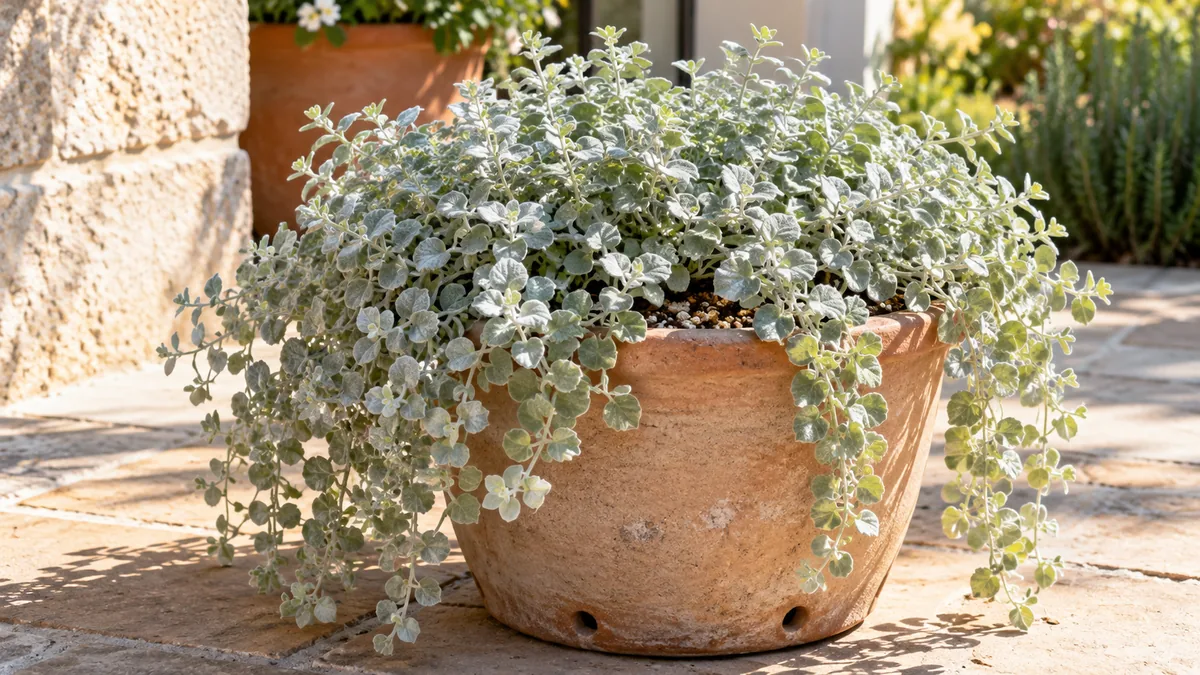
Use the plant as an edge or spiller, not as a tall central feature. Its silver foliage pairs well with upright flowering annuals that share its sun and watering needs; a mixed container becomes harder to manage if one neighbor needs constantly wet soil while the licorice plant needs the mix to drain between waterings. Gardening Know How recommends placing it near the edge of a container so stems can cascade, and the RHS lists patios and containers among suitable garden settings (Gardening Know How; RHS plant profile).
Container size and drainage
Choose a planter with open drainage holes and enough width for the roots to expand, but do not pot a small start into an oversized tub filled with slow-drying mix. A pot only a few inches wider than the root ball gives the plant space while keeping the root zone manageable. A tall or raised pot shows off the trailing stems; a shallow saucer that holds water below the pot can undo good watering habits.
When the roots have filled the container, shift the plant up one pot size in spring and refresh the mix around the root ball. If you overwinter it indoors, use a bright, airy spot rather than a dim room, and keep the container off standing water. For a basket, remember that exposed sides and wind dry the mix faster than an in-ground bed, so check it more often in hot weather.
Use a Loose, Well-Drained Root Zone
Drainage matters more than a precise soil-pH target. The plant grows in sandy and loamy soils in its native range, and cultivation references allow several soil textures as long as water can drain away; it tolerates ordinary or relatively poor soil better than persistently wet soil (PlantZAfrica; RHS plant profile). In a bed that stays wet after rain, use a raised planting area or choose a different spot rather than trying to fix a deep drainage problem with a little compost.
For pots, start with a quality potting mix and add a mineral component such as perlite or pumice if the mix stays wet for days. Do not put a layer of gravel at the bottom as a substitute for drainage holes; the water still needs a clear exit. After planting, the soil should hold enough moisture for roots to establish but should not remain soggy or smell sour.
Water by Root-Zone Dryness, Not a Calendar
Water new plants thoroughly after planting, then keep the root ball lightly and evenly moist while roots extend into surrounding soil. Once established, the hairy foliage and drought tolerance reduce the need for frequent watering, but they do not make the plant immune to long heat waves or a small pot drying out. PlantZAfrica and Gardenia describe the species as water-wise or drought-tolerant, while container guidance emphasizes that pots may need much more frequent checks during summer (PlantZAfrica; Gardenia; Gardening Know How).
Use this quick check instead of watering every few days by habit: press a finger into the top inch or two of mix, then check deeper if the surface is dry but the pot feels heavy. Water when the root zone is beginning to dry, and soak the soil evenly until excess runs from the drainage holes. Empty the saucer after it drains; roots should not stand in runoff.
Adjust the interval to the conditions. A large bed in mild weather may need little supplemental water, while a small terracotta basket in hot wind may dry quickly and need a daily check. If the leaves wilt, inspect the soil before reaching for the hose: dry soil calls for a thorough watering, while wet soil and soft stems point toward drainage trouble, not thirst.
Feed Sparingly
Routine heavy feeding is unnecessary and can make a trailing plant grow soft and unruly. If your garden soil is already fertile, skip fertilizer; if it is depleted, improve the planting area modestly with mature compost at planting rather than repeatedly feeding the foliage. For containers, a fresh, balanced potting mix usually supplies enough nutrition to begin the season.
If an established pot becomes pale or stops growing, check light, root health, and whether it is root-bound before adding nutrients. Use a diluted, balanced fertilizer only if growth and the mix indicate a genuine shortage, and follow the label. Stop feeding as cool weather slows growth; fertilizer cannot make a frost-tender plant winter-hardy.
Prune for a Dense, Cascading Shape
Pinch or snip young stem tips during active growth when you want branching, or shorten wayward stems to keep the plant within its space. Cut just above a healthy leaf pair so the remaining stem can produce side growth. Light, repeated trimming is easier for the plant to recover from than a drastic haircut after it has become woody and bare.
Avoid cutting deeply into old leafless stems unless you can see living shoots below the cut. If a plant has become sparse, first improve its light and drainage, then remove only the weakest growth; take healthy tip cuttings as insurance before reshaping it. The RHS recommends trimming as required, and Gardenia advises pinching or clipping stems that wander out of shape (RHS plant profile; Gardenia).
The small flower clusters are optional to remove. Leave them if you enjoy the late-season flowers and the pollinating insects that visit them; remove spent stalks if you prefer a smoother silver mound. Deadheading is a grooming choice, not a requirement for healthy foliage.
Propagate Licorice Plant From Cuttings
Stem cuttings are the most reliable way to keep a named cultivar looking like its parent. Use nonflowering tips in spring or late summer; the RHS lists both seasons for softwood cuttings, while other horticultural references describe semi-hardwood propagation (RHS plant profile; Gardenia). Choose a period when the plant is growing and temperatures are mild, not during a heat wave or just before frost.
Root tip cuttings step by step
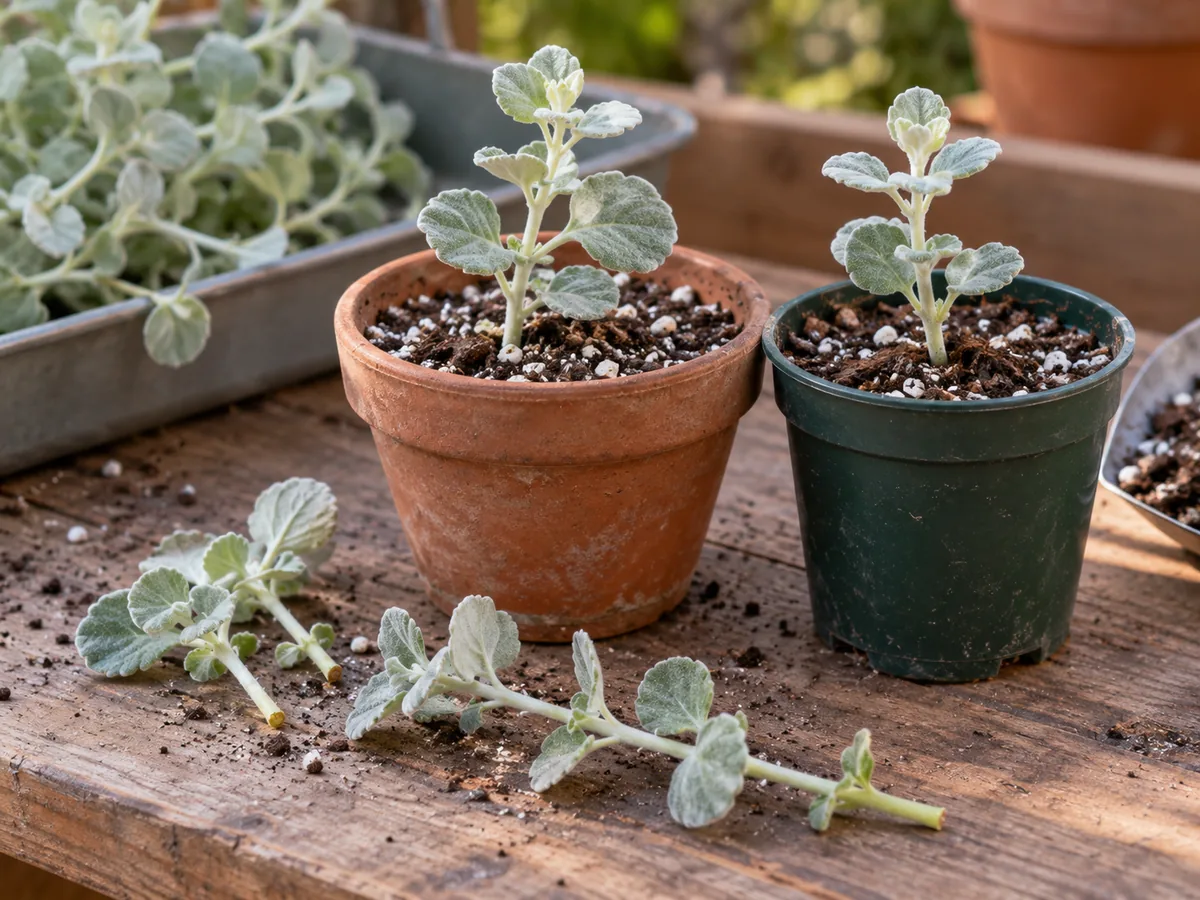
- Water the parent plant the day before cutting if its soil is dry, then choose firm, healthy, nonflowering shoot tips.
- With clean, sharp snips, take several cuttings about 3–4 inches long, cutting just below a leaf joint.
- Remove leaves from the lower half of each stem so foliage will not sit in the mix; keep a few leaves near the tip.
- Fill small pots with fresh, sterile, free-draining propagation mix and moisten it so it is damp, not saturated.
- Insert each cutting far enough to keep it upright, then firm the mix gently around the stem. Rooting hormone is optional, not a substitute for clean tools and an airy medium.
- Place the pots in bright indirect light in a warm, ventilated spot. Keep the medium lightly moist; if you use a loose humidity cover, vent it regularly and remove it if condensation stays heavy.
- When a cutting resists a gentle tug or begins making new growth, check for roots before potting it on. Harden the new plant off gradually before moving it into full outdoor sun.
Do not keep cuttings waterlogged while waiting for roots. The cutting has no functioning root system yet, so it can wilt in hot direct sun even if the mix is wet; bright shade and controlled moisture give it a better chance. If a stem turns black or collapses, discard it, clean the pot, and start again with a healthier tip and fresher mix.
Grow Licorice Plant From Seed
You can also start licorice plant from seed, especially if you want several plants for a border. Sow indoors in late winter or early spring according to the seed packet and your local frost date; South African autumn sowing advice should not be copied directly into a Northern Hemisphere calendar. Use a clean seed-starting mix, keep it evenly moist rather than saturated, and provide strong light as soon as seedlings emerge. PlantZAfrica confirms seed propagation, and HGTV recommends starting seed indoors before the last spring frost (PlantZAfrica; HGTV).
Move seedlings outdoors only after frost danger has passed, and acclimate them over several days to direct sun and wind. Seedlings may not reproduce the exact leaf color or habit of a named cultivar; use cuttings when preserving a particular silver or chartreuse form matters. Buying one healthy plant and multiplying it with cuttings is often faster than starting a small seedling tray for a single container.
Overwinter or Replant Each Year?
In warm, nearly frost-free gardens, licorice plant can persist as a perennial subshrub. Outside that climate, treat it as a warm-season annual or move a container indoors before a frost threatens. This is a tender plant with conflicting published hardiness labels; rely on your local winter lows and the actual protection your site provides, not a zone number alone (RHS plant profile; Gardenia).
To overwinter a pot, inspect the foliage for insects, remove dead stems, and bring the plant into the brightest cool room or protected greenhouse you have before cold nights arrive. Reduce watering because growth slows and evaporation drops; still check the root zone so it does not dry completely. Do not keep it in a warm, dark room and compensate with extra fertilizer—that combination tends to produce weak, stretched growth.
A potted plant may look less full indoors, even if it survives. If indoor light is poor or your winter is long, take cuttings in late summer, overwinter the small plants in a bright place, and use them to replace the outdoor display in spring. In areas where this species is locally invasive, do not dump cuttings or seed-bearing trimmings into natural areas or waterways.
Troubleshoot Fading or Weak Growth
The plant’s appearance usually points toward the next check. Start with light and soil moisture, then inspect the stems and the underside of leaves; changing several things at once makes it harder to tell which fix helped. RHS describes the species as generally pest-free, but stressed or sheltered plants can still attract sap-feeding insects or develop disease when conditions stay wet (RHS plant profile).
Leggy growth, weak stems, and dull color
If stems lengthen, gaps widen, or the plant flops outward, check whether it is getting enough sun and whether it has been overfed or watered too often. Move a pot in stages to a brighter position, reduce unnecessary feeding, and let the surface begin to dry between waterings. Once new growth is sturdy, trim the longest stems lightly to encourage branching; do not shear a weak plant hard while it is still stretching for light.
If the leaves are chartreuse, first confirm that the plant is not a ‘Limelight’ selection. If it should be silver, inadequate light is the first condition to correct; a decline in color paired with limp stems or wet soil suggests the plant needs a root and drainage check as well. Do not assume every greenish leaf needs fertilizer.
Yellow leaves, mushy stems, and pests
A few older yellow leaves can be ordinary turnover, but a yellowing plant with persistently wet soil, a sour smell, or soft dark stems may have a root problem. Stop routine watering, check that drainage holes are open, and remove standing water from the saucer. If roots are brown and mushy, trim only the damaged parts with clean tools and repot the surviving plant into fresh, free-draining mix; if the crown has collapsed, take any healthy tips before discarding it.
For whiteflies or aphids, look under leaves and tap a stem over white paper to confirm insects before treating. Isolate a container plant, remove heavily infested tips, and rinse pests from the foliage if the plant can dry quickly afterward. If you use a contact product, choose one labeled for the plant and pest, test a small area, follow the label exactly, and avoid spraying open flowers or a sun-heated plant.
In parts of coastal California, the species has escaped cultivation into natural areas and can spread through seed or stem fragments. The California Invasive Plant Council currently rates it Limited, which is a regional assessment rather than a universal ban; if you garden near sensitive habitat, check local guidance before planting and dispose of trimmings securely (California Invasive Plant Council).
Conclusion
For a full, silvery licorice plant, start with a sunny or lightly shaded hot-climate site, an open root zone, and a pot or bed that drains freely. Water more attentively while it establishes and when a container dries quickly, but let soil condition—not a calendar—set the next watering. Keep fertilizer modest, trim lightly while stems are actively growing, and take cuttings before winter if your garden freezes.
The most useful choice is often the one that fits your climate: let it spread in a warm border, feature it as a container spiller, or grow it as a seasonal annual where winters are too cold. Check the cultivar label, leave room for its width, and confirm local invasive-plant advice before planting near natural areas.