Mold on Turmeric Soil: Causes, Checks & Fixes
Quick answer
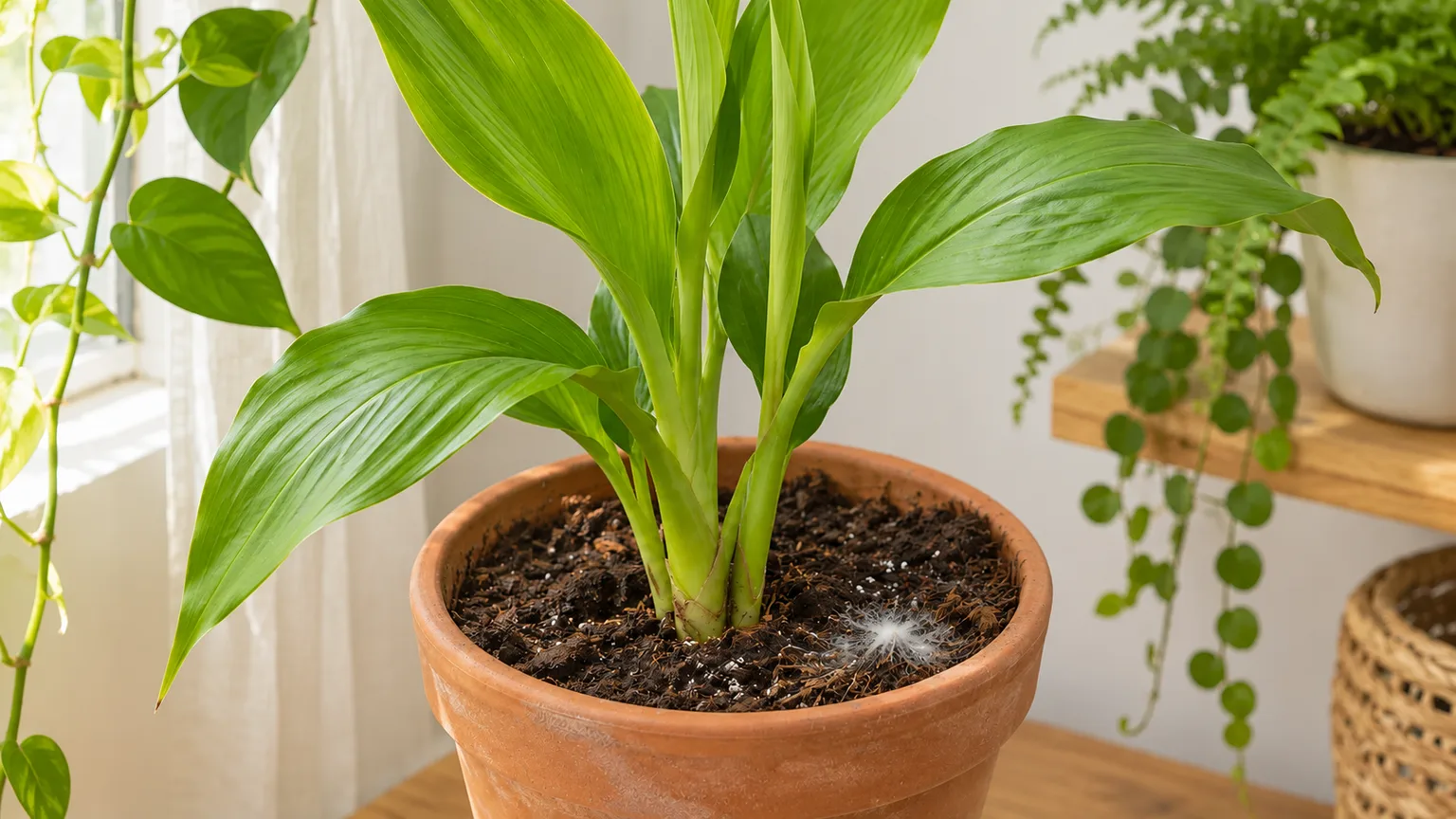
A thin, fuzzy white patch on Turmeric potting mix is often surface fungi feeding on organic matter, especially when the mix stays warm and moist. Remove the visible growth, then check how quickly the pot dries; keep active Turmeric evenly moist but never leave its rhizomes in stale, waterlogged mix.
Mold on Turmeric Soil: Causes, Checks & Fixes
This guide covers mold on soil on Turmeric. See also the general Mold on Soil guide, watering, and light pages for this plant.
Mold on Turmeric Soil: Causes, Checks & Fixes
Quick answer
A thin white or pale-gray fuzz on the surface of Turmeric’s potting mix is often saprophytic fungi feeding on dead organic material, rather than a diagnosis of disease. It commonly shows up when warmth, moisture, and organic matter coincide. The patch is a cue to inspect the growing conditions, not a reason to dry a tropical rhizome crop until it wilts. Epic Gardening describes surface mold as associated with warm, moist potting mix, while the Royal Horticultural Society explains that saprotrophic fungi feed on dead and decaying material.
For the general signs and causes of mold on soil, see the symptom guide. On Turmeric, the useful distinction is between a surface-only patch and a root-zone problem: this plant grows from thick underground rhizomes and wants moist, organic soil, but those rhizomes can still deteriorate if the mix remains stale and waterlogged.
What mold on soil looks like around Turmeric
Surface growth usually appears as a thin white, grayish, or pale tan web or soft fuzz on the uppermost mix. It may sit around bits of compost, bark, or fallen leaf tissue. A patch can return after scraping if the same warm, damp conditions remain, so recurrence alone does not establish that Turmeric has a fungal disease.
Look at the plant as well as the soil. If the leaf stalks remain firm, new shoots are emerging during the growing season, and the rhizome area has no sour smell, the visible surface growth may be an incidental decomposer. If lower stems soften, foliage collapses, or the mix smells sour, consider a waterlogged root zone and inspect further. Appearance alone cannot identify the fungus or rule out a separate disease.
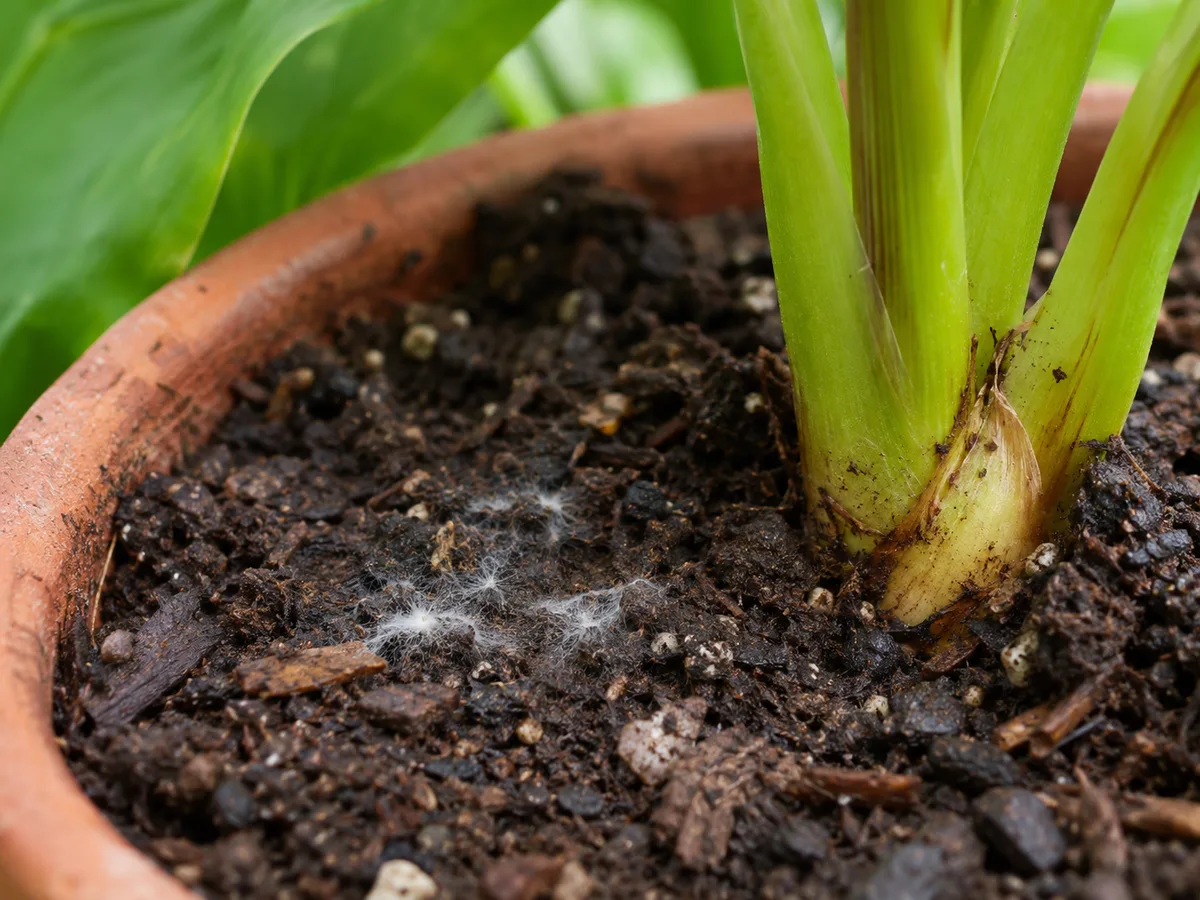
A surface patch on moist potting mix is different from a soft, decaying Turmeric rhizome.
Why Turmeric’s potting mix can grow mold
Turmeric benefits from a rich, moisture-retentive medium, and that organic matter gives decomposer fungi material to feed on. N.C. Cooperative Extension recommends loose, well-drained soil with ample consistent water for ginger and turmeric; University of Florida IFAS notes that Turmeric grows well in organic-amended soil. Those needs mean a grower should not respond to every mold patch by switching to a dry, low-organic mix.
Instead, check whether the balance has slipped from evenly moist to continuously wet. A large pot, dense mix, blocked drainage holes, a saucer holding runoff, cool weather, or reduced light can slow drying. Turmeric’s growth and water use also change as the foliage dies back toward dormancy. Colorado State University Extension notes that houseplant growing media can remain moist longer when plant water use slows, which is a useful reminder to adjust the watering rhythm as Turmeric’s active season ends.
Check the surface, pot, and rhizome
Use these checks before making a large change:
- Check depth, not just the top. Push a finger or wooden skewer a few centimeters into the mix. A damp surface can coexist with a root ball that is drying, while a surface that looks dry can cover soggy lower mix.
- Lift the container. Compare its weight after watering and as it dries. If the pot remains heavy for many days in warm, bright growing conditions, check drainage and the mix structure. Colorado State notes that slower water use leaves media moist, especially when growth slows.
- Look at drainage. Make sure the container has open drainage holes and that a cachepot or saucer is not holding runoff against the base.
- Smell near the drainage holes. A persistent sour or swampy odor supports concern about stale, saturated mix; ordinary earthy smell does not diagnose rot.
- Assess Turmeric’s growth stage. A leafy plant in warm weather needs more water than a plant whose foliage is yellowing and dying back. University of Florida IFAS describes Turmeric entering dormancy as a seasonal cue associated with harvest.
Do not unpot a firm, actively growing Turmeric just because a little fuzz is visible. If the base is soft, the rhizome smells foul, or the plant is rapidly collapsing, slide the root ball out carefully and inspect the rhizomes for firm versus mushy tissue. This is the point to compare with the Turmeric root rot guide, not to assume all white soil growth is root rot.
The first fix: remove surface growth and correct the wetness pattern
For a small patch with otherwise healthy foliage, scrape away the mold and the top layer of affected mix with a clean spoon. Bag and discard it rather than spreading it over another pot. Wipe the pot rim and tools, then leave the surface open to air. Epic Gardening recommends removing visible surface growth and correcting the conditions that let it return.
Next, water by Turmeric’s growth stage and the mix’s moisture, not by a fixed calendar. During active leafy growth, keep the deeper root zone evenly moist and let excess drain. Avoid repeatedly watering while the lower mix is already saturated. As leaves yellow and growth slows, reduce watering so the dormant rhizomes are not held cold and wet. The dormancy cue before harvest marks a change in water use. Turmeric still needs moisture while growing; complete dry-down is not the right mold treatment.
If the surface stays wet despite careful watering, improve airflow around the pot and check that the mix drains without compacting. Do not add fungicide, cinnamon, or bleach to the soil as a first response. A surface patch alone does not identify a pathogenic fungus, and unneeded chemicals can complicate diagnosis or injure roots.
Surface mold or a more serious problem?
| What you see | What it suggests | What to do |
|---|---|---|
| Thin fuzz on the mix; leaves and stalks remain firm | Surface decomposers are possible; verify moisture and drainage | Remove top growth and monitor the plant |
| Soil remains heavy and wet; gnats hover or emerge from the mix | Persistently moist growing media may be attracting fungus gnats | Adjust watering to growth stage and compare with the fungus gnats guide |
| Sour smell, soft rhizome, or collapsing stem base | Root or rhizome decay needs direct inspection | Inspect promptly and follow the root rot guide |
| Powdery mineral crust that is hard or crystalline rather than fuzzy | Fertilizer or water salts may be collecting at the surface | Review fertilizer use and water quality; do not treat it as mold |
Fungus gnats and surface mold can occur in similarly moist mixes, but one does not prove the other. Colorado State University Extension explains that fungus gnat adults prefer moist media and their larvae develop in the medium. If small flies are present, inspect the soil and use the gnat guide; if there are no flies and Turmeric remains vigorous, focus on surface moisture and airflow.
Recovery and seasonal prevention for Turmeric
Judge the result over the next few weeks by whether the fuzzy layer stays gone, the pot dries at a more predictable rate, and Turmeric continues firm growth while in season. A yellowing older leaf may not turn green again; fresh, healthy shoots matter more than reversing old damage. If the plant is entering dormancy, leaf loss can be normal, but soft rhizomes and a sour smell are not.
Prevent recurrence by using a loose mix that holds moisture but drains, keeping holes clear, and emptying standing water. Keep fallen leaves and dead debris off the surface because saprotrophic fungi feed on decaying matter. During warm active growth, do not let Turmeric bake dry; during cool rest, do not continue its summer watering rhythm. This seasonal adjustment fits Turmeric’s underground rhizome cycle better than a year-round rule to keep the pot either wet or dry.
When to inspect the rhizome urgently
Act promptly if the base of a stalk is mushy, the pot smells sour, or the plant collapses while the mix remains soaked. Surface mold alone is not an emergency, but these additional signs can indicate decay below the soil line. Remove only clearly soft or rotten rhizome tissue with a clean blade, keep remaining firm pieces in a clean, freely draining medium, and avoid watering the resting plant as if it were in full summer growth.
Related tool
Use the Plant Problem Diagnosis Tool to compare mold, fungus gnats, and root-zone symptoms before changing Turmeric’s care.