Aphids on Turmeric: How to Identify and Remove Them
Quick answer
Aphids are possible on turmeric, but North Carolina State Extension does not list them among this plant's serious pest problems. Confirm live, soft-bodied insects on tender growth before treating. First, isolate a potted plant and rinse the leaf undersides with a gentle, firm stream of water.
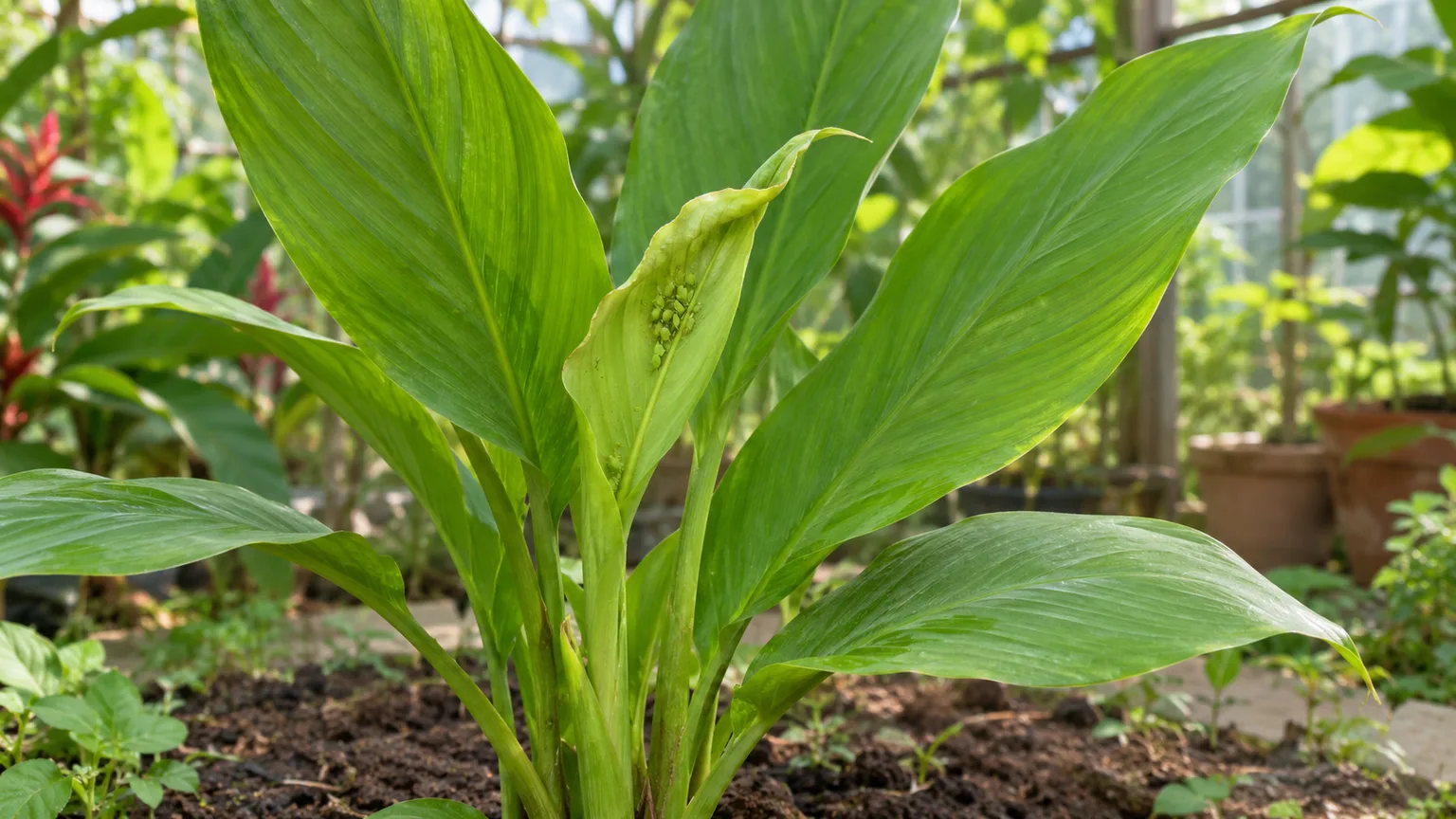
Aphids on Turmeric: Causes, Checks & Fixes
This guide covers aphids on Turmeric. See also the general Aphids guide, watering, and light pages for this plant.
Aphids on Turmeric: Causes, Checks & Fixes
Quick answer
Turmeric (Curcuma longa) has large, tender leaves and seasonal growth from an underground rhizome. Aphids can feed on soft new growth, but they are not listed among turmeric’s serious pest problems in NC State Extension’s turmeric profile. Treat a visible colony, not leaf curl by itself.
First fix: move a potted turmeric away from neighboring plants, then rinse the underside of the affected leaf with a steady, leaf-safe stream of plain water. Aim into the fold of the emerging leaf without tearing it. For a garden clump, rinse the affected foliage in place and check that runoff will not carry insects onto nearby plants. UC IPM and RHS aphid guidance both support checking the pest itself and starting with proportionate control.
Turmeric naturally slows and goes dormant as its foliage yellows and dries toward the end of its warm growing season. That normal seasonal change is not evidence of aphids; use the Turmeric overview to compare the plant’s growth stage before intervening.
What aphids look like on turmeric
Turn over the newest leaves and examine the soft, folded spear where it is still opening. Aphids are small, soft-bodied insects, often pear-shaped, that gather in groups on tender shoots and leaf undersides. Green is common, but color alone is not diagnostic. A hand lens helps reveal their legs and paired short tubes near the rear of the body, called cornicles. UC IPM’s identification guide describes their body shape and feeding on young plant tissue.
Look for several clues together:
- Live insects clustered along a leaf vein, sheath, or folded edge.
- A sticky film on the leaf below the colony. Aphids excrete honeydew as they feed; ants may visit it, and sooty mold can grow on it. The RHS description of aphid damage explains these linked signs.
- Pale, papery cast skins left behind after aphids molt.
- New leaves that are puckered, curled, or opening unevenly while older leaves remain comparatively normal.
Honeydew without visible aphids is not a diagnosis. Check the leaf above the sticky patch and inspect for other sap-feeding insects before treating. NC State notes that turmeric can also have red spider mites when soil is too dry and slugs or snails on young leaves; those are useful differentials, not reasons to spray for aphids.
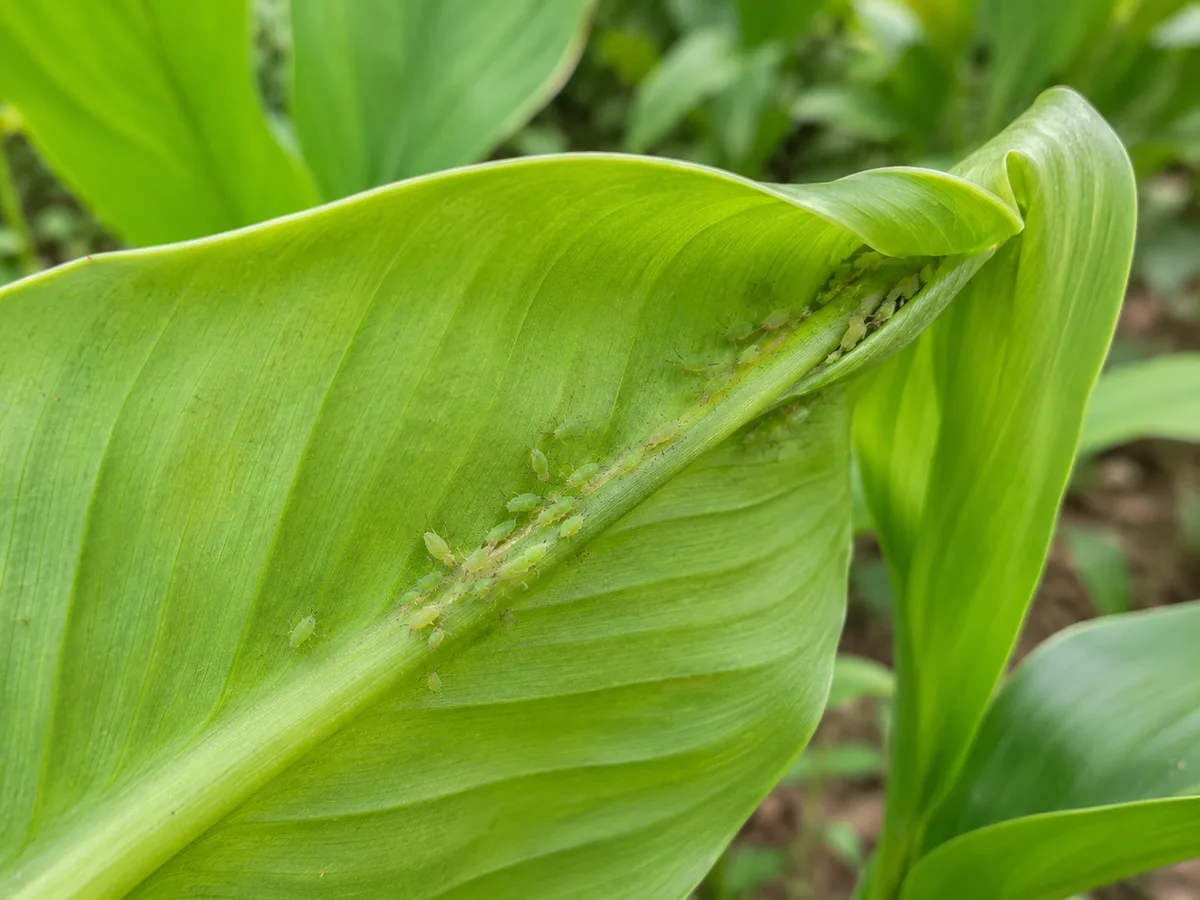
Inspect the tender fold and the underside of each affected leaf; aphids can be missed when only the upper surface is checked.
Why aphids can appear on turmeric
The vulnerable point is fresh growth. Aphids use piercing mouthparts to take plant fluids, and colonies can multiply on accessible young tissue. Turmeric’s broad leaves emerge folded from a basal clump, which gives an observer a reason to inspect the unfolding spear and its underside closely. Do not read that growth form as proof the plant is especially aphid-prone; turmeric is not generally described as having serious insect problems.
Soft new growth may be more attractive when a plant is being pushed with excessive nitrogen. Avoid feeding to force recovery; UC IPM recommends avoiding overfertilization as part of aphid prevention. For turmeric, fertilizer belongs to active warm growth, not to a dormant or declining clump. Check the Turmeric fertilizer guide if you are unsure whether the plant is actively growing.
Outdoor turmeric can also sit among plants that support lady beetles, lacewings, and other aphid predators. The RHS notes aphids’ role in garden food chains; a few colonies on a vigorous garden plant may be tolerable if they are not distorting new leaves or spreading. Indoors, isolate a confirmed colony because there may be no outdoor predator community to keep it in check.
Check the pattern before treating
Use a bright light and inspect the whole turmeric clump, not only the leaf with the most visible curl. Check the newest spear, the underside of every affected leaf, leaf bases, and nearby plants. Tap a leaf over white paper: live aphids are visible as small insects, whereas stippling and webbing without clustered insects point more toward spider mites. Compare that pattern with spider mites on Turmeric.
| What you see | More likely explanation | Next check |
|---|---|---|
| Soft insects in a cluster, sticky honeydew, and curled new growth | Aphids | Inspect the fold and leaf underside; rinse the colony. |
| Fine pale stippling and delicate webbing, especially on dry foliage | Spider mites | Use the Turmeric spider-mites guide and check whether active-season mix has dried too far. |
| Ragged holes or missing margins, sometimes with slime | Slugs or snails | Search the leaf bases and pot rim at night; do not apply an aphid treatment. |
| Distortion with no insects, honeydew, or cast skins | Seasonal leaf opening or another stress | Compare new leaves and seasonal dieback with the Turmeric watering guide. |
If foliage is yellowing across the whole clump rather than only around feeding sites, first check the season, moisture, and rhizome condition. Turmeric needs evenly moist soil while it is actively growing, then much less water as the top naturally dies back. The Turmeric light guide and soil guide help separate care stress from a confirmed pest problem.
Remove a small aphid colony safely
For a small colony, rinse the affected leaf surfaces, directing water upward onto the underside and into the leaf fold. Support the leaf with your free hand so the stream does not split the tender blade. Rinsing physically removes exposed aphids; UC IPM’s quick tips recommend water sprays for reducing populations on suitable plants. Practical aphid-removal guidance also emphasizes the leaf undersides, where colonies commonly hide. The same method is practical for turmeric’s broad leaves, provided the spray is not so forceful that it bruises or snaps the spear.
Keep the plant separate from other potted plants and recheck the same folds in a few days. Rinse again if live aphids remain. Wipe honeydew from leaf surfaces with a damp cloth after removing the insects; cleaning alone will not stop a live colony. If one leaf is badly twisted and holds a dense colony that cannot be rinsed free, remove only that leaf with clean scissors. Avoid stripping healthy leaves from a rhizome plant that needs its foliage to build and store energy.
Do not immediately spray neem, oil, or soap over every leaf. If a colony persists despite repeated rinsing, choose a labeled insecticidal soap or horticultural oil only if the current label permits use on the plant and, when the rhizome will be eaten, on edible turmeric. These products work by contact, so exposed insects must be covered. UC IPM cautions that soaps and oils may injure sensitive or drought-stressed plants, should not be applied in very hot conditions, and will miss aphids hidden inside curled leaves. Never substitute dish detergent for a formulated product or exceed its label.
When the curl is not an aphid problem
Turmeric leaves can curl from water stress, heat, or natural seasonal decline. Aphid feeding is more convincing when insects, cast skins, and honeydew occur together on soft growth. If those signs are absent, do not repeat a pesticide treatment on the basis of leaf shape alone.
Spider mites are a particularly relevant lookalike because NC State reports them on older turmeric plants when soil is too dry. They produce fine stippling and may leave delicate webbing; aphids instead form visible colonies and sticky honeydew. Slugs and snails chew holes or ragged edges, especially on young leaves. Late-season yellowing and drying across the entire clump may simply reflect turmeric’s dormant period. Use the Turmeric problems hub to route broad yellowing, root decline, and watering symptoms to their own checks.
Recovery and prevention
An already curled or scarred leaf may not flatten after the aphids are gone. Judge success by the next leaf: it should open without a fresh colony or expanding distortion. A vigorous turmeric clump can replace damaged foliage during active growth, while a naturally dormant clump will not produce a quick new flush until its growing season resumes. Do not fertilize or keep the rhizome wet to force dormant growth; follow the seasonal care pattern in the Turmeric overview.
For prevention, inspect new turmeric leaves and the undersides weekly during warm active growth, and check neighboring plants before bringing them close to a potted clump. Avoid excessive nitrogen, remove only severely infested leaves, and preserve beneficial insects outdoors. A vigorous clump is supported by the plant’s normal conditions—warmth, morning sun with afternoon shade, rich soil that drains, and regular moisture while leaves are growing—not by extra pesticide. If you need to adjust those conditions, make one care change at a time and refer to the watering guide and soil guide.
When to use this page vs other Turmeric guides
Use this page when you can see aphids or the matching signs of honeydew and cast skins on turmeric. Use spider mites on Turmeric for stippling or webbing without aphid colonies, and yellow leaves on Turmeric when yellowing affects the clump more broadly. For a plant-wide seasonal or care review, start with the Turmeric overview or browse the Turmeric problems hub.
Related tool
Use the Pest Identifier Tool to compare visible insects before choosing a treatment.
Related Turmeric guides
- Turmeric overview — Use for the plant’s growth cycle and seasonal dormancy.
- Turmeric watering guide — Use when leaves are curling but there are no visible aphids.
- Turmeric soil guide — Use when the active root zone stays saturated or dries unevenly.
- Spider mites on Turmeric — Use for stippling or webbing rather than sticky colonies.
- Yellow leaves on Turmeric — Use when yellowing is widespread or seasonal.
- Turmeric problems hub — Browse other diagnoses when the evidence does not fit aphids.