Low Humidity on Turmeric: Causes, Checks & Fixes
Quick answer
Turmeric is a tropical plant that prefers humid air, but dry or brown leaf edges do not prove humidity is the cause. Check the potting mix, drainage, light, and season first. If the root zone is evenly moist and damage is limited to leaf edges during a dry indoor spell, raise local humidity gradually while keeping leaves ventilated and the rhizome out of soggy soil.
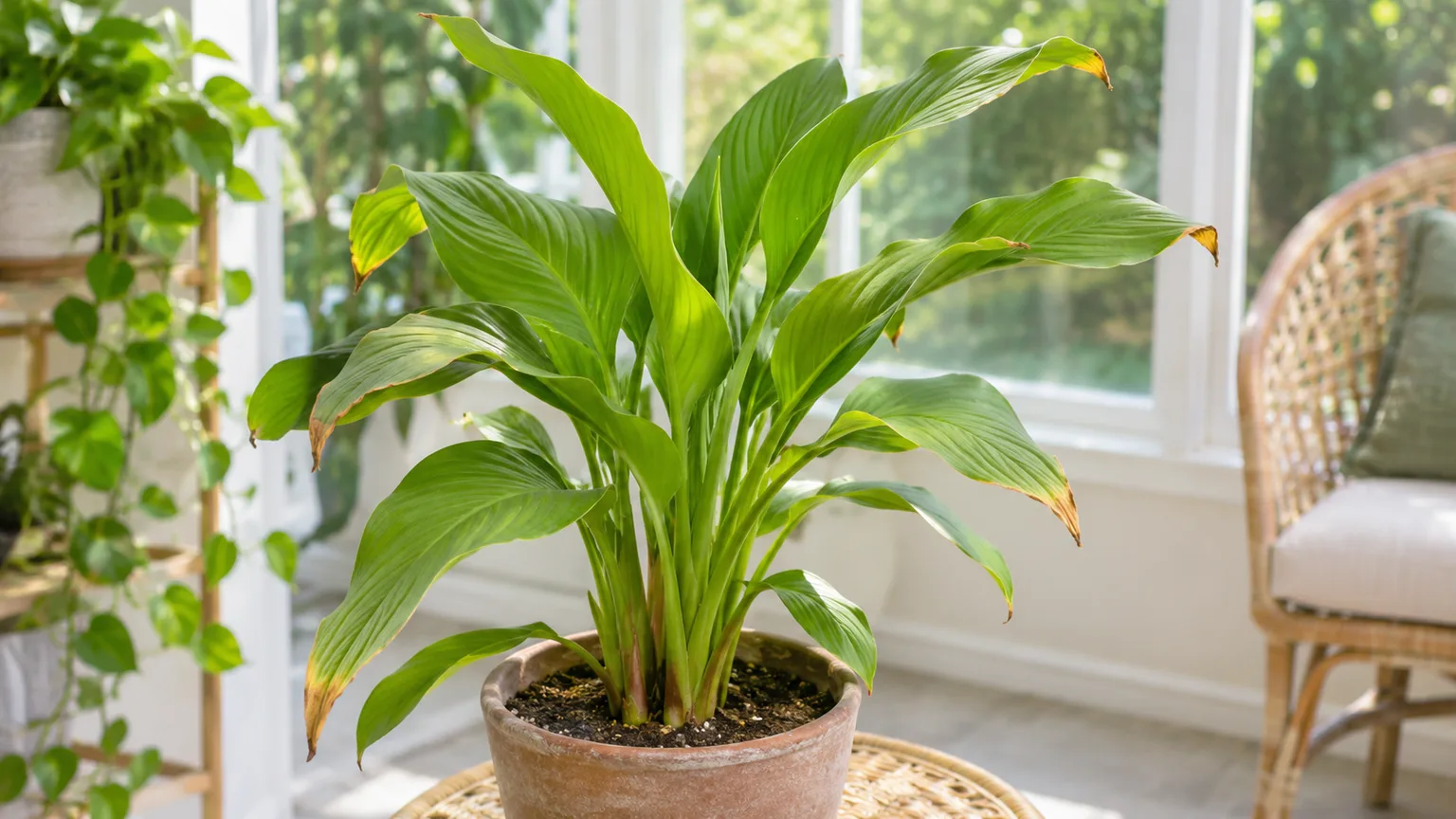
Low Humidity on Turmeric: Causes, Checks & Fixes
This guide covers low humidity on Turmeric. See also the general Low Humidity guide, watering, and light pages for this plant.
Low Humidity on Turmeric: Causes, Checks & Fixes
Quick answer
Turmeric is a tropical plant that prefers humid air, but dry or brown leaf edges do not prove humidity is the cause. Check the potting mix, drainage, light, and season first. If the root zone is evenly moist and damage is limited to leaf edges during a dry indoor spell, raise local humidity gradually while keeping leaves ventilated and the rhizome out of soggy soil. UGA Extension describes turmeric as a tropical plant that likes high humidity, warmth, and bright shade.
Turmeric (Curcuma longa) grows from an underground rhizome and produces broad, soft leaves. In pots, low humidity can speed water loss from those leaves, especially near heaters or in dry winter air. But turmeric does not have a single leaf pattern that identifies dry air on its own: underwatering, saturated roots, abrupt direct sun, and normal seasonal dieback can look similar. Make one measured change at a time so you can tell whether the plant is responding.
Warmth, bright shade, and a steady root zone help turmeric through active growth; dry edges need a few checks before you change humidity.
What low humidity looks like on turmeric
Dry-air stress is more plausible when tips or margins become papery and crisp while much of each leaf remains green. It may affect several leaves, particularly during a dry spell indoors, with the oldest or most exposed leaves often showing damage first. Leaf edges can curl, and new leaves may unfurl with dry margins if the surrounding air remains dry.
These signs are clues, not a diagnosis. A crispy edge can also follow a missed watering, hot direct sun, excess fertilizer salts, or root damage. If the whole leaf yellows and dries over several weeks as the growing season ends, consider dormancy before treating it as a humidity problem. UF/IFAS notes that turmeric foliage dies back as the rhizomes approach harvest and dormancy (Turmeric).
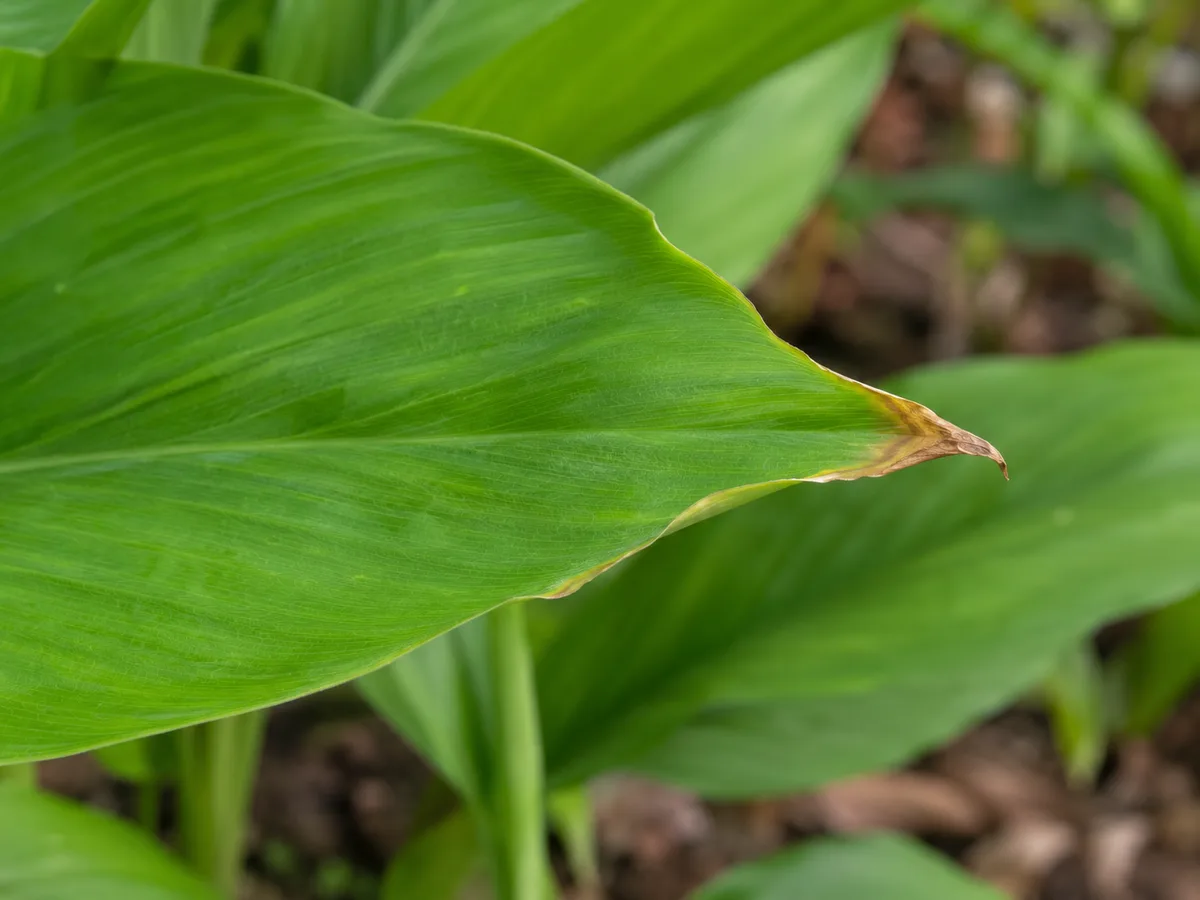
A dry leaf edge can fit low humidity, but the moisture and light conditions around the plant help distinguish likely causes.
Why dry air can stress turmeric
Leaves lose water to the air. When the surrounding air is dry, that loss can increase. If roots cannot replace water as quickly as the leaves lose it, the edges may dry first. The risk is greater when the potting mix dries rapidly, a plant sits near a heating vent, or it has recently moved from a sheltered greenhouse to a much drier room.
Turmeric’s tropical growing preferences make humidity relevant, but moisture around the leaves and moisture around the rhizome are different things. UGA Extension recommends high humidity and warm temperatures for ginger and turmeric. NC State Cooperative Extension likewise recommends a warm, humid location for sprouting rhizomes, while emphasizing loose, well-drained soil and ample, consistent water during growth (NC State Extension). High humidity does not mean keeping the soil saturated: excess moisture around a cool or poorly drained rhizome can invite rot.
Check these lookalikes first
| What you notice | More likely explanation | What to check |
|---|---|---|
| Crispy edges and a very light pot; mix is dry below the surface | Underwatering or a root ball that dries too quickly | Check moisture several centimeters down, then water thoroughly if the root zone is dry |
| Yellowing across the plant, soft lower stems, or a sour smell; mix stays wet | Poor drainage or root/rhizome rot | Empty the saucer, check open drainage holes, and inspect the rhizome if decline continues |
| Bleached or brown patches on the window-facing side after a move | Sun scorch or heat stress | Return the plant to bright shade and acclimate it gradually to stronger light |
| A crust on the potting mix or rim; damage followed repeated feeding | Fertilizer salt buildup | Pause fertilizer and review the label and feeding history |
| Most foliage gradually yellows and dries at season’s end | Natural dormancy | Reduce watering as growth stops; do not try to force new foliage with extra moisture |
If several causes seem possible, correct the clearest root-zone problem first. Do not raise humidity and increase watering at the same time: the latter can leave the rhizome wet without resolving dry air around the leaves.
How to confirm low humidity is contributing
- Check the air. Use a room hygrometer placed near the plant, away from a humidifier outlet or a sunny window. Compare readings over a few days, especially after heating or air-conditioning starts. There is no need to chase a precise percentage from a generic houseplant chart; look for persistently dry conditions and symptoms that track them.
- Feel the root zone. Check below the surface and lift the pot to gauge its weight. If the mix is dry through the root ball, water may be the immediate issue. If it remains heavy and wet, do not add water to address leaf crisping.
- Review exposure. Note recent changes such as moving the plant beside a heater, opening a window to cold dry air, or placing it in stronger sun. Turmeric prefers bright shade; an abrupt shift can damage leaf tissue even when room humidity has not changed.
- Look at the whole plant and the calendar. Is only the leaf margin affected, or are whole leaves yellowing? Is new growth active? A broad seasonal dieback near the end of the growing cycle points toward dormancy rather than a sudden humidity failure.
- Watch for pests and root trouble. Inspect leaf undersides for fine webbing or stippling. Check for soft stems, a sour smell, or persistent wetness around the rhizome if the plant is declining quickly.
First fix: raise humidity gently
If the air is persistently dry, the root zone is neither parched nor waterlogged, and the plant is still actively growing, increase humidity near the foliage in a controlled way:
- Move the pot away from heaters, radiators, and cold drafts while keeping it in bright shade.
- Run a clean room humidifier nearby and monitor the air with a hygrometer. Do not direct a strong stream of mist at the leaves or wall.
- Group plants if there is enough space for air to circulate around each one. Avoid crowding foliage against a cold window or damp wall.
- Keep watering based on the mix, not the humidity setting. During active growth, water when the upper layer begins to dry, then allow excess water to drain fully.
Misting is not a reliable long-term humidity control because the effect fades quickly. UVM Extension mentions misting when indoor air is dry, but a humidifier offers steadier control if dry conditions persist (Growing Ginger and Turmeric Indoors). Keep leaves from remaining wet in stagnant air; improving ambient humidity does not require keeping the foliage continuously damp.
Do not seal an established leafy plant in a plastic bag. Trapped condensation and poor ventilation can create a persistently wet environment. A humidity dome is useful for short-term rhizome sprouting, a different stage of growth: UF/IFAS describes pre-sprouting rhizomes in humid potting mix but cautions growers to avoid excess moisture and temperatures above its recommended range to reduce rot and disease risk (UF/IFAS production guide).
Recovery and prevention
Existing brown, crisp tissue will not turn green again. Improvement means the damage stops expanding and new leaves emerge with healthy margins. Check the plant weekly and record humidity, watering, and new growth for two to four weeks. Turmeric grows slowly enough that a few days is not a useful recovery test.
During active growth, keep the plant warm, give it bright shade, and maintain even—not waterlogged—moisture. Use a pot with drainage and a loose mix that does not remain saturated. NC State’s home-growing advice pairs consistent moisture with well-drained soil, while UF/IFAS production guidance notes that excess moisture and cool conditions increase disease concerns. As the growing season ends and foliage naturally declines, reduce watering instead of maintaining summer conditions (UGA Extension).
Seek a different diagnosis if leaves collapse rapidly, lower stems soften, or the rhizome becomes mushy or foul-smelling. Humidity adjustments cannot repair rotted tissue. For other symptom patterns, compare the Turmeric problem guides, including brown tips, drooping leaves, root rot, and spider mites. Review the plant’s watering needs and light needs when those conditions have recently changed.
Frequently asked questions
Does turmeric need high humidity?
Turmeric is tropical and grows best with warm, humid conditions. A dry room can contribute to crispy leaf edges, especially when the pot dries quickly, but humidity is only one possible cause.
How can I tell if low humidity is harming my turmeric?
Look for dry, crisp tips or margins during a period of dry indoor air, then check that the mix is not very dry or waterlogged and that leaves have not recently been scorched by stronger sun. Symptoms alone cannot confirm low humidity.
Should I mist turmeric leaves to raise humidity?
Misting gives only a brief change in humidity and is not a dependable way to control room moisture. A humidifier near the plant or grouping plants can provide a steadier local increase; keep air moving and avoid leaving foliage wet for long periods.
Can brown turmeric leaf edges turn green again?
No. Crispy, dead tissue will not turn green again. Judge improvement by whether the damage stops spreading and the next leaves emerge without fresh crisping.
Could dry turmeric leaves mean the plant is going dormant?
Yes. If most foliage gradually yellows and dies back near the end of the growing season, turmeric may be entering normal dormancy. Reduce watering as growth stops rather than trying to maintain summer moisture or humidity.
Related tool
Use the Plant Problem Diagnosis Tool to compare dry edges with other symptoms before changing more than one care factor.