Rhizomes in Plants: How They Grow and Spread
Learn what rhizomes are, how to tell them from roots, bulbs, tubers, and runners, which plants spread this way, and how to divide or contain them.
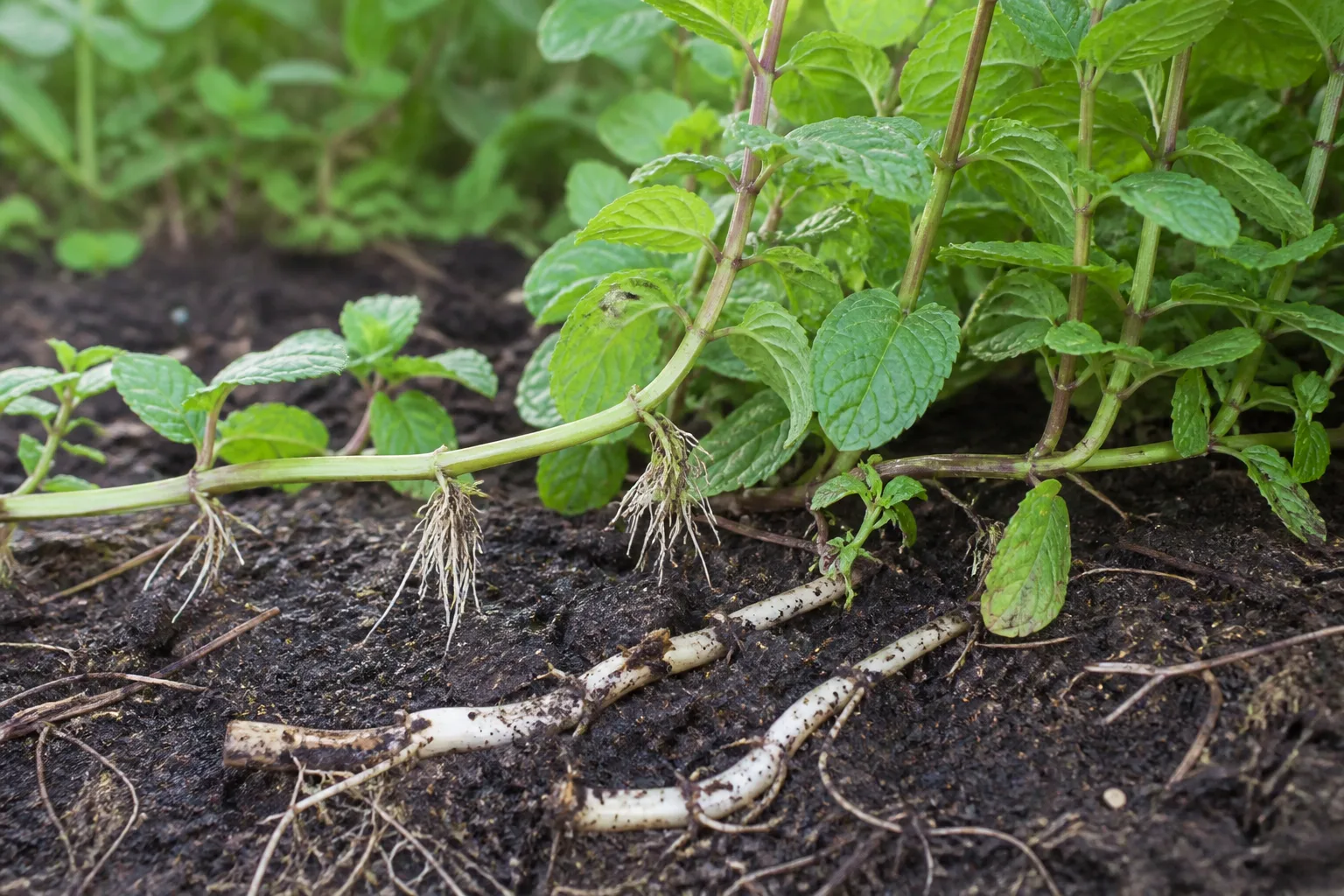
A rhizome is a modified stem that grows horizontally, usually underground or right at the soil surface. It has nodes and buds; roots grow from it, and new shoots can rise from its buds. That makes a rhizome more than a storage organ: it is a living stem that can help a perennial survive, spread, and produce a new plant.
The word tells you how a plant grows, but not whether it will behave politely in a garden. Ginger and bearded iris both have rhizomes, yet one is a compact edible crop and the other can be a vigorous ornamental; bamboo and some weeds can travel much farther. The useful question is not simply “Does this plant have rhizomes?” but “How does this species’ rhizome grow, and where can it go?”
What is a rhizome?
In botanical terms, a rhizome is a specialized stem whose main axis grows horizontally. It may be thick and fleshy, as in ginger, or long and slender, as in a running grass. The stem has nodes—points where leaves, buds, or roots can arise—and internodes, the stretches between nodes. This anatomy separates it from a true root, which does not have stem nodes with buds.
Depending on the plant, the rhizome may stay well below the surface, lie just under mulch, or sit partly exposed. Bearded iris is a familiar exception to the idea that a rhizome must be buried: its thick, horizontal rhizome often grows at or just above the soil surface, as BBC Gardeners’ World Magazine notes in its overview of the iris family (BBC Gardeners’ World Magazine). In other plants the rhizome is hidden, so you need to gently move soil aside to inspect it rather than judging by the leafy shoots alone.
Rhizomes are also often called rootstocks, but that everyday term is broader and less precise. A plant may have a rootstock without every underground structure being a rhizome. When you are identifying a plant for propagation or deciding whether it could spread, look for stem features and the species’ growth habit instead of relying on the label.
How to identify a rhizome below the soil
If you suspect a plant spreads underground, expose only a small section at the outer edge of the clump. Use your fingers or a hand trowel to loosen soil rather than cutting blindly through the growth. A rhizome usually looks like a horizontal stem: it may be jointed or segmented, and the joints may show a bud, scale-like leaf, old shoot scar, or new shoot. Fine roots often emerge from its underside or nodes.
The strongest clue is a repeating stem pattern. Follow the structure in both directions: one end may connect to the parent plant, while the growing tip leads toward a new shoot or bud. Roots tend to branch into finer and finer strands without the regular stem-like nodes and buds. Color and thickness alone are not reliable; young rhizomes can be pale, while older ones may be brown or woody.
Put the soil back after your check, especially around a plant you want to keep. If you plan to divide it, expose a larger section only when the plant is in the right season and you know where its buds are. A casual diagnostic dig should not become an accidental division that leaves the parent with too little viable growth.
Rhizomes vs. roots, stolons, bulbs, corms, and tubers
Many underground plant parts look alike when they come out of the ground. The distinction matters because each one has different growth points and planting requirements. A botanical overview from OERTX’s OpenStax-based lesson on stem modifications describes rhizomes, stolons, tubers, corms, and bulbs as different modified stem structures.
| Structure | What it is | A practical clue | Familiar example |
|---|---|---|---|
| Rhizome | A horizontal stem, usually underground, with nodes and buds | New roots can grow from its nodes; shoots can emerge from buds | Ginger, iris, bamboo |
| Root | An organ that absorbs water and anchors the plant | It lacks stem nodes and buds; fine roots branch from it | Carrot roots, fibrous roots |
| Stolon or runner | A stem that grows along or just above the ground | It makes a new plant at a node, often at a distance from the parent | Strawberry runner |
| Bulb | A short stem surrounded by fleshy storage leaves | Cut it open and the layers are modified leaves around a central bud | Onion, tulip |
| Corm | A short, swollen underground stem | It is solid inside rather than layered like an onion bulb | Crocus, gladiolus |
| Tuber | A swollen storage stem or stem tip with buds | Potato “eyes” are buds that can produce shoots | Potato |
The easiest confusion is between a rhizome and a root. A rhizome is stem tissue that can produce a shoot from a bud; roots may emerge from that stem, but they are separate organs. A potato is not a rhizome: it is a tuber with multiple eyes. A strawberry plant spreads mainly by aboveground runners, or stolons, while bamboo spreads by underground rhizomes.
Common names can muddy the water. Garden catalogs may call bulbs, corms, tubers, and rhizomes “bulbs” as a convenient shopping category, even though they are botanically different. Use the plant’s own planting instructions: the right depth and orientation for an iris rhizome may be wrong for a tulip bulb or potato tuber.

What rhizomes do for plants
Rhizomes combine several useful jobs. They store carbohydrates and other resources, carry buds that can make new shoots, and provide a route for roots to establish in nearby soil. In perennials, those reserves help support regrowth after dormancy or damage. A peer-reviewed study of tall fescue describes rhizomes as underground stems with buds capable of producing roots and shoots, and documents the role of stored resources in establishment and persistence (research in Annals of Botany).
The same structure supports vegetative propagation: a new shoot can arise from a bud on a rhizome without a seed. That growth is genetically connected to the parent plant, which is why division is a reliable way to multiply many perennials. It also explains why removing only the visible foliage may not end a weed patch. If viable rhizome pieces remain, buds may send up replacement shoots.
For gardeners, that underground network has both benefits and costs. A dense, well-behaved rhizome can knit a planting together, fill gaps, and return each year. A fast-running one can cross a bed edge, enter lawn or neighboring beds, and make maintenance harder; vigor is an asset only when the plant has enough space.
Running and clumping rhizomes behave differently
Rhizomes differ in the length and spacing of their internodes, and that influences how far new shoots can appear from an established clump. Clumping or compact types make relatively short horizontal growth and stay closer to the parent plant. Running types extend farther, producing shoots along a traveling underground stem. These are useful descriptions of growth habits, not guarantees that a plant will remain inside a given boundary.
Bamboo is a clear example of why species identification matters. Some bamboos form tight clumps; others have long-running rhizomes that can push up culms well away from the original planting. The rhizome architecture of bamboo can also differ within a single underground system, with short, clustered growth and longer spreading stems; a study of dwarf bamboo describes this diversity and the linked rhizome-root system (peer-reviewed bamboo research). Do not select bamboo by the word “clumping” or “running” on a casual label alone—confirm the species, mature size, local climate suitability, and containment needs.
Spread also depends on the plant’s age, soil, climate, available moisture, and physical barriers. A groundcover may creep slowly in dry shade but expand faster in moist, fertile soil. Even a compact clump can grow outward enough to need periodic division, while a runner’s appearance at the edge may be a signal to intervene before the network becomes difficult to trace.
Plants that grow from rhizomes
Many garden plants use rhizomes, but a shared structure does not make their behavior identical. Treat examples as a starting point for checking the particular species, cultivar, and local invasive-plant guidance. A plant that is useful in one region can be troublesome or prohibited in another.
Useful garden and edible plants
Ginger and turmeric are edible rhizomes grown for their aromatic underground stems. Bearded iris grows from a thick rhizome that sits at or near the surface, while canna and many ferns also arise from rhizomes. Mint spreads by underground rhizomes and can also root from stems that touch soil, so a single patch may use more than one route to expand. Rhubarb is another familiar perennial with a short, stout underground crown and rhizomatous growth.
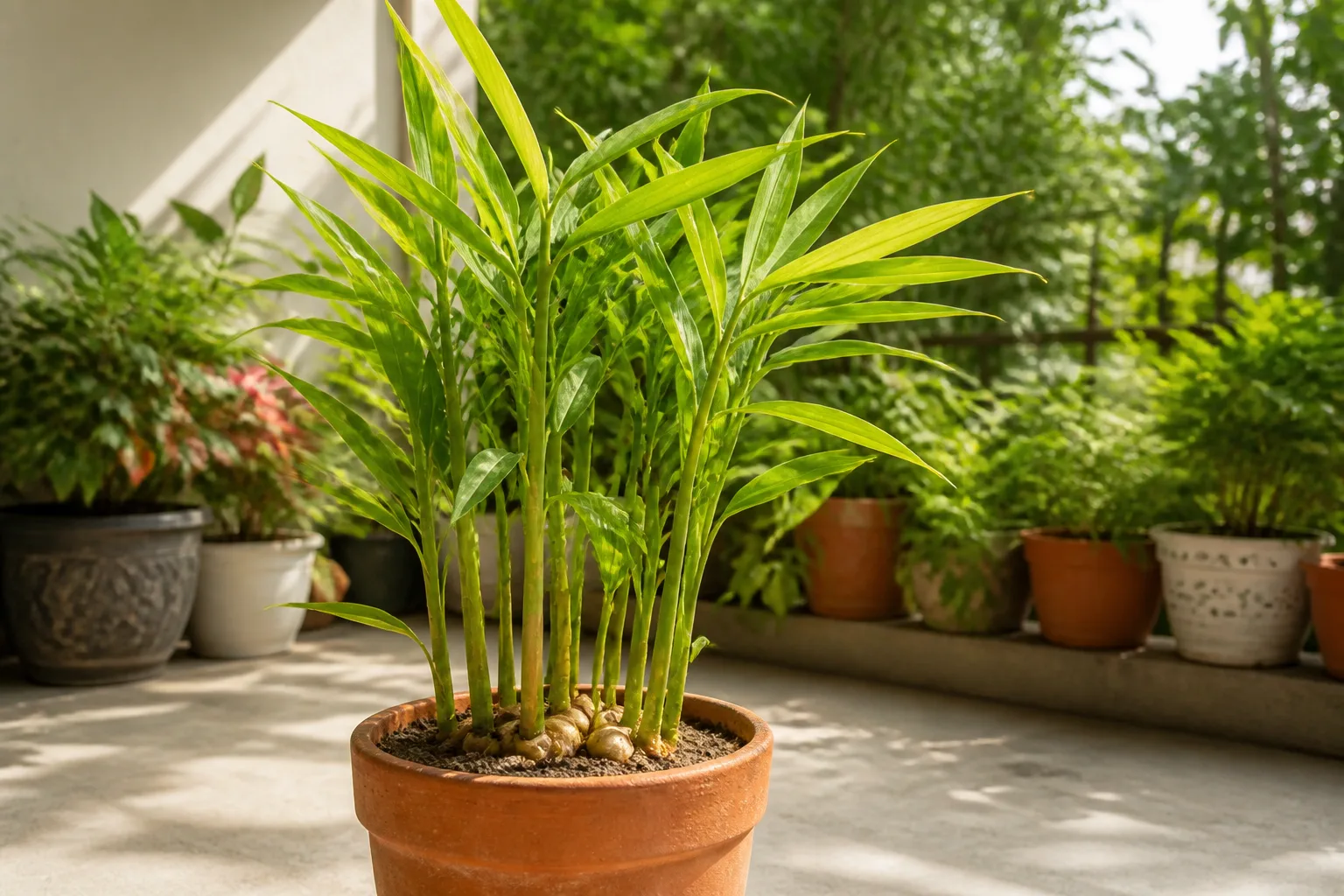
Some rhizomatous plants are selected for groundcover, erosion control, or reliable seasonal growth. Their ability to establish strongly can be an advantage on a slope or in a contained bed where quick cover is wanted. It becomes a maintenance problem if a groundcover reaches a lawn, path, wild area, or planting where it can outcompete less vigorous species.
The label “rhizome plant” is not enough to determine if the plant is edible, hardy, shade tolerant, or suitable for a pot. Ginger grown as a crop, for example, has different seasonal and temperature needs from a hardy landscape perennial. Check the plant’s own climate, light, moisture, and planting-depth information before you choose a location.
Vigorous spreaders and invasive plants
Some weeds and invasive plants persist because underground stems can regenerate after the top growth is cut or pulled. Examples include horsetail, Japanese knotweed, and some grasses, though the legal status and ecology of each species vary by location. Creeping perennials can also become difficult garden weeds even when they are not formally classified as invasive in a region.
The practical warning is not “all rhizomes are bad.” It is that fast-running growth can escape a garden, and small living pieces may be hard to find after soil has been moved. For a plant with an aggressive reputation, check state or local invasive-species resources before planting, sharing divisions, composting removed material, or moving contaminated soil. Follow the local disposal guidance; do not assume that ordinary composting will kill a persistent plant.
How to decide whether a rhizome plant fits your garden
Start with the space you can actually maintain, not the plant’s first-year size. Find out whether the rhizome is compact or running, how tall and wide mature shoots become, whether the plant can cross a border, and whether you are willing to check the perimeter during the growing season. A plant that spreads by ten inches a year can be manageable in a large bed and a nuisance beside a narrow path.
Then match its growth habit to the job. A clumping edible or ornamental rhizome can be an efficient perennial where you want a lasting patch. A vigorous groundcover may fit a broad, bounded area but not a mixed border with delicate plants. Running bamboo is a poor impulse purchase for a small yard or property line unless you have a realistic containment and monitoring plan.
Ask three questions before bringing it home: Can I identify the plant accurately? Can I contain or divide it if it expands? Is it appropriate and legal where I live? If any answer is uncertain for an aggressive species, choose a slower alternative. “Fast coverage” is not a bargain if it creates years of boundary work.
Planting and caring for rhizomatous plants
There is no universal planting depth for rhizomes. Some are planted several inches down, while bearded iris rhizomes need sunlight and air at their upper surface. Follow species-specific instructions and orient each division so that its buds can send shoots upward and roots can reach soil. Burying a surface-growing iris too deeply can reduce flowering or contribute to decline; leaving a moisture-loving rhizome exposed in a dry, hot site can stress it.
Good drainage is important for many rhizomatous ornamentals, but soil needs still differ. A wetland species is not managed like a bearded iris, and an edible ginger crop is not maintained like a hardy perennial. Before planting, loosen compacted soil, correct drainage where appropriate, and avoid adding rich amendments that create a waterlogged pocket around a plant that needs air at its rhizome.
Water newly planted divisions enough to settle the soil and support root establishment, then adjust to species and weather. Do not keep the ground saturated simply because the plant grows underground. Once a patch is established, inspect its outer edge and note where new shoots appear; that record gives you a realistic sense of the plant’s growth rate before it becomes a surprise.
When and how to divide a healthy rhizome clump
Divide when the center becomes crowded, flowering declines, or the clump has outgrown its allotted space—not simply because a calendar says it is time. Timing is species-specific. For bearded iris, late summer or early fall after flowering is a common window; Fine Gardening’s division guide recommends assessing the clump after its bloom season and replanting sound sections in a sunny, well-drained location. Other perennials may be best divided in spring or during dormancy.
For a plant you know is safe to divide, water the soil lightly the day before if it is dry, then lift the clump with a garden fork or spade far enough from the shoots to avoid slicing through the center. Shake or rinse away enough soil to see the rhizomes and growing points. Use a clean, sharp knife to separate sections, keeping at least one healthy bud or active shoot and attached roots on each division; discard soft, hollow, badly damaged, or diseased tissue.
Replant divisions promptly at the depth appropriate for that species. Firm soil around the roots, water to settle the planting, and keep the newly disturbed area evenly moist while it establishes without leaving it waterlogged. Reduce foliage only when the species’ guidance calls for it; cutting every plant back by the same amount is not a universal rule.
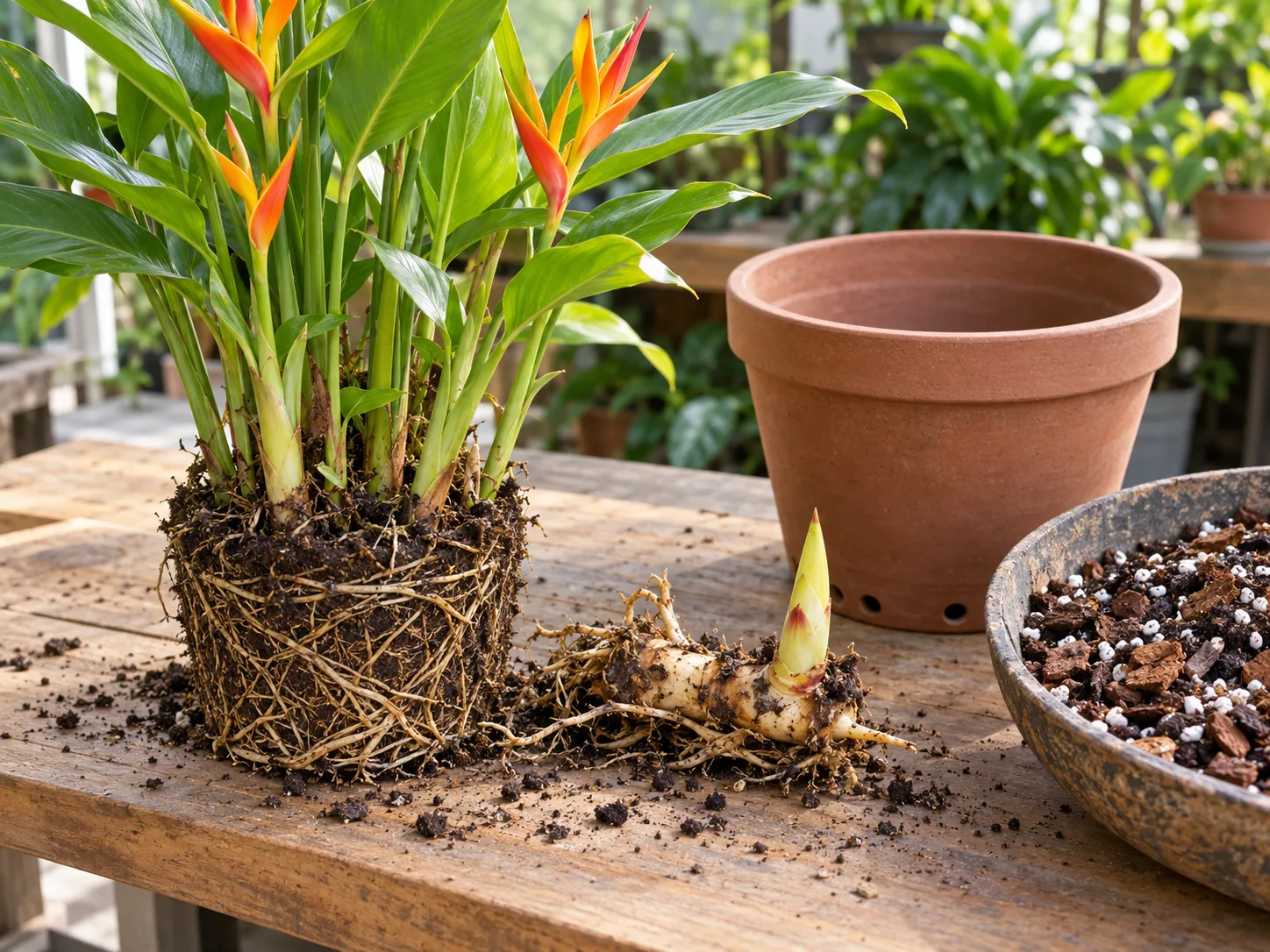
Use division to multiply healthy ornamentals, not as a casual method for moving an unidentified invasive plant. A fragment that is adequate for propagation can also be enough to restart an unwanted patch. Clean tools and soil from equipment before moving to another bed, especially after working with plants that spread aggressively.
How to keep running rhizomes contained
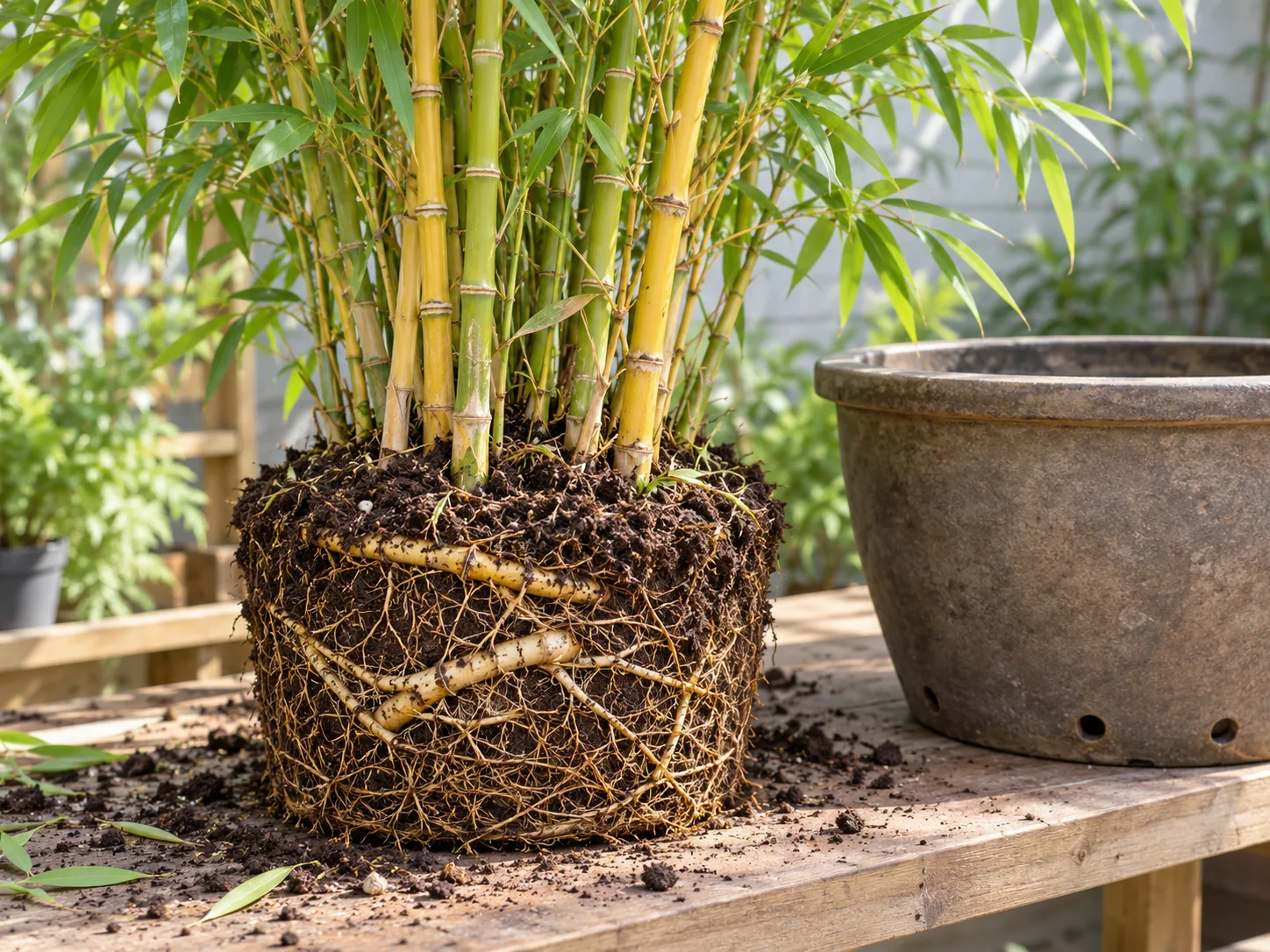
For an ornamental you want to keep, plan the boundary before planting. A container can be the simplest option for mint or another vigorous herb: use a pot with drainage holes, keep it above ground or place it where roots and stems cannot escape unnoticed, and trim shoots that root outside the rim. A pot buried in a bed may slow spread but does not eliminate it if the rhizomes reach over the edge, pass through a drainage opening, or escape during division.
For a larger planting, a durable root barrier can redirect shallow rhizomes, but it has to be installed to the depth and design appropriate for the species. Some running plants grow deeper or travel around the ends of a short barrier. Leave enough barrier above grade to spot crossing rhizomes, and inspect it during the growing season rather than assuming the buried plastic has solved the problem permanently.
Choose a barrier that matches the plant
Match the method to the consequences of escape. A small mint patch can be managed by a pot, a regularly checked bed edge, and prompt removal of stray stems. Bamboo or a locally regulated invasive plant may need a professional containment plan or may be a poor choice to plant at all. No barrier makes an unsuitable invasive species safe for every property, and a barrier cannot prevent spread by seed if the plant also produces viable seed.
Avoid relying on a shallow garden edging strip as a deep-root barrier. It may make mowing easier or interrupt a shallow runner, but a rhizome can pass beneath it or around it. A good plan includes an accessible inspection zone, a way to remove escapes, and enough room to work without digging through the desirable center of the clump.
Removing unwanted rhizomatous weeds
Begin by identifying the weed. A persistent perennial with rhizomes needs a different approach from an annual seedling, and a potentially invasive species may have special disposal or reporting rules. If you are unsure what it is, photograph the leaves, stems, flowers, and any underground part before removal, then compare them with a local extension or invasive-species identification resource.
For a small patch of a non-regulated garden weed, loosen the soil with a fork and lift the connected rhizomes as intact as practical. Work outward from the visible shoots, sift the disturbed soil for pale or brittle pieces, and remove new shoots promptly if they return. Repeated follow-up matters: one pass may leave small segments or buds behind, and the next flush gives you another chance to reduce the stored underground network.
Do not rototill or chop a persistent patch into many fragments unless a species-specific control plan says that approach is appropriate. Cutting can spread viable pieces and make later identification harder. Smothering or solarization may suppress some plants under the right conditions, but results depend on plant species, climate, season, soil moisture, and how completely the treatment covers the patch. Neither is a universal one-step eradication method.
For Japanese knotweed or another regulated or highly persistent invasive plant, avoid moving soil or plant pieces off site and follow your local authority’s current instructions. If the infestation is extensive, near a property boundary, or close to construction, contact a qualified local invasive-plant professional before disturbing it. General garden advice cannot replace location-specific handling requirements.
Common rhizome mistakes to avoid
The first mistake is assuming that rhizomes are roots. That can lead you to cut through a propagation stem, miss its buds, or misjudge how the plant spreads. Learn to recognize nodes and shoots, and check a reliable botanical description when the identification affects a planting or removal decision.
The second is treating every rhizomatous species as equally aggressive. Ginger, iris, mint, and bamboo all have rhizomes, but their habits, climates, and uses differ. Use a species-level assessment rather than buying or rejecting a plant based on the category alone.
The third is burying a rhizome according to a generic “bulb depth” rule. A surface-growing iris and a ginger rhizome should not automatically be planted at the same depth. Check whether the rhizome should be shallow, covered, or exposed; correct placement helps both healthy growth and flowering.
The fourth is cutting an overgrown clump without keeping viable buds or roots on the divisions. A piece of stem without a living growing point may not establish, while an unwanted weed fragment with a bud may do exactly what you do not want. Inspect each piece before planting or disposal.
The fifth is relying on a barrier or one cleanup pass without follow-up. A barrier must be deep and continuous enough for the plant, and it still needs inspection. After digging out a weed, watch the area for new shoots and remove them while they are small; the first treatment is the start of control, not proof the rhizome network is gone.
Conclusion
Rhizomes are modified stems with nodes and buds, not roots. Those features let plants store resources, produce shoots and roots, and spread vegetatively. To identify one, expose a small area and look for stem-like joints, buds, and shoot connections rather than relying on color or thickness alone.
For planting decisions, the species’ growth habit matters more than the word “rhizome.” Compact clumps can be useful in a perennial bed or food garden; fast-running types need space, boundaries, and regular checks. Plant at the depth the species needs, divide healthy clumps in the right season, and handle aggressive weeds with a patient, locally appropriate plan. With those distinctions in mind, you can enjoy rhizomatous plants where they belong and catch unwanted spread before it becomes a much larger job.



