Slow Growth on Turmeric: Causes, Checks & Fixes
Quick answer
Slow growth on Turmeric is normal in cool weather-this monsoon rhizome plant rests until soil stays warm. Worry only when summer warmth is steady and no new leaf spears appear for weeks. First step: confirm warmth and the calendar, then restore evenly moist soil in your brightest warm spot before changing anything else.
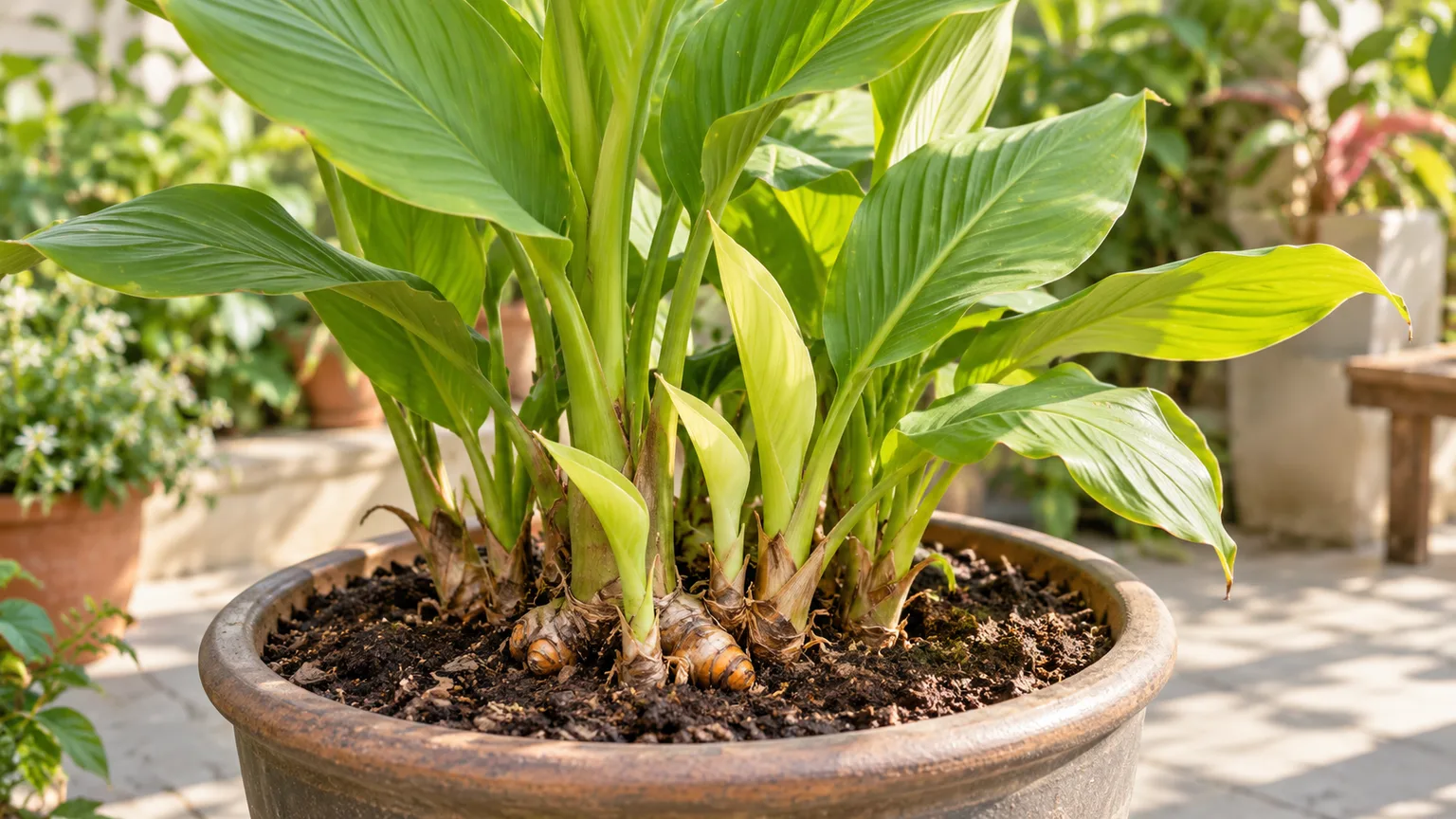
Slow Growth on Turmeric: Causes, Checks & Fixes
This guide covers slow growth on Turmeric. See also the general Slow Growth guide, watering, and light pages for this plant.
Slow Growth on Turmeric: Causes, Checks & Fixes
Quick answer
Slow growth on Turmeric (Curcuma longa) is often the calendar, not a crisis. This 3–4 ft upright perennial herb from the ginger family grows during the monsoon season and becomes dormant once the season ends, so a pot with no spears in cool months is usually resting, not dying.
First step: check soil warmth and the season before you touch anything. If nights are cool or the pot sits below about 65°F (18°C), move it to your warmest bright spot with morning sun and wait. If warmth is steady and the clump has sat static for a month, restore evenly moist soil per the Turmeric watering guide and make no other change for two weeks.
For how chronic stagnation works across houseplants in general, see our slow growth hub. On Turmeric, the decisive check is whether fresh leaf spears keep rising from the rhizome while older leaves stay green — not whether the whole clump looks tall from across the room.
What slow growth looks like on Turmeric
Turmeric does not grow from woody stems — every leaf rises as a spear from the underground rhizome, an underground horizontal stem that stores the season’s energy. So “slow” on this plant means no new spears, not bare branches.
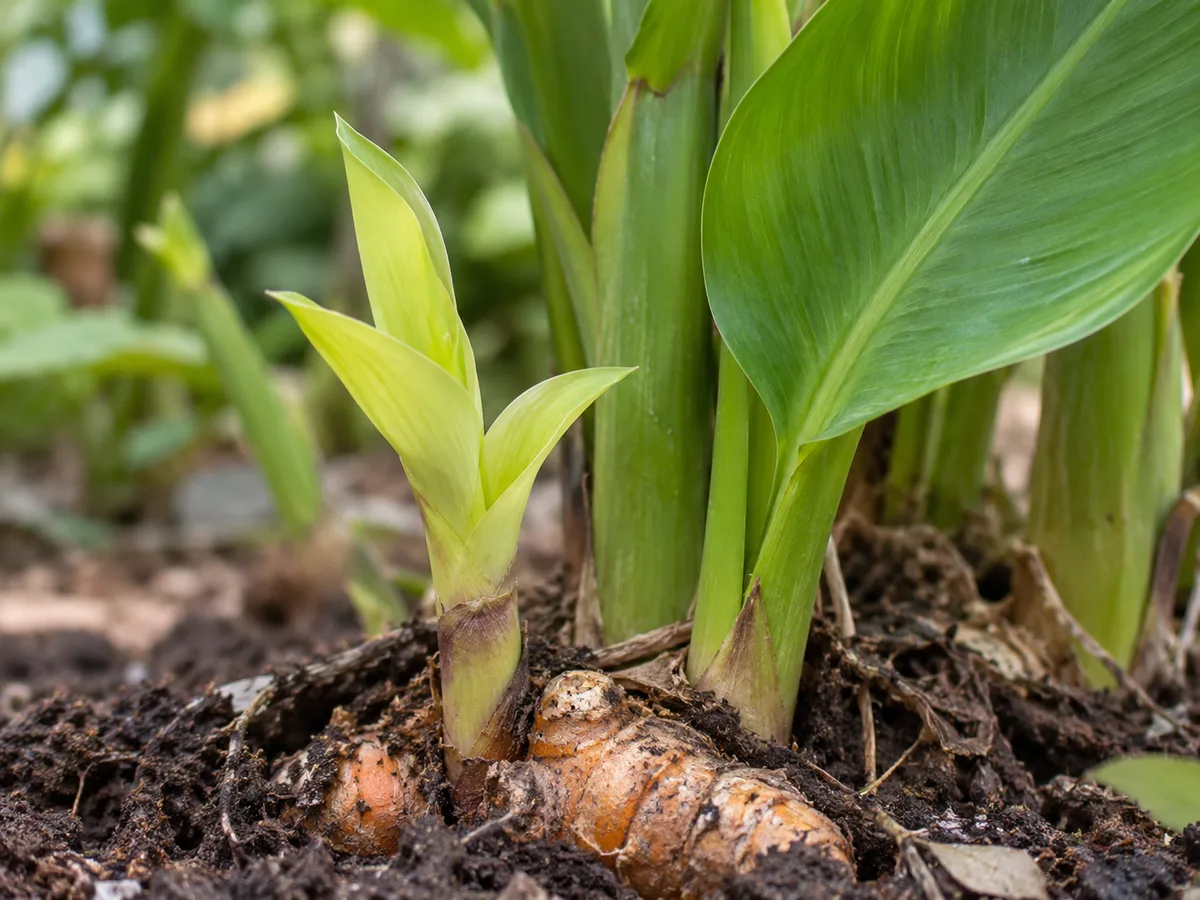
Short stalled spear with small pale leaves and no height gain — compare spear height and leaf size against the previous flush on the same clump.
Typical stall patterns:
- No new spears for three or more weeks in warm weather, while older leaves stay green
- Spears emerge, then freeze at a few centimeters tall with leaves that never expand
- Each new leaf smaller than the last, with paler color than the previous flush
- A green but parked clump — alive, upright, and completely static through summer
- Thin, sparse shoots from a pot that used to fill densely
Normal slow periods you should not try to fix:
- Cool-season rest — no top growth for months while rhizomes sit in drier soil
- Late-spring waiting — rhizomes emerge in June and July when the soil temperatures heat up, so a bare pot in April or May is usually just early
- Fall yellowing and dieback — foliage wilting and drying signals harvest dormancy, described in the Turmeric overview, not failure
- Two to three weeks after dividing — disturbed rhizomes pause top growth while they re-anchor
Turmeric’s heat calendar comes first
Most “slow growth” complaints about this plant are really dormancy misread as disease. Curcuma longa is a deciduous perennial: it dies back to the rhizome and waits. Gardeners routinely assume the plant is lost, then feel relieved when it finally emerges once soil heats up.
Treat the calendar as your first diagnostic tool. In regions colder than Zones 8–11, Turmeric cannot stay in the ground year-round — extension guidance says to lift rhizomes in fall and store them cool and dry, or grow the plant as an annual. A potted rhizome kept in a cool room through winter will not sprout on your schedule no matter how much you water or feed it.
Indoors, the same rule applies on a smaller scale. A pot parked near a drafty window or on a cold tile floor can sit weeks behind a pot in a warm bright corner. Before diagnosing anything else, confirm the rhizome has actually had sustained warmth — not just a few sunny afternoons.
Cool soil is the most common brake
Turmeric wants sustained tropical warmth: roughly temperatures between 68 and 86°F during active growth, and growth visibly stalls when temperatures drop toward 65°F. Cool soil slows rhizome metabolism, so spears either never emerge or creep up stunted.
Feel the pot, not just the air. Containers on cold floors, unheated balconies, or air-conditioned rooms can hold root-zone temperatures far below what the leaves experience. If the pot feels cool to the touch in the morning and spears are static, warmth — not fertilizer — is the missing input.
This is also why spring patience matters more than spring feeding. A rhizome that has not yet felt real heat cannot use nutrients; feeding it early only salts a mix that no roots are actively drinking from. Wait for steady warmth and the first genuine spear before you even think about the Turmeric fertilizer guide.
Crowded or weak rhizomes stall the top
Because every shoot draws from stored rhizome energy, the clump below decides the growth above. Two rhizome problems stall Turmeric more than any leaf issue:
A pot-bound clump. Thick rhizomes multiply fast and can literally split open a pot. Long before that drama, a crowded pot holds almost no soil between rhizomes, so water runs through and nutrients vanish — spears emerge thin and short. If you unpot and find a solid mass of rhizome with barely any mix, the plant is starving for room, and the fix belongs to the Turmeric repotting guide, not to extra feeding.
Divisions that were too small. Each new piece needs enough stored energy to launch shoots — growers recommend leaving at least 3–5 eyes per division. A single small finger with one eye may sit alive but shootless for a whole season. When buying or splitting, choose plump firm pieces and plant them 5–10 cm deep, buds up.
Old, never-divided plantings can also lose vigor over the years as the center of the clump exhausts its section of mix. If a five-year-old pot grows weaker each season despite good warmth and water, division in spring or summer is the reset — not stronger fertilizer.
Monsoon moisture: evenly wet in heat, dry in rest
In active growth Turmeric is thirsty: thick leaves and fleshy rhizomes pull heavy moisture, and containers may need soaking every two to four days in hot weather once the top 2–3 cm dries. A mix that swings bone-dry between waterings stalls spear expansion and invites red spider mites, which appear when the soil is too dry — check the spider mites on Turmeric guide if stippled leaves accompany the stall.
But the same wetness that powers summer growth rots rhizomes in cool weather. Extension sources note this plant has no serious insect or disease problems on healthy growth — rot comes from cultural error, specifically keeping resting rhizomes sodden through cool months. The rhythm to memorize is warm, wet and well fed in the summer, and cool and dry in the winter.
Read the mix before each watering rather than following a weekday. Lift the pot: a light pot with stalled spears in heat needs water now; a heavy, sour-smelling pot with stalled spears in cool weather needs drying, not drinking — compare with overwatering on Turmeric and underwatering on Turmeric to tell the two apart.
Weak light and thin feeding
Turmeric performs best with full sun in the morning and afternoon shade — bright enough to drive big canna-like leaves, sheltered from scorching midday sun. A dim indoor corner or deep shade produces the classic weak-light signature: spears that stretch, leaves that stay small and pale, and a clump that never fills out. Compare with not enough light on Turmeric and leggy growth on Turmeric if stretching dominates.
Feeding matters, but only inside the warm window. Practical grower guidance recommends monthly feeding with a balanced organic fertilizer through the growing season, across a long 7 to 10 months to mature cycle. A plant that gets no food all summer in a small pot will fade to small pale leaves — yet feeding a cool, dormant, or waterlogged plant achieves nothing and can burn resting roots. Warmth and moisture first, food second, and never as the opening move on a stressed clump.
Rich, high-organic but draining mix underpins all of this. If your potting soil has compacted into a brick that water sheets off, no watering schedule can keep moisture even — refresh the mix per the Turmeric soil guide rather than watering more often.
How to confirm the cause
Work through these checks in order on a stalled plant:
- Calendar check — Is it cool season, early spring, or fall dieback? If so, this is likely dormancy. Wait for sustained warmth.
- Warmth check — Are nights reliably above about 65°F where the pot sits? Move cold-floor pots to the warmest bright spot.
- Moisture check — Probe 3–5 cm down. Bone-dry in heat means thirst; soggy and sour in cool means rot risk. Lift the pot to learn its watered versus dry weight.
- Crowding check — Are rhizomes pressing the pot walls or is there almost no soil left? Suspect a root-bound clump.
- Pest check — Inspect young unfurling leaves for slugs and snails, and dry foliage for fine mite stippling. Young leaves troubled by slugs are a known Turmeric pattern.
- Newest-spear check — Compare the latest spear against the previous flush. Smaller, paler, slower spears point to light or nutrition; sudden collapse points to rhizome trouble — cross-check root rot on Turmeric, wilting on Turmeric, and yellow leaves on Turmeric for the matching pattern.
Lookalike comparison
| What you see | Likely cause | Key check |
|---|---|---|
| Long thin shoots reaching sideways | Leggy growth | Plant is growing, just stretched — increase light rather than treating a stall |
| Older leaves yellowing while spears stall | Yellow leaves or hunger | Whole-clump fade in warm weather points to nutrition or watering |
| Spears flopping limp in moist soil | Wilting or root rot | Check rhizome firmness and soil smell immediately |
| Fine stippling on dry foliage | Spider mites | Mites thrive when the mix goes too dry in heat |
| Drooping leaves, static spears | Drooping leaves | Moisture rhythm issue rather than a dormancy problem |
Confirmed stall — steady warmth for weeks, firm rhizomes, yet no new spears or spears frozen mid-height. Suspected dormancy — cool weather, bare or yellowing pot, firm rhizomes resting in drier soil. Leave the second one alone.
First fix for Turmeric
Restore warm, evenly moist conditions and change nothing else for two weeks. Move the pot to your warmest bright position with morning sun, water the rich mix thoroughly so it is moist through (not swimming), and resume the monsoon rhythm — watering again as the top 2–3 cm begins to dry.
Then wait and watch the spears. New spear emergence or visible height gain within two to four weeks means you found it. Only after that response should you layer in monthly feeding or consider division for a crowded clump.
What not to do the same day
Do not repot, divide, prune, and fertilize a stalled plant all at once — you will never know which correction worked, and disturbed rhizomes pause even longer. Do not feed a cool or waterlogged plant. And do not keep a resting winter rhizome wet “to wake it up” — that invites the exact rot that kills it.
Recovery timeline
In genuine warmth, corrected plants usually push a new spear or add visible height within two to four weeks. Leaves that already expanded small will not enlarge retroactively — judge by the next spear, which should come up taller with broader, deeper-green leaves.
Full vigor takes a season, not a week: Turmeric needs roughly seven to ten months of warm growth to mature a rhizome worth harvesting. A plant rescued in midsummer may look modest until late season, and that is normal. If no spears appear after six warm weeks despite correct moisture and light, unpot and inspect the rhizomes — soft, brown, foul-smelling flesh means rot, and only firm healthy sections with eyes are worth replanting in fresh mix.
How to prevent it next season
Plant or wake rhizomes only after real, sustained warmth — not the first warm weekend. Site pots for morning sun with afternoon shade, following the Turmeric light guide. Keep the rich organic mix evenly moist through active growth and cut water sharply as foliage yellows in fall. Feed monthly only while new leaves are expanding, and stop at senescence. Divide congested clumps every few years in spring or summer so each division carries several eyes, and store lifted rhizomes cool and dry where winters bite. Browse the full Turmeric problems hub at the first sign of trouble next year, while issues are still small.
When to use this page vs other Turmeric guides
- Turmeric watering guide — Use for routine moisture rhythm before assuming slow growth is the main issue.
- Turmeric problems hub — Browse all common issues on this species.
- Root Rot on Turmeric — Use instead when spears collapse or rhizomes feel soft and smell sour.
- Leggy Growth on Turmeric — Use when shoots stretch and lean rather than stalling in place.
- Yellow Leaves on Turmeric — Use when foliage discoloration leads and stalling follows.