Not Enough Light on Turmeric: Causes, Checks & Fixes
Quick answer
Turmeric may need more light when new leaves emerge smaller, paler, or unusually stretched toward a window. It naturally tolerates partial shade, so compare recent growth and check season, warmth, and soil moisture before moving it; then increase bright, filtered light gradually.
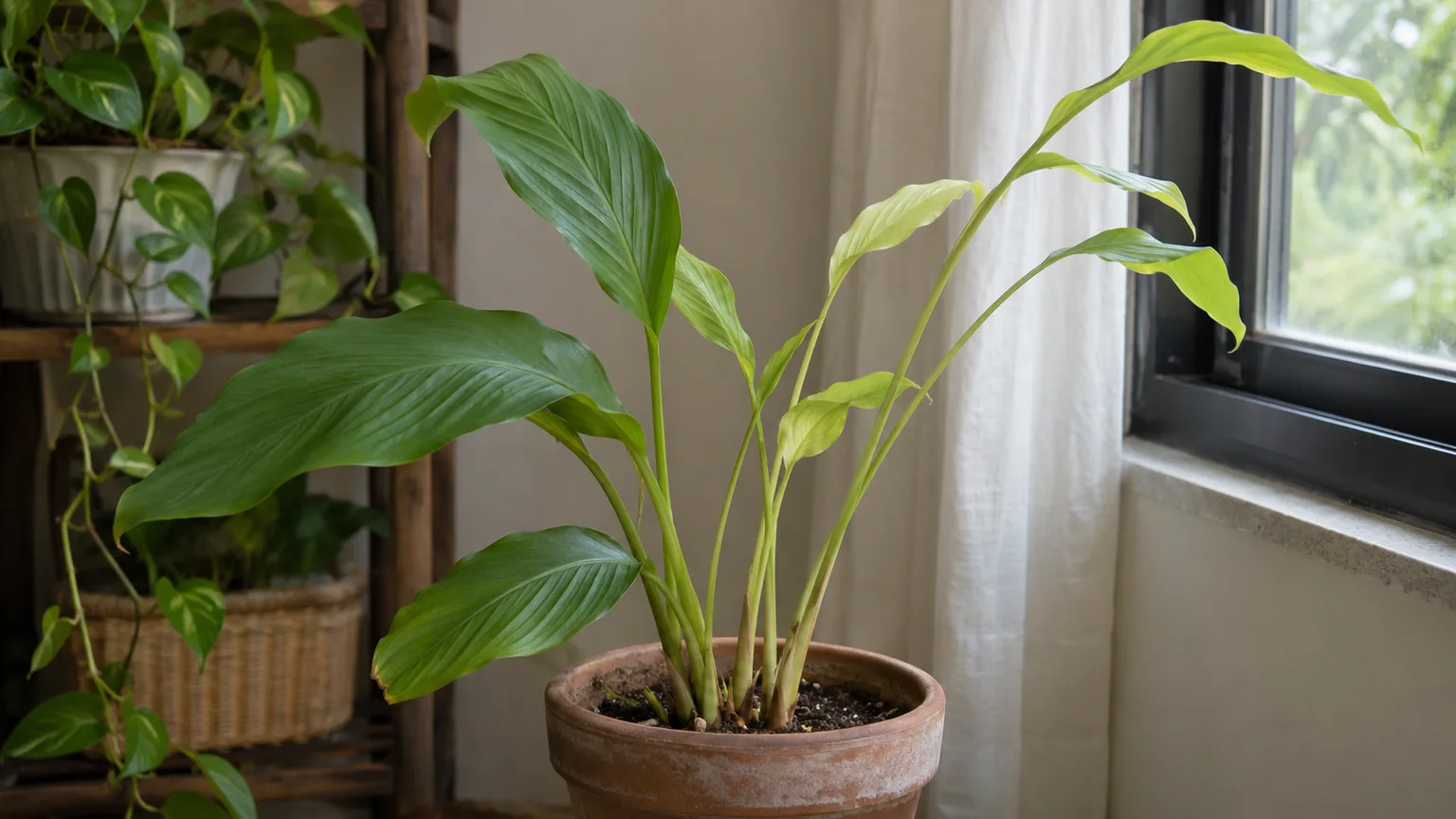
Not Enough Light on Turmeric: Causes, Checks & Fixes
This guide covers not enough light on Turmeric. See also the general Not Enough Light guide, watering, and light pages for this plant.
Not Enough Light on Turmeric: Causes, Checks & Fixes
Quick answer
Turmeric (Curcuma longa) is a tropical rhizome plant with broad upright leaves, and it can grow in partial shade. A tall leaf stalk or one faded older leaf does not prove the plant needs more sun. Look for a pattern in new growth: several leaves emerging smaller, paler, thinner, or leaning toward the brightest side are stronger clues that the current spot is too dim or unevenly lit. University of Maine Extension describes low-light etiolation as elongated, spindly growth with pale leaves.
First step: compare the last two or three leaves and note their size, color, and direction. If the newest growth is consistently weaker and the plant is actively growing, shift it toward brighter, filtered light over several days. Turmeric can grow in partial shade with a few hours of sun, so aim for a brighter, more even location rather than putting a shade-grown plant straight into hot afternoon sun.
What low light looks like on Turmeric
Turmeric leaves rise from individual stalks attached to an underground rhizome. With too little usable light during active growth, the newest stalks may become longer and weaker than earlier ones, leaves may be smaller or less green, and the whole clump can lean toward one window. Judge these changes against the plant’s own previous growth; turmeric naturally grows upright, and shade-grown leaves may remain green.
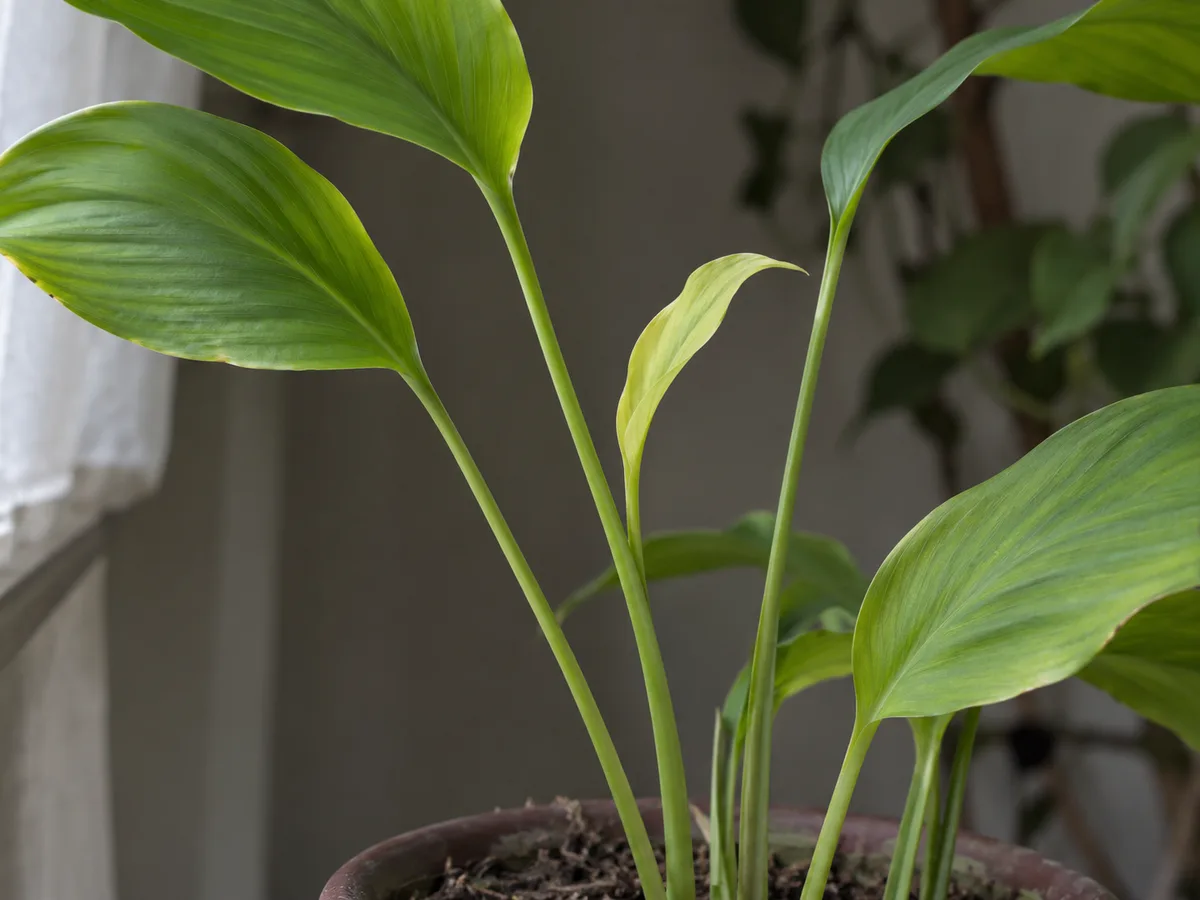
New leaves that are repeatedly pale, smaller, or stretched toward one window can point to insufficient or uneven light.
A single yellowing leaf, especially near the end of the growing season, is a weak light clue. Turmeric can slow down seasonally and shed foliage as the rhizome rests. If several leaves fade together after shorter days or cooling temperatures, check the season and rhizome condition before moving the plant or adding fertilizer.
Why Turmeric can struggle in a dim spot
Partial shade tolerance does not mean that any indoor corner provides enough light for continued leaf growth. Window glass, distance from the window, an overhang, curtains, and neighboring foliage all reduce the light reaching the leaves. A pot several feet from a bright window may receive much less light than the room appears to have from where you sit.
Outdoor recommendations vary with climate and growing purpose. N.C. Cooperative Extension notes that turmeric can grow with roughly two to five hours of sun and may stay greener in shade. That variation is why there is no single sunlight-hour threshold that diagnoses every container or garden plant. The University of Georgia Extension recommends warm conditions and bright shade for home-grown turmeric.
Confirm the cause before moving the pot
Check the plant while it is actively making leaves. Compare the newest leaf with older ones and look for repeated stretching, paleness, or one-sided leaning. Turn the pot a quarter-turn and observe whether new stalks continue to reach in the same direction; directional growth can reveal an uneven window source.
Then rule out the common lookalikes:
- Seasonal dormancy: gradual yellowing or dieback as growth slows can be normal. Do not try to force dormant rhizomes to grow by increasing light, water, and fertilizer at once.
- Dry soil or heat stress: limp leaves with a very dry pot call for a moisture check, not just a brighter spot. A sunnier position can increase water loss, so reassess the mix before watering.
- Waterlogged roots or rhizome: yellow leaves combined with persistently wet mix, soft stalk bases, or a sour smell suggest root-zone trouble. Check drainage and use the Turmeric root rot guide if the rhizome seems soft.
- Normal older-leaf aging: one old outer leaf fading while the rest of the plant remains firm and produces healthy new growth is not enough evidence of low light.
If the turmeric is warm, actively growing, and its new leaves remain thin or pale while reaching toward a window, inadequate or poorly distributed light becomes more likely. The Royal Horticultural Society’s Curcuma profile and the N.C. Cooperative Extension guidance both support partial-shade growing, so diagnose a poor fit to the actual light in your home rather than assume that the plant needs full sun.
The first fix: increase bright light gradually
Move the pot closer to a bright window where it receives more even daylight, or add a suitable plant light above the foliage if natural light is limited. Change the position in stages over several days, especially if the leaves have been in deep shade. Turmeric prefers filtered exposure in hot settings; Epic Gardening advises morning sun and afternoon shade because intense full sun can scorch the leaves.
If one side of the clump faces the window, rotate the pot occasionally so the foliage develops more evenly. Keep the plant warm and the potting mix consistently but moderately moist during active growth, with excess water able to drain. Do not compensate for weak growth with extra fertilizer before checking the light, warmth, and moisture; one main change at a time makes the response easier to read.
Recovery: judge the next leaves
Existing stretched stalks will not become shorter, and a pale leaf may not return to a deeper green. Do not remove healthy foliage just to make the clump look compact; leaves still support the rhizome. Trim only fully dead or badly damaged tissue with clean scissors.
During active warm-season growth, look for the next leaves to emerge sturdier, greener, and less tilted over the following several weeks. If no new foliage appears because the plant is dormant, hold steady and reassess when growth resumes. If new leaves remain weak after the plant has received brighter, more even light, check root-zone moisture, warmth, crowding, and pests instead of increasing light indefinitely.
Prevent low-light stress next season
Choose a bright indoor position near a window and keep the entire clump from being shaded by curtains or other plants. Outdoors, use a spot that fits the local climate and acclimate container-grown turmeric gradually when moving it into stronger sun. Turmeric can adapt to partial shade, and both the amount of direct sun and the risk of scorching change with heat and water availability.
Check new leaves every week during active growth. Early directional stretching is easier to correct than waiting until a whole season of foliage has weakened. For routine placement, see the Turmeric light guide; use the not enough light hub to compare this pattern with other causes of pale or stretched foliage.
Related tool
Use the Plant Problem Diagnosis Tool to compare low light with watering, dormancy, and root-zone symptoms before changing several care conditions.