How to Remove Citrus Stains From Clothes and Carpet
Learn how to remove citrus stains from clothes and carpet: lift pulp, rinse fresh juice, treat sweetened spills, and inspect fabric before using heat.
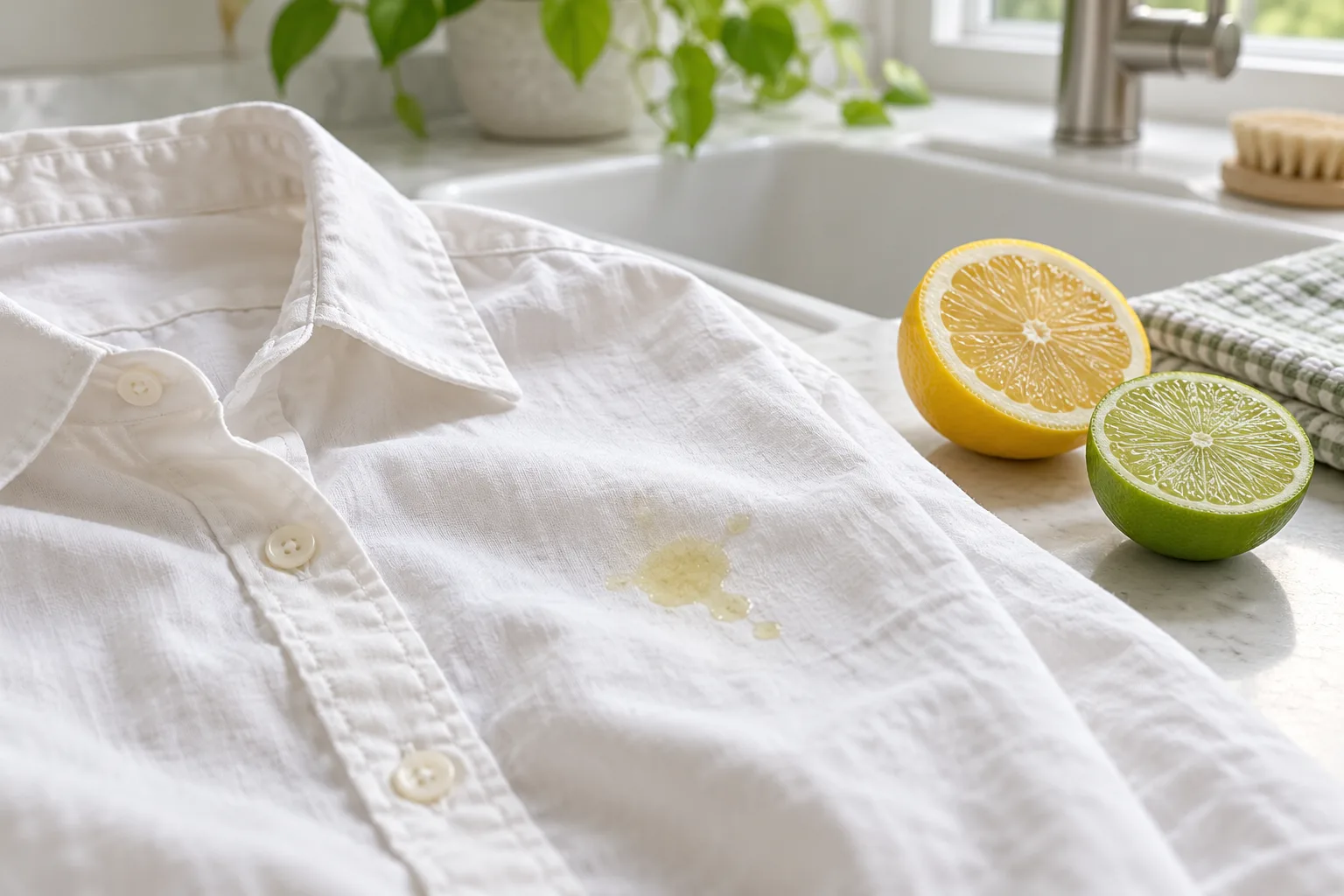
For fresh lemon, lime, or grapefruit juice on washable clothing, lift any pulp, blot up the liquid, and rinse the back of the stain with cool water. Pretreat any remaining mark with liquid laundry detergent, wash according to the garment’s care label, and check the spot before putting the item in a dryer. On carpet, scoop up pulp, blot instead of rubbing, dab with cool water, and use a little diluted mild detergent only if a sweet or sticky residue remains; rinse the cleaner back out and blot the area as dry as you can.
The important distinction is between residue you can remove and color that has changed. A pale or yellowish mark may be dried juice, pulp, sugar, or a spill mixed with another ingredient, but if the fabric or carpet dye itself has lightened, a stain remover cannot put that color back. Treat fresh spills promptly, test cleaners where they will not show, and stop if the material begins to fade or change texture.
The quick answer: dilute first, then choose the surface
For a fresh spill, start with the gentlest action that reaches the whole spot: remove solids, absorb liquid, and dilute what remains with cool water. A machine-washable garment can usually be rinsed from the reverse side and then washed with detergent; a carpet or fixed cushion needs controlled dabbing because water cannot be flushed through it or spun out in a washer.
If the juice is part of lemonade, punch, a cocktail, or a bottled drink, it may contain added sugar, coloring, or other ingredients. Those can leave a more visible or sticky residue than a splash of plain juice. Treat what you see, not just the fruit name: clear juice often needs a rinse, while a sweetened or colored spill may need careful detergent treatment after the first dilution.
For a very quick response, remember lift, blot, rinse, wash or dab, then inspect. Do not scrub a wet spot, pour a strong cleaner over it, or move directly to heat. A measured, repeatable treatment makes it easier to see whether the mark is fading and helps prevent the remedy from spreading it.
What citrus juice leaves behind
Plain citrus juice is watery and usually has little of the dark pigment found in berry juice, coffee, or red wine. A fresh drop may therefore be hard to see, especially on a pale shirt, but pulp, peel oil, sugar, or a colored mixer changes the cleanup. Once the moisture dries, sticky residue can hold lint or soil, making the area look darker or duller than the fabric around it.
The word stain can also describe two different outcomes. One is material left on the surface or in the fibers, which water and detergent may lift; the other is a pale patch where the textile dye or finish has changed. The second is not removable soil. Repeating the same wash can waste time or weaken the material without restoring its original color.
One commonly repeated warning is that citrus juice can bleach fabric, but outcomes vary: not every citrus spill visibly bleaches every material. The safe action is still to rinse promptly and keep the item out of unnecessary heat or bright sun while the juice is present. If a pale spot remains after residue is gone, focus on determining whether color has been lost rather than escalating to stronger stain removers.
What to do before you clean
First, check whether the spill is pure juice, pulp, or a mixed drink. Lift fruit pieces with the edge of a spoon; do not press them down or drag them across a shirt, carpet, or rug. If you are away from a sink, press a clean white cloth or paper towel onto the wet area, lift it, and repeat with a fresh dry section until little more liquid transfers.
Then identify the material. Read the garment care label before washing, and check the maker’s instructions for rugs, carpet, or upholstery. Natural-fiber rugs, wool, silk, vintage fabric, coated upholstery, and anything marked dry-clean-only deserve more caution than a sturdy cotton T-shirt. When the cleaning directions are missing or unclear, try only dry absorption and contact a textile or carpet-care professional before adding liquid.
For a cleaner that will be visible after drying, do a hidden-area test first. Dab a small amount of the proposed solution onto an inconspicuous edge, blot it with a white cloth, and let it dry completely. Look for color transfer, a ring, stiffness, or a change in texture before treating the central stain; a quick wet test can miss a color shift that appears only once the area dries.
Remove citrus juice from washable clothes
If the label allows water washing, treat the garment before laundering rather than tossing it into a full load and hoping the cycle takes care of it. Work over a sink or basin, and keep the stained portion from touching clean parts of the garment. The University of Georgia Cooperative Extension’s textile stain guide recommends prompt cool-water rinsing for fresh fruit stains and cautions readers to follow the care label and test treatments for colorfastness.
Lift pulp and blot the spill
Use a spoon to lift citrus pulp, seeds, or bits of peel from the surface. If the juice is still wet, press a clean white cloth against it; blot straight down, lift, and use a dry section rather than rubbing back and forth. Keep working until the cloth stops picking up much liquid, but do not use pressure so hard that you stretch a knit or force the spill through to the other side.
If a large drink has soaked through a shirt or napkin, place a clean towel beneath the stained area so the spill does not transfer to another layer. Avoid colored towels, which may release dye onto pale cloth. Do not use a hair dryer or iron to speed up drying; the first goal is to remove the juice, not to make the wet spot disappear temporarily.
Flush from the back, pretreat, and wash
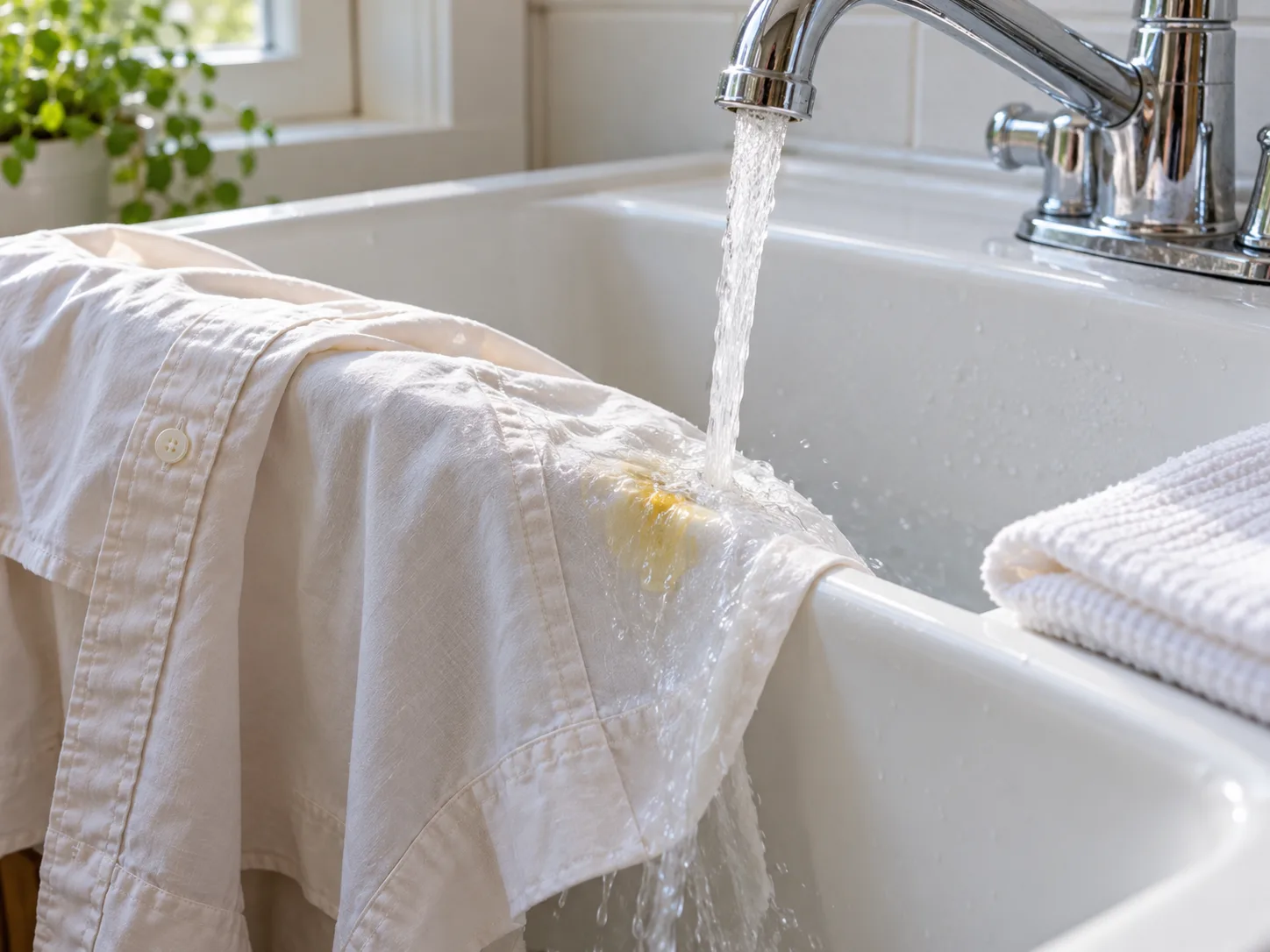
Turn the garment inside out and hold the back of the stain under a gentle stream of cool water. This lets the water carry diluted juice out through the fabric rather than pushing it deeper from the front. For a delicate weave, use a basin and pour water through the back in short intervals instead of stretching or rubbing the cloth beneath a forceful faucet.
If a shadow or tacky feeling remains, add a small amount of liquid laundry detergent according to the product directions. Gently work it into the spot with a fingertip, then rinse or wash the garment as the care label allows. Michigan’s laundry stain guidance groups fruit and beverage marks with other food stains and emphasizes treatment followed by laundering; use the garment label to set the actual cycle and temperature.
After washing, inspect the fabric in good light before drying. If you still see residue, repeat the rinse and detergent treatment rather than using the dryer. Air-dry the garment while you are checking a faint mark; once it is gone, you can use the drying method on the care label. The Martha Stewart stain-care guide similarly advises gentle blotting, a reverse-side rinse for washable fabric, and extra caution with delicate or vintage textiles.
Sweetened drinks, pulp, and peel oil need separate treatment
A glass of lemonade can leave a different mark from a cut lemon. Sugar makes the spill sticky; colored drink mix or cocktail ingredients can add dye; pulp leaves small solids; and zest or rind may add an oily component that does not rinse away as easily as juice. Start with the same dry lift and cool-water dilution, then judge whether the remaining mark is sticky, colored, or oily before choosing the next step.
For sticky residue on washable cotton or synthetics, pretreat with liquid laundry detergent and wash according to the label. For an added colorant, use a stain product only if its package permits the garment’s fiber and color; do not assume a stronger dose is safer or more effective. If the spot feels greasy after rinsing because it contains peel oil, use a laundry stain product labeled for that kind of stain and test it first, rather than pouring solvent or undiluted dish soap onto delicate fabric.
Do not apply chlorine bleach, oxygen bleach, peroxide, rubbing alcohol, or vinegar automatically just because a spill contains citrus. Some can remove dye or affect finishes, and there is no reason to combine them. If detergent does not improve the mark after one or two careful treatments, the next step should depend on the care label or a professional’s advice, not a more concentrated home mixture.
Get citrus juice out of carpet
On carpet, the goal is to remove the liquid while keeping the wet area small and preventing residue from settling at the base of the pile. Work with clean white cloths, use just enough water to dilute the spot, and switch to a dry section often. The University of Georgia’s carpet and upholstery stain instructions also use a mild neutral detergent, blotting, a clean-water rinse, and careful moisture removal for fruit stains on soft surfaces.
Blot and dilute without saturating
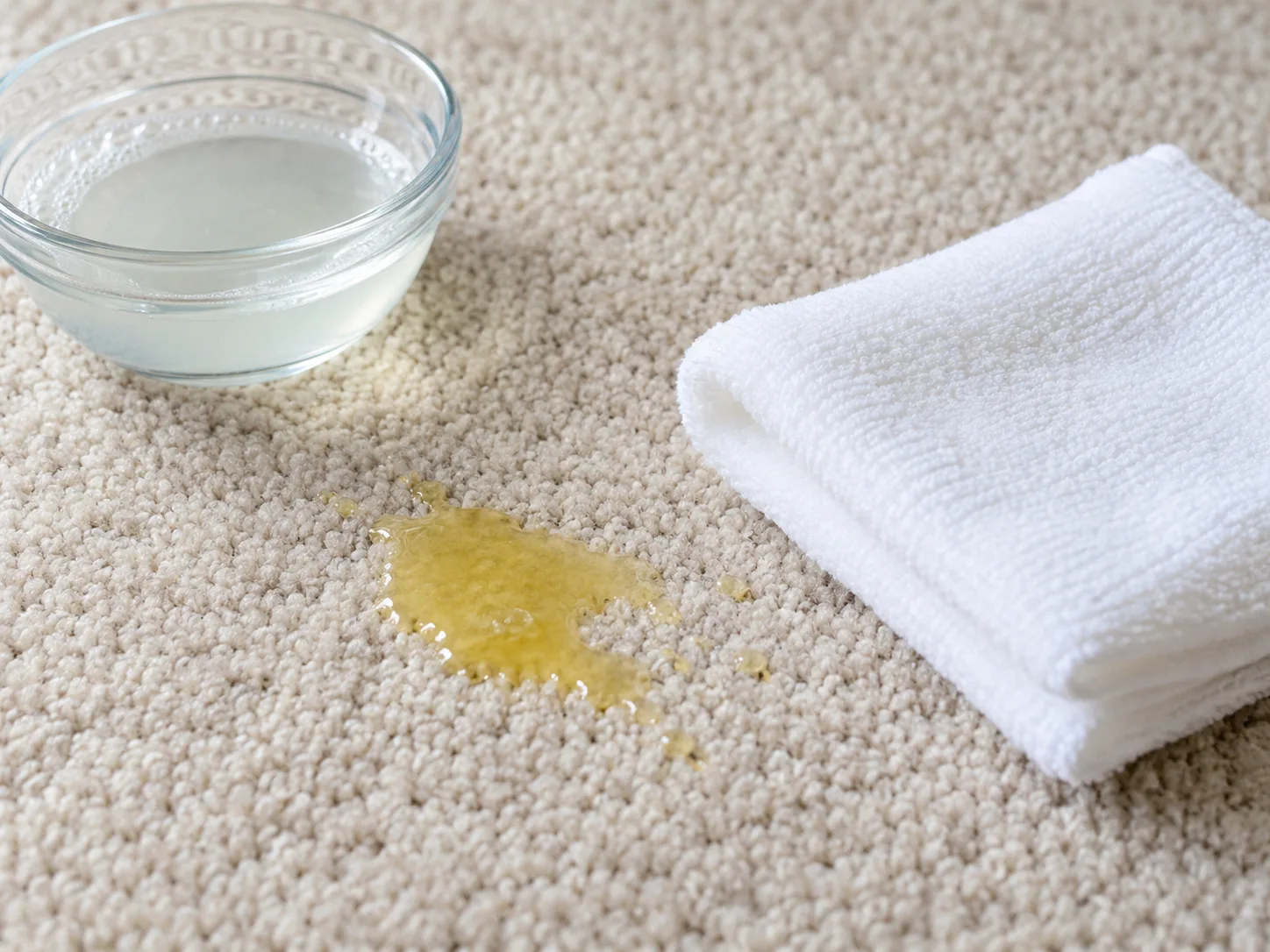
Scoop any visible pulp with a spoon, keeping the spoon nearly parallel to the pile so you do not rake the fibers. Press a dry white cloth onto the spill, working from the outer edge toward the center. Replace or fold the cloth when it becomes wet; dragging a saturated cloth across the carpet can enlarge the mark and redeposit juice.
Dampen another white cloth with cool water and dab the spot. Use small amounts: the carpet should be damp at the surface, not soaked through to the backing or pad. Blot with a dry cloth after each pass. Continue alternating damp and dry cloths until no sticky feeling or visible residue transfers, then stop before you create a broad wet circle.
Use mild detergent only for residue, then rinse and dry
If plain water leaves a sugary or colored residue, mix a few drops of clear, mild dish detergent into a cup of water. Dampen a white cloth with the solution and dab just the affected fibers; do not pour the mixture directly onto the carpet. Test it first in a hidden corner, and use a carpet manufacturer’s approved product instead if the carpet label specifies one.
Rinse the spot by dabbing with a new cloth lightly dampened with plain water. This step matters because leftover detergent can make carpet feel stiff or collect soil. Finish by pressing several dry towels onto the area, then leave it exposed to air until the pile and backing are fully dry; a fan across the surface can help, but direct heat is unnecessary.
When the carpet is dry, gently lift the pile with your fingertips or a soft upholstery brush if the maker permits it. If the spot has a dark ring, the backing is wet, the color has shifted, or the stain returns as it dries, stop repeating the treatment. A professional cleaner can assess whether the problem is residue, wicking from below the carpet, or dye change.
Upholstery, wool rugs, and other delicate surfaces
A removable cushion cover can often be treated like a washable garment, but only if its tag says it can be washed. For fixed upholstery, blot up liquid first, then check the cleaning code or manufacturer’s instructions before using water. A test spot should dry completely before you treat the visible area, because water or detergent may leave a ring or alter the finish even when the wet test looked harmless.
If the fabric permits water-based cleaning, use the carpet method: a barely damp white cloth, a small amount of mild solution if needed, a plain-water rinse by blotting, and a dry towel to pull moisture back out. Keep water away from seams and cushion interiors; over-wetting a cushion can leave a slow-drying damp area that is harder to correct than the original spill. The Good Housekeeping guide to fruit stains likewise advises checking upholstery care instructions and avoiding excess moisture during spot treatment.
For wool rugs, silk, rayon, vintage linens, leather trim, or upholstery with an “X” cleaning code, do not experiment with kitchen cleaners. Lift solids, absorb the liquid gently with a dry white cloth, and ask the manufacturer or a professional cleaner what method is safe. Take a photo of the care label and tell the cleaner whether the spill was plain juice, a sweetened drink, or a mixture; that detail helps them choose a method without guessing.
What to do about an old or already-washed mark
If the juice has dried, do not scrape aggressively or pour a large amount of water onto the area. For machine-washable clothing, re-wet the mark from the back with cool water and let it soften briefly, then apply liquid detergent according to its package directions. Rinse or wash as the label permits and air-dry before deciding whether the stain remains; a dried sugar film can look worse before it dissolves.
For carpet, first loosen any dry pulp with a spoon, then use a damp cloth to soften residue in small sections. Blot between each damp pass so the backing does not become saturated. If a sticky ring remains, use the diluted detergent method once and rinse thoroughly; repeated wetting can make an old spot spread or wick back to the surface after drying.
If an item has already gone through the dryer, treatment may take more than one cycle, but do not assume the heat has made every mark permanent. Recheck the material and care label, repeat the mildest compatible treatment, and consider a product specifically labeled for fruit or food stains only if it suits the fabric. Stop when the visible mark is no longer changing; more scrubbing or stronger chemicals can cause a new color or texture problem.
Is the mark a stain or color loss?
A remaining mark can be hard to diagnose while fabric is wet. Let the item dry away from a heater, then compare it with the surrounding area in natural light. A sticky or slightly darker spot suggests residue may remain; a clean, pale patch with no texture or tackiness may be a change in the dye or finish instead. Carpet can show a similar difference between soil left in the pile and fibers that have lost color.
Use one more label-safe wash or a careful surface clean only if the mark still behaves like residue. If each treatment leaves the spot unchanged, do not keep adding products. Stain removal takes away material; it does not restore missing dye, and strong stain removers can make a faded patch larger. A textile restorer or carpet professional may be able to advise whether color repair is possible, but there is no household cleaner that reliably recolors a fabric.
This distinction also explains why a citrus mark may look serious even when little juice remains. A stain is a substance to remove; a bleach-like light patch is a color problem to assess. The best next step depends on which one you are actually seeing, not on how many cleaning products you have tried.
Mistakes that make cleanup harder
- Rubbing the wet spill: Friction pushes juice, sugar, and pulp through the weave or farther into carpet pile. Lift solids and blot with repeated straight-down presses instead.
- Using too much water on carpet or upholstery: A puddle can carry residue into the backing or cushion and leave a larger ring. Use a barely damp cloth, then blot dry between passes.
- Skipping the rinse after detergent: Residual soap can leave a tacky or stiff spot that attracts dirt. Dab with plain water and keep removing moisture until the cloth comes up clean.
- Using heat before inspection: A hot dryer, iron, or heater can make a remaining food mark harder to treat and can damage some fibers. Check the stain first and follow the material’s drying directions.
- Assuming a stronger product is better: Bleach, peroxide, vinegar, alcohol, and stain-remover sprays have different effects on fibers and dyes. Follow only a product label that covers your material, and never mix cleaning products.
- Repeating a treatment after the mark stops changing: More solution may remove dye or finish rather than residue. If a pale patch is stable after cleaning, reassess it instead of scrubbing harder.
When to call a professional cleaner
Choose professional help early for silk, wool, vintage clothing, structured garments, dry-clean-only pieces, heirloom rugs, and upholstery with unclear cleaning codes. Also stop if the hidden test transfers color, if the stain spreads as you work, or if a pale patch appears after the liquid has been removed. A cleaner can identify fiber, dye, and finish before choosing a treatment that might otherwise be difficult to reverse.
Tell the cleaner what spilled and what you tried. “Citrus” is useful, but “fresh lemon juice,” “sweetened lemonade with color,” or “grapefruit drink with pulp” is more specific. Include whether the item has been washed, dried, or treated with bleach or another product, and do not put a previously treated item through another cycle before explaining what was used.
For a carpet stain that keeps returning, has soaked into the pad, or sits on a natural-fiber rug, a surface dab may not reach the source. Continuing to wet and blot the same area can damage the pile or leave a residue ring. A trained carpet-care professional can inspect the backing and choose extraction or spot treatment that matches the fiber and dye.
Conclusion
For a fresh citrus spill, remove pulp, blot excess liquid, and rinse washable fabric from the back with cool water. On carpet, work with small amounts of water and a white cloth; add diluted mild detergent only when plain water leaves a sticky or colored residue, then rinse and dry the area thoroughly.
Let the material’s care instructions guide each next step, test cleaners where they will not show, and inspect before applying heat. If a pale mark remains after residue is gone, treat it as possible color loss rather than an invitation to use stronger chemicals. Prompt, gentle treatment gives the spill its best chance of coming out while protecting the clothing, carpet, or upholstery underneath.