How to Remove Pollen Stains From Clothes at Home
Remove pollen stains from washable clothes with tape, detergent, and careful rinsing. Get fabric-specific advice and avoid setting the mark with heat.
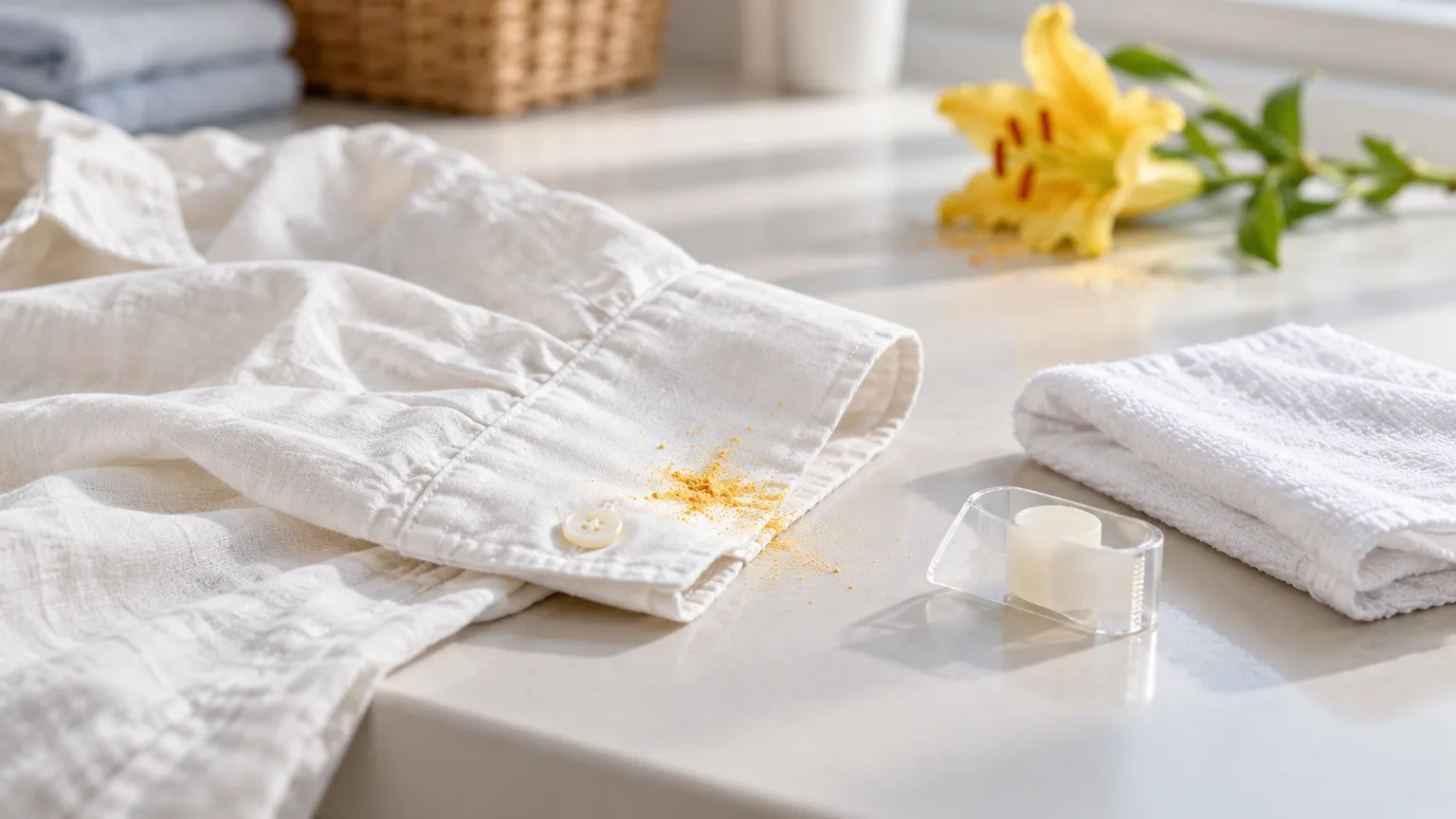
If pollen lands on a washable shirt, do not wet or rub it first. Take the garment outside, shake off loose grains, and lift what remains with small pieces of sticky tape; only after the visible powder is gone should you rinse the fabric from the back with cool water. Pretreat with liquid laundry detergent, wash according to the care label, and air-dry so you can inspect the stain before using a dryer or iron.
That order matters more than owning a special stain remover. Pollen is a dry powder at first, so dragging a damp cloth across it can spread the colored particles into a larger area. The method below uses ordinary laundry supplies, while accounting for delicate fabrics, lily pollen, old marks, and surfaces that cannot go in a washer.
What to do in the first few minutes
Pause before brushing the stain away. If you are wearing the item, take it off carefully without folding the stained area onto another part of the garment; if that is not practical, place a clean towel behind the mark so pollen does not transfer to skin or another surface. Carry the garment outside or over a wastebasket, then gently shake it with the stained side facing down.
For a fresh mark, press a piece of clear tape or masking tape lightly against the dry pollen and lift straight up. Use a clean section of tape for each touch rather than sliding it across the fabric. Stop if the material is fuzzy, loosely woven, embellished, or delicate enough that adhesive could pull threads; in that case, skip tape and take a valuable piece to a cleaner.
If there is no tape, a vacuum hose held just above the fabric can draw away visible loose pollen without pressing it into the weave. Use low suction if the vacuum has that setting, keep the nozzle from touching the cloth, and avoid this shortcut on fragile fibers. Laundry professionals interviewed by Martha Stewart also recommend dry lifting with tape, shaking, or carefully held vacuum suction before wet treatment.
Why pollen needs a dry-first approach
A pollen stain can contain two things: loose grains resting on the surface and colored residue that has already transferred into the fibers. The first is easiest to remove dry. Rubbing can grind the particles into the weave, while a wet wipe can smear them outward and create a larger yellow or orange area.
That does not mean water should never touch pollen. Once the loose powder is lifted, a cool rinse from the reverse side can carry remaining material out through the fabric instead of pushing it farther in. The useful rule is dry removal first, controlled cool-water treatment second. If someone has already rinsed the spot, do not scrub it or use heat; blot excess moisture without rubbing, then continue with the detergent step.
Color varies by flower, and lily pollen often leaves a vivid orange mark that is more noticeable than a faint dusting from other flowers. You do not need to identify the plant before treating the garment. Start with the same gentle sequence, then choose any stronger step according to the fabric label and the product instructions.
Household products worth reaching for
Keep the first treatment simple. You usually need a wastebasket or outdoor area, clear or masking tape, cool running water, a small amount of liquid laundry detergent, and a clean white cloth. A basin is useful if the garment can safely soak, but it is optional; repeated controlled rinsing is often easier to manage than a long soak.
Liquid laundry detergent is the best first product for a washable garment because it is made for laundry and can be selected for the fabric and care instructions. Follow the package directions for pretreating, especially the time limit, and do not let concentrated product dry on the garment. Persil’s pollen-stain instructions likewise begin by shaking off dry pollen, then pretreating and washing at the temperature allowed by the care label.
For a stubborn mark on a colorfast, bleach-safe washable item, an oxygen-bleach product may be a later option if its label permits use on that fabric and color. Oxygen bleach is not a universal “safe on everything” fix: test a hidden area, use the package dose, and keep it away from wool, silk, leather, and any garment marked do not bleach. Do not substitute chlorine bleach unless the care label explicitly permits it.
White vinegar is sometimes suggested as a home soak, but it is not a guaranteed pollen remover and should not be the first step. If you choose to try diluted vinegar on a sturdy washable item, test an inconspicuous area first, follow a reliable fabric-care recommendation, and rinse thoroughly. Never combine vinegar with chlorine bleach or another cleaner: the U.S. Poison Control Center warns that vinegar and chlorine bleach can produce highly irritating chlorine gas. Avoid adding rubbing alcohol as a default treatment; a solvent can affect some dyes, finishes, and synthetic fibers, and a hidden-area test cannot make an unsuitable product safe.
How to remove pollen stains from washable clothes
Use this sequence for a machine-washable garment whose care label allows water washing. Work over a sink or basin, keep the stain separate from clean sections of fabric, and treat the spot before adding the item to a full laundry load. Do not choose wash temperature from a generic stain category; follow the garment label and detergent directions.
1. Lift loose pollen without rubbing
Take the garment outside if possible and hold the mark facing down. Shake gently, then use tape in short presses to pick up grains that remain on the surface. Do not brush, wipe, scrub, or press a damp paper towel against it. If the pollen has already been rubbed, still remove any surface powder that remains, but expect to repeat pretreatment rather than trying to scrape the colored shadow away.
For a small mark, a few light tape touches are safer and more precise than a long strip dragged across the fabric. Check the tape after each press; when it stops collecting visible powder, move on. Do not use sticky tape on velvet, loose knits, sequins, fragile silk, or fabrics whose nap or finish could lift.
2. Rinse from the back with cool water
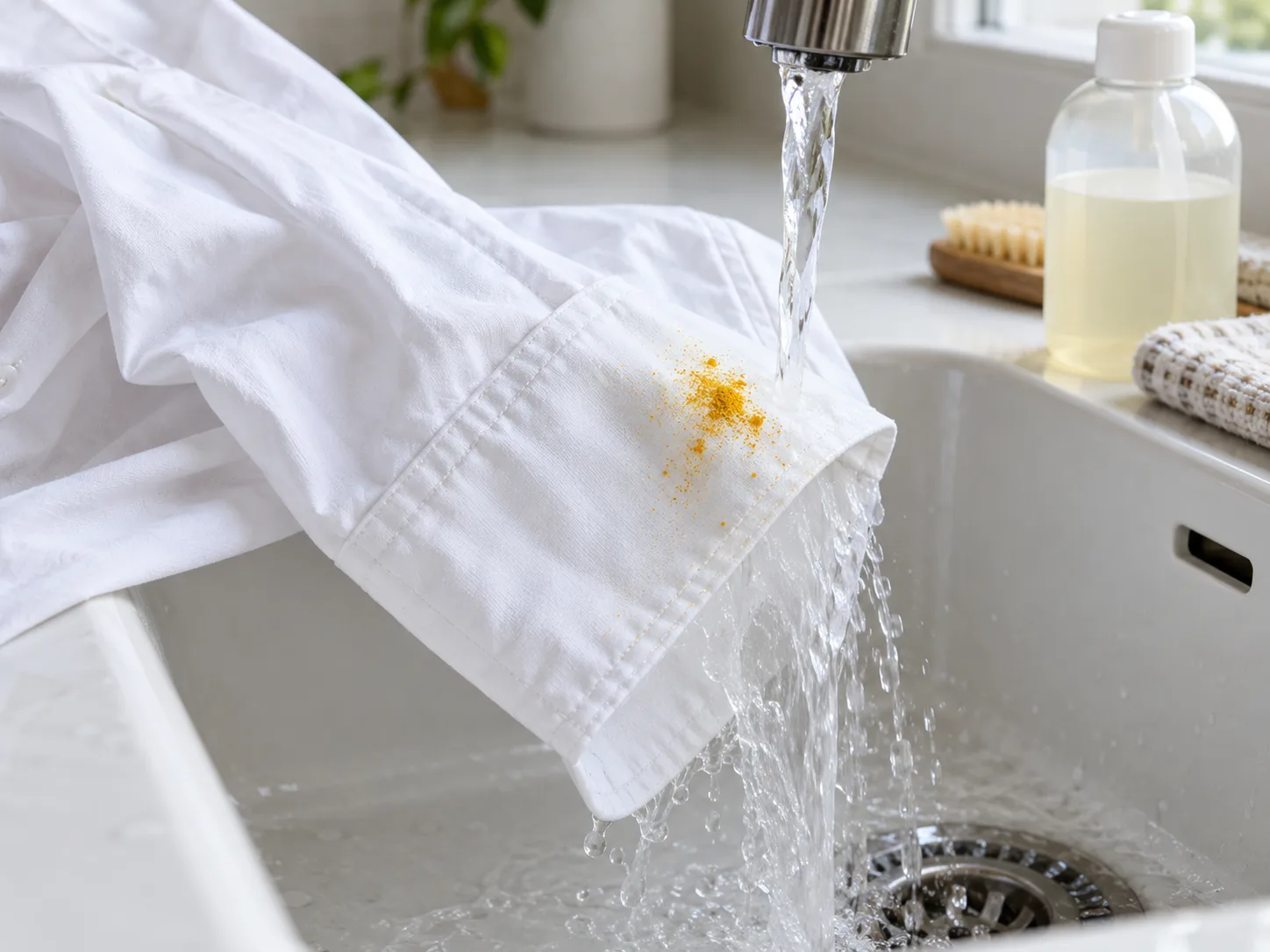
Turn the garment inside out so the reverse side of the stain faces the faucet. Run cool water through the fabric from that side, allowing the flow to push remaining pollen back out the way it entered. Keep the stream gentle on lightweight or loosely woven material, and avoid rubbing the spot between your fingers.
Rinse for a short interval, then inspect the front. If the mark is still visible, continue with the detergent pretreatment rather than escalating to a solvent. A brief cool-water soak can help a washable, sturdy garment after the loose grains are removed, but it is not essential; keep the soak within the fabric and detergent instructions, and do not soak a garment that the label says should not be washed.
3. Pretreat and wash by the care label
Apply a small amount of liquid laundry detergent to the remaining mark and gently work it in with your fingertip or a clean soft cloth, moving from the outer edge toward the center. Use only light pressure. Let the detergent sit for the time stated on its package; many stain-treatment directions call for several minutes, but longer is not automatically better and may be unsuitable for a particular dye or finish.
Wash the garment by itself or with similar colors, using the cycle and water temperature permitted by its care label. The U.S. care-label rule for textile apparel requires regular care instructions and warnings about cleaning procedures that may harm an item; treat those directions as limits on stain treatment too. When in doubt, choose the gentler permitted cycle and do not add bleach unless the label allows it.
If a pollen mark is on a larger area, do not pour extra detergent into the washer beyond the normal measured dose. More detergent does not guarantee a cleaner shirt and may leave residue. Pretreat the mark first, then let the machine do the washing.
4. Air-dry and inspect before using heat
When the cycle ends, inspect the fabric in bright natural light while it is still damp. If you can still see yellow or orange, do not tumble-dry, iron, or put the garment near a heater. Air-dry it in a shaded, ventilated spot and look again once the fabric is fully dry; wet fabric can make a faint stain difficult to judge.
This pause prevents a common setback: applying dryer or iron heat before you know whether the stain has cleared. If a trace remains, repeat the dry-lift step if loose pollen is present, pretreat again, and rewash according to the label. Use heat only after the mark has disappeared, and only if the garment’s drying instructions allow it.
If a yellow or orange shadow remains
A stubborn shadow does not mean the garment is ruined, but it does mean you should slow down. Confirm that the mark is still pollen rather than a different stain, check the care label again, and repeat the detergent pretreatment once before changing products. Repeated gentle cycles are generally safer than combining several household chemicals or scrubbing aggressively.
For a bleach-safe white or colorfast item, an oxygen-bleach laundry product can be the next option if the garment label and product directions allow it. Test the solution on a hidden seam or hem first and let that test dry before judging color change. Use the product’s own dose and soak time; do not make a stronger mixture on the assumption that it will work faster.
Sunlight can fade some pollen pigments, but it is an optional step, not a promise. Try a short period of indirect-to-moderate direct sun only on a garment whose color and care instructions can tolerate it, then inspect frequently. Bright sun can also fade garment dyes; the Canadian Conservation Institute notes that light can fade textile colors and weaken fibers, with damage increasing as exposure accumulates. Do not leave dark, printed, or delicate fabric outside unattended for a day or more.
Lily pollen and stubborn orange marks
Lily pollen deserves quick, careful handling because a vivid orange deposit can be noticeable even after the grains are gone. Do not flick a lily anther over a shirt or brush the mark with your sleeve. If you see pollen on the fabric, keep the garment away from other clothes, lift the dry grains with tape if the fabric can tolerate adhesive, and then follow the normal cool-rinse and detergent sequence.
If an orange trace remains after washing, treat the color as residual stain rather than loose powder. Repeat pretreatment and laundering, then consider oxygen bleach only on bleach-safe fabric. Martha Stewart’s interviewed laundry experts describe sunlight as one way to fade pollen pigment, but any sun exposure should be balanced against the garment’s colorfastness and care directions.
For cut lilies at home, removing the pollen-bearing anthers before they shed can prevent many stains. Do this over a bin or outdoors, and avoid shaking the flower. If the item is expensive, dark, silk, wool, or labeled dry-clean-only, stop before trying vinegar, alcohol, bleach, or prolonged sun; take it to a cleaner and point out the exact spot.
Choose the method by fabric
Cotton and linen: These sturdy washable fibers usually tolerate the standard sequence if the label permits: dry lift, cool rinse, detergent pretreatment, wash, then air-dry. White cotton may allow an oxygen-bleach treatment, but confirm the care label and product directions; colored cotton can still fade or change shade.
Polyester and other synthetics: Use the same dry-first approach, but avoid aggressive solvents and high heat. Some synthetic fabrics hold oily components or finishes differently, and heat can affect the material as well as any remaining stain. Keep detergent pretreatment modest and use the care-label cycle.
Wool and silk: Do not automatically use enzyme detergent, oxygen bleach, vinegar, or a machine wash. These fibers can be harmed by products or agitation that are routine for cotton. Lift only loose pollen gently, then follow the label’s hand-wash or dry-clean instruction; for a treasured piece, let a professional cleaner handle the mark.
Dark, printed, or dyed garments: Test any stain product in a hidden spot and wait for it to dry before deciding the color is safe. A small color change can become a pale patch if you continue treatment. Skip sunlight and bleach unless the fabric and product labels explicitly support them.
Stretch fabrics and embellished items: Be conservative with adhesive tape, solvents, oxidizing products, and vigorous rubbing. If the garment contains sequins, beads, bonded trim, elastic panels, leather accents, or a coating, professional cleaning is usually safer than testing several remedies on the visible stain.
Dry-clean-only, vintage, or embellished garments
For a dry-clean-only item, remove loose pollen carefully and stop before adding water, detergent, vinegar, alcohol, or a stain-remover spray. If the fabric is smooth and sturdy enough, use light tape presses; if it is textured, delicate, beaded, or likely to snag, do not use adhesive. Keep the spot dry and take the item to a professional cleaner promptly.
Tell the cleaner that the mark is pollen, identify whether it is lily pollen if you know, and point to the stain instead of rubbing it in yourself. The cleaning process is selected for the textile and finish, while home spot treatments can leave rings, color loss, or a stain that is harder to remove. Tide’s care-symbol guide advises sending dry-clean-only garments to a cleaner for stain removal; the garment’s own label takes priority over a generic home recipe.
Treat vintage clothing, wedding wear, structured jackets, silk scarves, and garments with uncertain labels the same way. If the tag is missing or illegible, test nothing visible: a cleaner can assess fiber, dye, and construction before choosing a treatment.
Pollen on upholstery and outdoor cushions
Do not start by spraying a sofa or cushion with water. First lift dry pollen: take removable covers outside and shake them gently, or use a vacuum nozzle just above the surface. On fixed upholstery, keep the vacuum from pressing into the weave and avoid tape on velvet, textured upholstery, or any fabric where adhesive might pull fibers.
After dry removal, check the manufacturer’s care tag or cleaning code. If water-based spot cleaning is allowed, test a small amount of mild detergent solution in an unseen area, wait until it dries, and look for color transfer or a ring. If the test passes, lightly dab the remaining mark with a clean white cloth, working from its outside edge toward the center; use as little moisture as possible and do not scrub.
For outdoor cushions, remove the cover if the maker allows it and follow the cover’s wash instructions. If it is not removable, use the maker’s recommended cleaner and method rather than hosing the cushion down. Deep foam can hold water and dry slowly, while excess moisture can create a new problem that is harder to solve than pollen dust.
Common mistakes that make the stain worse
- Rubbing or brushing first: This can push pollen into the weave or smear it beyond the original spot. Lift it vertically with tape or gentle suction instead.
- Wetting the loose powder immediately: Water is useful after dry grains are removed, but a wet wipe across fresh pollen can spread colored residue.
- Using hot water without checking the label: Temperature recommendations depend on the garment. Start with cool water for the rinse, then wash only as warm as its care instructions permit.
- Using chlorine bleach or mixing cleaners: Bleach can damage dyes and fibers, and mixing household products can create hazardous reactions. Use one label-approved product at a time and rinse it out before trying another.
- Using rubbing alcohol as a universal fix: Solvents can affect dyes, finishes, or synthetic fibers. A patch test does not remove every risk, so reserve solvent treatments for professional guidance.
- Drying or ironing before inspecting: Heat may make remaining discoloration harder to remove. Air-dry first and repeat treatment if needed.
- Leaving a garment in strong sun for days: UV may fade a mark but can fade the fabric too. Check often and stop if the garment color changes.
Does sunlight help pollen stains?
It can help fade some yellow-orange pigment after loose pollen has been removed and the garment has been washed, but sunlight is not a substitute for dry lifting, detergent, and a label-safe wash. A light-colored, colorfast cotton shirt may tolerate a brief supervised exposure better than a dark print, saturated dye, or delicate fabric. If the care label says to dry in shade or avoid direct sun, follow it.
Use sunlight only after cleaning, and inspect the garment periodically rather than leaving it out all afternoon without checking. If the stain changes but does not disappear, bring the item back inside and repeat a compatible detergent treatment. Do not use a UV lamp or place the garment against a hot window; extra exposure does not guarantee a better result and can fade or weaken the textile.
Prevent pollen stains before they happen
When arranging lilies, remove the pollen-bearing anthers before they open fully or shed, using tweezers over a wastebasket. Keep the flower head away from clothing while you work, and wash your hands or tools afterward so you do not transfer pollen to a sleeve. This prevention step is especially useful for bright lilies with heavy pollen loads.
When carrying cut flowers, hold stems below the blooms and keep the flowers upright, away from a light-colored shirt or coat. If you garden or arrange bouquets often, wear a washable apron or an older layer and keep a roll of clear tape nearby. If pollen does land on fabric, start the dry-lift method as soon as you notice it; quick, careful handling makes the rest of the treatment simpler.
Conclusion
To remove pollen stains from clothes, begin with the powder, not the washer: shake the garment outside, lift loose grains with tape or gentle suction, rinse the remaining mark from the back with cool water, and pretreat with a fabric-safe laundry detergent. Wash according to the care label, then air-dry and inspect before using a dryer or iron.
Repeat a gentle treatment if the stain remains. Use oxygen bleach or sunlight only when the fabric and its care instructions allow them, and leave dry-clean-only, delicate, vintage, or valuable pieces to a professional. The safest household method is the one that removes pollen without turning a small stain into fabric damage.