How to Get Rid of Mold on a Shower Curtain Safely at Home
Remove mold from a shower curtain safely with label-first washing, careful spot treatment, and smart drying. See when stains remain and when to replace it.

Mold on a shower curtain usually does not call for a stronger cleaner. Start by checking the care label, wash a machine-safe fabric curtain or liner with detergent, hand-wash anything the label excludes, and let every surface dry fully before hanging it back in the shower. A curtain can come clean even if a dark stain remains, so judge the result by the material’s condition, odor, and whether visible growth returns—not by color alone.
The most important safety rule is to use one cleaning product at a time. The CDC recommends removing visible mold with water and detergent, drying promptly, and not mixing cleaners; bleach is not a shortcut that makes every curtain safe to soak. CDC mold-cleanup guidance and NC State Extension’s advice for washable household fabrics support a careful, material-aware approach.
The Fastest Safe Method for Most Curtains
If the care label allows machine washing, remove the curtain or liner from its rings, check for loose hooks, and put it in the washer with regular laundry detergent on the gentlest suitable cycle. Use the water temperature and any additives permitted by the label, then hang the item to dry completely; do not assume that a plastic liner can go in the dryer. This removes soil and visible growth without first gambling on a soak that may fade, stiffen, or weaken the material.
If the label says hand-wash only, or if it is missing and the item looks delicate, use a tub or large basin with lukewarm water and a small amount of detergent. Work the solution gently through the spots with a soft cloth or soft nylon brush, rinse until the water runs clear, and hang the item so both sides can dry. For an unknown fabric or old, brittle liner, follow the cautious path rather than testing an aggressive cleaner on the whole curtain.
Is It Mold, Mildew, Soap Film, or a Stain?
The word “mildew” is often used for flat, surface growth, but it is not a separate cleaning category that requires its own magic recipe. A shower curtain can also collect soap film, body oils, mineral deposits, and dye transfer; some of those marks look like mold, and a discolored spot may remain after the material is clean. Color and shape are not reliable enough to identify a mold species or tell you whether a stain is still active growth.
Treat visible fuzzy or spreading spots as growth that needs removal, but do not try to name it by whether it is pink, gray, green, or black. A slick film can also have soap or body-soil residue mixed in, and appearance alone cannot identify what it is; washing removes that film whether or not mold is part of it. If discoloration remains on a dry, odor-free, intact curtain after cleaning, it may be a stain rather than a reason to keep escalating chemicals.
Identify the Curtain and Liner Material First
A decorative outer curtain and the liner behind it do different jobs. The outer curtain may be cotton, polyester, nylon, or a coated textile; the liner may be vinyl, PEVA, or fabric. The care symbol, manufacturer instructions, and any attached label matter more than a generic online recipe because the same treatment can be fine for white cotton and damaging to a printed fabric or thin plastic.
| What you have | Start with | Main limit |
|---|---|---|
| Washable fabric curtain | Detergent and the label-approved machine or hand-wash method | Do not exceed the label’s heat or bleach limits |
| Fabric liner | Detergent and the care-label wash cycle | Let it dry completely; do not leave it folded while damp |
| Vinyl or PEVA liner | Detergent and a soft cloth or brush; machine-wash only if its label allows | Keep it away from hot water and the dryer unless the manufacturer says otherwise |
Separate the outer curtain from the liner before cleaning if they have different care instructions. Inspect the bottom hem, folds, seams, magnets, and grommets; buildup often collects where water sits or fabric overlaps. A plastic liner that has become stiff or cracked is not a good candidate for repeated scrubbing, while a fabric curtain with intact seams may tolerate another careful wash.
Protect Yourself Before You Clean
A small, damp curtain is a different job from cleaning mold-damaged drywall, but do not shake a dry, visibly moldy liner through the bathroom or carry it against clean towels. Remove it carefully, keep it away from clean laundry, and wash your hands after handling it. If the growth is extensive, dusty, or shedding, avoid brushing it indoors and ask someone else to handle the item if exposure could bother them.
The CDC advises that people with mold allergies, immune suppression, underlying lung disease, asthma, or COPD should not take part in mold cleanup. If that applies to you, have another household member clean the curtain or ask a health professional about the safest option for your situation; the CDC’s broader recommendations are written for mold cleanup generally, not specifically for one shower liner. For larger cleanup jobs, CDC guidance also describes gloves, eye protection, respiratory protection, and fresh air as protective measures.
Open a window if it is safe and practical, or run a bathroom fan that vents outdoors while using cleaning products. Wear household gloves if you have sensitive skin or are handling visible growth, and protect nearby towels from splashes. You do not need to combine vinegar, baking soda, peroxide, or bleach to get a curtain clean; mixing products can create a hazardous reaction and can make a simple wash harder to control.
Machine-Wash a Fabric Shower Curtain
Many fabric curtains can be washed in a machine, but decorative trim, water-repellent coatings, metal rings, stitched-in weights, and blackout or specialty linings can change the instructions. Read the care label, take off detachable hooks, and choose the cycle and temperature it permits. Good Housekeeping’s cleaning guidance likewise recommends following the care label for textile or decorative curtains rather than applying the same wash recipe to every fabric.
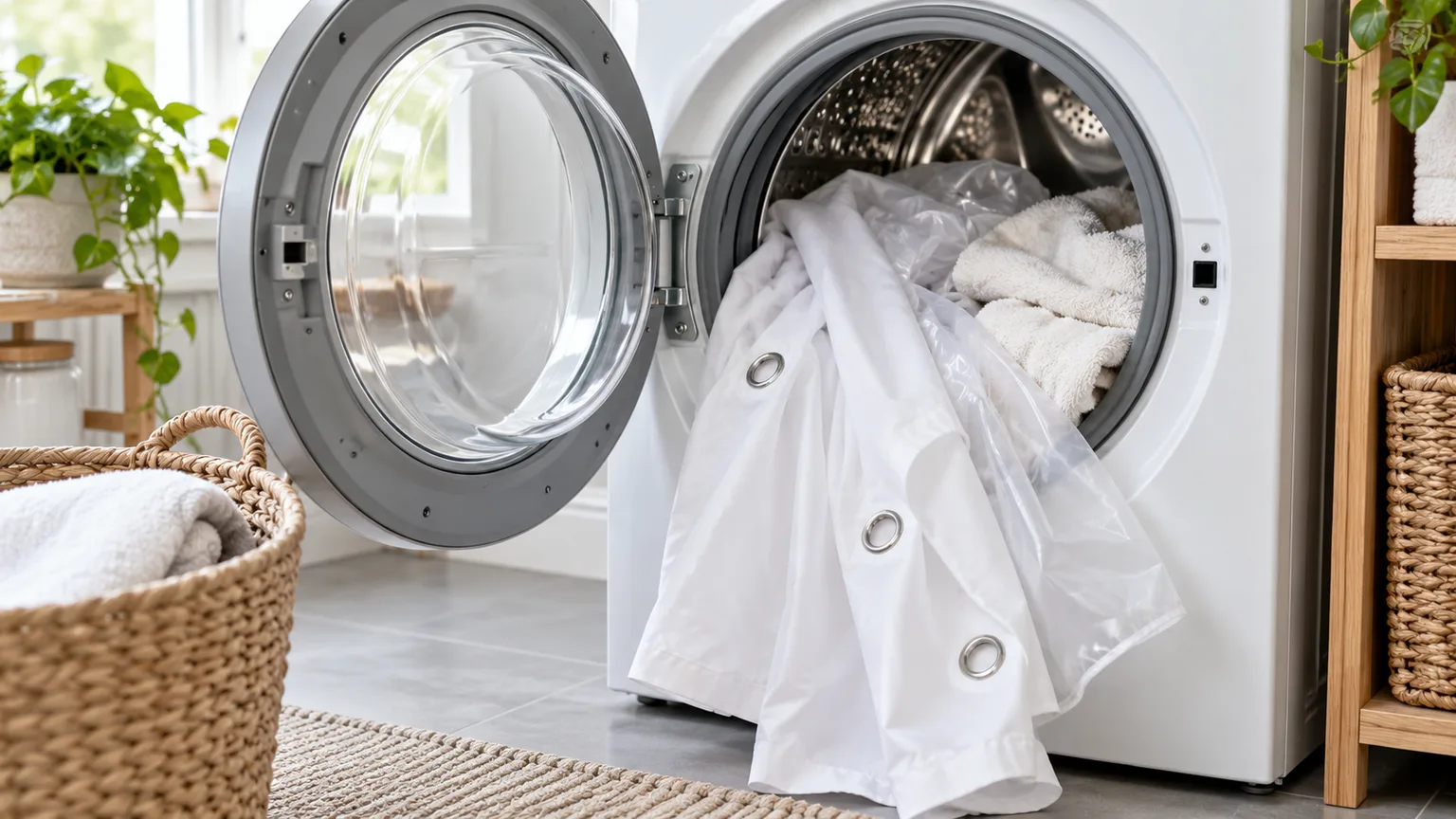
Use the regular amount of detergent for the load, not an extra dose meant to overpower the mold. Too much detergent can leave residue in heavy folds and may make rinsing less effective. If the curtain is large or the washer is small, wash it by itself or in a balanced load; do not pack the drum tightly, because the curtain needs room to move and rinse.
Treat Stains Before the Wash, Not With a Chemical Cocktail
For a washable curtain with a visible spot, first rinse the area with cool or lukewarm water and apply a small amount of laundry detergent according to its label. Gently work it in with a soft cloth, wait only as long as the product directs, and then wash the whole curtain so the treated area is rinsed away. Test any stain remover on a hidden hem first, especially on a printed, dark, or coated fabric.
Do not pour chlorine bleach, vinegar, peroxide, or borax onto a curtain just because the spot is dark. A color change can be permanent, and different products have different compatibility rules. NC State Extension’s washable-fabric guidance calls for pretreating with a non-ammonia detergent and using only a suitable, label-approved bleach when appropriate; on a shower curtain, the curtain’s own care tag is the deciding instruction.
Wash a Machine-Safe Plastic Liner Carefully
Some plastic or vinyl liners can be machine-washed, but that does not mean every liner can. Check the package or manufacturer’s care directions first; if there is no clear instruction, hand-washing is the safer default. Good Housekeeping describes washing machine-safe plastic or vinyl curtains with regular detergent and a few towels for extra agitation, then hanging them to dry, while Real Simple also cautions against putting a plastic liner in the dryer.
If the label permits a washer, remove rings and hooks, use a gentle cycle and cool water unless the manufacturer specifies otherwise, and add only items that will not snag or discolor the liner. A couple of colorfast towels may cushion a flexible liner and help it move through the wash, but they are not mandatory; avoid overloading the machine. Skip high heat, long hot soaks, and any dryer cycle unless the manufacturer expressly approves them, because softened or warped plastic may no longer hang or seal properly.
After the cycle, inspect the seams and lower edge while the liner is still wet. If it is tacky, stretched, cracked, peeling, or newly cloudy, do not keep scrubbing it; the surface may be breaking down. Hang it open over the tub or shower so it drains and dries, then reinstall it only when the folds and hem are dry to the touch.
Hand-Wash a Vinyl or PEVA Liner
Hand-washing gives you more control over a liner that is too fragile for the washer or has no reliable care tag. Fill a clean bathtub or basin with cool or lukewarm water, add a small amount of ordinary laundry detergent, and submerge only as much of the liner as the tub allows. Do not add vinegar or bleach to the same basin, and do not soak a printed or coated liner in a product that its label does not approve.
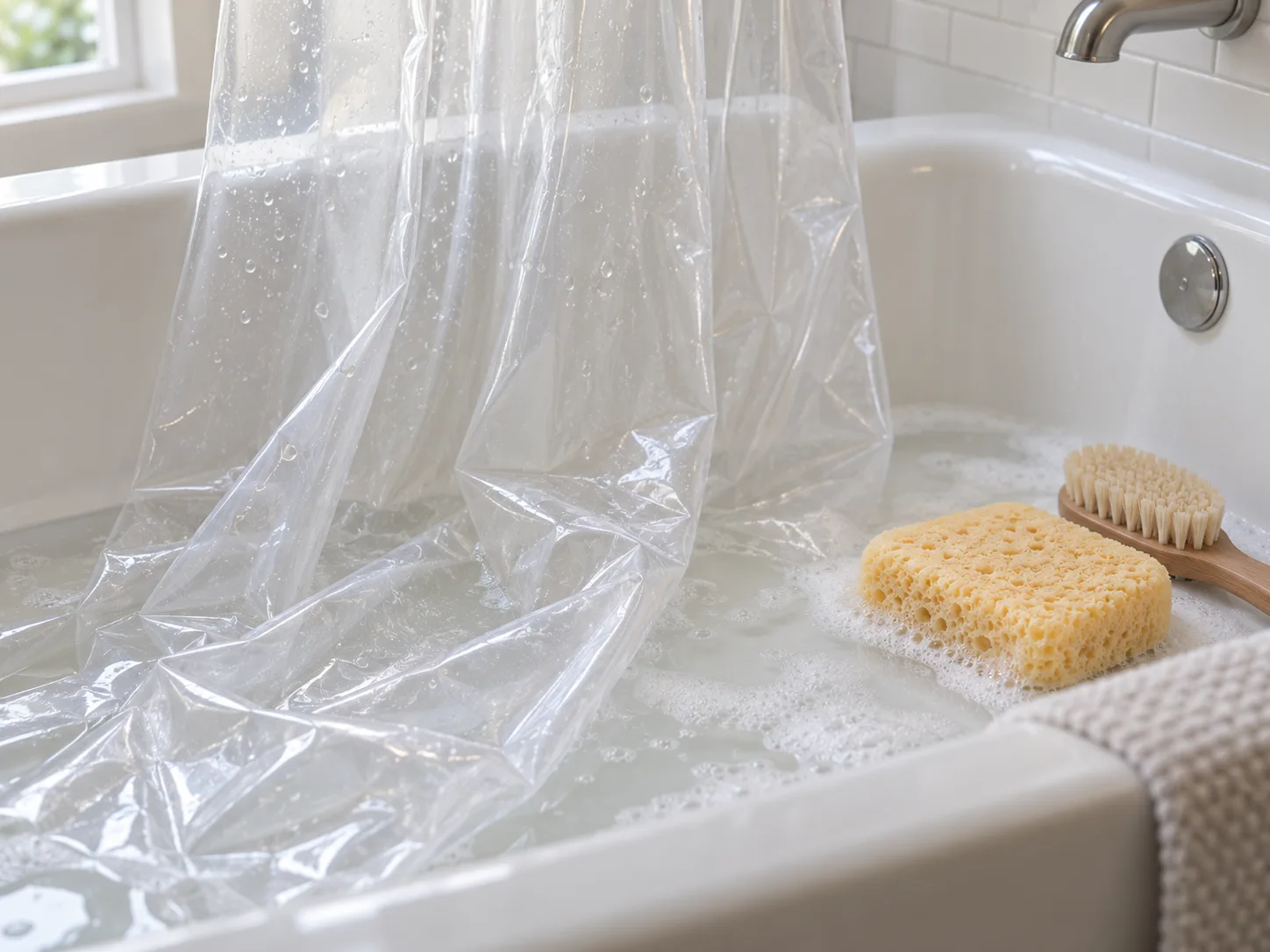
Wipe both sides with a soft sponge or cloth, paying attention to the bottom edge, folds, and spots where the liner touches the tub. If a patch needs light scrubbing, use a soft nylon brush and short strokes; an abrasive pad can scratch or roughen thin plastic, which makes the surface harder to clean. Drain the basin, rinse the liner thoroughly with clean water, and check whether the residue lifts before trying a second treatment.
Hang the liner fully open to drip-dry, with the hem clear of pooled water. Do not twist or wring it tightly, since creases and stress can weaken old vinyl. If it still smells musty after it is completely dry, or if growth remains embedded in a cracked or peeling surface, replacement is usually more sensible than repeating the soak.
When Oxygen Bleach Is Appropriate
Oxygen bleach can help with discoloration on some washable, colorfast fabrics, but “color safe” does not mean suitable for every curtain. Use it only if both the curtain’s care instructions and the product label permit it, and follow the package dilution, temperature, and soak time. Test a hidden spot first when the fabric is printed, dark, delicate, or coated; stop if color transfers or the surface changes.
A stain treatment and mold removal are not the same promise. Oxygen bleach may lighten a stain on an approved fabric, but a remaining mark does not automatically mean live mold is still present, and an unstained appearance does not prove that a damp bathroom problem is fixed. Never mix oxygen bleach with chlorine bleach, vinegar, ammonia, peroxide, or another cleaner; use one treatment, rinse as directed, and wash separately if the label says to do so.
For vinyl, PEVA, waterproof coatings, or unknown plastics, skip an oxygen-bleach soak unless the manufacturer specifically approves that exact material. A detergent wash is a less aggressive first attempt and is usually enough for fresh surface film. If the stain persists but the liner is otherwise sound, check the material maker’s advice before moving to a stronger product.
Use Chlorine Bleach Only If the Label Allows It
Chlorine bleach is a narrow option, not the default for every moldy curtain. Use it only on an item whose care label allows chlorine bleach and only according to the bleach product’s directions; a white appearance does not guarantee that a fabric, print, seam, or coating is bleach-safe. If the label is missing, the material is colored, or you cannot identify the fabric, use detergent or replace a low-cost liner rather than guessing at a bleach ratio.
Never mix bleach with vinegar, ammonia, acids, or other household cleaners. The CDC warns against mixing cleaners and specifically states that bleach should never be combined with ammonia or another cleanser; ventilate the bathroom and follow the product label for protective equipment, dilution, contact time, rinsing, and disposal. Do not pour an improvised bleach mixture over the curtain while it hangs above a tub, where splashes can reach skin, grout, towels, or metal hardware.
If the washer and fabric label both allow bleach, use the correct dispenser and measured dose specified by the product and machine instructions. Do not add bleach to a bucket that still contains vinegar or another treatment, and do not reuse an unrinsed basin for a different cleaner. A label-approved wash is more predictable than the separate bleach-soak recipe often repeated online.
Do Vinegar, Baking Soda, Peroxide, or Borax Work?
You do not need a special “mold-killing” ingredient for a washable curtain. The CDC’s practical cleanup advice is to clean visible mold with water and detergent, remove what you can see, and dry promptly; it does not require a household cleaner to sterilize the item. For fabric, NC State Extension also puts detergent and compatible fabric care at the center of washing.
Vinegar is an acid and may discolor some fabrics or coatings; it is not a reliable guarantee that every mold type or stain is gone. Never combine it with bleach. Baking soda can act as a mild abrasive in some cleaning jobs, but a paste can leave residue in folds and rough scrubbing can damage a thin liner; it is not necessary for a routine wash.
Hydrogen peroxide can bleach or spot colored fabric, and its safe use depends on the curtain material and the product’s label. Borax is not automatically harmless because it is naturally occurring, and there is no reason to handle or soak a shower curtain in it when a detergent wash is the lower-complexity first step. If a specialist product is warranted, choose one labeled for the exact material and use it alone as directed.
What to Do if Discoloration Remains
Let the curtain dry completely before deciding whether the treatment failed. If the fabric is intact, has no musty odor, and feels clean rather than slimy or dusty, a flat discoloration may be a residual stain; another label-approved wash or stain treatment may lighten it, but repeated chemicals cannot restore pigment that has already changed. Do not put a fabric curtain in a hot dryer until you are satisfied with the stain result, because heat can make some stains harder to remove and can shrink certain textiles.
If the spot is still raised, fuzzy, slippery, or musty after washing, clean the item again only if its material can tolerate another cycle. Use detergent, rinse thoroughly, and dry it fully before considering a separate label-approved stain treatment. If the same growth returns quickly after the curtain is clean and dry, the curtain may not be the only issue; inspect the room for poor ventilation, a persistently wet hem, leaks, or growth on nearby surfaces.
Avoid judging success by whether every mark disappears. Mold can stain or damage material even after visible soil has been washed away, while soap or mineral residue may look like a dark speck. A cleanable curtain should be clean to the touch, free of a persistent musty odor, and structurally sound; a perfect-looking surface is not a substitute for fixing a recurring moisture source.
When to Replace the Curtain or Liner
Replace a plastic liner that is brittle, cracked, sticky, peeling, torn at the grommets, or no longer hangs flat. Those defects trap water and make a thorough clean harder, and scrubbing may enlarge the damage. A thin liner is inexpensive enough that replacement can be the practical choice when growth remains embedded after one careful, material-safe cleaning.
A fabric curtain may be worth another wash if its fibers, seams, and coating remain sound. Replace it if it stays strongly musty after it is washed and fully dried, if growth reappears immediately on a clean surface, or if repeated treatment has faded, weakened, or distorted it. NC State Extension recommends consulting a restoration or cleaning specialist when a household item is valuable or sentimental; that is a better route for an expensive decorative curtain than experimenting with harsher products.
There is no useful universal percentage of a curtain that must be moldy before it should be discarded. Base the choice on how much growth remains after a safe wash, the condition of the material, whether odor persists, and whether you can get it completely dry. If the source is contaminated floodwater or sewage rather than ordinary shower moisture, do not treat it like a routine laundry stain; follow local public-health guidance or discard the item.
Prevent Mold From Returning
Cleaning removes what has collected on the curtain; drying changes the condition that lets it come back. After every shower, pull the curtain across most of the rod instead of leaving it bunched in a wet stack. Let the liner hang inside the tub or shower pan so it drains there, and keep the lower hem from sitting in a puddle or folded against a damp bath mat.
Rinse off visible soap film when it builds up and wash the curtain before it develops a heavy musty smell. Check the lower folds, seams, and the section hidden behind the outer curtain, because those are the places that can stay wet longest. If one corner always gets spotted, change where the curtain rests and check whether that part of the bathroom gets less airflow.
Let the Curtain and Bathroom Dry Between Showers
Spread the curtain so air can reach both faces rather than closing it into a thick pleat. Wipe standing water from the hem or tub edge if it regularly collects there, and avoid leaving a damp towel pressed against the liner. If more than one person uses the shower in quick succession, keep the curtain open between showers and give it a longer drying window after the last one.

Run the bathroom exhaust fan while showering and for a while afterward, and open the door or a window if that is safe and practical. The CDC’s mold-cleanup recommendations emphasize fresh air, removing moisture, and drying promptly; the same principle helps a washable curtain stay dry, though a fan cannot fix a leak or a fan that does not move air outdoors. If the mirror and walls stay wet long after showers, the ventilation system may need maintenance or the bathroom may need a dehumidifier suited to the space.
How Often to Wash a Shower Curtain
Inspect the liner about once a month as a simple starting routine, then wash sooner if you see visible buildup, feel a slick film, or notice a persistent musty smell. Real Simple’s curtain-care guidance also suggests monthly cleaning for a frequently wet plastic liner and less frequent washing for an outer fabric curtain that stays relatively dry; treat that as a practical schedule, not a health guarantee or a rule for every bathroom.
A liner in a busy, poorly ventilated bathroom may need cleaning more often than one that opens fully and dries between showers. A decorative outer curtain protected by a liner can often go longer, provided it remains dry and its care label permits that interval. If the curtain is clean but growth repeatedly appears on nearby walls or ceiling, changing the washing schedule alone will not solve the moisture problem.
When It Is a Bigger Bathroom Moisture Problem
A moldy curtain can be a clue, but it does not prove that the whole bathroom has a serious mold problem. Look for growth on the ceiling, wall outside the spray area, window frame, grout, or vanity; soft or swollen wall material; peeling paint; leaks; and spots that return shortly after cleaning. If growth is on a building surface or the wall feels damp, deal with the water source and get appropriate repair advice rather than repeatedly washing the liner.
The CDC notes that mold cleanup can pose health risks and advises people with allergies, immune suppression, asthma, COPD, or underlying lung disease not to take part. Ask a landlord or building manager to investigate recurring growth in a rental, and consider a qualified remediation or repair professional for widespread growth, hidden water damage, or material that cannot be dried. For visible growth on tile or grout beyond the curtain, see our guide to cleaning mold in the shower; a curtain wash cannot replace cleaning or repairing those surfaces.
Conclusion
For most washable shower curtains and liners, detergent, the care-label-approved wash method, and complete drying are the sensible first steps. Use a stain treatment only when the material allows it, never combine cleaners, and replace plastic that is cracked or fabric that remains musty or visibly affected after careful cleaning.
Then change the drying routine: spread the curtain, keep the hem out of standing water, and ventilate the bathroom after showers. If mold also appears on walls or keeps returning, look beyond the curtain and correct the moisture source.