How to Remove Rust Stains From Concrete
Remove rust stains from concrete with a surface-safe method. Compare mild acids and concrete cleaners, then avoid etching, runoff damage, and repeat stains.
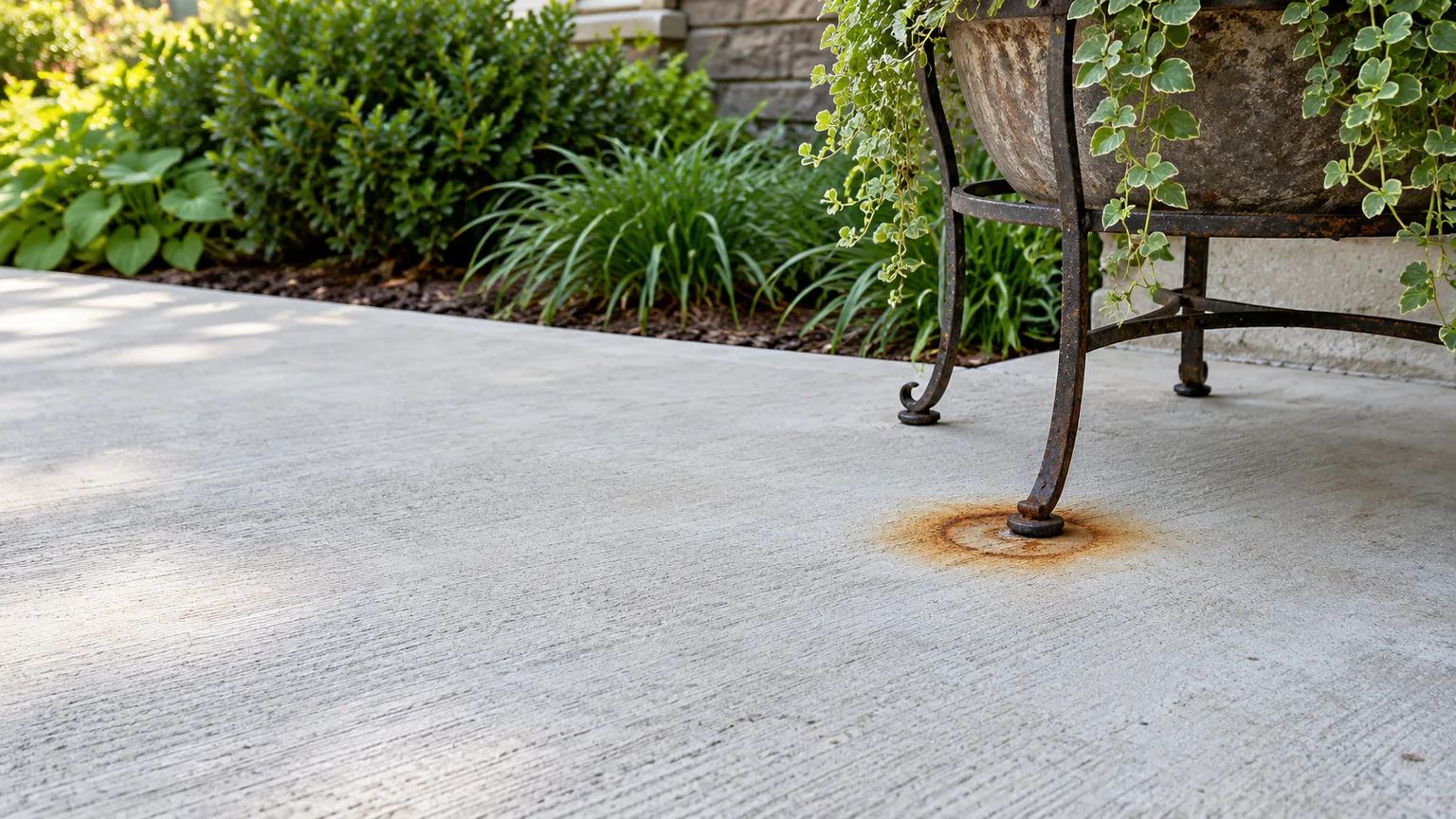
For a small orange mark from a planter, chair foot, or garden tool, start with the mildest cleaner that is compatible with your concrete. Sweep away grit, test the cleaner on a hidden spot, apply it for the label’s stated time, scrub with a nylon brush, and rinse thoroughly. A rust-targeting cleaner may be needed because ordinary soap and water can lift surface dirt without dissolving iron oxide lodged in concrete’s pores.
Before treating a large or recurring stain, look for the metal source. Rust from an object sitting on the slab is usually a cleaning job; rust that bleeds from a crack, spall, or damaged area may be coming from steel inside the concrete. Cleaning can remove the color temporarily, but it will not stop active corrosion.
First Identify What Is Rusting
Concrete is porous, so rust can discolor the surface even after the rusty object has been moved. Common sources include iron or steel furniture feet, fence posts, tools, metal edging, fertilizer granules, and irrigation water with iron. Concrete Network also notes that exposed reinforcement or iron-bearing aggregate can create rust marks from within the slab; it recommends finding and correcting the source before cleaning because the stain can return otherwise (Concrete Network’s guide to rust stains on concrete).
Start by moving nearby metal objects and checking whether their contact points line up with the stain. Look up as well as down: rusting railings, downspouts, fasteners, or sprinkler water can leave a trail that lands several feet from its source. If the stain follows the spray pattern of a sprinkler or appears below a rusty fitting, fix that source first or the next wetting may recreate the mark.
Surface stain or corrosion inside the slab?
A surface-transfer stain is often a ring, drip, or localized patch that corresponds to a metal object. If you remove the object and the stain fades after cleaning, the cause was likely external. A wider orange streak emerging from a crack, a spot that returns after each rain, or rust beside flaking concrete deserves closer inspection.
Rusting reinforcing steel can expand and contribute to cracking or spalling, but a stain alone does not prove that the slab has a structural problem. Check for loose fragments, a growing crack, exposed steel, or a hollow, delaminating area. If any of those signs are present, do not keep applying acid or pressure to disguise the mark; photograph it and ask a concrete repair professional to inspect the area.
Choose Cleaner by Surface and Stain Age
The right product depends on two things: the stain and the finish. Rust is not grease or mildew, so a degreaser or general-purpose detergent may clean the surrounding grime while leaving the orange iron residue. The best starting choice is a product that explicitly lists concrete or masonry and rust on its label, with directions that match your surface.
| Cleaning option | Best fit | Main limitation |
|---|---|---|
| Mild dish soap and water | Loose dirt around a stain; first rinse | Usually will not remove rust embedded in the pores |
| White vinegar or lemon juice | A small, recent mark on plain, unsealed concrete after a patch test | Results vary; the acid can alter sensitive finishes and should not dry on the slab |
| Rust remover labeled for concrete | Persistent or older stains on compatible concrete | Ingredients and dwell times differ; follow that exact label and safety data sheet |
| Muriatic or hydrochloric acid | Not a routine homeowner rust treatment | Can injure people, corrode metals, and damage or alter the concrete surface |
Small, fresh spots on plain concrete
A mild household acid such as white vinegar or lemon juice may help with a small, recent stain on plain, unsealed gray concrete. Concrete Network describes these as options for newer stains, while This Old House’s concrete-cleaning guide suggests vinegar for rust and calls for thorough rinsing; the guides use different contact times (Concrete Network, This Old House). That variation is a useful reminder that there is no universal timer for every concrete mix, stain depth, or finish.
If you choose this route, first test a few drops in a hidden area and watch for color or texture change. Use a small amount, do not let it dry, scrub gently, and rinse completely; stop if the patch lightens, roughens, or develops a halo. If the mark does not respond to one careful trial, move to a concrete-labeled rust remover rather than soaking the slab repeatedly in household acid.
Deep stains and concrete-formulated removers
Aged stains can extend below the visible surface, so even a cleaner that dissolves rust may need more than one label-directed treatment. Concrete Network identifies oxalic-acid cleaners as effective for heavy rust and explains that the required product depends on stain age, extent, and concrete porosity. This is a product-selection clue, not a reason to buy a concentrated chemical or invent a mixing ratio at home.
Read the container and the safety data sheet before opening the cleaner. Confirm that the label allows your exact material—plain concrete, pavers, stamped concrete, or a sealed finish—and use only the dilution, dwell time, protective equipment, and disposal directions printed by its manufacturer. If the surface is coated or decorative and the label is unclear, contact the cleaner manufacturer or the installer before testing it.
Muriatic acid is a poor shortcut for an ordinary rust spot. Hydrochloric acid can cause serious eye and skin burns, irritate or damage the respiratory system, and corrode many metals, according to the NIOSH Pocket Guide to Chemical Hazards. Concrete Network cautions that strong acid cleaners can also strip concrete color or coatings. Do not use an improvised acid-and-water recipe; if a job seems to require a strong mineral acid, hire a qualified concrete-cleaning professional instead.
Why Common Cleaning Shortcuts Fail
Dish soap helps lift loose dirt and makes the area easier to inspect, but it is not a dedicated rust dissolver. If the orange pigment remains after washing, scrubbing harder with soap is unlikely to solve the chemistry of the stain. Switch to a compatible rust treatment rather than increasing brush pressure.
Bleach is intended for different kinds of discoloration, such as some organic stains, and is not a reliable rust-removal step. It may change the appearance of nearby concrete without removing the iron deposit. Keep cleaners separate: never combine products or add one cleaner to another, and rinse fully before switching treatments.
Wire brushes, steel wool, and aggressive abrasive pads can scratch the cement paste or leave metal particles that create new orange marks. A stiff nylon brush gives useful agitation without adding steel to the surface. Avoid grinding or sanding as a first response; removing the top layer can leave a visible patch with a different texture and exposed aggregate.
A pressure washer alone moves water and loose debris but often cannot dissolve a rust deposit that has penetrated the concrete. Treat the stain with a compatible cleaner first, then use water to remove loosened residue. A strong narrow jet can scar the surface, strip sealer, or drive dirty water into joints, so pressure is not a substitute for product compatibility.
Prepare the Work Area and Tools
Gather a bucket, clean water, a stiff nylon-bristle brush, gloves and eye protection suitable for the chosen product, and the rust remover itself. Keep the product label and safety data sheet available. If the cleaner calls for ventilation, do not work in an enclosed garage; if it calls for specific chemical-resistant gloves or other protective equipment, ordinary household gloves may not be enough.
Remove furniture, planters, mats, and anything that could be splashed. Cover or move nearby plants, protect metal hardware and painted trim, and plan where rinse water will go before applying a chemical. Do not direct cleaner-laden runoff into a garden bed, pond, storm drain, or neighboring property; follow the product’s disposal instructions and local requirements. This is especially important when the label warns against contact with vegetation or aquatic life.
Choose a cool, dry period when rain is not imminent and the surface is not hot from direct sun. Heat and wind can dry a cleaner before it has worked, while rain can spread it beyond the test area. Sweep off loose dust and grit first so you do not grind particles into the finish while brushing.
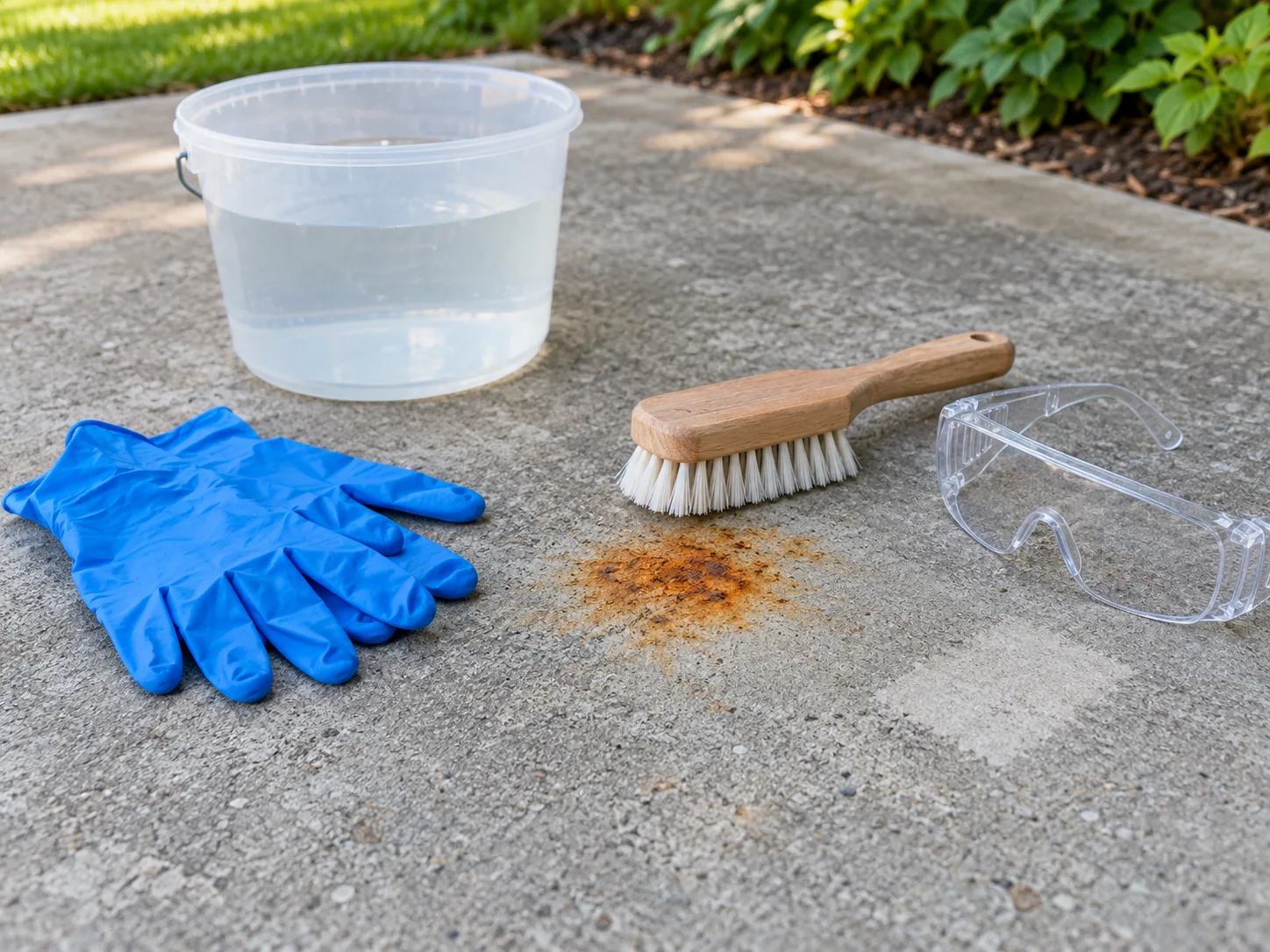
Step-by-Step Rust Removal
Work on one small area at a time. A controlled patch makes it easier to see whether the treatment is working and keeps cleaner from reaching surfaces that should not be exposed to it.
Clean and test an inconspicuous patch
Rinse or wipe the stain area to remove loose grit and dirt, then let it drain. Pick a test spot at an edge or behind an object where a slight color change would be less noticeable. Apply the cleaner exactly as directed and inspect both while wet and after it dries; wet concrete can look darker, which can hide uneven bleaching or etching.
Do not skip the patch test because a product says “concrete safe.” Concrete includes different mixes, sealers, stains, and finishes, and a generic label may not cover all of them. This Old House likewise recommends testing a cleaner in an inconspicuous area before cleaning concrete (This Old House). If the test leaves a lighter halo, rough spot, cloudy film, or soft-looking finish, rinse immediately and do not treat the visible stain with that product.
Apply the compatible rust cleaner
Once the test dries without a problem, follow the product’s directions for application and dwell time. Apply only enough to keep the stain covered; flooding the whole patio does not improve contact and increases runoff. If the product requires dilution, measure it precisely in a nonreactive container and never substitute a stronger mixture.
Keep the cleaner wet only for the instructed period. Do not walk away, let it bake in sun, or extend the dwell time because the stain looks stubborn. If the stain does not lift within the label’s window, rinse first and let the surface dry before deciding whether a repeat application is permitted.
Scrub without abrading the surface
Use a nylon brush and moderate pressure, working from the outside of the mark inward so you do not spread orange residue across clean concrete. Short, overlapping strokes are more controlled than a few hard passes. If the surface is decorative or has a thin coating, use the gentlest brush the manufacturer allows.
The goal is to loosen the stain, not to remove a layer of concrete. Stop if aggregate begins to show, the surface feels rougher, or color transfers to the brush. A rust ring from a metal leg may need another controlled cleaner application; it does not justify grinding the slab or switching immediately to a stronger acid.
Rinse, dry, and judge the result
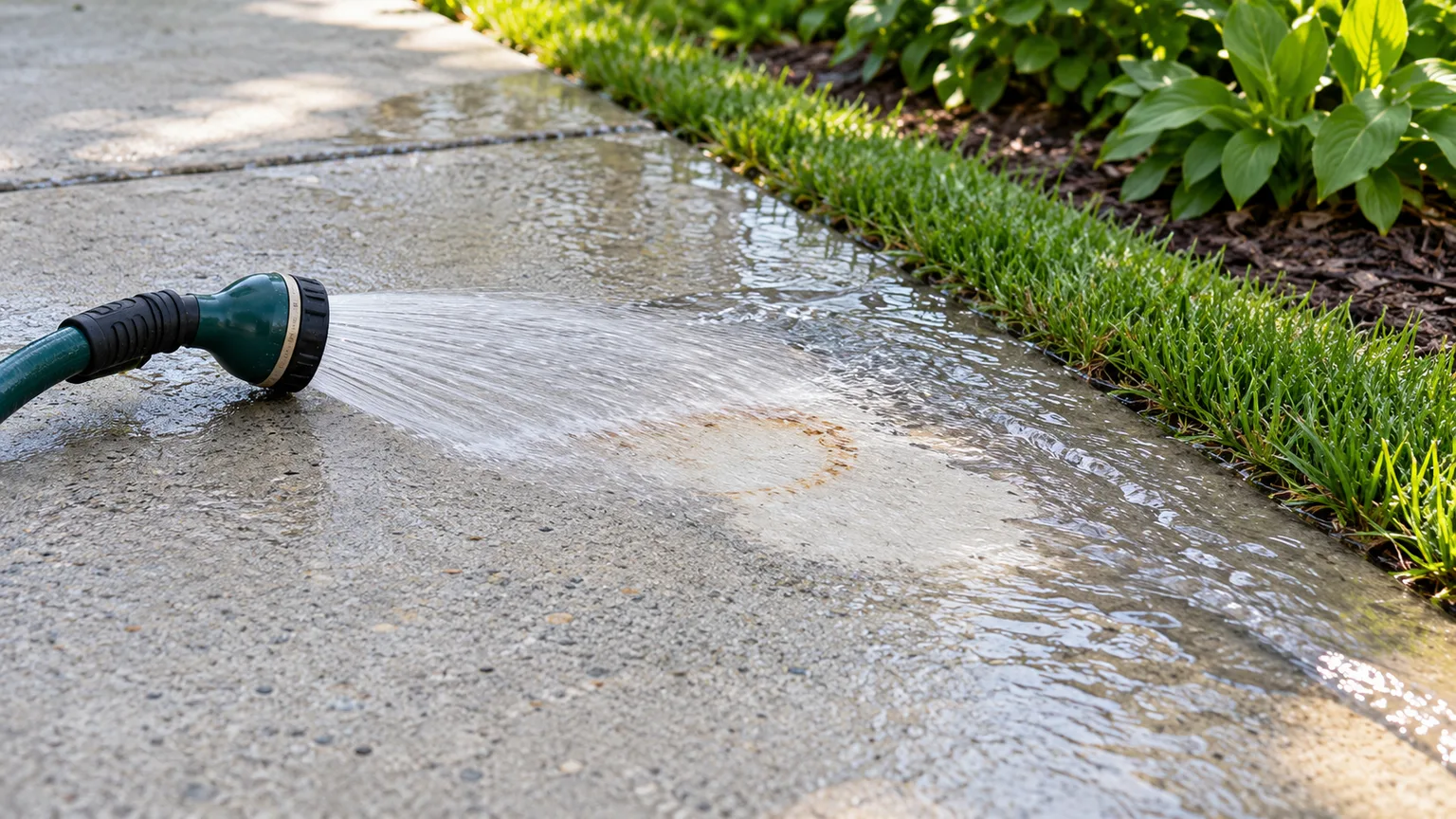
Rinse with plenty of clean water, following the cleaner’s directions and keeping the flow contained. Use a garden hose or bucket for a small spot; use a pressure washer only if the concrete and cleaner instructions allow it. Remove residue from adjacent joints and rinse splashed trim or hardware as directed by the label.
Let the concrete dry fully before judging the final color. A wet patch can look cleaner or darker than it will after drying, and concrete may retain a faint shadow even when the surface rust is gone. If a slight stain remains and the surface is unchanged, repeat only if the cleaner label permits it. If color or texture has changed, stop; further acid or abrasion can enlarge the damaged patch.
Handle Colored, Sealed, or Decorative Concrete
Stamped, integrally colored, acid-stained, polished, painted, and sealed concrete need a more conservative approach than an ordinary gray slab. The finish may be a thin layer or treatment, so an acid that removes rust can also dull a sealer, strip color, expose aggregate, or leave a clean spot that looks different from the surrounding surface. Do not assume that “natural,” “household,” or “biodegradable” means compatible with that finish.
First identify the coating or coloring product if possible. Check the sealer manufacturer’s maintenance instructions and select a cleaner whose label explicitly permits that finish. If the concrete is newly installed, follow the installer’s curing and cleaning guidance rather than experimenting; the surface may not yet be ready for chemical treatment.
Use a hidden test patch, start with a small amount, and rinse promptly if the finish reacts. Avoid muriatic acid and high-pressure spray on decorative or coated surfaces unless the manufacturer or installer specifically approves the method. For a prominent rust mark on a costly patio or a surface you cannot identify, a concrete-cleaning contractor can test the product and treatment on a discreet area before treating the whole stain.
What if the stain remains or returns?
If the spot is lighter but still visible, wait for a dry inspection before changing methods. Residual discoloration can be rust below the cleaned surface, a shadow caused by the original metal, or a change in concrete color from a too-strong treatment. Photograph the dry patch in the same light as the surrounding slab; that makes it easier to tell whether a second treatment helped or only enlarged a halo.
If the cleaner label allows another pass, repeat the same application once rather than combining chemicals or increasing concentration. Older, deep rust marks can be difficult to remove completely because concrete pores hold residue below the surface. Concrete Network notes that heavy rust can penetrate deeply; if two careful label-directed treatments produce little change, stop and ask a professional about poulticing, spot repair, or resurfacing options.
When the rust returns, trace the source instead of repeating the same treatment. Look for a metal foot, fastener, fertilizer granules, iron-rich sprinkler water, or a rusting railing above the stain. If the mark is emerging from a crack or damaged patch, a repair may be needed before cleaning; otherwise every rain can carry fresh iron to the surface.
Can pressure washing remove rust?
Pressure washing is useful for rinsing loosened cleaner and surface dirt, but pressure alone is rarely the best way to dissolve rust in the concrete pores. Use a compatible rust remover first and treat the washer as a rinse tool. This is consistent with concrete-cleaning guidance that recommends matching the chemical to the stain and using washing after treatment (Concrete Network’s cleaning-chemical guide).
If you use a washer, check the machine and cleaner instructions, begin at the lowest useful pressure, choose a wide fan spray, and test on a hidden patch. Keep the nozzle moving and well away from the surface; avoid a zero-degree or turbo nozzle on ordinary residential concrete. High pressure can etch the cement paste, make stripes, push water under a coating, or chip weak edges. Protect windows, doors, plants, and nearby people from spray and debris, as This Old House advises in its concrete-cleaning guidance (This Old House).
For a small ring, a hose and brush usually give better control than hauling out a pressure washer. If the washer leaves a lighter stripe, stop rather than “blending” the surrounding slab with more pressure. That can turn one stain into a much larger finish problem.
Prevent new rust stains
Prevention begins with the source. Add nonstaining feet or a protective pad under metal furniture, move rusty tools off the slab, and repair or coat metal parts that sit against concrete. Sweep granular fertilizer off the patio or driveway before rain; metal-bearing granules can leave orange marks after they get wet. If a sprinkler draws iron-rich water, adjust the spray pattern or use a water-treatment option appropriate to the irrigation system.
Inspect nearby railings, downspouts, fence posts, and fasteners after storms. A rust streak below a gutter elbow is a clue that the water is carrying iron from the metal above. Fixing that drip is more useful than scrubbing the same line every month.
A suitable concrete sealer can reduce water absorption and make some stains easier to clean, but sealing is not a cure for an active rust source or a cracked slab. Let cleaned concrete dry fully, confirm that the surface is sound, and choose a sealer compatible with the concrete finish. Follow that product’s preparation and reapplication schedule instead of assuming every driveway needs resealing on the same calendar.
When to call a concrete professional
Bring in a concrete professional when rust is coming through a crack, concrete is spalling or flaking, reinforcement is visible, or the stain spreads despite removing all nearby metal sources. These signs may indicate a moisture path or steel corrosion that needs repair, not stronger surface cleaner. A contractor can determine whether the area needs a localized repair, a compatible cleaning treatment, or a larger assessment.
Professional help is also sensible if the surface is polished, stamped, colored, sealed, painted, or part of an older decorative installation and you cannot identify its finish. Ask the contractor to name the proposed cleaner, describe how they will protect the coating and surrounding plants, and test a small area before proceeding. A cautious test may leave a faint stain, but it is preferable to stripping a broad patch of color.
Conclusion
To remove rust stains from concrete, identify the metal source, match the cleaner to the surface, test a hidden patch, and use a nylon brush with a thorough rinse. Mild vinegar or lemon juice may help a small new mark on plain concrete, while a stubborn spot may call for a rust remover specifically labeled for concrete; neither option is automatically safe for sealed or decorative finishes.
Skip improvised strong-acid recipes and avoid using pressure as a substitute for the right cleaner. If the stain comes back from a crack or damaged area, address the concrete rather than repeatedly bleaching or scrubbing the symptom. A clean, fully dry test patch—and a fix for the rust source—are the best signs that the job is actually finished.