How to Prune a Lemon Tree: When to Cut and What to Keep
Prune lemon trees around local frost and fruiting. Tell rootstock suckers from useful canopy shoots, make clean cuts, and reduce an overgrown tree in stages.
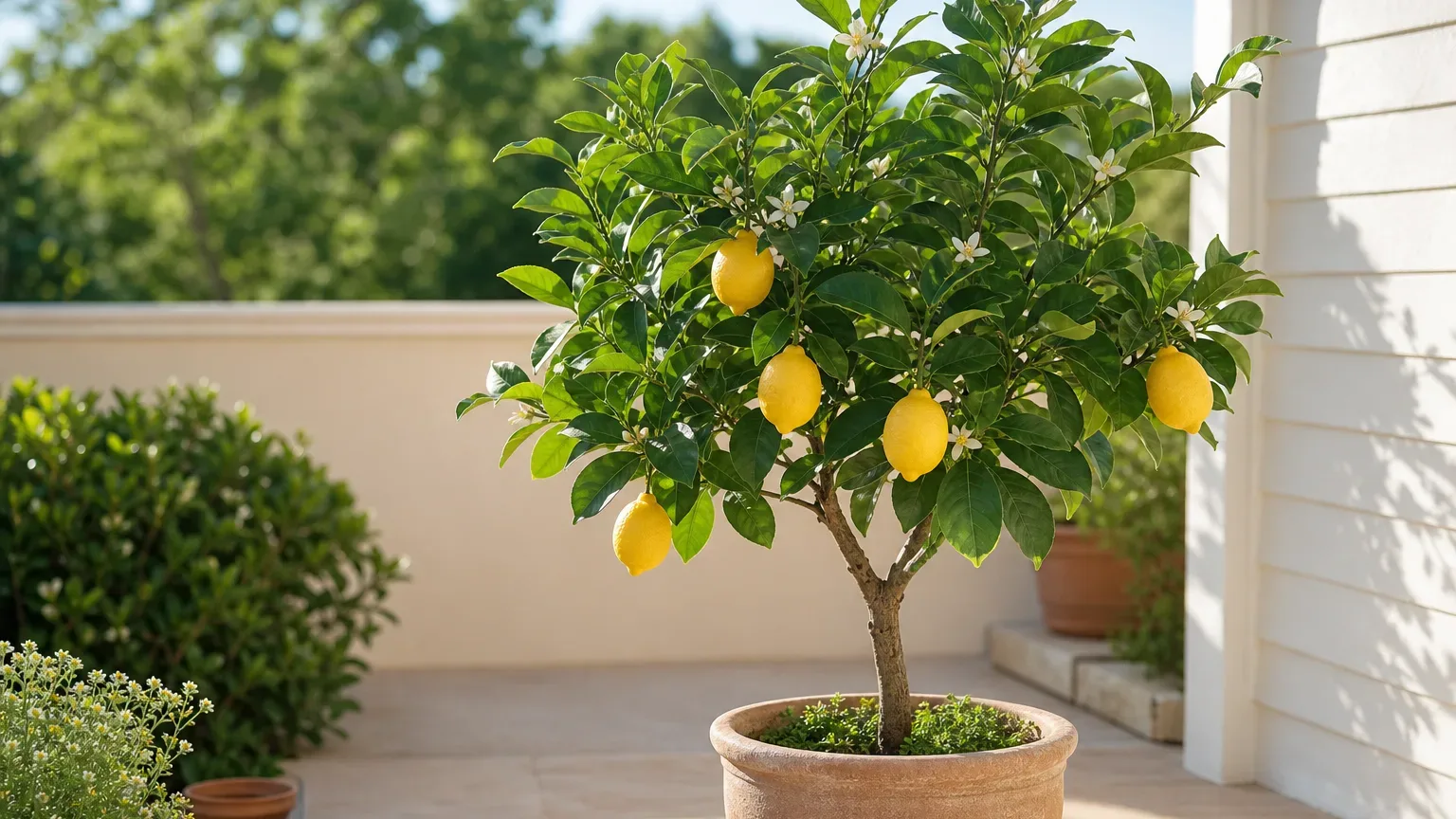
First, walk around your lemon tree and find one branch that is clearly dead, broken, rubbing, or growing from below the graft union. Remove that problem branch only if you can identify where it starts; then step back before deciding whether the tree needs any shaping. Most lemons do not need a yearly canopy haircut.
The safest pruning plan is selective: keep healthy leafy branches, remove growth that is damaged or in the wrong place, and reduce height only when a branch can be cut back to a suitable side branch. That approach preserves the foliage that supports fruit, limits the flush of vigorous replacement shoots, and avoids exposing shaded wood to sudden sun.
Make the first cut only after you name the problem
Decide what the tree needs before you pick up pruners. A branch touching a path, one that is cracked, and a rootstock sucker are different problems; each has a different best cut. “It looks untidy” is not enough reason to remove a healthy, fruit-bearing limb.
Stand far enough back to see the whole crown, then look underneath and through it. Identify the branch that creates a real conflict, note whether it carries flowers or fruit, and trace it to its point of origin. If the tree is yellowing, wilting, or losing leaves across several branches, pause: poor roots, drought, cold injury, pests, or disease may be the cause, and pruning more foliage will not fix those conditions.
When to prune a lemon tree
Use frost risk and the tree’s growth stage rather than a fixed month. In a frost-prone area, wait until damaging freezes are unlikely before doing structural work; after a freeze, let new growth show the boundary between living and dead wood before making large cuts. A small broken limb or a clearly dead twig can be removed when needed, but avoid a major late-season prune that could push tender growth just before cold weather.
In a mild, frost-free climate, routine shaping is often easiest after the main harvest or near a period of slower growth, before a strong new flush. UC IPM describes pruning just before bloom or just after fruit set as useful windows and cautions against late-season pruning in frost-prone places; UF/IFAS notes that timing depends on variety, location, crop, and pruning severity. Those recommendations are not contradictory so much as context-specific: local weather and the crop you want to keep determine the safer window.
If lemons are hanging on branches you plan to cut, harvest ripe fruit first when practical and preserve productive branches unless the tree has a safety or access problem. Light cleanup does not require stripping flowers or fruit from the whole tree. When a lemon flowers or carries fruit in more than one flush, an aggressive cut can remove a current crop and the leafy growth needed to support later fruiting.
Why restraint protects fruiting wood
Citrus holds much of its productive capacity in its green canopy. Removing leaves and branch tips reduces the tree’s food-making surface; the tree may respond with vigorous vegetative shoots, but that is not the same as a guaranteed increase in lemons. UF/IFAS guidance for home citrus says established citrus generally does not need canopy pruning for health or production, and that unnecessary pruning can reduce fruiting.
This is why pruning a lemon tree is usually about a specific constraint: a broken limb, a branch rubbing another, shoots from the wrong rootstock, poor access, or a canopy so crowded that selected interior branches have died back. You are trading foliage or fruiting wood for space, safety, light, or a better-directed branch. Make that trade only when the benefit is clear.
A lemon’s upright shoots can look untidy without being useless. Some will become productive lateral branches; others are badly placed and crowd the center. Judge each by where it begins, how firmly it joins, whether it rubs, and whether it fills a gap—not by vertical direction alone.
Lemons can also grow more upright than some other citrus, so a young tree may need light shaping to fit its site. Harvest to Table’s citrus guide makes that broad distinction between lemon/lime and more spreading citrus; treat it as a useful starting point, because cultivar, rootstock, age, and light still change the tree’s actual shape.
Find the graft union before deciding what stays
Many nursery lemons are grafted: the upper scion is the named lemon variety, while the lower rootstock supplies the roots and lower trunk. The graft or bud union is often a bend, swelling, diagonal seam, or change in bark texture near the base. Look for it before removing a vigorous shoot from the trunk.
A shoot emerging below that union belongs to the rootstock, not the lemon variety you bought. Remove it at its point of origin with a clean cut, rather than shortening it and leaving a stub that can resprout. Rootstock shoots can grow quickly and eventually compete with or overtake the fruiting scion; Greg Alder’s citrus field guide shows why checking the union matters more than guessing from a shoot’s vigor.
Above the union, an upright shoot is part of the desired variety. It may be a water sprout, a vigorous shoot from older wood, but it is not automatically a rootstock sucker. Keep one if it can fill an open section of the canopy or replace a damaged branch; remove it if it points into the center, competes with a stronger scaffold, or creates a genuine obstruction.
Thorns can be a clue but not a diagnosis. Rootstock growth may be thornier than the scion, and some common rootstocks have three-part leaves, yet lemons themselves vary in thorniness by cultivar and age. Locate the union first; use thorns and leaf shape only as supporting clues, not the sole basis for a cut.
Choose branches by priority, not by silhouette
Make cuts in an order that protects useful growth. Remove dead or broken wood first, then address a clear grafted-rootstock sucker, then remove a branch that is actively rubbing or blocking access. Stop after those cuts and reassess; a tree that looks less symmetrical may still be healthier and more productive than one shaped into a tight ball.
For two branches that cross, keep the one with the stronger attachment and better outward position, and remove the other at its origin. If both are healthy and neither causes friction, leave them until you have a reason to intervene. Rubbing bark creates a wound, but simply growing toward the inside of the tree does not mean a branch must go.
Dead tips can be traced back to live wood by lightly scratching a small patch of bark: green, moist tissue just beneath the bark suggests the branch is alive, while dry brown tissue farther out may be dead. Follow a dead branch toward the trunk until the tissue is alive, then cut back to a healthy lateral or to the branch collar. If decline is spreading, if bark is oozing, or if you see unusual lesions, ask a local extension office to help identify the cause before pruning more.
Set up safe, clean tools for thorny wood
Use sharp bypass hand pruners for small twigs, loppers for thicker branches that fit cleanly between their blades, and a pruning saw for limbs that would crush or jam those tools. The right tool is the smallest one that makes a clean cut without twisting the branch. A dull or undersized blade tears bark and makes a neat cut harder to achieve.
Wear puncture-resistant gloves, long sleeves, and eye protection, especially around older trees or vigorous rootstock shoots. Lemon thorns can be long and stiff, and a branch can spring back as it is released. Do not prune from an unstable ladder or reach above your shoulders with a saw; if a high limb cannot be handled from firm ground, have an insured arborist assess it.
Brush soil and sap from the blades before cleaning them. Clean tools between trees, and take extra care after cutting suspect diseased tissue so you do not carry contaminated sap or debris to another plant. Keep cut branches out of paths while you work; the thorns remain sharp after the branch is on the ground.
Cut at the branch collar, not flush with the trunk
At the base of a branch, look for a slightly swollen collar and a ridge of bark where the branch joins its parent limb. The final cut should preserve that collar and sit just outside it; do not cut flat against the trunk or leave a long stub. This keeps the natural branch junction intact and avoids creating an unnecessarily large wound. Colorado State University Extension’s pruning guidance explains collar cuts and the three-cut method for large limbs; the basic placement is useful for a lemon’s woody branches too.
For a small branch, hold it so its weight does not pull the bark as it drops, then cut just outside the collar with one controlled stroke. If you are shortening a live branch instead of removing it, return it to a substantial lateral that points toward open space. A short heading cut in the middle of a bare branch often leaves a stub and can trigger a cluster of shoots close to the cut.
Do not smear wound sealant over ordinary pruning cuts. A clean cut at the right place and sound tool hygiene are more useful than coating every wound; a local extension service can advise if a specific disease or regional rule changes that practice.
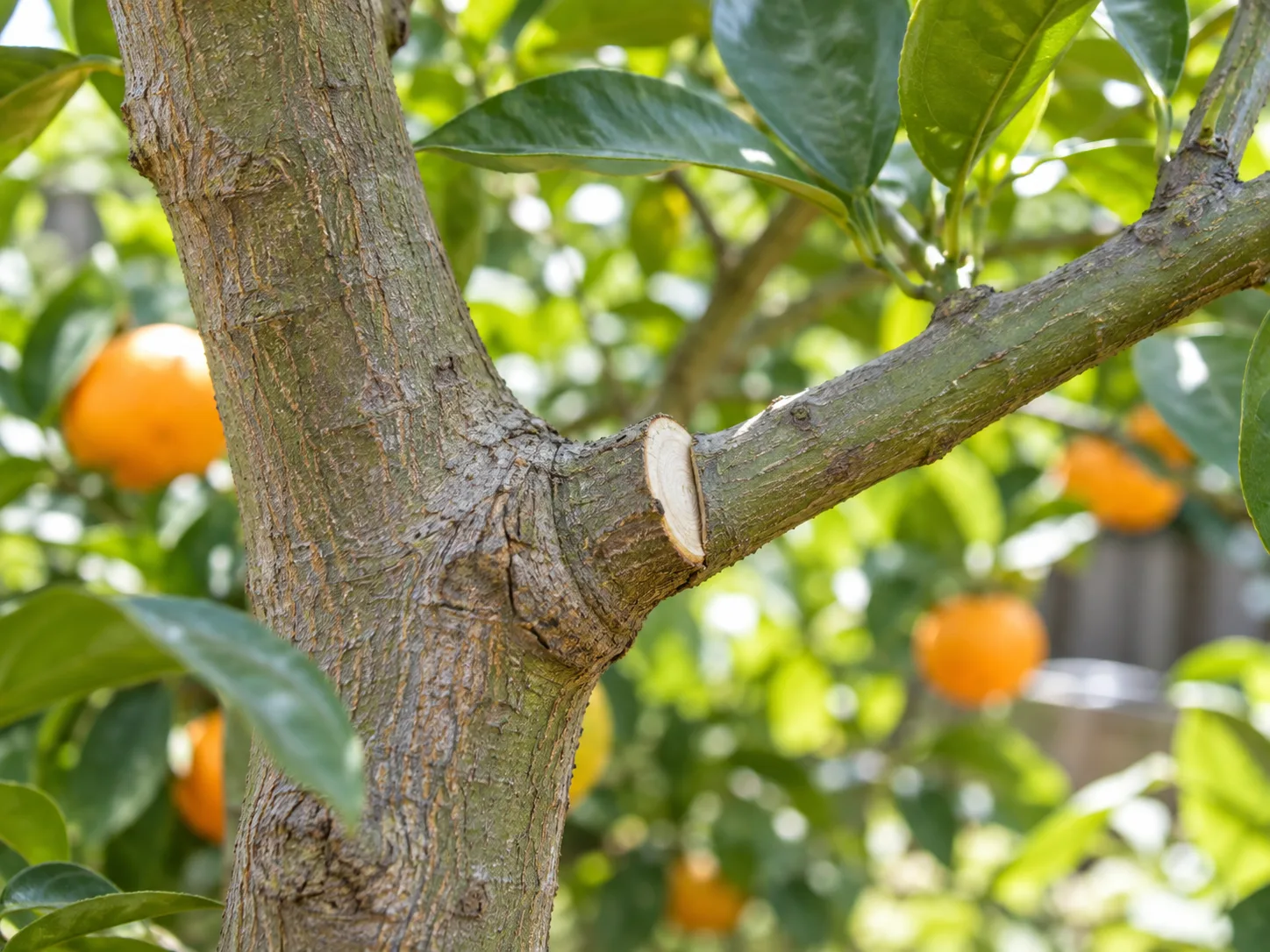
Remove a heavy branch without stripping bark
A large branch can tear a strip of bark down the trunk as its weight falls. Use a three-cut sequence when the limb is heavy enough to pull as it separates: make a shallow undercut several inches out from the trunk, move a little farther toward the tip and cut down from above until the branch comes away, then remove the remaining stub just outside the collar.
The first two cuts take the limb’s weight before the final cut. Keep your body out of the drop zone, and do not try to catch the branch. If the limb is overhead, too large for a hand saw, or close to a roof, wire, or person, stop and bring in a professional rather than climbing with a loaded saw.
Thin a crowded canopy without hollowing the center
Lemons do not need a hollow center or a perfectly rounded outline. If the interior is so dense that branches rub, die back, or block access, remove one poorly placed branch at its origin and then look through the canopy again. Leave healthy interior shoots that are not causing a problem; they can shade the trunk and contribute leaves even when they are not on the outer edge.
Aim for a few modest openings rather than a ring of daylight around a bare center. The mature tree should still look leafy from several angles when you finish. UF/IFAS explains that light interception influences flowering, fruit set, and fruit quality in commercial citrus, but its grove hedging figures do not mean a home lemon should be mechanically stripped: selective cuts must balance light with the leaves and shaded bark the tree needs.
If only one side is crowded, thin that side rather than removing equal amounts everywhere. Keep branches that spread into open space, and remove a competing one only where it truly blocks another branch or creates a rubbing point. Step away often; looking from the outside makes it easier to see where your next cut would expose a large patch of trunk.
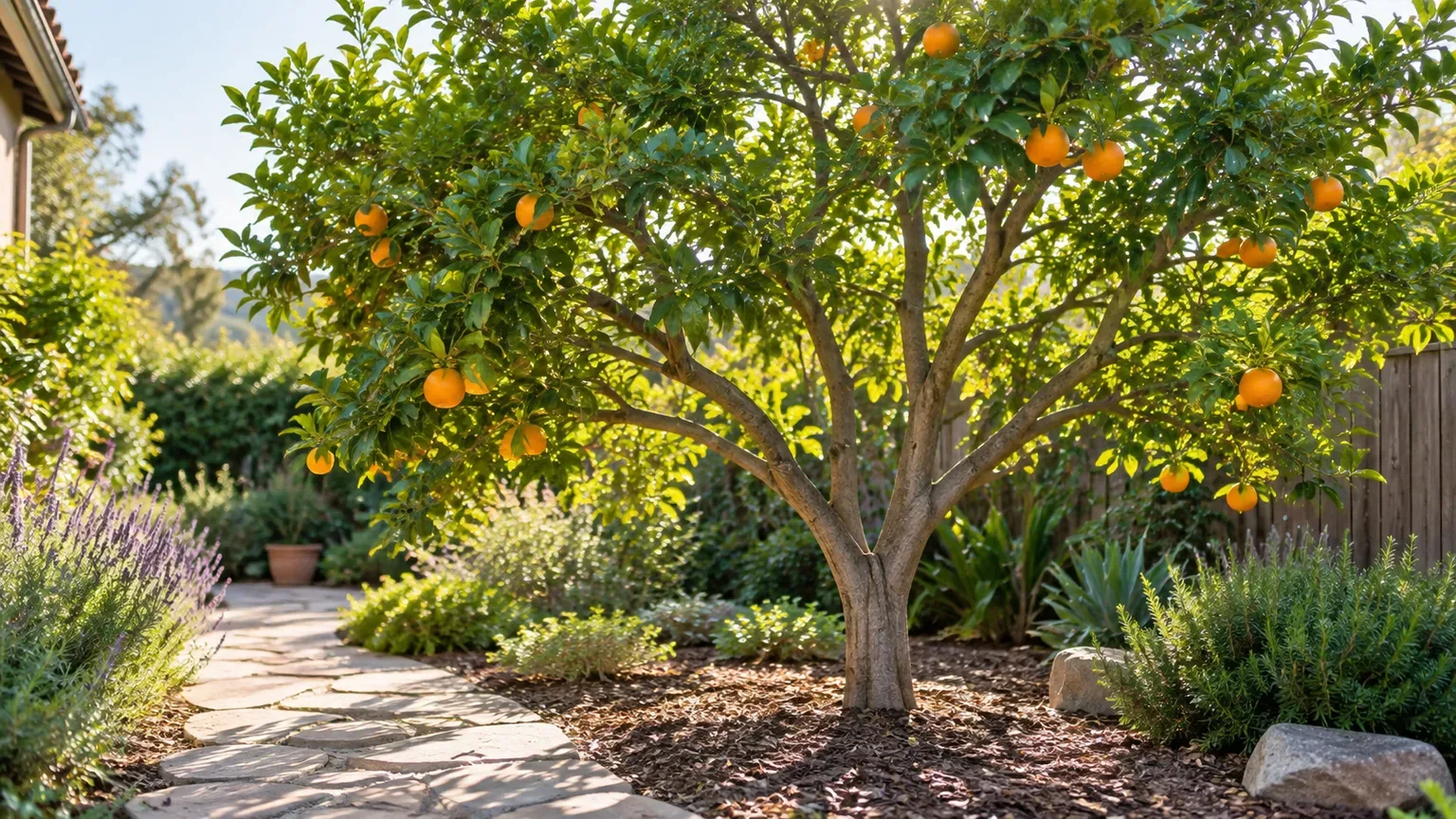
Reduce height by returning branches to laterals
If a lemon tree is too tall to harvest comfortably, do not cut straight across the top and leave a row of stubs. Choose one or two of the tallest branches and reduce each back to a lower side branch that is large enough to take over as the new tip. The cut redirects growth without leaving a bare pole above the canopy.
Lower a large tree over more than one season. After each reduction, preserve plenty of leafy growth and watch which shoots respond before removing more. A hard one-time cut often creates a strong flush of upright shoots, removes fruit-bearing canopy, and exposes older wood that had been shaded; UF/IFAS notes that severe citrus pruning can stimulate vegetative regrowth and reduce subsequent yield.
Keep the goal realistic: a mature tree cannot be held to a tiny footprint without repeated cuts and lost crop. If harvesting requires a ladder or awkward reach, reducing the tree gradually may help, but a variety or rootstock better suited to the available space may be the long-term solution.
Shape a young lemon tree without hard topping
Young trees need leaf area to establish roots and develop sturdy scaffold branches. Remove rootstock suckers, broken tips, and a branch that rubs or competes with the main framework, but do not strip lower leaves just to expose a clean trunk. The first few years are a chance to guide the tree gradually, not an invitation to cut it back to a predetermined height.
If one long shoot is growing far outside the shape you can maintain, shorten it to a well-positioned side branch rather than shearing the whole crown. Keep several well-spaced main branches with strong attachments, and avoid leaving multiple branches that compete at the same point. For a young tree that is already balanced, no shaping cut may be necessary this year.
Adjust the approach for a potted lemon tree
Container lemons may need size control sooner because their canopy has to fit a patio and their roots are confined. Still, a pot does not make a severe annual cut harmless: the limited root system cannot instantly replace the leaves you removed. Start with dry, dead, damaged, or badly crossing twigs, then reduce only the longest branches that make the pot unstable or difficult to move.
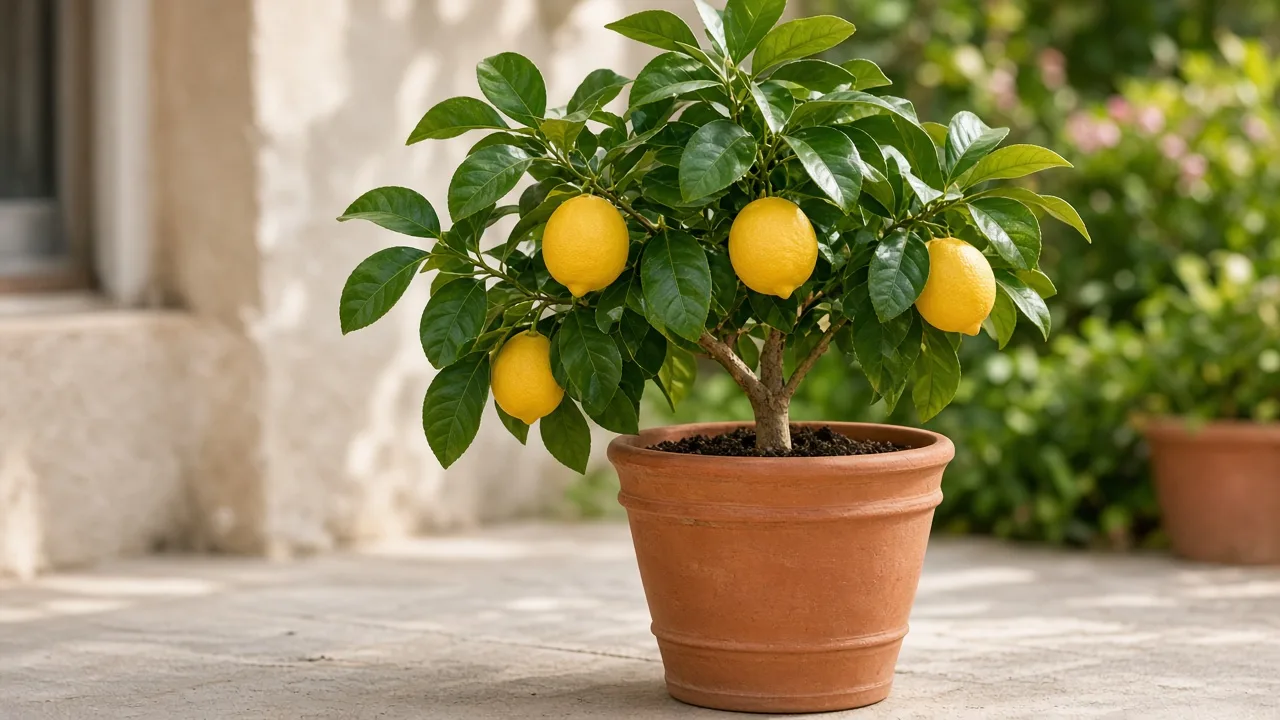
For an indoor-overwintered lemon, avoid a large prune while it is adapting to dimmer indoor conditions or returning outdoors. A tree moved from a bright sheltered room to direct summer sun can scorch even without pruning; removing leafy cover at the same time increases exposure. If the plant needs shaping, wait until it is growing steadily in its regular light and weather, then take small cuts over time.
Pot-grown Meyer lemons are often kept compact, but they still benefit from the same graft-union check if nursery-grafted. Do not pinch every new tip in pursuit of a round ball. A few well-placed laterals and a stable root ball matter more than a perfectly even outline.
How much should you remove in one session?
There is no safe percentage that fits every lemon tree. A young, small, recently transplanted, freeze-damaged, or drought-stressed tree can be set back by a cut that a large, vigorous tree tolerates. Use the cut list as a stop rule: remove only the damaged growth and the specific conflicts you named, then pause if additional cuts would mostly improve appearance.
For a badly neglected tree, spread renovation over several growing seasons. Keep enough foliage on each major limb to support regrowth, reduce the largest height or crowding issue first, and reassess after the next flush. If a tree needs a major structural reduction, or large limbs are involved, ask a certified arborist or local citrus extension specialist to make a plan before removing a large part of the crown.
Protect bark and foliage newly exposed to sun
Lemon bark and inner scaffold branches that grew in shade can be injured when a heavy prune suddenly exposes them to direct sun. This risk is greatest in hot, bright, dry conditions and after a severe canopy opening. Preserve some leaf cover on the south- and west-facing sides when possible, and avoid combining a major reduction with a heat wave or drought.
If you must remove a large section and trunk or scaffold wood becomes exposed, follow local citrus guidance for sun protection. UC IPM recommends protecting exposed citrus branches from sunburn with a 50:50 mixture of white interior latex paint and water. This is for exposed bark in the relevant climate, not a coating for pruning wounds or an automatic treatment after a few small cuts.
The simplest prevention is to avoid exposing the wood in the first place: open the canopy incrementally, and do not remove the entire outer shell of leaves from a mature tree. The same leaves you might be tempted to remove provide shade as well as energy.
Help the tree recover and watch new shoots
After a moderate prune, return to the lemon tree’s ordinary care. Keep moisture consistent in the root zone without leaving soil waterlogged, and do not apply extra nitrogen in an attempt to force fast regrowth. The tree may push vigorous shoots where wood was removed; keep a well-positioned shoot if it can replace a branch, and rub out a misplaced one while it is small.
Watch the canopy through the next flush. A few new shoots are expected; widespread leaf drop, wilting despite moist soil, or dieback that spreads past a cut points to stress beyond ordinary pruning response. Recheck light, watering, pests, and root health before cutting again. If the pruning exposed large branches, inspect them during hot weather for pale or cracked bark and use local extension guidance if sunburn appears.
Common lemon-pruning mistakes to avoid
Pruning by the calendar alone. “Late winter” is not the same weather everywhere. Use frost risk, harvest, and the timing of new growth to choose a safe window.
Removing every upright shoot. A below-union sucker and an above-union water sprout are not interchangeable. Trace the shoot to its origin before deciding whether it belongs in the canopy.
Topping the tree. A flat cut across several leaders removes a lot of foliage and can prompt a dense cluster of upright regrowth. Reduce tall branches to substantial side branches over time.
Opening the center until the trunk is bare. Selective light is useful, but a lemon tree also needs leaves and shade. Stop when problem branches are gone and the tree retains a balanced, leafy framework.
Pruning a stressed tree as if shape were the problem. Drought, root trouble, freeze injury, and disease all affect recovery. Diagnose widespread decline before removing healthy green wood.
Conclusion
Prune a lemon tree when local conditions give it a safe recovery window: after damaging frost risk in colder climates, or around harvest and growth flushes in warm ones. Begin with the smallest necessary cut, confirm the graft union before removing a shoot, and preserve healthy foliage unless a branch is damaged, rubbing, unsafe, or truly in the way.
Use a branch collar cut for removals, a lateral branch for height reduction, and several seasons for a badly overgrown tree. A good pruning session should leave the lemon looking recognizably leafy, with fewer conflicts and a canopy you can reach—not a bare framework waiting for the tree to replace what you removed.



