How to Identify and Fix a Root-Bound Plant Before Planting
A root-bound plant can struggle after planting. Find the warning signs, choose a safe root treatment, and give container-grown trees and shrubs a better start.
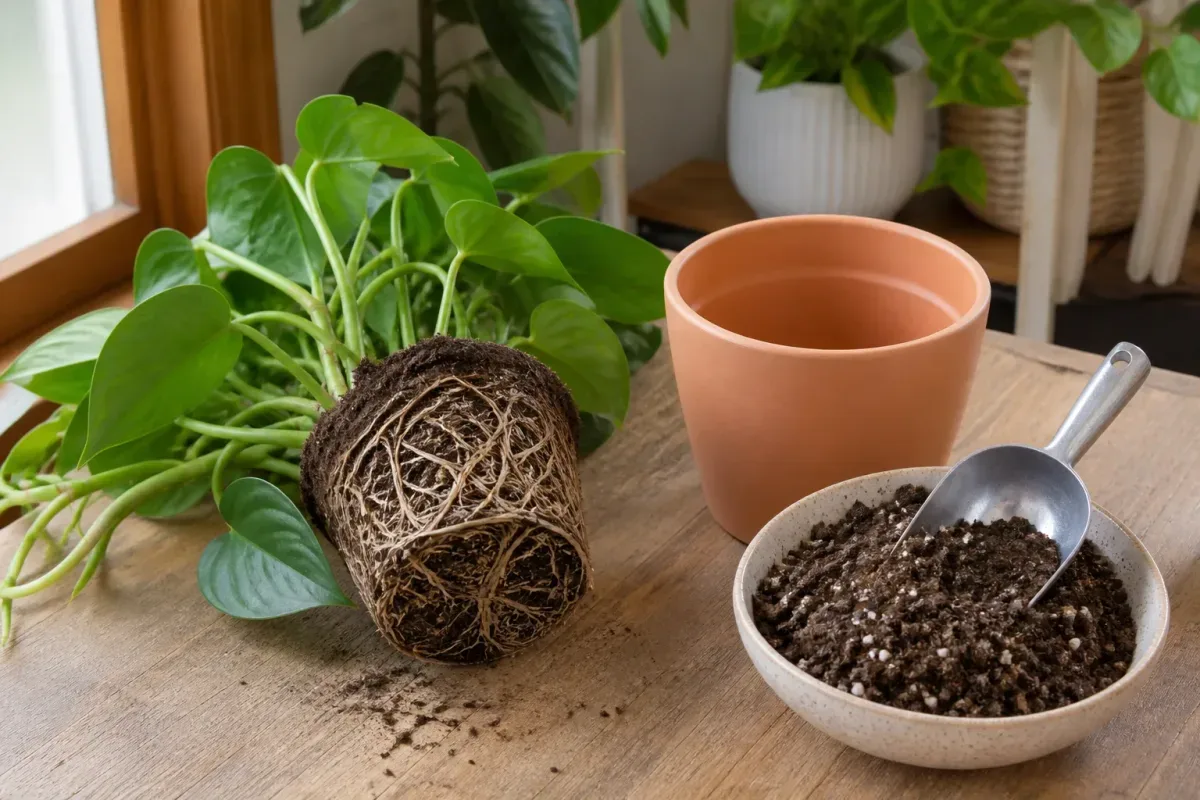
The quickest way to confirm a root-bound plant is to slide it out of its container and inspect the rootball. A plant is root-bound when roots have filled the available mix and turned into dense circles or layers along the pot wall and base; roots poking through a drainage hole are a clue, not a diagnosis. If the rootball is crowded, loosen or cut the circling roots before planting so they can grow into the new soil instead of keeping the old pot’s shape.
That last step matters most for trees and shrubs headed into the landscape. A tight spiral that remains wrapped around a woody rootball can restrict outward root growth and, over time, contribute to roots that press against or girdle the trunk. The fix is not automatically to strip every bit of soil away: choose the least disruptive treatment that corrects the pattern, because plant species and root types respond differently.
The fastest reliable check is the rootball
Start with the container, not the leaves. Turn the pot on its side, support the plant at the soil line, and ease the pot away while keeping the rootball intact; if the container is flexible, squeeze its sides first. Do not pull the plant out by its stem or tug on a branch, since that can tear the crown or break the very roots you are trying to inspect.
A rootball with some roots visible at its edge can still be healthy and ready to plant. Look around the sides and bottom: a dense network that follows the pot’s circular outline, repeated loops, or a woven mat that hides nearly all the growing medium points to real congestion. The Royal Horticultural Society recommends lifting a plant out because this is the best way to see whether the roots are congested, and it notes that masses spiraling around the base can interfere with drainage. (RHS container repotting guidance)
If the mix is bone-dry and falling apart, a light drink before removal may help the rootball hold together. If it is wet, sour-smelling, or collapsing, avoid adding water and check for soft, decaying roots; rot and root binding can occur together, but they are not the same problem.
What a truly root-bound rootball looks like
Healthy container roots normally branch through the mix. A root-bound plant has gone further: the root system has traced the shape of its pot, often with many roots running sideways around the perimeter rather than pointing into open soil. On woody nursery stock, look for thick roots that circle close to the trunk or wrap around the top of the rootball, because those are more concerning than a surface layer of fine feeder roots.
Think about whether the rootball can make contact with the soil around it. A lightly crowded plant still has visible mix between individual roots and can be teased open without force. A severe root-bound rootball holds a hard container-shaped form, has little visible mix, and resists gentle spreading; this is a sign to treat the roots before planting or to choose a different specimen.
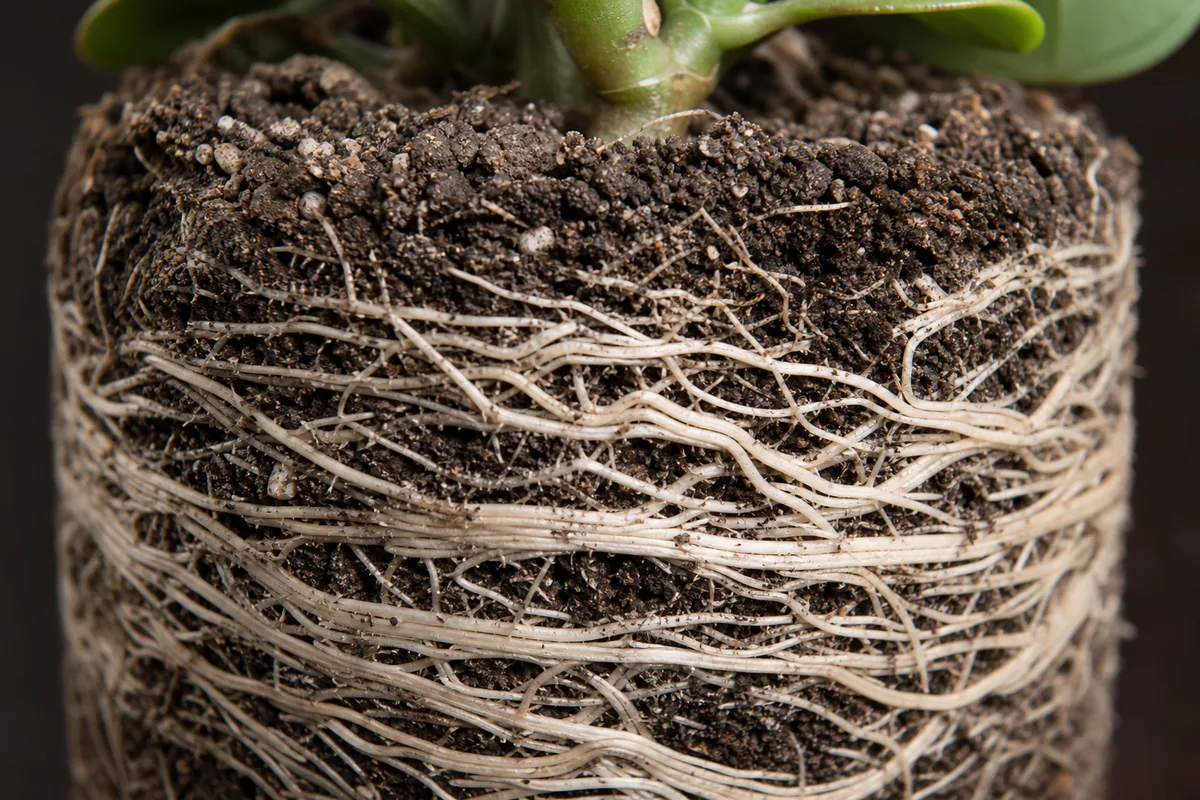
The pattern matters more than color alone. Fine roots may be white, cream, tan, or darker because of species and growing medium; firm texture and branching are better signs of living tissue than a particular shade. Black, soft, hollow, or foul-smelling roots suggest decay and call for a separate diagnosis.
Roots in drainage holes alone are not proof
A few roots can find their way through a drain hole because it is the easiest exit from the pot. That does not automatically mean the plant has a solid root mat or needs major root pruning, especially if the rest of the ball still contains loose mix and the roots do not circle tightly.
Likewise, a plant can be badly root-bound even if no roots are visible underneath. Nursery containers hide the sides and the upper root flare; a dense spiral may be concealed until the plant comes out. Use drainage-hole roots, frequent dry-down, or slow growth as reasons to inspect, then base the decision on the rootball itself.
Aboveground symptoms only justify a closer look
A root-bound plant may need water more often than it used to because roots have displaced part of the mix that stores moisture. It can wilt between waterings, stall, or produce less top growth, but none of those symptoms proves root binding by itself. Heat, dry wind, compacted or hydrophobic media, overwatering, poor planting depth, and pests can produce similar signs.
For a plant already in a landscape, check the moisture both in the original nursery rootball and in the surrounding soil. The peat- or bark-based medium in container stock may dry faster than the heavier garden soil around it, so nearby soil can feel damp while the rootball is dry. Penn State Extension warns that container-grown trees and shrubs can dry quickly after planting because nursery media behaves differently from landscape soil, making rootball irrigation part of establishment care. (Penn State Extension on container-grown trees and shrubs)
The combination of symptoms is useful only as a trigger for inspection. If you can verify root circling, then choose a root treatment; if you cannot, investigate water, soil, light, planting depth, and pests before cutting healthy roots.
How to inspect nursery stock without damaging it
Before buying, check the plant while it is still in the nursery pot. Look underneath for roots at the holes, inspect the top of the mix for a buried trunk flare or roots circling the surface, and gently squeeze a flexible pot to see whether the rootball is likely to release. Ask nursery staff before sliding a plant out, and return it to the same pot without pulling on stems if you are only checking a specimen you do not intend to buy.
For a small perennial or annual, a quick look at the rootball can reveal whether roots are beginning to circle or whether the root plug is already a solid mat. For a young tree or shrub, examine the upper portion of the ball for the point where major roots spread from the trunk; if the trunk disappears straight into potting mix with no visible flare, the plant may have been set too deeply in its nursery container. Penn State Extension advises checking the roots of container-grown trees and shrubs before purchase, since root defects can persist and become more consequential as woody roots thicken.
Decide whether to buy, treat, or pass
A plant with a few fine roots at the edge is usually a reasonable purchase if it is otherwise healthy and you can prepare it for planting. A moderately crowded rootball can often be corrected with teasing or limited cuts, particularly when the roots are still flexible and have not formed thick woody loops. You are deciding how much correction you are willing and able to do, not trying to find a plant with no roots at all.
Pass on or ask for a replacement when a large woody root already makes a tight turn around the trunk, several structural roots cross or constrict the trunk flare, the ball is mostly a hard coil of woody roots, or roots are black and decaying throughout. Root defects on nursery trees are easier to address before the tree is planted, but severe structural defects may not be safely corrected with a few quick cuts. If the tree is valuable or large, ask a certified arborist or local extension office to inspect it rather than improvising deep root surgery.
First decide where the plant will grow
The correct treatment depends on the destination. A small herbaceous plug going into a garden bed can usually tolerate more loosening than a mature shrub with thick, woody roots; a plant staying in a pot needs a different balance of root reduction and fresh mix than a tree planted in the ground. Identify the plant, check its transplant sensitivity, and decide whether the goal is outward growth, a modest container refresh, or simply avoiding a poor nursery specimen.
For annuals and many young perennials, separate the outer roots with your fingers and spread them into the planting hole. For container-grown trees and shrubs, focus on disrupting persistent circular roots before they lignify and wrap toward the trunk; do not assume that washing away every bit of growing medium is necessary. If the plant is a houseplant that will remain in a container, use our houseplant root-bound diagnosis guide for the pot-up versus same-pot decision, and our houseplant repotting guide for container technique.
Tease loose roots on a mild case
If the outside of the rootball is a loose web of fine roots, start with your hands. Gently comb the outside downward and outward with your fingers, or use a blunt chopstick to free roots from the surface. The aim is to release the ends so they point into the planting soil, not to unravel the entire root system or remove every trace of nursery medium.
A small, pliable root plug can be loosened on several sides and at the base, then placed into the bed with roots spread into the surrounding soil. If the plant has a taproot, bulb, fleshy storage root, or brittle roots, avoid aggressive teasing; break only what is clearly circling and follow species-specific guidance. When a root snaps, do not keep pulling simply to make the ball look tidy.
The best time to correct the pattern is at planting, before new roots grow farther around the container’s shape. A tangled rootball placed into a wide planting hole without being opened can keep the same circular direction, so extra space alone does not solve the problem. Penn State’s tree and shrub guidance recommends severing or shaving container-imprinted roots so the new root tips can grow outward into landscape soil.
Make targeted cuts when roots circle tightly
When finger-teasing cannot free the roots, use a clean, sharp knife or pruning saw to interrupt the circle. For a small, fibrous plant, shallow vertical cuts through the outer root mat and a loosened or cut bottom may be enough; for a dense rootbound plug, a few deliberate radial cuts can encourage new root tips to leave the ball. Keep cuts shallow and limited to the congested outer layer whenever the roots are young and flexible.
For container-grown woody plants, treat cutting as correction rather than routine styling. Penn State Extension describes using a sharp knife, saw, or spade to sever circling roots and reports that research-tested cuts and shaving can support root growth into landscape soil. The exact cut depends on the size and structure of the rootball, so do not use a fixed number of slices as a substitute for inspecting where major roots lead.
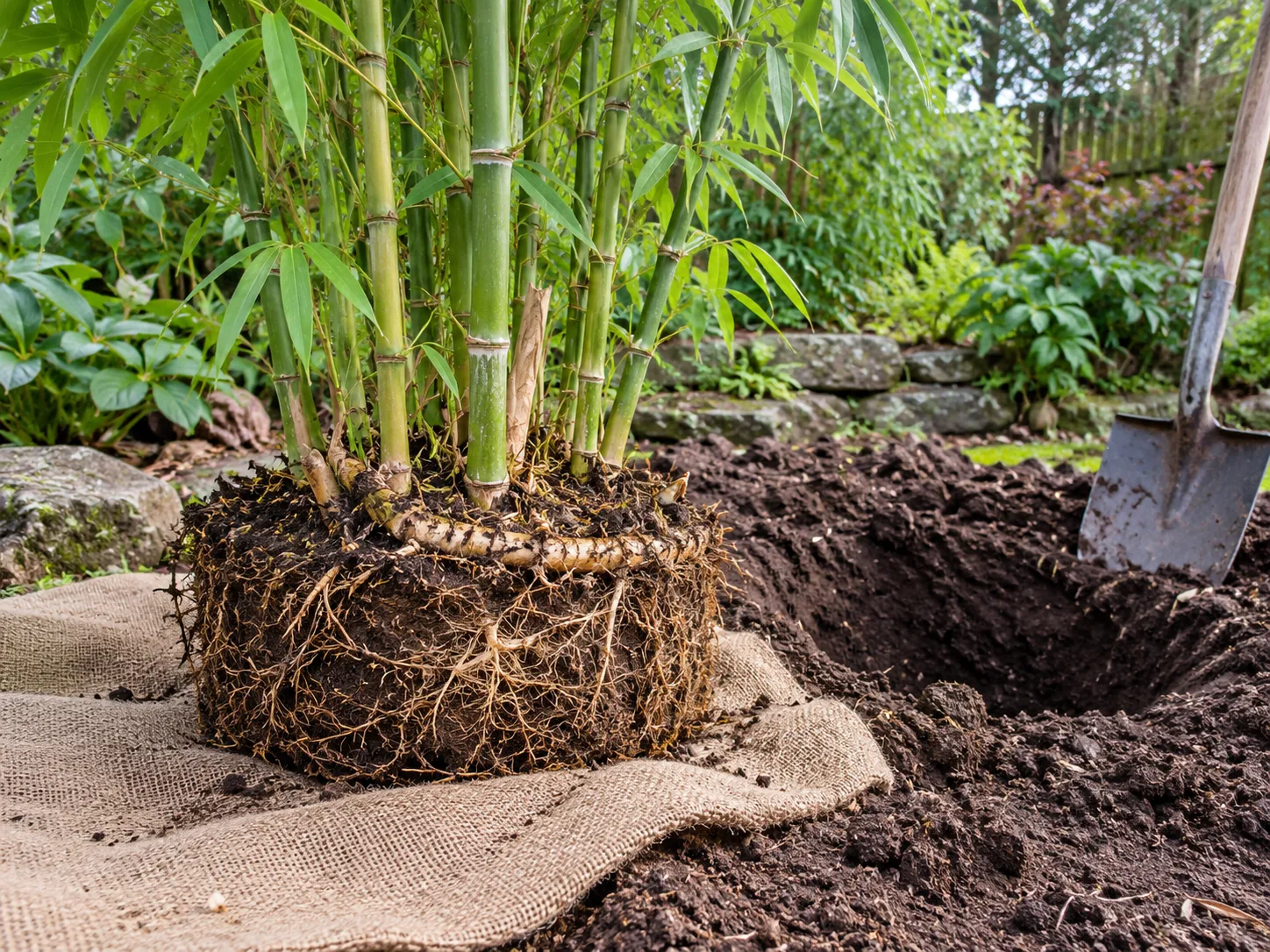
Work around the ball and look again after the first cuts. A root that now points outward is usually a better result than a root left wrapped around the trunk; a deep cut through multiple large structural roots may instead remove too much functioning root area. If correcting the defects would require removing a large fraction of the root system, replace the nursery plant or get species-specific professional advice.
When root shaving is appropriate
Root shaving means cutting a thin layer from the outside and bottom of a dense container rootball to remove the roots that have followed the pot wall. It can be useful for heavily circling woody stock when the plant species tolerates the treatment and the person doing the work can make a flat, controlled cut. It is more aggressive than teasing, so reserve it for rootballs where light methods leave the circling pattern intact.
Research described by Harvard’s Arnold Arboretum found that root treatment outcomes varied by tree species. In trials led by Michigan State University researchers, shaving reduced circling in some tested trees, while bare-rooting caused serious stress and mortality in some sensitive tulip trees; results from one species should not be treated as a rule for every tree. (Harvard Arnold Arboretum, Arnoldia: “Untangling the Issue of Circling Roots”)
That evidence is a reason for a measured response, not for leaving a severe coil untouched. For a valuable landscape tree, identify the species, inspect the structural roots and flare, and consult an arborist when the correction would remove substantial woody tissue.
Plant a root-bound nursery plant in a bed
Prepare the planting hole before taking the plant out of its pot, so roots are not left exposed while you dig. Make the hole wide enough for the rootball and for any roots you have spread outward, but no deeper than needed to set the plant at the correct grade. Keep the plant’s rootball shaded and moist while working; do not leave it baking on pavement in direct sun.
After loosening or cutting the roots, position the ball so its sides meet the surrounding soil and fill the hole with the native soil removed from it unless local guidance or a specific soil problem calls for another approach. Break large clods and firm soil gently to eliminate major air pockets without stomping it compact. Avoid adding fertilizer to the hole as a substitute for root repair; the immediate tasks are correct placement, soil contact, and steady moisture.
Water slowly after planting so both the original rootball and the surrounding soil are wetted. Then check them separately during the first weeks: a hose that wets only the planting basin can leave the nursery rootball dry inside, while frequent shallow watering can keep the crown damp without reaching the active roots. Mulch can help moderate soil moisture, but keep it away from stems and trunks.
Set trees, shrubs, and perennials at the right depth
Find the root flare before planting a woody tree. This is where the trunk widens and the first structural roots begin to spread; container mix may cover it, so brush away loose medium until the flare is visible. Set the flare at the finished soil grade or slightly above it where drainage conditions call for that, following local tree-planting guidance rather than trusting the soil line in the nursery pot.
Do not bury the trunk to hide an uneven rootball. Deep planting can keep bark and the root flare too wet and can encourage roots to grow in an unhealthy direction; Penn State Extension notes that container trees and shrubs are sometimes planted too deeply in the nursery, so checking the trunk-root transition matters. Set herbaceous perennials at their normal crown depth and preserve each plant’s species-specific planting level.
Backfill to the same grade all around instead of creating a deep bowl that holds water against the trunk. Water settles the soil naturally; if the plant sinks after the first irrigation, lift it and correct the grade while the roots are still accessible. A correctly loosened rootball planted too deeply can still struggle, so root direction and planting height are one operation, not two separate chores.
If the plant must stay in a container
A plant that stays in a pot has two practical options: move to a slightly larger container or root-prune and refresh the mix in the current one. Choose a modest size increase if the plant needs more room and can tolerate a larger pot; oversized pots hold more unused wet mix, which can slow drying around roots. For species that like snug pots or plants that have reached their intended size, same-pot repotting can be a better fit. A rosemary grower at We Grow Rosemary describes the same destination-based choice for container herbs: move a plant for continued size, or root-prune when you want to keep it manageable in its current pot. (We Grow Rosemary’s root-bound rosemary guide)
For a mild coil, loosen the perimeter and place the rootball in fresh mix at the same depth. If it is severely congested and there is no room to upsize, root pruning can be done gradually; the RHS advises that modest trims can be staggered over multiple seasons to reduce stress. Do not apply one percentage to every plant, because fine-root density, season, species, and the condition of the old roots all change what the plant can tolerate.
Keep the indoor operation deliberately narrow: loosen what is circling, remove only dead or damaged roots, and preserve healthy fine roots. The full process for pot dimensions, drainage, mix, and recovery is covered in the site’s houseplant repotting guide.
When not to wash or cut a root system
Root washing removes most or all of the old growing medium so the root structure can be seen directly. Gardening Know How describes it as a way to expose circling roots and the flare, but it also leaves fine roots exposed and can disturb species that transplant poorly. Do not make root washing the default for every nursery tree simply because the soil line is hard to read. (Gardening Know How on root washing)
The Harvard Arboretum’s account of multi-species trials is especially useful here: techniques that worked well on London planetree did not produce the same outcome on red maple and tulip tree, and bare-rooted trees in some groups experienced significant stress or died. If you are considering full root washing for a large or valuable specimen, first look for species-specific guidance and consult an arborist or extension educator.
Avoid cutting when the roots are healthy and only lightly crowded, when a plant is flowering or under severe heat stress and can wait, or when you cannot identify which roots are structural. If the rootball smells foul and contains soft, collapsing roots, focus on removing rot and correcting the wet conditions; a normal root-bound treatment will not solve root disease on its own.
Aftercare for the first growing season
New roots need contact with moist, aerated soil. During establishment, water deeply enough to wet the nursery rootball, then let excess water drain and check soil moisture again before irrigating; climate, rain, soil type, plant size, and species determine the interval. Container media can dry at a different rate from garden soil, so feel both the original rootball and the backfill rather than watering from the surrounding ground alone.
For trees and shrubs, monitor the plant through the first growing season and adjust irrigation during hot or windy stretches. Keep mulch spread over the root zone but off the trunk, and avoid piling soil over the flare after the plant settles. A plant that droops briefly after transplant may recover, but persistent wilting in wet soil, stem decline, or a sour smell calls for another inspection rather than more water.
Do not immediately combine root correction with hard top pruning, fertilizing, and a major location change. Each adds stress or changes water demand, and it becomes difficult to tell which adjustment caused a problem. The root treatment should be followed by stable conditions and careful moisture checks while new growth resumes.
Mistakes that let circling roots persist
The most common mistake is putting a tight rootball into a bigger hole without changing the direction of its roots. New soil around the outside can stay unused while roots continue following the old pot-shaped route. Tease or cut the circle first, then place outward-facing roots against fresh soil.
Another mistake is treating all plants alike. A small fibrous perennial plug, a woody tree, a bulb, a succulent, and an orchid do not have identical root architecture or tolerance for disturbance. Choose a treatment based on plant type and root condition, and reject stock with structural trunk defects that a casual gardener cannot safely correct.
Avoid using leaf color or a root at one drainage hole as the entire diagnosis. These are clues, while the rootball reveals whether roots truly dominate the medium. Likewise, do not wash a tree’s roots bare or shave off a thick layer just because an online method says every plant needs the same treatment; research shows that outcomes vary by species and severity.
Conclusion
A root-bound plant is confirmed by a crowded, circling rootball, not by one root at a drainage hole or a wilted leaf. Inspect nursery stock before buying when possible, correct flexible roots by teasing, and use limited cuts for a tightly bound ball; reserve root shaving or root washing for informed cases where the species and root structure justify it.
The destination determines the next move. Set landscape plants with outward-growing roots and the trunk flare at the right grade, or choose a modest pot increase for a container plant; then water the original rootball and surrounding soil as they establish. If a woody nursery plant has large roots already constricting its trunk, choosing another specimen is often safer than hoping the defect will fix itself underground.



