12 Popular Gum Trees: Eucalyptus, Corymbia & Angophora
Compare 12 popular gum trees across Eucalyptus, Corymbia, and Angophora by foliage, bark, mature size, climate, and site fit before planting in your garden.
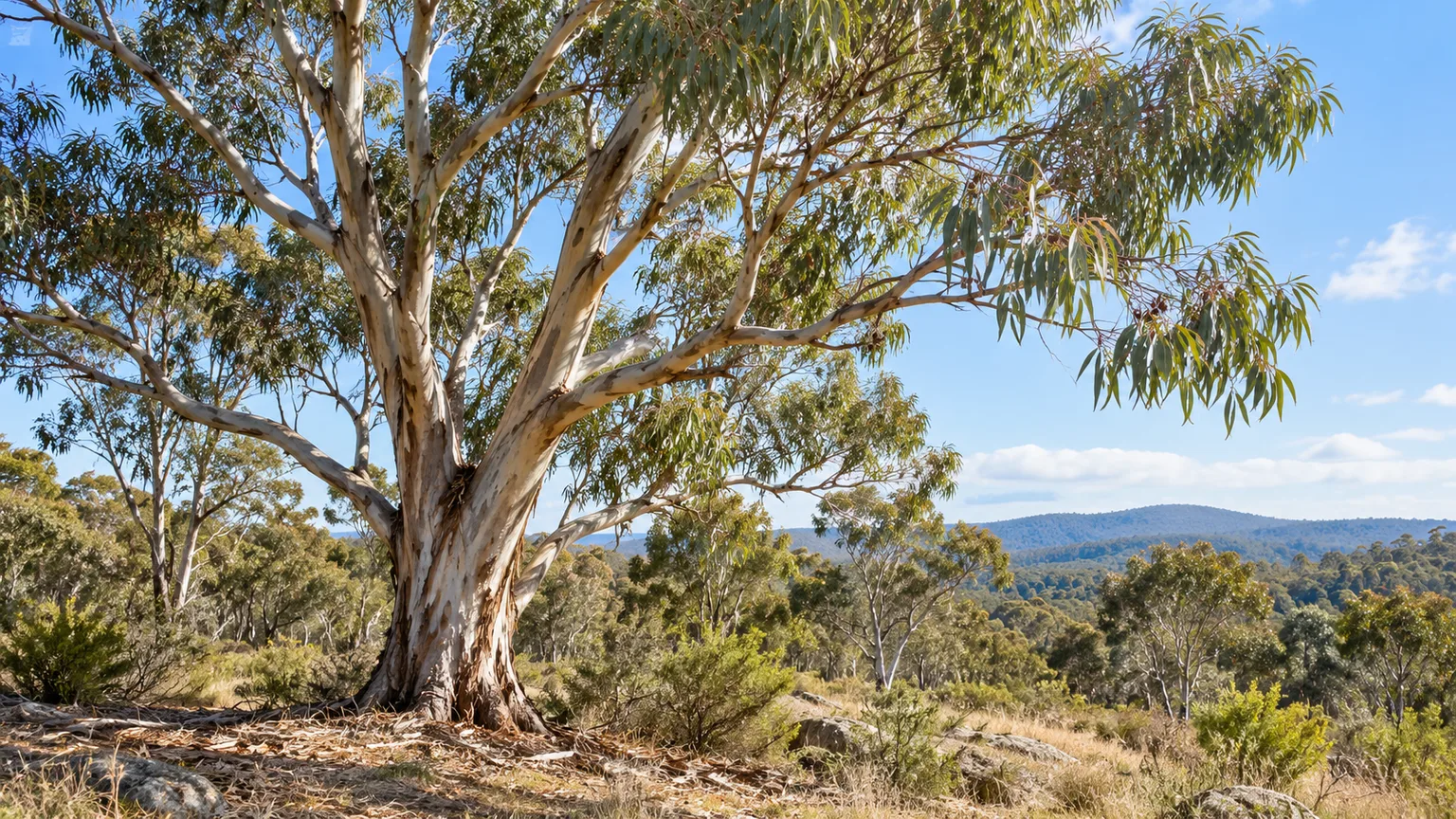
“Gum tree” sounds like a tidy plant category, but it is a common name shared by several related Australian tree genera. That matters when you are comparing size, cold tolerance, flowers, or suitability for a backyard: a compact-looking juvenile eucalyptus in a nursery pot may eventually be a large tree, while a flowering gum can belong to a different genus altogether.
This guide compares 12 familiar names and gives you a practical way to narrow the list. Start with the botanical name on the plant label, then match that exact species or cultivar to your climate and available space. The pictures and common names are useful clues; they are not substitutes for a mature-size and local-suitability check.
What Counts as a Gum Tree?
Most people use “gum tree” for familiar members of the eucalypt group, especially species in Eucalyptus. But the name also applies to trees in Corymbia and Angophora. These are distinct genera in the myrtle family, Myrtaceae. A comparative-genomics study treats Eucalyptus and Corymbia as separate genera, while horticultural references list all three under the broad common-name umbrella of gum trees. The Queensland Gardening Pages usefully groups Eucalyptus, Corymbia, and Angophora while noting that many species are too large for ordinary home gardens. A peer-reviewed comparison of Eucalyptus and Corymbia also makes clear that the genera are related without being interchangeable.
Common names are not a reliable taxonomy system. “Lemon-scented gum” is Corymbia citriodora, not an Eucalyptus species; “dwarf apple” is Angophora hispida. A nursery may still use an older Eucalyptus name for a plant now sold as Corymbia, and common names vary between regions. When a label has both names, use the italicized two-part botanical name to identify what you are buying.
Do not confuse these gums with sweetgum (Liquidambar styraciflua) or black gum (Nyssa sylvatica). They are unrelated trees with “gum” in their English names. Leaf shape, fruit, and genus are different, and their care requirements should not be transferred to eucalypts. LeafyPixels has separate guides to American sweetgum and black gum.
Twelve Gum Trees at a Glance
Use this table to shortlist by appearance and scale, not as a final planting recommendation. “Large” means a tree that needs a generous, open site; exact mature height and spread vary with subspecies, cultivar, soil, water, and climate. Several names cover plants with different habits, and a grower may sell a grafted selection that stays smaller than a seed-grown species.
| Common name | Botanical name | Standout feature | First site-fit question |
|---|---|---|---|
| Blue gum | Eucalyptus globulus | Blue-gray foliage and pale, shedding bark | Is there room for a very large tree, and is it locally appropriate? |
| Dwarf apple | Angophora hispida | Smaller, often multi-stemmed habit and white flowers | Can the site provide sun and space for its mature spread? |
| Lemon-scented gum | Corymbia citriodora | Aromatic foliage and smooth, pale bark | Do you have a broad, warm landscape rather than a small yard? |
| Manna gum | Eucalyptus viminalis | Bark shedding in long ribbons | Can the site accommodate a tall tree and its litter? |
| Rainbow gum | Eucalyptus deglupta | Striking multicolored bark | Is the climate reliably frost-free? |
| Red cap gum | Eucalyptus erythrocorys | Yellow flowers under vivid red caps | Is a low, spreading crown appropriate for the location? |
| Red-flowering gum | Corymbia ficifolia | Showy red, pink, or orange flower clusters | Is the climate mild enough, and is the plant a named grafted selection? |
| Salmon gum | Eucalyptus salmonophloia | Smooth bark with salmon tones | Do you have a large, sunny site suited to its dry-climate origins? |
| Silver-dollar gum | Eucalyptus cinerea | Rounded, silver juvenile leaves | Would a container or cut-foliage plant meet your goal better than a permanent tree? |
| Scribbly gum | Eucalyptus haemastoma | Wavy insect trails on smooth bark | Can the site support a tree adapted to sandy, well-drained conditions? |
| Snow gum | Eucalyptus pauciflora | Cold-adapted forms and patchy smooth bark | Which subspecies is actually offered, and does it suit your summer climate too? |
| Spotted gum | Corymbia maculata | Mottled, patch-like bark | Is there enough room for a large shade or park-style tree? |
Choose by Climate, Space, and Maintenance
Measure the planting area before you fall for a leaf or flower. A tree’s expected crown width matters as much as its height: allow clearance from a house, paths, neighboring property, overhead lines, and any place where falling branches or heavy litter would cause problems. The Queensland Gardening Pages specifically caution that most gum trees are unsuitable for average home gardens. A dwarf or mallee habit can reduce scale, but “small for a gum” does not mean shrub-sized for every yard.
Next, compare the plant’s native climate with your own. USDA Plant Hardiness Zones describe average annual extreme winter temperatures; they do not tell you whether a tree can cope with hot humid summers, saturated soil, coastal exposure, or a long dry season. The difference is easy to miss when a nursery tag shows only a zone range. Look for the named species and, when relevant, subspecies or cultivar, then check a regional extension or botanic garden source for local performance.
Check the local plant-risk status before purchase. Introduced gum trees are not automatically invasive, and a status from one state or country cannot be generalized to all places. On the other hand, species that seed freely or spread beyond cultivation can become a poor ecological fit even if the tree grows well in your garden. Ask your local extension service, council, or invasive-plant authority about the exact botanical name.
Finally, decide what you want the tree to do. A silver-dollar gum can provide decorative foliage in a pot or for flower arrangements; a red-flowering gum is selected for bloom; a snow gum may suit a colder mountain garden. If you want dependable flowers, a compact named cultivar, or a particular leaf color, buy a correctly labeled plant rather than relying on a seedling’s generic common name. The Royal Horticultural Society’s profile for a scarlet gum illustrates how cultivar-level growing and pruning notes can differ from general statements about the genus.
Twelve Species to Compare
Blue Gum (Eucalyptus globulus)
Blue gum is a classic tall eucalyptus with blue-green foliage and bark that sheds as the trunk matures. It can become a very large tree, so it is better suited to broad landscapes, parks, or forestry contexts than a narrow residential lot. Its rapid growth can seem like an advantage in a new yard, but the same trait makes later space conflicts harder to correct.
For blue gum, check the local invasive-plant list alongside the mature-size estimate. A species can be a poor ecological fit in one area and acceptable in another, so do not copy a hardiness-zone recommendation from a different region. If you want a blue-gray leaf effect, a smaller silver-dollar gum or a locally recommended native tree may be a more realistic starting point.
Dwarf Apple (Angophora hispida)
Dwarf apple is an Angophora, not an apple tree or a eucalyptus. Its common name comes from its youthful, apple-like appearance; look for a more crooked, branching habit and clusters of pale flowers rather than fruit like a true apple. The species is native to eastern Australia, where it is associated with open woodland and coastal conditions.
“Dwarf” is relative to the giants in this group. It can be a more manageable gum for a landscape with room for a small tree, but the label does not guarantee a permanent compact shrub. Confirm the mature spread for the exact stock and leave it enough room to develop a naturally branching canopy. If you garden outside its native climate, check winter extremes and summer moisture with a local source before planting.
Lemon-Scented Gum (Corymbia citriodora)
The lemon-scented gum is a Corymbia with aromatic leaves and smooth bark that may peel in patches. Its scent comes from leaf oils, but smelling a bruised leaf is not evidence that it repels insects outdoors or that it is safe to ingest. Treat it as a large ornamental tree, not as a small fragrance plant; mature specimens need generous clearance.
This species is often chosen for its tall, elegant form in warm landscapes. That appeal can hide practical costs: litter, canopy shade, roots competing for soil moisture, and the difficulty of reducing a mature tree to fit a tight space. If the goal is fragrance, compare the eventual size against the site first, then ask a local nursery whether a smaller related selection is reliably available.
Manna Gum (Eucalyptus viminalis)
Manna gum is also called ribbon gum or white gum. Its smooth bark peels in hanging strips, while the mature tree can reach a substantial size. Those ribbons make the species easy to recognize, but they also create seasonal cleanup; bark and leaf litter are part of the maintenance equation rather than an occasional surprise.
Manna gum comes from southeastern Australia and is often described as more cold-tolerant than tropical eucalypts. That does not make it suitable for every cold garden. A tree may survive winter yet struggle with summer heat, heavy clay, or persistent moisture. Use the exact species name to check both winter and summer limits, and do not squeeze a tall ribbon-barked tree beside a small home simply because the climate seems right.
Rainbow Gum (Eucalyptus deglupta)
Rainbow gum is the unmistakable bark choice: as thin outer layers shed, the exposed trunk can show green, orange, maroon, and other tones. The color develops with age and seasonal bark shedding; a young nursery plant may not show the dramatic mature pattern people expect from photographs.
This tropical species is not a cold-climate substitute for snow gum. It needs a frost-free or near-frost-free growing environment and space to become a large tree. In cool regions it is best treated as a protected conservatory or specialist collection plant rather than a dependable outdoor landscape tree. Before choosing it for an ornamental planting, verify the minimum temperatures for the local accession and remember that winter protection does not solve long-term height.
Red Cap Gum (Eucalyptus erythrocorys)
Red cap gum is a smaller, often low-spreading species from Western Australia. Its yellow flowers emerge from buds covered by conspicuous red caps, giving it a high-contrast display without relying on huge red flower clusters. A tree’s mature crown can still be broad, and branch strength and structure matter when choosing a spot near a walkway or sitting area.
The name is a useful recognition clue, but it is not a promise of a tidy miniature tree. Give it full sun and well-drained ground suited to the conditions for its origin, and ask whether the nursery stock is grafted or seed-grown. If a tag lists only a broad common name, request the botanical name before deciding how much space to reserve.
Red-Flowering Gum (Corymbia ficifolia)
Red-flowering gum is one of the most colorful members of the group, with dense clusters of red, pink, orange, or occasionally cream flowers. It is a Corymbia rather than a true Eucalyptus. Flower color and tree size can vary considerably; grafted garden selections are often chosen for more predictable bloom and a more manageable form than seed-grown trees.
This species is associated with the mild Mediterranean climate of southwestern Western Australia. In climates with hard freezes, prolonged wet soil, or hot humid summers, it may be unreliable even if a generic hardiness chart suggests overlap. Ask for the cultivar name, rootstock details when grafted, and local track record. A grafted tree also needs careful handling: avoid planting it so deeply that the graft union is buried.
Salmon Gum (Eucalyptus salmonophloia)
Salmon gum is a tall Western Australian tree named for the warm salmon-colored cast of its smooth bark. It belongs to dry inland landscapes and is valued in its native region for more than ornamental foliage. For a homeowner, however, the chief question is usually scale: this is not a small shade tree for a foundation bed.
A species adapted to a particular inland climate should not be selected simply because it tolerates heat or a challenging soil in its range. Local rainfall, drainage, summer humidity, and invasive-plant status all matter. If you are looking for a colorful trunk, compare smaller, locally proven ornamental trees before bringing a large salmon gum into a suburban garden.
Silver-Dollar Gum (Eucalyptus cinerea)
Silver-dollar gum is the most practical choice on this list when the goal is rounded, silvery juvenile foliage rather than a permanent canopy tree. Its blue-gray leaves are popular in floral arrangements and remain rounded and opposite on young shoots; mature foliage changes in shape and arrangement as the plant develops. NC State Extension describes both the juvenile and adult leaf forms and notes that the species can grow rapidly, reaching a much larger size in its native environment than a potted plant suggests.
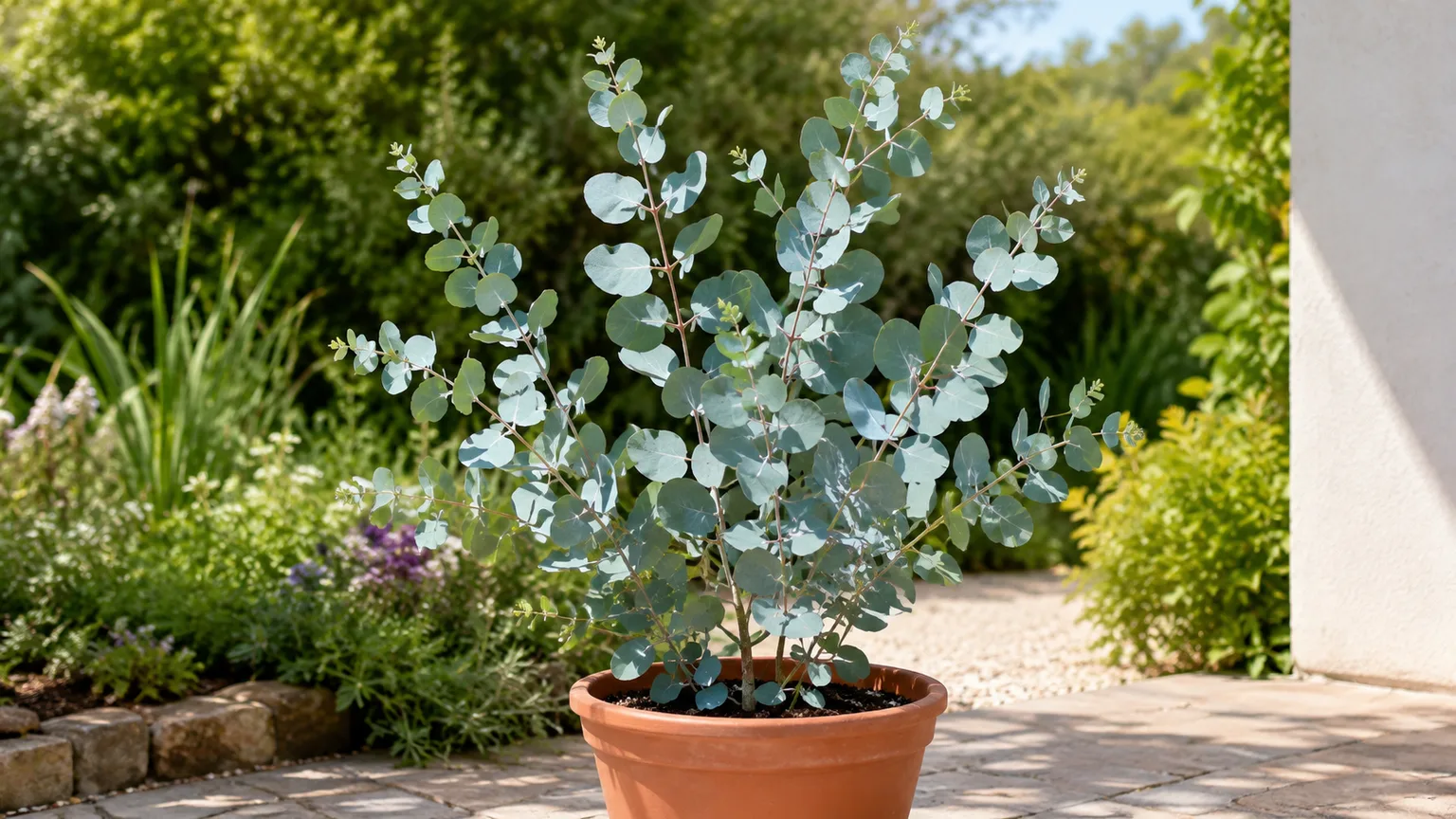
A large container can hold a young plant on a patio, and in colder areas some gardeners treat it as a seasonal specimen or bring it indoors before freezing weather. A pot slows and constrains roots; it does not permanently transform a tree into a compact houseplant. NC State Extension also rates this species as poisonous if ingested, so keep leaves and concentrated plant oils away from children and pets. See its silver-dollar gum growing profile from NC State Extension for region-specific care and safety notes.
Scribbly Gum (Eucalyptus haemastoma)
Scribbly gum is a southeastern Australian eucalyptus recognized by thin, wavy lines beneath the bark. Those “scribbles” are feeding trails created by insect larvae rather than cracks or a disease pattern, and the tree may shed bark while the marks are revealed. The visual effect is strongest on smooth pale trunks and makes this species interesting as a specimen in a suitable landscape.
A scribbly gum is not a general-purpose small-yard tree. It is associated with sandy, well-drained sites and should not be used to solve poor drainage in a compact planting bed. If the soil is heavy, compacted, or regularly waterlogged, choose a tree adapted to that condition instead of amending a small area and hoping the roots stay contained.
Snow Gum (Eucalyptus pauciflora)
Snow gum is the cold-climate standout among these 12, but its name does not make every plant sold under it winterproof in every region. Eucalyptus pauciflora includes different subspecies and local forms, and size and habit can vary from low, multi-stemmed trees to larger trees. Smooth bark in white, gray, or cream patches adds year-round interest, while the foliage and branches are shaped by the local growing conditions.
Treat the species name as the start of the hardiness check. Ask which subspecies is being sold, find its coldest proven range, then check whether your summer heat and humidity fall within its comfort zone. “Cold tolerant” is a comparison, not a guarantee: young roots, wind exposure, drainage, and sudden temperature swings can affect establishment even where mature specimens survive.
Spotted Gum (Corymbia maculata)
Spotted gum belongs to Corymbia. Its smooth trunk develops a mottled, patchy appearance as bark sheds, and the foliage can have a lemon-like scent when bruised. It is a large tree with a broad, high canopy, making it better suited to parks, streetscapes, and large properties than to a narrow urban yard.
The mature canopy is the decision point. It can offer shade and a striking trunk, but a small lot may not have room for its spread, leaf litter, roots, or long-term branches. If you want a spotted-bark effect at home, consider a tree with a proven smaller mature size for your region rather than pruning a large gum every year to force it into place.
How to Tell a Gum From Its Lookalikes
Start with the whole plant and its label. A gum is not identified by one universal leaf or bark pattern: some species shed smooth bark, others keep fibrous or stringy bark, and juvenile leaves can look very different from the adult foliage on the same tree. The leaf shape also varies widely across the group, so aroma alone is a poor field test.
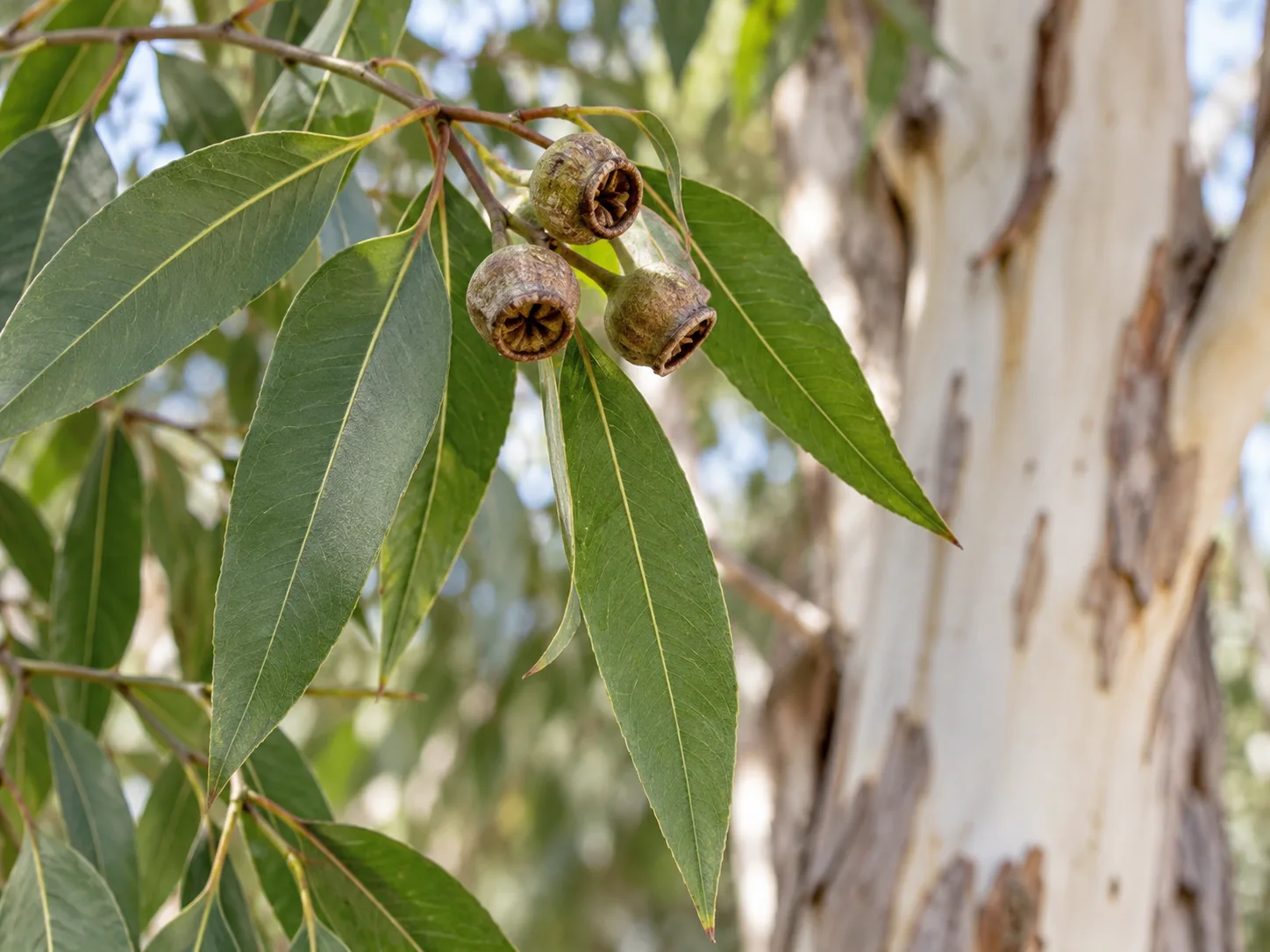
If you are checking an established tree, look at several clues together: mature and young leaves, bark texture, flower clusters, woody capsules, and the local species list. Eucalyptus species commonly produce woody capsules and often change from rounded juvenile leaves to narrower adult leaves; a detailed illustrated botanical guide from Botany Brisbane explains those leaf and capsule features. The Royal Horticultural Society’s scarlet gum profile offers a useful species-level example of aromatic foliage and small flowers.
The same rules help avoid two common mix-ups. Sweetgum has star-shaped leaves and spiky fruit; black gum is a Nyssa. Neither belongs to the gum-tree genera discussed here. If you need a confident identification for a mature tree, take clear photos of its leaves, bark, flowers or capsules, and the whole crown, then ask a regional native-plant society, extension office, or arborist.
Risks to Check Before You Plant
Local status comes first. A plant can be valued as an ornamental in one region and behave as a weed in another. The Queensland Gardening Pages notes that introduced Australian eucalypts have become troublesome weeds in some parts of the world; that does not mean every species in Eucalyptus, Corymbia, and Angophora is invasive everywhere. Check the botanical name against your state or country’s current invasive-plant list and follow any local planting restrictions.
Do not ignore fire and litter context. Gum trees can drop leaves, bark, seed capsules, and branches, and some species contain aromatic oils. In a fire-prone area, ask the local fire authority or extension office about defensible-space rules, recommended distances, and species guidance for your property. Do not rely on broad claims that a particular eucalyptus is “fireproof” or inevitably dangerous; the site, maintenance, weather, and local guidance determine the practical risk.
Keep plant material out of mouths. Do not eat leaves or sap from a gum tree, and do not treat essential oil as a safe home remedy. NC State Extension flags Eucalyptus cinerea as poisonous if ingested; for pets or children, prevent chewing and contact a veterinarian or poison center if ingestion occurs. Wear gloves if you have sensitive skin, and avoid using concentrated oils without qualified safety guidance.
A final practical check is maintenance. Ask whether your site can absorb routine leaf and bark cleanup, whether roots and canopy have enough space, and whether pruning will be safe as the tree grows. A professional arborist is the right person to assess a mature tree near a building or utility line; choosing a smaller species before planting is usually easier than correcting an oversized tree later.
Conclusion
Gum trees span three related but distinct genera, and their shared common name hides a wide range of sizes and climate needs. Use the botanical name to compare the actual plant, treat hardiness zones as one clue rather than a planting guarantee, and check local ecological status before you buy. If your yard cannot support a large tree, silver-dollar gum in a managed container or a locally recommended smaller mallee is a more realistic direction than planting a giant gum and planning to prune it down.



