Leaf Miners on Aglaonema Silver Bay: Silver Panel Checks &
Quick answer
Leaf miner larvae tunnel inside Aglaonema Silver Bay broad silver-gray leaves, leaving pale winding tracks between the upper and lower surfaces—not ragged chew holes through the large silver center panels. First step: isolate the plant and pinch off every mined blade at the petiole, bag the foliage, and inspect soft crown flush before you spray.
Leaf Miners on Aglaonema Silver Bay: Causes, Checks & Fixes
This guide covers leaf miners on Aglaonema Silver Bay. See also the general Leaf Miners guide, watering, and light pages for this plant.
Leaf Miners on Aglaonema Silver Bay: Causes, Checks & Fixes
Quick answer
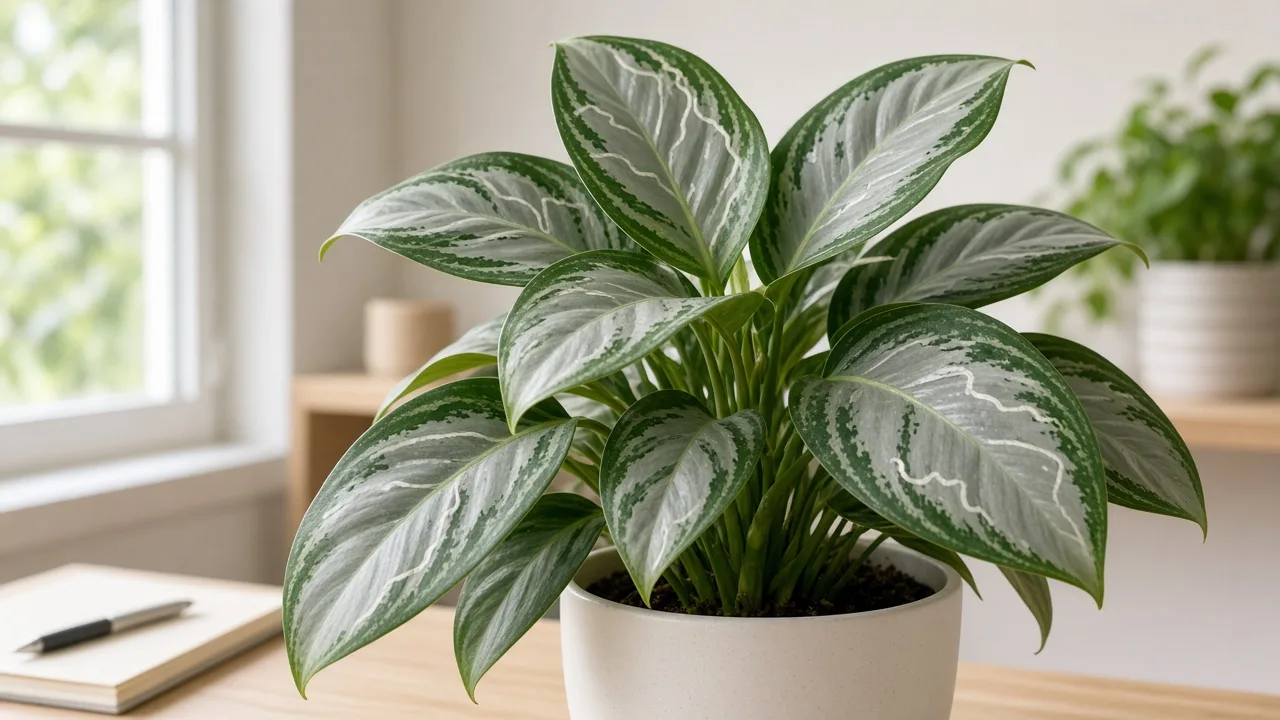
Leaf miners on Aglaonema Silver Bay (Aglaonema commutatum ‘Silver Bay’) are tiny fly larvae feeding between the upper and lower surfaces of broad oval leaves with large silver-gray centers and dark green margins. Indoor Silver Bay is generally troubled by aphids, mealybugs, spider mites, and scale more often than leaf miners—but when serpentine tunnels appear after outdoor summer placement, nursery hitchhikers, or crowded aglaonema shelves, the pale winding trail inside a silver-gray blade is unmistakable if you backlight the leaf.
For how leaf miner larvae tunnel inside foliage and why contact sprays underperform, see our leaf miners guide. On Silver Bay, the diagnostic clue is a bordered pale trail inside a broad silver-gray center panel—not a ragged full-thickness hole from caterpillars or a clean mechanical tear on a desk-edge leaf.
First step: isolate the plant and pinch off every mined leaf at the petiole, bag the removed foliage, and inspect soft new growth at each crown center before you spray.
When to use this page vs other Aglaonema Silver Bay guides
| Pattern | Read next |
|---|---|
| Serpentine tunnel inside the blade | This page |
| Ragged through-hole with frass pellets on the surface | Caterpillars |
| Open hole without internal bordered tunnel | Holes in leaves |
| Silver streaks, black specks, scarred tips | Thrips |
| Fine stippling with webbing on leaf undersides | Spider mites |
| Distorted crown flush without confirmed tunnels | Distorted leaves |
| Brown dry spot that fell out leaving a hole | Black spots |
| Uniform silver fade on whole new crown, no internal trail | Not enough light or pale leaves |
| Yellow lower leaves, wet mix, soft crown | Overwatering or root rot |
What leaf miners look like on Aglaonema Silver Bay
The clearest sign is a serpentine mine—a twisting white or pale brown trail inside the broad oval blade, often with a dark line of larval waste (frass) running through it. The mine widens as the larva grows. Unlike caterpillar chew holes, which remove tissue outright and leave ragged margins with pellet frass on the surface, leaf miner damage keeps the outer leaf surface mostly intact except for a small exit hole when the larva matures.
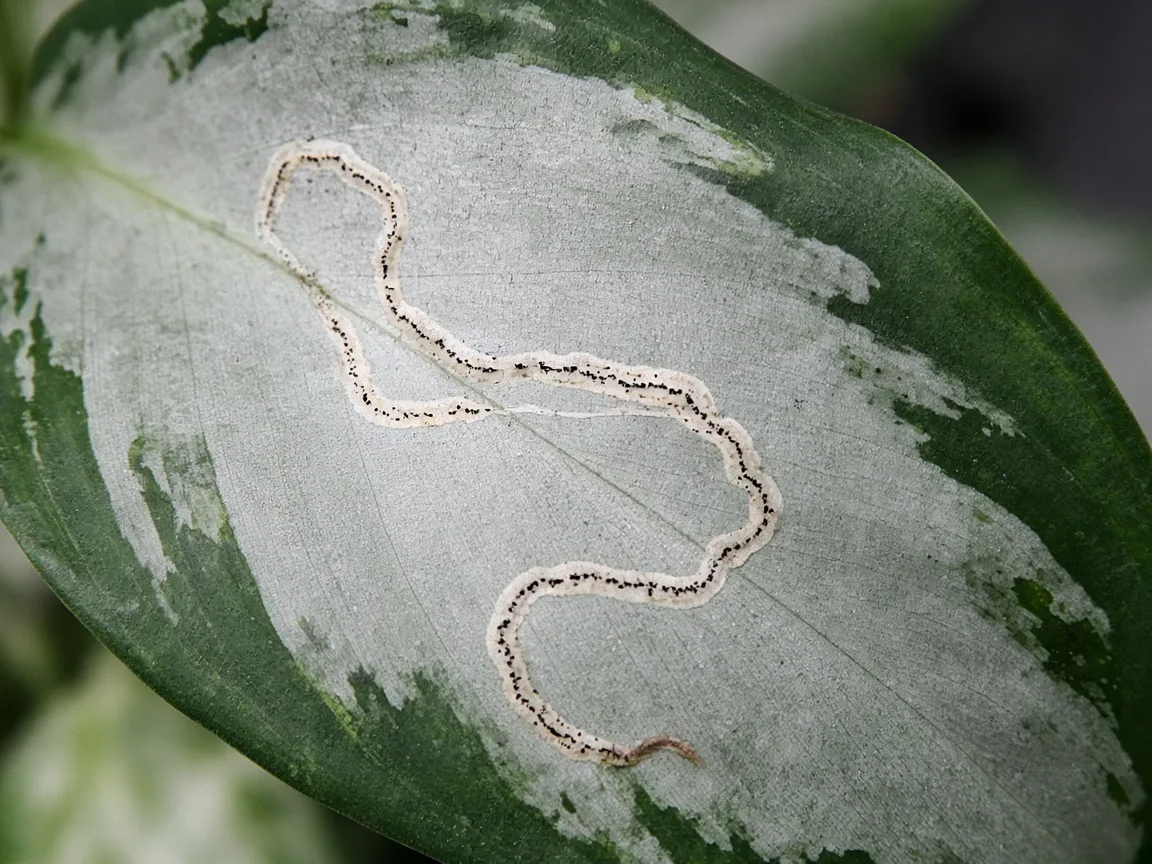
A bordered pale tunnel with a dark frass line inside a Silver Bay blade—backlight the silver-gray center to confirm the mine sits between tissue layers, not through the blade.
Other clues on Silver Bay:
- White stippling on silver-gray panels from adult females puncturing leaves to feed on sap before laying eggs inside the blade.
- Mines on soft new crown leaves and on middle blades where overlapping upright foliage traps humid air in a dense clump.
- A small yellow maggot visible inside an active mine if you gently tear the widest part of the tunnel on a thinner section of silver-gray tissue.
- Brown seedlike pupae on the soil surface or pot rim after larvae drop out of mined leaves—common beneath desk pots where debris collects.
Silver Bay leaves carry large silver-gray center panels with dark green margins on broad glossy blades. Mines show up as pale squiggles cutting across the silver zones and are especially visible when they cross tissue where chlorophyll is already thin. Mature firm blades lower on an upright clump may carry old brown mines while active feeding concentrates on the softest new silver-gray leaf at each crown.
Backlight test on silver-gray center panels (Silver Bay only)
Silver Bay foliage is thick enough to backlight with a phone flashlight held behind the broad blade. A true leaf miner trail shows as a bordered tunnel with intact silver-gray and green tissue on both sides of the pale path and often a dark frass line down the center. Caterpillar damage punches through both surfaces—you see open air through the hole, not an enclosed tunnel. Mechanical unfurl tears on the newest silver-gray blade leave a clean linear split without an internal bordered mine. This backlight check takes ten seconds and prevents spraying a Silver Bay that only has a shelf snag or brown tip damage from dry air.
Crown flush mining on slow silver-variegated aglaonema (Silver Bay only)
Silver Bay pushes new broad leaves slowly from a dense upright crown, and the large silver-gray zones on fresh tissue lack chlorophyll. Female leaf miner flies prefer tender tissue, so the first expanding mine often appears on the silver-gray leaf still unfurling at a crown center—not on the oldest firm blades near the pot rim. Owners notice damage on outer leaves at eye level, but the active larva may be mining a soft inner tip you never see without lifting overlapping foliage. When you inspect, start at every crown flush and work outward along each stem, not only at the most obvious mined blade in the clump.
Silver-zone mine visibility vs pale leaves from low light (Silver Bay only)
Silver Bay tolerates low to medium filtered light better than most houseplants, but in very dim offices new leaves emerge uniformly greener or washed-out across the whole blade—chlorophyll loss without a bordered internal trail. Leaf miner damage is different: a serpentine pale path with frass inside an otherwise well-colored silver-gray leaf. If the entire new crown is pale and there is no winding mine, fix light or check pale leaves before you treat for pests. If one silver-gray blade has a bordered squiggle while neighbors look normal, leaf miners are the better fit.
Why Aglaonema Silver Bay gets leaf miners
Leafminers in the genus Liriomyza—including the vegetable leafminer (L. sativae) and related species—attack many greenhouse and ornamental broad-leaved plants. Adult flies lay eggs inside leaf tissue; larvae mine between epidermal layers for about two weeks in warm conditions before exiting to pupate in soil or on the pot surface. Warm indoor conditions allow multiple overlapping generations through spring and summer.
Silver Bay invites leaf miners for practical reasons:
- Soft silver-gray crown flush year-round in heated offices gives females fresh broad tissue to puncture and mine—even though overall growth is slow compared with pothos.
- Large silver-gray panels with thin chlorophyll make mines easy to spot once you backlight a leaf—but also quick for a larva to cross before you notice stippling on silver tissue.
- Dense upright architecture in a multi-crown pot overlaps leaves and reduces airflow between blades on the same stem.
- Outdoor summer placement on shaded patios is the most common route indoors—eggs may already be inside leaves weeks before tunnels appear on Silver Bay.
- Crowded aglaonema shelves with Silver Bay grouped near Cutlass, Maria, or other Chinese evergreens let flies move between pots.
- Broad-spectrum insecticide use on other pests can kill parasitic wasps that normally keep leaf miner numbers low—secondary outbreaks after mite or aphid sprays happen in home collections.
Leaf miners rarely kill established plants. Unusually heavy mining can cause affected leaves to brown and drop, but a stable Silver Bay in medium filtered light with steady watering usually outgrows cosmetic damage if you remove mines early. Because Silver Bay grows slowly, one mined crown flush can sit visible for months—early removal matters more than on fast-growing vines.
How to confirm the cause
Work through these checks before treating:
- Hold the silver-gray leaf to light. A bordered internal tunnel confirms leaf miner—not a ragged caterpillar hole, not a clean mechanical tear, and not brown tips from fluoride alone.
- Check whether the mine is expanding. A lengthening trail means an active larva; an old brown mine may be empty.
- Look for frass. A dark line inside the pale tunnel distinguishes miners from thrips silvering or spider mite stippling.
- Rule out chewers. Caterpillars remove tissue outright, leaving ragged full-thickness holes and pellet frass on leaf surfaces—not enclosed trails. See caterpillars on Silver Bay.
- Inspect new plants and patio returns. Mines on one nursery aglaonema in a mixed display often explain sudden tunnels on otherwise healthy Silver Bay.
- Note recent sprays. A flare of mines two to three weeks after broad-spectrum insecticide fits loss of natural enemies more than random bad luck.
- Humidity check. A center split on the newest silver-gray blade with crispy edges and no internal tunnel points to low humidity unfurl damage—not leaf miners.
If you see only fine yellow dots without bordered trails, suspect spider mites in dry winter air. Silvery scarring without internal tunnels points to thrips. Open ragged holes with frass pellets on the leaf surface point to caterpillars, not miners.
First fix for Aglaonema Silver Bay
Isolate the plant and pinch off every mined leaf at the petiole—discard removed foliage in the trash, not the compost pile.
Isolate the plant away from other aglaonemas, pothos, and philodendron on the same shelf immediately. Pinch or cut affected blades where the petiole meets the stem, bag removed leaves so larvae cannot pupate in your bin, and wipe scissor blades with alcohol between cuts if mines are widespread across multiple crowns.
Do not reach for insecticidal soap, neem, or horticultural oil as a first response on a Silver Bay with a few cosmetic mines. Larvae inside leaves are shielded from contact products—insecticides are not very effective for leafminer control—and unnecessary film on silver-gray foliage adds stress without reaching maggots. Do not change watering or fertilize a mined Silver Bay before you remove active larvae; soft nitrogen-rich crown flush is easier for flies to puncture.
Aglaonema Silver Bay is toxic to cats and dogs if ingested. Wear gloves when bagging pruned foliage and keep pets away from discarded leaves on the floor.
| Confirmed pattern | First fix |
|---|---|
| Active serpentine mine inside silver-gray leaf | Isolate and pinch off mined blades; bag foliage |
| Ragged through-hole with frass pellets | Hand-pick caterpillars; see caterpillars |
| Silver streaks, live thrips on shake test | Rinse leaf undersides; see thrips |
| Clean tear, no internal tunnel | Reposition pot away from shelf edge—no pesticide |
Step-by-step recovery
Once mined leaves are removed and the plant is isolated:
- Scout every three to five days through warm months when fly generations turn over quickly. Lift overlapping blades and inspect backs of newest silver-gray leaves at each crown center.
- Keep baseline care steady—medium to low filtered indirect light, water when the top half of mix dries, and average household humidity. Wild swings in water or light slow replacement foliage after you prune mines on a slow grower.
- Improve airflow slightly by spacing pots on the shelf so you can inspect leaf backs without crowding—enough gap for gentle circulation, not a cold draft below 13°C (55°F).
- Hold fertilizer while mines are active. Resume light feeding only once new mines stop appearing for two weeks.
- Inspect all aglaonemas nearby and remove early mines on other cultivars before adults reinfest the Silver Bay.
- Escalate only if needed. If mines cover most silver-gray leaves or keep spreading despite weekly removal for three weeks, a systemic product applied per label for indoor ornamentals may help when contact removal fails. Treat this as a last resort on home Silver Bay, not a first response.
For a small starter plant with mines on every blade, division at repotting may be faster than fighting entrenched pests—keep only crowns with clean firm growth.
Recovery timeline
| Phase | Timing | Good sign | Bad sign |
|---|---|---|---|
| After first removal | Days 1–5 | No new expanding mines on unfurling crown tips | Fresh trails on new silver-gray blades |
| New growth | Weeks 3–6 | Clean blades with crisp silver centers and green margins | Stippling returns or pupae pile on soil |
| Cosmetic | Ongoing | Old brown mines stable on pruned sections | Multiple crowns declining |
Mined tissue never regains its original silver-gray color. Judge success by absence of new expanding mines and firm new broad blades at crown centers—not by old trails fading.
Cosmetic mines on a few leaves of a firm office Silver Bay: visible improvement within days once you remove affected foliage; new clean blades may take three to six weeks to unfurl because Silver Bay grows slowly.
Small plant with mines on more than half of leaves: may recover slowly from clean crowns, but heavy mining on a stressed Silver Bay in very dim light sometimes warrants keeping only the healthiest division rather than waiting months.
Lookalike symptoms
| What you see | Likely cause | How to tell apart |
|---|---|---|
| Winding pale tunnel inside silver-gray leaf | Leaf miner | Bordered trail with frass line; surface mostly intact |
| Ragged hole through the blade | Caterpillars | Tissue removed; frass pellets on surface |
| Clean linear tear on one blade tip | Mechanical snag | No internal tunnel; damage along desk or shelf path |
| Center split on newest silver-gray blade | Dry-air unfurl tear | No bordered mine; crispy edges in dry rooms |
| Fine yellow dots with webbing | Spider mites | No enclosed tunnel; stippling across leaves |
| Silver streaks, black specks | Thrips | No internal bordered mine |
Route full-thickness holes without internal tunnels to holes in leaves on Aglaonema Silver Bay.
Mistakes to avoid
- Confusing mines with caterpillar holes—miners tunnel inside tissue; caterpillars chew ragged open holes with pellet frass on the surface.
- Spraying soap or oil first on a Silver Bay with a few cosmetic mines—wastes effort without reaching larvae inside tissue.
- Composting mined leaves—larvae may survive and pupate in the pile.
- Using broad-spectrum insecticides for mealybugs or spider mites, then wondering why leaf miners exploded two weeks later.
- Inspecting only the tallest outer leaf on an upright clump while active mines sit on soft crown tips hidden inside the clump.
- Repotting mid-outbreak—unnecessary stress; pupae in soil are secondary to removing active mines on foliage.
Wear gloves when handling damaged Silver Bay; sap contains calcium oxalate crystals that irritate skin.
Aglaonema Silver Bay care cross-check
Leaf miners are a pest issue, not a watering problem—but stressed Silver Bay crowns recover slower after you remove foliage.
- Light: Medium to low filtered indirect; Silver Bay tolerates dim offices better than most aglaonemas—see Silver Bay light. Avoid stacking heavy pruning with a sudden move into harsh direct sun that scorches silver-gray panels.
- Water: Water when the top half of mix dries—see Silver Bay watering. Soggy mix in dim offices stresses roots during recovery; bone-dry pots slow new crown flush.
- Humidity: Average household levels are fine—see low humidity only if unfurl tears mimic mines.
- Soil: Well-draining peat- or coco-based mix with perlite—see Silver Bay soil. Do not repot solely because of leaf miners.
How to prevent it next time
- Quarantine new aglaonemas two weeks before mixing collections.
- Inspect silver-gray leaves at purchase—reject plants with visible serpentine mines or heavy stippling on crown flush.
- Rinse and inspect patio Silver Bay before winter bring-in; check crown tips and overlapping leaf axils.
- Remove mines during weekly care before larvae exit to pupate in soil beneath the pot.
- Preserve natural enemies by using targeted controls for aphids and spider mites—rinse-first approaches before blanket sprays on the whole shelf.
- Scout crown flush weekly during spring and summer when flies are most active near open windows.
When to worry
Escalate beyond leaf removal when:
- Most silver-gray leaves on a small plant show active expanding mines.
- New mines appear every week on the same Silver Bay despite consistent removal for three weeks.
- Leaf drop is heavy and the clump looks thin after mining, not after drought or overwatering.
- Mines spread to multiple aglaonemas on one shelf despite isolation.
For a mature office Silver Bay with scattered cosmetic mines on older blades, worry less about plant death and more about appearance and spread—pinch mined blades, keep watering steady, and watch new unfurling leaves at crown centers for clean silver-gray tissue with dark green margins.
Discard and restart from a clean division only when every crown is mined, repeated removal failed, and no firm growth remains to salvage.
Conclusion
Leaf miners on Aglaonema Silver Bay look alarming on broad silver-gray foliage but rarely kill a well-cared-for indoor specimen. The larvae live inside tissue where contact sprays barely reach, so your best tool is early isolation, removal of mined leaves, and steady Silver Bay care while the plant pushes clean new blades from crown centers. Save systemic escalation for persistent outbreaks—and avoid broad-spectrum sprays that trigger the very flare you are trying to prevent.
Related Aglaonema Silver Bay guides
- Aglaonema Silver Bay overview — placement, silver variegation, and care baseline
- Silver Bay watering — when wet soil is not the issue
- Silver Bay light — medium to low filtered light for firm silver-gray leaves
- Silver Bay soil — drainage that keeps roots healthy in dim rooms
- Holes in leaves on Aglaonema Silver Bay — full-thickness damage vs internal tunnels
- Caterpillars on Aglaonema Silver Bay — ragged holes with frass
- Thrips on Aglaonema Silver Bay — silver streaks and scarred tips
- Aglaonema Silver Bay problems hub — all common issues on this cultivar
Related tool
Use the Plant Problem Diagnosis Tool to narrow causes for leaf miners on this plant before changing multiple variables at once.