Holes In Leaves on Aglaonema Silver Bay: Pest & Damage
Quick answer
Holes in Aglaonema Silver Bay leaves are almost never disease indoors—they mean caterpillar chew, mechanical scrapes, or occasional slugs after outdoor summer moves. First step: inspect leaf margins and undersides at night for caterpillars or frass.
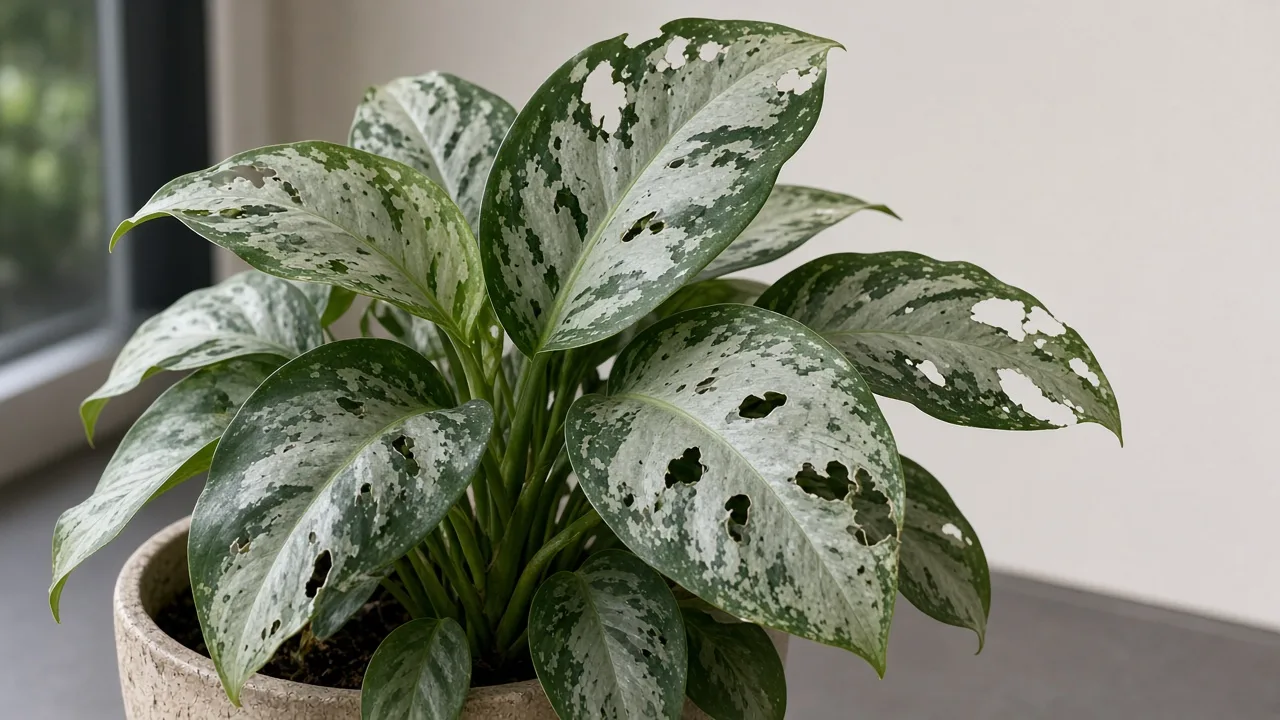
Holes In Leaves on Aglaonema Silver Bay: Causes, Checks & Fixes
This guide covers holes in leaves on Aglaonema Silver Bay. See also the general Holes in Leaves guide, watering, and light pages for this plant.
Holes In Leaves on Aglaonema Silver Bay: Causes, Checks & Fixes
Quick answer
Holes in Silver Bay Chinese evergreen (Aglaonema ‘Silver Bay’) foliage are almost always chewing damage or mechanical scrapes—not indoor fungal leaf spot. On this popular office cultivar with broad arching silver-green blades, soft tissue tears easily against furniture. See our holes in leaves guide—on Silver Bay, frass and one-sided tears tell you which fix to apply.
First step: inspect margins and undersides at night with a flashlight.
When to use this page vs other Silver Bay guides
| What you see | Read next |
|---|---|
| Winding trails inside leaf | Leaf miners |
| Chew with frass | Caterpillars |
| Fine stippling, no holes | Spider mites |
| Irregular tears one side | Mechanical—relocate pot |
| Brown spots with halo | Black spots |
What holes look like on Silver Bay
Silver Bay carries broad silver-green lance leaves with dark green margins. Holes show on arching outer blades more than inner crown leaves.
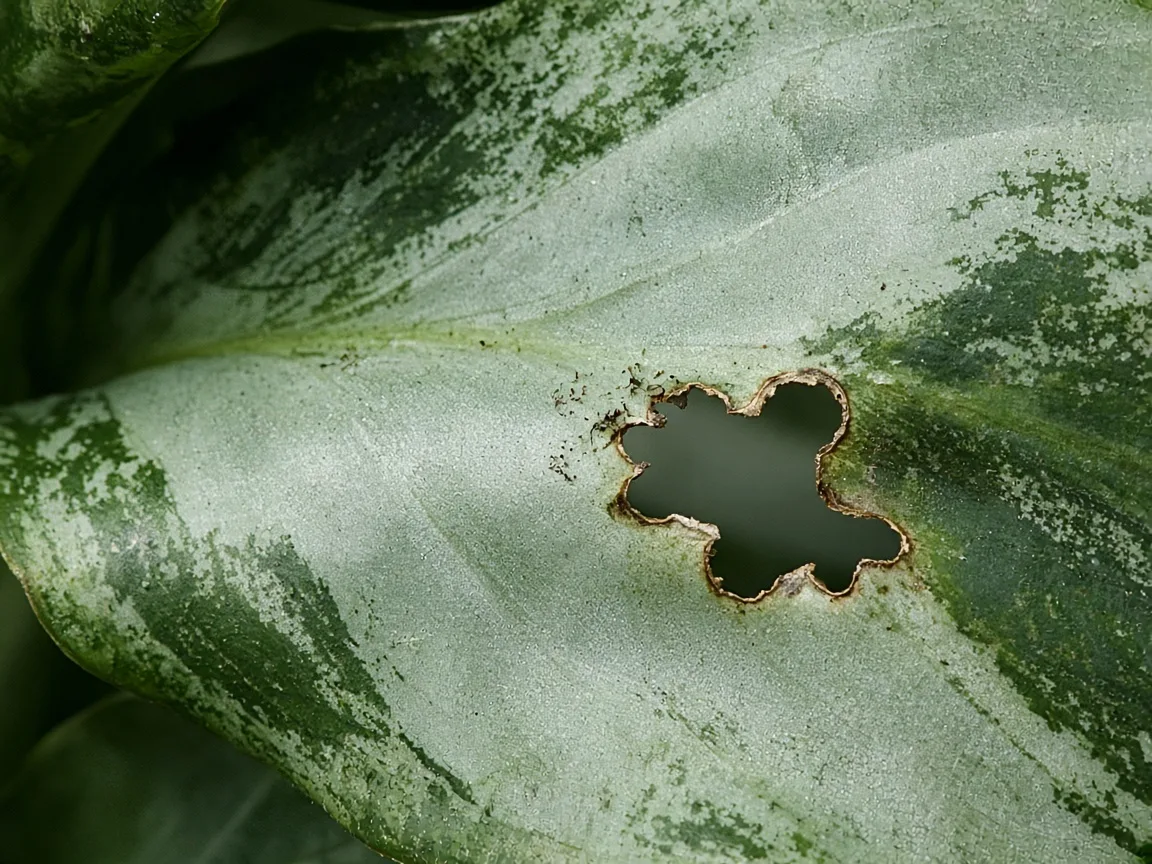
Chewed margin on Silver Bay foliage—check crown weekly for caterpillars hiding in dense stems.
Caterpillar chew (most common with active pests):
- Clean round holes or notched margins with green or dark frass on leaves or soil
- Caterpillars on houseplants hide on undersides and in crown by day
- Damage may appear overnight on multiple arching leaves
- Office plants near open windows may get hitchhiker larvae
Leaf miners (uncommon—trails not holes):
- Winding brown serpentine trails inside the silver blade
- Not clean round holes—see leaf miners
Mechanical tears:
- Clean punctures on one side of pot nearest wall or tight shelf
- No frass, no slime—Silver Bay’s broad blades arch into furniture when stem leans
Outdoor summer slugs:
- Round windows and slime on pot rim after patio time
- Rare on plants that stay indoors year-round
Pet chew:
- Irregular tears on lowest accessible leaves—Aglaonema is toxic if ingested
Check newest crown leaves for fresh chew—active infestation needs faster action.
Why Silver Bay gets holes
Caterpillars feed at night on Aglaonema foliage. Indoor disease-related shot holes are rare—chew and scrapes dominate.
Office caterpillar hitchhikers. Nursery stock and open windows introduce larvae that hide in Silver Bay’s dense crown.
Broad arching blades scrape easily. Desk and floor placement against walls tears outer leaves without pests.
Pets target accessible lower leaves—relocate if bite marks appear.
Thrips scarring lookalike: Western flower thrips cause silvery scars that can look like tiny holes—see distorted leaves if new growth crinkles.
How to confirm the cause
- Night inspection with flashlight—hand-pick caterpillars.
- Frass on leaves or soil confirms chew insects.
- One-sided damage = mechanical scrape.
- Slime on pot rim after outdoor time = slugs.
- Tap test over white paper for thrips if stippling without true holes.
Office caterpillar and chew checks
Three Silver Bay-specific details:
Leaf miners leave winding trails, not clean holes on Silver Bay’s broad silver blades.
Clean round holes with frass mean caterpillar—check crown weekly in dense multi-stem pots.
Pets chewing toxic foliage—relocate pot; see veterinarian if ingested.
First fix for Silver Bay
Inspect undersides and crown for caterpillars or frass; hand-remove pests found.
Isolate if chew spreads; see caterpillars. Bt on margins is safer than broad sprays on silver tissue.
If mechanical tears only: reposition with clearance—no pesticide.
Do not spray until you confirm active pests—not tears from placement.
Step-by-step recovery
- Isolate if frass on multiple plants.
- Night inspections five to seven days until no new chew.
- Remove only mostly destroyed leaves.
- Watch new growth two to four weeks for clean silver blades.
- Do not fertilize until new leaves firm.
Lookalike symptoms
| Pattern | Check | Likely cause |
|---|---|---|
| Chew + frass | Night caterpillar | Caterpillars |
| Winding trails | Inside leaf | Leaf miners |
| One-sided tear | Wall side | Mechanical |
| Stippling, crinkle | New growth | Thrips |
| Brown spots | Wet leaves | Black spots |
Mistakes to avoid
- Do not spray fungicide on chew holes.
- Do not remove every holey leaf.
- Do not ignore shelf neighbors with frass.
- Do not mist holey leaves—wet foliage promotes leaf spot.
Recovery timeline
Hole tissue does not fill in—expect clean new leaves within two to four weeks after pest removal. Allow one full flush before judging.
How to prevent holes next time
- Quarantine new plants two weeks before placing on a shared office shelf or plant stand
- Weekly crown inspection in office settings—lift arching outer leaves and look for frass in the stem cluster
- Clearance from walls and tight shelves; leave at least 4 inches on all sides so silver-green blades do not scrape when the pot shifts
- Keep indoors after slug exposure on patio; rinse pot rim and saucer before bringing back inside
- Water at the soil line per watering guide so splash does not soften torn edges into secondary black spots
- Rotate the pot monthly in bright indirect light so growth stays balanced and outer leaves do not lean into furniture
How to prevent holes next time
Quarantine every new plant two weeks before placing it on a shared shelf with Silver Bay. During summer patio moves, inspect undersides at dusk for caterpillars and wipe slug slime from pot rims before bringing pots indoors. Keep at least six inches of clearance on all sides of the pot so broad silver-green blades do not scrape walls, blinds, or tight bookshelf edges when stems lean. Caterpillars on houseplants often hitchhike on newly purchased foliage—one weekly flashlight check on new growth catches infestations before they chew multiple leaves. Because Aglaonema is toxic if ingested, keep floor pots away from pets that might bite soft tissue and leave clean-edged holes without frass.
When to worry
- Chew on multiple new crown leaves within days
- Pet ingested foliage—toxic plant
- Frass on entire collection shelf
Related Silver Bay guides
Conclusion
Holes on Silver Bay are chew pests or mechanical damage—confirm frass before fungicide or misting.