Distorted Leaves on Aglaonema Silver Bay: Pest & Draft
Quick answer
Distorted leaves on Aglaonema Silver Bay usually mean thrips scarring new growth, mealybugs at the crown, or cold drafts twisting unfurling blades—not a virus. First step: inspect newest leaf undersides with a magnifier before repotting or fertilizing.
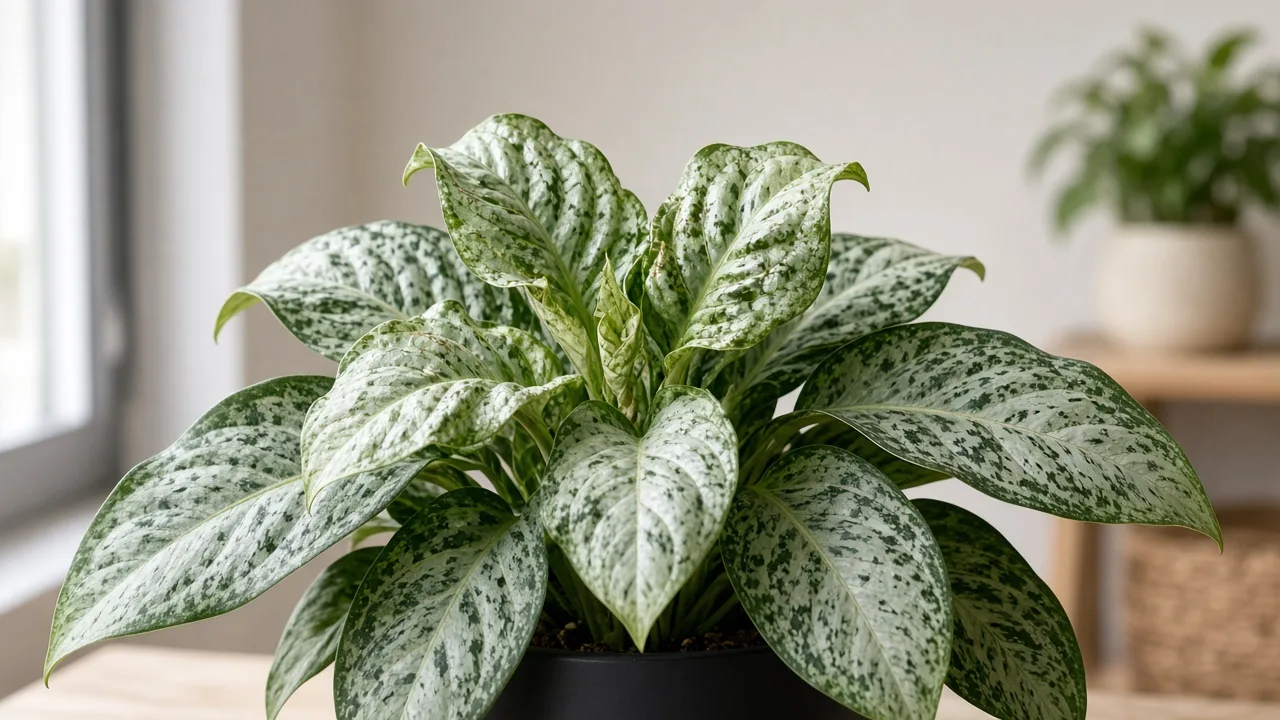
Distorted Leaves on Aglaonema Silver Bay: Causes, Checks & Fixes
This guide covers distorted leaves on Aglaonema Silver Bay. See also the general Distorted Leaves guide, watering, and light pages for this plant.
Distorted Leaves on Aglaonema Silver Bay: Causes, Checks & Fixes
Quick answer
Distorted leaves on your Silver Bay Chinese evergreen (Aglaonema ‘Silver Bay’) are rarely a virus or mystery nutrient problem indoors. On this shade-tolerant cultivar with broad silver-green blades, crinkled or twisted new growth almost always means thrips scarring, mealybugs at the crown, or cold drafts on unfurling tissue. See our distorted leaves guide for general causes—on Silver Bay, damage on newest leaves only is the key clue.
First step: inspect the undersides of the newest unfurling leaves with a magnifier or phone macro. Silvery scars and tiny insects beat repotting guesses.
When to use this page vs other Silver Bay guides
| What you see | Read next |
|---|---|
| Silvery scars on new leaves | Thrips |
| White cotton in axils | Mealybugs |
| Stipple and webbing | Spider mites |
| Cold window twist only | Draft stress—move off glass |
| Holes in mature leaves | Holes in leaves |
This page covers crinkled, puckered, or twisted new foliage. If older leaves only are pale, see pale leaves.
What distorted leaves look like on Silver Bay
Silver Bay carries broad silver-green lance leaves with dark green margins. Distortion shows on unfurling tissue—not random on old mature blades.
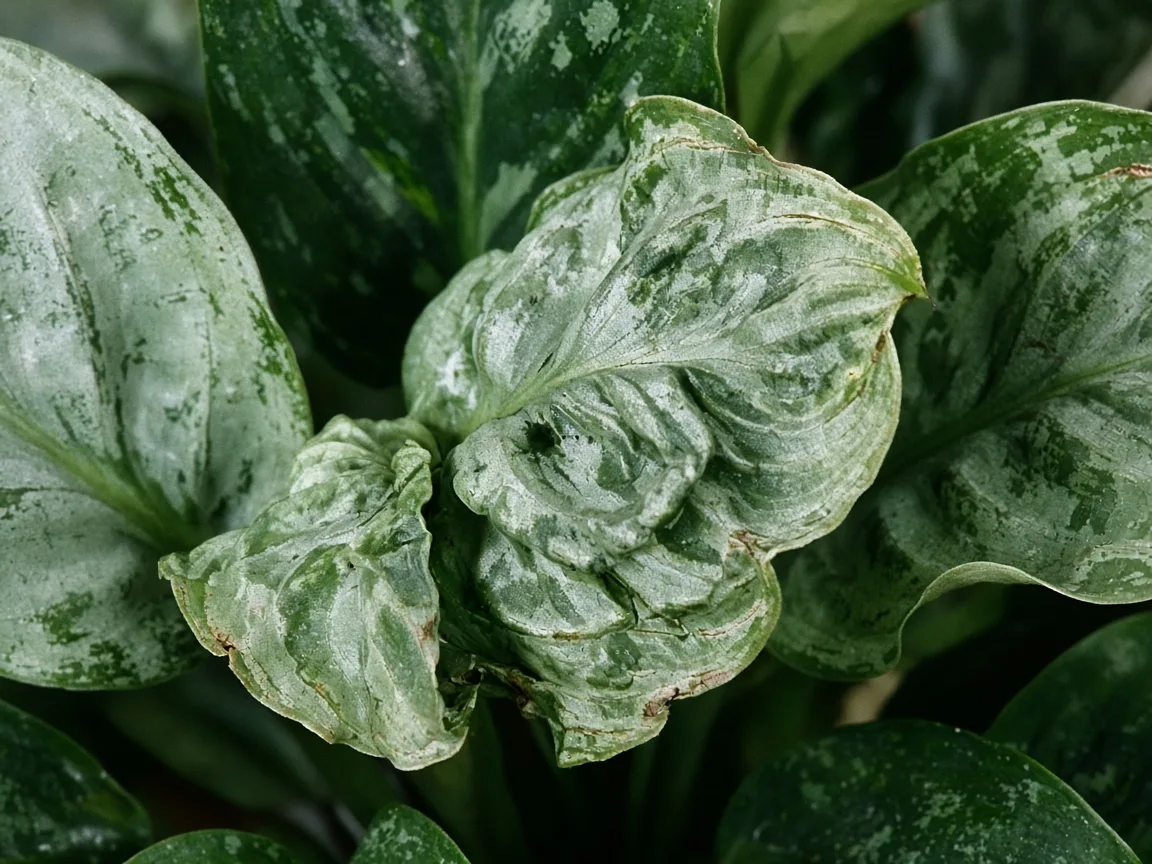
Crinkled unfurling Silver Bay leaf—thrips scar silver tissue before the blade fully expands.
Thrips scarring (most common on new growth):
- Crinkled, puckered, or fan-shaped new leaves that never open flat
- Silvery or bronze scars on unfurling silver tissue
- Western flower thrips feed on soft new blades—mature leaves may look normal
- Black specks (frass) on undersides of distorted leaves
- Spreads to neighboring plants if untreated
Mealybugs at crown:
- Distorted emerging leaves with white cottony fluff in petiole axils
- Sticky honeydew on new growth
- Crown may look stunted while older leaves stay flat
Cold draft curl:
- Twisted or curled tips on newest leaves near winter window glass or AC vent
- No insect signs; damage appears after cold nights
- Aglaonema is cold-intolerant below about 60°F (15°C)
- Older leaves unaffected—only newest flush
Spider mite stippling with rigid distortion:
- Fine stippling on new flush in very dry heated air
- Webbing on undersides—see spider mites
Check newest crown leaves only. Distortion on fresh unfurling tissue with insects present is urgent—isolate immediately.
Why Silver Bay gets distorted leaves
Chinese evergreens prefer warm indoor temperatures and even moisture. Silver Bay’s broad silver new leaves are soft and vulnerable while unfurling—pests target that flush.
Thrips love soft new Aglaonema tissue. They rasp silver cells before the blade hardens, leaving permanent crinkles. Office plants near doors and windows get draft plus thrips hitchhikers on new nursery stock.
Winter window placement. Silver Bay on a cold sill twists new tips overnight when glass temperature drops—owners blame “disease” when it is environmental.
Mealybugs hide in crown density. Multi-stem Silver Bay bushes trap humidity and pests in inner axils—distortion appears before cotton is obvious.
Viral mottle is rare indoors. Do not assume virus until thrips, mealybugs, mites, and drafts are ruled out.
How to confirm the cause
- New growth only? Distortion limited to newest leaves points to thrips, mealybugs, or drafts—not old-leaf nutrient issues.
- Magnifier on undersides. Thrips are tiny; silvery scars confirm feeding even if insects are hard to see.
- Cotton in axils? Mealybugs at crown—dab with alcohol on a swab.
- Window proximity. Twist after cold night without pests = draft—move pot 12 inches back from glass.
- Neighbor plants. Distortion on shelf mates = contagious pest—isolate collection.
- Tap test over white paper. Thrips fall out when disturbed.
Twisted new flush on Silver Bay
Three cultivar-specific details:
Thrips pucker silver new leaves before full expansion. Scars show on the silver center more visibly than on dark margins.
Draft twist on long lance tips near HVAC. Rotate pot weekly; add sheer curtain on winter windows.
Mealybugs at crown distort emerging leaves—inspect axils before repotting for “root problems.”
First fix for Silver Bay
Inspect newest leaf undersides for thrips, mites, or mealybugs; rinse or isolate if you find active pests.
See thrips for silvery scar patterns and treatment.
If no pests: move off cold window glass and draft vents. Aglaonema needs warmth for flat new growth.
Do not repot or fertilize until cause is identified—stressed crown plus fresh mix worsens distortion.
Step-by-step recovery
- Isolate if thrips or mealybugs confirmed—inspect neighbors two weeks.
- Treat pests per species guide—repeat applications as thrips lifecycle requires.
- Move off cold glass and AC vents; maintain medium to bright indirect light.
- Watch next two flushes of new growth. Flat silver blades mean success. Continued crinkle = active pests or drafts.
- Remove only leaves mostly destroyed or harboring pests—keep partial green blades.
Lookalike symptoms
| Pattern | Check | Likely cause |
|---|---|---|
| Crinkled new leaves, silvery scars | Thrips on underside | Thrips |
| White cotton at crown | Axils | Mealybugs |
| Twist near window, no pests | Cold night | Draft—relocate |
| Stipple + webbing | Dry air | Spider mites |
| Uniform pale old leaves | Not new only | Pale leaves |
Mistakes to avoid
- Do not repot distorted Silver Bay before pest check—repotting spreads mealybugs.
- Do not assume virus—thrips are far more common indoors.
- Do not mist new distorted leaves—wet foliage risks leaf spot.
- Do not remove every distorted leaf at once if plant is small.
Recovery timeline
Scarred tissue does not uncurl—judge by the next flush. After pest control or draft removal, expect flat new leaves within three to five weeks in warm indoor conditions. Two clean flushes confirm resolution.
How to prevent distorted leaves next time
- Quarantine new plants two weeks
- Inspect new growth weekly with magnifier
- Keep away from winter window glass and AC vents
- Treat thrips early before they scar multiple flushes
- Maintain even moisture—stressed plants recover slower
When to worry
- Distortion spreads to multiple new flushes despite treatment—re-identify pest
- Crown collapses with wet soil—separate issue; check overwatering
- Mealybugs on many collection plants—treat entire shelf
Related Silver Bay guides
Conclusion
Distorted Silver Bay leaves are pest scarring or draft twist on new growth—inspect unfurling silver blades before repotting or feeding.