Root Rot on Spinach: Signs, Causes & What to Do
Quick answer
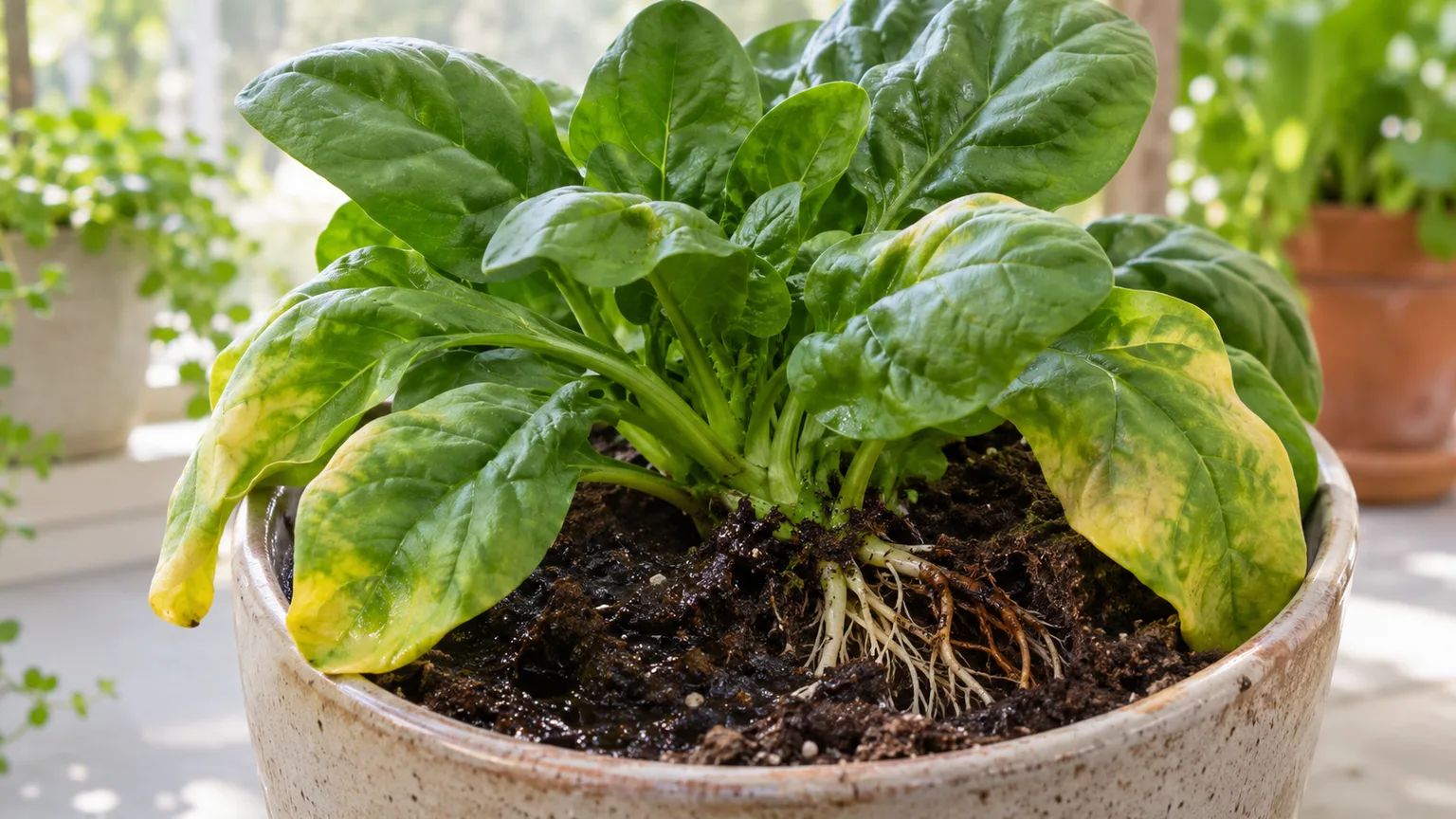
Spinach root rot can cause yellow lower leaves, stunting, and wilting, but wet soil can injure roots without a pathogen. First inspect one affected plant's roots; look for dark, sunken or water-soaked tissue and reduced root hairs before treating the bed.
Root Rot on Spinach: Signs, Causes & What to Do
This guide covers root rot on Spinach. See also the general Root Rot guide, watering, and light pages for this plant.
Root Rot on Spinach: Signs, Causes & What to Do
Search intent
The reader wants to know whether yellowing or wilting spinach has root rot, how to check the roots without misdiagnosing ordinary waterlogging, and what to change before the rest of the crop is affected.
SEO title planning
- Root Rot on Spinach: Signs, Causes & What to Do
- How to Check Spinach Roots for Rot
- Is Your Spinach Wilting in Wet Soil? Check the Roots
Best title: Root Rot on Spinach: Signs, Causes & What to Do — it names the crop and frames the page around diagnosis and action without promising a cure.
Meta description planning
- Check Spinach for root rot, tell wet-soil stress from infection, and protect the rest of a bed or container with practical next steps.
- Learn what spinach root rot looks like below the soil, when to remove a plant, and how to reduce repeat problems in a wet bed.
- Yellow leaves and wilting do not prove root rot. Inspect spinach roots, improve drainage, and know when to ask an extension clinic.
Best description: Check Spinach for root rot, tell wet-soil stress from infection, and protect the rest of a bed or container with practical next steps.
Primary and supporting keywords
- Primary: root rot on spinach
- Supporting: spinach root rot symptoms; spinach wilting in wet soil; spinach dark roots; spinach root disease; spinach damping-off; spinach yellow lower leaves; spinach root hairs; root rot in spinach seedlings; spinach soil drainage; waterlogged spinach bed; spinach crop rotation
NLP entities
Spinacia oleracea; spinach; palak; taproot; fine roots; root hairs; damping-off; Pythium; Rhizoctonia; Fusarium; Aphanomyces; saturated soil; soil drainage; irrigation; plant-disease diagnostic clinic.
People Also Ask questions
- What does root rot look like on spinach roots?
- Can wet soil alone damage spinach roots?
- Why is spinach wilting when its soil is wet?
- How do I check a spinach plant for root rot?
- Can spinach recover after root rot?
- Should I use fungicide on spinach root rot?
- How can I prevent spinach root rot in a raised bed?
E-E-A-T signals
Spinach-specific disease references; an at-home taproot and fine-root inspection; clear distinction between water injury and pathogen infection; no pesticide recommendation without diagnosis; honest recovery limits.
Featured snippet opportunities
- Paragraph: symptoms of root rot on spinach
- List: root signs to check before treating
- Paragraph: how excess irrigation can mimic root rot
- List: steps to reduce repeat risk in spinach beds
Helpful content checklist
This guide separates confirmed root damage from leaf symptoms that have several causes. It gives one first inspection step, crop-specific drainage and rotation guidance, and an escalation point for pathogen identification.
- Root Rot on Spinach: Signs, Causes & What to Do
- How to Check Spinach Roots for Rot
- Is Your Spinach Wilting in Wet Soil? Check the Roots
Root Rot on Spinach: Signs, Causes & What to Do
- Check Spinach for root rot, tell wet-soil stress from infection, and protect the rest of a bed or container with practical next steps.
- Learn what spinach root rot looks like below the soil, when to remove a plant, and how to reduce repeat problems in a wet bed.
- Yellow leaves and wilting do not prove root rot. Inspect spinach roots, improve drainage, and know when to ask an extension clinic.
Check Spinach for root rot, tell wet-soil stress from infection, and protect the rest of a bed or container with practical next steps.
- H1: Root Rot on Spinach: Signs, Causes & What to Do
- H2: Quick answer
- H2: What root rot looks like on spinach
- H2: Why spinach beds and seedlings are vulnerable
- H2: How to inspect one spinach root system
- H2: The first fix when spinach soil stays wet
- H2: When a spinach plant is unlikely to recover
- H2: Prevent root rot in the next spinach sowing
- H2: When to use this page vs other Spinach guides
- H2: Related Spinach guides
- H2: Related tool
Quick answer
Root rot on spinach can cause yellow lower leaves, weak growth, wilting, and plant collapse, but those symptoms alone do not confirm an infection. Lift one symptomatic plant and inspect its roots before changing irrigation across the bed. If the soil is saturated, stop the next watering and let excess water drain; spinach needs steady moisture, not standing water. The Spinach overview gives the normal crop-care context for comparing a stressed plant with healthy growth.
What root rot looks like on spinach
Spinach root rot and damping-off can affect seedlings before they emerge, kill new seedlings, or cause stunting, yellow lower leaves, wilting, and collapse in older plants. Affected roots may be water-soaked or brown to black, and lesions can girdle or darken the taproot; excess water can also damage roots without a pathogen, so wet soil plus wilt is not enough to diagnose disease (UC IPM spinach disease guide).
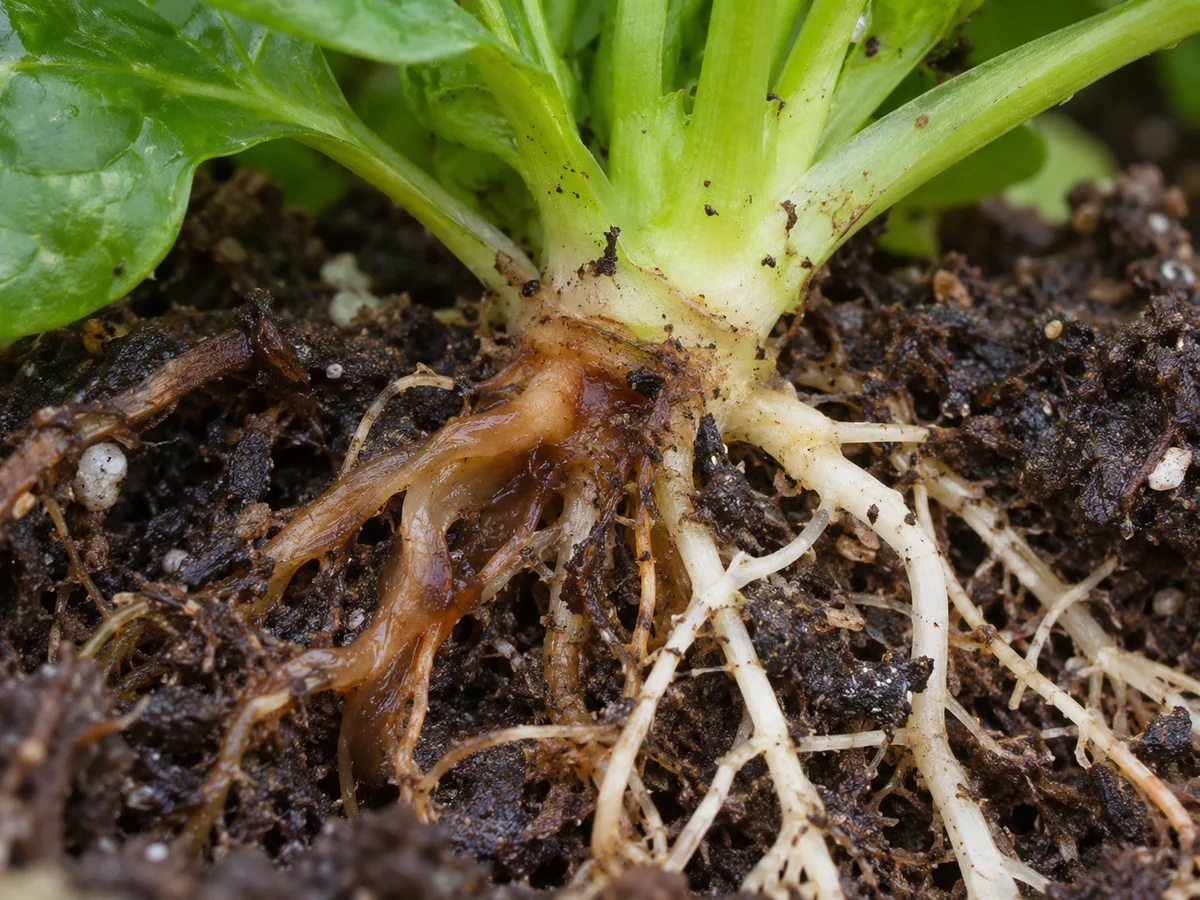
Compare the taproot and fine roots: color and firmness matter more than a yellow leaf by itself.
On spinach, dark sunken root areas with few or no root hairs are stronger warning signs than foliage color alone. The University of Minnesota’s spinach diagnosis guide describes this pattern in a root-rot complex that can involve several organisms (UMN Extension spinach diagnosis). A brown mark inside the taproot can occur with Fusarium root rot, sometimes with few obvious above-ground symptoms; that internal sign is specific to one diagnosis and cannot identify every spinach root problem (Cornell’s spinach Fusarium notes).
Why spinach beds and seedlings are vulnerable
Spinach root rot is a disease complex rather than one single pathogen. UC IPM lists soilborne Fusarium, Pythium, and Rhizoctonia among the organisms involved, while Minnesota’s guide also names Aphanomyces in the spinach root-rot complex. This is why a photo or a brown root cannot tell you which organism is present (UC IPM; UMN Extension).
The field pattern matters. UC IPM associates more severe damping-off with clay or poorly draining soil, low spots, slow drainage, irrigation, and repeated spinach production. Seedlings and newly emerging plants are especially susceptible, but older spinach can also develop root rot. If several plants decline in a damp patch while nearby plants remain firm, note that pattern for diagnosis rather than assuming every wilting rosette has the same cause (UC IPM).
Wet soil can also harm spinach roots without an infection, and the above-ground signs can resemble root rot. Root disease more strongly fits when inspection shows sunken, girdled, or water-soaked root lesions, but only laboratory diagnosis can distinguish many soilborne problems with confidence. Wisconsin Extension cautions that very few plant diseases can be diagnosed accurately by eye and recommends its plant-disease clinic for uncertain cases (UW Extension root-rot guidance).
For the general explanation of root decay, see the root-rot guide. On spinach, the practical question is whether the root zone has remained saturated and whether the taproot shows damage—not simply whether a leaf has gone limp.
How to inspect one spinach root system
Choose one plant with early symptoms from the edge of the affected area. Lift it gently with surrounding soil rather than pulling the leaves, then loosen enough soil to see the taproot, root crown, and fine roots. Keep an unaffected plant nearby for comparison if the crop is small.
Look for dark, sunken or water-soaked tissue, girdling around the taproot, roots with few root hairs, and soft sections that break down when handled (UW Extension root-rot signs). Healthy-looking roots should remain firm (Gardening Know How root inspection guide); if the root system is mostly intact and the surface soil is dry, check the crop’s water and weather conditions before labeling it root rot. Root-rot symptoms overlap with other stresses, so do not use smell, leaf color, or a single damaged root as proof. Practical root inspection can narrow the issue, but a plant clinic is the better next step when a valuable bed is declining or the signs do not fit one clear pattern.
The first fix when spinach soil stays wet
First, stop the next irrigation in the saturated area and let water move out of the root zone. Do not try to “dry out” the entire crop by leaving it without water for a long stretch; resume watering when the root zone is no longer saturated. Check the bed or pot again before the following watering and note whether the soil remains wet longer than the surrounding area.
For container-grown spinach, confirm that the pot has open drainage and is not sitting in water. For a garden bed, clear blocked drainage paths and avoid directing irrigation into a low spot. If the soil drains poorly across the whole bed, use a better-drained site or raised bed for the next sowing rather than repeatedly watering by the calendar. UC IPM recommends well-drained soil and careful irrigation to prevent flooding and saturation in spinach (UC IPM management notes); Epic Gardening also cautions that repeatedly disturbing hidden roots is impractical, so inspect one affected plant rather than excavating the entire crop (Epic Gardening root-rot guide).
Do not apply a fungicide because a leaf is yellow or a root is brown. Different organisms can cause spinach root rot, and Wisconsin Extension advises identifying the pathogen before choosing a chemical treatment. If several plants are affected or you need to decide whether a treatment is appropriate, ask a local extension office or diagnostic clinic first (UW Extension).
When a spinach plant is unlikely to recover
If the crown is soft, most of the taproot is girdled or rotted away, or the plant has collapsed, remove that plant with its damaged roots instead of leaving it in the row. UC IPM describes severe cases in which nearly all roots are girdled or rotted off and the plant collapses; recovery is not something to promise in that state (UC IPM). Keep soil from a symptomatic plant away from healthy beds and clean tools before using them elsewhere; Wisconsin Extension advises gardeners to limit moving contaminated soil and plant material between garden areas (UW Extension).
If only a small section of root is damaged and the crown remains firm, correct the drainage problem and watch new growth and neighboring plants rather than repeatedly lifting the same spinach. Continued upright growth and a lack of new decline are useful signs to monitor. The Spinach watering guide helps you check moisture without leaving the soil saturated, and the Spinach soil guide covers drainage and mix choices.
Prevent root rot in the next spinach sowing
Choose a site that drains freely and avoid placing spinach in a low area where water lingers after irrigation or rain. UC IPM recommends not planting consecutive spinach crops and practicing crop rotation where damping-off and root rot are problems. Rotate the bed with crops outside the spinach family and remove declining plants rather than letting repeated crops build on a history of disease.
Keep irrigation even, but do not flood the seedbed. Spinach seedlings are especially vulnerable, so use a bed or container that drains promptly and avoid watering again while the root zone is still saturated. If root rot recurs in the same area, send a representative plant and roots to a local diagnostic clinic; the organism matters when deciding what to change next. When the crop wilts despite moist soil, compare the pattern with the Spinach light guide and the Spinach problems hub before treating the whole bed for root rot.
When to use this page vs other Spinach guides
Use this page when spinach wilts or yellows while the root zone stays wet and the roots show dark or sunken damage. If the roots are firm and the soil is dry, start with the Spinach watering guide; if you cannot find damaged roots, use the Spinach problems hub to compare other causes. The Spinach overview gives the crop’s usual growing conditions for context.
Related Spinach guides
- Spinach overview — normal growth and seasonal growing context.
- Spinach soil guide — drainage and root-zone conditions.
- Spinach watering guide — steady moisture without saturation.
- Spinach light guide — compare heat and light stress with wet-root symptoms.
- Spinach problems hub — route to another diagnosis when root signs are absent.
Related tool
Use the Root Rot Risk Checker to review drainage and moisture clues before changing the whole bed.
FAQ 1 Question: How can I tell whether my spinach has root rot? Answer: Lift one symptomatic plant and inspect the taproot and fine roots. Dark, water-soaked or sunken lesions, girdling, and loss of root hairs support root rot, but only a diagnostic lab can identify the pathogen.
FAQ 2 Question: Can overwatering make spinach look as if it has root rot? Answer: Yes. Saturated soil can damage roots even when no disease-causing organism is involved, and the leaves may yellow or wilt in either case. Check the roots and drainage instead of diagnosing from foliage alone.
FAQ 3 Question: Can a spinach plant recover from root rot? Answer: A plant with limited root injury may resume growth after the soil drains and conditions improve, but a collapsed crown or most of the taproot rotted away is a poor recovery sign. Remove badly affected plants and protect healthy spinach nearby.
FAQ 4 Question: Should I use fungicide on spinach with root rot? Answer: Do not choose a fungicide from leaf symptoms or a photograph. Spinach root rot can involve different organisms, so ask a local extension service or plant clinic to identify the cause before considering a treatment for an edible crop.
FAQ 5 Question: How do I prevent root rot in spinach next season? Answer: Grow spinach in a site or container that drains freely, avoid flooding the bed, and rotate away from consecutive spinach crops where root rot has occurred. Keep the root zone moist without leaving it saturated.