Yellow Leaves on Spinach: Causes, Checks & Fixes
Quick answer
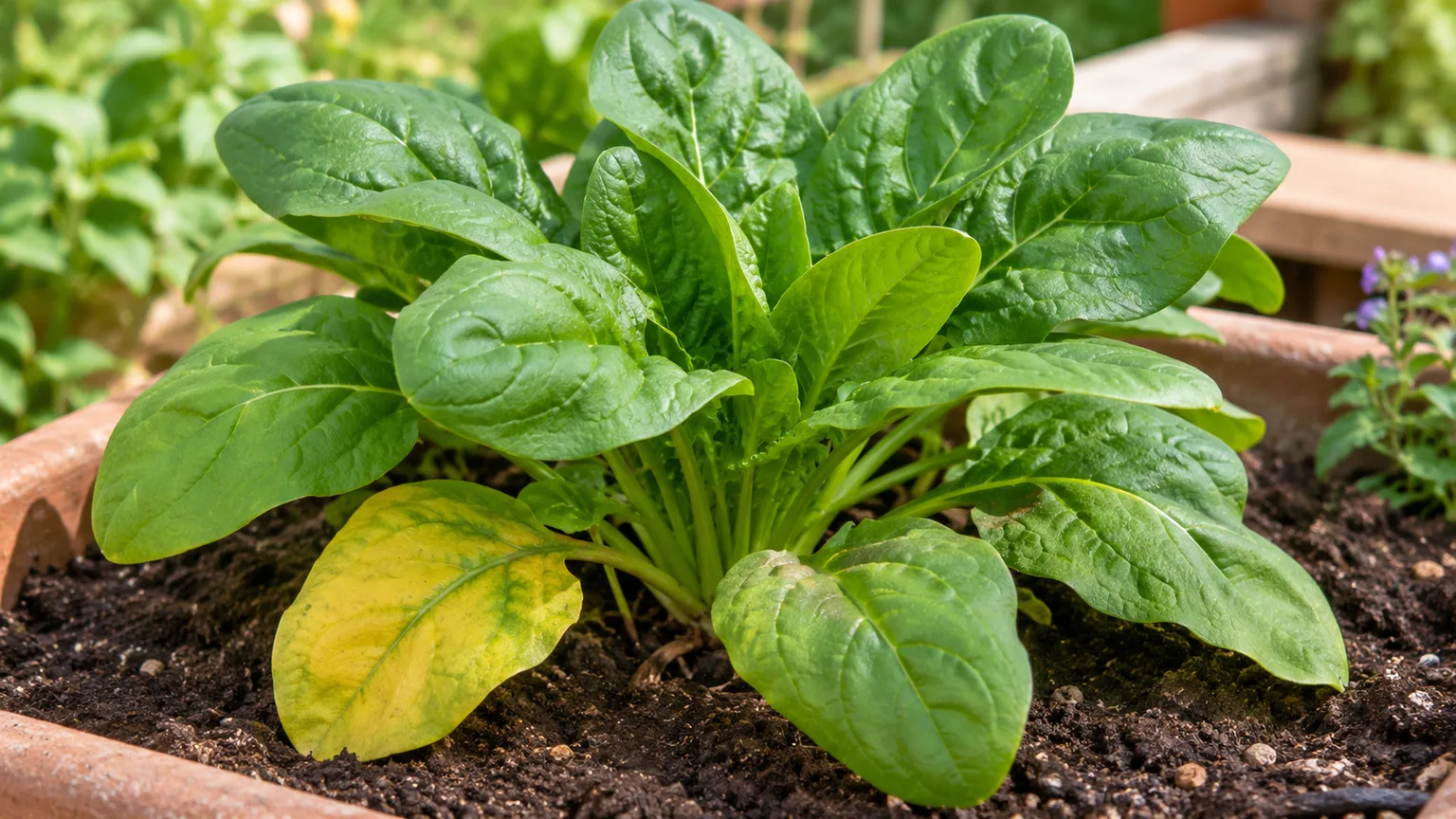
On spinach, first note whether yellowing is limited to an old outer leaf, appears as distinct spots, or affects several leaves across the rosette. Check the soil and leaf undersides before feeding; wet-weather yellow spots with a purplish underside can indicate downy mildew, while a tall flower stalk means the cool-season crop is bolting.
Yellow Leaves on Spinach: Causes, Checks & Fixes
This guide covers yellow leaves on Spinach. See also the general Yellow Leaves guide, watering, and light pages for this plant.
Yellow Leaves on Spinach: Causes, Checks & Fixes
Search intent: A spinach grower wants to know why leaves are yellow, how to distinguish crop aging, downy mildew, root-zone stress, or a nutrient issue, and what to check before changing care.
SEO title planning:
- Why Are My Spinach Leaves Turning Yellow? Check These Signs
- Yellow Leaves on Spinach: Causes, Checks & Fixes
- Save Your Spinach Crop by Reading Yellow Leaves Correctly
Best title: Yellow Leaves on Spinach: Causes, Checks & Fixes — it names the crop and symptom while promising practical diagnosis rather than a single assumed cause.
Meta description planning:
- Diagnose yellow spinach leaves by checking the rosette, soil moisture, and leaf undersides for clues of aging, downy mildew, or root stress.
- Learn why spinach leaves turn yellow, when yellow spots may signal downy mildew, and what to check before watering or feeding.
- Separate normal older-leaf decline from disease or care stress and choose the safest first step for yellowing spinach.
Best description: Learn why spinach leaves turn yellow, when yellow spots may signal downy mildew, and what to check before watering or feeding.
Primary keyword: yellow leaves on spinach Supporting keywords: spinach leaves turning yellow; yellow spinach leaves; spinach downy mildew symptoms; spinach yellow spots; spinach lower leaves yellow; spinach overwatering signs; spinach nutrient deficiency; spinach bolting; spinach soil drainage; spinach leaf chlorosis
NLP entities: Spinacia oleracea; spinach rosette; cotyledons; outer leaves; downy mildew; Peronospora effusa; chlorosis; leaf underside; soil moisture; drainage; nitrogen; soil test; bolting; flower stalk
People Also Ask questions: Why are older spinach leaves yellow? Can wet soil yellow spinach? How do I spot downy mildew on spinach? Can nutrient deficiency cause yellow spinach leaves? Should yellow spinach leaves be removed? Does heat make spinach turn yellow?
E-E-A-T signals: The guide starts with leaf age and underside inspection, separates symptoms from suspected causes, cites extension and crop-disease sources, and avoids treating yellow color alone as proof of deficiency.
Featured snippet opportunities:
- Paragraph: first checks for yellow spinach leaves
- List: downy mildew clues on spinach
- List: leaf-age patterns that help narrow nutrient issues
- Paragraph: what a bolting spinach plant looks like
Helpful content checklist: This page connects yellowing to spinach’s low rosette, cool-season crop cycle, and crop-specific downy mildew. It gives readers a safe inspection order and explains when to use soil testing instead of guessing at fertilizer.
- Why Are My Spinach Leaves Turning Yellow? Check These Signs
- Yellow Leaves on Spinach: Causes, Checks & Fixes
- Save Your Spinach Crop by Reading Yellow Leaves Correctly
Yellow Leaves on Spinach: Causes, Checks & Fixes
- Diagnose yellow spinach leaves by checking the rosette, soil moisture, and leaf undersides for clues of aging, downy mildew, or root stress.
- Learn why spinach leaves turn yellow, when yellow spots may signal downy mildew, and what to check before watering or feeding.
- Separate normal older-leaf decline from disease or care stress and choose the safest first step for yellowing spinach.
Learn why spinach leaves turn yellow, when yellow spots may signal downy mildew, and what to check before watering or feeding.
- H1: Yellow Leaves on Spinach: Causes, Checks & Fixes
- H2: Quick answer
- H2: What yellowing looks like across a spinach rosette
- H3: Check leaf age and pattern
- H2: Check the underside for spinach downy mildew
- H2: Read moisture and drainage around spinach’s shallow roots
- H2: Decide whether nutrient stress is plausible
- H2: Notice when spinach is bolting
- H2: The first fix: correct the condition the evidence supports
- H2: Recovery and harvest decisions
- H2: Prevent yellowing in the next spinach sowing
- H2: When to use this page vs other Spinach guides
Quick answer
Yellow leaves on spinach do not point to one cause. Start by checking whether a single older outer leaf is fading, several leaves have distinct yellow spots, or the whole rosette is losing color. Then feel the soil and turn a marked leaf over before watering or feeding. Spinach grows as a low rosette; young seedlings have shallow roots, while established plants can develop a longer taproot, as described in Penn State’s spinach guide. Moisture, airflow through crowded leaves, and the crop’s cool-season timing all affect what yellowing means. For a general symptom comparison across plants, see the yellow-leaves guide; this page narrows those checks to spinach.
What yellowing looks like across a spinach rosette
A single old outer leaf that fades while the center remains green is a different pattern from yellowing that spreads across several leaves. Spinach is harvested from the outside in, leaving its central growing point to produce more leaves; Penn State Extension recommends harvesting outer leaves while keeping the rosette intact. If just one worn leaf is yellow, remove it cleanly and monitor the inner leaves. If new growth also pales, or several leaves decline together, inspect the plant and bed before treating.
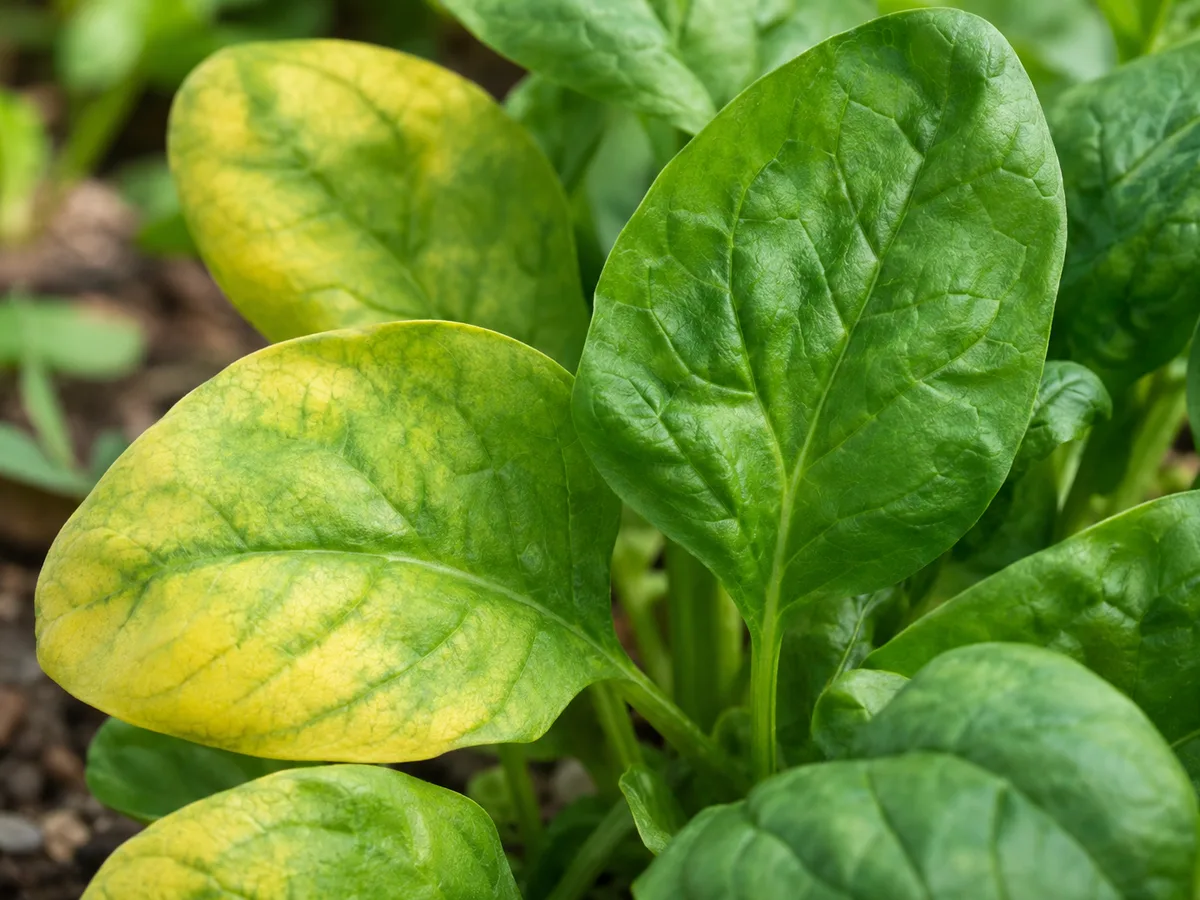
Compare older outer leaves with the newer center before deciding that the whole spinach plant is failing.
The location of yellowing can narrow the possibilities but cannot identify a nutrient shortage on its own. Nutrient-related chlorosis may start on older or younger leaves depending on which nutrient is unavailable, and different stresses can look similar. UConn Extension describes this leaf-age pattern as an initial clue and recommends confirming suspected nutrient problems with soil or plant-tissue testing rather than diagnosing from color alone.
Why leaf age matters on a spinach rosette
Because spinach is a short-lived leafy annual, older harvest leaves and new center growth should be read separately. If yellowing stays on one outer leaf and the center keeps producing normal leaves, treat it as an isolated leaf decline rather than proof of a crop-wide problem. If the pattern moves inward or the plant stops making healthy leaves, treat it as a crop-wide stress signal and check moisture, leaf undersides, and the crown.
Check the underside for spinach downy mildew
Look for separate yellow patches or spots on the upper surface, then turn the same leaf over. UC IPM describes yellow lesions on leaves of any age, purple growth beneath them, and cool, wet weather with a dense spinach canopy as signs and conditions linked to downy mildew in its spinach disease guide. A yellow leaf without spots or underside growth is not enough to diagnose downy mildew.
If the underside has purple or whitish growth and several leaves show expanding spots after damp weather, remove badly affected foliage and keep the bed clean. Water the soil rather than wetting leaves, and give crowded rosettes enough space for air to move. Utah State Extension recommends drip irrigation to reduce leaf dew for downy-mildew management. Gardening Know How’s spinach-specific overview describes underside growth and recommends crop cleanup and resistant seed for future spinach sowings. For the broader disease pattern and general management context, see the downy mildew guide.
Do not use a fungicide based on yellowing alone; confirm the disease from the leaf pattern first. If spots keep spreading through several rosettes, ask your local extension office for current spinach-specific control options.
Check moisture and drainage around young spinach roots
Spinach needs steady moisture, but its bed or container should still drain. Penn State Extension recommends keeping the soil consistently moist and watering the soil rather than the foliage; spinach roots are shallow when seedlings are small. Check below the surface, not just the dry crust. If the root zone is dry, water evenly. If it is saturated, pause irrigation and check for blocked drainage, compacted soil, or a container without open drainage holes.
A wet root zone and a wilted plant deserve attention, but yellowing by itself does not prove overwatering. A spinach grower’s soil-test case documents several possible causes of yellow leaves, including poor drainage, compacted soil, water extremes, temperature stress, nutrient issues, and disease. Compare the soil condition with the leaf pattern before changing the watering schedule. If the bed is poorly drained, improve the growing conditions for the next sowing rather than adding repeated surface watering to compensate. A grower case of spinach yellowing case illustrates why a single symptom should not trigger a single assumed fix.
Decide whether nutrient stress is plausible
Nutrient stress becomes more plausible when several leaves show a consistent pattern and the soil history supports it, such as repeated crops without compost or a known pH problem. Yellowing that begins on older leaves can fit some mobile-nutrient shortages, while a pattern on young leaves can fit other deficiencies; those are clues, not a spinach-specific diagnosis. UConn Extension cautions that drought, excess water, disease, pests, and other stresses can resemble nutrient deficiency. A soil or plant-tissue test is a better next step than adding nitrogen or a mixed fertilizer by guesswork.
If a test confirms a deficiency, use a fertilizer appropriate for edible vegetables and follow its label. Avoid heavy feeding as a rescue treatment: excess nutrients can also harm plants, and a damaged leaf will not become useful again just because the soil was amended. UConn Extension recommends testing before applying nutrients when the pattern is uncertain. For broader crop-care context, start with the Spinach overview and check the soil guide.
Notice when spinach is bolting
A tall central stalk rising from the rosette means spinach is moving into flowering rather than producing only harvest leaves. Penn State Extension notes that warm weather and longer days push spinach to bolt, after which leaves can become bitter and the crop’s productive window ends. This differs from a patchy disease pattern: bolting changes the plant’s shape as well as the quality of its leaves. When the stalk is rising, harvest sound leaves promptly and plan a new sowing for the next cool growing window instead of trying to restore the old rosette.
The first fix: correct the condition the evidence supports
Make one change that matches what you found. For dry soil, water the root zone thoroughly and keep checking the shallow bed or container so it does not dry out again. For saturated soil, stop adding water and restore drainage. For spotted leaves with underside growth, remove badly affected leaves, keep foliage dry, and avoid crowding. For an unconfirmed nutrient concern, test the soil before feeding.
Do not strip every yellow leaf, add fertilizer, and change the watering schedule at the same time. That makes it difficult to tell whether the condition is improving and can add stress to a spinach crop that is already near the end of its cool-season window. If only outer leaves are affected and new growth remains healthy, harvest or remove the old leaves and watch the center.
Recovery and harvest decisions
Do not use an old yellow leaf as the only recovery measure. Better signs are new leaves emerging normally from the center, no increase in spotted foliage, and soil that stays moist without remaining saturated. With suspected downy mildew, judge whether the disease is still advancing on new leaves rather than expecting old spots to disappear.
Harvest firm, unaffected outer leaves while they are tender, leaving the central growing point for continued leaf production as Penn State Extension describes for spinach harvest. If the plant has bolted, the crop is nearing its natural finish; harvest sound leaves promptly and sow another batch when cool conditions return.
Prevent yellowing in the next spinach sowing
Start true spinach in its cool season and use a fertile, well-drained bed or a roomy container with drainage. Keep moisture even around its shallow roots, thin crowded seedlings, and water at the soil line so foliage does not stay damp. Penn State Extension recommends spacing plants and watering soil to help reduce conditions associated with disease. Where yellowing has recurred, record which leaves were affected and use a soil test before adjusting pH or fertilizer. If warmer days arrive and a flower stalk begins, treat that as the crop’s seasonal signal rather than a nutrient emergency.
When to use this page vs other Spinach guides
Use this page when the main sign is yellowing and you need to compare leaf age, moisture, disease, and crop stage. If the soil is wet and the plant is wilting, use the Spinach watering guide; if pale growth follows a major change in sun exposure, check the Spinach light guide. The Spinach problems hub helps route you when the main symptom is not yellowing.
Related tool
Use the Plant Problem Diagnosis Tool to compare yellowing with other spinach symptoms before changing several conditions at once.
FAQ 1 Question: Why are the older outer leaves of my spinach turning yellow? Answer: One aging outer leaf can be less concerning than yellowing that moves through the rosette. Remove a leaf only if it is declining, then check whether new inner leaves remain healthy and whether the soil is staying evenly moist.
FAQ 2 Question: Can overwatering make spinach leaves turn yellow? Answer: It can be one possibility, especially if the bed or container stays saturated and the plant wilts despite wet soil. Check drainage and the crown before adding water or fertilizer.
FAQ 3 Question: How do I tell spinach downy mildew from a nutrient problem? Answer: Downy mildew often begins as yellow spots and may show purplish growth on the leaf underside in cool, wet conditions. Nutrient problems more often follow a broader leaf-age pattern; look at several leaves and confirm with a soil or tissue test before applying nutrients.
FAQ 4 Question: Will yellow spinach leaves turn green again? Answer: A leaf that has yellowed substantially usually will not regain its original color. Judge recovery by whether the center continues producing healthy leaves and whether yellowing stops spreading.
FAQ 5 Question: Should I harvest spinach when it starts turning yellow? Answer: Harvest sound leaves while they are still tender, but discard leaves that are diseased, slimy, or badly damaged. If the plant is sending up a central flower stalk, the crop is bolting and its remaining leaves may become bitter.