Light

How Much Sun Does Spinach Need? Full Sun, Shade & Grow
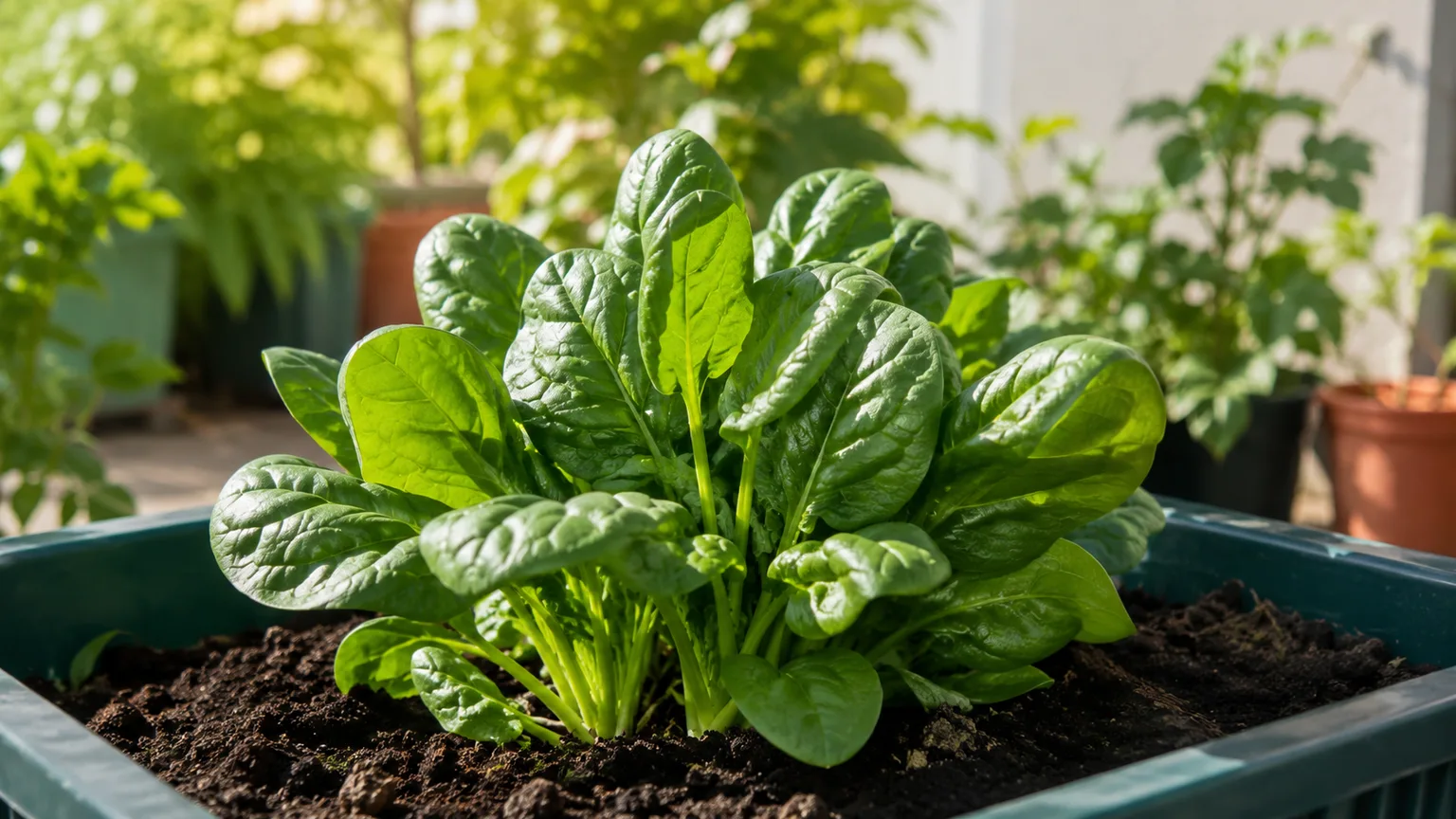
Spinach houseplant

How Much Sun Does Spinach Need? Full Sun, Shade & Grow Lights

How Much Sun Does Spinach Need? Full Sun, Shade & Grow Lights

Spinach Light Needs: The Quick Answer

Spinach (Spinacia oleracea) is a cool-season annual that performs best with 6 or more hours of direct sun in spring and fall, tolerates 3–4 hours with reduced yield, and benefits from afternoon shade once temperatures climb above 21 °C (70 °F) to delay bolting. For indoor grow lights, target 12–14 hours daily at 150–250 µmol/m²/s PPFD for a Daily Light Integral (DLI) of 14–20 mol/m²/day — and never exceed 16 hours of light, because long photoperiods trigger flowering Virginia Tech Extension Cornell CEA NC State Extension.

The practical rule: match light to the season, not the label. A spring crop in April wants full sun. The same variety sown in late May needs shade cloth or an east-only exposure. A fall crop in September wants full sun again. An indoor crop under lights needs a timer set to 13 hours, not 18. Spinach reads day length and temperature together — give it the wrong combination and it bolts regardless of how much fertilizer or water you provide Penn State Extension RHS Utah State Extension.

Seasonal Reality: Why “Full Sun to Part Shade” Misses the Point

Plant tags and seed packets almost always list spinach as “full sun to partial shade.” That range is technically true but practically misleading. It describes the species’ range of tolerance, not the conditions for quality harvests. In cool weather (10–20 °C / 50–68 °F), full sun drives rapid leaf expansion, thick texture, and sweet flavor. In warm weather, the same full sun accelerates the two things that ruin spinach: bolting and bitterness. The gardener’s job is not to find a single static spot that satisfies the label. It is to manage light dynamically — through site selection, shade cloth, container mobility, and succession sowing — so the plant experiences the light it needs for the phase it’s in University of Maryland Extension Clemson HGIC.

Survival vs. Optimal: The 3-Hour vs. 6-Hour Threshold

NC State Extension notes spinach “can tolerate 3 to 4 hours of sun a day” and is “one of the more shade-tolerant vegetables” NC State Extension. Tolerance, however, is not the same as productivity. At 3–4 hours of direct sun with bright ambient light, spinach will survive and produce some leaves — but they will be thinner, paler, slower to mature, and the total harvest per plant drops 30–50% compared to 6+ hours. In deep shade (<3 hours), the plant enters survival mode: leaves elongate (etiolate), chlorophyll darkens as the plant maximizes light capture, and the rosette opens up. It stays alive. It does not yield a salad bowl. If your only site is 3–4 hours, grow spinach anyway — but sow 2–3× the seeds, harvest at baby-leaf stage, and accept a shorter picking window Wisconsin Horticulture University of Maryland Extension.

Measuring Light in Your Garden: Shadow Test and Phone Apps

You do not need a PAR meter to make good placement decisions. On a clear day, hold your hand 30 cm (12 in) above the soil where you plan to sow. Sharp-edged shadow = direct sun. Soft, fuzzy shadow = bright indirect / dappled. No discernible shadow = deep shade. Count the hours the spot receives a sharp shadow. For more precision, a smartphone lux meter app (e.g., Photone, Lux Light Meter) gives a rough proxy: 20,000+ lux ≈ full sun; 10,000–20,000 lux ≈ partial shade; <5,000 lux ≈ deep shade. Remember lux measures human-perceived brightness, not photosynthetic photons — but for comparative site assessment, it works Iowa State Extension University of Missouri IPM.


Seasonal Light Strategy: Spring, Fall, Winter

Spring: Full Sun Early, Afternoon Shade Late

Early spring (soil 7–15 °C / 45–59 °F): Full sun, 6–8+ hours. The low sun angle and cool temperatures mean high light without heat stress. This is the window for maximum leaf thickness and sugar content. Sow ‘Bloomsdale Long Standing’, ‘Space’, or ‘Tyee’ in the brightest bed you have Cornell Extension.

Late spring (air >21 °C / 70 °F, day length >13 hours): Morning sun + afternoon shade. The combination of long photoperiod and warm soil is the primary bolting trigger. An east-facing bed, a spot shaded by taller crops (peas, fava beans) after 1 PM, or 30% shade cloth deployed at noon extends harvest by 1–2 weeks Penn State Extension Johnny’s Selected Seeds. Bolt-resistant cultivars (‘Palco’, ‘Corvair’, ‘Apollo’) buy additional days but cannot override midsummer conditions.

Fall: Full Sun Throughout (Shortening Days Are Your Friend)

Fall is the most forgiving season for spinach light. Full sun, 6+ hours, no shade needed. Shortening days (photoperiod <12 hours) actively suppress flowering, and cooling temperatures improve leaf texture and sweetness. Sow 6–8 weeks before first frost. ‘Winter Bloomsdale’, ‘Giant Winter’, and ‘Medania’ are bred for this window Utah State Extension RHS. In zones 7+, fall-sown spinach often overwinters under row cover for March harvest.

Winter: Maximum Sun, Cold Frame or Tunnel for Zones 6+

In mild winters (zones 7–10), spinach in a cold frame or low tunnel gets whatever sun is available — the more, the better. Growth slows below 5 °C (41 °F) but resumes vigorously in late winter. In colder zones, a south-facing cold frame with clear plastic captures enough light for slow but steady production. Do not shade winter crops; light is the limiting factor, not heat Garden UK RHS.

Summary Table: Light Targets by Season and Region

SeasonRegion / ZoneTarget Direct SunShade StrategyKey Cultivars
Early SpringAll zones6–8+ hoursNone’Bloomsdale’, ‘Space’, ‘Tyee’
Late SpringZones 5–74–6 hours (AM only)30% shade cloth at noon’Palco’, ‘Corvair’, ‘Apollo’
Late SpringZones 8+3–4 hours (AM only)50% shade cloth + container mobilitySwitch to heat-tolerant substitutes
FallAll zones6+ hoursNone’Winter Bloomsdale’, ‘Giant Winter’, ‘Medania’
WinterZones 7+Max availableNone (cold frame)‘Giant Winter’, ‘Medania’
Indoor (lights)Any12–14 hrs LEDN/AAny baby-leaf type

Sources: Cornell Extension Penn State Extension Utah State Extension RHS Johnny’s Selected Seeds Garden UK


Partial Shade and Shade Tolerance: The Honest Truth

Why Spinach Handles Shade Better Than Most Vegetables

Spinach evolved in the Caucasus and Central Asia as a winter-annual rosette, completing its life cycle under the weak, low-angle sun of early spring. Its broad, thin leaves and high chlorophyll content per unit leaf area are adaptations for efficient light capture in dim conditions Missouri Botanical Garden. Unlike fruiting crops (tomatoes, peppers) that need high photon flux to build reproductive structures, spinach only needs to build leaf tissue — a lower energy budget. This makes it genuinely one of the few vegetables that can produce a usable crop at 3–4 hours of direct sun, provided the rest of the day brings bright ambient sky light (open shade, not north-wall shadow).

Yield and Quality Trade-offs at 3–4 Hours

At 3–4 hours direct sun:

  • Leaf thickness decreases 20–30% (thinner leaves wilt faster post-harvest)
  • Time to baby leaf increases from ~28 to ~35–40 days
  • Total yield per plant drops 30–50%
  • Bolting resistance may actually improve slightly in warm weather because lower light = cooler canopy = slower soil warming
  • Flavor is milder, less “spinachy” (lower sugar and oxalate concentration)

If you have a 3–4 hour site, sow thick, harvest young, and resow often. Treat it as a baby-leaf crop, not a mature-leaf crop. See /plants/spinach/propagation/ for baby-leaf seeding rates and variety picks Wisconsin Horticulture University of Maryland Extension.

When Shade Becomes a Strategy, Not a Compromise

In late spring, intentional shade is a yield-extending tactic, not a compromise. A bed that gets full sun until 1 PM, then dappled shade from a trellised crop or 30% shade cloth, often out-yields a full-sun bed that bolts in 3 weeks. The shaded plants stay vegetative longer, giving you 4–5 harvests instead of 2. This is the “afternoon shade” strategy Penn State and Clemson both recommend for extending the spring window Penn State Extension Clemson HGIC.


Light, Heat, and Bolting: The Triple Trigger

Photoperiod Threshold: >14 Hours Triggers Flowering

Spinach is an obligate long-day plant: flowering is initiated when the photoperiod exceeds approximately 14 hours (varies slightly by cultivar). In the northern hemisphere, this occurs from mid-May through July at latitudes above 40° N. Below that latitude, the threshold is reached earlier or may not be reached at all in winter RHS University of Missouri IPM HortScience. Crucially, photoperiod is perceived by the leaves — shading the plant does not “hide” day length from the plant if the sky is bright. Only shortening the actual light period (e.g., with a blackout cloth on a tunnel) prevents photoperiod induction.

Temperature Synergy: Warm Soil + Long Days = Bolt

Photoperiod alone is not enough. Soil temperature above 24 °C (75 °F) synergizes with long days to accelerate bolting dramatically. At 18 °C soil, a 15-hour day may take 4–5 weeks to trigger visible bolting. At 26 °C soil, the same day length triggers bolting in 2–3 weeks Penn State Extension University of Missouri IPM HortScience. This is why shade cloth works: it reduces soil temperature (by 3–6 °C under 30% cloth) more than it reduces photoperiod perception. The plant still “sees” long days, but the thermal trigger is dampened.

Moisture Stress as the Third Accelerant

Drought stress — even brief — compounds the light/heat signal. Spinach’s shallow feeder roots (top 5–10 cm) dry fast in warm, bright conditions. Water stress signals “unfavorable conditions, reproduce now.” Consistent moisture is therefore a bolting delay tactic as much as a growth requirement University of Missouri IPM RHS. See /plants/spinach/watering/ for soil-check methods and seasonal schedules.

Cultivar Differences: Bolt-Resistant Types Buy 10–14 Days

‘Tyee’, ‘Space’, ‘Palco’, ‘Corvair’, ‘Apollo’, and ‘Melody’ are bred for slower bolting under long days. In university trials, they typically extend the harvest window by 10–14 days compared to standard types like ‘Bloomsdale’ under identical late-spring conditions Johnny’s Selected Seeds RHS HortScience. They are not “non-bolting” — they simply raise the temperature/day-length threshold. Use them for your last spring sowing, not as a license to ignore the calendar. See /plants/spinach/propagation/ for full variety tables.


Container Growing: Mobility as a Light Tool

Repositioning Through the Day: Morning Sun, Afternoon Shade

Containers turn light management from a site-selection problem into a daily decision. A 30 cm (12 in) pot on a wheeled caddy or lightweight saucer can be in full sun 7 AM–1 PM, then moved to dappled shade for the afternoon. This single habit — feasible for 1–3 pots — captures the spring full-sun growth boost while avoiding the late-day heat that drives bolting. In fall, leave the pot in full sun all day. In winter, park it against a south wall for maximum light and reflected heat University of Maryland Extension Penn State Extension.

Balcony and Patio Microclimates: Reflected Light, Wind, Heat

  • South/west balcony with concrete/stone: Reflected heat can raise pot temperature 5–8 °C above air temp. Shade cloth or east-only exposure essential by May.
  • East balcony: Ideal for spring — gentle morning sun, natural afternoon shade.
  • North balcony with open sky: Bright indirect all day. Works for baby leaf (3–4 hour equivalent). Add a grow light for mature leaves.
  • Wind: Accelerates dry-down. Check pots twice daily in sun+wind. See /plants/spinach/watering/.

Pot Size and Soil Volume: Why They Affect Light Tolerance

A 1-gallon (4 L) pot in full sun heats faster and dries faster than a 5-gallon (19 L) pot or in-ground bed. Small containers amplify heat stress, making afternoon shade more critical, not less. Minimum container for spinach: 30 cm wide × 30 cm deep (≈15 L) to buffer root-zone temperature and moisture. See /plants/spinach/soil/ for mix recipe and /plants/spinach/repotting/ for container-upgrading signs University of Missouri IPM Penn State Extension.


Grow Lights for Indoor Spinach

DLI and PPFD Targets: What the Research Says

Controlled-environment research (Cornell CEA, Virginia Tech, commercial hydroponics) establishes clear targets for spinach:

Practical translation: A 20–30 W full-spectrum LED bar (e.g., 4000K–6500K, high CRI) at 15–20 cm (6–8 in) above a 30×30 cm tray delivers ~180 µmol/m²/s. Run 13 hours → DLI ≈ 8.4 mol/m²/day. That is below the 14 minimum for vigorous growth. You need either two bars, closer spacing (10 cm), longer run (14 hrs → DLI ≈ 9.1), or accept slower, thinner growth. For true “garden quality” indoor spinach, target 300+ µmol/m²/s at 14 hours (DLI ≈ 15). Most home grow lights under-deliver unless you stack fixtures.

Photoperiod Limits: 12–14 Hours On, Never Exceed 16

This is the most common indoor mistake: leaving lights on 18–24 hours “for faster growth.” For spinach, long days = flowers. At 18 hours, even at 18 °C, many cultivars initiate bolting within 3 weeks. Cap at 14 hours. If you need more DLI, increase intensity (closer light, more watts), not duration. A 14-hour day with a dark period respects the plant’s physiology and keeps it vegetative Sun Hydroponics Iowa State Extension Plant Physiology.

Fixture Selection: Full-Spectrum LED, Distance, Coverage

  • Spectrum: 4000K–6500K “daylight” or “grow” white LEDs. Avoid “blurple” (red/blue only) — spinach grows but leaf morphology is abnormal (thin, curled) and nutrient uptake suffers.
  • Distance: Start at 20 cm (8 in) for seedlings; raise to 30 cm (12 in) as canopy expands. Use the hand-heat test: if the back of your hand feels warm at leaf level after 5 minutes, the light is too close.
  • Coverage: A single 30 cm bar light covers ~30×30 cm evenly. For a 60×30 cm tray, use two bars or a 60 cm panel. Edge plants in single-bar setups stretch toward the center — rotate trays daily.
  • Timer: Mechanical or digital outlet timer. Consistency matters more than precision.

Supplemental vs. Sole-Source: Windowsill + Light Hybrid Approach

A south window in January may deliver 4–6 hours of weak direct sun (DLI ~3–5). Adding a grow light for 8–10 hours (e.g., 6 AM–10 AM and 4 PM–8 PM) bridges the gap to DLI 10–12 — enough for baby leaf, marginal for mature. East/west windows: 2–3 hours direct + 10 hours supplemental. North window / interior room: 100% sole-source, 14 hours at max intensity. The hybrid approach saves electricity and often produces better leaf texture than sole-source because the plant gets some full-spectrum solar photons Iowa State Extension.


Shade Cloth and Season Extension in the Garden

When to Deploy: Soil Temperature >21 °C (70 °F)

Don’t guess by air temperature or calendar. Stick a soil thermometer 5 cm (2 in) deep at 10 AM. Consistently above 21 °C (70 °F) = deploy shade cloth. In most temperate zones, this occurs mid-May to early June for spring crops. For fall crops, remove shade cloth once soil drops below 21 °C (usually late September) Penn State Extension Clemson HGIC.

Density Choice: 30% vs. 50% Shade Cloth

  • 30% (light shade): Reduces PAR ~30%, soil temp ~3 °C. Best for late spring (May–June) when you still want growth but need heat relief. Extends harvest 1–2 weeks.
  • 50% (medium shade): Reduces PAR ~50%, soil temp ~5–6 °C. Best for early summer (June–July) rescue or zones 8+ spring. Yield per plant drops but survival rises. Do not use 50% in cool weather — plants become leggy.
  • Installation: Hoops (½ in PVC or wire) 45–60 cm high. Cloth draped, not touching leaves. Secure edges with clamps or soil. Remove for harvest, replace immediately.
  • Timing: Deploy when forecast shows 3+ consecutive days >24 °C (75 °F). Remove when heat wave breaks or fall cooling begins.

Row Cover Dual Use: Insect Exclusion + Light Diffusion

Lightweight floating row cover (0.5 oz/yd² / 17 g/m²) transmits 85–90% PAR but diffuses it, reducing leaf scorch and excluding leaf miners and flea beetles. In spring, it doubles as 2–3 °C frost protection. In summer, it provides ~10% shade — enough to slightly cool soil without triggering shade avoidance. Remove when temperatures exceed 27 °C (80 °F) under cover Cornell Extension University of Maryland Extension.


Warning Signs: Reading Your Spinach’s Light Feedback

Too Little Light: Leggy, Pale, Small Leaves, No New Growth

SymptomWhat It MeansFirst Action
Long petioles, wide leaf spacing, pale greenEtiolation — stretching for photonsMove to brighter spot / lower grow light / add hours
Leaves thin, floppy, tear easilyLow structural carbohydrate productionIncrease intensity (closer light, less shade)
No new leaves for 2+ weeks in active seasonBelow compensation pointImmediate relocation or supplemental light
Dark green but no growthSurvival chlorophyll max, no energy for divisionSame as above — dark ≠ healthy here

Key insight: In low light, spinach leaves often turn darker green as chlorophyll concentration increases per unit area. Beginners mistake this for health. It is the opposite — the plant is starving and maximizing capture efficiency. Judge by new leaf emergence rate and petiole length, not color alone Wisconsin Horticulture Iowa State Extension Plant Physiology.

Too Much Light/Heat: Bleached Patches, Crisp Edges, Sudden Bolt

SymptomWhat It MeansFirst Action
White/cream irregular patches on sun-facing leavesPhotobleaching — chlorophyll destroyed by excess photons + heatImmediate shade or move; damaged leaves won’t recover
Crisp brown margins, especially leaf tipsThermal stress + transpiration demand > supplyShade cloth, increase watering, check pot size
Flower stalk visible in center (bolting)Photoperiod + heat threshold crossedHarvest whole plant immediately; bitter but edible
Leaves curling/cupping upward at middayHeat avoidance responseShade cloth + check soil moisture

Sunburn on spinach is permanent — bleached tissue does not regreen. However, new leaves emerging after shade deployment will be normal. Bolting is irreversible — pinching the stalk does not revert the plant to vegetative growth University of Missouri IPM RHS. See /plants/spinach/plant-problems/bolting/ and /plants/spinach/plant-problems/sunburn-scorched-leaves/.

The “Looks Fine But Isn’t Growing” Trap

A spinach plant in marginal light (3–4 hours, cool temps) can sit for weeks looking perfectly green and healthy — just static. No new leaves, no bolting, no yellowing. The grower assumes “it’s happy, just slow.” In reality, the plant is at its light compensation point: photosynthesis ≈ respiration. It is living on stored reserves. The first stressor (missed watering, warm spell, aphids) tips it into decline. If you haven’t harvested a leaf in 10 days during the growing season, light is likely limiting. Move it, light it, or resow University of Maryland Extension.

Diagnostic Decision Tree: Symptom → Likely Cause → First Action

NEW GROWTH PRESENT?
├─ YES → Leaves normal size, thick, upright → Light is adequate ✓
│        Leaves small, pale, long petioles → Increase intensity/duration
│        Leaves bleached/crisp on one side → Reduce afternoon direct sun
└─ NO (10+ days no new leaf in season) →
     ├─ Soil wet, cool, dark green leaves → Too little light → Move/light
     ├─ Soil dry, warm, bleached tips → Too much heat/sun → Shade/water
     └─ Center elongating (bolt) → Harvest immediately → Resow

Light’s Interaction with Water, Soil, and Fertilizer

Brighter Light = Faster Dry-Down = More Frequent Watering

Light drives transpiration. A spinach pot in 6 hours of sun may need water daily in May; the same pot in 3 hours of shade may go 3 days. Check by finger (top 2 cm) or pot weight, not calendar. Overwatering in low light is the #1 killer of indoor/shade spinach — wet soil + low transpiration = anaerobic roots = damping-off or downy mildew. See /plants/spinach/watering/ for check methods and /plants/spinach/plant-problems/damping-off/ / /plants/spinach/plant-problems/downy-mildew/ for disease links University of Missouri IPM Clemson HGIC.

Low Light + Wet Soil = Downy Mildew and Damping-Off Risk

Downy mildew (Peronospora effusa) requires wet leaf surfaces + cool, humid air + low light for sporulation. Morning watering (so leaves dry by noon), wide spacing (airflow), and adequate light (faster dry-down) are the cultural triangle. In shade or indoor setups, space plants 10–15 cm apart and run a small fan 2–3 hours/day if humidity >70% RHS UC IPM.

Fertilizer Efficiency Drops in Dim Conditions

Nitrogen uptake is light-dependent — the plant needs photosynthetic energy to assimilate nitrate into amino acids. In low light, fertilizer sits in soil unused, raising EC and risking salt burn without growth benefit. Fertilize at half rate or skip entirely when light is marginal (<4 hours direct or DLI <10). Resume full feeding when light improves. See /plants/spinach/fertilizer/ for NPK ratios and schedule Penn State Extension Cornell Extension.


When to use this page vs other Spinach guides


Related Spinach Guides


Conclusion

Spinach light management is not about finding the “right” static spot. It is about reading the season and the plant and adjusting — sometimes daily. In cool weather, chase the sun: full exposure builds the thick, sweet leaves that make spinach worth growing. As the season warms, chase the shade: afternoon protection buys you weeks of extra harvest. In containers, move the pot. In beds, deploy shade cloth. Indoors, set the timer to 13 hours and resist the urge to add “just a few more hours.” The photoperiod trigger is absolute; no amount of intensity compensates for a too-long day.

The warning signs are readable if you know the code: leggy and pale = more light; bleached and crisp = less afternoon sun; dark green but static = more light, not more fertilizer; bolting = harvest now, resow later. Each signal points to a specific action, not a vague “adjust conditions.”

Most importantly: succession sowing is your ultimate light-management tool. No single planting lasts forever. A fresh batch sown every 2–3 weeks in the appropriate light for its season outperforms any heroic effort to extend a planting past its biological window. See /plants/spinach/propagation/ for sowing calendars by zone and variety.

Grow spinach for the season you’re in, not the season you wish for. The leaves will tell you if you got it right.

Frequently asked questions

How many hours of sunlight does spinach need each day?

Spinach grows best with 6 or more hours of direct sun in cool weather (spring and fall). It tolerates 3–4 hours but produces thinner leaves and lower yields. In late spring, afternoon shade (morning sun only) extends the harvest by delaying bolting.

Can spinach grow in partial shade or full shade?

Yes, spinach is one of the most shade-tolerant vegetables and will survive with 3–4 hours of direct sun plus bright ambient light. Deep shade (<3 hours) keeps the plant alive but yields minimal harvest. For a usable crop in shade, sow thickly and harvest at baby-leaf stage.

What grow light schedule should I use for indoor spinach?

Run full-spectrum LED grow lights for 12–14 hours per day (never exceed 16 hours). Target 150–250 µmol/m²/s PPFD at canopy height for a Daily Light Integral (DLI) of 14–20 mol/m²/day. Longer photoperiods trigger bolting even at cool temperatures.

Why does my spinach bolt (flower) so quickly in late spring?

Bolting is triggered by the combination of day length exceeding ~14 hours, soil temperatures above 24 °C (75 °F), and any moisture stress. Shade cloth, consistent watering, bolt-resistant cultivars, and succession sowing each buy time, but midsummer spinach is rarely successful — switch to heat-tolerant substitutes.

How do I tell if my spinach is getting too much or too little light?

Too little: leggy stems, wide leaf spacing, pale or dark-green-but-static leaves, no new growth for 10+ days. Too much/heat: bleached white patches, crisp brown leaf edges, midday leaf curling, sudden central flower stalk. Move the pot or adjust shade cloth at the first sign on new growth.

How this Spinach light guide is reviewed?

Editorial policyReview board

Written by · Reviewed by LeafyPixels Review Board · Updated July 19, 2026

This Spinach light guide was researched and written by . Light guidance, practical checks, and care recommendations for Spinach are checked against multiple independent references before publication.

We prioritize sources that hold up under scrutiny:

  • University cooperative extension bulletins and fact sheets (Penn State, Clemson, UMD, NC State, and similar programs)
  • Botanical garden and horticultural society publications
  • Peer-reviewed plant science and veterinary toxicology references where pet safety matters (including ASPCA Animal Poison Control)
  • Established reference works on indoor plant culture

The LeafyPixels editorial team then reviews the draft for clarity, step-by-step usefulness, and fit with real apartment and home conditions-not ideal greenhouse setups. When guidance changes materially, we update the page and note the revision date.


Sources used

  1. Clemson HGIC (n.d.) Spinach. [Online]. Available at: https://hgic.clemson.edu/factsheet/spinach/ (Accessed: 19 July 2026).
  2. Cornell CEA (n.d.) Cornell Cea Baby Spinach Handbook. [Online]. Available at: http://www.plantgrower.org/uploads/6/5/5/4/65545169/cornell_cea_baby_spinach_handbook.pdf (Accessed: 19 July 2026).
  3. Cornell Extension (n.d.) Vegetable Growing Guide Beginners Edition Northern Ny. [Online]. Available at: https://clinton.cce.cornell.edu/resources/vegetable-growing-guide-beginners-edition-northern-ny (Accessed: 19 July 2026).
  4. Garden UK (n.d.) Spinach Year Round Succession Uk. [Online]. Available at: https://gardenuk.co.uk/growing/spinach-year-round-succession-uk/ (Accessed: 19 July 2026).
  5. Horticulturae 9:10 (n.d.) Horticulturae9101130. [Online]. Available at: https://doi.org/10.3390/horticulturae9101130 (Accessed: 19 July 2026).
  6. HortScience (n.d.) Hortsci.35.1.43. [Online]. Available at: https://doi.org/10.21273/hortsci.35.1.43 (Accessed: 19 July 2026).
  7. HortScience (n.d.) Hortsci.36.5.889. [Online]. Available at: https://doi.org/10.21273/hortsci.36.5.889 (Accessed: 19 July 2026).
  8. HortScience (n.d.) Pp.47.6.821. [Online]. Available at: https://doi.org/10.1104/pp.47.6.821 (Accessed: 19 July 2026).
  9. Iowa State Extension (n.d.) Important Considerations Providing Supplemental Light Indoor Plants. [Online]. Available at: https://yardandgarden.extension.iastate.edu/how-to/growing-indoor-plants-under-supplemental-lights/important-considerations-providing-supplemental-light-indoor-plants (Accessed: 19 July 2026).
  10. JIRCAS (n.d.) Jarq56 1 67 75. [Online]. Available at: https://www.jircas.go.jp/sites/default/files/publication/jarq/jarq56-1_67-75.pdf (Accessed: 19 July 2026).