Spinach Pruning Guide: Harvest, Timing & Bolting
Spinach Pruning Guide: Harvest, Timing & Bolting
Spinach Pruning Guide: Harvest, Timing & Bolting
First, pinch or snip only yellow, slimy, or clearly damaged lower leaves at the base of each petiole with clean scissors. Do not shear the rosette or take kitchen harvests until the plant has enough true leaves to recover—usually about six true leaves and usable outer blades. For whole-plant context—cool-season timing, palak sowing, and bolting—see the Spinach overview.
Quick answer
Spinach (Spinacia oleracea) is pruned by harvesting leaves, not shaping woody branches. After a quick cleanup of yellow or damaged tissue, your first productive cut is one mature outer leaf (or a small outer cluster), leaving the central crown untouched. Repeat outer picks as leaves reach roughly 3–6 inches (7.5–15 cm) long, taking no more than about one-third of the leafy mass per pass. Plants regrow from the crown in cool, moist conditions; once a flower stalk rises, leaf quality drops and the crop should be replaced or finished for seed—not heavily “pruned back” like a perennial herb.
What spinach pruning actually means
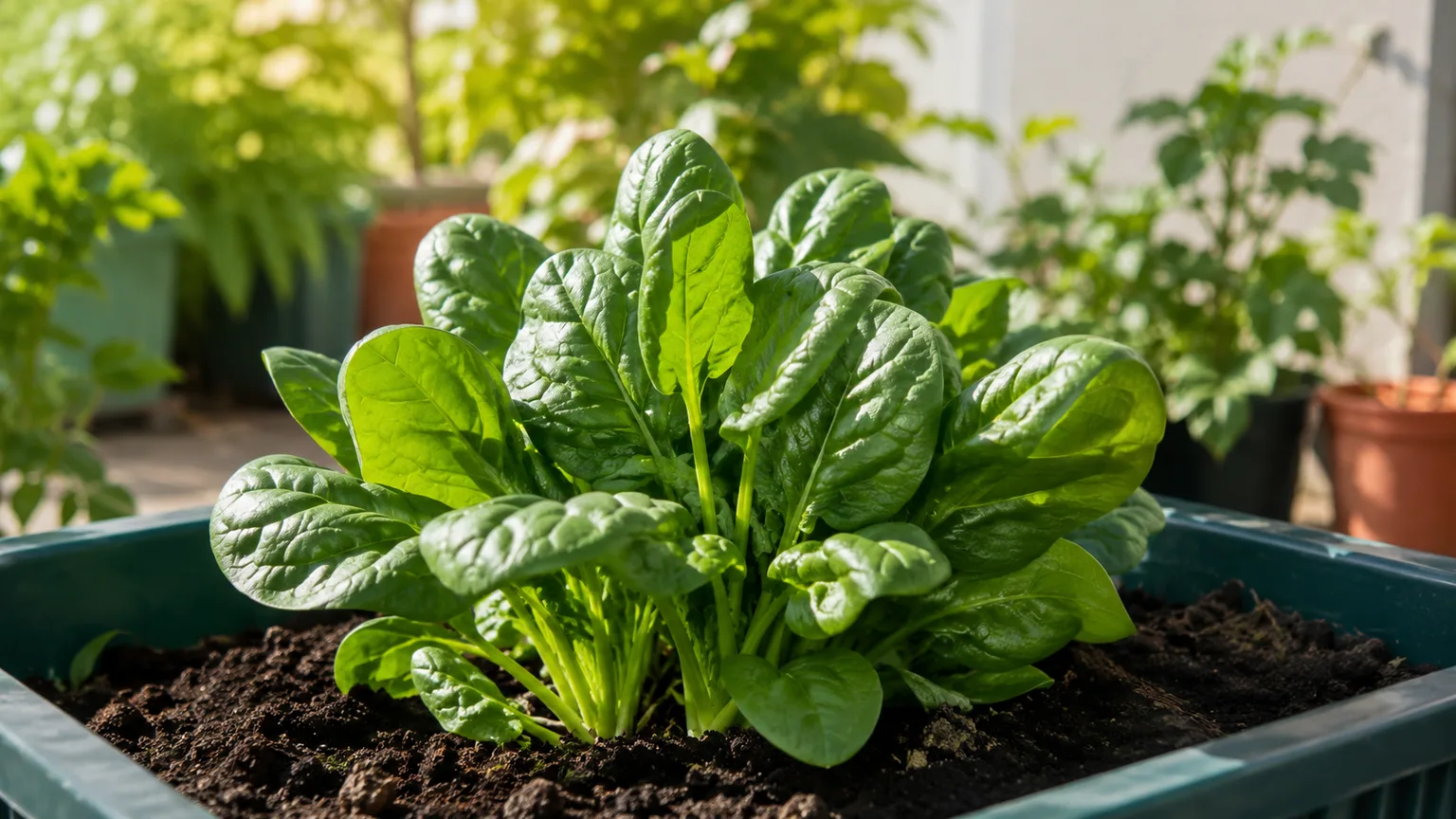
Garden spinach forms a low rosette of fleshy leaves on short petioles. New foliage unfolds from the crown—the compressed growing point at soil level. There are no lignified canes to rejuvenate. “Pruning spinach” means timed leaf removal that balances kitchen demand with the plant’s short vegetative window before bolting (flowering).
NC State Extension notes that leaves may be harvested at any size and that plants often produce new leaves after picking, especially when harvested young. Clemson HGIC describes picking tender spinach leaves 3–6 inches long, starting with outer leaves and working inward as newer leaves size up. That outer-in pattern is the core pruning judgment for palak beds and containers.
Leaves vs whole-rosette harvest
Two legitimate harvest styles serve different goals:
| Goal | Method | Cut placement | Regrowth expectation |
|---|---|---|---|
| Steady kitchen supply | Outer-leaf picking | Individual outer petioles near the crown | Repeated picks over weeks in cool weather |
| One large bunch | Whole-rosette cut | Scissors just above the crown | Often one partial regrowth flush, then bolt |
| Salad mixes | Baby-leaf shear | 1–2 inches above soil in dense rows | May re-sprout once if roots stay healthy |
Wisconsin Horticulture recommends cutting entire plants at the soil line when a central stalk appears, while fall plantings may give better continued harvest if you remove outer leaves only and let the crown keep producing.
True spinach vs summer “spinach” substitutes
Do not apply this page to Malabar spinach (Basella), New Zealand spinach, or amaranth greens—they are different species with different growth habits. True spinach bolts quickly in heat and long days; summer substitutes exist precisely because Spinacia oleracea stops making tender leaves when reproduction starts. The Spinach overview separates palak from those look-alike crops.
When to prune or harvest spinach
First harvest size
Wait until seedlings have moved past cotyledons into true leaves. Wisconsin Horticulture suggests starting periodic harvest when plants have at least six true leaves, or taking mature plants in one cut. Gardening Know How notes many varieties are harvestable once the rosette has five or six leaves, with baby leaves sweeter and more tender.
In practice: if only seed leaves are present, delay. If outer blades are long enough to cook but the center still shows small, pale new leaves, you are in the right window.
Season and bolting pressure
Spinach is a cool-season crop. NC State Extension explains that increasing day length and heat trigger bolting, ending leaf growth and turning flavor bitter—bolt-resistant cultivars help in warm springs but do not eliminate biology.
RHS recommends mild temperatures around 15–20°C (60–70°F) and warns that hot, dry stress pushes premature flowering. In warm regions (including much of India outside the cool season), treat spinach as a short cool-window crop and lean on light adjustments and steady watering rather than aggressive cutting to force growth.
What to check before you cut
Run a thirty-second inspection:
- Crown health — firm, not sunken or rotting; wet crowns after heavy rain may need fewer cuts, not more.
- Soil moisture — dry, cracking mix slows regrowth; water before harvest if plants are limp from thirst, not disease.
- Bolting cues — narrowing leaves, faster stem elongation, or a domed bud at the center means leaf harvest is ending.
- Pest or mildew — remove and bag affected leaves; do not compost heavily infected tissue in humid climates.
- Spacing — overlapping rosettes stay wet longer; thin or harvest alternates to improve airflow (RHS suggests harvesting every other plant when thinning).
If growth is pale and stretched, read leggy growth on Spinach and not enough light before blaming harvest technique.
The first cut to make
After cleanup of yellow or damaged lower leaves, select one mature outer leaf whose petiole is long enough to lift clear of the crown. Cut the petiole close to the crown without slicing into neighboring young leaves or the growing point. Wait three to five days and watch the center: if new leaves unfurl, your timing and cut height were appropriate.
This single outer cut is deliberately conservative. It confirms regrowth before you take a larger kitchen harvest.
How to harvest spinach step by step
Outer-leaf cut-and-come-again
- Hold the outer leaf blade up and trace the petiole to the crown.
- Snip with clean kitchen scissors or bypass snips.
- Move around the rosette, taking outer leaves only.
- Rinse leaves after picking; grit collects in savoy crinkles.
Gardening Know How describes this as cut and come again—the standard way to stretch harvest on a highly perishable leafy crop.
Whole-rosette cut at the crown
When you need a full bunch—or when bolting starts—cut just above the crown with a single horizontal slice. Clemson HGIC notes whole plants may be harvested this way; Wisconsin Horticulture adds that cutting at the soil line keeps leaves cleaner than uprooting with roots attached.
Whole-rosette harvest can stimulate one more partial flush from the crown if weather stays cool and roots stay moist, but do not depend on multiple heavy shears through summer heat.
Baby-leaf shearing in dense rows
For salad mixes, sow thickly and shear young leaves 1–2 inches above the soil when they reach usable size. This is production harvesting, not maintaining long-lived rosettes. Regrowth depends on variety, fertility, and remaining crown tissue—plan a succession sowing (propagation guide) two weeks later rather than expecting endless baby cuts from one line in hot weather.
How much you can safely remove
Limit each pass to about one-third of the plant’s leafy mass. If a recipe needs more, take one-third from several plants or stagger rows sown a week apart.
Scalping the rosette to bare soil shocks shallow roots, invites crown rot in wet weather, and pairs badly with heat—common triggers for early bolting alongside drought. NC State Extension emphasizes shallow roots and steady moisture; over-harvesting dry plants accelerates decline.
Where to cut (and what to leave)
- Cut: Outer leaves with full-sized blades; yellow or damaged petioles at their base; bolted flower stems once you abandon leaf harvest.
- Leave: The central cluster of small, emerging leaves and the crown itself.
- Avoid: Tearing leaves halfway down the petiole (decay entry) or cutting so low you notch the crown.
Spinach does not branch from random mid-petiole wounds the way some woody herbs might from nodes. The crown is the only regrowth engine.
Pruning yellow, damaged, or diseased leaves
Remove fully yellow or brown lower leaves anytime—they no longer photosynthesize and can harbor slugs or mildew spores in humid beds. Snip at the petiole base; do not yank, which can disturb shallow roots.
For downy mildew or white rust (both noted on NC State Extension), remove affected foliage, improve airflow, and avoid working wet plants. Pruning cannot cure systemic infection; severely spotted rows are often better cleared and re-sown in a new cool window with resistant cultivars.
Pair repeated yellowing with watering checks—saturated soil and drought both show up on lower leaves before the crown fails.
Bolting: when pruning stops helping
Bolting is the shift from leaf production to flowering. Stems elongate, leaf blades shrink, and flavor turns harsh. RHS notes you may get longer harvests in spring or autumn, while summer heat shortens the leaf stage.
Once a central flower stalk is rising, do not expect hard cutting to restore tender palak. Options:
- Final harvest — whole-rosette cut for a last cooking batch.
- Seed saving — let selected plants flower if you want seed for next cool season (see propagation).
- Replace — pull bolted plants and sow the next batch in cooler weather.
Pinching the first tiny bud might delay flowering a few days in marginal conditions, but it is not a substitute for succession sowing or bolt-tolerant genetics.
Aftercare and recovery
After any harvest pass:
- Water if soil was dry; morning irrigation keeps foliage drier overnight than evening splashing.
- Mulch lightly in beds to buffer soil temperature swings that hasten bolting.
- Pause fertilizer immediately after a heavy cut unless plants are actively growing in fertile soil—spinach is a heavy feeder over the season (Wisconsin Horticulture), but salt shock on stressed crowns is unnecessary.
- Sanitize tools if you removed diseased tissue before moving to healthy rosettes.
Recovery is measured in days, not months. In active cool growth, outer gaps often refill within a week; in heat, regrowth may stall even when cuts were correct.
Signs your harvest rhythm is working
Positive signals:
- New leaves keep emerging from the center between picks.
- Outer leaves reach harvest size again within about a week in cool weather.
- Petioles stay crisp and green without widespread yellowing.
Warning signals:
- Center growth stalls more than a week after a heavy take.
- Buds appear soon after large harvests during warm spells.
- Slow growth persists despite gentle outer picks—often roots, heat, or light, not scissors.
Brown tips on margins usually trace to drought or salt stress; fixing watering beats tighter harvest schedules.
Mistakes to avoid
- Shearing the center first — removes the only growing point; regrowth stops or bolts follow.
- Confusing spinach with shrub pruning — no hard rejuvenation cuts; replace bolted plants.
- Harvesting wet, diseased rows — spreads mildew; pick when foliage is dry.
- Taking more than one-third repeatedly without recovery days — weakens shallow roots.
- Expecting one sowing to leaf all summer in hot climates — plan cool-season successions instead.
- Ignoring bolting — bitter leaves do not improve with more cutting.
Succession sowing instead of endless pruning
Spinach is productive but short-lived. NC State Extension recommends sowing every one to two weeks for extended harvest. Wisconsin Horticulture suggests about two weeks between sequential plantings.
Pruning extends each rosette’s kitchen life; succession sowing extends the season. Combine both: light outer harvests on plants in their prime, plus new sowings entering the six-leaf stage as older rows bolt.
Conclusion
Spinach pruning is outer-leaf harvest with crown protection—cleanup first, then conservative outer cuts, never more than one-third per pass, and a clear pivot when bolting begins. Match harvest intensity to cool weather and steady moisture; when heat and day length rise, scissors cannot replace a fresh sowing. That rhythm—not heavy cutting—is what keeps palak tender from first pick to last cool-week flush.