Spider Mites on Spinach: Signs, Checks and Safe Control
Quick answer
Spider mites can infest spinach, but pale speckles alone do not confirm them. Tap a suspect leaf over white paper and look for moving specks or fine webbing underneath; if you confirm live mites, rinse the foliage with a steady stream of clean water, then keep checking new growth.
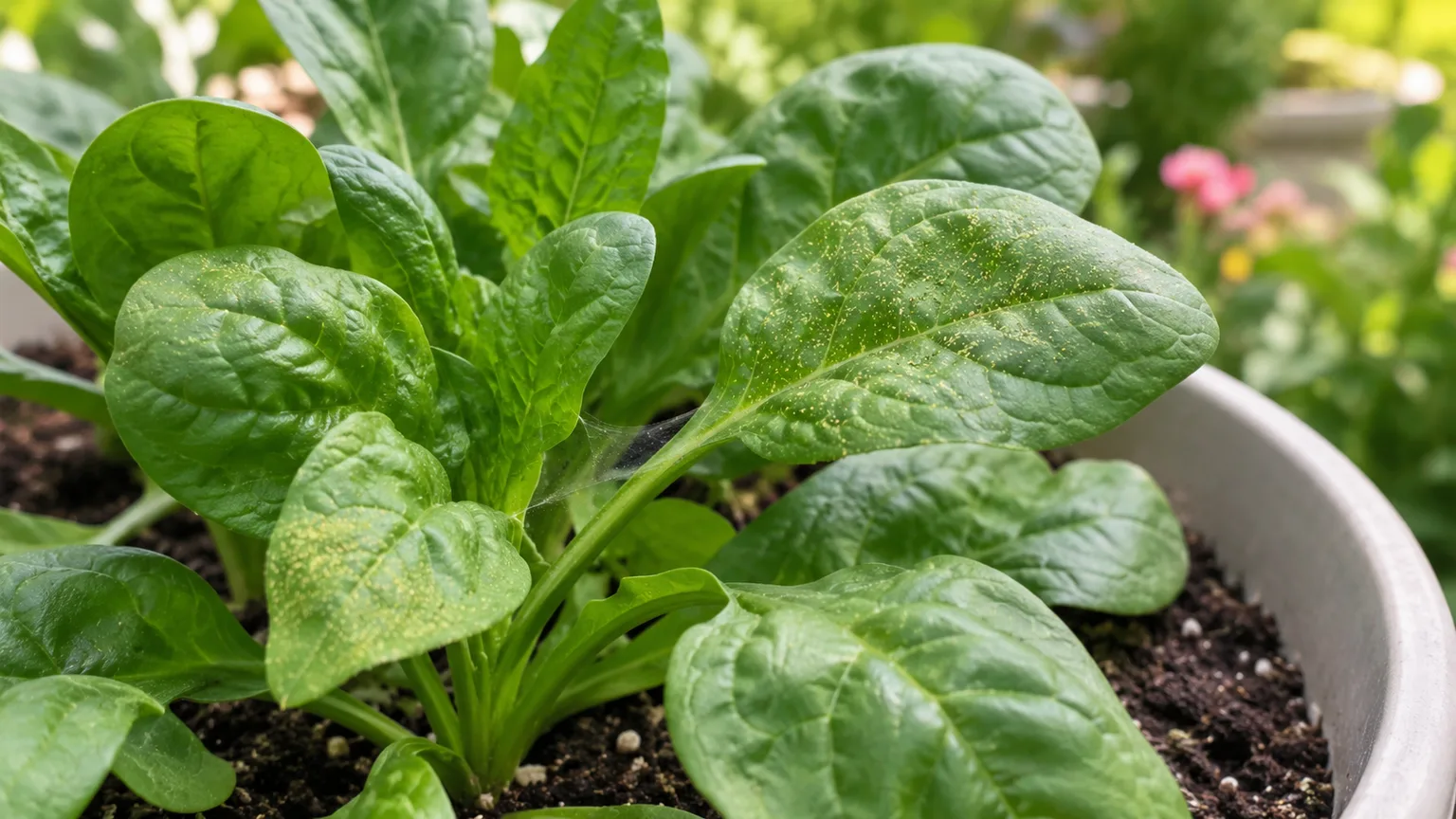
Spider Mites on Spinach: How to Spot and Control Them Safely
This guide covers spider mites on Spinach. See also the general Spider Mites guide, watering, and light pages for this plant.
Spider Mites on Spinach: How to Spot and Control Them Safely
Search intent
Readers want to know whether pale spinach leaves have spider mites, how to check a crowded crop quickly, and what is safe to do before harvesting edible leaves.
SEO title planning
- Spider Mites on Spinach: What the Speckles Mean and What to Do
- Spider Mites on Spinach: How to Spot and Control Them Safely
- Protect Spinach Leaves from Spider Mites Before Harvest
Best title: Spider Mites on Spinach: How to Spot and Control Them Safely — it names the problem and emphasizes diagnosis and food-crop precautions.
Meta description planning
- Confirm spider mites on spinach from stippling, moving specks, or webbing, then rinse leaf undersides and protect the crop before harvest.
- Learn how to inspect spinach rosettes for spider mites, tell them from downy mildew, and follow pesticide labels on edible leaves.
- Spider mites can mark spinach leaves in hot, dry weather. Check for live mites, wash foliage carefully, and protect your harvest.
Best description: Confirm spider mites on spinach from stippling, moving specks, or webbing, then rinse leaf undersides and protect the crop before harvest.
Primary and supporting keywords
- Primary: spider mites on spinach
- Supporting: spinach spider mite damage; spider mites on spinach leaves; spinach leaf stippling; webbing on spinach; how to check spinach for mites; spider mite treatment for spinach; spinach pests; safe pesticide use on spinach; spinach downy mildew lookalike; cool-season spinach care
NLP entities
Spinacia oleracea, two-spotted spider mite, Tetranychus urticae, leaf stippling, webbing, rosette, leaf undersides, downy mildew, preharvest interval, cool-season crop, drought stress, beneficial predatory mites.
People Also Ask questions
- What do spider mites look like on spinach?
- How do I confirm spider mites on leafy greens?
- Can spider mites attack spinach outdoors?
- What is the safest first treatment for spinach with spider mites?
- How do I distinguish mites from spinach downy mildew?
- Can neem oil be used on spinach before harvest?
- Will mite damage disappear from spinach leaves?
E-E-A-T signals
The guide asks readers to confirm live mites before treatment, connects dry-weather risk to spinach’s cool-season growth, uses extension and IPM sources, and treats pesticide label and harvest timing as crop-safety requirements.
Featured snippet opportunities
- Definition: spider-mite stippling on spinach
- List: how to inspect a spinach rosette
- Table: spider mites versus downy mildew
- Paragraph: first water-based treatment and edible-crop label caution
Helpful content checklist
This page adds spinach-specific inspection points for an overlapping rosette, separates mites from downy mildew, and gives one low-risk first action without recommending an unverified pesticide.
- Spider Mites on Spinach: What the Speckles Mean and What to Do
- Spider Mites on Spinach: How to Spot and Control Them Safely
- Protect Spinach Leaves from Spider Mites Before Harvest
Spider Mites on Spinach: How to Spot and Control Them Safely
- Confirm spider mites on spinach from stippling, moving specks, or webbing, then rinse leaf undersides and protect the crop before harvest.
- Learn how to inspect spinach rosettes for spider mites, tell them from downy mildew, and follow pesticide labels on edible leaves.
- Spider mites can mark spinach leaves in hot, dry weather. Check for live mites, wash foliage carefully, and protect your harvest.
Confirm spider mites on spinach from stippling, moving specks, or webbing, then rinse leaf undersides and protect the crop before harvest.
- Quick answer
- What spider-mite feeding looks like on spinach
- How to confirm mites in the rosette
- Why hot, dry spells can expose spinach to mite damage
- First fix: rinse confirmed mites from the foliage
- Protect harvestable leaves and follow pesticide labels
- Separate mite stippling from spinach downy mildew
- Recovery and prevention in a short-lived cool-season crop
- Related Spinach guides
- Five FAQs
Quick answer
Spider mites can infest spinach, as shown in a Washington State University Extension report of a severe infestation in a spinach seed crop, but pale speckles alone do not confirm them. Tap a suspect leaf over white paper and look for tiny moving specks, a monitoring method described by Purdue University Extension; fine silk on the underside is another clue. If you confirm live mites, first rinse the affected foliage with clean water, directing the stream beneath the leaves and into the overlapping center of the rosette. Check the crop rather than assuming spinach is immune.
Spinach is an edible leafy crop that grows best in cool weather; heat can trigger bolting while dry conditions favor spider mites (North Carolina State Extension; Colorado State University Extension). Because it is harvested for its leaves, pesticide label and harvest directions matter. This guide focuses on confirming mites on spinach and controlling them without guessing at pesticide use.
What spider-mite feeding looks like on spinach
The earliest clue is a scatter of tiny pale dots across the leaf surface. These stipples are feeding marks, not a fuzzy coating; as damage builds, a leaf can look dull, yellowed, or bronzed. Spider mites may also leave fine silk across leaf surfaces and under the blade; eggs and cast skins are easier to inspect with a hand lens (Gardening Know How). Utah State University Extension describes stippling on upper leaf surfaces and webbing underneath; Colorado State University Extension also identifies stippling and webbing as common signs.
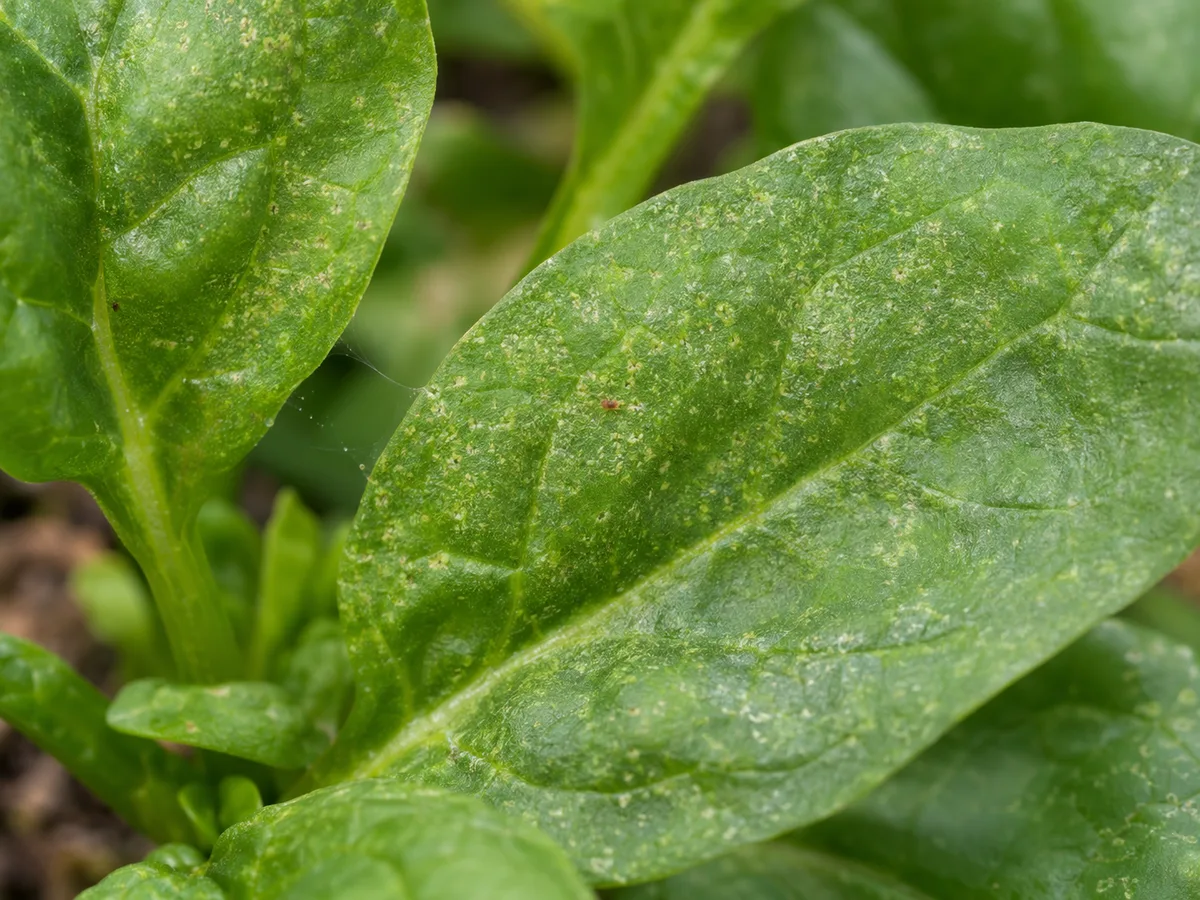
Fine stippling and light webbing are clues; confirm live mites on the undersides before treating spinach.
Spinach leaves overlap in a low rosette, so the center can hide damage that is not obvious from above. Start with outer leaves that show new speckling, then inspect the undersides and the places where neighboring leaves touch. Use the pest itself, such as moving mites or eggs, to confirm before treating.
How to confirm mites in a spinach rosette
Choose several leaves with fresh-looking stippling and inspect their undersides with a hand lens. Magnification helps distinguish mites from dust and makes eggs or cast skins easier to see (Gardening Know How). Compare the suspect leaves with cleaner ones nearby so you can tell whether new marks are spreading.
Look across the planting rather than inspecting only one damaged leaf. Spider mites are tiny and can go unnoticed until feeding damage is visible (Gardening Know How). Moving mites together with fresh stippling support an active infestation. If you find no mites or eggs, pause and compare heat stress, uneven moisture, and disease before spraying; spinach downy mildew can also create yellow leaf spots.
Why hot, dry spells can expose spinach to mite damage
Spinach grows best in cool weather and moist, well-drained soil; hot weather can trigger bolting and shorten the harvest period (North Carolina State Extension). Spider mites, in contrast, tend to feed and multiply more readily under dry conditions, and drought-stressed plants can be more vulnerable to their damage (Colorado State University Extension; Utah State University Extension).
That does not mean you should keep a spinach bed constantly wet. Maintain even moisture while allowing excess water to drain, and avoid using extra irrigation as a substitute for mite inspection. The Spinach watering guide explains how to keep the root zone moist without leaving it saturated; use the Spinach soil guide if water pools or the bed drains slowly.
A flowering stalk or bitter, elongated growth can signal that spinach is bolting as temperatures rise, rather than a mite outbreak. Check the Spinach light guide when a hot, exposed position may be accelerating the crop’s decline. Bolting and mite feeding can occur at the same time, so confirm pests directly before changing the care routine.
First fix: rinse confirmed mites from the foliage
After you confirm live mites, rinse the affected spinach with a steady stream of clean water, aiming at leaf undersides and the center of each rosette. Use enough pressure to dislodge pests but not so much that tender leaves tear or seedlings flatten. Utah State University Extension recommends washing infested vegetable plants with water directed beneath leaves, and The Spruce describes water rinsing as a practical way to dislodge spider mites.
Recheck the same plants regularly for fresh stippling, live mites, or new webbing. Rinsing removes mites, not the feeding marks already left on damaged leaves; Utah State University Extension describes these marks as stippling that can progress to bronzing. The useful sign is that new leaves emerge without expanding stipples. Remove only leaves that are heavily webbed or no longer usable, and discard them rather than leaving infested debris beside the bed.
Protect spinach leaves before harvest
Spinach is an edible crop, so do not borrow a houseplant pesticide recipe or assume that an “organic” label makes a spray suitable for leaves you plan to eat. If water rinsing is not enough and you consider a pesticide, read the full label first. It must specifically allow use on spinach and on the growing site; follow its application directions and preharvest interval. The National Pesticide Information Center explains that the label states whether a fruit or vegetable is listed and how long to wait before harvest.
Do not use a product if spinach is absent from its label, and do not shorten the harvest interval to save a crop. Avoid broad-spectrum sprays unless a product label and qualified local guidance support their use; such products can also harm predatory insects that help suppress mites (Utah State University Extension). If you cannot confirm that a treatment is permitted for spinach, rely on water rinsing, remove badly affected plants, and protect nearby healthy rows from contact with infested foliage.
Separate mite stippling from spinach downy mildew
Mites usually produce many small feeding dots and may leave fine silk. Spinach downy mildew more often begins as yellow spots, with purple fungal growth visible on the undersides as the disease develops; UC IPM documents this pattern on spinach. If you see fuzzy purple growth rather than moving specks or mites, compare the signs with disease guidance instead of spraying for mites. The Spinach problems hub can help route other symptoms, while the global spider-mites guide covers mite identification across plant types.
If damage is widespread but no mites, eggs, or silk appear, check soil moisture and disease signs before treating; spinach grows best in moist, well-drained soil (North Carolina State Extension). The Spinach overview provides the crop baseline when the whole planting is stressed rather than individual leaves showing pest signs.
Recovery and prevention through the spinach season
Keep checking the undersides of new and outer leaves after rinsing, especially during hot, dry weather. Healthy, unstressed plants are less vulnerable to spider-mite outbreaks; maintain the steady moisture spinach needs without creating saturated soil. Remove weeds or crop debris that may shelter mites nearby, as Utah State Extension notes that mites can overwinter on crop debris and weeds (Utah State University Extension). Rotate attention across the bed so a single clean-looking center does not hide damage on outer leaves.
Spinach is an annual cool-season crop, so the goal is to protect usable leaves and stop new damage, not restore stippled tissue. If most of a plant is webbed, the crown is failing, or the bed is already bolting and producing poor leaves, remove the affected plant and sow a fresh crop in suitable weather rather than applying repeated treatments to foliage you will not harvest. For crop timing and harvest context, return to the Spinach overview.
Related tool
Use the Pest Identifier Tool to compare spider-mite signs with other likely spinach pests before choosing a treatment.
Related Spinach guides
Use this page when inspection confirms spider mites. Start at the Spinach problems hub if the marks do not match mites; check watering when the bed is too dry or too wet, soil when drainage is poor, and light when hot exposure is driving bolting. The Spinach overview covers the crop’s full growing season.
FAQ 1 Question: How can I tell spider mites from downy mildew on spinach? Answer: Spider mites leave fine stippling and may leave silk on leaf undersides; look for tiny moving mites with a hand lens or white-paper tap. Spinach downy mildew more often starts as yellow spots and can show purple growth beneath them.
FAQ 2 Question: Should I spray my spinach as soon as I see pale dots? Answer: No. Check both sides of several leaves and confirm live mites, eggs, or webbing first. Yellowing alone is nonspecific, so compare soil moisture and disease signs before acting.
FAQ 3 Question: What is the first treatment for spider mites on spinach? Answer: Rinse the affected plants with a steady stream of clean water, directing it to leaf undersides and the crowded center of the rosette. Avoid a forceful jet that tears tender leaves or saturates already wet soil.
FAQ 4 Question: Can I use neem oil or insecticidal soap on spinach? Answer: Only use a pesticide if its label specifically permits the product on spinach and the site where it is growing. Follow the label and its preharvest interval; if spinach is not listed, do not apply that product to the crop.
FAQ 5 Question: Will mite-damaged spinach leaves recover? Answer: Old stippled leaves usually keep their feeding marks, even after mites are controlled. Judge recovery by whether fresh damage stops and the center of the spinach rosette produces clean leaves.