Mealybugs on Spinach: Confirm the Pest and Protect Your Crop
Quick answer
Mealybugs can feed on many plants, but white material alone does not confirm them on spinach. Look for oval, soft-bodied insects under cottony wax, sticky honeydew, or clusters at leaf bases. If confirmed, isolate or remove the affected spinach and do not apply a pesticide unless its label specifically allows use on spinach and gives a preharvest interval.
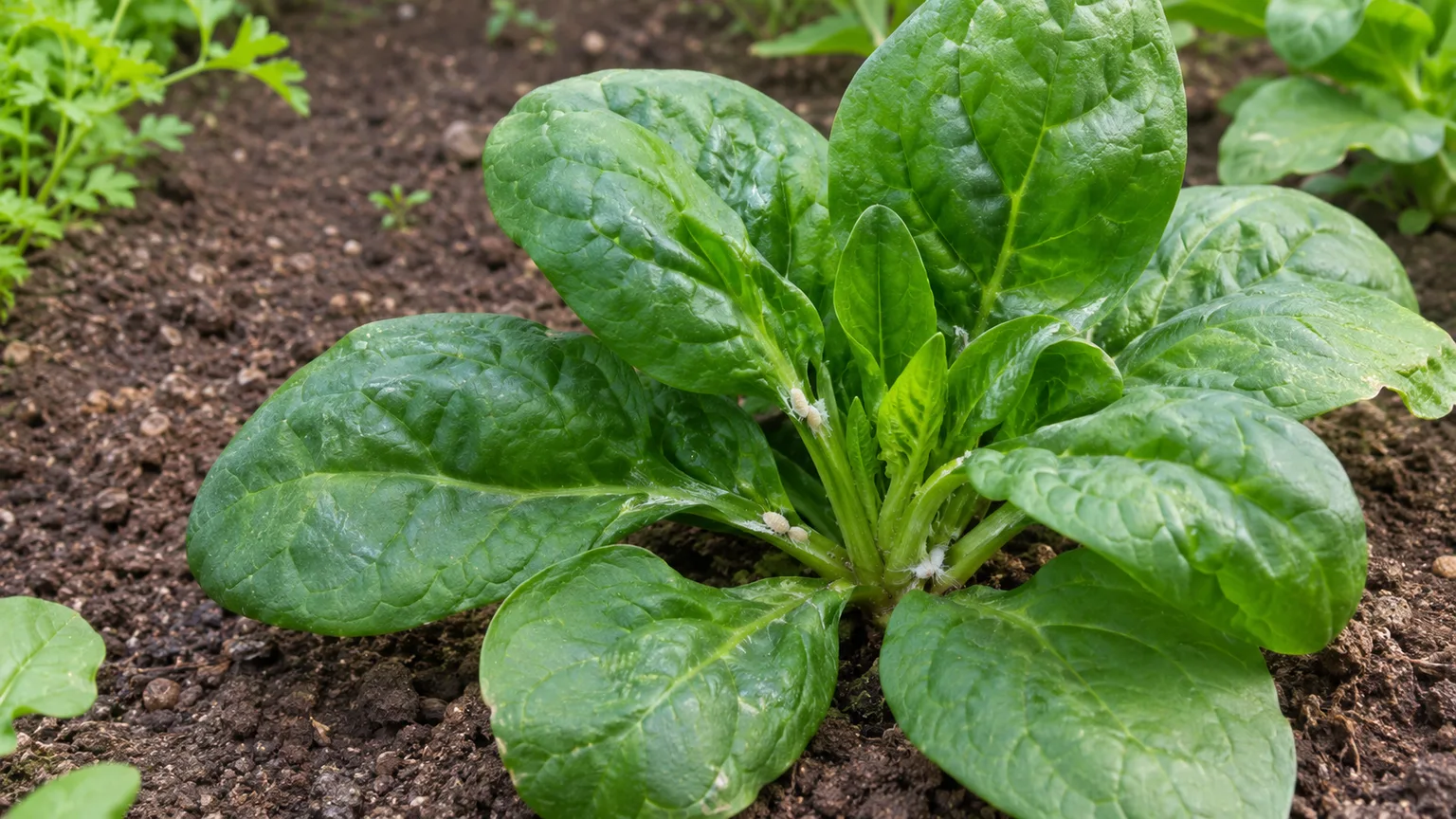
Mealybugs on Spinach: How to Confirm and Protect the Crop
This guide covers mealybugs on Spinach. See also the general Mealybugs guide, watering, and light pages for this plant.
Mealybugs on Spinach: How to Confirm and Protect the Crop
Primary intent: Identify and manage a suspected mealybug infestation on edible spinach. This page shows the reader what confirms the insect, explains how growing setting affects the diagnosis, and puts edible-crop pesticide restrictions first.
- Mealybugs on Spinach: Identification and Safe Crop Care
- Mealybugs on Spinach: Confirm the Pest and Protect Your Harvest
- White Cottony Bugs on Spinach? Check for Mealybugs
Mealybugs on Spinach: Identification and Safe Crop Care
- Learn how to confirm mealybugs on spinach, inspect hidden leaf bases, remove affected growth, and protect edible leaves from unsafe pesticide use.
- See what mealybugs look like on spinach, which white marks may be lookalikes, and why pesticide labels matter on a crop you plan to eat.
- Find a careful first response to suspected spinach mealybugs, from checking the crown and leaf undersides to deciding when to remove the plant.
Learn how to confirm mealybugs on spinach, inspect hidden leaf bases, remove affected growth, and protect edible leaves from unsafe pesticide use.
- Quick answer
- Why mealybugs on spinach need careful diagnosis
- How to check a spinach rosette and confirm live insects
- White marks that can be mistaken for mealybugs
- First response: isolate and remove the affected material
- Pesticide cautions for an edible leaf crop
- Recovery, replanting, and prevention
- When to use this page versus related spinach guides
- FAQs
Quick answer
Before treating, confirm you can see insects beneath the white wax: mature females are oval and soft-bodied, while young crawlers may look like tiny pale specks. Check the bases of leaves and the crown, not just the broad leaf surfaces. Cottony clusters, sticky honeydew, and dark sooty growth together make mealybugs more likely, but none of those signs alone proves the diagnosis. University of Wisconsin Extension notes that mealybugs are most often associated with perennial foliage plants and are less common on flowering or bedding plants; because those host patterns do not specifically describe spinach, verify the insect before acting using its identification guidance.
If you confirm live mealybugs, separate the affected spinach from nearby plants and remove visibly infested leaves. Because spinach is eaten as a leaf, do not use a pesticide unless its label specifically lists spinach and the intended site of use. Follow all directions and the label’s preharvest interval for that exact product. For help with the plant’s normal growing conditions, see the Spinach overview.
Why mealybugs on spinach need a careful diagnosis
Mealybugs feed by inserting mouthparts into plant tissue and taking sap. Their white, waxy covering can resemble a tuft of cotton lodged where a petiole joins the stem. Feeding may weaken growth, and the insects’ sticky honeydew can collect on leaves and support dark sooty mold described by NC State Extension. Those signs can develop on many plants, but they are not a reason to assume spinach is a common host.
Spinach is usually grown as a cool-season leafy vegetable, often harvested over a relatively short crop cycle. In a garden bed, a white patch may be residue, fungal growth, or webbing from another pest. Consider the growing setting before settling on the diagnosis: mealybugs are more likely to be encountered in protected or greenhouse settings in cool climates, while outdoor crop problems are more plausible in warmer regions where mealybugs can occur on crops. The RHS describes glasshouse mealybugs as pests of houseplants and greenhouse plants that hide in protected plant parts such as leaf sheaths and stem joints.
If the plant is already sending up a flowering stalk, it may be bolting rather than declining from insects. Heat and longer days shorten spinach’s harvest window; check the Spinach light guide and seasonal watering guidance when deciding whether the crop is still worth keeping.
How to confirm mealybugs on a spinach rosette
Inspect the plant in good light before rinsing or removing leaves. Turn over several leaves, follow each petiole down to its base, and check the crown where new leaves emerge. Mealybugs often gather in creases and sheltered joins, so a quick look at the top of the leaves can miss them. Practical mealybug scouting guidance likewise stresses checking protected plant parts. Extension guidance also recommends checking roots or drainage areas if the plant is yellowing or wilting without a clear aboveground cause and white wax is present.
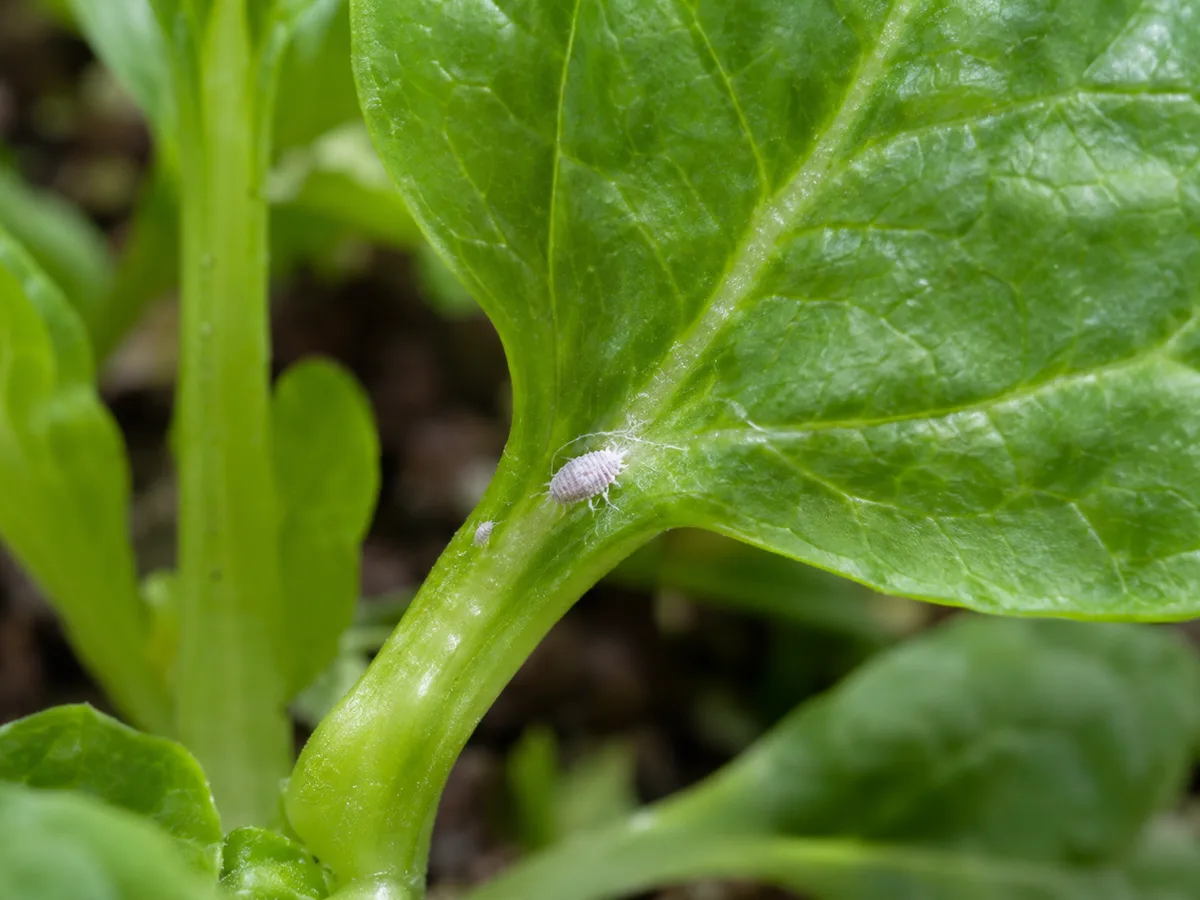
Look for a tiny oval insect beneath loose white wax at a leaf base; a pale patch by itself is not enough to confirm mealybugs.
Use a hand lens if available. Look for a small, oval, segmented insect under loose white wax; a cottony egg sac may sit beside it. Tap a suspect cluster gently with a damp cotton swab and watch for a tiny insect moving. Honeydew feels tacky rather than powdery. Ants near the plant may be attracted to honeydew, but ants by themselves do not confirm mealybugs.
Check the leaves and crown for feeding-related yellowing or stunted new growth, but treat these as supporting clues, not proof. Spinach can wilt when its shallow root zone dries, and leaves can yellow from waterlogged soil or natural aging. If soil conditions seem off, compare with the Spinach watering guide and soil guide before blaming a pest.
White marks that can look like mealybugs
| What you see | What it may be | How to tell |
|---|---|---|
| Loose white cottony patches at leaf bases, with oval insects beneath | Mealybugs | Look closely for segmented bodies, legs, and movement; check nearby joints for sticky honeydew. |
| A flat white or gray film on the leaf surface | Powdery residue or fungal growth | It may wipe or smear without revealing an insect body. Do not spray a pesticide based on color alone. |
| Fine stippling, pale specks, or delicate webbing | Spider mites | Inspect the leaf underside for tiny moving mites and web strands; compare with the general spider-mite guide if that pattern fits. |
| Small pear-shaped insects or shed skins around tender growth | Aphids | Look for visible colonies rather than waxy cotton clusters; compare with the general aphid guide. |
If you cannot find live insects, photograph the mark and inspect again before choosing a treatment. A misdiagnosed spray can damage tender leaves and create residue concerns without solving the actual problem.
First response: isolate and remove affected material
For a confirmed, small infestation, first move a container-grown spinach plant away from other plants. In an outdoor bed, mark the affected plant and check neighboring spinach and weeds nearby. Then remove leaves carrying visible clusters or egg sacs, bag them, and discard them with household waste rather than leaving them beside the crop. Avoid stripping every healthy leaf: spinach needs its remaining foliage to keep growing, and damaged old leaves will not become pristine again.
For a light infestation on a plant you intend to keep, gently rinse the crown and leaf undersides with clean water, then inspect the same sheltered spots again over the next several days. A firm water stream can dislodge pests, but protect young seedlings and avoid breaking the crown. This is a physical removal step, not proof that eggs or hidden insects are gone. UC IPM recommends monitoring hidden plant areas and using nonchemical removal where practical for mealybug management.
If multiple plants are covered in insects, the crown is heavily infested, or most harvestable leaves are contaminated, remove the plant instead of repeatedly treating food leaves. Spinach is a short-cycle crop; replanting at the appropriate season may be more useful than trying to rehabilitate a severely infested or already bolting rosette. Penn State Extension’s spinach growing guidance describes its cool-season timing and leaf-harvest window.
Pesticide cautions for edible spinach
Do not transfer houseplant advice directly to a crop you plan to eat. Recommendations involving rubbing alcohol, insecticidal soap, horticultural oil, or other pesticides may be intended for ornamentals, and a product’s use on houseplants does not establish that it is allowed on spinach. If you are considering any pesticide, check that the label names spinach and the relevant growing site; follow the listed rate, protective directions, and harvest interval. The National Pesticide Information Center explains that the label specifies the preharvest interval and that a crop not listed on the product label must not be treated with that product for that crop.
Do not improvise a soap or alcohol mixture on harvestable leaves. General houseplant control recommendations do not establish that a product or mixture is permitted on edible spinach; the crop label still controls. If a labeled treatment is not available for your specific crop and setting, continue with physical removal or remove the affected plant. When the crop is grown commercially or in a shared greenhouse, consult a local extension service or crop adviser before treatment.
Recovery and prevention
After removal, monitor the crown, leaf bases, and undersides at each harvest. New leaves emerging without cottony clusters or sticky deposits are a better sign of control than whether old leaves regain their color. If the plant continues to decline despite no visible insects, recheck soil moisture, drainage, and whether the spinach has bolted; use the Spinach problems hub to compare other causes.
Inspect transplants and nearby ornamentals before moving them into the spinach area. Keep rows or containers spaced enough to inspect the inner leaves, remove weeds and plant debris, and avoid carrying suspected insects from one plant to another on hands or tools. Spinach likes consistently moist soil but not a pest remedy based on keeping its leaves wet; water the soil when practical and keep the crown open enough to inspect. Harvest outer leaves regularly while the plant is productive, then remove aging or bolting plants rather than keeping them as a reservoir near young sowings.
When to use this page versus other Spinach guides
Use this page only when you can confirm mealybugs or their cottony egg sacs on spinach. If the white material has no insect underneath, compare symptoms before treating. The Spinach problems hub helps route you to other causes; the general aphid guide and spider-mite guide cover two possible lookalikes. For broader identification, read our general mealybug guide.
Related tool
Use the plant problem diagnosis tool as a symptom triage aid if the signs are mixed. It cannot confirm mealybugs or determine whether a pesticide is allowed on spinach; verify the insect and follow the label for any crop treatment.
Can mealybugs infest spinach?
Mealybugs feed on many kinds of plants, but a white patch alone does not confirm them on spinach. Look for a segmented insect beneath the wax before taking action.
What do mealybugs look like on spinach?
Look for oval, soft-bodied insects beneath white cottony wax, often gathered around leaf bases, stems, or the crown. Sticky honeydew or black sooty growth can also occur.
Can I spray insecticidal soap on spinach for mealybugs?
Only use a pesticide whose label specifically allows use on spinach and follow its directions and preharvest interval. A product safe for ornamental plants is not automatically suitable for edible leaves.
Should I eat spinach leaves that had mealybugs?
Remove visibly infested leaves and follow local food-safety guidance. If a pesticide was used, do not harvest until the product label’s preharvest interval has passed.
Will spinach recover from mealybugs?
A lightly affected plant may continue growing after the insects are removed, but leaves already damaged or contaminated may not become marketable. Remove a heavily infested or bolting plant and re-sow in the next suitable cool-weather window.