Leggy Spinach Seedlings: Causes, Checks & Fixes
Quick answer
Leggy spinach seedlings have unusually long, thin stems or petioles, often leaning toward a light source. First move a pale, window-stretched plant to brighter light; if it is already in full sun, check for a rising flower stalk and warm or lengthening-day conditions instead.
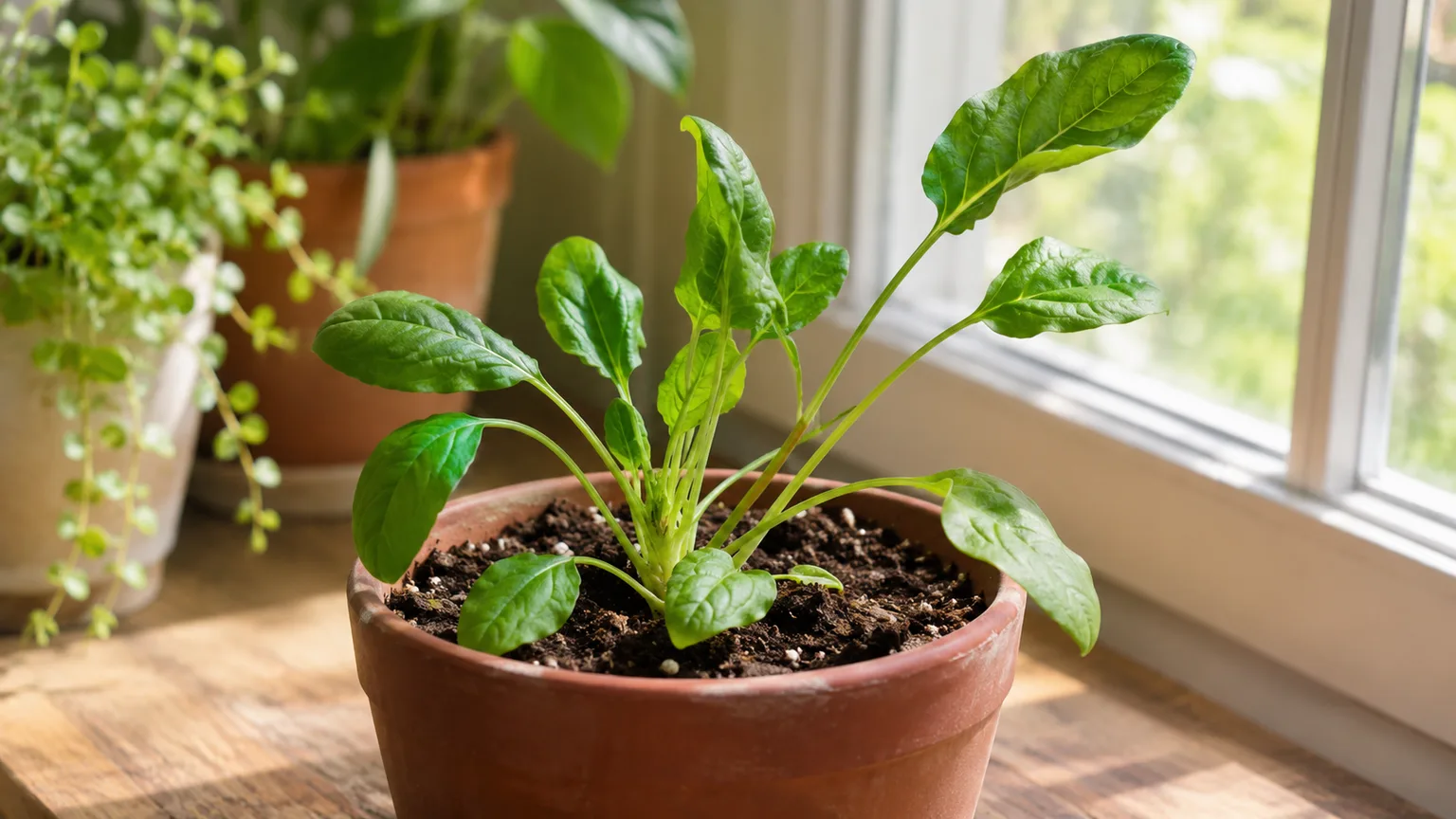
Leggy Growth on Spinach: Causes, Checks & Fixes
This guide covers leggy growth on Spinach. See also the general Leggy Growth guide, watering, and light pages for this plant.
Leggy Growth on Spinach: Causes, Checks & Fixes
Quick answer
Leggy spinach usually means a young plant is stretching for light: its stem or petioles look unusually long and thin, and the seedling may lean toward a window. Move a pale, window-stretched plant into brighter light first. Spinach tolerates some shade, especially in warm weather, but a dim indoor window can still leave seedlings weak and open rather than forming a compact rosette. NC State Extension describes spinach as a cool-season annual that grows in full sun to partial shade.
Check the plant’s stage before changing care. A rising central flower stalk on an established plant points to bolting, not ordinary light-seeking stretch. Heat and lengthening days can trigger that change in spinach, and stronger light will not reverse it. For general seedling stretch, see the leggy growth guide; the checks below focus on true spinach’s low rosette and short cool-season harvest.
What leggy growth looks like on spinach

Long, weak petioles and an open young rosette can indicate that spinach seedlings are reaching for light.
Young spinach normally builds a low cluster of leaves from a central growing point. A seedling is suspect when its stem is conspicuously thin, the leaf stalks are longer than expected for the small rosette, the leaves are spaced far apart, or the whole plant tilts toward a bright window. Compare neighboring seedlings: a tray where only the side nearest the window stands upright often points to uneven light, while uniformly stretched seedlings suggest the whole setup is too dim or warm.
If the plant has already formed a substantial rosette, look for a different pattern. Bolting sends up a distinct central stalk from the crown; the plant shifts from making a flat leaf cluster toward flowering. Spinach is sensitive to heat and increasing day length, and the leaves can become bitter as it bolts. NC State Extension describes this central flowering-stalk change. Do not label every tall spinach leaf as legginess: mature outer leaves naturally stand above the soil while the rosette remains compact.
Why spinach seedlings stretch
Light is weak or arrives from one side
Low light is the leading clue when seedlings are pale, narrow, and visibly reaching toward a window or lamp. In an indoor start, a bright room may still provide less usable light than a sunny outdoor bed. Burpee’s seedling guidance identifies insufficient light as the most common cause of spindly seedlings and also notes that warm nights can contribute.
Spinach does not need punishing all-day heat to grow well. It can tolerate partial shade, and some afternoon shade helps during hot weather; that is different from keeping seedlings in a dark corner. See the spinach light guide for seasonal sun placement. In warm regions, preserve the cool conditions spinach needs rather than solving stretch by exposing it abruptly to scorching midday heat.
Crowded seedlings compete for space
When seedlings overlap, lower leaves are shaded and plants compete for the same light. Crowding can also leave the rosettes small and make it difficult to tell which seedling is weak. Penn State Extension recommends thinning spinach so plants have room to develop; it cautions that the roots are shallow at this stage, so work gently. Penn State Extension
Heat can look like legginess, but bolting is a separate diagnosis
Spinach is a cool-season crop. Warm conditions can reduce quality and speed flowering, while insufficient light stretches the young stem toward a source. Utah State University Extension recommends growing spinach before hot weather and thinning plants to appropriate spacing. If the center is sending up a flower stalk, adjust the harvest plan instead of trying to train the crop back into a baby-leaf rosette.
How to confirm the cause
Check the pattern before changing several conditions at once:
- Follow the direction of growth. A consistent lean toward a window or grow light supports uneven light. Spinach can grow in partial shade, but the seedlings still need a bright position; compare it with the light requirements for spinach.
- Look at the center of the plant. A distinct central stalk with developing buds points to bolting. A thin, leaning seedling with no flower stalk is more consistent with legginess.
- Check spacing. If leaves overlap heavily or stems are crowded, thin the stand to the variety’s recommended spacing. Avoid tugging sharply beside the retained seedlings; the roots are delicate when young.
- Review temperature and season. Spinach grows best in cool weather. A seedling stretched in a warm room may have both low light and excessive warmth; an established outdoor plant in lengthening spring days may instead be bolting.
- Check the root zone only if the plant is also wilting or collapsing. Dry mix can slow growth, but watering more will not correct a light problem. Use the spinach watering guide if the leaves are limp or the soil is drying quickly.
If the plant has just emerged and the stem is still upright and firm, it may recover useful growth after the conditions improve. If it is flopped over, pinched at soil level, or rotting at the crown, inspect it for seedling disease rather than assuming it only needs more light; spinach can be affected by seedling damping-off. NC State Extension
The first fix: increase light for a stretched seedling
Move a pale spinach seedling that leans toward a window into a brighter position. A suitable outdoor bed can receive full sun in cool weather; partial shade is useful when the weather is warm. For indoor starts, provide a close, bright grow light according to the fixture’s instructions, keeping it high enough to avoid heat or leaf damage. The practical seedling guidance from Homestead and Chill emphasizes supplying light as seedlings emerge and adjusting lamp distance as they grow.
Then give the plant time to make new leaves. The old elongated stem will not contract, and pruning it will not make the existing growth compact. A compact new center is the sign that light has improved. If the seedling is already outside in full sun, do not automatically add more direct sun; check whether the central stalk is bolting or the plant is experiencing heat instead.
Repair the planting setup without stressing spinach roots
Once light is corrected, thin crowded seedlings while they are small, leaving the strongest plants at the spacing listed for the cultivar. Penn State Extension describes thinning around two inches of plant height and gives four to six inches as a typical development space, while other recommendations vary by cultivar and harvest style. Use the packet and local growing guide rather than forcing a single spacing onto every baby-leaf crop. If you started spinach in cells, move it while young and keep the root ball intact; the spinach propagation guide covers sowing and transplant timing.
Do not bury a stretched spinach stem deeply to imitate tomato rescue advice. Some vegetable seedlings tolerate deeper planting, but that is not a reliable correction for spinach; extra depth cannot replace light and can leave the crown or stem in wet mix. Keep the growing point above the soil and avoid disturbing healthy roots. The spinach soil guide explains how to keep the root zone moist but draining.
Leggy growth, normal leaf growth, or bolting?
| What you see | More likely explanation | What to do |
|---|---|---|
| Small, thin seedling leaning toward a window; no flower stalk | Weak or one-sided light | Move it to brighter light and rotate the container periodically |
| Many seedlings overlap and shade one another | Crowding | Thin gently to the variety’s spacing |
| Upright central stalk rising from a mature rosette, sometimes with buds | Bolting from seasonal conditions | Harvest usable leaves promptly; sow another cool-season crop when conditions suit |
| Limp leaves with dry mix, especially in a shallow container | Water stress | Check moisture and follow the spinach watering guide |
Bolting is especially easy to confuse with legginess because the plant becomes taller. On spinach, the key is the center: an emerging flower stalk means the crop is entering reproduction, while a light-starved seedling stretches its thin young stem while trying to reach light. Penn State Extension notes both rising temperatures and longer days as reasons spinach crops can bolt. Penn State Extension
Recovery and when to resow
After moving a seedling into brighter, season-appropriate light, judge progress by the leaves that form next. The existing stem will stay elongated, but later growth may be more upright and compact if light was the main issue. Keep the soil evenly moist rather than waterlogged; spinach’s shallow roots and rapid leaf growth make drying out stressful. For basic establishment care, use the spinach overview alongside the specific light and watering guides.
Resow if the crown is damaged, the stem is collapsed, or the seedlings are so weak that they cannot hold their leaves upright. Spinach grows quickly in cool weather, and a fresh sowing may give a better harvest than nursing a severely stretched crop. Utah State University Extension recommends growing the crop before summer heat. If a central flower stalk has appeared, treat it as bolting: pick sound leaves soon, then start another planting during a suitable cool window. The crop’s season and harvest timing are outlined in the spinach overview.
Prevent another leggy spinach sowing
- Put indoor seedlings under bright light as soon as they emerge; do not leave new sprouts in a covered or dim tray.
- Keep the lamp at the distance recommended for its type and raise it as the seedlings grow.
- Sow or grow spinach in cool-season conditions. Spinach performs best before hot weather, and heat or increasing day length can prompt bolting.
- Thin seedlings gently before overlapping leaves create persistent shade. Penn State Extension notes that spinach roots are shallow during thinning.
- Prefer direct sowing in the final bed or container when practical. The spinach propagation guide covers starting and moving seedlings.
- Avoid feeding a stretched seedling as a substitute for light. Correct the environment first; fertilizer will not shorten a weak stem.
Related Spinach guides
- Use the spinach light guide to choose a brighter location without adding heat stress.
- Use the watering guide if leaves wilt or the shallow root zone dries quickly.
- Use the soil guide when drainage or a waterlogged crown is part of the problem.
- Use the propagation guide to sow again or move young seedlings with less root disturbance.
- Use the spinach overview for cool-season timing and harvest planning.
Related tool
Use the Plant Problem Diagnosis Tool to compare leggy growth with bolting, water stress, and other spinach problems.