Low Humidity on Spinach: Causes, Checks & Fixes
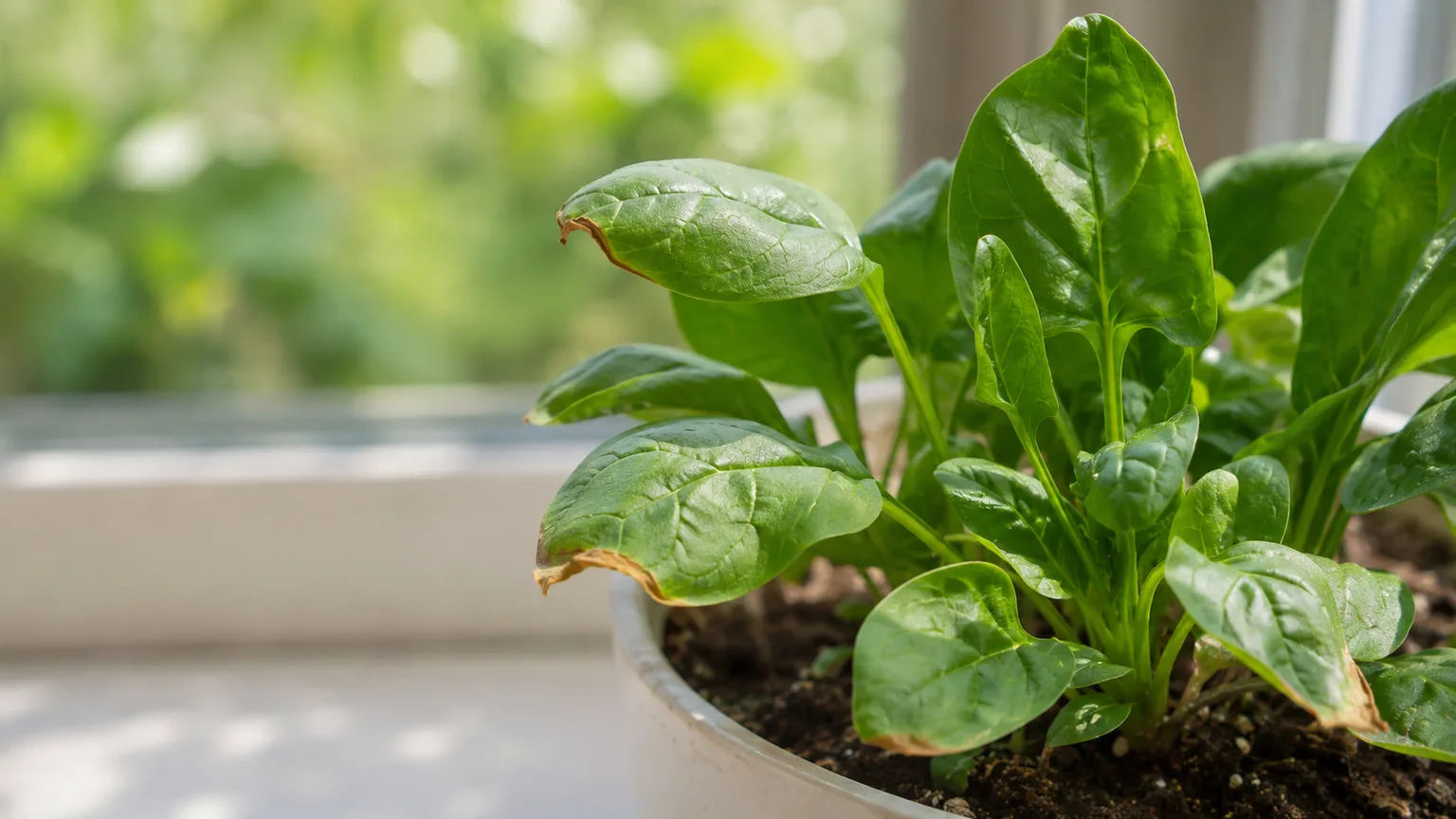
Low Humidity on Spinach: Causes, Checks & Fixes
This guide covers low humidity on Spinach. See also the general Low Humidity guide, watering, and light pages for this plant.
Low Humidity on Spinach: Causes, Checks & Fixes
Search intent: A grower sees dry or crisp spinach leaves and wants to know whether dry air is responsible, what to check first, and whether misting or watering will help.
SEO title options:
- Low Humidity on Spinach: Why Leaf Edges Turn Crispy
- How to Diagnose Low Humidity on Spinach
- Spinach Leaves Turning Dry? Check Air, Heat, and Soil Moisture
Best title: Low Humidity on Spinach: Why Leaf Edges Turn Crispy — it states the symptom and leaves room to correct the common confusion with heat and soil-water stress.
Meta description options:
- Crispy spinach leaves do not always mean low humidity. Check soil moisture, heat, wind and leaf age before choosing a fix.
- Learn why dry air is an uncommon stand-alone spinach problem, how to check for root-zone drought, and what to do first.
- Diagnose dry spinach leaf edges without misting blindly. Separate dry air from heat, underwatering, wet-soil root trouble and normal aging.
Best description: Crispy spinach leaves do not always mean low humidity. Check soil moisture, heat, wind and leaf age before choosing a fix.
Keywords:
- Primary: low humidity on spinach
- Supporting: spinach dry leaf edges, spinach brown leaf margins, spinach leaves crispy, spinach humidity needs, spinach heat stress, spinach underwatering, spinach wilting, spinach growing in dry weather, spinach container watering, spinach bolting in heat
NLP entities: Spinacia oleracea, palak, cool-season annual, rosette, shallow roots, root zone, transpiration, leaf turgor, moisture-retentive soil, wind exposure, heat stress, bolting, damping-off.
People Also Ask: Does spinach need humidity? Can dry air brown spinach leaves? Should I mist spinach? Why is spinach wilting in wet soil? Can spinach recover from brown edges? Is heat stress the same as low humidity?
E-E-A-T signals: Distinguishes an air-humidity label from measurable soil and weather conditions, checks the shallow root zone before treatment, and uses extension-style crop guidance plus horticultural editorial sources.
Featured snippets: Paragraph — whether spinach needs high humidity; list — first checks for dry leaf edges; table — low humidity vs drought vs heat vs root damage.
Helpful content: This guide explains why the houseplant-style humidity diagnosis often misleads for a garden annual, gives a soil-first check, and sets realistic limits for damaged leaves.
- Low Humidity on Spinach: Why Leaf Edges Turn Crispy
- How to Diagnose Low Humidity on Spinach
- Spinach Leaves Turning Dry? Check Air, Heat, and Soil Moisture
Low Humidity on Spinach: Why Leaf Edges Turn Crispy
- Crispy spinach leaves do not always mean low humidity. Check soil moisture, heat, wind and leaf age before choosing a fix.
- Learn why dry air is an uncommon stand-alone spinach problem, how to check for root-zone drought, and what to do first.
- Diagnose dry spinach leaf edges without misting blindly. Separate dry air from heat, underwatering, wet-soil root trouble and normal aging.
Crispy spinach leaves do not always mean low humidity. Check soil moisture, heat, wind and leaf age before choosing a fix.
- H1: Low Humidity on Spinach: Why Leaf Edges Turn Crispy
- Quick answer
- What dry air looks like on a spinach rosette
- Why humidity is rarely the only cause outdoors
- Check the shallow root zone before changing the air
- Separate dry air from heat, drought, root trouble, and aging
- First fix: water only if the root zone is drying
- When spinach will not recover from leaf damage
- Prevent repeat stress in beds and containers
- When to use this page vs other Spinach guides
- Related Spinach guides
Low Humidity on Spinach: Why Leaf Edges Turn Crispy
Quick answer
True spinach (Spinacia oleracea) is a fast-growing, cool-season garden annual, not a tropical houseplant. Low humidity by itself is not a reliable diagnosis for brown or crisp leaves. First check the soil around its shallow roots. If that layer is drying, water the root zone; if it is already damp, look at heat, wind, drainage, and leaf age before adding water or trying to humidify the crop. The RHS spinach guide emphasizes moisture-retentive soil and notes that hot, dry conditions can bring the short harvest to an end through bolting.
What dry air looks like on a spinach rosette
A crisp edge does not measure humidity or identify the cause. On spinach, the useful first question is whether the shallow roots have access to water. A general review of plant water stress describes loss of turgor and wilting among drought responses, but those symptoms still need to be matched to the growing conditions rather than treated as proof of low humidity (review of plant water-stress responses).
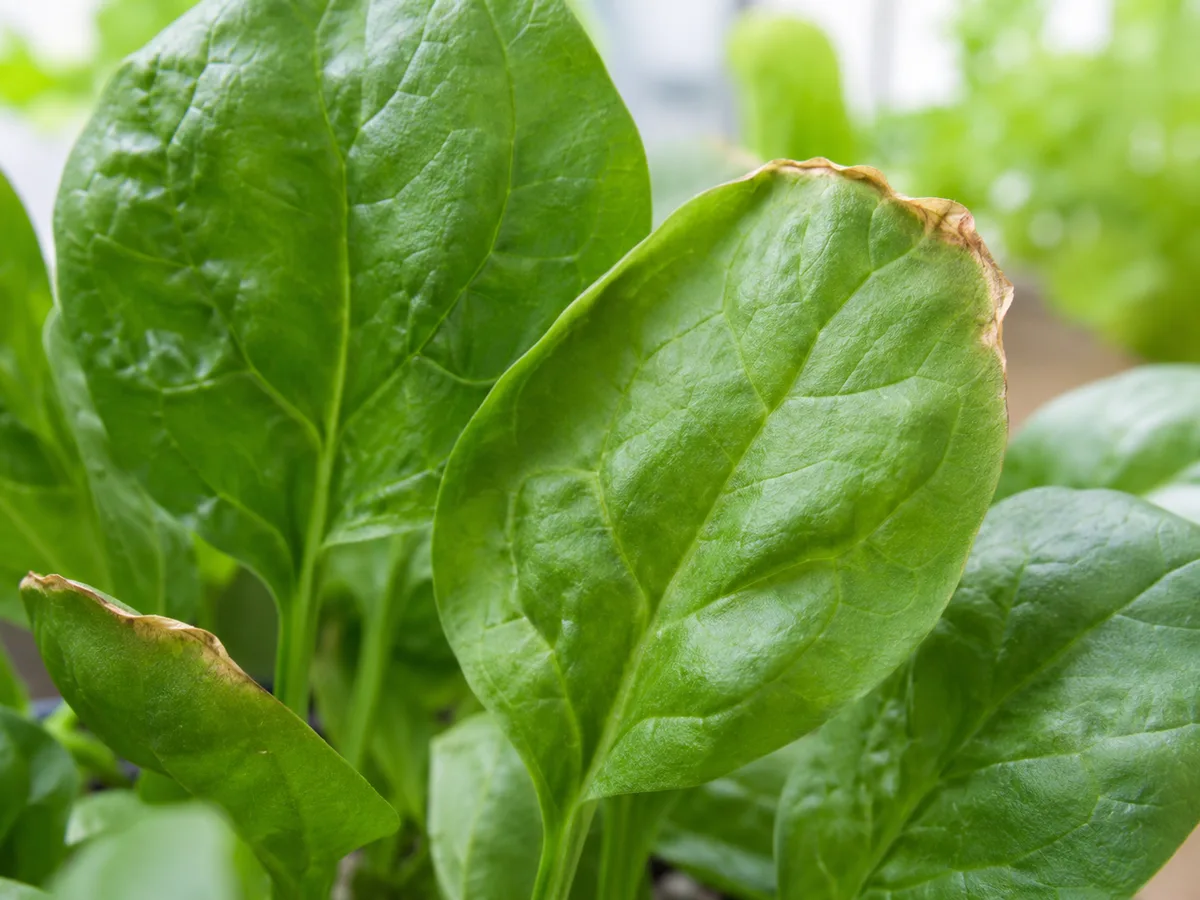
Dry margins can follow several stresses; check the root zone and recent weather before changing care.
Spinach usually grows as a low rosette of tender leaves. If the newest center leaves remain firm and the brown area is confined to one or two older outer leaves, a whole-plant humidity crisis is less likely. If many leaves wilt together, inspect moisture, drainage, and exposure instead. Cultivars vary in leaf shape, but the RHS describes spinach as a compact leafy crop that can grow in full sun or partial shade (spinach cultivar profile).
Why humidity is rarely the only cause outdoors
Humidity is a room or local-air measurement; garden spinach experiences changing sun, wind, soil moisture, and temperature at the same time. For that reason, a humidity reading alone cannot tell you whether a spinach plant has a water problem. Adding a humidifier around an outdoor bed is not a useful first response.
Spinach is specifically a cool-season crop. The RHS reports that hot, dry weather can trigger premature flowering, while Fine Gardening likewise links rising temperatures with bolting and recommends keeping soil moist and cool (Fine Gardening’s spinach guide). If the plant is sending up a central flower stalk and its leaves are becoming coarse or bitter, it may be reaching the end of its useful harvest rather than asking for higher humidity.
Check the shallow root zone before changing the air
Check early in the day, before midday heat changes how the leaves look. Feel the top couple of centimetres of soil beside the plant, not just the dry surface crust. In a pot, also lift it: a noticeably light container plus dry soil points toward a need for water. Spinach has shallow roots and performs best with steady moisture, so small containers and windy positions can dry faster than a garden bed. For crop-specific watering detail, use the Spinach watering guide.
If the soil is dry below the surface, give a slow, thorough watering at soil level and let excess drain away. Recheck the following morning. Utah State University Extension recommends regular irrigation and notes that moisture swings can toughen leaves and slow their development (spinach watering advice). Do not compensate for dry air by keeping the crown permanently wet; saturated soil can create a different root problem. If the soil is already moist, pause watering and compare the plant’s position with the Spinach light guide and the soil guide.
Read the pattern, not one brown edge
| What you notice | More useful first check |
|---|---|
| Crispy margins after hot, windy days; soil is dry below the surface | Water availability and exposure; dry air may add to demand but is not confirmed alone |
| Leaves droop while soil is dry | Root-zone drought; water thoroughly and reassess when temperatures cool |
| Leaves droop while soil stays wet | Drainage or root damage; do not add water just because foliage is limp |
| Seedlings topple, with a pinched or watery stem at soil level | Possible damping-off rather than humidity stress; Gardening Know How describes this characteristic spinach seedling pattern (seedling disease guide) |
| Older outer leaves decline while the center is healthy | Check normal leaf age and harvest history before changing the whole setup |
| A central flower stalk appears as weather warms | Bolting and crop maturity; sow a new cool-season batch rather than trying to raise humidity |
First fix: water only if the root zone is drying
When the root zone is dry, water the soil evenly rather than spraying leaves or misting the air. A named-author grow guide from Gardening in Steps advises checking more often in warm or dry weather (watering guidance). Use a light organic mulch to conserve moisture and keep the soil cool, as described by Fine Gardening.
When soil is already evenly moist, do not keep watering on a schedule to treat a suspected humidity problem. Instead, if the crop is in a pot, move it out of reflected heat from masonry and consider light afternoon shade during a warm spell. The RHS profile lists partial shade as suitable for spinach; its own Spinach overview explains the cool-season growing pattern. Avoid drastic pruning or repotting a garden annual just because one leaf edge is brown.
If the crop is indoors or under cover, keep it away from a heater or hot window and avoid sealing foliage inside a plastic cover. Leaf wetness is not a substitute for root-zone moisture.
When spinach will not recover from leaf damage
Brown, crispy tissue will not turn green again. Remove only leaves that are mostly dead or unsound; keep healthy leaves to harvest while they remain tender. The sign of improvement is a firm center and new leaves that expand without fresh edge damage, not the old margins returning to their original color.
If a plant remains limp despite moist soil, check whether the pot drains and whether roots are dark, water-soaked, or girdled. UC IPM lists wilting, collapse, and brown-to-black roots among spinach root-rot signs, and notes that excess water can damage roots even without a pathogen (UC IPM spinach diagnosis). In seedlings, a collapsing stem at the soil line can point to damping-off rather than a cue to increase humidity. For more on saturated soil and root damage, compare our general root-rot guide and overwatering guide.
Prevent repeat dry-edge stress
Keep the root zone evenly moist, but not waterlogged. In containers, check more often during hot or dry weather because the small volume of mix can lose water quickly. Use fertile, moisture-retentive soil with drainage; the Spinach soil guide covers container and bed mixes. In a warm climate, schedule spinach for the cooler growing window and use afternoon shade to moderate heat rather than trying to make an outdoor bed humid.
Harvest outer leaves while the center is actively growing. Once a flower stalk rises, treat the crop as bolting and plan a fresh sowing in suitable cool weather. Steady moisture can limit one source of stress, but it cannot make spinach behave like a heat-loving crop. See the Spinach fertilizer guide only if growth stays pale after moisture, drainage, and seasonal conditions are appropriate; fertilizer is not a treatment for crispy margins.
When to use this page vs other Spinach guides
Use this page when leaf edges look dry and you are unsure whether air conditions are involved. If the soil is dry and the whole plant wilts, start with the Spinach watering guide; if the soil remains wet or the crown softens, use the root and overwatering guides. If a central flower stalk has appeared, the main issue is likely heat- or season-related bolting, not low humidity.
Related tool
If you are growing spinach under cover and can measure the air, use the Humidity Calculator to record the reading alongside temperature and soil moisture. Treat it as context, not as a diagnosis on its own.
Related Spinach guides
- The Spinach problems hub helps route other leaf and root symptoms.
- The Spinach overview explains the cool-season rosette and normal harvest cycle.
- The Spinach light guide is for plants exposed to intense afternoon sun or deep shade.
- The Spinach soil guide helps when containers dry too quickly or beds stay soggy.
- The Spinach watering guide covers dry soil, damp-soil wilting, and steady moisture.
For general humidity effects across plants, see the low-humidity guide. Here, spinach’s shallow root zone and cool-season timing are the more useful starting points.
Does spinach need high humidity?
Usually not as a separate growing requirement. Garden spinach is more likely to suffer when hot, dry or windy weather dries its shallow root zone faster than you replace water. Check the soil before changing the air around the plant.
Can low humidity make spinach leaves turn brown?
Brown margins alone do not confirm low humidity. Check soil moisture, heat, wind exposure and whether the damage is limited to older outer leaves.
Should I mist spinach to raise humidity?
Misting is not a useful first fix for an outdoor crop: it wets the foliage but does not correct dry soil. Water the root zone when it is drying and keep leaves as dry as practical.
Why is my spinach wilting when the soil is damp?
Wilting in damp soil is not a cue to add more water. Check that the container drains, the crown is firm and roots are not dark or soft; root damage can prevent a plant from taking up water.
Will crispy spinach leaves become green again?
No. Brown, dry tissue does not recover its green color. Judge improvement by whether new leaves emerge normally and the damage stops spreading.