Mold on Spinach Soil: Causes, Checks, and Safe Fixes
Quick answer
A thin white fuzz limited to the potting mix is usually surface fungus feeding on organic matter, not a disease of spinach. Lift away loose growth, then keep the shallow root zone evenly moist without leaving it saturated.
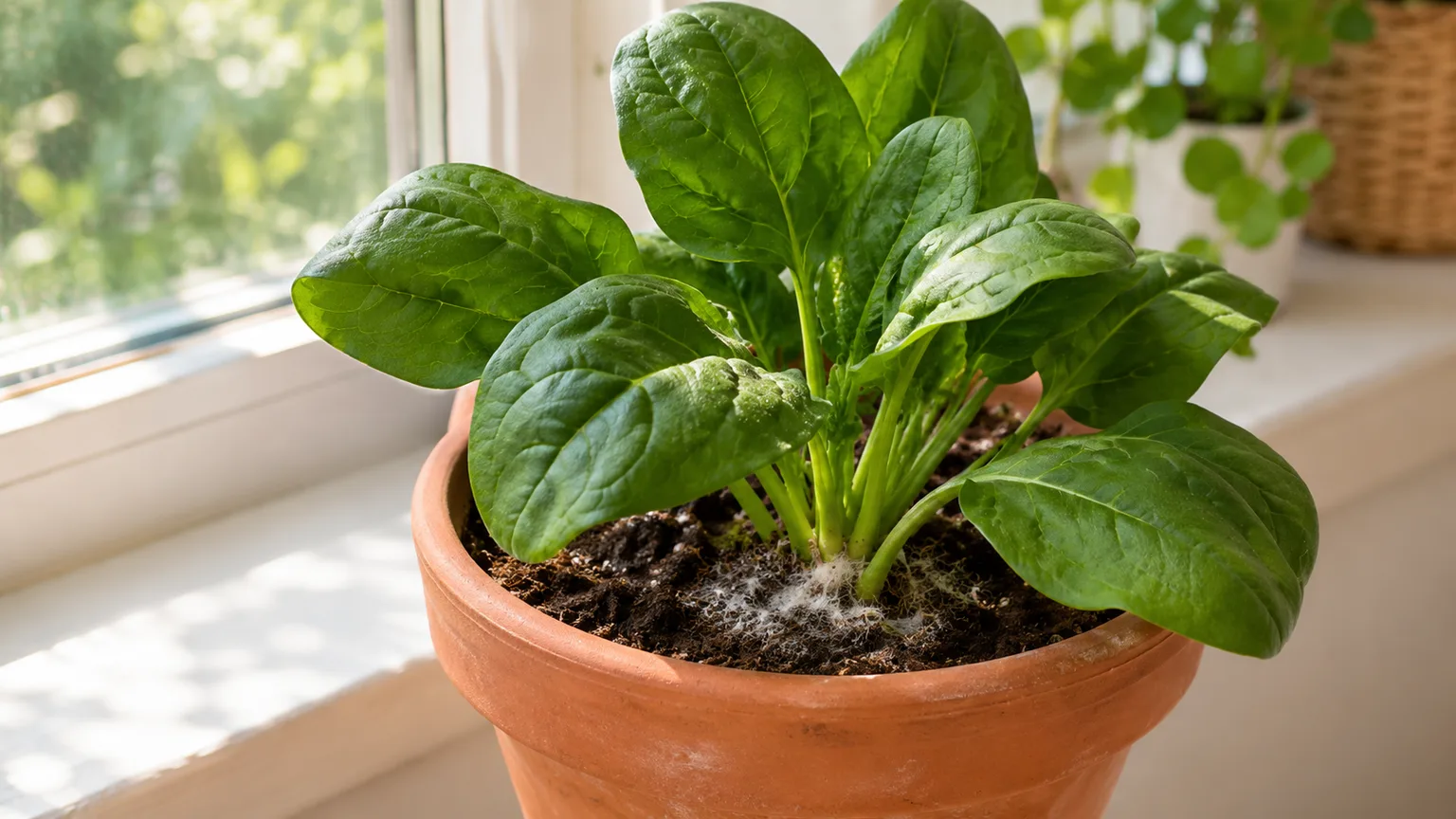
Mold on Spinach Soil: What the White Fuzz Means and What to Do
This guide covers mold on soil on Spinach. See also the general Mold on Soil guide, watering, and light pages for this plant.
Mold on Spinach Soil: What the White Fuzz Means and What to Do
Quick answer
A thin white or grayish fuzz limited to the potting mix is usually a surface fungus using damp organic matter. It does not by itself mean spinach has a root disease. Lift off loose growth and fallen leaves with a clean spoon, staying at the surface; then check moisture before watering again. Spinach has shallow roots, so the goal is an evenly moist root zone, not a dry pot.
For general causes and identification of mold on soil, use the symptom guide. This page focuses on spinach in a container, where shallow roots make the usual advice to “let the soil dry out” too blunt.
What mold on spinach soil looks like
Surface mold often appears as a thin, soft white web or powdery film on the mix, decomposing leaves, or bits of bark. It remains on the soil rather than forming lesions in spinach tissue. Saprophytic fungi feed on dead organic material in the mix; the visible surface growth is often more of a moisture and airflow clue than proof that the plant is infected (LaPlant’s overview of potting-soil mold).
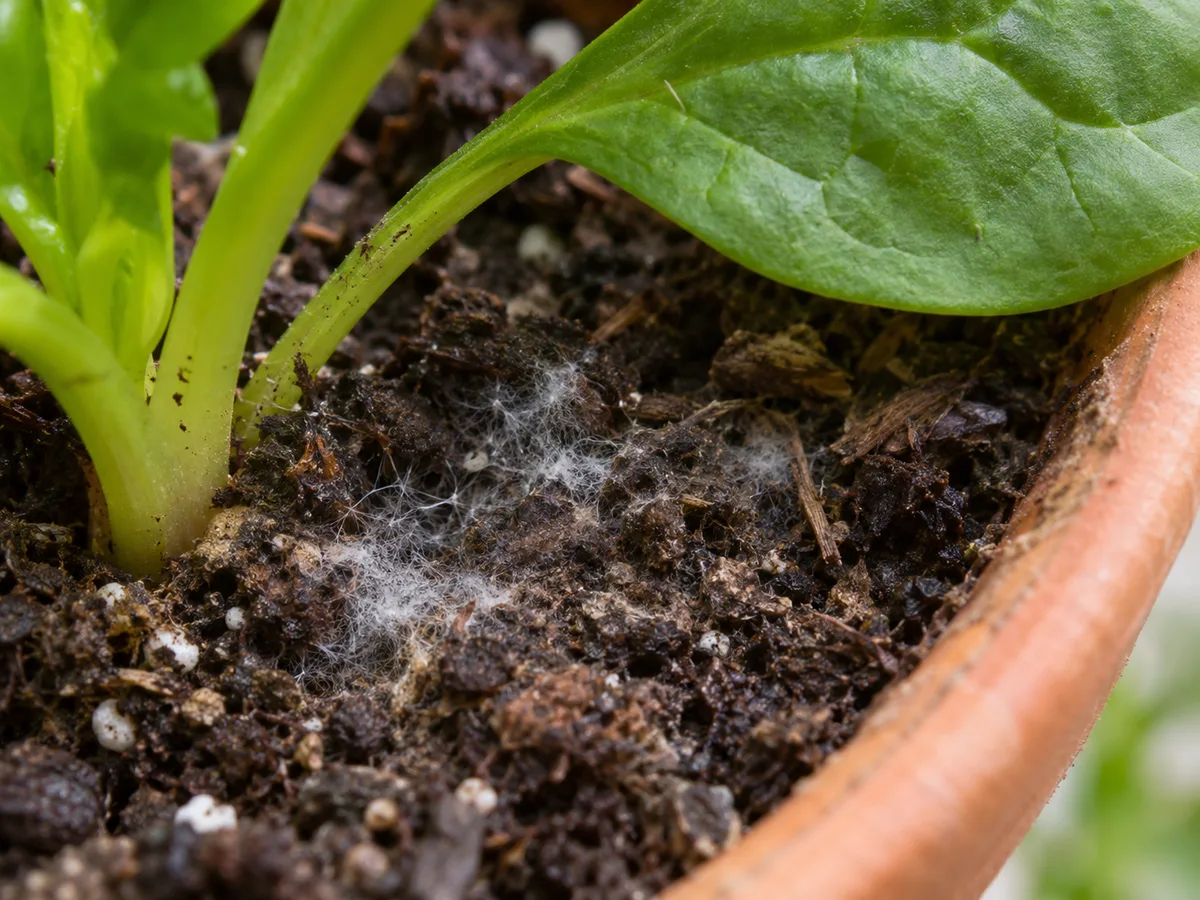
Fine surface growth on damp mix is different from disease lesions on spinach leaves.
Spinach is grown for its leaves, so inspect them as well as the pot. Downy mildew is a different problem: it makes yellow or pale patches on the upper leaf surface and grayish or purplish growth beneath it. A white patch on the mix alone does not match that pattern (Gardening Know How’s spinach downy-mildew guide). If leaves are affected, compare with the spinach yellow-leaves guide and remove suspect leaves from the harvest.
Why mold appears around spinach
Spinach grows quickly but has a shallow root system. Its soil should stay evenly moist while draining freely; UC IPM notes that saturated conditions can favor crown and lower-leaf rot in spinach (UC IPM’s watering guidance). A surface that stays wet for long periods can support fungi feeding on organic ingredients, particularly when the pot sits in a full saucer or receives frequent small top-ups.
In a container, check whether water can escape through open drainage holes and whether the potting mix is compacted. Poor drainage, low air movement, and decaying leaves on the soil surface can all contribute to mold on potting mix (Family Handyman’s mold and drainage overview). This does not mean spinach should be kept dry: the crop’s shallow roots make it less forgiving of a complete dry-down than many established houseplants.
If the plant is crowded, remove only dead leaves touching the mix and make sure the rosette is not pressed against a damp wall or cover. Spinach is a low, leafy annual (NC State Extension’s species profile); keeping the crown clear and giving leaves room to dry after watering is more useful than exposing the pot to harsh heat. For the crop’s full seasonal needs, see the Spinach overview and Spinach light guide.
First fix: remove the loose surface growth
Use a clean spoon to lift away loose mold and the decaying leaf fragments beneath it. Work shallowly and stop if fine roots are exposed; spinach roots can run close to the surface. Do not discard the plant or replace all its mix for a small patch when the crown is firm and the leaves are growing normally.
After cleaning, check the mix about 1–2 cm below the surface. If it still feels wet, wait before watering. When it is just beginning to dry, water the root zone evenly and let excess drain away. UC IPM describes spinach as a shallow-rooted crop that benefits from frequent, shallow irrigation while avoiding saturation (UC IPM).
Check that this is not rot, gnats, or leaf disease
Use these signs to decide whether surface cleaning is enough:
| What you see | More likely explanation | Next step |
|---|---|---|
| Fine fuzz only on the mix; leaves and crown stay firm | Surface fungus on organic matter | Remove loose growth and adjust the moisture pattern |
| Pot remains wet, spinach wilts, or the crown turns soft or dark | Root-zone stress or crown rot | Check drainage and roots; use the Spinach root-rot guide if tissue is soft or discolored |
| Tiny dark flies rise from the mix; pale larvae may be in the top layer | Fungus gnats | Reduce persistent surface wetness without drying spinach roots; see fungus gnats on spinach |
| Yellow patches or gray-purple growth appear on the leaf undersides | Possible spinach downy mildew | Keep affected leaves out of the harvest and compare with the Spinach problems hub |
Penn State Extension distinguishes fungus-gnat larvae in soil from leaf diseases such as powdery mildew and root rot; the location of the symptom matters (Penn State Extension). Mold on soil should not be diagnosed from a white color alone.
Keep the mix moist without keeping its surface soggy
Spinach needs regular moisture for tender leaf growth, especially in small containers that dry faster than a bed. Check the mix rather than following a fixed calendar: a finger press near the edge of the pot helps you judge the surface and shallow root zone. Water when the mix is beginning to lose its wet feel, then empty standing runoff. The Spinach watering guide covers the crop’s regular moisture checks; the Spinach soil guide covers drainage and mix structure.
Avoid two extremes: frequent sips that keep only the surface damp, and a long dry spell that leaves the whole root ball dry. If the mix smells sour, drains very slowly, or stays wet long after watering, inspect the drainage holes and texture before changing the watering amount. Do not add fungicide, cinnamon, bleach, or peroxide to an edible crop’s soil as a first response; these treatments do not correct trapped moisture and can expose edible leaves to unapproved residues.
Recovery and harvest
If the crown remains firm and new leaves look normal, surface mold alone is unlikely to require a drastic rescue. The fuzz may return if the surface stays wet or dead material remains in the pot, so judge progress by a clean surface and stable new growth rather than by expecting old marks to disappear.
Do not eat soil-contaminated or visibly diseased leaves. Harvest clean leaves separately, rinse them under running water, and discard leaves with decay or suspicious lesions. If the crown is soft, roots are dark and mushy, or the plant keeps wilting while the mix is wet, treat that as a root-zone problem rather than a surface-mold problem; young spinach with a collapsing crown may not recover.
When to use this page vs other Spinach guides
Use this page when fuzzy growth is confined to the potting mix. The differential table above links to Spinach guides for soft roots or a failing crown, flies in the soil, and leaf symptoms. Use the moisture checks earlier in this article for a persistently wet or dry root zone, and return to the Spinach problems hub if none of those patterns fits.
Use the Plant Problem Diagnosis Tool to compare symptoms before changing multiple care conditions.
Related Spinach guides
- Spinach soil guide for drainage and mix texture.
- Spinach watering guide for keeping shallow roots evenly moist.
- Spinach light guide if a dim, crowded location is slowing surface dry-down.
- Spinach root-rot guide if the crown or roots are soft or dark.
- Fungus gnats on spinach if insects are emerging from the pot.