Aphids on Spinach: Identification and Control
Quick answer
Look under spinach leaves and around the crown for clusters of soft-bodied insects, pale cast skins, or sticky honeydew. First, rinse or remove a small localized colony and recheck the rosette; use only a pesticide labeled for edible spinach if a larger infestation persists, and follow its harvest interval.
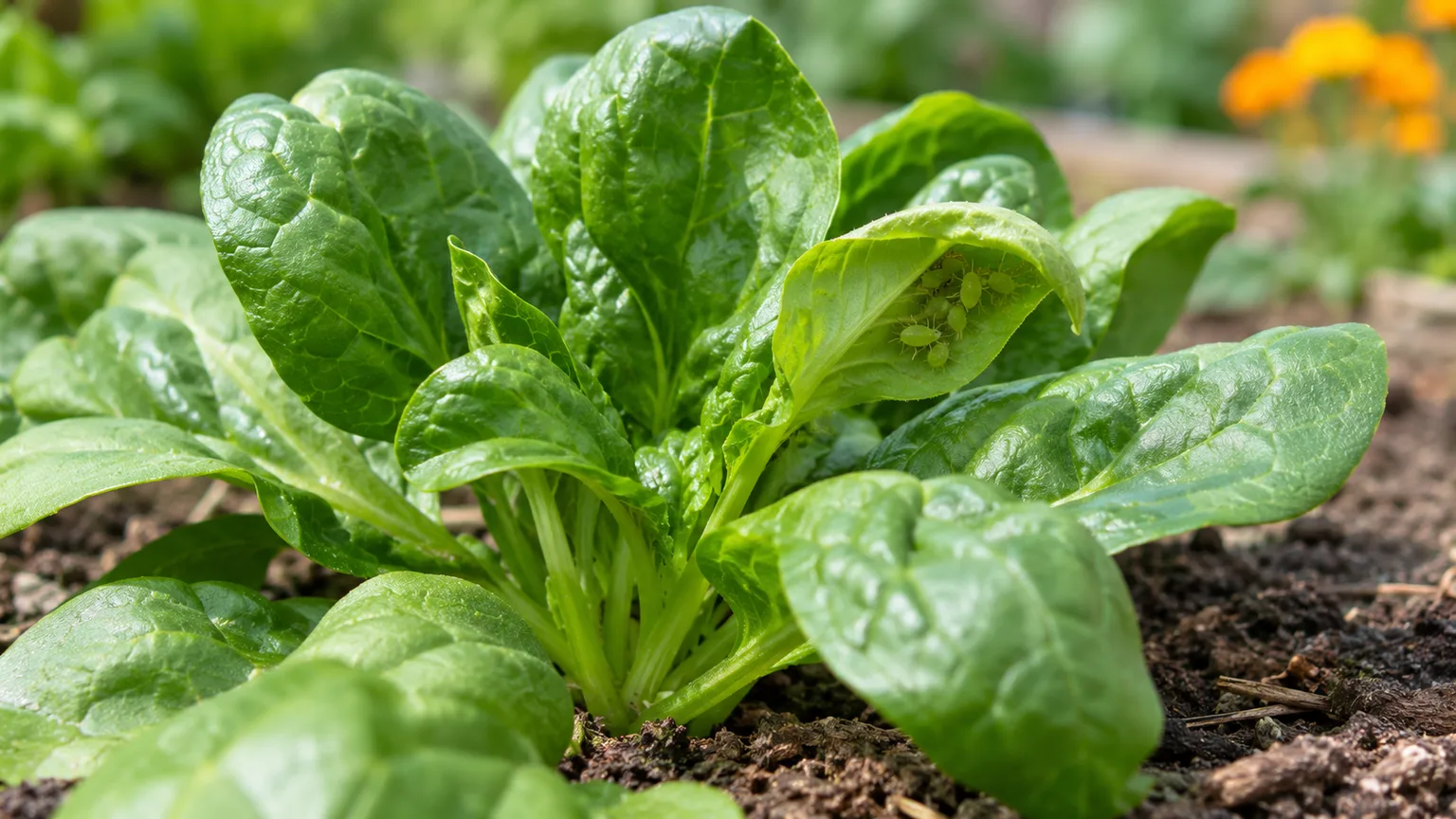
Aphids on Spinach: How to Spot Them and Protect the Harvest
This guide covers aphids on Spinach. See also the general Aphids guide, watering, and light pages for this plant.
Aphids on Spinach: How to Spot Them and Protect the Harvest
Search intent
Readers want to identify insects on edible spinach, stop an infestation without contaminating the harvest, and tell aphid damage from heat-related bolting or other leaf problems.
SEO title planning
- Curiosity-driven: What Are the Tiny Bugs on My Spinach? Check for Aphids
- Straightforward: Aphids on Spinach: Identification and Control
- Benefit-driven: How to Remove Aphids from Spinach Before Harvest
Best title: Aphids on Spinach: Identification and Control — it names the crop and problem and promises practical diagnosis and management.
Meta description planning
- Find aphids hiding in spinach rosettes, choose a crop-safe first step, and protect tender leaves before harvest.
- Learn where aphids hide on spinach, how to confirm an infestation, and which control steps fit an edible leafy crop.
- Spot aphids, honeydew, and cast skins on spinach, then manage the colony without confusing it with heat-driven bolting.
Best description: Find aphids hiding in spinach rosettes, choose a crop-safe first step, and protect tender leaves before harvest. It previews identification, action, and the harvest concern.
Primary and supporting keywords
- Primary: aphids on spinach
- Supporting: spinach aphid control, green peach aphid spinach, potato aphid spinach, aphids on spinach leaves, spinach leaves sticky, aphid honeydew on spinach, wash aphids off spinach, edible crop pest control, spinach bolting vs aphids, aphid cast skins
NLP entities
Spinacia oleracea, green peach aphid, potato aphid, nymph, honeydew, cast skin, spinach rosette, leaf underside, crown, lady beetle, lacewing, hoverfly larva, insecticidal soap, preharvest interval, bolting.
People Also Ask questions
- Where do aphids hide on spinach?
- What do spinach aphids look like?
- Can I wash aphids off spinach?
- Are curled spinach leaves caused by aphids?
- Can I eat spinach after aphids have been on it?
- What is the first treatment for aphids on spinach?
- Does spinach bolt because of aphids?
E-E-A-T signals
The guide uses crop-specific extension pest guidance, distinguishes the two common aphids, prioritizes physical removal, and treats pesticide labels and harvest intervals as controlling instructions.
Featured snippet opportunities
- Paragraph: quick aphid identification on spinach
- List: where to inspect inside the spinach rosette
- Steps: first response to a small colony
- Table: aphids versus bolting and leafminer symptoms
Helpful content checklist
The page explains how low, overlapping spinach leaves change inspection and rinsing; gives a first step that avoids unnecessary spraying; and separates pest signs from heat-related crop maturity.
- Aphids on Spinach: What They Look Like and How to Control Them
- Aphids on Spinach: Identification and Control
- How to Remove Aphids from Spinach Before Harvest
Aphids on Spinach: Identification and Control
- Find aphids hiding in spinach rosettes, choose a crop-safe first step, and protect tender leaves before harvest.
- Learn where aphids hide on spinach, how to confirm an infestation, and which control steps fit an edible leafy crop.
- Spot aphids, honeydew, and cast skins on spinach, then manage the colony without confusing it with heat-driven bolting.
Find aphids hiding in spinach rosettes, choose a crop-safe first step, and protect tender leaves before harvest.
- Quick answer
- What aphids look like on spinach
- Where aphids hide in a spinach rosette
- Aphids or something else? A spinach-specific check
- First fix: remove the small colony
- When physical removal is not enough
- Protecting a spinach crop as harvest approaches
- Why nitrogen and natural enemies matter
- Recovery and prevention in a short-season crop
- Related Spinach guides
- When to use this page vs other Spinach guides
- Related tool
Quick answer
Look under spinach leaves and around the crown for clusters of small, soft-bodied insects, pale shed skins, or sticky honeydew. First, rinse a small colony from the plant or remove the most heavily infested leaf, then inspect nearby rosettes again. Spinach leaves sit low and overlap, so a strong spray of water can miss pests tucked into the crown; check the undersides and the folded youngest leaves instead. Washington State University notes that water may be less effective on spinach’s low foliage, and recommends hand removal for small localized infestations (WSU Hortsense).
What aphids look like on spinach
Aphids are tiny, pear-shaped, soft-bodied insects, often green or yellow-green on spinach. The common green peach aphid can range from dark green to yellow and lacks a waxy coat; potato aphids are larger and may be pink or green. You do not need to identify the exact species before taking a first physical-control step, but a hand lens helps distinguish a colony from leaf grit or shed plant material (UC IPM).
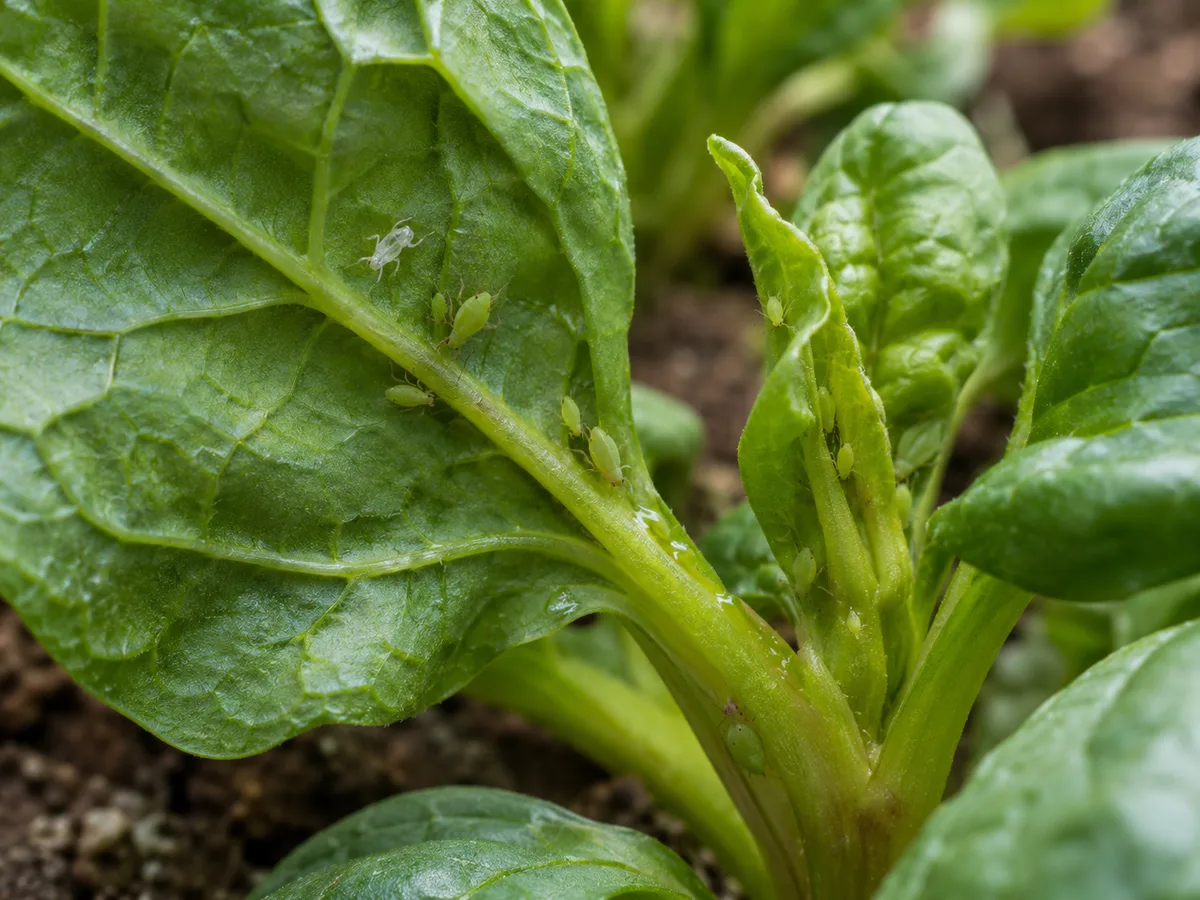
Small aphid colonies often gather along leaf veins and around tender growth in a spinach rosette.
Look for groups on leaf undersides, along the stalks, and in fresh growth. Feeding can leave leaves yellowed, curled, distorted, or wilted. Sticky honeydew and tiny pale cast skins are useful clues when the insects are hidden between leaves; honeydew may also attract ants or develop dark sooty growth (WSU Hortsense).
Where aphids hide in a spinach rosette
Spinach grows as a low rosette, with overlapping leaves emerging from a central crown. Start at the newest leaves and work outward, lifting each leaf rather than looking only across the top surface. The folds around young growth and the lower side of the petiole can shelter a few aphids even when the exposed leaves look clean.
In a dense planting, check neighboring plants too. Aphids often appear in patches rather than evenly across a bed, so finding one colony is a reason to inspect nearby crowns, not to spray every plant automatically. If you grow spinach in a container, examine the leaf bases above the potting mix as well as the undersides.
Aphids or something else? A spinach-specific check
| What you see | More likely explanation | Check next |
|---|---|---|
| Small insects in groups, pale shed skins, or sticky spots | Aphids | Turn over leaves and inspect the crown for live insects. |
| A central stalk rising as days warm, with leaves changing in quality | Bolting | Check for a flower stalk; bolting is part of spinach’s transition to seed production, not a pest colony. |
| Irregular mines or translucent winding trails within a leaf | Leafminer activity | Hold the leaf to the light and look for a larva or trail inside the leaf tissue. |
| Yellowing without insects, honeydew, or cast skins | Another stress or normal aging | Compare with yellow leaves on Spinach and review recent watering and light before treating for aphids. |
Spinach is a cool-season annual, and warmer, longer days can push it toward bolting; that change may coincide with pest discovery but does not itself confirm aphids. For general insect identification and management, see the aphids guide. If the main change is a flower stalk rather than a colony, compare it with your Spinach overview and Spinach light guide.
First fix: remove a small colony
For a few colonies, first rinse or wipe the insects from the affected leaves. Support the leaf with one hand and direct a steady stream of clean water across the undersides and stalks; because spinach foliage is close to the soil, avoid blasting mud onto the leaves or splashing soil into the crown. If water cannot reach a tight cluster, pinch off that leaf and discard it rather than leaving it beside the bed. WSU recommends hand removal for small infestations and notes that water can be ineffective against spinach’s low foliage (WSU Hortsense).
Recheck the crown and adjacent plants after the leaves dry. Repeat physical removal if live aphids remain, and look for lady beetles, lacewing larvae, hoverfly larvae, or parasitized aphids before considering a spray. Natural enemies can suppress some colonies, but severe field populations may outpace them; UC IPM describes lady beetles, syrphid flies, lacewings, and parasitoid wasps among aphid enemies (UC IPM).
When physical removal is not enough
If colonies return quickly across multiple plants or seedlings begin to weaken, consider a product only when its label specifically allows use on spinach and aphids. Follow all directions, protective measures, repeat intervals, and the preharvest interval on the label. Never assume a product safe for ornamentals is suitable for an edible crop, and do not substitute a homemade dish-soap mixture for a labeled product. The Pacific Northwest handbook lists pesticide options for spinach aphid, while WSU advises checking the label’s time between treatment and harvest (PNW Handbook, WSU Hortsense).
Avoid broad-spectrum insecticides when beneficial insects are active unless crop loss makes intervention necessary. Some products can harm natural enemies as well as aphids, and repeat sprays may be needed for labeled products because coverage matters. Treat only the affected crop according to the label, then monitor; do not copy commercial field rates or timing into a home garden.
Protecting a spinach crop as harvest approaches
Spinach is harvested for its leaves, so colonies can make otherwise usable foliage unpleasant or unmarketable even before a plant is visibly weakened. Before picking, inspect the folds and undersides, remove infested leaves, and rinse the harvest thoroughly under clean running water, separating overlapping leaves to dislodge grit and insects. Washing harvested leaves does not control aphids left on the plant, so continue checking the living rosette.
If you used a pesticide, harvest only after the product’s labeled interval has elapsed. When aphids are confined to a few leaves close to harvest, removing those leaves and monitoring may be simpler than spraying. For general spinach harvest timing and how to pick outer leaves without removing the central growing point, see Spinach growing and harvest guidance from UW Extension and GrowVeg’s spinach guide.
Why nitrogen and natural enemies matter in spinach beds
UC IPM reports heavier aphid populations on spinach receiving excess nitrogen. Avoid extra feeding as a reaction to curled or yellowed leaves: it will not remove a pest colony and may encourage tender growth that aphids can exploit. Use your normal crop fertility plan, and review the Spinach fertilizer guide if you are unsure whether the crop actually needs feeding.
Keep an eye out for lady beetles, lacewings, hoverfly larvae, and tiny parasitic wasps. WSU recommends encouraging natural enemies and avoiding broad-spectrum insecticides that kill beneficial insects. This does not mean leaving a damaging colony unchecked; it means beginning with inspection and targeted removal, then escalating only if the infestation persists (WSU Hortsense).
Recovery and prevention in a short-season crop
Leaves that curled or distorted while aphids fed may remain misshapen. Progress is better measured by fewer live insects, no new honeydew, and clean new leaves from the crown. Check the same plants every few days while the crop is actively growing. If aphids keep returning, inspect weeds and nearby plants that may be hosting colonies, and consider a row cover for a future planting before pests arrive; UC IPM notes that some covers have reduced aphid populations, though setup and practicality vary by planting size.
Spinach prefers cool growing conditions and consistent moisture. Stress from heat and longer days can lead to bolting, while excess nitrogen can support larger aphid populations; these are different pathways and need different responses. Sow in the cooler part of your local season, avoid overfeeding, and inspect leaf undersides during routine harvest. For water-related droop, use the Spinach watering guide; for yellowing without visible pests, compare symptoms with yellow leaves on Spinach and wilting on Spinach. GrowVeg’s guide to bolting covers the effect of warm, long days on cool-season crops.
Related Spinach guides
- Use the Spinach overview for whole-crop growing conditions and seasonal planning.
- Use Spinach watering when leaves droop but no aphids, honeydew, or cast skins are present.
- Use yellow leaves on Spinach when yellowing occurs without an insect colony.
- Use wilting on Spinach when the plant remains limp after aphids are removed or the soil condition may be involved.
- Use Spinach light guidance when the crop is stretching or bolting as the season warms.
- Use the Spinach problems hub to compare other crop symptoms.
When to use this page vs other Spinach guides
Use this page when you find live aphids, cast skins, or honeydew on spinach. Choose the watering, yellow-leaves, or wilting guides when those symptoms appear without aphids; they follow separate diagnostic paths and are not treated with pest controls.
Related tool
Use the Pest Identifier Tool to compare a close-up observation with common pest patterns before choosing a treatment.
FAQ 1 Question: Where should I look for aphids on spinach? Answer: Turn over leaves and inspect the youngest folded growth, leaf stalks, and tight crown. Also look for pale cast skins and sticky honeydew when live insects are hard to see.
FAQ 2 Question: What should I do first if I find aphids on spinach? Answer: Rinse or wipe a small colony from the affected leaves, or remove a heavily infested leaf. Then inspect nearby rosettes and recheck the crown after the foliage dries.
FAQ 3 Question: Will spinach leaves recover after aphids are removed? Answer: Curled or distorted leaves may stay damaged. Recovery means the colony stops spreading and new leaves emerge clean from the crown.
FAQ 4 Question: Can I spray spinach for aphids right before harvest? Answer: Use only a pesticide whose label permits it for aphids on spinach, and observe its preharvest interval. For a small infestation, physical removal may be more practical close to harvest.
FAQ 5 Question: How can I prevent aphids on spinach? Answer: Inspect leaf undersides regularly, avoid excess nitrogen, and preserve beneficial insects by avoiding unnecessary broad-spectrum sprays. Row covers may help protect a future planting when installed before aphids arrive.