Pygmy Date Palm Care Guide: Light, Water, Size & Safety
Phoenix roebelenii
Grow Phoenix roebelenii in bright filtered light and slightly moist, well-drained soil. Plan for its 5–6 ft indoor size and sharp frond-base spines.
Pygmy Date Palm Care Guide
Start with wateringThe most common care mistake for Pygmy Date PalmWatering guide →Pygmy Date Palm care essentials
Light
Bright, filtered light indoors; medium to high light without harsh afternoon sun
Water
Keep the potting mix slightly moist during active growth, but never waterlog it. Water thoroughly when the upper layer begins to dry and let all excess drain away.
Soil
Use a moist but freely draining palm potting mix in a container with drainage holes.
Humidity
Temperature
Warm, frost-free conditions; keep indoor plants away from cold drafts.
Fertilizer
About Pygmy Date Palm
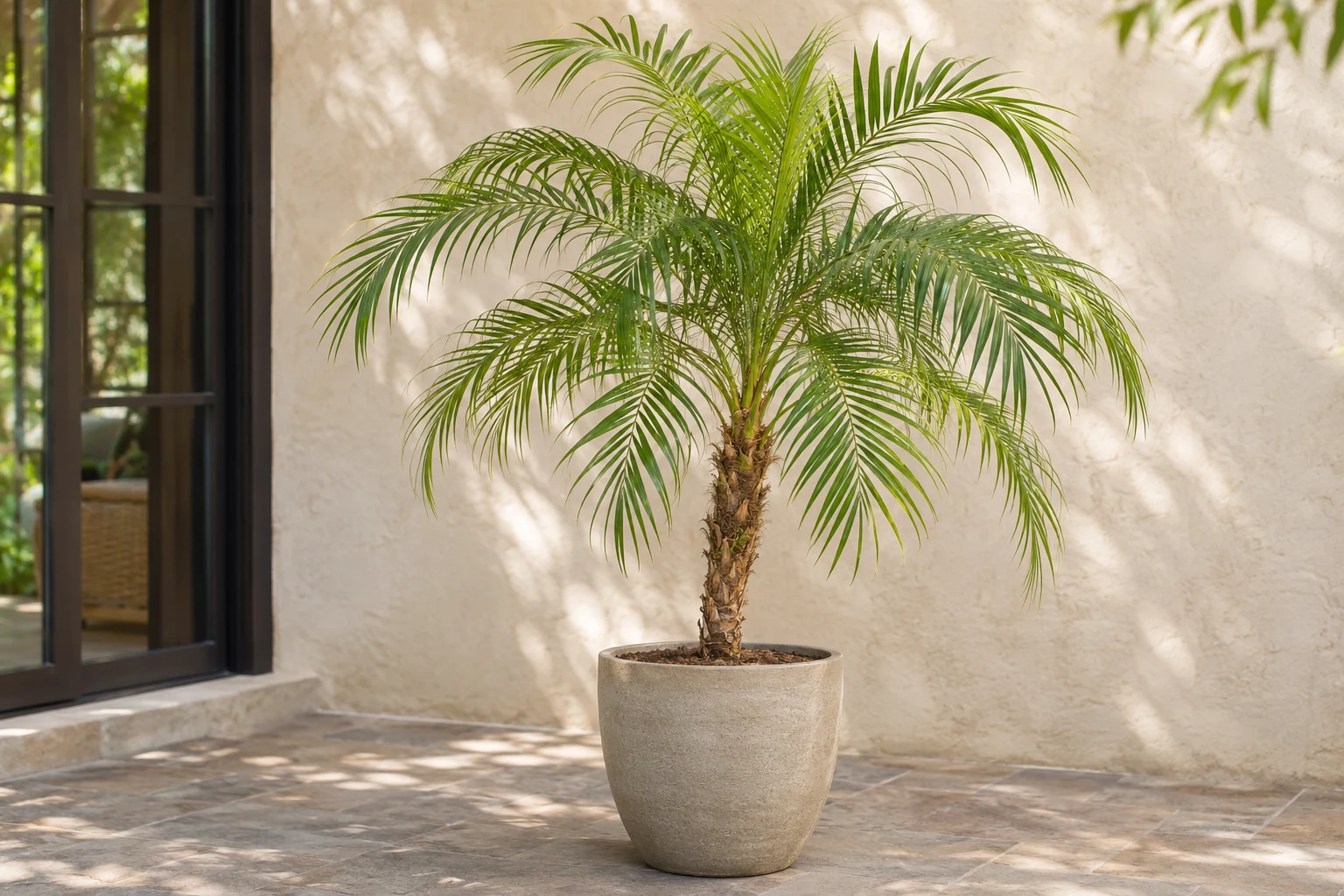
Pygmy Date Palm is native to Southern China and mainland Southeast Asia, including Laos, Myanmar, Thailand, and Vietnam, typically reaches 6–12 ft tall outdoors with a 5–8 ft spread; usually about 5–6 ft tall indoors indoors, with slow growth. Pygmy Date Palm has a palm like growth habit and part of the Arecaceae family. It is also known as Robellini Palm, Dwarf Date Palm, Miniature Date Palm, and Roebelin Palm.
| Detail | Information |
|---|---|
| Also known as | Robellini Palm, Dwarf Date Palm, Miniature Date Palm, Roebelin Palm |
| Native region | Southern China and mainland Southeast Asia, including Laos, Myanmar, Thailand, and Vietnam |
| Mature size | 6–12 ft tall outdoors with a 5–8 ft spread; usually about 5–6 ft tall indoors |
| Growth rate | Slow |
| Growth habit | Palm Like |
| Scientific name | Phoenix roebelenii |
| Family | Arecaceae |
How to care for Pygmy Date Palm?
How much light does Pygmy Date Palm need?
Bright, filtered light indoors; medium to high light without harsh afternoon sun. Partial shade outdoors. Full sun outdoors after gradual acclimation. direct sun
- Bright - Bright, filtered light indoors; medium to high light without harsh afternoon sun.
- filtered light indoors - Bright, filtered light indoors; medium to high light without harsh afternoon sun.
- medium to high light without harsh afternoon sun - Bright, filtered light indoors; medium to high light without harsh afternoon sun.
- Partial shade outdoors - Partial shade outdoors.
- Full sun outdoors after gradual acclimation - Full sun outdoors after gradual acclimation.
- direct sun - direct sun.
When should you water Pygmy Date Palm?
Keep the potting mix slightly moist during active growth, but never waterlog it. Water thoroughly when the upper layer begins to dry and let all excess drain away.
- Feel the upper inch of mix - Water thoroughly when the upper layer begins to dry and let all excess drain away.
- water when it starts to dry - Water thoroughly when the upper layer begins to dry and let all excess drain away.
- then empty the saucer so the roots do not sit in water - Keep the potting mix slightly moist during active growth, but never waterlog it.
- Drain excess water - Water thoroughly when the upper layer begins to dry and let all excess drain away.
What soil works best for Pygmy Date Palm?
Use a moist but freely draining palm potting mix in a container with drainage holes.
- Palm potting mix - Use a moist but freely draining palm potting mix in a container with drainage holes.
- Add coarse perlite or pumice if the mix holds water too long - Use a moist but freely draining palm potting mix in a container with drainage holes.
Grower notes for Pygmy Date Palm
Bright filtered light is the indoor target
Give Pygmy Date Palm a bright position with filtered or indirect light. NC State Extension notes that it prefers medium to high light and should be protected from hot afternoon sun. Outdoors it can tolerate partial shade or full sun, but acclimate a container gradually before moving it into stronger direct light.
Keep moisture steady without leaving a wet pot
During active growth, keep the mix slightly moist rather than bone dry or waterlogged. Check the upper inch and water when it begins to dry, then let the pot drain fully. The palm grows along fast-moving rivers in its native range, but that does not mean its indoor roots should stand in a saucer of water.
Plan for a real palm-sized container plant
A container slows growth but does not keep this palm tiny. NC State reports typical indoor height around 5–6 feet; outdoor specimens are reported from roughly 6.5 to 12 feet tall and can spread 5–8 feet. Nurseries often pot several young plants together for a fuller, multi-trunk look, so allow room for the arching crown.
Treat every frond base as sharp
The lower leaflets at the petiole base are modified into rigid spines about 2–3 inches long. Wear gloves and long sleeves when moving or pruning the palm, and keep it out of walkways where people, children, or pets might brush against the fronds.
Separate the pygmy palm from the date crop
Despite the shared genus name, Phoenix roebelenii is a distinct, compact ornamental species, not Phoenix dactylifera, the familiar Date Palm. Pygmy Date Palm has its own small purple drupes and care needs; do not apply date-crop expectations or another Phoenix species' mature size to it.
Is Pygmy Date Palm pet safe?
ASPCA lists Pygmy Date Palm as non-toxic to cats, dogs, and horses. Its sharp leaf-base spines can still puncture skin, so place it away from pet traffic and handling routes.
The ASPCA lists Miniature Date Palm, with Pygmy Date Palm as an alternate common name, as non-toxic to cats, dogs, and horses; its listing uses the spelling Phoenix robellinii. This describes toxicity, not the physical danger from the palm's sharp 2–3-inch spines. Keep the fronds out of reach and seek veterinary advice if a pet is punctured or unwell after chewing any plant.
Watering Pygmy Date Palm
For Pygmy Date Palm, feel the upper inch of mix; water when it starts to dry, then empty the saucer so the roots do not sit in water. and water check the soil regularly; warm, bright conditions use water faster, while cool or dim winter conditions need less frequent watering. Reduce watering as growth and light levels slow in winter, but do not let the root ball become bone dry for long periods.
| Detail | Information |
|---|---|
| How often | Check the soil regularly; warm, bright conditions use water faster, while cool or dim winter conditions need less frequent watering. |
| How to check | Feel the upper inch of mix; water when it starts to dry, then empty the saucer so the roots do not sit in water. |
| Seasonal changes | Reduce watering as growth and light levels slow in winter, but do not let the root ball become bone dry for long periods. |
Signs of overwatering
- Potting mix stays wet for several days or the pot remains heavy
- Yellowing or declining fronds while the root zone is persistently damp
- Root rot can follow chronic overwatering
Signs of underwatering
- Potting mix is dry well below the surface
- Fronds lose firmness or leaflet tips become dry
Soil & potting for Pygmy Date Palm
Use a mix of Palm potting mix, Add coarse perlite or pumice if the mix holds water too long for Pygmy Date Palm. Good drainage is essential; roots should not sit in water. Avoid mixes that stay saturated or compacted. Target soil pH around Acidic to neutral; avoid strongly alkaline conditions, which are associated with manganese deficiency in this species. Repot infrequent; this palm prefers to be slightly root-bound and does not need regular repotting., ideally in spring or early active growth.
| Detail | Information |
|---|---|
| Recommended mix | Palm potting mix, Add coarse perlite or pumice if the mix holds water too long |
| Drainage | Good drainage is essential; roots should not sit in water. Avoid mixes that stay saturated or compacted. |
| Soil pH | Acidic to neutral; avoid strongly alkaline conditions, which are associated with manganese deficiency in this species. |
| Repotting frequency | Infrequent; this palm prefers to be slightly root-bound and does not need regular repotting. |
| Best season to repot | Spring or early active growth |
Signs it needs repotting
- Roots have filled the pot or are escaping the drainage holes
- The mix has broken down or no longer drains freely
Humidity & temperature for Pygmy Date Palm
Keep temperatures around warm, frost-free conditions; keep indoor plants away from cold drafts. Avoid letting Pygmy Date Palm sit below UF/IFAS lists outdoor hardiness near 30°F (-1°C); protect container plants from frost. In cooler climates, use the palm outdoors only in warm weather and bring the container inside before frost.
| Detail | Information |
|---|---|
| Ideal temperature | Warm, frost-free conditions; keep indoor plants away from cold drafts. |
| Minimum temperature | UF/IFAS lists outdoor hardiness near 30°F (-1°C); protect container plants from frost. |
| Temperature notes | In cooler climates, use the palm outdoors only in warm weather and bring the container inside before frost. |
Fertilizer & pruning for Pygmy Date Palm
Pruning (optional)
Remove fully dead or diseased fronds only. Wear gloves and keep hands clear of the sharp spine-like leaflets at each frond base.