Coconut Tree Light Needs: Full Sun, Windows & Limits
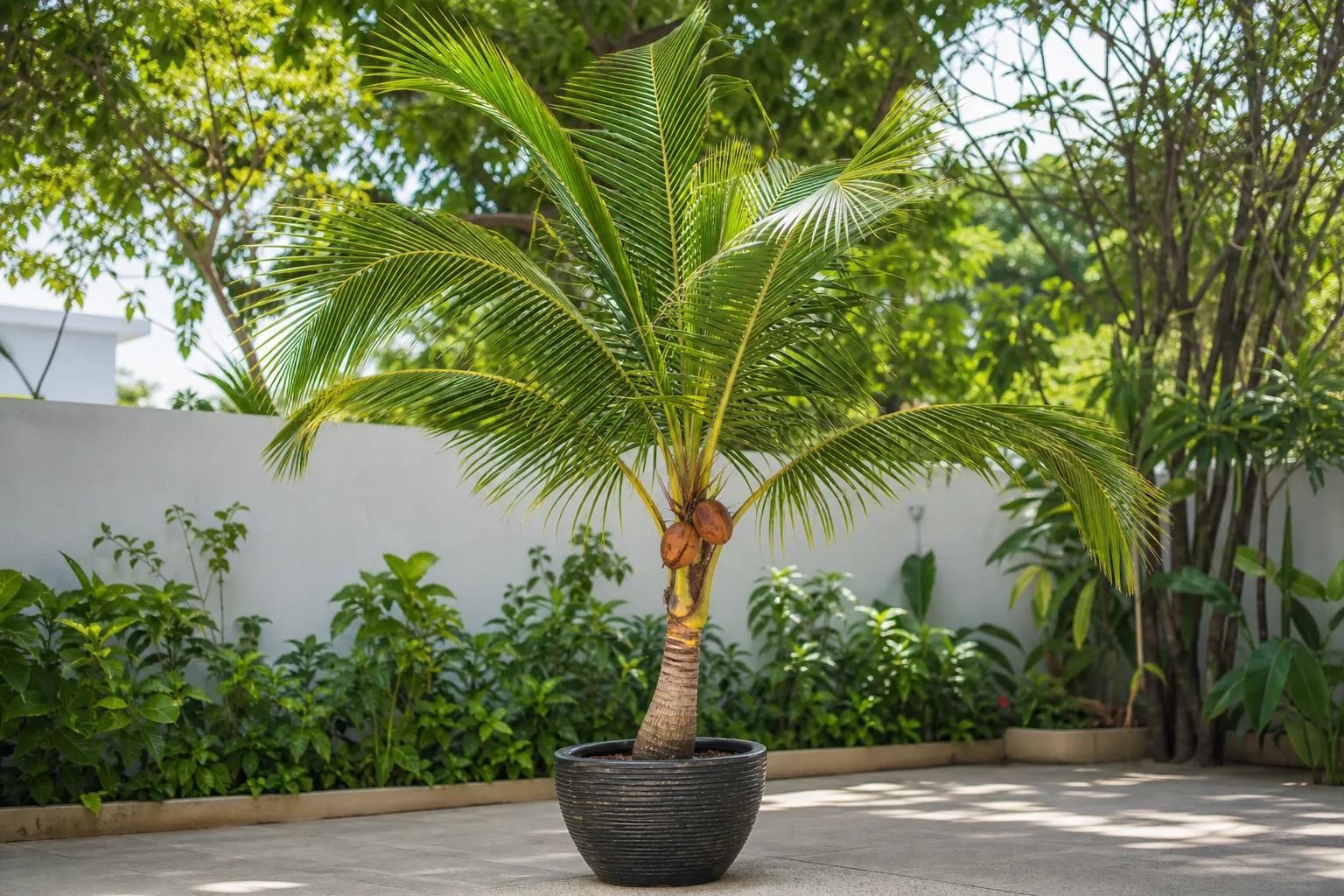
Coconut Tree Light Needs: Full Sun, Windows & Limits
Coconut Tree Light Needs: Full Sun, Windows & Limits
Coconut Tree (Cocos nucifera) is not a “bright corner” palm. It is a coastal tropical species that builds a tall single trunk and a crown of long pinnate fronds when it receives open, all-day sun, sustained warmth, and frost-free air. University and botanical references agree on the same cultural core: plant coconut where it gets full sunlight, not dappled courtyard shade meant for understory ornamentals. (UF/IFAS Gardening Solutions) (Missouri Botanical Garden)
This guide covers how much light a Coconut Tree needs outdoors, what “full sun” means on an Indian balcony or terrace, what is realistic indoors or under glass, how to acclimate young plants, and which frond symptoms point to light first versus watering or feeding issues.
How Much Light Coconut Trees Actually Need
For landscape and outdoor container plants, treat full sun as the default. UF/IFAS states coconut requires full sunlight, alongside wind and brief flooding tolerance once planted in the right hardiness band. Missouri Botanical Garden lists Sun: Full sun and notes best growth in moist, well-drained, moderately fertile soil in full sun in frost-free coastal lowlands. (UF/IFAS Gardening Solutions) (Missouri Botanical Garden)
In practice, that means most of the day without heavy building or tree shade on the crown. A coconut that only gets two hours of morning sun behind a taller building is not “sun-loving enough” for strong trunk and frond production. RHS outdoor guidance for the species is likewise full sun, with south- or west-facing aspect preferred in climates where it can live outside. (RHS)
Fruiting raises the bar further. Missouri Botanical Garden notes coconut needs a minimum of about 18°C (64°F) to produce fruit. Light without heat will not turn a dim indoor specimen into a nut-bearing palm. (Missouri Botanical Garden)
Full Sun Outdoors vs Bright Conservatory Light
Outdoors in the tropics and subtropics, full sun is direct sky exposure for most daylight hours. Under glass, RHS advises growing coconut in full or bright filtered light with moderate humidity in a warm conservatory or as a short-lived houseplant foliage specimen in frost-prone regions. That is not the same as a living-room corner lit by a ceiling bulb. (RHS)
RHS indoor palm guidance also singles out Cocos as needing good light levels, warmer winter nights (about 16°C / 61°F), and warns that many palm leaves scorch under direct bright sunlight through glass if the plant is not adapted. So indoor growers chase maximum usable brightness while watching for hot glass burn after a sudden move to a south pane. (RHS indoor palms)
Why Cocos nucifera Is Built for Open Coastal Sun
Cocos nucifera is native to tropical western Pacific islands and is now pantropical on frost-free coasts and lowlands. Missouri Botanical Garden describes it as thriving in humid, frost-free coastal seashores and notes it grows in southern Florida, the southern tip of Texas, and Hawaii, but does poorly in southern California’s cooler, less tropical pattern. That habitat story explains the light preference: open coastal sky, not forest understory. (Missouri Botanical Garden)
In India and similar climates, coconut-based plantings are classic coastal and near-coastal land uses. An ICAR journal study of coconut-based farming systems in coastal Odisha treats coconut as the perennial spine of open homegarden and holding systems—not a shade crop tucked under dense canopy. Use that as a placement cue: if your site is cool, shaded, or frost-prone, light is only one of several climate mismatches. (Indian Journal of Agricultural Sciences)
USDA Plants lists coconut with year-round growth and a high frost-free-day requirement in its database characteristics. Horticultural manuals still prescribe full sun for cultivated palms; do not read a generic “shade tolerance” database field as permission to plant coconut under trees. Follow MOBOT, UF/IFAS, and RHS for garden placement. (USDA Plants)
Best Outdoor Placement in India and Similar Tropics
In frost-free coastal and warm inland tropical districts (Kerala coast, coastal Karnataka and Tamil Nadu, parts of Odisha, Andaman settings, and similar belts), plant Coconut Tree where the crown sees unobstructed sun for most of the day. UF/IFAS also reminds growers that coconut belongs only in warm hardiness bands (roughly USDA 10B–11 in Florida guidance) because freezes injure or kill it. Indian growers outside truly tropical microclimates face the same cold risk even when summer sun is intense. (UF/IFAS Gardening Solutions)
Space matters as the palm matures. Tall cultivars need room so neighboring walls and trees do not throw afternoon shade onto the crown for half the year. UF Extension notes landscape spacing on the order of 18–30 feet between palms for full-sun plantings—use that as a reminder that crowding equals shade over time. (UF/IFAS Charlotte County Extension)
Balcony, Terrace, and Courtyard Reality Checks
On apartments and townhomes, “outdoor” still has to mean open-sky exposure. A west-facing terrace with six to eight hours of direct sun can support a young container coconut better than a deep north courtyard that never sees hard shadows at midday. East exposures work when mornings are long and unobstructed; pure north balconies in the northern hemisphere usually fail for long-term vigor.
If the only outdoor option is a shaded shaft between buildings, coconut is the wrong plant. Choose a different palm or accept that you are growing a temporary novelty seedling, not a lasting tree. Pair light with the soil and drainage habits this palm needs so a sunny pot does not also sit waterlogged.
Indoor and Conservatory Light for Young Coconut Palms
Indoors, be honest about the goal. RHS treats young coconut in frost-prone areas as a short-lived foliage plant for a warm conservatory or bright houseplant culture—not a permanent living-room fruit tree. Keep pots in the brightest realistic glasshouse or sunroom position with full or bright filtered light, warmth, and moderate humidity. (RHS)
RHS indoor palm notes that Cocos needs good light and warmer winter nights than many parlor palms. If your room cannot stay near that warmth and brightness through winter, growth stalls and older fronds decline even when watering is careful. (RHS indoor palms)
Window Direction, Distance, and Glass Scorch
In the northern hemisphere, prioritize south or west glass for indoor coconut, with the pot as close to the pane as heat and leaf safety allow. East can work for morning sun plus bright day light. North windows rarely supply enough intensity for anything beyond short-term holding.
Watch for scorch through glass. RHS warns that direct bright sunlight through glass can burn many palm leaves. A nursery plant grown under shade cloth can bleach or crisp within days on a hot south sill. Soften with sheer fabric for the first weeks, then increase exposure. (RHS indoor palms)
Rotate the pot a quarter turn every couple of weeks so the crown does not lean hard toward one pane. Leaning is directional growth toward light; chronic lean plus thin new fronds means the room is still too dim.
Acclimating Nursery Plants and Seedlings to Strong Sun
Young coconuts are often raised under shade or dense nursery cover, then sold into full-sun gardens. Moving them overnight into harsh afternoon tropical sun can burn leaflets even though the species wants full sun long term. Acclimate over 10–14 days: start with morning sun and bright open shade in the afternoon, then add midday hours as new spear tissue stays green and firm.
Outdoors after transplant, UF/IFAS stresses first-year moisture and mulch while roots establish; do not confuse wilt from root shock with a need for permanent shade. Once roots take, return the plant to the full-sun site it needs. (UF/IFAS Gardening Solutions)
Seedlings germinating from the nut also need warmth and strong light as the first fronds expand. Keep them in bright open conditions rather than a dim indoor shelf if you want a sturdy juvenile palm before propagation aftercare ends.
Warning Signs of Too Little Light
Too little light on Coconut Tree usually looks like slow or stalled spear production, elongated or floppy new fronds, a crown that leans hard toward the only bright window, and older leaves that yellow and drop while the plant never builds trunk girth. Indoor pots in dim rooms often stay wet longer, which invites the soft, sour-soil problems covered in the watering guide—so low light and overwatering often arrive together.
A coconut kept in permanent building shade outdoors may survive for a season as a decorative seedling, then stall. If neighboring trees close the canopy, prune or relocate rather than hoping fertilizer will replace photons. Feeding cannot fix chronic shade; see the fertilizer guide only after light and warmth are adequate.
Warning Signs of Harsh or Sudden Intense Light
Sudden intensity shows as bleached, tan, or crisp patches on leaflets facing the sun or hot glass, especially after a move from shade-house stock. Tips may brown where leaf surfaces heated on a west sill. Scorched tissue does not re-green; wait for undamaged new spears and adjust placement so new growth stays evenly green.
Differentiate scorch from cold damage. UF Extension notes chilling injury can damage leaf tissue even in the 40s °F (~4–9°C), and freezes can kill palms that look “almost tropical enough.” Pale, collapsed tissue after a cold night is not a signal to add more shade cloth long term—it is a climate mismatch. (UF/IFAS Charlotte County Extension)
Grow Lights When You Lack Outdoor Exposure
If you keep a young coconut indoors through a non-tropical winter, a strong full-spectrum LED over the crown is more honest than a distant north window. Hang the fixture so the newest fronds receive intense light for roughly 12–14 hours daily in active growth, then watch leaf temperature so fixtures do not cook leaflets. Grow lights can maintain foliage quality for a season; they rarely replace tropical outdoor sun for long-term trunking and almost never support fruiting indoors.
When days lengthen and nights stay warm, move the palm outdoors gradually using the acclimation steps above. A summer terrace with full sun beats any indoor lamp schedule.
When Light Problems Mimic Water or Nutrient Stress
Yellow older fronds appear in shade, overwatering, cold snaps, and potassium deficiency. Start with placement: is the crown in real full sun or bright conservatory light? Is night heat adequate for growth? Then check moisture with the watering method and drainage in the soil mix before assuming a fertilizer fix.
Premature nut drop and progressive yellowing in landscape palms can also signal serious disease such as lethal yellowing in regions where it occurs—not a light tweak. UF/IFAS lists premature fruit drop and blackening stalks among lethal yellowing signs. If those appear, seek local diagnosis rather than only moving the plant. (UF/IFAS Gardening Solutions)
When to Use This Page vs Other Coconut Tree Guides
Use this page when you are choosing exposure, diagnosing pale or leaning fronds, planning balcony sun, or deciding whether an indoor window is bright enough. Switch to watering when the mix stays wet or bone-dry, soil when drainage fails, fertilizer when growth is slow despite full sun, repotting when roots bind the pot, and propagation when you are starting from a viable nut. The overview hub summarizes climate fit before you invest in a large palm.
Related Coconut Tree Guides
- Coconut Tree overview — climate fit, mature size, and whether this palm belongs on your site
- Coconut Tree watering — moisture timing that changes with sun and pot heat
- Coconut Tree soil — sandy, free-draining mixes for sunny containers and beds
- Coconut Tree fertilizer — palm nutrition after light and warmth are correct
- Coconut Tree repotting — upsizing young sun-grown container palms
- Coconut Tree propagation — germinating nuts in warmth and strong light
- Coconut Tree hub — species profile and cluster entry point
Conclusion
Coconut Tree light care is simple and strict: give Cocos nucifera full sun outdoors in a frost-free tropical or warm subtropical site, or the brightest conservatory-level light you can manage indoors for a temporary foliage specimen. Acclimate nursery plants before harsh afternoon exposure, watch for glass scorch, and treat dim rooms as holding spaces—not long-term homes. When fronds fade or stall, fix light and warmth first, then confirm water, soil, and feeding with the sibling guides above.