Coconut Tree Watering: Schedule, Checks & Fix Mistakes
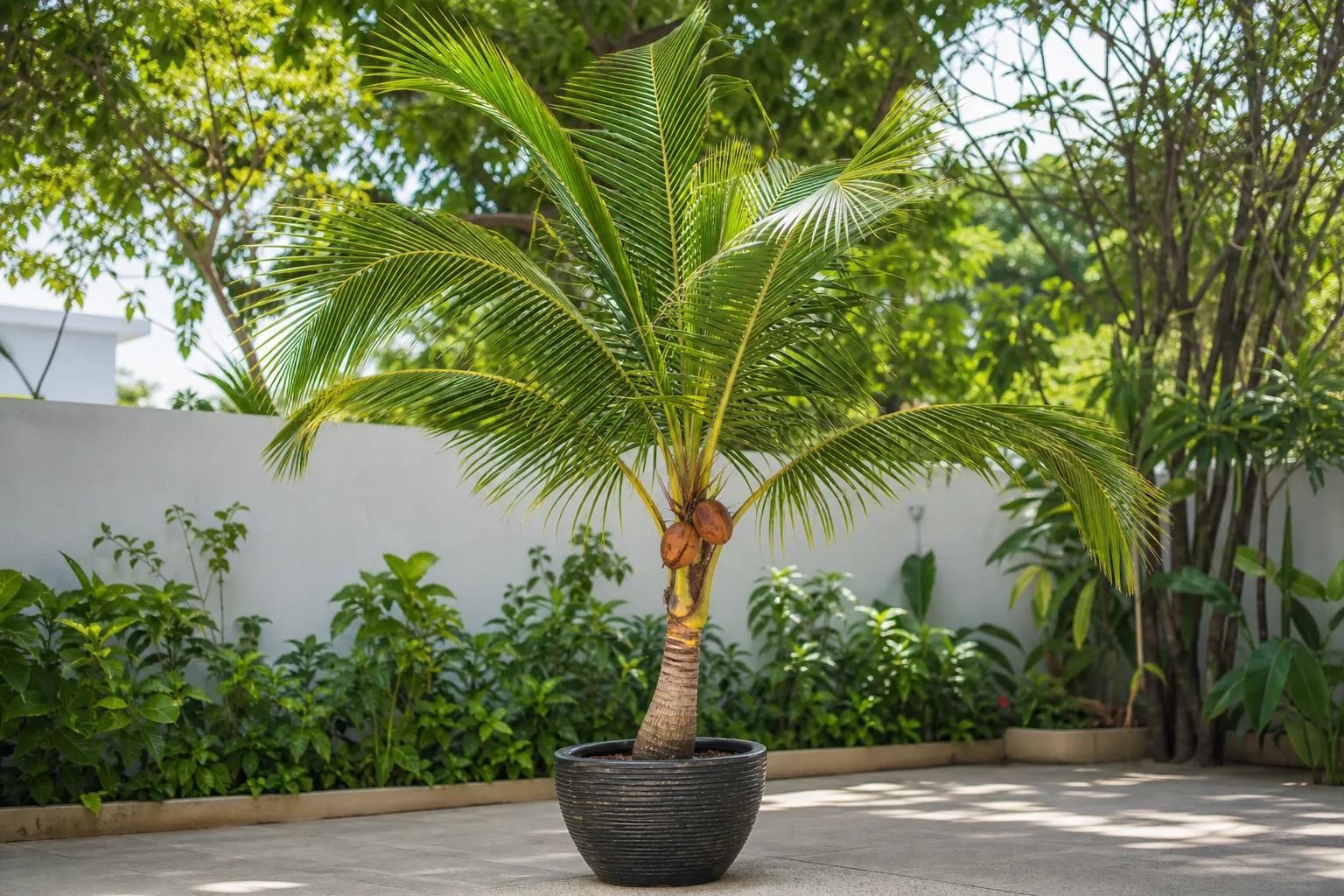
Coconut Tree Watering: Schedule, Checks & Fix Mistakes
Coconut Tree Watering: Schedule, Checks & Fix Mistakes
Coconut tree watering is a balancing act, not a weekly habit you can copy from a money plant. Cocos nucifera is a coastal palm that evolved with rain, sandy soils, and free drainage. Outdoors in frost-free tropics it wants an evenly moist root zone. In a pot it still wants moisture—but the same volume of water that helps a landscape transplant can turn a plastic tub into a rot chamber if the mix never dries and air never returns to the roots.
Missouri Botanical Garden lists coconut with a medium water need and best growth in moderately fertile, humusy, moist, well-drained soils in full sun (Missouri Botanical Garden – Cocos nucifera). RHS echoes that with moist but well-drained loam or sand, and for under-glass plants: water moderately in the growing season and sparingly in winter (RHS – Cocos nucifera). Your job is to match that biology—steady moisture while the palm is establishing or growing hard, then a real cutback when cool air and low light slow the crown.
This guide covers how often to water coconut outdoors and in containers, how to check dryness, what overwatering and drought look like on fronds, how monsoon and winter change the rhythm, and what to do first when you are unsure.
Why Cocos nucifera Wants Steady Moisture, Not Soggy Soil
Coconut is not a cactus and it is not a swamp plant that wants a permanent puddle around the trunk. In habitat it sits on coastal sands and lowlands where water moves through the profile. UF/IFAS notes that coconut requires full sun and tolerates flooding and wind once sited correctly—but also that the safest way to avoid disease pressure is planting in well-draining locations (UF/IFAS Gardening Solutions – Coconut Palm). Tolerance of brief flooding outdoors is not permission to leave a houseplant sitting in a saucer for days.
The palm stores little water in a succulent trunk the way some dryland species do. Young container plants and first-year transplants depend on consistent soil moisture while new roots colonize the surrounding soil. At the same time, a single growing point—the bud—sits at the crown. Pathogens that cause bud rot, especially Phytophthora palmivora, need free water to move and infect; wet crowns, overhead irrigation, and poorly drained sites raise risk (UF/IFAS – Bud Rot of Palm). So the target is clear: moist roots, aerated soil, dry crown.
If you keep the mix constantly saturated in a pot, roots lose oxygen, soft tissues collapse, and lower fronds yellow even though the plant looks “watered.” If you let the rootball bake bone-dry for long stretches in heat, leaflets fold, tips crisp, and older fronds die early. Aim for the middle that matches coastal sand after rain: wet through, then drain, then water again before true wilt.
How Often to Water a Coconut Tree
There is no honest universal calendar for how often to water a coconut tree. Pot size, soil texture, sun, wind, rainfall, and season all change dry-down speed. Use the intervals below as starting points, then let moisture checks decide.
Outdoor landscape palms in India and similar climates
For first-year transplants, UF/IFAS recommends about one inch (2.5 cm) of water weekly from rainfall or irrigation, plus a few inches of surface mulch to hold moisture and suppress weeds (UF/IFAS Gardening Solutions – Coconut Palm). In hot, dry Indian summers that often means a deep soak once a week if rain fails—more often on pure sand that sheds water, less often when monsoon already supplies the inch.
Established landscape palms with deep, extensive roots usually need less hand-watering when monsoon rains are reliable. Research summaries of Indian and tropical plantation trials show meaningful yield responses when summer irrigation is added during dry spells—for example basin applications on the order of hundreds of litres per palm at multi-day intervals in Kerala-type climates—but home gardeners should treat those as landscape establishment and dry-season support, not as a daily cup-of-water houseplant schedule (Experimental Agriculture review via DOI). In a courtyard or coastal plot, watch the soil under the mulch and the look of the newest fronds more than any fixed litre count.
Skip irrigation after heavy rain until the upper root zone has drained. Coconut can handle brief wet periods outdoors; chronic waterlogging in compacted clay or a sealed planter is a different problem.
Container and indoor coconut palms
In pots, check more often because the limited soil volume heats and dries (or stays wet) faster than open ground. In warm, bright weather many growers check every two to four days. Water when the top 2–5 cm of mix feels dry and the pot feels lighter than after a full soak—then water thoroughly and let excess drain. In cool rooms with weak winter light, the same plant may need water only weekly or less.
RHS guidance for under-glass culture is the right indoor frame: moderate watering in active growth, spare watering in winter (RHS – Cocos nucifera). A coconut palm on a dim balcony in December is not “thirsty every Tuesday.” It is barely growing, and wet peat-heavy mix will sit cold and anaerobic for days.
How to Check Before You Water
Surface color lies. Dark mix can still be dry underneath; pale crust can sit over wet roots. Use at least one reliable check every time.
Finger test: Push a finger 2–5 cm into the mix. If it feels cool and clings, wait. If it feels dry at that depth, water. On large tubs, check near the rootball edge, not only against the pot wall.
Pot weight: Lift after a thorough watering and again each day. When the container feels clearly lighter, the root zone has used much of the free water. Weight is often more honest than eyesight for plastic pots.
Mulch lift (outdoors): Pull back mulch beside the trunk base and feel the soil. Mulch hides both dryness and sogginess. Do not pile mulch against the stem; keep a small clear collar so the crown stays dry.
Never water because the calendar pinged while the pot is still heavy. Never water a coconut sitting overnight in a full cachepot. Never mist the crown as a substitute for root-zone watering—foliage mist does not hydrate deep roots and can keep the bud wetter than you want.
Deep Watering Technique That Matches Palm Roots
When it is time to water, soak deeply once. Apply water slowly across the surface until it runs from drainage holes (containers) or until the rootball zone is wet to depth (landscape). Partial daily sips wet the top crust, leave deep roots dry, and train you to overwater later when the plant looks limp for other reasons.
For new landscape palms, UF/IFAS transplant guidance for palms is useful even beyond coconut-specific pages: keep the rootball uniformly moist but never saturated for the first months, use a shallow berm so irrigation stays in the rootball area, and avoid sites with high water tables or poor drainage (UF/IFAS – Transplanting Palms). Water the soil, not the spear. Research cited in that publication found no benefit to irrigating the crown versus watering the soil.
After watering, empty saucers within 20–30 minutes. Elevate pots slightly if they sit in decorative sleeves so holes stay open. Outdoors, let gravity finish the job—do not create a permanent pond around the trunk.
Signs You Are Overwatering Your Coconut Tree
Overwatering on coconut often shows as yellowing lower fronds while the mix stays wet, a sour smell from the pot, soft roots, stalled spear growth, and a pot that stays heavy for many days after a soak. Wilting with wet soil is the classic trap: dead roots cannot take up water, so the plant looks thirsty when it is drowning. Missouri Botanical Garden’s overwatering overview explains the oxygen loss mechanism—roots in saturated soil die back and decay, then the plant cannot drink even though the mix is wet (Missouri Botanical Garden – Overwatering).
Indoor growers also see fungus gnats in mix that never dries and soft tissue at the base of juvenile plants. If several of these signs appear together, stop watering, improve drainage and light if you can, and inspect roots before the next soak.
Root rot, crown rot, and bud rot risks
Root decline from chronic wetness is common in pots with dense mix and no grit. Separately, bud rot can kill the single growing point. UF/IFAS documents bud rot on Cocos nucifera and stresses that free water supports Phytophthora spores; nursery water management and avoiding prolonged wetness on the bud matter (UF/IFAS – Bud Rot of Palm). Watch for a discolored or wilted spear leaf that pulls out easily, foul odor at the leaf base, or an open-topped crown with no new leaves while older fronds still look green. That pattern is not fixed by “more water.”
Lethal yellowing and related phytoplasma diseases cause progressive yellowing and premature nut drop in some regions—those are not watering problems, but they are easy to confuse with chronic stress. If nuts drop early and flower stalks blacken while watering has been reasonable, seek local palm-disease guidance rather than flooding the roots.
Signs Your Coconut Tree Needs Water
Underwatering looks different. Expect brown crispy frond tips and margins, drooping or folded leaflets, dry mix that sheds water when you finally irrigate, and premature death of older leaves. The pot feels very light. Outdoors, prolonged dry soil under thin mulch in peak summer heat will slow growth long before the tall trunk looks “thirsty.”
A single dry stretch is usually recoverable: give one deep soak, let excess drain, then return to moisture checks. Do not compensate with daily cups for a week—that swings you into overwatering. If fronds are limp and the mix is wet, treat it as overwatering and root stress, not drought.
Seasonal Watering: Heat, Monsoon, and Cool Months
Water most during warm, high-light growth. In tropical and subtropical gardens that often means hot dry months before monsoon and any mid-season gaps between rains. During active monsoon, cut irrigation hard. Measure or estimate rainfall; if you already received roughly an inch in a week, skip the hose.
In cool, low-light months—indoor winters, cool conservatories, or brief cool spells—cut frequency sharply. RHS’s “water sparingly in winter” is the rule for under-glass plants (RHS – Cocos nucifera). Growth nearly stops; wet mix does not. Resume more frequent checks only when days warm, light strengthens, and new fronds push again.
Humidity helps fronds look softer, but humid air does not replace root watering, and stagnant wet crowns still invite trouble. Focus humidity on the room air if needed; keep irrigation at the soil.
How Pot Size, Soil, and Drainage Change the Schedule
Two coconut seedlings in the same room can need water on different days because their containers behave differently. A freshly upsized tub holds a reservoir of unused mix that stays wet for a week. A root-filled terracotta pot in full sun may need water every other day in May heat.
Use a moist but free-draining blend: soil-based or quality potting mix amended with coarse sand or grit and some bark or coir, matching Missouri Botanical Garden’s container advice of a soil-based mix with grit or sand added (Missouri Botanical Garden – Cocos nucifera). Pair that with the Coconut Tree soil guide when you rebuild a mix. Drainage holes are non-negotiable. Dense, peat-only mixes without grit are the usual reason indoor coconuts rot.
Planting depth matters for water stress too. Do not bury the stem deeper than it grew in the nursery; deeply planted palms can suffer water and nutrient stress and secondary root problems (UF/IFAS – Transplanting Palms). For more on timing and pot choice, see Coconut Tree repotting.
Watering Newly Planted or Transplanted Palms
Water immediately after planting. UF/IFAS recommends setting transplants about an inch below the soil surface (relative to nursery depth guidance on that page), watering in, mulching a few inches deep, and supplying about one inch of water weekly for the first year (UF/IFAS Gardening Solutions – Coconut Palm). Broader palm transplant research adds that container-grown palms need regular irrigation for roughly six to eight months because the original potting mix in the rootball dries faster than surrounding soil, with alternate-day irrigation often adequate during establishment depending on weather (UF/IFAS – Transplanting Palms).
Build a shallow berm around the rootball so water soaks the roots instead of running into lawn. Keep the soil uniformly moist, not flooded. After the first half-year to year, reduce hand-watering if rainfall covers needs. Warm rainy months are the easiest planting window for the same reason: nature helps you keep moisture steady without daily hose work.
Common Coconut Watering Mistakes
Calendar watering year-round. Fix: check the top 2–5 cm and pot weight; cut hard in cool, dim periods.
Leaving water in saucers or sealed decorative pots. Fix: drain every time; elevate pots so holes stay open.
Watering the crown instead of the soil. Fix: soak the root zone; keep the bud as dry as practical.
Assuming “flood tolerant” means “likes wet pots.” Fix: brief outdoor flooding is not the same as chronic saturation in containers.
Deep planting then overwatering to “help it settle.” Fix: plant at the correct depth, then keep moist—not buried and drowned.
Ignoring light when diagnosing water stress. A coconut in weak indoor light uses little water; yellow fronds there are often wet roots plus low light. Confirm placement against the Coconut Tree light guide before adding more irrigation.
Feeding a waterlogged plant. Fertilizer on anaerobic roots burns. Dry the routine and inspect roots first; then follow Coconut Tree fertilizer only on an actively growing, well-drained plant.
When to use this page vs other Coconut Tree guides
- Coconut Tree overview — Start here for climate fit, mature size, and whether this palm belongs outdoors or only as a short-term container specimen.
- Coconut Tree soil — Use when the mix stays soggy or sheds water; watering frequency cannot fix wrong texture or blocked drainage.
- Coconut Tree light — Use when growth is weak and pots stay wet for days; low light slows water use.
- Coconut Tree repotting — Use when roots circle densely, the pot dries in a day, or you need a drainage refresh.
- Coconut Tree fertilizer — Use after watering and drainage are stable; yellow older fronds are often nutrition, not a cue to flood the pot.
- Coconut Tree propagation — Use when starting from seed; germination needs warm, moist medium without rotting the nut.
Related Coconut Tree guides
- Coconut Tree overview
- Coconut Tree light
- Coconut Tree soil
- Coconut Tree fertilizer
- Coconut Tree repotting
- Coconut Tree propagation
- Coconut Tree pruning
Conclusion
Coconut tree watering succeeds when you treat Cocos nucifera as a coastal palm with moist, aerated roots—not a desert plant and not a pond plant. Outdoors, give establishing palms about an inch of water weekly when rain fails, mulch the surface, and ease off once roots are deep and monsoon covers needs. In containers, water when the top 2–5 cm dries, soak until drainage runs, empty saucers, and cut back sharply in cool, low-light months.
Watch fronds and the root zone together. Yellowing with wet soil, sour mix, or a collapsing spear points to too much water and possible bud or root disease. Crispy tips and a feather-light pot point the other way—one deep soak, then return to checks. Get moisture, drainage, and season aligned, and watering stops being guesswork and becomes a simple rhythm you can trust.