Coconut Tree Propagation from Seed Guide
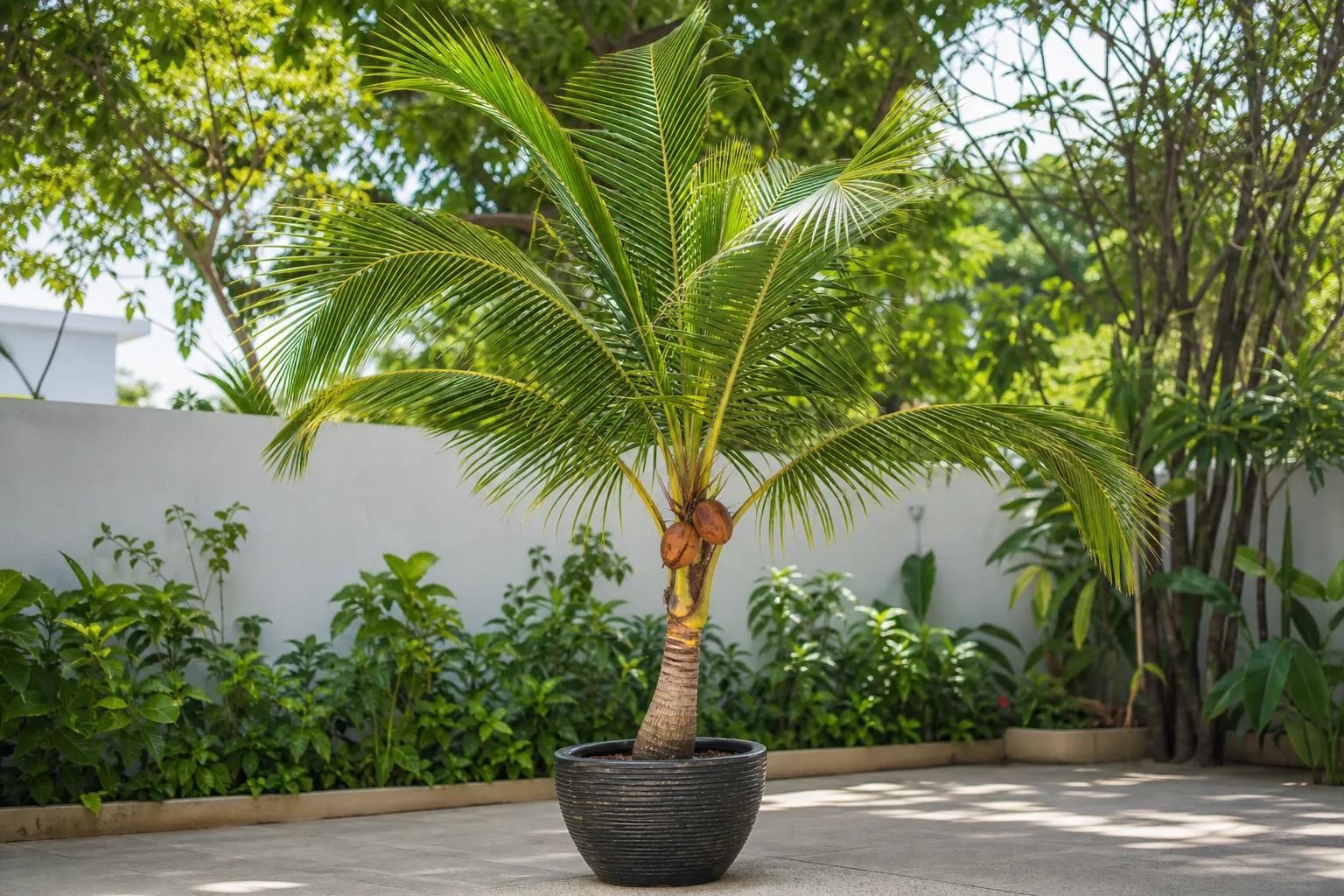
Coconut Tree Propagation from Seed Guide
Coconut Tree Propagation from Seed Guide
Coconut tree propagation is a seed project, not a cutting project. Cocos nucifera is a solitary palm: it does not throw suckers or clump like areca, and a frond or trunk piece will not become a new tree. The only practical home method is to start a whole coconut—the seed fruit—under sustained tropical warmth, even moisture, and free drainage. If you want a second palm, you plant another nut.
That biology also sets honest expectations. A sprouted coconut becomes a large landscape palm in frost-free coastal and lowland tropics; indoors it is usually a temporary foliage specimen that will outgrow typical rooms and almost never fruit. Missouri Botanical Garden places the species in USDA zones 10 to 12 with full sun and moist, well-drained soil, and notes that fruiting needs nighttime temperatures above about 18°C (64°F). UF/IFAS likewise limits Florida planting to roughly zones 10B–11. In India’s coastal belts and other true tropics, seed-grown palms are a long-term garden investment; elsewhere, treat germination as a learning project first.
This guide covers how to pick a viable nut, plant it correctly, keep it alive through the slow germination window, and move a seedling without killing the root–seed connection. Pair it with the Coconut Tree watering guide, Coconut Tree soil guide, and Coconut Tree light guide once the spear is up.
Why Coconut Trees Only Grow from Seed
Most “how to propagate coconut” mistakes begin with the wrong plant model. Coconut is a single-trunk palm in the palm family Arecaceae. It multiplies by seed, not by division. There is no reliable home method using stem cuttings, leaf cuttings, or air layers. Commercial tissue culture exists for research and industry programmes, but it is not a kitchen-counter technique.
Seed-grown plants are seedlings, not clones. Tall and dwarf cultivar groups—such as types marketed as Jamaican Tall or Malayan Dwarf—can differ in trunk form and stature, yet a nut from an unnamed street tree will not guarantee the parent’s exact habit. Buy named nursery stock when you need a specific landscape form; use seed when you accept variation and have the climate for a mature palm.
Adjacent germination inside the husk
UF/IFAS palm-seed research classifies coconut as an adjacent germinator: early growth starts as a swollen “button” against the seed, and roots and shoot emerge from that button rather than from a long remote cotyledonary petiole (Palm Seed Germination, EP238). In coconut, those first stages happen inside the fibrous fruit wall that stays attached to the seed. That is why extension guidance says coconut seed does not require husking before planting—in fact, the seedling germinates within the fruit before you see the shoot.
Leave the husk on. Do not saw the nut open “to help it,” and do not strip coir down to the hard shell unless a specialist protocol requires it. The husk buffers moisture and is part of the germination chamber. Your job is orientation, warmth, and a medium that stays moist without drowning the nut.
How to Choose a Viable Coconut
Start with a mature brown coconut that still has its fibrous husk, not a polished white “dessert coconut” that has been dried and processed for eating. Landscape nuts that fall naturally, or mature nuts harvested for planting, are better than supermarket cooking coconuts of unknown age and storage history. Freshness matters because palm seed viability varies with age and handling; EP238 notes that viable coconut seed will audibly slosh when shaken, while nuts that do not are immature or excessively desiccated.
For India and similar climates, collect from healthy parent palms when fruit is fully mature for seed use, and plant soon rather than storing for months in a hot shed. Avoid nuts with soft, sour-smelling husk, cracked shells with leaking water, or visible mold through damaged fiber. Heavy insect boring or a hollow, rattling sound without liquid are poor bets.
The slosh test and what to reject
UF/IFAS Gardening Solutions states that brown coconut seeds are ready to propagate when you hear a “sloshing” sound once shaken. Hold the nut firmly, shake near your ear, and listen for free liquid moving inside. That liquid is liquid endosperm; solid white meat is solid endosperm that will feed the seedling for a long time after germination begins.
Reject nuts that feel bone-dry and silent, feel rotten or waterlogged at the husk surface, or have already sprouted and then dried out in storage. A nut that sprouted and stalled in cold, dark conditions is not “almost there”—it is stressed tissue. When in doubt, plant two or three viable nuts rather than gambling on one questionable store coconut.
Best Timing for Coconut Seed Propagation
Coconut seed wants heat. EP238 summarizes that virtually all palms germinate most evenly in roughly 21–38°C (70–100°F), with about 29–35°C (85–95°F) often giving the best results. Cool nights stall the process even if daytime sun feels warm. Missouri Botanical Garden notes that container culture can start from seed sown in spring in a soil-based mix with grit or sand added.
In frost-free tropical India, the practical window is the warm season when soil stays warm and irrigation or monsoon moisture is reliable—often late spring into the rains—so the nut never swings between baking dry and cold wet. In subtropical pockets with occasional cool snaps, wait until night temperatures stay comfortably tropical, or use a heated greenhouse or warm verandah. Do not start a coconut on a chilly balcony in winter and expect a sprout.
If you are germinating indoors under glass, match the Coconut Tree overview climate honesty: warmth without frost, strong light after emergence, and a plan for where a growing palm will live once it leaves the nursery pot.
How to Plant a Coconut Step by Step
Work with one nut per container when you can. Large palm seeds transplant poorly when roots tangle, and coconut seedlings benefit from space. Use a deep pot with open drainage holes—nursery bags or large tubs work outdoors in the tropics—and a medium that holds moisture without becoming anaerobic.
- Confirm the nut passes the slosh test and the husk is intact.
- Fill the container with a free-draining, moisture-retentive mix (see below).
- Lay the coconut on its side.
- Settle it into the medium so about one-third of the nut remains above the surface (mulch or sand is fine as cover around the buried portion).
- Water thoroughly once, then keep the root zone evenly moist—not flooded—while heat stays high.
- Place the pot in full sun outdoors in true tropics, or the brightest warm spot you can manage under glass.
- Wait patiently; do not dig the nut up weekly to “check.”
UF/IFAS describes the same orientation and exposure: place coconuts on their side, bury under mulch or sand, and leave one-third of the nut above ground, with germination best in high temperatures. Closely spaced nursery rows are a commercial option; home growers usually do better with individual pots so roots stay undisturbed until transplant.
Medium, orientation, and planting depth
A practical germination substrate follows the palm-seed rule in EP238: well drained yet moisture-holding, without wild wet–dry swings. A 1:1 peat (or coir) and perlite blend works under many nursery conditions; for larger pots, a soil-based mix with grit or sand—aligned with Missouri Botanical Garden container advice—also works if drainage is excellent. Match the mix to your Coconut Tree soil philosophy: aerated roots, not sticky clay.
Orientation matters more than decorative “pointy end up” myths. Planting on the side with partial exposure is the extension-backed method for coconut. Burying the entire nut deeply in heavy soil invites rot and makes emergence harder. Leaving the whole nut perched on dry sand with no contact moisture is the opposite failure—desiccation before the button can form.
Heat, moisture, and light during germination
Keep moisture uniform during the first critical stages when the button and roots form. Alternating bone-dry husk and soggy puddles reduces germination success. If you cannot irrigate regularly, a clear cover can help hold humidity, but remove standing water and ventilate so the surface never smells sour. Overwatering is as harmful as drought; EP238 warns that standing water on the substrate surface is a red flag.
Light before sprouting is secondary to heat and moisture. After the shoot emerges, treat the seedling like a sun plant in open habitats: gradually give strong light so the first leaves do not bleach or burn from a sudden move into harsh afternoon sun. Follow the same gradual hardening you would use in the Coconut Tree light guide for young nursery plants.
Germination Timeline and Early Seedling Signs
Palm seed is famously slow and uneven. EP238 notes that over a quarter of palm species may need more than 100 days to germinate and still show low total germination in some cases, because embryos often finish development after sowing. Coconut is not the fastest palm, but it is not hopeless either—home growers should plan on weeks to several months, not a weekend project. Keep the nut if it still smells clean and the husk is firm; discard if the husk collapses into foul mush.
Success usually looks like a firm sprout emerging near the nut, followed by a developing spear and early roots exploring the medium. Do not break the connection between seedling and nut. The haustorium inside continues to draw food from the endosperm; EP238 advises growers not to sever that link at transplant. A soft, blackened sprout with a sour smell is failure—open air, reduce moisture, and start a fresh viable nut rather than nursing rot.
Aftercare Until Transplant
Once the seedling shows at least one leaf and a developing root system, shift from “germination nursing” to young-palm care. Keep the mix evenly moist while the plant is establishing, then follow the soak-and-check rhythm in the watering guide. Do not fertilize for the first couple of months after germination begins; EP238 states palm seedlings draw nutrition from the endosperm during that early window. When active growth is clear and roots fill the nursery pot, move to a dilute palm-appropriate feed during warm growth—details belong in the Coconut Tree fertilizer guide, not in heavy feeding of a barely sprouted nut.
Watch for seedling collapse at the soil line in chronically wet, cool, poorly ventilated setups. NC State Extension describes damping-off as pathogens attacking seeds and young stems under wet conditions, and emphasizes clean media, drainage, air movement, and avoiding extreme wetness. Coconut is a large seed, but the young shoot still fails in stagnant, waterlogged pots.
Moving seedlings to larger pots or the ground
UF/IFAS notes that six-month-old palms can be placed directly into the ground when climate allows. Transplant in warm weather when root growth is active. Dig a hole that accommodates the root system without forcing a deep bury. Palms are intolerant of deep planting: EP238 warns that planting seedlings even about 1.3 cm (½ inch) too deep can set them back severely. Set the plant so the point where roots begin sits at the soil surface—not with the stem buried like a tomato.
Outdoors, UF/IFAS recommends planting transplants about one inch below the previous soil line only as a careful nursery-to-landscape transfer detail for established young palms, watering immediately, mulching a few inches on the surface, and providing about 2.5 cm (1 inch) of water weekly from rain or irrigation in the first year. Do not pile mulch against the soft crown. For pot culture, step up gradually using the Coconut Tree repotting guide rather than jumping into an enormous tub of wet mix that stays cold and sour.
Common Propagation Failures and Fixes
No sprout after months: nights were too cool, the nut failed the slosh test, or the medium cycled dry. Restart with a fresh viable nut and sustained heat.
Nut rotting before sprouting: overwatering, poor drainage, or a damaged husk. Use a grittier mix, empty saucers, and plant only sound nuts.
Sprout emerges then collapses: damping-off conditions—excess wetness, low light, cold, dirty reused media. Improve air flow, light, and drainage; do not keep the crown wet.
Seedling yellows after deep planting: raise or replant to the correct depth; deep planting is a classic palm killer.
Indoor seedling stalls: insufficient light and warmth. Move to a conservatory-level climate or accept a short-lived houseplant phase. Fruiting indoors is unrealistic for almost all home setups.
Expecting offsets from the parent trunk: coconut will not oblige. Buy another nut or a nursery palm.
Indoor Coconut Seedlings vs Landscape Reality
A sprouted coconut on a bright windowsill is a charming experiment. A mature Cocos nucifera is a 15–30 m coastal palm with a crown spread measured in meters, not desk plants. Missouri Botanical Garden describes mature height of about 50–100 feet outdoors. Indoor growers should enjoy the juvenile foliage while it lasts, then move the plant outdoors only where winters stay frost-free—or gift it to a tropical garden before the pot becomes a root-bound hazard.
In coastal India, Sri Lanka, Southeast Asia, and similar climates, seed-to-landscape is the real path: full sun, sandy or well-drained loam, wind exposure the species tolerates, and years of patience before flowering. UF/IFAS notes flowering commonly begins after four to six years, with full production taking around two decades, and each fruit taking about a year to develop. Propagation success is the first chapter, not the harvest.
When to use this page vs other Coconut Tree guides
Use this page when your question is how to start a new Cocos nucifera from a nut: viability checks, planting position, germination conditions, and first transplant. Switch to sibling guides for ongoing culture of an established plant. The overview frames climate fit and mature size. Watering covers how often to soak an established pot or young landscape palm. Soil details mixes and drainage for long-term roots. Light covers sun exposure after the seedling stage. Fertilizer is for active growth after the endosperm phase. Repotting handles container upsizing once roots fill the nursery pot. Pruning is only for dead or hazardous fronds on established palms—not a multiplication method.
Related Coconut Tree guides
- Coconut Tree care overview — climate, size, and whether this palm belongs in your space
- Coconut Tree watering — moisture for seedlings after sprouting and for landscape transplants
- Coconut Tree soil — drainage and mix texture that prevent germination rot
- Coconut Tree light — hardening young palms into full sun
- Coconut Tree repotting — moving a rooted seedling without deep planting
- Coconut Tree fertilizer — feeding after the seed’s endosperm phase ends
Conclusion
Propagate coconut trees by planting a viable, sloshing nut on its side with about one-third exposed, then holding heat and even moisture until the sprout appears—often over a long wait. Leave the husk on, never plant the stem too deep at transplant, and reserve cuttings fantasies for plants that actually clump. In true tropical, frost-free gardens, a careful seed start can become a landmark palm; indoors, treat germination as a temporary tropical experiment and plan the plant’s next home before the spear outgrows the room.