Underwatering on Coconut Tree: Causes, Checks & Fixes
Quick answer
Underwatering on Coconut Tree shows up as brown crispy frond tips, folded or drooping leaflets, and potting mix dry well below the top 2–5 cm while the container feels very light — Cocos nucifera wants steady root moisture, not cactus-style drought. First step: finger-test or lift the pot; if the surface is dry and the mix is dusty throughout, give one deep soak until water runs from the drainage holes and empty the saucer within 30 minutes.
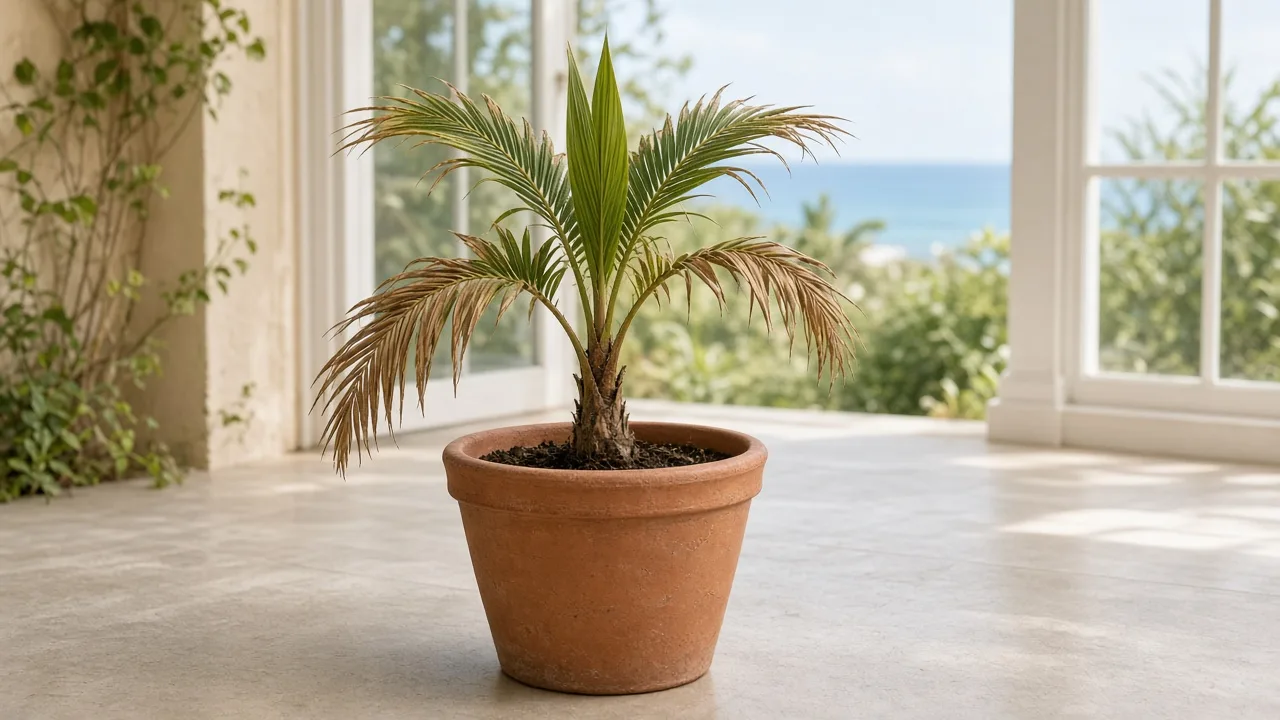
Underwatering on Coconut Tree: Causes, Checks & Fixes
This guide covers underwatering on Coconut Tree. See also the general Underwatering guide, watering, and light pages for this plant.
Underwatering on Coconut Tree: Causes, Checks & Fixes
Quick answer
Underwatering on Coconut Tree (Cocos nucifera) is root-zone drought while the palm still expects steady moisture in warm growth — not the “let it dry for weeks” rhythm that suits succulents. A young container coconut carries a single crown and one growing spear; when gritty mix goes bone dry in a sunny conservatory or terrace, every leaflet on the lowest frond can fold before you notice the pot never got heavy after your last drink.
First step: finger-test the top 2–5 cm and lift the pot. If the surface is dry, the probe comes out clean well below the top layer, and the container feels very light, give one deep soak until water runs from the drainage holes, then empty the saucer. Firm spear with folded leaflets on dry soil points here — a foul smell, blackened spear tissue, or wet heavy mix points to overwatering or root rot instead.
For how chronic dry soil stresses houseplant and palm roots in general, see our underwatering guide. On coconut, the pattern usually shows up as crispy brown frond tips on a very light patio tub, folded pinnae after a missed week in full sun, or skipping irrigation because monsoon rains made the surface look wet while the rootball below stayed dry.
When to use this page vs other Coconut Tree guides
- Overwatering — heavy wet pot, yellow lower fronds on soggy mix, sour smell
- Wilting — collapsed fronds on either wet or dry soil
- Drooping leaves — sagging leaflets without full crisping
- Brown tips — crisp edges from dry air even when soil moisture is adequate
- Low humidity — indoor heat crisping leaflet margins before wilt
- Yellow leaves — lower frond yellow on a normal moisture rhythm
- Slow growth — stalled spear or new fronds without obvious drought
What underwatering looks like on Coconut Tree
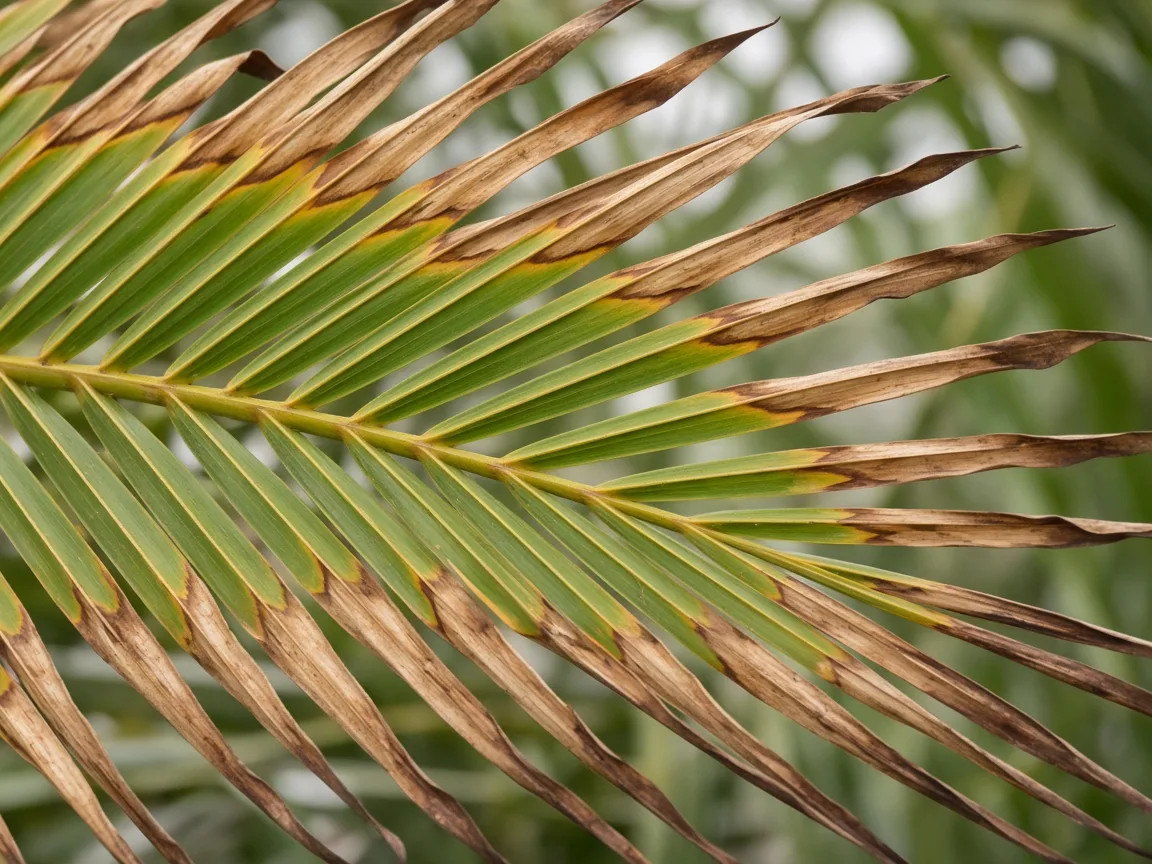
Brown crispy leaflet tips and slight pinnae folding — spear still upright, unlike mushy bud rot at the crown.
Early underwatering:
- Mix at 2–5 cm depth feels dry; finger or chopstick comes out clean with no cling
- Pot feels noticeably lighter than after your last full soak
- Leaflets along one frond fold or droop while the central spear stays firm and green
- Dry pale dust on the pot rim; no sour smell or green algae on the surface
Active underwatering:
- Several fronds show brown crispy tips or margins at once on the same very light pot
- Oldest lower fronds bronze or yellow from the tips inward while spear growth slows
- Water poured on the surface runs down the inside wall without wetting the center — hydrophobic dry mix
- New frond fails to open fully or leaflets stay thin and gray-green
Advanced drought stress:
- Spear growth stalls for weeks in summer despite warm light
- Premature death of multiple lower fronds while the crown looks thin
- Spider mites flare on dust-dry leaflet undersides
- Landscape transplant sheds fronds after a dry spell without the weekly soak young palms need
Why the solitary spear makes drought urgent
Coconut is a single-trunk palm with one active growing point at the crown — not a clumping palm that can sacrifice one stem and keep others. UF/IFAS notes coconut requires full sunlight and tolerates flooding and wind once established outdoors, but that coastal biology still assumes roots can access moisture between dry winds and heat. The palm does not store water in a succulent trunk; it depends on an evenly moist root zone while leaves transpire heavily in full sun.
When mix dries completely in a plastic tub, fine roots die back first. The spear may still look green while lower pinnae fold — owners who recently fixed overwatering often under-correct and withhold the next soak, which starves the same crown they were trying to protect. Pair the watering dry-down check with lifting the pot every time; a calendar that worked in a cool room will fail on a sunny terrace in July.
Container grit mix vs. first-year landscape transplants
Two different underwatering stories show up on the same species.
Patio and conservatory tubs use sandy, grit-amended soil that drains fast — correct for crown health, brutal if you only splash the surface. RHS guidance for under-glass coconut is moderate watering in the growing season and sparingly in winter; “sparingly” means less often when the palm is cool and slow, not letting the entire rootball desiccate for a month. In warm bright weather, many containers need a check every two to four days.
Newly planted landscape palms face a different clock. UF/IFAS recommends about one inch (2.5 cm) of water weekly from rainfall or irrigation during the first year after transplant, plus a few inches of mulch kept off the trunk. Skipping that weekly soak on pure sand during a dry Indian summer stresses roots before they spread — wilting reads as “heat” when the fix is deep irrigation at the rootball, not more mist on fronds.
Monsoon pause and dry-gap mistakes
Growers in monsoon climates often stop hand-watering when rains return — correct when the root zone stays moist for days. Underwatering appears in the dry gaps between rain events: surface mulch looks dark, but sand below is powder-dry and the pot or basin never received a full soak. Coconut tolerates brief outdoor flooding better than a sealed patio saucer, yet Missouri Botanical Garden still lists best growth in moist, well-drained soil — meaning wet-through then drain, not chronic dust.
After a week of cloudy drizzle that never penetrated, run the finger test at 2–5 cm before assuming “monsoon watered it.” Resume one deep application in the root zone, not a teacup on the trunk base.
Dry air vs. true drought on pinnae
Coastal palms appreciate humidity, but crispy leaflet tips alone can trace to low humidity while mix still holds moisture — common near heaters or air conditioning. Split the diagnosis:
| Signal | Mix at 2–5 cm | Pot weight | Spear | Likely cause |
|---|---|---|---|---|
| Crisp tips only, leaflets still turgid | Slightly moist | Moderate | Firm green | Low humidity — see humidity guide |
| Folded pinnae + crisp tips | Dry throughout | Very light | Firm | Underwatering — deep soak |
| Yellow lower fronds, wet probe | Wet, heavy | Heavy days later | Firm or stalled | Overwatering |
| Blackened spear, foul crown | Often wet | Variable | Soft, dark | Bud rot — not more drought water |
UF/IFAS drought guidance notes plants lose water faster than roots can replace it under heat, wind, and limited root volume — exactly what a root-bound nursery coconut in a small tub faces on a windy balcony.
How to confirm underwatering before you change everything
Work in this order:
- Probe depth — dry at 2–5 cm on two sides of the pot or basin, not just the surface crust.
- Pot or basin weight — compare to how it felt right after a full soak.
- Spear and crown — firm green spear vs. soft dark tissue at the bud (bud rot needs drainage and disease response, not repeated soaking on a rotting crown).
- Frond pattern — oldest fronds crisp first; widespread yellow on wet soil suggests a different problem.
- Recent care — travel, “monsoon pause,” fear after overwatering, or a move to a hotter light position without more frequent checks.
If mix is dry throughout and the spear is firm, underwatering is confirmed. If mix is wet and smells sour, open the overwatering path instead.
The first fix to try
Rewet the root zone once, thoroughly, with free drainage.
For containers: water slowly in two passes so gritty mix absorbs instead of channeling. Stop when water runs clearly from drainage holes; empty the saucer within 30 minutes. If water races through a gap between mix and pot wall, bottom-wick in a tray for 20–30 minutes, then drain — do not leave the pot standing in water overnight.
For first-year landscape transplants: apply roughly one inch of water across the mulched root zone in one session when rain has not supplied it that week, using a berm so irrigation soaks in rather than running off bare sand (UF/IFAS coconut palm planting guidance).
That single correction is the first fix. Wait 24–48 hours before repotting, pruning multiple fronds, or fertilizing. The Spruce notes evaluating soil with a moisture meter and saturating just before mix goes dry indoors — the same “confirm dry, then soak” logic applies on a terrace tub.
Recovery steps if drought already browned fronds
After the first deep soak:
- Do not remove every browned frond at once — living tissue still feeds the crown until replacements open. Trim fully crisp or dead fronds at the base only when new growth looks stable.
- Raise check frequency in heat or after repotting into fresh gritty mix, which dries faster until roots re-colonize.
- Address humidity if tips crisp on otherwise moist soil — otherwise you will chase tip burn with extra water and invite rot.
- Hold fertilizer until the spear pushes a clean new frond; then follow the fertilizer guide if slow growth persists with correct moisture and light.
Lethal yellowing and lethal bronzing cause frond discoloration on wet or dry soil alike — if oldest fronds yellow in a spreading pattern with blackened fruit stalks, contact your local extension office; that is not fixed by soaking (UF/IFAS coconut disease notes).
Recovery timeline
Mild underwatering often shows partial leaflet reopening within hours to two days after a proper soak. Existing brown tips do not revert to green.
Spear and new frond recovery usually takes several weeks to a few months, judged by a firm spear and the next frond opening with minimal tip burn. Landscape transplants may shed one or two lower fronds after drought — normal if the crown stabilizes and weekly moisture returns.
If the spear collapses or pulls out easily after rewetting, stop soaking and assess crown rot — recovery may not be possible.
Mistakes to avoid
- Misting fronds instead of rewetting mix — brief leaf wetting does not recharge roots on a palm in full sun.
- Assuming monsoon or drizzle fully watered the rootball — always probe depth in dry spells.
- Fertilizing a drought-stressed palm — salts on dry roots burn fine hairs; rehydrate first.
- Soaking a wet, heavy pot because fronds wilt — wilt on soggy mix is overwatering or root failure, not drought.
- Deep planting or mulch piled on the crown — keeps the bud wet while roots are dry; follow repotting depth rules from the overview.
How to prevent underwatering next time
Match the overview baseline: full sun where possible, free-draining gritty soil, and the watering guide rhythm — top 2–5 cm dry, then soak. Lift the pot before every drink. Use open drainage holes and empty saucers promptly.
Outdoor first-year palms: maintain weekly moisture until roots establish, with mulch off the trunk. Indoor cool-season palms: reduce frequency per RHS spare winter watering, but never let the rootball stay dust-dry for weeks in a heated room.
Inspect weekly during heat waves, after moving to brighter light, or when a new frond is expanding — all increase water demand. Deep, infrequent soaking encourages roots to explore the pot (UF/IFAS drought-efficient watering principles); shallow splashes train dry pockets at the bottom.
Related Coconut Tree guides
- Overview — species limits, crown anatomy, and outdoor vs. container culture
- Problems hub — all sibling symptom pages
- Watering — dry-down depth, monsoon logic, and first-year landscape rates
- Overwatering — wet wilt and bud rot lookalikes
- Brown tips — humidity crisping without dry soil
- Low humidity — indoor air and leaflet margins
Related tool
Use the Plant Watering Calculator to narrow causes for underwatering on this plant before changing multiple variables at once.