Coconut Palm Root Rot: Spear vs Root Checks
Quick answer
First, stop watering and empty saucers so the root zone can drain. If the top 2–5 cm stays soggy while lower fronds yellow, the spear stalls, or the mix smells sour, tip the palm out and inspect adventitious roots—firm pale roots mean overwatering stress; brown mush with sour odor confirms rot.
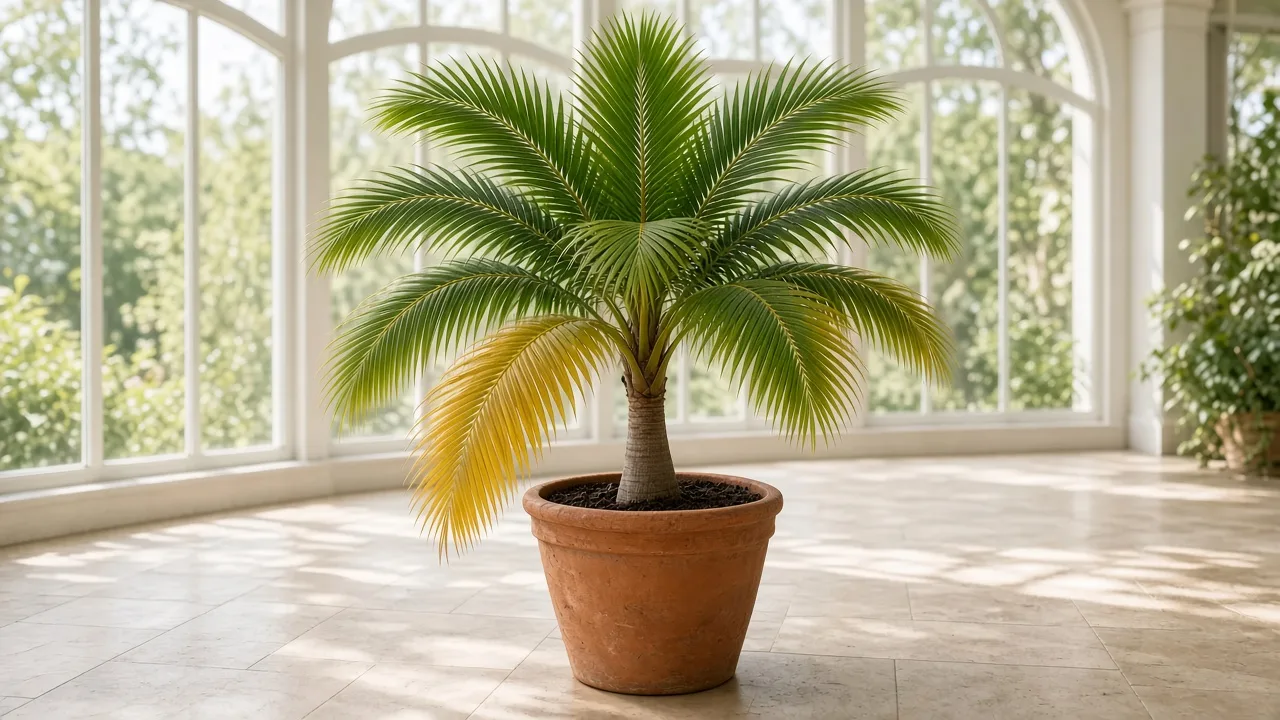
Root Rot on Coconut Tree: Causes, Checks & Fixes
This guide covers root rot on Coconut Tree. See also the general Root Rot guide, watering, and light pages for this plant.
Root Rot on Coconut Tree: Causes, Checks & Fixes
Quick answer
Root rot on Cocos nucifera is adventitious root failure in chronically wet, low-oxygen mix—most common on young container coconuts grown indoors, on terraces, or in conservatories, not on healthy coastal plantings that tolerate brief flooding. Outdoor palms can sit in sandy, aerated soil after storms; a heavy decorative pot that never dries concentrates the same water stress into mushy roots and sour mix.
For how saturated soil kills roots in general, see our root rot guide. On coconut palm, the pattern is yellowing or drooping lower fronds on a waterlogged pot, stalled spear growth, fungus gnats over wet surface mix, and brown mushy adventitious roots when you tip the plant out—not a hard trunk with shelf fungi (that is Ganoderma butt rot, a different problem).
First step: stop all irrigation and empty saucers or cachepots. Let excess water drain, then check whether the top 2–5 cm has begun to dry before the next drink. If the mix stays soggy and lower fronds keep declining, inspect roots the same day—do not fertilize, drench fungicide, or bury the trunk deeper “for stability.”
When to use this page vs other Coconut Tree guides
| What you see | Read next |
|---|---|
| Wet mix, mushy adventitious roots, sour smell (this page) | Stay here for inspection and salvage limits |
| Wet mix but roots still mostly firm | Overwatering on Coconut Tree — dry-down may be enough |
| Dry, light pot, crispy leaflet tips | Underwatering |
| Midday limp fronds on a drying pot | Wilting or drooping leaves |
| Lower yellow only, neutral smell, firm roots | Yellow leaves |
| Spear discolored, pulls out, foul bud odor | See Spear leaf, bud rot, and butt rot below (Phytophthora bud rot — not classic root mush) |
| White fuzz on wet surface, firm roots | Mold on soil or fungus gnats |
Browse overlapping symptoms on the Coconut Tree problems hub when more than one pattern fits.
What root rot looks like on Coconut Tree
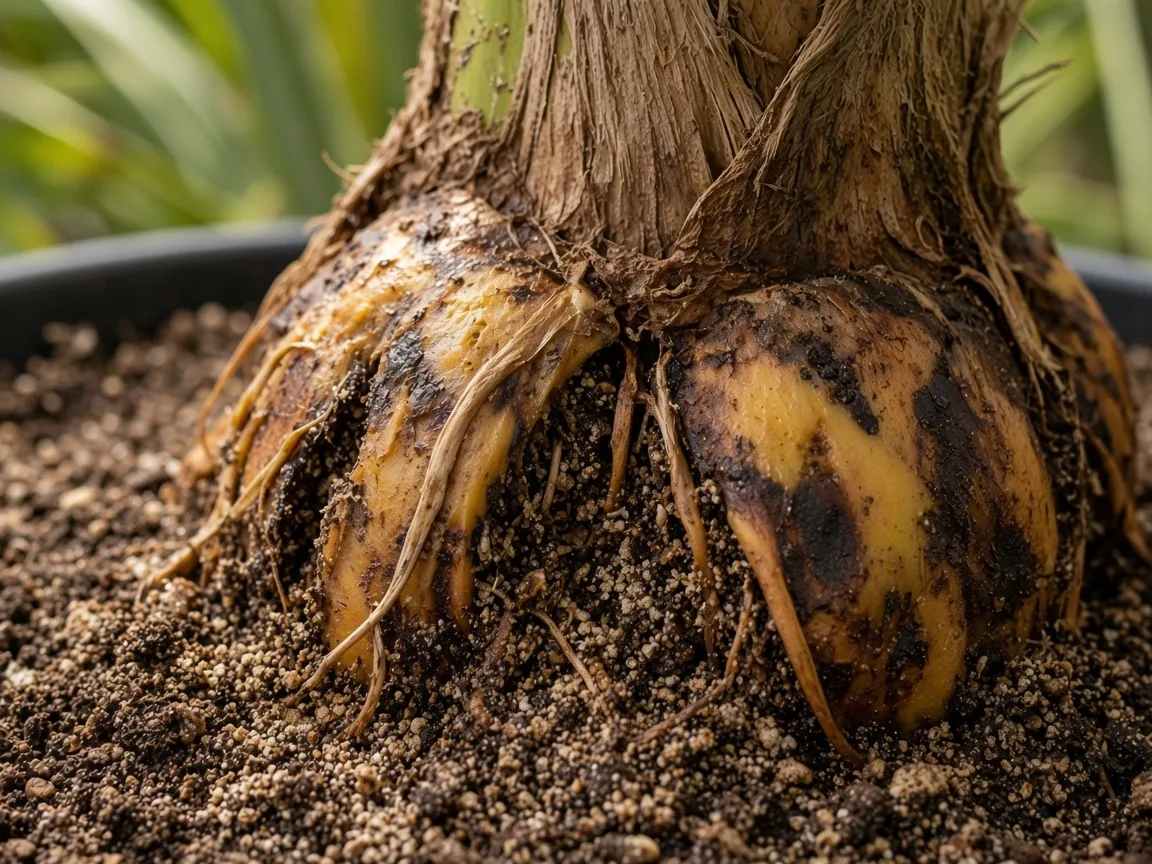
Root rot on coconut palm — soft brown roots in damp sandy mix; compare with firm pale tissue on the same root ball.
Coconut is a single-trunk palm with pinnate fronds and no lateral buds—only one apical meristem (bud) per stem. Roots are adventitious, emerging from the trunk’s root initiation zone rather than a woody taproot. That anatomy means rot in the pot can starve the crown while older fronds still look green for weeks, and bud damage from wet crowns cannot be pruned away like a branching shrub.
Canopy clues before you unpot
- Yellowing or browning lower fronds while the top 2–5 cm of mix feels wet for many days
- Drooping leaflets on a heavy pot, especially after daily watering or rain filling saucers
- Spear leaf stalls or looks pale while mix stays saturated—may overlap with early Phytophthora bud rot, so inspect the bud when you unpot
- Sour or musty smell at drainage holes or when you tilt the container
- Fungus gnats over constantly wet surface mix on terrace tubs
- Slow growth or no new frond for months in a cool, dim conservatory with continued watering
What you find on adventitious roots
Slide the root ball out while supporting the trunk—do not pull from fronds. Healthy coconut roots should feel firm when pinched through gloves; they emerge at near full diameter and grow mostly laterally. Rot shows as brown, soft, hollow, or slimy roots that may break away from the initiation zone. UF/IFAS notes coconut palms want well-draining locations—chronically saturated pots fail sooner than brief outdoor flooding on coarse sand.
Lower fronds that have turned fully yellow will not re-green. Judge recovery by a firm spear, new frond emergence, and stable pot weight—not old leaflet color.
Coastal flooding tolerance vs soggy container traps
Gardeners often assume “coconut likes water” because UF/IFAS recommends about one inch of water weekly for first-year transplants and notes tolerance to wind and flooding in coastal plantings. That is not permission to keep a nursery coconut in a sealed cachepot.
| Setting | Water behavior | Rot risk |
|---|---|---|
| Sandy coastal soil | Rain drains; roots spread wide in aerated sand | Low except in true swamps or compacted fill |
| Terrace tub / conservatory pot | Limited volume, blocked holes, full saucers | High — mix stays anaerobic for days |
| Cool indoor winter | Growth slows; same watering schedule as summer | High — unused water sits around roots |
Missouri Botanical Garden describes best growth in moderately fertile, humusy, moist, well-drained soils—moist means even moisture with oxygen, not perpetual mud in a closed pot.
Spear leaf, bud rot, and butt rot — three different “rots”
This page covers root-zone failure from culture and wet mix. Route elsewhere when symptoms do not match:
Phytophthora bud rot — First symptom is discoloration and wilting of the spear leaf; the spear may pull out with a foul odor while older fronds still look healthy. On Cocos nucifera, UF/IFAS illustrates an open-topped crown with no new leaves emerging. Free water in the crown and nursery overhead irrigation drive this pathogen—fix drainage and crown wetness, not only root trimming.
Ganoderma butt rot — Degrades the lower trunk; does not cause soft root mush. Diagnosis needs a conk on the trunk or internal trunk discoloration—not brown roots alone. Removing the palm is a safety issue when conks appear; fungicides do not cure established butt rot.
Cultural root rot (this page) — Mushy adventitious roots in sour wet potting mix, often with lower frond yellowing and heavy pots. Recovery is possible on young plants if firm roots and a healthy spear remain.
Confirm the diagnosis before repotting
Work through evidence in order:
- Moisture at 2–5 cm — wet and cool with lower frond decline points to roots, not drought.
- Pot weight — unusually heavy days after watering suggests poor drainage or a plugged hole.
- Spear integrity — firm, green spear on mix that is finally drying may be overwatering without full rot; spear that pulls out easily means bud pathogen or advanced crown damage.
- Root texture — mush confirms rot; firm pale roots do not.
- Trunk base — soft, sunken, or conk-bearing trunk suggests butt rot, not a simple repot fix.
- Recent care — moving from bright terrace to dim room without reducing water, or planting the trunk deeper than nursery depth, strongly favors cultural rot.
Drought stress shows a light, dry pot and brown crispy leaflet tips—not sour wet mix. Low light alone causes leggy, pale growth but should not smell rotten unless watering stayed on a summer schedule.
First fix: drain the root zone, then inspect once
After you stop watering and empty saucers, wait only long enough to see whether water drains freely—hours, not days of neglect in hot conservatory sun on a small palm. If the mix remains waterlogged and lower fronds still decline:
- Tip the root ball out supporting the trunk, not the fronds.
- Shake away loose mix and look at root color, firmness, and smell at the initiation zone.
- If more than half the root mass is firm, move to conservative trimming below.
- If most roots are mush and the spear pulls out, salvage is unlikely—replace rather than repeat rescue.
Do not apply palm fertilizer to force growth; stabilize roots first.
Step-by-step salvage when firm roots remain
When inspection shows decay on the outer roots but a solid core and a firm spear:
- Trim only soft, brown, or hollow roots with clean pruners. Wipe tools between cuts.
- Discard the old mix—do not reuse it for coconut or other palms in the same pot.
- Repot into fresh, freely draining mix sized to the remaining root mass (see the soil guide — roughly 50% quality potting mix, 25% coarse sand or grit, 25% fine bark or coir). Avoid upsizing “to help” a stressed palm.
- Plant at the same depth the palm grew in the nursery—palms resent deep burial of the initiation zone per repotting guidance.
- Water once lightly to settle mix, then let the top 2–5 cm dry before the next irrigation.
- Place in maximum light the plant can tolerate without scorching a recently shaded specimen—warmth and photosynthesis speed root recovery.
Avoid stacking a fungicide drench, frond removal, and heavy feed on the same day. Nursery bud drenches for Phytophthora are a different diagnosis—they do not replace drainage for mushy roots.
Recovery timeline and when to give up
Mild cases may show a new spear pushing or a firm existing spear within several weeks after drainage improves and only outer roots were trimmed. Coconut is moderately paced in warm sun; cool rooms stretch recovery.
Replace or stop rescue when:
- The spear pulls out or smells foul—the bud is already dead and no new fronds will emerge
- Yellowing climbs through most of the crown while mix finally dries
- Nearly all adventitious roots slough on a second inspection
- A Ganoderma conk appears on the trunk—remove the palm for safety; do not compost near other palms
- A root-bound seedling in a tiny nursery pot never dries—refresh roots and mix or start a new propagation nut
Prevent root rot on the next coconut palm
- Water on dryness, not calendar — finger-test the top 2–5 cm; lift the pot for weight.
- Drainage holes and empty saucers — never let the crown or pot base sit in standing water; UF/IFAS links wet nursery conditions to bud rot after storms.
- Grit-amended mix in containers — matches moist but well-drained culture, not heavy peat alone.
- Reduce water in cool, low-light months when the palm is barely growing indoors.
- Quarantine new nursery coconuts and learn dry-down speed before repotting into decorative tubs.
- Inspect after monsoon weeks or vacation wicking before increasing fertilizer or pruning living fronds.
Return to routine care from the Coconut Tree overview once pot weight, spear firmness, and root checks stay stable through a full dry-down cycle.
Related Coconut Tree guides
Use this page when unpotting finds soft, brown, or foul-smelling adventitious roots on wet mix. Route elsewhere when roots are firm:
| Evidence | Guide |
|---|---|
| Wet mix, firm roots | Overwatering |
| Dry pot, wilt | Underwatering or wilting |
| Yellow lowers only | Yellow leaves |
| Stable palm, routine moisture | Watering or overview |
Related tool
Use the Root Rot Risk Checker to narrow causes for root rot on this plant before changing multiple variables at once.