Brown Tips on Coconut Tree: Causes, Checks & Fixes
Quick answer
Brown tips on a coconut palm usually mean leaflet tips are drying faster than roots can resupply water—often from underwatering in heat, dry indoor air, or fertilizer salts in a pot. First step: press a finger into the top 2–5 cm of mix; if dry and the pot feels light, water deeply until a little drains, then empty the saucer before you change anything else.
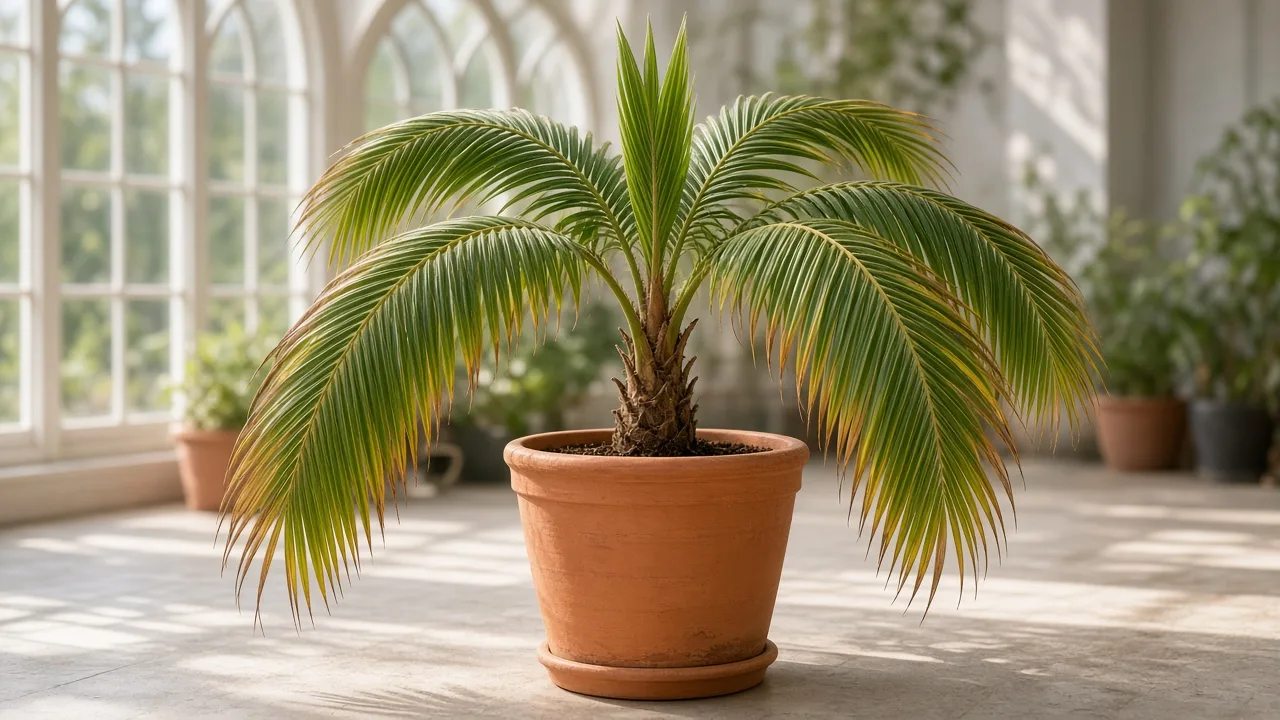
Brown Tips on Coconut Tree: Causes, Checks & Fixes
This guide covers brown tips on Coconut Tree. See also the general Brown Tips guide, watering, and light pages for this plant.
Brown Tips on Coconut Tree: Causes, Checks & Fixes
Quick answer
Brown tips on coconut palm (Cocos nucifera) almost always mean the pinnae at the end of each pinnate frond are desiccating—not that the whole palm is dying. In pots and warm conservatories, the usual drivers are dry mix between deep soaks, humidity below what long arching fronds expect, or salt buildup after heavy feeding. Your first move: press a finger into the top 2–5 cm of mix per the watering guide. If it is crumbly and the container feels light, water thoroughly until a little drains, then empty the saucer within 30 minutes. If the probe reads moist and the pot still feels heavy, suspect dry room air or fertilizer salts before you add more water.
For how leaflet tips dry when transpiration outpaces root uptake in general, see our brown leaf tips guide. On coconut, the burn pattern is pinna-focused on the longest lower fronds while the central spear often stays green—because this solitary coastal palm pushes huge feather-like leaves from a single bud, and tips are the last tissue to receive water in full sun with freely draining mix.
What brown tips look like on coconut palm
Pinnae tips vs. spear or bud failure
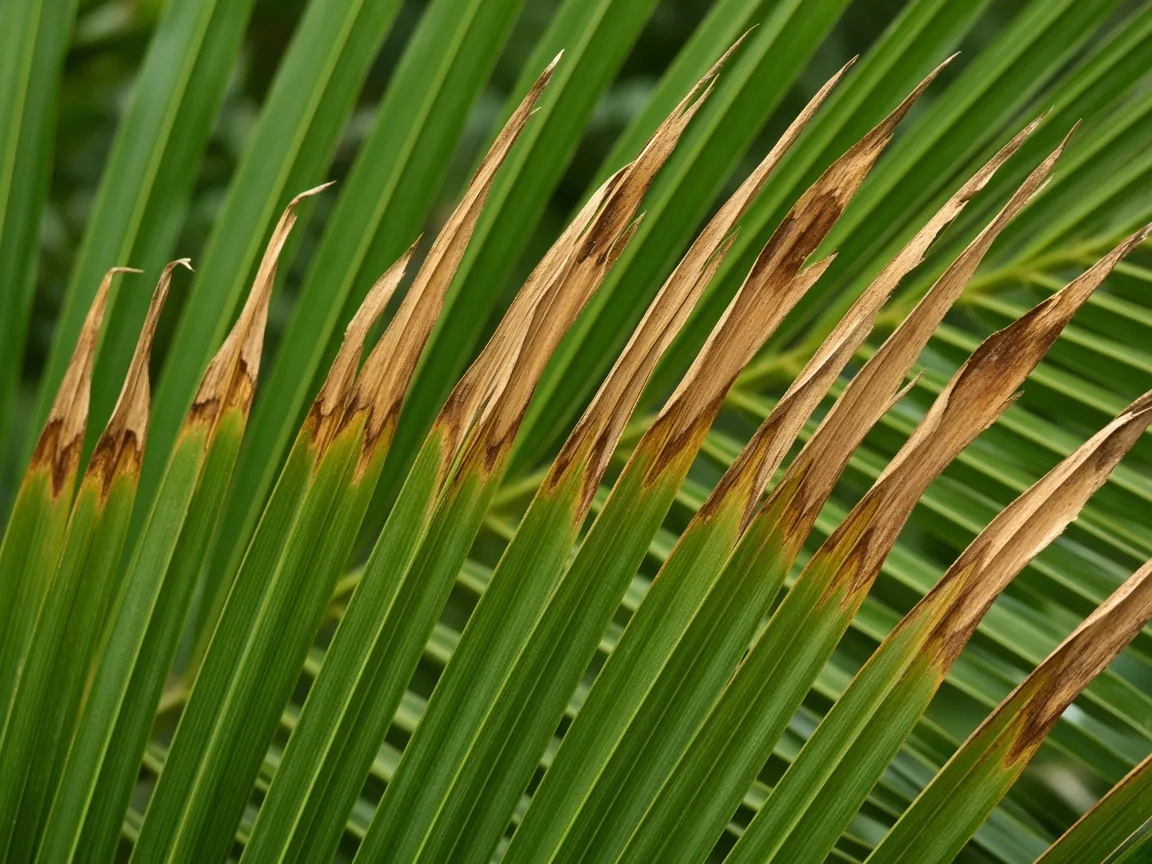
Brown tip symptoms on coconut palm—tan crispy pinna ends on otherwise green pinnate fronds.
Tip burn shows as tan or brown crispy edges on individual pinnae (the narrow leaflets along each frond), often on several leaflets on the same frond and on multiple fronds at once. The spear leaf at the crown should still look firm and green. Crush a healthy pinna—it should smell faintly green, not sour.
Bud rot and crown collapse look different: the newest spear darkens, wilts, or pulls out easily, sometimes with a foul smell, while lower fronds may yellow on wet mix. UF/IFAS notes that bud rot turns new fronds darker brown until they fall off, and severely affected palms should be removed (UF/IFAS Gardening Solutions – Coconut Palm). If the spear is soft on soggy soil, stop tip trimming and read overwatering and root rot instead of this page.
Tip burn vs. drought, humidity, salts, mites, and nutrient bands
| Pattern | What you often see | Likely cause |
|---|---|---|
| Crispy pinna tips, dry 2–5 cm, light pot | Heat dry-down between drinks | Underwatering |
| Crispy tips while 2–5 cm is moist, spear firm, pot near vent | Low humidity / heat draft | Low humidity |
| White crust on soil rim after feeding | Salt / fertilizer burn | Leach; hold feed |
| Broad yellow band on oldest fronds, green center | Magnesium shortage | Palm-special fertilizer after culture fix |
| Translucent spots with brown margins on oldest fronds | Potassium shortage | Palm-special fertilizer |
| Stippling + webbing on pinna undersides | Spider mites | Spider mites |
| Whole fronds yellowing, fruit drop (mature landscape palm) | Disease complex | Extension diagnosis—not cosmetic tips |
Why coconut palm gets brown tips
Long pinnate fronds and fast transpiration in full sun
Coconut is a single-trunk feather palm with arching fronds that can reach many meters outdoors; even young container plants carry long pinnate leaves that transpire heavily in full sun. Pinnae at the frond tip are farthest from the root zone and die first when water delivery lags. Missouri Botanical Garden describes best growth in moderately fertile, humusy, moist, well-drained soils in full sun in frost-free zones (Missouri Botanical Garden – Cocos nucifera)—a profile that punishes calendar watering on a rootbound nursery pot baking on a terrace.
Dry conservatory air on a tropical coastal palm
RHS recommends growing coconut under glass with moderate humidity, watering moderately in the growing season and sparingly in winter (RHS – Cocos nucifera). Penn State Extension notes that frond tips turn brown when humidity is low, especially in dry winter rooms (Penn State Extension – Palms as Houseplants). Central heating can drop relative humidity into the 20–30% range while the crown still sits in warm air—classic tip burn on moist soil.
Underwatering between deep soaks in containers
The coconut hub lists brown crispy frond tips among underwatering signs when mix compacts and sheds water. Sandy, grit-amended soil drains quickly—which coconut needs—but small plastic tubs in afternoon sun can go from moist to drought-stressed in a few days. UF/IFAS suggests about one inch of water weekly from rain or irrigation during the first year after transplanting outdoors (UF/IFAS Gardening Solutions – Coconut Palm); potted specimens in heat often need more frequent checks than that calendar rule.
Salt and fertilizer buildup in pots
Coconut in containers is susceptible to nutrient deficiencies and benefits from regular palm-specific “Palm Special” fertilizer several times per year in the landscape (UF/IFAS Gardening Solutions – Coconut Palm). The same concentrated feeding in a closed saucer can leave soluble salts that burn sensitive pinna margins. University of Minnesota Extension notes that excess fertilizer salts can damage container plants and that periodic leaching helps (University of Minnesota Extension – Container fertilizing). Brown tips that appear right after a heavy feed, with white residue on the pot rim, fit salt stress more than humidity alone.
Magnesium or potassium shortage on older fronds
When culture is steady but oldest fronds show yellowing with distinct patterns—a broad lemon band with green center (magnesium) or translucent spotting with brown margins (potassium)—the palm may need a balanced palm fertilizer, not more water. Correct deficiencies only after you confirm drainage and moisture rhythm; see the fertilizer guide for timing.
How to confirm the cause
Work through these checks in order:
- Probe the top 2–5 cm per the watering guide—crumbly and light supports drought; wet and heavy with yellow lower fronds points to overwatering.
- Lift the pot—unexpected lightness plus crispy pinnae confirms underwatering; moderate weight with moist probe supports humidity or salt burn.
- Inspect the spear—firm green spear with only tip burn is cultural; soft dark spear on wet mix is crown trouble.
- Map heat paths—radiators, AC vents, and hot glass within a meter explain winter tips on moist soil.
- Look for white crust on soil or pot rim; note recent fertilizer dates.
- Scan pinna undersides for stippling or webbing before you blame dry air alone.
- Read the oldest fronds for yellow bands that suggest magnesium or potassium shortage rather than simple tip crispness.
The first fix to try
Check the top 2–5 cm. If dry, water deeply until a little drains, then empty the saucer.
That one step fixes the most common terrace and balcony failure—surface-dry rootballs in hot light—without flooding a palm that only needs humidity correction. If the probe reads moist and the pot still feels moderately heavy, do not add more water. Move the palm at least a meter from heating vents and stabilize humidity at frond height for several days.
If white crust suggests salts, leach by watering slowly with plain water until roughly twice the pot volume runs through, twice in one session (University of Minnesota Extension – Container fertilizing), before resuming feed. Trim fully dead pinna tips only after the culture fix is in place.
Trimming brown pinnae without inviting crown rot
Coconut palms do not heal leaflet tips the way some broad-leaved houseplants do after a scissors trim. Snip only fully crisp brown pinna tips, following the natural leaflet shape, or wait until an entire frond senesces and cut the petiole at the trunk when fully brown—never while fronds are still yellow-green and photosynthesizing. Do not pour water into the crown or leave the bud soaked; UF/IFAS links wet crowns to bud rot risk (UF/IFAS Gardening Solutions – Coconut Palm). Keep falling trimmings clear of pets that might chew fronds.
Step-by-step recovery by cause
Drought tip burn in hot weather
- Soak until water exits drainage holes; empty saucer within 30 minutes.
- Shade harsh afternoon glass for a few days if the rootball was bone dry, then return to full sun gradually.
- Track the 2–5 cm probe daily in heat—many containers need drinks every few days in summer.
- Expect clean new pinnae on the next unfurling spear in one to three weeks; old brown tips stay crisp.
Humidity burn indoors
- Relocate away from radiators and forced-air returns.
- Run a humidifier within 4–6 feet of the crown—not only across the room.
- Match winter drinks to slower growth; moist but not saturated mix in cool dim rooms (RHS – Cocos nucifera).
- Rinse pinna undersides once to remove dust and early spider mites.
Salt or fertilizer burn
- Stop fertilizer immediately.
- Leach with plain water as described above.
- Hold feed until new spears unfurl without edge burn (often two to three weeks).
- Resume palm-special feeding in warm growth only per the fertilizer guide.
Do not repot, hard-prune every frond, and fertilize the same week—that hides which change helped.
Recovery timeline
Brown pinna tissue does not re-green. New spears should show clean leaflet margins within one to three weeks once moisture, humidity, and salt load stabilize. Indoor humidity fixes in deep heating season may take two to three weeks because overnight air stays dry.
Recovery is working when the spear stays firm, the next frond unfurls without crisp edges, and pot weight stays predictable between scheduled soaks.
Escalate if brown marches down pinnae toward the rachis on wet soil, the palm wilts with sour mix, or lower fronds yellow while the crown softens—that is root or bud stress, not cosmetic tips.
What not to do
Do not keep mix constantly saturated to “fix” dry tips—that invites rot when growth slows in cool weather. Do not apply fertilizer on dry, salt-stressed roots. Do not mist the crown repeatedly without improving drainage. Do not confuse landscape lethal-yellowing stories with a young indoor palm that only has dry pinnae. Do not leave standing water in cachepots—empty saucers after every soak per the soil guide.
How to prevent brown tips next time
Run the 2–5 cm dryness probe before every major soak in active growth—not a fixed calendar. On hot terraces, check daily when mix dries fast. Indoors in winter, reduce frequency but pair it with humidity at frond height. Flush containers seasonally to limit salt buildup. Match pot volume to frond size so roots do not bake between drinks. Monitor for spider mites when air is dry.
Weak light stalls growth and can mimic thirst; confirm enough sun before you only add water. Landscape transplants in year one should receive steady moisture from rain or irrigation without flooding the root zone (UF/IFAS Gardening Solutions – Coconut Palm).
When to use this page vs other Coconut Tree guides
- Coconut Tree watering guide — Use for routine 2–5 cm checks before assuming brown tips is the main issue.
- Coconut Tree problems hub — Browse all common issues on this species.
- Low humidity on Coconut Tree — Start here when tips crisp on moist soil near heating vents.
- Underwatering on Coconut Tree — Start here when the whole pot is light and dry top-to-bottom.
- Overwatering on Coconut Tree — Start here when lower fronds yellow on wet mix or the spear softens.