Slow Growth on Coconut Tree: Causes, Checks & Fixes
Quick answer
Slow growth on Coconut Tree shows as a firm trunk with weeks between new fronds, a small spear leaf that will not open, and little height gain despite moist mix—often when root-zone temperatures sit below about 18°C (64°F), light is weak indoors, the container is root-bound or too shallow for downward roots, or palm-specific nutrients are missing. First step: probe mix temperature at root depth and move the palm to the warmest full-sun spot you can hold through the day before repotting, heavy feed, or pruning.
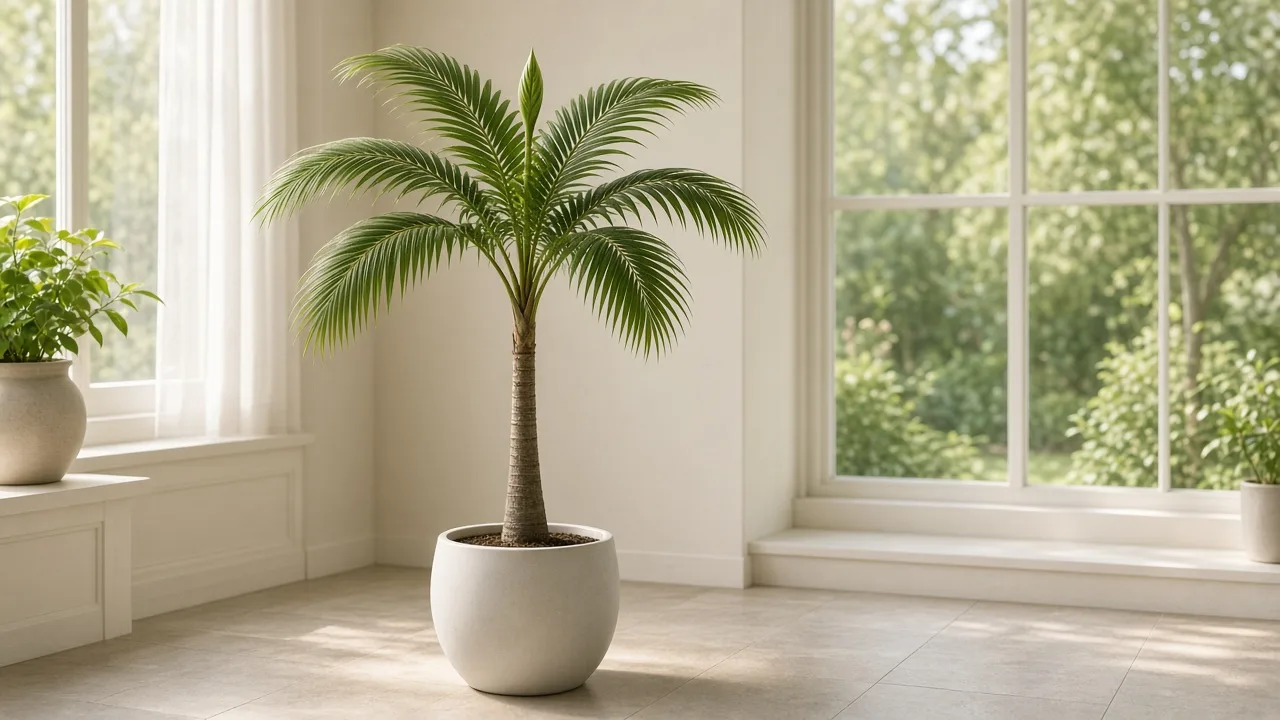
Slow Growth on Coconut Tree: Causes, Checks & Fixes
This guide covers slow growth on Coconut Tree. See also the general Slow Growth guide, watering, and light pages for this plant.
Slow Growth on Coconut Tree: Causes, Checks & Fixes
Quick answer
Cocos nucifera is a coastal palm built for full sunlight and frost-free warmth. In a pot it will never match beach-coconut speed, but slow growth still has a clear signature: the trunk stays firm, yet weeks pass without a new frond opening, the central spear leaf stays small and rolled, and height barely changes without the long petioles and thin leaflets you would see with pure stretch.
For how chronic stress limits cell division in general, see our slow growth hub. On Coconut Tree, the decisive first check is root-zone temperature at depth—not whether you watered yesterday.
First step: probe mix temperature 5–8 cm deep and hold the root zone above about 18°C (64°F) in the warmest full-sun spot available before repotting, feeding, or pruning fronds.
When to use this page vs other Coconut Tree guides
This page is the pace-and-stall entry when the trunk is firm but new fronds arrive slowly—not when stretch or color alone dominates.
| Pattern | Read next |
|---|---|
| Long sparse fronds reaching for glass, thin leaflets | Leggy growth |
| Pale fronds in a dim room without a stalled spear | Not enough light |
| Yellow oldest fronds on constantly wet mix | Overwatering or yellow leaves |
| Spear browning, sour wet mix, soft crown tissue | Root rot or wilting |
| Crispy tips after dry spells | Underwatering |
| Long-term placement and outdoor limits | Light guide |
| Full cluster index | All coconut problems |
What slow growth looks like on Coconut Tree
Healthy young coconut in warm bright conditions opens new fronds on a steady rhythm—often one every several weeks in peak summer on a well-rooted container plant. Missouri Botanical Garden notes best performance in full sun with moist, well-drained soil when nights stay frost-free. Slow growth breaks that cadence without necessarily killing the palm:
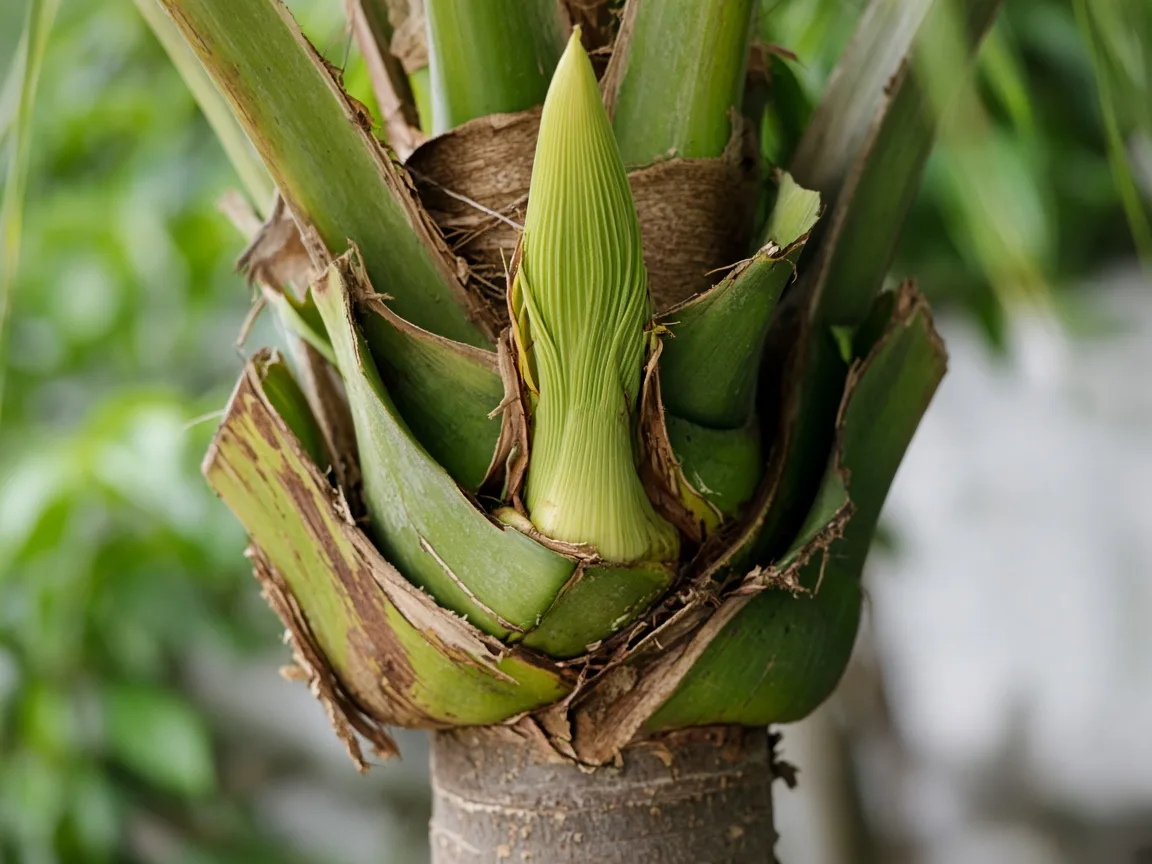
A green but undersized spear stalled at the crown, with older fronds unchanged for weeks—firm trunk, but the apical bud has not pushed a new leaf in warm weather.
- Firm gray-brown trunk with wide time gaps between fully opened fronds
- Small spear leaf at the crown that stays rolled for many weeks without expanding
- Undersized new fronds when they finally open—shorter petioles and narrower leaflets than earlier leaves on the same plant
- Little vertical gain over a month despite moist (not soggy) mix
- Pot weight barely cycles in a cool room—roots use little water because metabolism is low
- Normal winter pause in an unheated conservatory—zero or one frond over several cool months can be seasonal, not failure
This differs from leggy growth when petioles lengthen toward glass, from not enough light when fronds bleach and thin without a long spear stall, and from overwatering when lower fronds yellow on sour wet mix while the spear may still look green.
Reading spear-leaf pace: a coconut-only growth clock
Palms have one apical bud. All new leaves emerge from the spear at the crown—there is no backup growing point like a banana rhizome sending up a second pseudostem. That makes the spear your growth clock:
| Spear signal | Likely cause | First move |
|---|---|---|
| Green spear, weeks without unfurling, cool mix | Root zone below about 18°C (64°F) | Warm placement; reduce winter water per watering |
| Thin pale spear in a “bright” room | Light still marginal for a full-sun palm | Confirm outdoor or window sun hours; see light |
| Firm trunk, pot dries in hours, roots in drainage holes | Root-bound or pot too shallow for downward roots | Spring repot one size up—not day one if the room is cold |
| Frizzled or streaked new spear in cold wet mix | Manganese deficiency worsened by low temperature | Warm and aerate roots before palm-formula feed |
| Oldest fronds spotted yellow-brown, canopy dull | Potassium deficiency on container palms | Palm-special fertilizer in warm months, not high-nitrogen lawn feed |
| Spear brown and collapsing on wet mix | Bud rot / crown failure | Stop overhead watering; see root rot escalation |
Gently pull one older frond downward—it should resist. Firm trunk with a stalled green spear usually means environment or nutrition, not emergency surgery.
Why Coconut Tree gets slow growth
Coconut requires full sunlight and is only suited to USDA Hardiness Zones 10B–11 where freezing temperatures do not occur. Indoors or in cool conservatories it is a short-season foliage specimen whose metabolism depends on heat and light more than most houseplants.
Coconut-specific triggers:
- Cool root zone indoors — The Spruce notes coconut palms prefer at least 70°F and grow best between 85°F and 95°F, and may fail to thrive below 64°F. A living room at 20°C with mix at 14°C on a stone floor stalls spears for weeks.
- Winter watering like summer — RHS guidance for coconut under glass is moderate water in the growing season and sparingly in winter. Cold roots plus steady moisture invite slow growth and root stress without obvious wilt.
- Moderate indoor light — Full sun outdoors versus filtered conservatory glass often produces a firm plant that simply does not open new fronds until moved to stronger sun.
- Shallow or undersized containers — Coconut roots naturally grow downward; a tall sprout in a small shallow nursery pot hits physical limits even when top growth looks fine.
- Wrong fertilizer — UF/IFAS reports high-nitrogen turf fertilizers can trigger potassium deficiency in palms, with chlorotic, stunted, frizzled leaves in severe cases. Container palms are especially prone to nitrogen deficiency when newly potted.
- Skipping palm-formula feed in warm months — UF recommends palm-specific fertilizer three to four times per year for landscape coconuts; container specimens need scaled, balanced palm blends during active growth per the fertilizer guide.
- Over-pruning green fronds — UF/IFAS warns that removing yellowing fronds can worsen nutrient stress and slow recovery from deficiency.
Do not confuse normal cool-season rest with failure. Below about 18°C, one frond in several months on a firm trunk is expected. Resume active diagnosis when warmth returns and the spear still will not move.
How to confirm the cause
Work through these checks in order:
- Root-zone temperature — Probe 5–8 cm deep at dusk. Mix below about 18°C (64°F) explains most indoor winter stalls.
- Light on the crown — Sharp hand shadow at midday on the spear? Coconut wants full sun when frost-free; indoors that means the brightest unobstructed window or summer patio.
- Spear timeline — Note when the last frond fully opened; count weeks to the next unfurl in a room held above 18°C.
- Pot depth and roots — Tip the container: circling roots at the bottom of a shallow pot, or roots escaping holes while the spear stalls, suggest physical limits—not disease.
- Frond pattern — Oldest-leaf spotting and tip necrosis point to potassium deficiency; frizzled new spear tissue in cold mix suggests manganese issues.
- Moisture rhythm — Heavy wet mix that never lightens in cool weather stunts; compare with overwatering and underwatering patterns.
First fix for Coconut Tree
Warm the root zone above about 18°C (64°F) at depth and hold that warmth through the day in the sunniest frost-free spot—before any other intervention.
That single correction addresses the most common container slow-growth case:
- Move the pot off cold stone floors, drafty doorways, and uninsulated glass at night.
- Use a heated conservatory, sunroom, or outdoor terrace when air temperatures stay above coconut minimums.
- Reduce watering frequency while the mix is cool—soggy cold roots stall harder than slightly dry firm tissue.
- Do not fertilize a cold stalled palm; wait until spear movement returns in warmth.
- Do not repot on day one unless roots are severely bound and the room is already warm.
If temperature already stays above 18°C with strong sun and growth is still flat, escalate to brighter placement, spring repot into a deeper container, or measured palm-formula feed—not more water.
Deep pots and downward roots: a container-only limit
Field coconuts anchor with deep fibrous roots in sandy coastal soil. Indoor growers often keep a tall sprout in a wide but shallow decorative pot. The spear may stay green while the root plate circles at the bottom with nowhere to go.
Plant-only recovery path when warmth and light are adequate but height still stalls:
- Choose a pot one size larger and deeper than the current container, with drainage holes.
- Use the soil blend—sandy, aerated, moist but never waterlogged.
- Repot in warm active growth, setting the nut or root ball no deeper than it grew before.
- Water once thoroughly, then let the top 2–5 cm dry before the next soak.
- Wait four to six weeks before judging spear speed—nutrient correction on palms can take six months or longer.
Jumping three pot sizes “for growth” leaves wet unused mix around a small root ball—a common stall trigger on coconut seedlings.
Recovery timeline and mistakes to avoid
Faster spear unfurling and larger new leaflets often appear within four to ten weeks once root-zone warmth, full sun, and appropriate moisture align. Rebuilding frond size after a long cool stall may take a full warm season. UF/IFAS notes correcting palm nutrient deficiencies can take six months to two or three years because damaged fronds are not replaced instantly. Do not:
- Feed heavily while mix is below about 18°C
- Use high-nitrogen houseplant or lawn fertilizer on a palm
- Strip yellowing lower fronds for aesthetics during deficiency recovery
- Overhead soak the crown nightly in cool weather
- Assume leggy growth fixes a stalled spear—stretch and stall are different patterns
Signs you are winning: plumper spear, shorter time between frond openings, deeper green on newest leaflets, and pot weight cycling normally after watering. Signs to escalate: spear browning, crown collapse, or total stall above 22°C with six or more hours of direct sun—inspect roots and pests before repeating fertilizer.
How to prevent slow growth next time
Match the overview routine: frost-free full sun when possible, warm root zone, deep free-draining mix, reduced winter water, and palm-formula feed only during active warm months. Scout the spear weekly when days shorten in fall. Move outdoor containers to the sunniest zone 10B–11 microclimate before cool nights. Resume fertilizer when new fronds return in heat—not on a dormant winter palm.
Related Coconut Tree guides
- Overview
- Light
- Watering
- Soil
- Fertilizer
- Leggy growth
- Not enough light
- Yellow leaves
- Overwatering
- Problems hub
Conclusion
Slow coconut growth is usually warmth, light, container limits, or palm nutrition on a firm trunk—not a mystery virus. Measure mix temperature at depth first, then adjust sun, watering, pot depth, and palm-formula feed in that order. A plump opening spear tells you the single apical bud is working again; a browning spear on wet mix needs crown and root assessment before any growth plan.