Aphids on Coconut Tree: Causes, Checks & Fixes
Quick answer
Aphids on Coconut Tree (*Cocos nucifera*) gather on the softest tissue—unfolding crown spears, tender pinnae on new fronds, and developing inflorescence bracts—leaving sticky honeydew on stiff leaflets below. First step: isolate container palms from other plants and blast frond undersides and rachis bases with a firm hose or shower spray while keeping water out of the central crown before applying any pesticide.
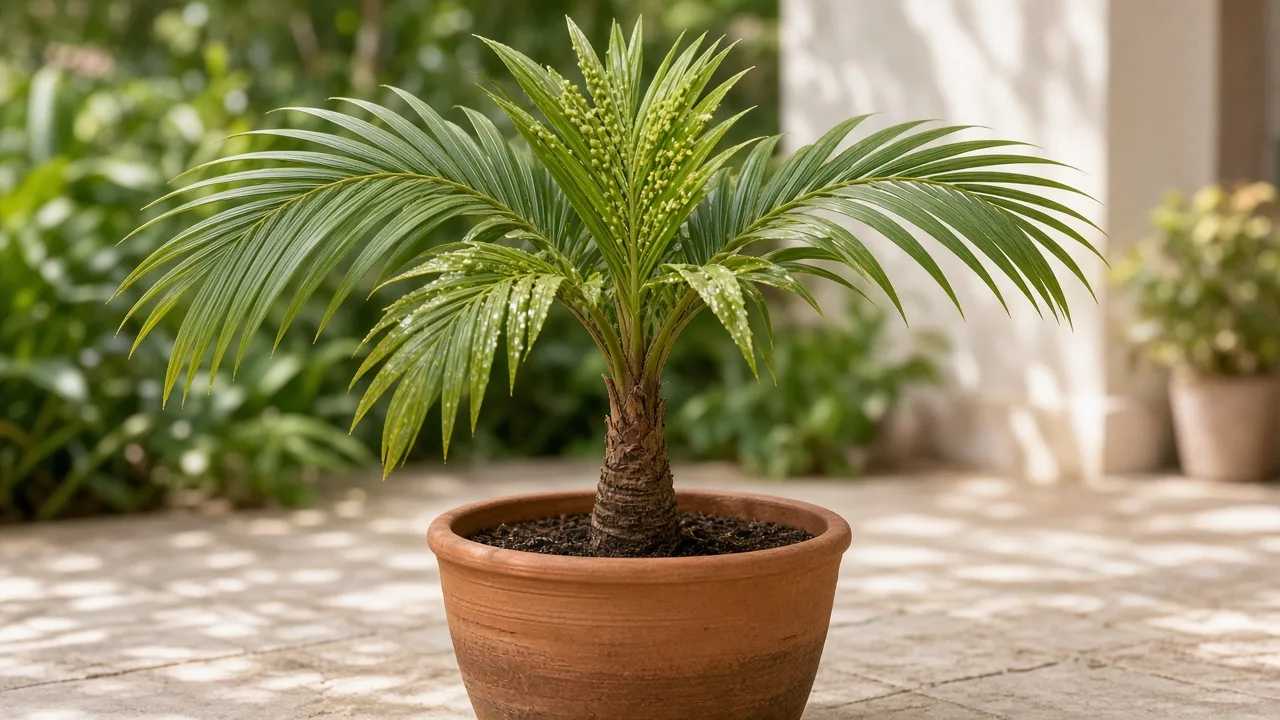
Aphids on Coconut Tree: Causes, Checks & Fixes
This guide covers aphids on Coconut Tree. See also the general Aphids guide, watering, and light pages for this plant.
Aphids on Coconut Tree: Causes, Checks & Fixes
Quick answer
Aphids on Coconut Tree (Cocos nucifera) are small sap-sucking insects that colonize wherever this single-trunk palm pushes soft tissue fastest—the unfolding central spear, tender pinnae along new pinnate fronds, and the bracts around developing inflorescences on older specimens. Aphids feed on soft, new plant growth and excrete sticky honeydew that coats stiff leaflets on fronds below, which is often the first clue on a tall patio palm you rarely inspect closely.
First step: move a container coconut away from other plants and blast frond undersides, rachis bases, and visible inflorescence bracts with a firm spray while keeping the crown heart dry. Coconut’s rigid pinnate fronds hide colonies along the rachis and in leaflet axils; confirm live aphids before stacking pesticides. For general aphid biology and when winged forms appear, see our aphids pest guide—on coconut, the urgent issue is usually honeydew on fronds plus crown hygiene, not repotting or fertilizer on day one.
What aphids look like on Coconut Tree
Healthy coconut fronds are long and pinnate—paired leaflets on a stiff central rachis arching from the trunk crown. Aphid damage concentrates on the newest tissue, not on weathered lower fronds:
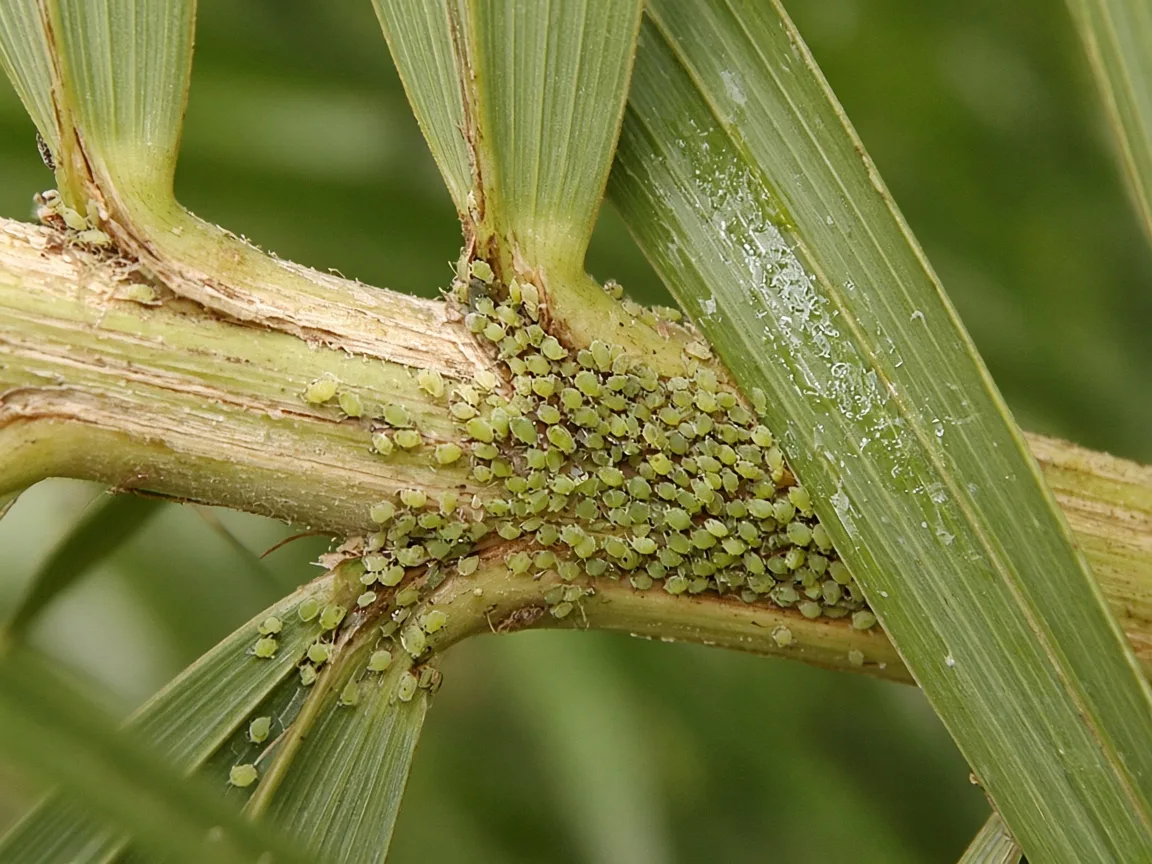
Aphid symptoms on Coconut Tree — compare clusters with healthy pinnae on the same frond.
- Clusters of tiny pear-shaped insects on the unfolding spear, young pinnae tips, rachis joints, and inflorescence bracts—often green, but aphids can also be black, brown, yellow, or pink
- Sticky, shiny honeydew on upper pinnae and the trunk below active feeding sites on the crown
- Curled or puckered young leaflets on the newest frond while older stiff fronds still look normal
- Ant trails on the trunk, pot rim, or terrace paving—ants harvest honeydew and protect aphid colonies
- Black sooty mold that wipes off with a damp cloth; it grows on honeydew, not inside coconut leaflet tissue
- Stunted or twisted spear leaves when feeding is heavy at the crown before the frond fully expands
Coconut is not a latex-bleeding succulent. If you see tackiness without insects, trace it upward to the active feeding zone on the crown—honeydew follows aphid colonies on new spears or flower bracts, not normal leaflet sheen. Because Cocos nucifera holds each frond for months, you may notice honeydew on mid-canopy pinnae while aphids remain on the spear above. Always inspect the topmost unfolding frond first, using binoculars on in-ground trees before climbing.
Where aphids hide on coconut crowns and inflorescences
Three spots matter on this palm and rarely matter the same way on broad-leaf houseplants:
Unfolding spear and crown heart
New coconut leaves emerge as a tight spear from the trunk apex. Aphids tuck into the overlap between the spear and the youngest open frond, where leaflet bases are still soft. Do not pour rinse water into this heart—coconut is vulnerable to bud rot when the crown stays wet, a risk called out in Coconut Tree watering guidance for stagnant crown moisture. Rinse fronds around the spear, not into it.
Rachis and pinnae axils on new fronds
Once a frond begins to open, colonies move along the rachis and into leaflet axils. Stiff mature pinnae lower on the trunk are poor aphid habitat; focus scouting on the top one to two fronds on container plants and the crown third on landscape palms.
Inflorescence bracts on fruiting-age palms
Mature coconuts produce large branched inflorescences enclosed by woody bracts before nuts form. Aphids prefer tender, fast-growing tissue, and developing spathes offer an overlooked colony site on coastal or Florida landscape palms. Container specimens indoors rarely flower, but conservatory-grown adults may—check any emerging spadix as carefully as the spear.
Why Coconut Tree gets aphids
Aphids are introduced pests, not a coconut disease. Insects on indoor and patio plants often arrive on newly purchased specimens or neighbors moved outdoors for summer—skipping quarantine is the most common entry route for potted nursery coconuts.
Warm, sunny growth favors outbreaks. Coconut wants full sun and steady warmth; when a container palm on a terrace pushes a new spear through spring and summer, the entire soft tip is one feeding buffet. High nitrogen levels favor aphid reproduction, so heavy feeding right after Coconut Tree repotting can produce extra-tender shoots aphids colonize quickly.
Ants complicate control. Ants protect aphids from predators and parasites, so honeydew on a coconut whose trunk touches an ant trail may mean reinfestation after rinsing. Landscape palms near outdoor kitchens or irrigated beds see this often.
Dry indoor air points to a different pest. Spider mites thrive in dry, warm conditions and are common on palms stressed by low humidity—fine stippling without honeydew on new spears usually means spider mites on Coconut Tree, not aphids. Scale is also frequent on Florida coconuts; UF/IFAS lists coconut palm among hosts for tessellated scale, which looks like immobile disks on fronds, not moving pear-shaped clusters—see mealybugs on Coconut Tree when white cottony masses appear in the crown.
How to confirm the cause
Work through these checks before treating:
- Location on the plant — Aphids on unfolding spears, new pinnae, and inflorescence bracts. Immobile brown bumps on older fronds suggest scale, not aphids.
- Hand lens inspection — Aphids are soft-bodied with cornicles on the hind end. They move slowly when disturbed compared with flying whiteflies.
- Tap test — Shake a young frond over white paper. Whiteflies fly in a cloud; aphids stay as clusters on the rachis.
- Ant activity — Ants on the trunk or pot strongly suggest honeydew producers are present in the crown above.
- Sooty mold check — Rub a dark pinna patch. Sooty mold smears and wipes away; mineral salt burn on tips is localized and crunchy—see brown tips on Coconut Tree.
- Care cross-check — Confirm mix is not sour or waterlogged for days. Overwatering stress does not create aphids, but root rot on Coconut Tree slows recovery once pests and wet mix combine. See yellow leaves on Coconut Tree when lower fronds yellow without crown insects.
- Neighbor scan — Many aphid species colonize a wide range of plants. Check tropical companions and any vegetables on the same terrace.
If mature fronds look stiff, the spear opens cleanly, and no insects appear after a careful crown check, old honeydew may be leftover from a cleared infestation—keep scouting weekly rather than spraying blindly.
First fix for Coconut Tree
Isolate container palms from other plants and blast frond undersides, rachis bases, and visible inflorescence bracts with a firm hose or shower spray while keeping the crown heart dry.
On a patio tub, tilt the pot, cover soil with plastic if needed, and work from below upward so runoff does not funnel into the spear. On in-ground coconuts, use a hose with enough pressure to dislodge insects from the lowest reachable fronds first, then work higher only if you can do so safely without soaking the crown. A strong stream of water knocks aphids off sturdy plants and washes fresh honeydew before ants or sooty mold take hold.
Aim spray at leaflet undersides and rachis joints—not a sustained jet into the central bud. Let fronds dry the same day; coconut tolerates brief wetting on mature pinnae but not a flooded heart overnight.
Do not apply insecticidal soap, horticultural oil, or neem until you have confirmed live aphids and finished at least one thorough rinse. Do not fertilize a pest-hit palm hoping to push replacement growth—that produces more soft tissue aphids prefer. Do not repot on day one unless soggy mix and soft roots already point to root failure.
Step-by-step recovery
After the initial isolation and rinse:
- Repeat water sprays every two to three days on reachable fronds until live aphids are gone on inspection. Target undersides and rachis bases on the top one to two fronds.
- Apply insecticidal soap if colonies persist after several rinses. Soaps work on contact only and must coat insects directly—repeat at label intervals, typically every five to seven days for three cycles, because aphid populations can increase rapidly in warm weather.
- Spot-test soap on one leaflet cluster before treating the whole crown. Palms can be sensitive to insecticidal soap—treat a small patch, wait 48 hours, and check for spotting before full application.
- Wipe sooty mold off upper pinnae with plain water once honeydew production stops. Trim leaflets that stay more than half coated if they no longer photosynthesize well—follow Coconut Tree pruning for safe frond removal on living palms.
- Manage ants on trunk bands or pot feet if they return to protect colonies. Sticky trunk bands (on wrapped bark only—not bare young trunk tissue) or ant bait placed away from pets can help predators reach aphids.
- Hold fertilizer until new spears look clean and firm for two weeks. Resume at modest strength per the Coconut Tree fertilizer guide during active warm-season growth, avoiding excess nitrogen.
Keep container coconuts isolated until you see no new aphids for at least two weeks after the last treatment. Landscape trees may need professional lift equipment for severe crown infestations you cannot reach—escalate before repeated whole-tree oil sprays in hot sun.
Recovery timeline
Water knockdown shows results within two to three days when colonies are moderate and confined to one new frond. A full soap course often takes one to two weeks with label-interval repeats because nymphs hide in curled young pinnae.
Honeydew dries within days once feeding stops; sooty mold stops spreading and can be wiped away over one to three weeks. Mildly distorted young pinnae on an opening frond may straighten partially as the next spear emerges cleanly—but stiff older tissue rarely returns to perfect form. Judge success by firm upright new spears, falling pest counts, and dry leaflet surfaces—not by restoring every blemished frond.
Container coconuts grow more slowly than in-ground coastal trees. Indoor coconut palms are often short-term foliage specimens that push limited new fronds per year in conservatory light, so patience matters after any crown pest hit.
Lookalike symptoms to rule out
Scale insects appear as immobile brown or tan disks on fronds and rachises, not soft moving clusters. Tessellated and other scales are documented palm pests in Florida—confirm identity before choosing oil sprays.
Mealybugs form white cottony masses in crown crevices and leaflet bases rather than dense green groups on open pinnae.
Spider mites cause fine stippling and webbing in hot dry air—usually without heavy honeydew on new spears. See spider mites on Coconut Tree.
Whiteflies fly when disturbed and leave similar honeydew, but adults look like tiny white moths on frond undersides.
Normal lower frond yellowing happens with overwatering, cold exposure, or natural senescence. Without insects on the spear, that pattern is cultural—cross-check Coconut Tree watering and light before assuming aphids.
Mistakes to avoid
Do not return an isolated container palm to the plant grouping after a single rinse. Indoor aphid populations rarely decline without repeated intervention.
Do not use dish detergent instead of products labeled for plants—harsh soaps can spot coconut pinnae.
Do not ignore ants while treating only the crown you can see from the ground.
Do not spray insecticidal soap on fronds in direct scorching sun right after rinsing; treat in morning or evening and avoid soaps when temperatures exceed 90°F.
Do not flood the crown repeatedly “to wash aphids away”—standing moisture in the bud invites rot that can kill the palm faster than aphids alone.
Do not overwater during recovery. Coconut roots need aerated mix even when you rinse foliage often—see soil and watering guides before keeping mix soggy “to compensate” for sprays.
Coconut Tree care cross-check
While treating aphids, keep baseline care stable:
- Light — Full sun or the brightest conservatory spot supports stiff new spears. Weak light produces soft, etiolated growth aphids favor.
- Water — Deep drinks when the top 2–5 cm of mix dries; avoid stagnant crown water and sour, saturated pots.
- Humidity — Moderate humidity helps frond appearance; very dry air favors mites more than aphids but slows recovery from any pest.
- Temperature — Frost-free warmth only; chill damage yellows lower fronds without creating aphids.
Fixing pests without stabilizing light and watering leaves coconut vulnerable to the decline patterns covered on the Coconut Tree overview.
How to prevent aphids next time
Isolate new plants before placing them near existing collections and inspect crown spears weekly during quarantine.
Scout the topmost spear and any emerging inflorescence through warm growth. Avoid excess nitrogen that pushes soft shoots—use balanced palm feeding per the fertilizer guide.
Quarantine terrace palms that summered outdoors before they rejoin indoor conservatories.
Preserve beneficial predators when possible. Lady beetles, lacewings, and parasitic wasps reduce aphid numbers if broad-spectrum sprays have not eliminated them—outdoor landscape coconuts often recover with water rinses and predator help once ants are managed.
Keep ants off trunks and wipe dust from pinnae every few weeks so early colonies show on stiff coconut foliage.
When to worry
Treat as urgent when aphids cover most of the visible spear, ants swarm daily, or sooty mold blocks light on a large share of the crown within a week. Also escalate if the spear stops opening while colonies remain visible, or if honeydew and insects coat an inflorescence you cannot reach with rinse or soap.
Lower urgency fits a handful of aphids on one spring frond if you isolate and rinse immediately. Coconut rarely dies from aphids alone on an otherwise healthy palm—but heavy sustained feeding weakens slow crown growth and invites secondary mold.
Call a professional arborist for tall in-ground palms when crown colonies persist after repeated safe rinses and you cannot access the spear without climbing into the bud zone.
Conclusion
Aphids on Coconut Tree announce themselves on unfolding spears, tender pinnae, and occasional inflorescence bracts—not on every stiff lower frond. Isolate container plants, blast frond undersides and rachis bases while keeping the crown heart dry, confirm live insects, then repeat water sprays or use labeled insecticidal soap with a spot test if needed. Stable full sun, warm temperatures, and proper watering support clean new spears once honeydew and ants are gone—that is the recovery signal worth watching on Cocos nucifera.
When to use this page vs other Coconut Tree guides
- Coconut Tree watering guide — Use for crown moisture and root-zone checks before assuming aphids explain every yellow frond.
- Coconut Tree problems hub — Browse all common issues on this species when symptoms overlap.
- Spider mites on Coconut Tree — Different entry point when dry indoor air and stippling dominate without honeydew on new growth.
Related Coconut Tree guides
- Coconut Tree overview
- Coconut Tree watering
- Coconut Tree light
- Coconut Tree soil
- Yellow leaves on Coconut Tree
- Coconut Tree problems
- Brown tips on Coconut Tree
- Root rot on Coconut Tree
Related tool
Use the Pest Identifier Tool to narrow causes for aphids on this plant before changing multiple variables at once.