Stop Fruit Flies in Trash Cans for Good
Stop fruit flies from coming back: bag fermenting scraps, scrub the can, block odors, and check drains and compost—not just the kitchen counter.
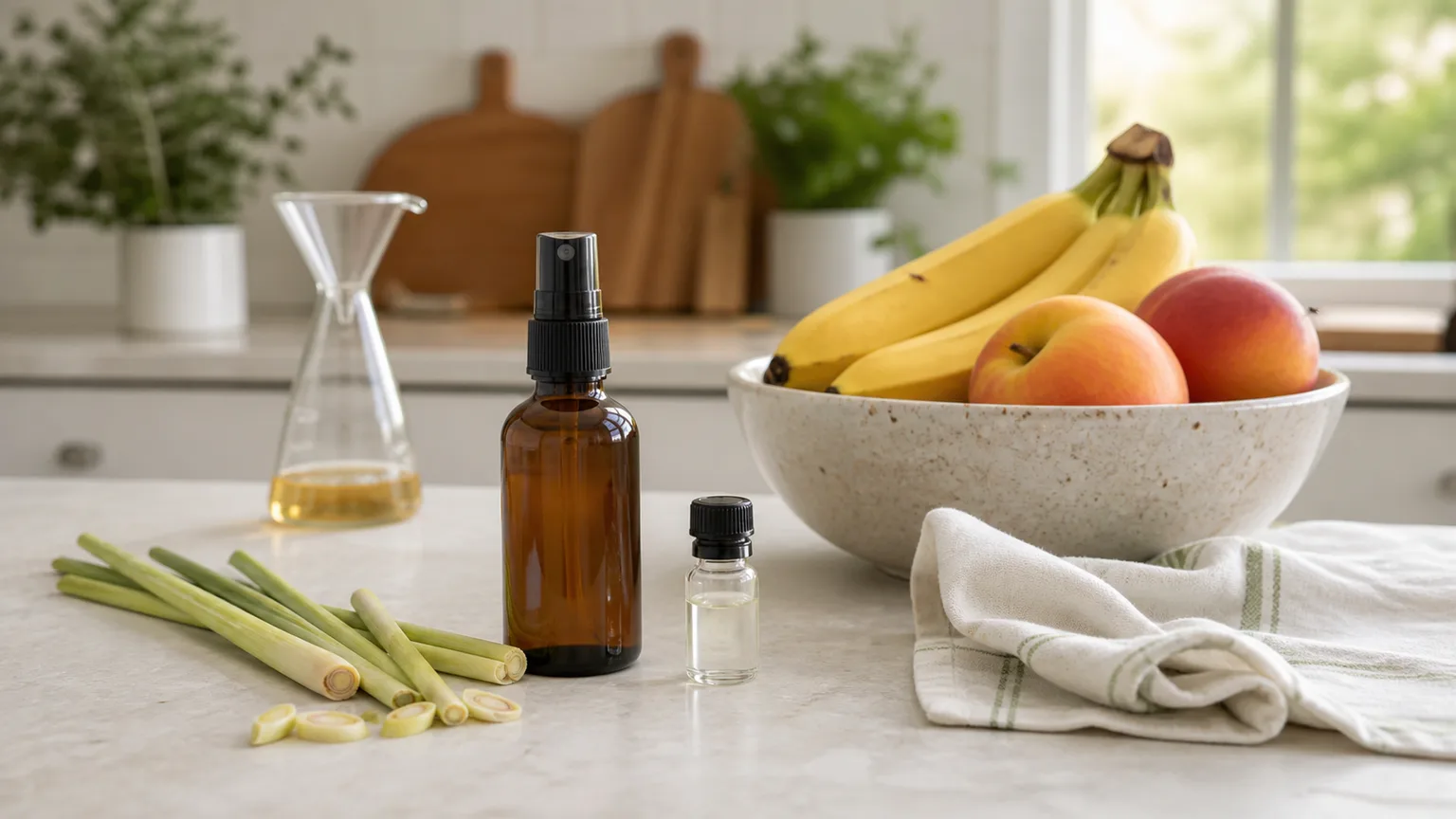
A cloud of tiny flies over the kitchen trash usually means one thing: something in or under that bin is fermenting, and adults are laying eggs faster than your trap can catch them. The fix is not a better spray. It is a short sequence—remove the wet waste, scrub the breeding film, seal the lid, trap the stragglers, and change how scraps enter the can.
If you only set a vinegar bowl and walk away, expect the swarm to return within a week. Fruit flies complete their life cycle in about eight to ten days in a warm kitchen, and females can lay eggs on any moist, fermenting surface—including the sticky ring at the bottom of a trash can. (University of Wisconsin–Madison Extension’s fruit fly guidance) (UConn Extension’s fruit fly overview)
Why Fruit Flies Keep Returning to the Trash Can
Fruit flies (Drosophila spp.) are drawn to the smell of fermentation: overripe fruit, soda residue, wine, beer, and the slurry that collects when a liner leaks. University of Minnesota Extension notes they show up wherever fermenting fruits, vegetables, liquids, or trash containers are present indoors—and they can appear any time of year, with a spike in fall and winter when produce piles up. (University of Minnesota Extension’s fruit fly ID page)
Your trash can is a perfect nursery because it combines odor, moisture, and shelter. House flies and blow flies use many of the same sites; UC IPM emphasizes that eliminating larval habitat—not just swatting adults—is the preferred management approach for filth flies around garbage. (UC IPM’s fly management guidance)
Fruit Flies vs. Other Small Flies Near the Trash
Misidentification sends people to the wrong fix. Fruit flies are tan with red eyes (about 1/16–1/8 inch long) and hover near produce, open drinks, and trash. Drain flies look fuzzy, hold their wings roof-like, and breed in the gelatinous slime inside slow drains—not in a dry, well-sealed bin. Fungus gnats are weak fliers around damp potting soil, not fermenting garbage.
If flies cluster on the wall above a sink or inside a shower stall, read the drain-fly section later—not the vinegar-trap-only route. Virginia Tech Extension recommends mechanical drain cleaning over pouring bleach or vinegar down pipes for drain-fly control. (Virginia Tech’s drain fly publication) For fruit-fly-style vinegar traps used correctly, see our homemade gnat trap guide.
How Fast They Breed When Food Sits in the Bin
Eggs land on or just beneath the surface of fermenting material. Larvae feed on yeast in the decay, then pupate nearby. Wisconsin Extension puts the full cycle at eight to ten days; UConn Extension cites eight days under favorable conditions.
That speed explains the rebound. Kill adults tonight and miss a tablespoon of residue under the rim, and you can have a new generation before the liner is full. Warm trash sitting in sun accelerates the same pattern outdoors.
The Order That Actually Works: Clean, Seal, Trap, Prevent
Treat the eight methods below as one workflow, not a buffet. Clean removes larvae and food film. Seal stops new entry and odor escape. Trap knocks down adults while you hunt hidden sources. Prevent keeps the can from becoming attractive again.
Traps alone are a monitoring tool. Wisconsin Extension is blunt: the only way to completely stop fruit flies is to find and eliminate breeding sites—most often at the bottom of trash and garbage cans where caked vegetable matter hides. (University of Wisconsin–Madison Extension’s fruit fly guidance)
Step 1: Remove and Bag the Breeding Material Tonight
Start with the bag, not the spray. Tie off the current liner—even if the can is only half full—and carry it out. Fruit flies can be laying eggs on exposed scraps while you read this.
If you see larvae on the bag or bin wall, treat it like a maggot situation: contain, remove, wash. Our fast maggot cleanup guide walks through the same remove-wash-dry logic blow flies use around unsealed kitchen waste. (UC IPM’s fly management guidance)
Double-Bag Wet Waste and Take It Out Early
Juicy scraps—melon rinds, coffee filters, meat trimmings, soggy paper—belong in a tied bag inside a second bag when the liner is thin or the pickup is more than a day away. UC IPM recommends placing garbage in plastic bags inside containers with tight-fitting lids and setting cans out at least weekly because waste that sits longer than a week can produce adult blow flies.
Do not leave a propped lid “just for a minute.” An open lid is an open invitation while adults are active.
Step 2: Wash the Can Before You Reset Traps
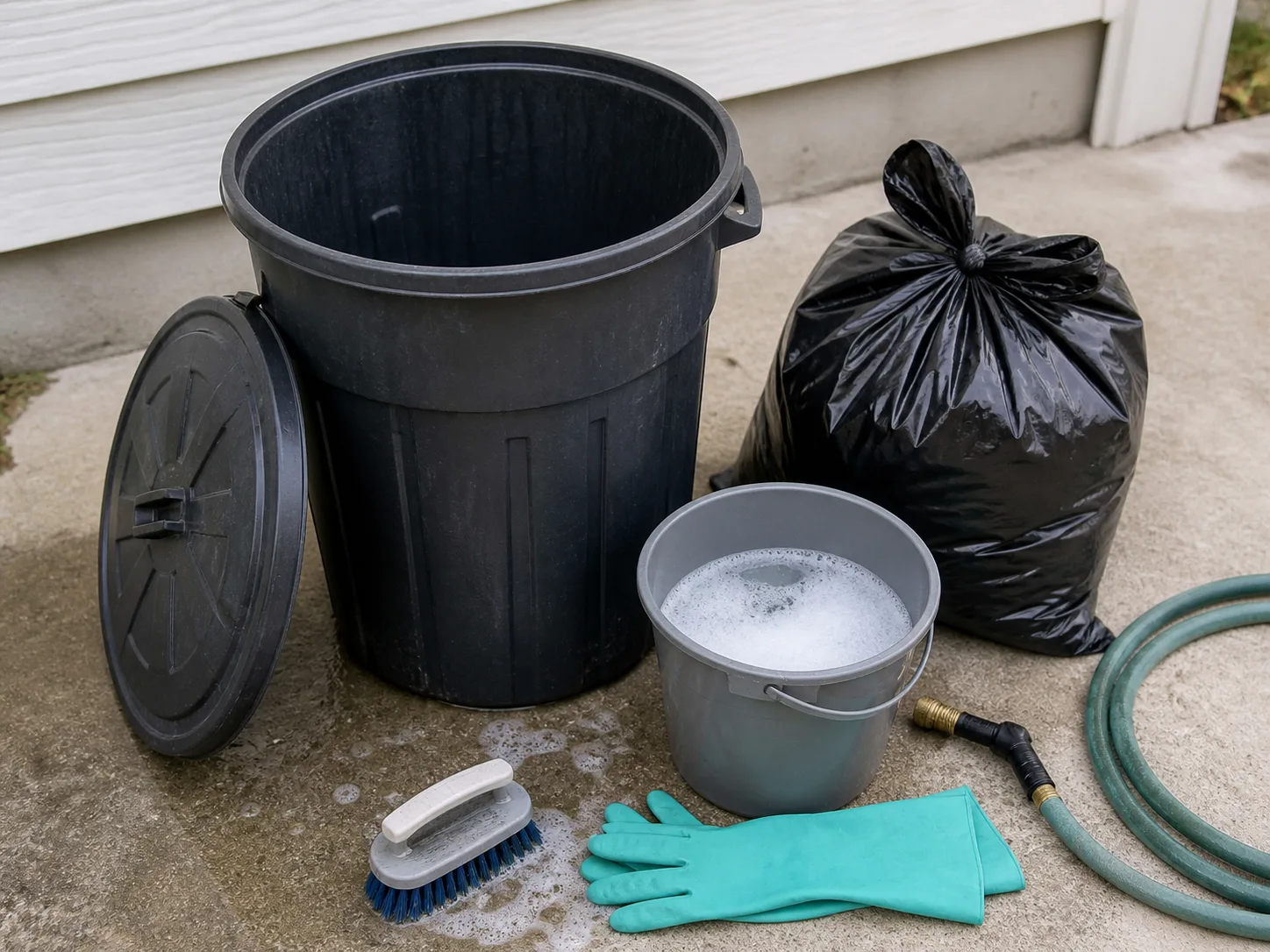
Empty the can completely. Pull out any liner slip or reusable bucket. Hit the bottom, sidewalls, lid underside, hinge crease, and foot pedal mechanism—every place liquid tracks.
Use hot water and dish soap first. A vinegar-based rinse helps cut sticky film and odor. Let the can drain fully; a damp bin re-softens dried residue and smells again by morning.
What to Use on Plastic, Metal, and Wheeled Cans
Plastic kitchen cans: Soft brush or microfiber cloth; avoid steel wool that scratches and holds grime.
Metal or stainless cans: Same soap wash; dry promptly to limit rust at seams.
Outdoor wheeled carts: Rinse with a hose, scrub the bottom sump where liquid pools, and leave the lid open until fully dry. If larvae were visible, wash the garage or pad spot where the cart sits—pupae can develop in drier spots nearby.
Step 3: Set a Vinegar Trap While You Hunt Hidden Sources
Once the can is clean and dry, place a trap next to the bin—not inside it. You are catching adults while you search for the real source.
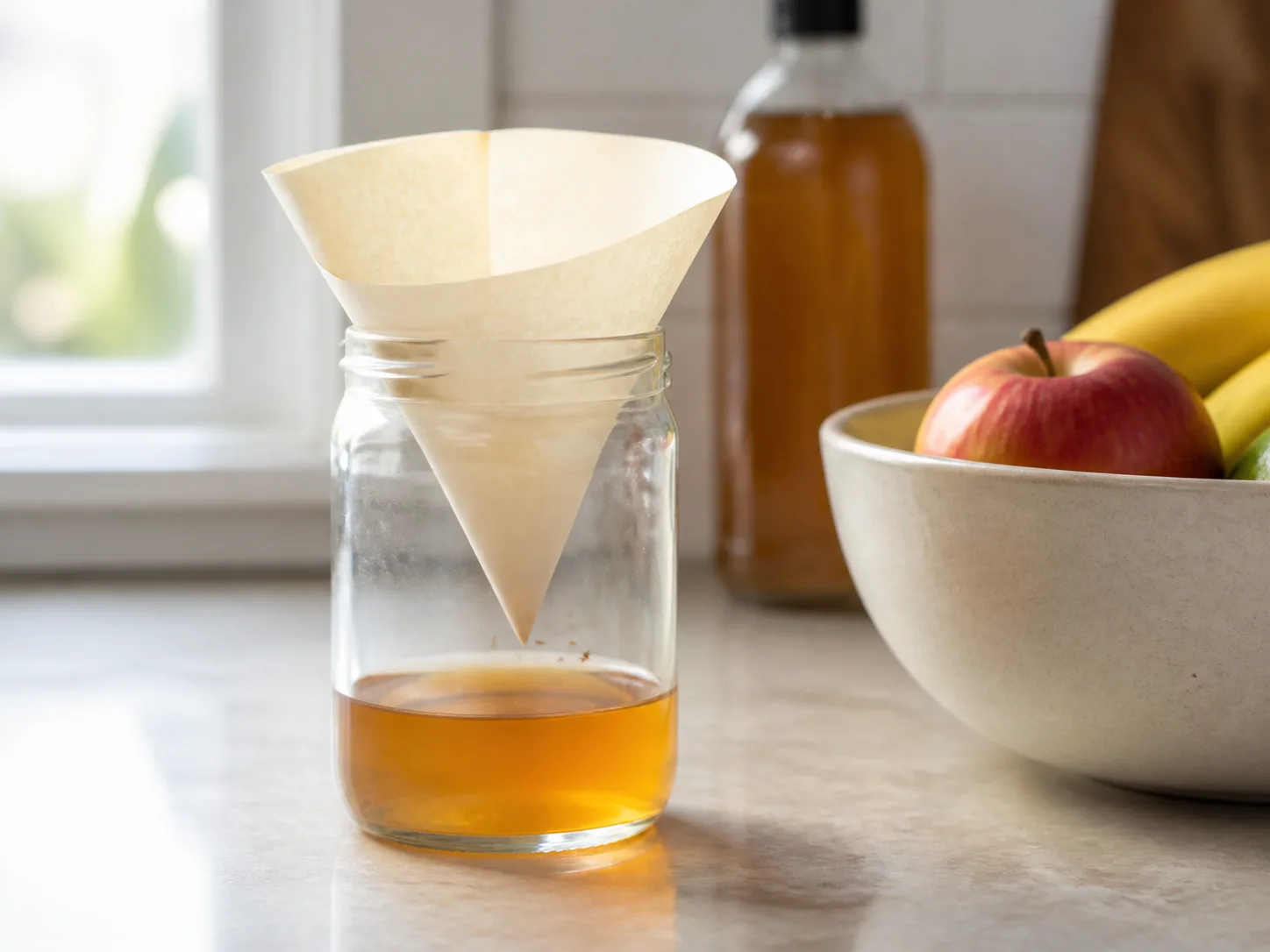
Fill a shallow bowl with 1/2 to 1 inch of apple cider vinegar and add two or three drops of dish soap. The vinegar mimics fermentation; soap breaks surface tension so flies sink instead of skating across the top. (UConn Extension’s fruit fly overview)
Refresh the bowl every day until catches drop to zero for several days.
Apple Cider Vinegar Bowl vs. Covered Jar Trap
Open bowl with soap: Fastest setup; best when you will refresh daily.
Covered jar: Stretch plastic wrap over a cup, poke small fork holes, and leave vinegar inside. UConn Extension notes flies enter but rarely find their way out—useful if you need a tidier counter.
Wine or beer bottle residue: Wisconsin Extension mentions old bottles with leftover liquid as passive traps. Works in a pinch near a bar cart or recycling zone.
Sticky fly strips catch some adults but look unsightly in a kitchen and can contaminate prep areas if placed too close to food. UC IPM notes sticky paper is fine for a few flies in a confined area, not a heavy trash-can infestation. (UC IPM’s fly management guidance)
Step 4: Seal the Lid and Fix the Gaps That Let Flies In
A trap cannot outpace a lid that never closes. Overfilled bags, bent hinges, and cracked pedal seals let odor out and flies in.
Check these failure points: bag bulging under the rim, liner folded into the hinge, missing rubber gasket, outdoor cart lid warped from sun, or a secondary bin without a lid in the garage.
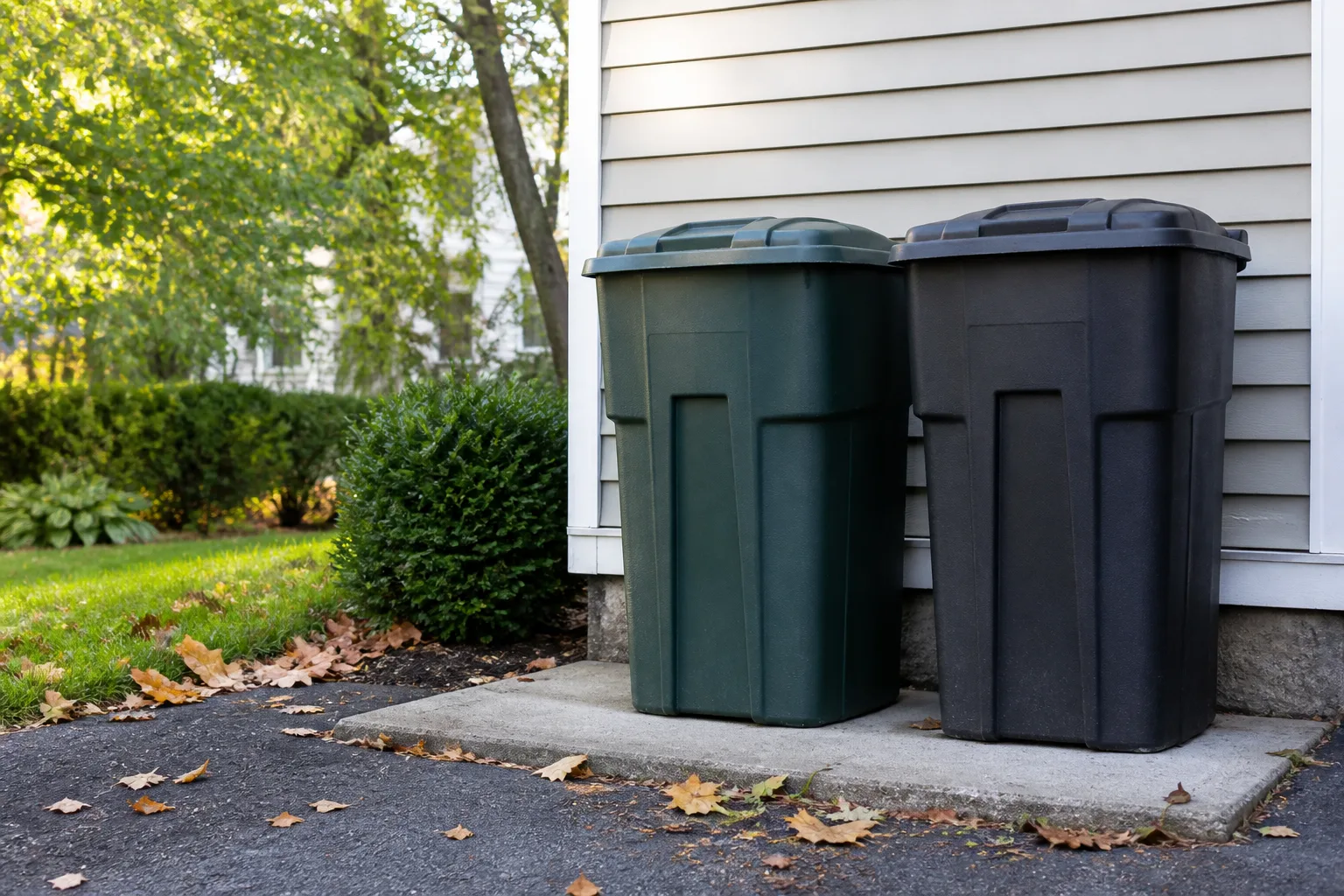
Press down until you hear or feel the latch engage. If the can cannot close unless you compact trash by hand, size up the liner or empty sooner—not harder.
Step 5: Rinse Recycling and Keep Juicy Scraps Wrapped
Recycling bins beside the trash are a common hidden source. Wisconsin Extension lists bottles and cans held for recycling—old ketchup bottles, soda cans, wine bottles—as frequent fruit-fly breeders.
Rinse containers until no sweet or tomato residue remains. Shake water out and let them dry before placing in a bin. Store the recycling tub with a lid if it lives indoors.
In the trash stream, wrap wet scraps in a paper towel or old bag before tossing. Avoid throwing naked fruit peels or liquid-heavy filters loose into the bottom of the can.
Step 6: Block Odors at the Bottom of the Bin
Odor control supports prevention; it does not replace washing. Less smell means fewer flies investigating the lid gap from across the room.
Baking Soda, Charcoal Filters, and Scented Liners
Baking soda: A thin layer in the empty can bottom—or sprinkled in the bag—absorbs moisture and odor between washes. Replace it when it clumps or smells stale.
Charcoal filters: Stick-on or drop-in filters help enclosed cabinets and under-sink cans. Swap on the schedule the manufacturer gives; saturated charcoal stops working.
Scented liners: They can mask odor temporarily but will not stop fermentation if juice pools under the bag. Treat scent as a backup layer, not proof the can is clean.
Step 7: Clean the Can on a Schedule That Matches Your Kitchen
Baseline: every two weeks for a lightly used kitchen can. In summer, with kids, compost scraps, or daily cooking, move to weekly. Clean immediately if you smell sour trash, see flies, or find liquid in the bottom.
Between deep washes, wipe the lid and rim when you change the bag. Take full bags out before they reach the rim so the lid can close every time.
Gardening Know How’s pest guidance aligns with this: keep counters, sinks, and drains clean, tie trash, remove rotting produce promptly, and store what you can in the refrigerator. (Gardening Know How’s fruit fly control article)
Step 8: Move Outdoor Cans Out of Heat and Sun
Outdoor carts ferment faster in direct sun. Heat speeds decay, increases odor plumes, and shortens the fly life cycle. Slide carts to shade, keep lids closed, and wash the interior seasonally—or sooner if you see maggots when the truck lifts the bag.
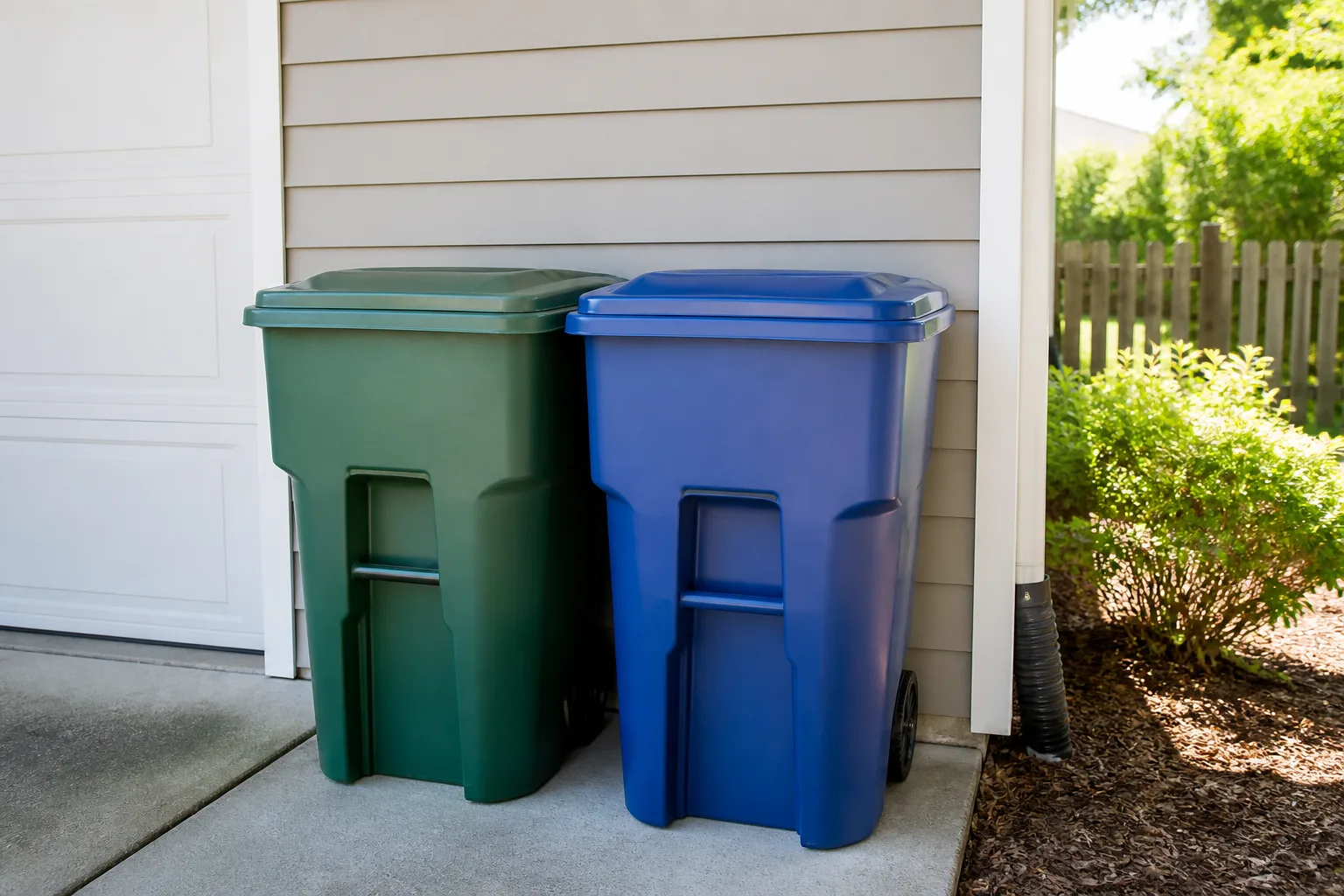
If outdoor flies spike after pickup day, the cart itself—not only the bag—needs scrubbing. UC IPM recommends regular soap-and-water washing of garbage cans to remove residues that attract blow flies and house flies. (UC IPM’s fly management guidance) For yard and patio flies that are not tied to a single can, see getting rid of flies outdoors.
When DIY Fixes Fail: Secondary Sources to Check
If traps still fill nightly after a washed can and sealed lid, assume breeding is happening somewhere else within flight range—roughly the same room or adjacent spaces.
Work this checklist:
- Garbage disposal: Run it with water frequently; clean the splash guard and rubber baffle where pulp collects.
- Under appliances: Peelings swept under a fridge or stand mixer support larvae for days.
- Forgotten produce: One soft potato in a pantry bowl can seed the whole kitchen.
- Compost caddy: A countertop bin without a lid or with liner leaks duplicates trash-can conditions.
- Mops and buckets: Sour mop water is a classic site Wisconsin Extension lists.
- Drains: If flies are fuzzy and weak fliers, switch to drain cleaning—not more vinegar bowls. (Virginia Tech’s drain fly publication)
Drains, Compost, and Forgotten Produce
Drains: Scrub the drain opening with a stiff brush to remove slime. Virginia Tech warns that pouring bleach or vinegar down drains kills only surface larvae—not the thick biofilm where eggs hide.
Compost: Keep the kitchen collector small and empty it daily. Outdoor piles need turning and covering; otherwise you are breeding flies outside that wander in when the door opens.
Produce storage: UConn Extension recommends washing produce, refrigerating ripe fruit when possible, and wiping counters with soapy water to remove sticky spots that hold eggs.
What Not to Do Near Food Trash
Do not fog a kitchen with insecticide while open food sits out. UC IPM states that in most homes, sanitation plus screens should be sufficient for house flies and that pesticides are not needed or recommended for typical indoor situations. (UC IPM’s fly management guidance)
Do not treat essential-oil sprays as a permanent fix. Peppermint, eucalyptus, or citronella may repel some flies briefly around a clean can, but they do not remove larvae in a dirty bin.
Do not rely on scented products while skipping washes. Odor masking without sanitation is how infestations look “mysteriously solved” for two days and return on day three.
For vinegar-based fly tactics that target adults in other parts of the home, our house fly vinegar guide covers a different fly group with different habits—useful if large house flies, not tiny red-eyed fruit flies, are the main problem.
Conclusion
Fruit flies over the trash can are a sanitation signal, not a mystery pest. Remove and bag fermenting waste tonight, scrub the can until the bottom is film-free, seal every gap in the lid, run a vinegar-and-soap trap while you check recycling and drains, and block odor with baking soda or charcoal between scheduled washes.
When the cycle finally breaks, you will see it in the trap: fewer catches, no flies hovering at the lid, no sour smell when you lift the bag. Keep the clean → seal → trap → prevent order, and the swarm stops coming back for good.