When to Start Broccoli Seeds Indoors by Frost Date
When to start broccoli seeds indoors? Count back 4–6 weeks from your last frost, then time hardening and transplanting for a cool, productive crop.
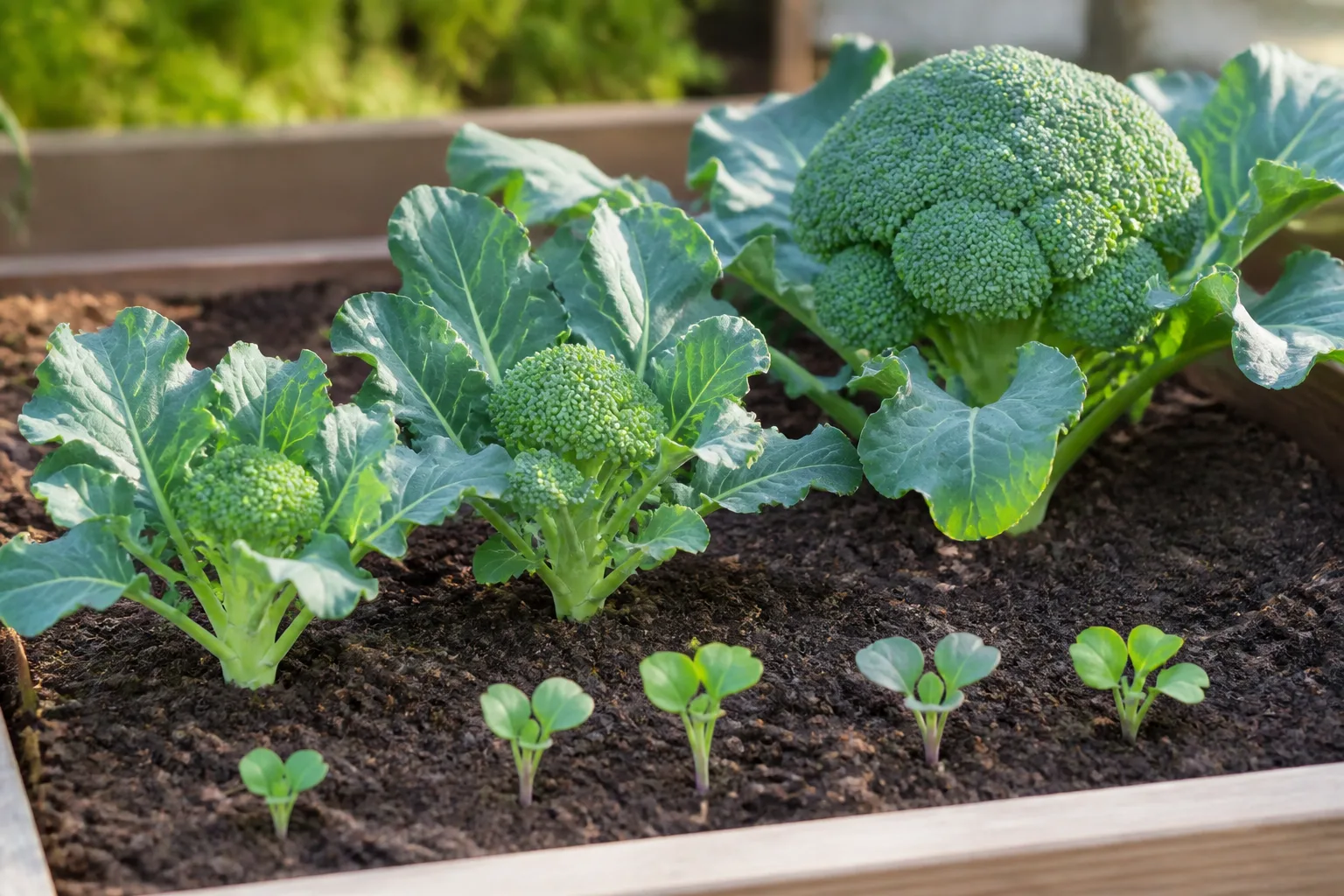
Start broccoli seeds indoors about four to six weeks before the date you expect to transplant them outside. For a spring crop, that usually means counting back four to six weeks from your area’s average last spring frost date, then reserving roughly one week at the end for hardening off. If your seed packet recommends a longer or shorter indoor period, follow the packet and use the local weather as the final check.
The useful answer is not simply “six weeks before frost.” Broccoli can go into the garden while the weather is still cool, and hardened seedlings tolerate light frost, so the best planting day is often before the last frost date. What you are really trying to do is raise a compact transplant that reaches the garden early enough to form a head before sustained heat, without keeping it indoors so long that it becomes root-bound, tall, or stressed.
The short answer: start 4–6 weeks before your outdoor target
For most home gardens, sow broccoli four to six weeks before the planned transplant date. If you intend to plant out two to three weeks before your average last frost, sowing roughly six to nine weeks before that frost date can be reasonable—but only when you have strong light and a cool place to hold the seedlings. Many gardeners use a simpler six-week rule because it leaves time for germination, seedling growth, and hardening without pushing the plants too far.
Key dates to put on your calendar:
Mark four dates rather than one:
- Average last spring frost: the historical date when your area usually stops seeing a 32°F freeze. It is a planning average, not a guarantee.
- Target transplant date: the day you want broccoli in the garden. This may be one to three weeks before the average last frost if the soil is workable and a cold snap can be covered.
- Hardening-off start: usually five to seven days before planting, although a full week or longer is easier on plants.
- Indoor sowing date: count backward from the transplant date by the number of weeks your variety needs indoors, then add a few days if you expect slow germination or variable spring weather.
This sequence prevents a common mistake: treating the last frost date as the day broccoli must be planted. The last frost is a reference point. The crop’s real deadline is the arrival of repeated warm days, because heat during head formation can produce loose heads, premature flowering, or a crop that stalls before it becomes harvestable.
Broccoli is a cool-season crop in the cabbage family. West Virginia University Extension describes its preferred growing range as about 65–75°F and notes that high temperatures and increasing day length can trigger bolting. That makes timing a race between a young plant becoming large enough to head and the weather becoming too warm for a quality crop (West Virginia University Extension).
Soil temperature is part of the decision too. A cold calendar date does not help if the planting bed is waterlogged, frozen, or too cold for roots to establish. Utah State University Extension places cool-season seeds such as broccoli in a soil-temperature range around 55–65°F for germination, while indoor room conditions can be warmer than that. Once the bed is workable and drains well, a hardened broccoli transplant can make progress in weather that would slow a newly germinated seed (Utah State University Extension).
Build a broccoli calendar backward from planting day
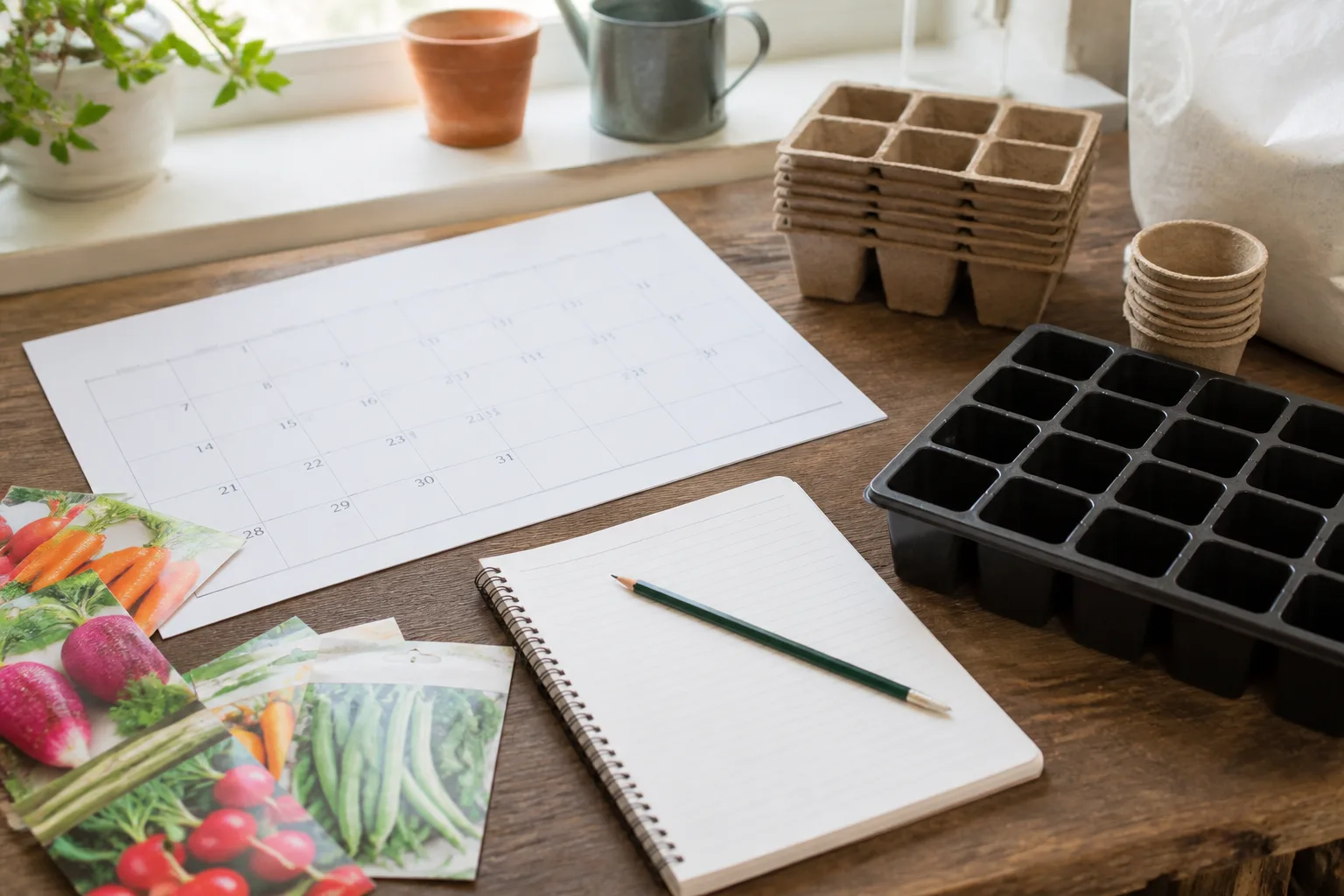
The most reliable schedule starts with the day the seedling should be outside, not the day you happen to have time to sow. Use this formula:
Indoor sowing date = target transplant date − indoor growing time − hardening time.
For a standard spring crop, use four to six weeks for indoor growing and about one week for hardening. Then add three to seven days of flexibility if your seed packet is old, your growing area runs cool, or you are starting without a grow light. Do not add extra weeks just to be safe; every week indoors is another week in a small container, and broccoli grows quickly once it has light, water, and nutrients.
Choose the variety and growing season first
Read the seed packet before choosing a date. “Days to maturity” usually describes the crop from a particular starting point, and packets differ in whether that count assumes direct sowing or transplanting. A fast variety may be a better spring choice where summer arrives early, while a heat-tolerant or slower variety may make more sense for a fall crop. West Virginia University Extension lists examples ranging from varieties maturing in the high 50s to those taking 70–80 days, which is enough variation to change the calendar by several weeks.
Also decide whether you want a spring harvest, a fall harvest, or both. Spring broccoli gives an early crop but faces a steadily warming season. Fall broccoli can be easier because seedlings grow through summer and form heads as temperatures moderate, but the young plants must be started or transplanted while the weather is still hot. If your area has a short, cool spring, a quick variety and early transplanting are usually more useful than simply sowing seeds earlier under weak indoor light.
Pick a transplant window, not just a frost date
For spring, aim to transplant when the bed is workable, the forecast has no immediate severe freeze, and you can cover the seedlings if a hard frost or drying wind arrives. Hardened broccoli can handle a light frost, but a plant moved straight from a warm room into freezing wind is not equivalent to an established outdoor crop.
Many growers set spring broccoli outside one to three weeks before the average last frost, depending on local conditions. In colder or exposed gardens, wait closer to the frost date or use a floating row cover. In a mild coastal or southern climate, the transplant window may begin much earlier, and heat—not frost—may be the limiting factor.
Your bed should also be ready. If soil stays saturated after rain, the correct date is not the date on the calendar; it is the first suitable day after drainage improves. Broccoli has a shallow root system, so roots need air as well as moisture during establishment.
Subtract seedling time and hardening time
Start with the target outdoor date and work backward in separate steps:
- Subtract five to seven days for hardening off.
- Subtract four to six weeks for indoor growth, depending on variety and seedling speed.
- Add a small buffer only if germination conditions will be inconsistent.
- Write the resulting date on the seed packet and schedule your light, containers, and seed-starting mix before that day.
This calculation gives you a window instead of a false sense of precision. If the plants are ready a few days early, keep them growing under light at a slightly cooler temperature and transplant when conditions cooperate. If they are slow, do not compensate by moving weak seedlings into cold soil simply because the date arrived.
A worked example for a May 1 last frost
Suppose your area’s average last spring frost is May 1 and your garden can usually plant hardened broccoli around April 15. Choose April 15 as the target transplant date. Start hardening around April 8, and sow indoors between March 4 and March 11 for a four- to six-week seedling period.
If your variety is fast, your lights are strong, and the spring forecast is mild, March 11 may be enough. If the variety is slower or you expect several cloudy weeks, March 4 gives more room. That is a better use of the range than always choosing the earliest date, because early sowing without adequate light creates a larger problem than a short delay.
If April 15 arrives with frozen or waterlogged soil, hold the seedlings for a few days and protect them from becoming crowded. If the weather is unusually warm, do not wait for May 1 just because it is the “safe” date; broccoli needs time to head before the heat settles in.
Spring and fall broccoli use different timing strategies
Spring crop: beat heat without rushing seedlings
The spring strategy is simple: produce a sturdy transplant quickly, get it outside while nights and soil are cool, and protect it from the occasional cold snap. The mistake is assuming that earlier is always better. A broccoli seedling that spends eight or ten weeks in a dim room may be older but less useful than a six-week seedling with a thick stem and an undisturbed root ball.
Spring sowing is especially worthwhile when your region moves quickly from cool weather to summer heat. Indoor control lets you germinate evenly and choose the transplant date rather than waiting for outdoor soil to warm enough for direct seeding. It also gives you a head start against cabbage worms and other pests that often find small outdoor seedlings before they can replace damaged leaves.
Fall crop: count backward from the heat breaking
For fall broccoli, do not count from the spring last frost. Count backward from the date when your area usually has enough cool weather left for the variety to mature, and allow extra time for slow growth during late-season cold. In many regions, seeds are started indoors in July or early August and moved outside once they are ready, though the exact date depends on how long summer heat persists and when the first fall frost usually arrives.
West Virginia University Extension describes mid- to late-July tray sowing for fall transplants and August-to-September planting windows, with the variety influencing the choice. Savvy Gardening likewise recommends starting fall broccoli in July or early August. In a hot climate, shade the young trays during the hottest part of the day and keep the mix evenly moist; in a short-season northern garden, choose a fast variety and protect late heads from early freezes.
The fall advantage is that heads can mature as temperatures cool, and a light frost may improve flavor rather than ruining the crop. The fall risk is poor germination and transplant shock during hot, dry weather. Start enough plants to allow for losses, and use shade cloth or temporary protection while they establish rather than delaying the sowing until the weather is already cool.
Sow and raise broccoli seedlings indoors
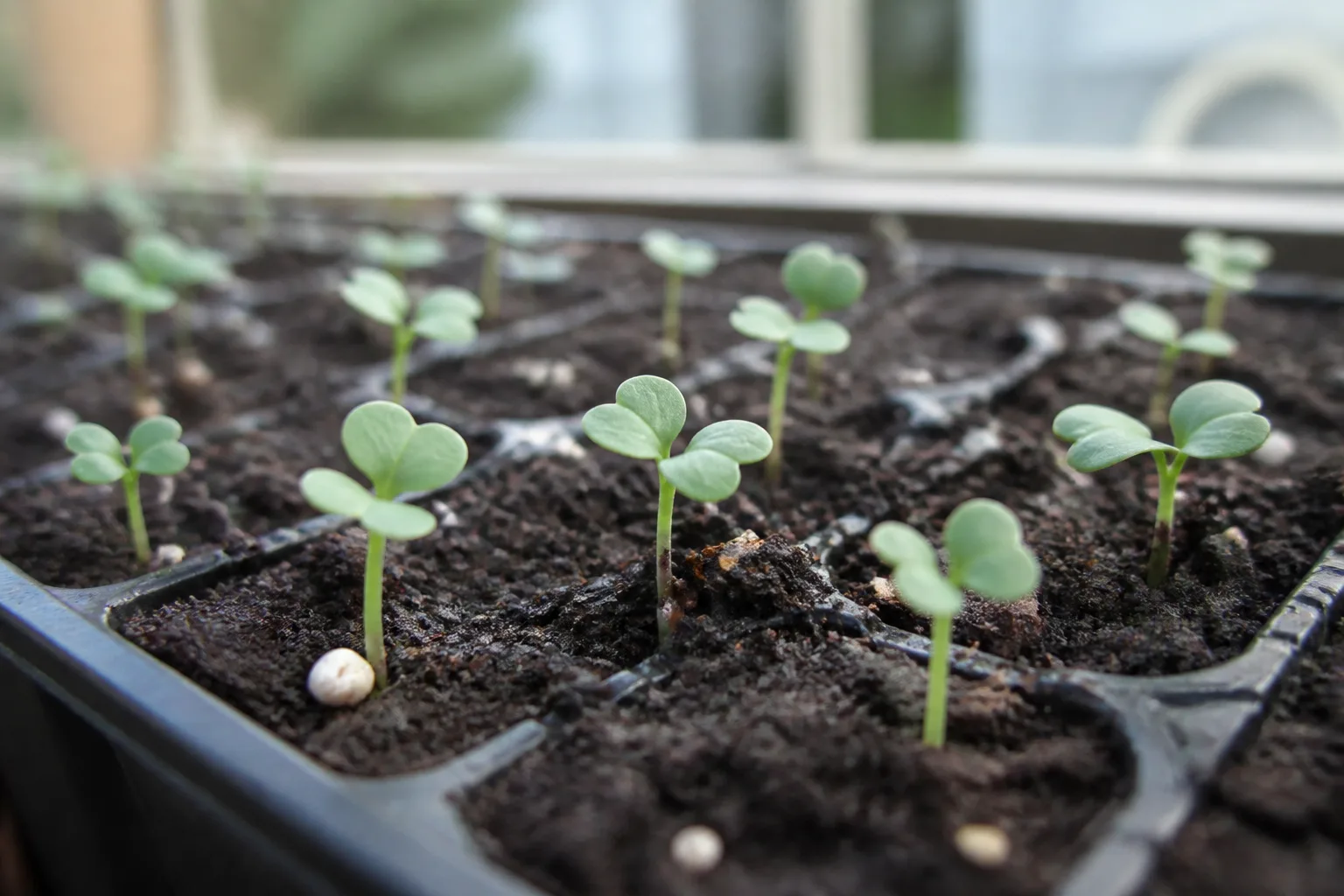
Use clean cells or small pots with drainage holes and a fine seed-starting mix rather than garden soil. Pre-moisten the mix until it feels like a wrung-out sponge, then sow seeds about ¼ inch deep or roughly two to three times the seed’s diameter. Utah State University Extension recommends pre-wetting the mix, lightly covering seeds, and checking trays at least daily so they do not swing from saturated to dry (Utah State University Extension).
Broccoli seeds often germinate in about seven to ten days under steady conditions, although the seed packet and room temperature are better guides for your particular lot. Keep the mix evenly moist, not waterlogged. A humidity dome can help before emergence, but remove or vent it as seedlings appear; trapped moisture and weak airflow create conditions for damping-off and surface mold.
Thin to one seedling per cell once the first true leaves appear. Cotyledons are the first smooth seed leaves supplied by the seed; true leaves look more like the mature plant. If you sowed into a communal tray, pot seedlings up carefully before roots tangle. A small transplant shock at this stage is easier to manage than a crowded tray later.
Light and temperature after germination
Put seedlings under a grow light as soon as they emerge. A sunny window can work if it is genuinely bright and you turn the tray regularly, but spring window light is often weaker and more directional than it appears. Savvy Gardening recommends roughly 14–18 hours of light for broccoli seedlings and keeping many fluorescent or classic grow lights close to the plant tops, adjusting upward as they grow (Savvy Gardening). Follow your fixture’s directions so leaves do not overheat.
The goal is compact, green growth, not maximum speed. Warm rooms and dim light produce thin stems that lean toward the window. If seedlings stretch, lower or reposition the light, increase the daily light period within the fixture’s safe range, improve spacing, and move the tray to a slightly cooler location. Do not bury a leggy stem deeply as a substitute for correcting the light; broccoli is not a tomato, and burying the stem can leave the plant unstable or expose it to rot.
Water, feeding, and airflow for sturdy stems
Water when the surface begins to dry, then let excess drain completely. Bottom-watering is useful for a cell tray because the mix can wick moisture upward without washing seeds or flattening young stems, but do not leave the tray sitting in water. Lift a cell or tray occasionally to learn how a moist container feels; that is more reliable than watering on a fixed calendar.
Seed-starting mix may contain little or no fertilizer. Once true leaves are present, a dilute, balanced liquid feed can support steady growth, but more fertilizer will not repair inadequate light. Use the product label as the upper limit and avoid keeping seedlings constantly lush and soft. A small fan set for gentle air movement can help stems strengthen and surfaces dry between waterings.
Your indoor aim is a short, sturdy plant with a good root ball, not a mature broccoli plant in a pot. The longer seedlings remain indoors, the more carefully you must manage root space, light, and temperature. If the plants are already the right size while the garden is delayed, shift to maintenance mode: keep them bright, avoid overfeeding, and check roots rather than automatically moving them into much larger containers.
Know when a broccoli seedling is ready to plant out
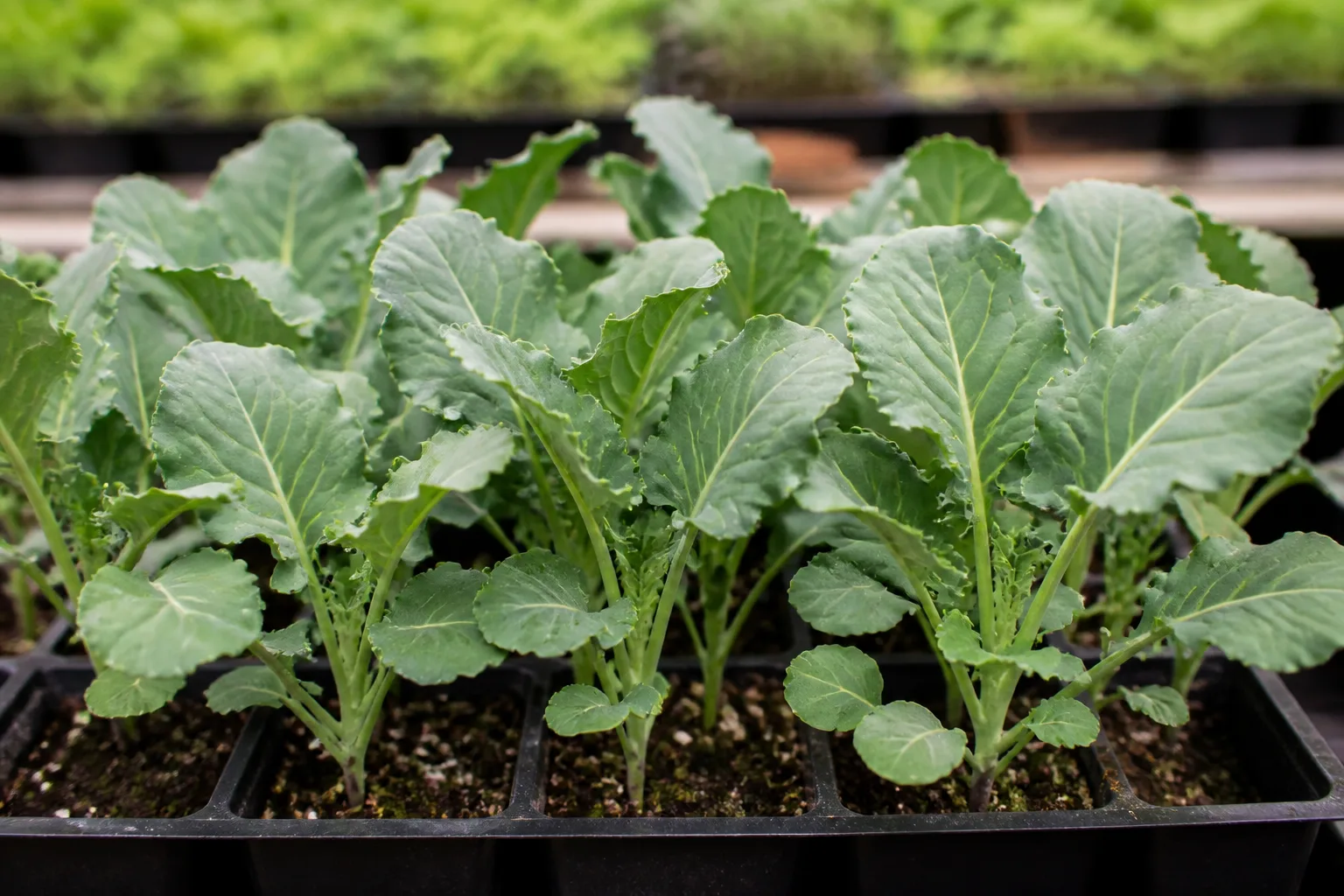
Use the plant’s condition together with the calendar. A good transplant is generally 4–6 inches tall, has a sturdy stem, three to five sets of true leaves, and a root ball that holds together without being a dense mat. Those measurements are practical targets, not a contest. A compact four-inch plant with a healthy root system is preferable to a six-inch plant that is pale, floppy, or root-bound.
Look at the newest growth. If the center is actively producing leaves and the plant recovers quickly after watering, it is likely ready for the transition. If leaves are yellowing from saturated mix, roots circle heavily, or the stem bends under its own leaves, correct the problem before transplanting. Outdoor soil does not magically cure an indoor root or light problem.
Harden off without setting the crop back
Begin hardening when the forecast allows several calm days. On the first day, place plants outdoors in bright shade for a few hours, protected from strong wind. Gradually lengthen the outdoor time and introduce more sun over the next week. West Virginia University Extension recommends acclimating transplants before moving them directly into the ground, and Savvy Gardening describes a slower progression toward full-time outdoor exposure.
Keep the mix evenly moist during hardening. A small cell can dry quickly outdoors, especially in wind, and a wilted seedling cannot adjust as well as a hydrated one. Bring plants in or provide shelter if temperatures are forecast to plunge, if gusts are strong, or if late afternoon sun causes leaves to wilt.
Hardening is not the same as leaving seedlings on a windowsill with the window open. Outdoor ultraviolet light, wind, and temperature swings all change the plant’s water demand. Skipping the process can cause scorched leaves, broken stems, or a stalled transplant even when the date and soil are otherwise right.
Plant broccoli outdoors and protect the first weeks
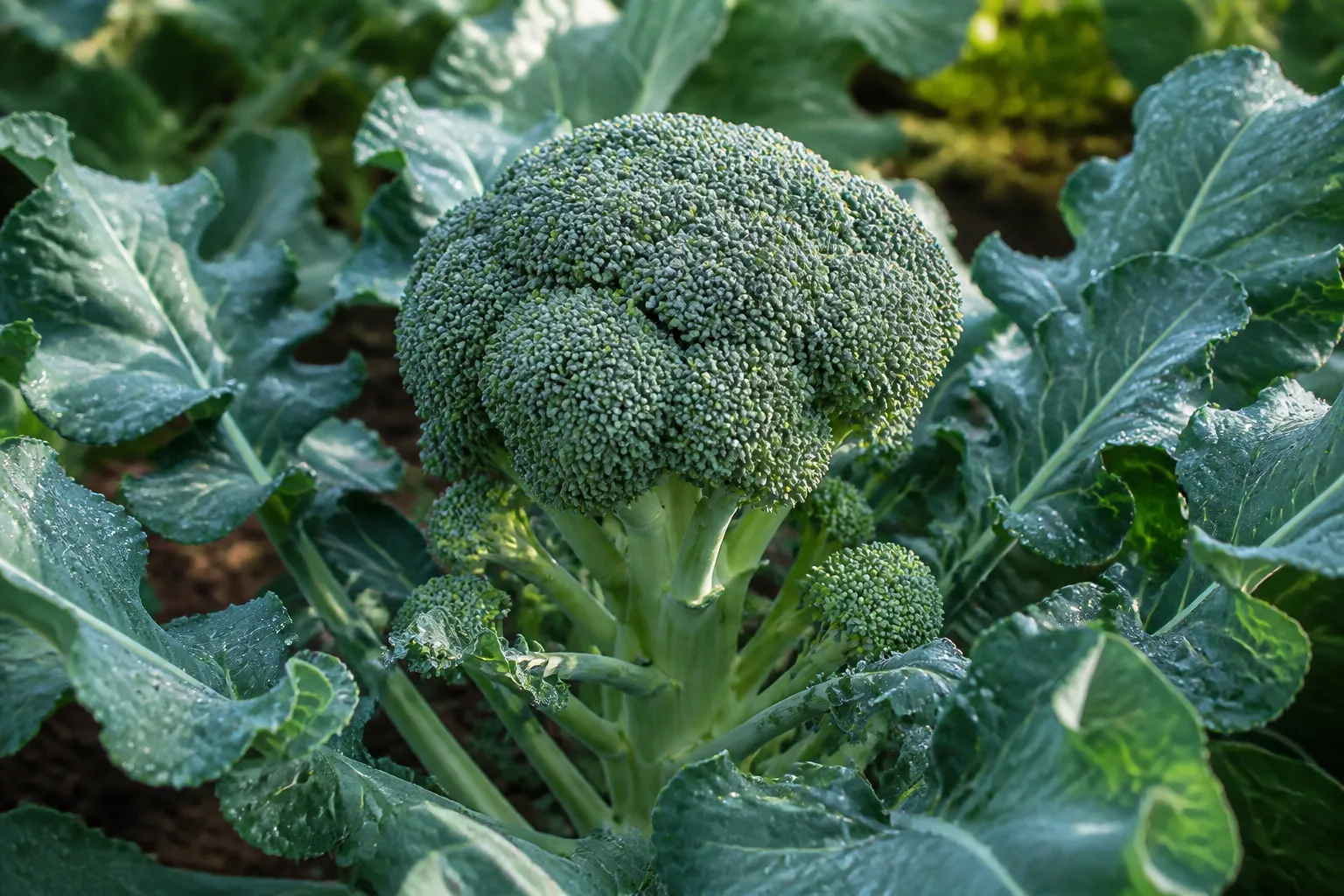
Choose full sun, fertile well-drained soil, and a bed where broccoli or another brassica has not recently struggled with a serious disease. A soil pH around 6.0–6.5 is a useful target cited by West Virginia University Extension, but a soil test is more informative than adding amendments by guesswork. Incorporate mature compost if the soil needs organic matter, but avoid creating a rich, soggy pocket around the transplant.
Spacing, soil, and row-cover decisions
Give standard broccoli about 18–24 inches between plants and roughly 36 inches between rows when you have room. West Virginia University Extension uses that spacing range, while closer spacing may be possible for small-crowned varieties or intensive beds. Check the packet: leaves need space for airflow and light, and crowded plants compete for water while making pest inspection harder.
Plant at the same depth the seedling occupied in its cell, firm soil around the root ball, and water immediately. If the stem is unusually long, support it with soil around the root zone rather than burying foliage. Mulch after the soil warms enough for growth, keeping the mulch off the stem so moisture does not remain against the crown.
Use floating row cover when young plants are exposed to cabbage worms, loopers, aphids, or a late cold spell. Secure the edges so adult moths cannot crawl underneath, and monitor the plants even under cover. Row cover moderates conditions and excludes pests; it does not fix a sowing date that is weeks too late or make a heat wave harmless.
For the first week, check plants daily. Water deeply enough to settle the root zone, but let excess drain. Two to three weeks after transplanting, a soil-test-informed side-dressing or a balanced vegetable fertilizer may support growth; do not respond to slow growth by repeatedly applying nitrogen without checking light, moisture, roots, and temperature first.
Fix the timing if you started too early or too late
Started too early: If the seedlings are small and healthy, keep them under strong light, reduce excess warmth, space them well, and delay feeding until they need it. If roots fill the cell, pot up only one container size. If stems are already long and weak, correct the light first; transplanting outdoors during a freeze will not make a leggy plant sturdy.
Started a little late: Skip the temptation to crowd seeds or keep seedlings in a hot room. Sow a second small batch if you have enough season, choose a faster variety for the replacement, and use a healthy nursery transplant if the local planting window is closing. A late but vigorous plant has a better chance than an early, stressed one.
The bed is ready before the seedlings: Harden the plants as soon as they have enough true leaves, then protect them outdoors with row cover or a low tunnel if the forecast is suitable. Do not leave them in a warm indoor corner simply because your original calendar says they should be younger.
Heat is arriving early: Transplant the best hardened plants as soon as soil and forecast allow, provide consistent moisture, and shade the bed during the hottest part of the afternoon if necessary. If the weather is already staying hot, switch your plan to a fall crop rather than expecting small spring plants to form perfect heads through summer.
Germination is uneven: Check seed age, sowing depth, mix moisture, and temperature before blaming the calendar. Seeds planted too deeply, allowed to dry, or held in cold saturated mix may emerge slowly. Utah State University Extension recommends observing trays daily because small changes in moisture or equipment can affect the germination environment.
The first action is simple: write down your average last frost date, the date your bed is normally plantable, and your seed packet’s maturity range. Count backward from the outdoor date, reserve a week for hardening, and let the seedlings and forecast refine the final decision. That approach gives broccoli the cool growing period it needs without turning “start early” into an invitation to grow weak plants indoors.
Conclusion
For most gardens, the right time to start broccoli seeds indoors is four to six weeks before transplanting, which often places sowing about six to nine weeks before the average last spring frost when you plant hardened seedlings a week or two early. Use the range as a planning window, not a rigid command. Variety, light, soil condition, frost protection, and the speed of the coming heat all matter.
Raise compact seedlings under strong light, harden them gradually, and plant them while the weather is cool enough to finish the crop. If spring timing slips, a fall crop may be the better opportunity. Broccoli rewards the gardener who counts backward from a realistic outdoor date and watches the temperature as closely as the calendar.