Winter Houseplant Care: 7 Expert Tips That Work
Winter houseplant care is not the same as summer. Learn why plants rest, how to water less, add light, raise humidity, and avoid the mistakes that kill roots.
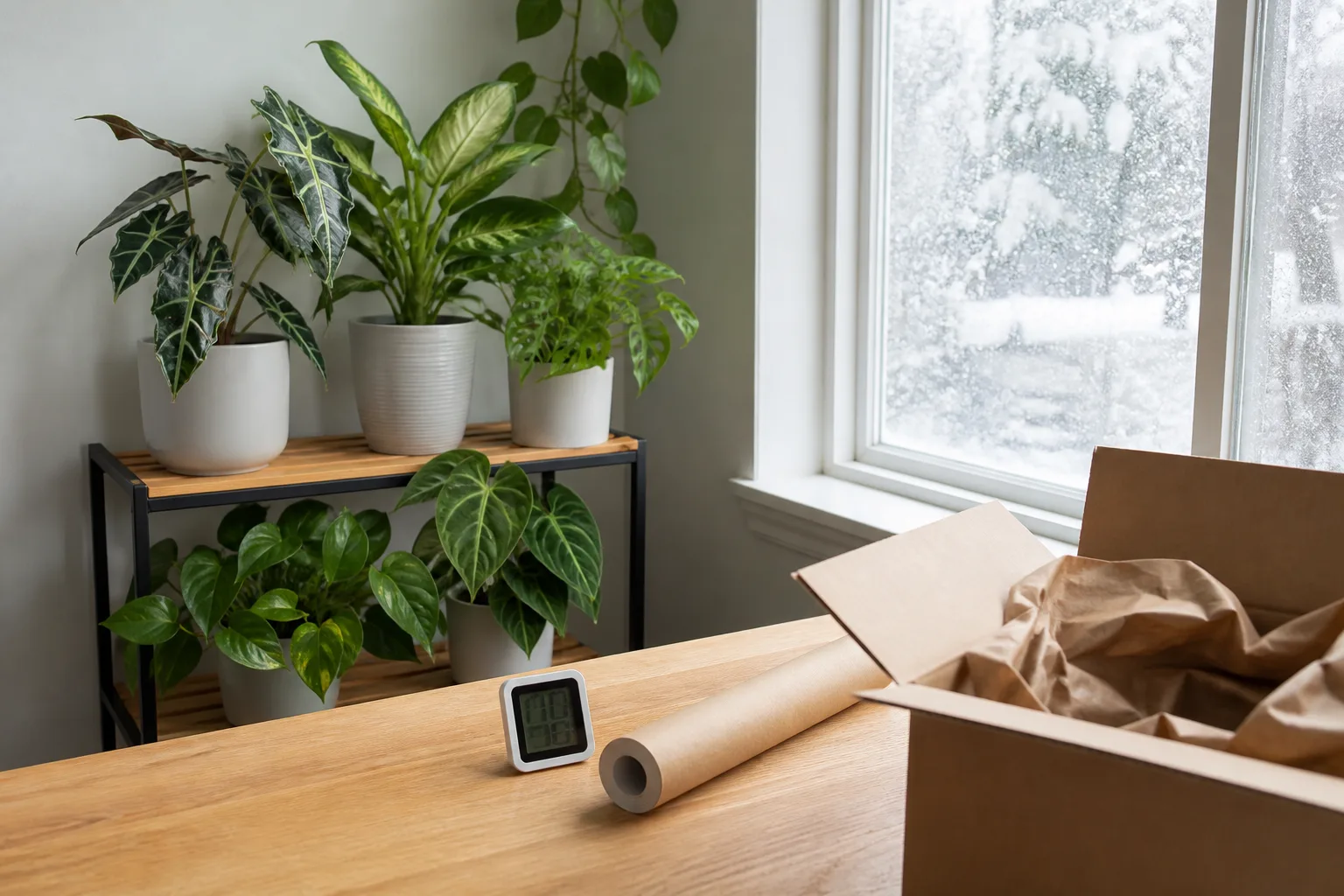
Your fiddle leaf fig looked architectural in September. By February it has yellow lower leaves, crispy margins, and a watering routine you have not changed since summer. The plant is not “being dramatic.” Winter houseplant care fails when owners keep summer habits while the indoor environment shifts — less light, drier air, colder glass, and slower metabolism underground.
The fix is not more attention. It is less of the wrong inputs and targeted adjustments to light, water, humidity, and heat placement. Below is what extension horticulturists and experienced indoor growers actually change when days shorten — plus a first-week checklist you can run today.
Why Houseplants Struggle in Winter (It’s Not the Outdoor Cold)
Houseplants live inside heated buildings. They do not experience Minnesota windchill on the windowsill, but they do experience a different indoor climate from October through March. Three shifts cause most winter decline.
Shorter days cut the energy supply
Photosynthesis depends on light intensity and duration. When days shorten and the sun sits lower, even south-facing windows deliver fewer hours of usable light. University of Maryland Extension notes that low-light stress shows up as faded foliage, stunted growth, and poor flowering — and that light intensity drops sharply with distance from the window. (University of Maryland Extension)
Penn State Extension Master Gardeners measured as low as 25 foot-candles on north-facing sills in mid-morning winter — far below the ~100 fc many sources cite as a low-light baseline. Plants can survive there only if watering and expectations match the reduced energy budget. (Penn State Extension)
Forced-air heat strips humidity from the air
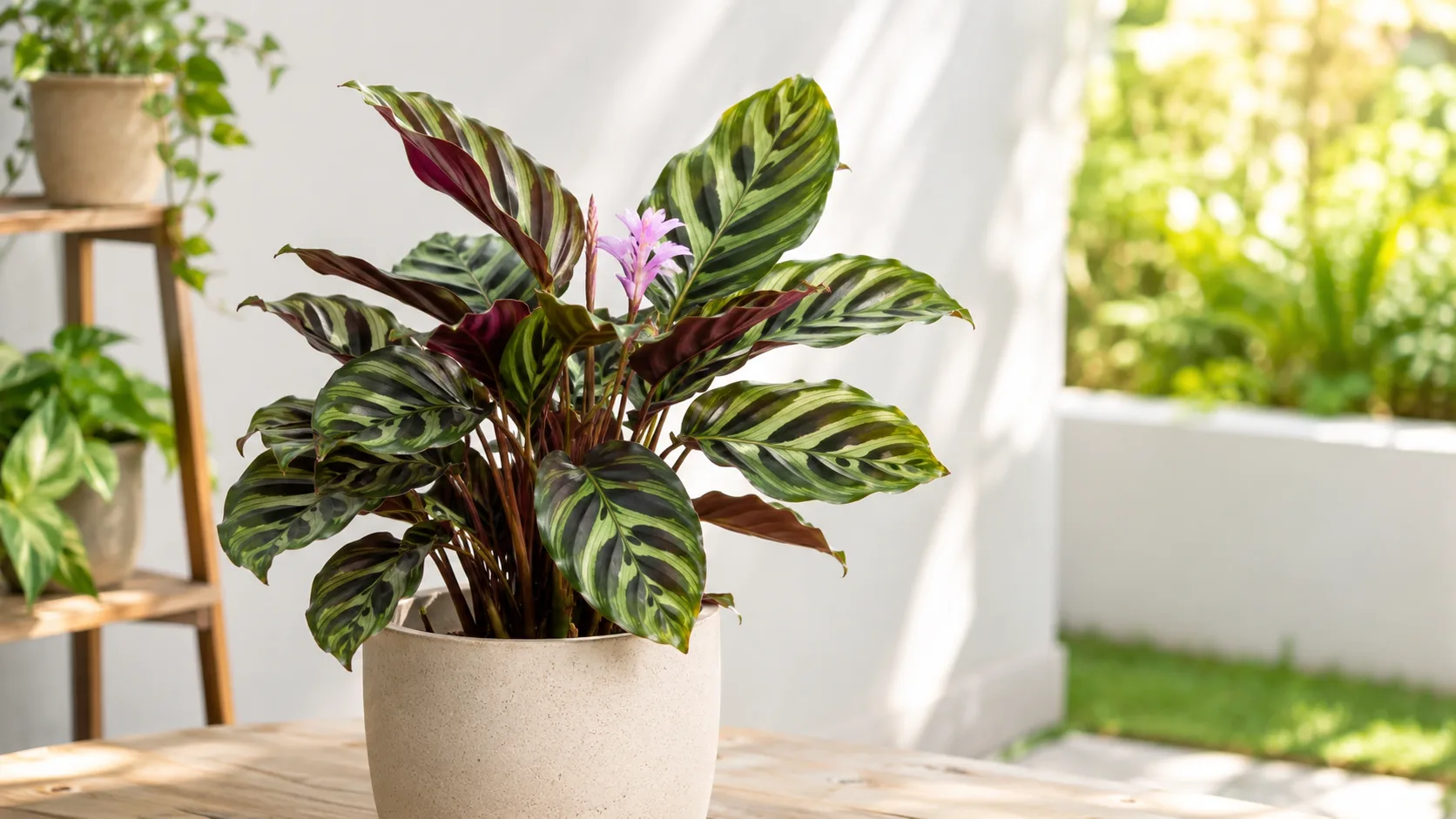
Tropical houseplants evolved in forests where relative humidity often sits 50–60%. Heated homes commonly run 20–30% in winter. That gap dries leaf edges faster than roots can replace moisture, especially on calathea, ferns, and peace lilies. Dry air also favors spider mites — a pest that thrives when humidity crashes.
Drafts, radiators, and cold window glass create hot-cold swings
Cold air leaks around windows and exterior doors stress foliage overnight. Meanwhile, hot air from floor vents and radiators desiccates leaves in hours. University of Wisconsin–Madison Division of Extension warns that air currents near windows and doors produce cold drafts many tropicals cannot tolerate, while inconsistent temperatures compound water-stress symptoms. (University of Wisconsin–Madison Division of Extension)
The pattern: less light means slower growth and lower water use — but dry heat and drafts increase visible stress at the same time. That is why winter problems look like a mystery when the real issue is a stacked environmental shift, not a single missing nutrient.
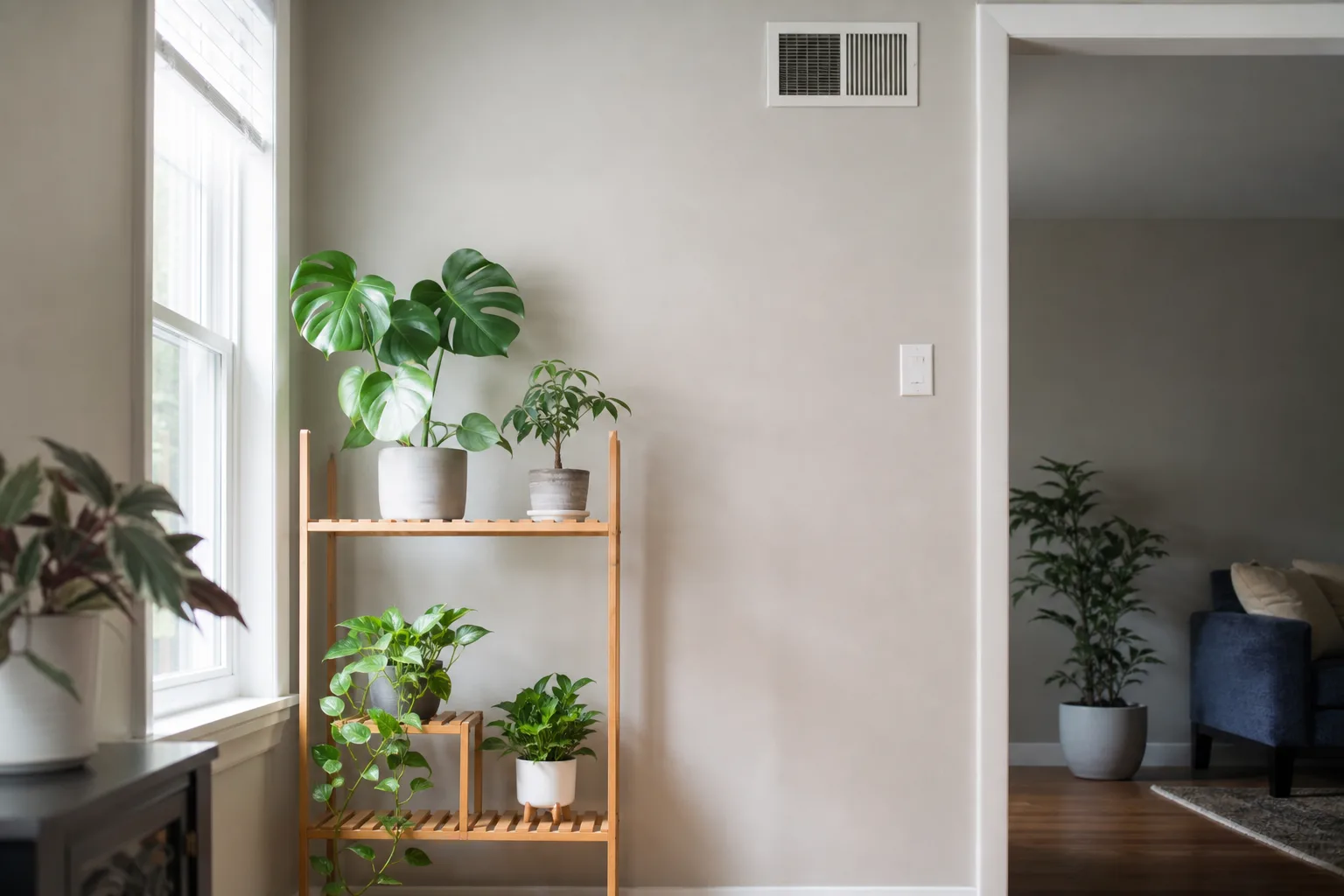
Think of Winter as a Rest Season — Not a Growth Sprint
Most common houseplants do not go fully dormant indoors the way outdoor maples do, but they slow down. Metabolic rate drops. Root uptake decreases. New leaves emerge slowly, if at all. University of Wisconsin–Madison Extension states plainly that plants in slow-growth periods — winter for most species — require less water than during active growth. (University of Wisconsin–Madison Division of Extension)
Treat winter as a holding season: protect roots, maintain minimum light, avoid rot, and skip the urge to “fix” cosmetic leaf loss with fertilizer or extra water. Roots often keep working quietly while tops look tired. If you need help telling dormancy from death, see how to tell if a plant is dead or just dormant.
The 7 Pro-Backed Adjustments That Fix Most Winter Stress
These seven changes cover the failures we see most often in winter plant clinics — ordered by impact.
Tip 1: Check soil before you water — and break the weekly schedule
Overwatering is the number-one winter killer. When growth slows, soil stays wet longer. Roots suffocate. Leaves yellow. The plant looks thirsty, so owners water again — accelerating root rot.
University of Wisconsin–Madison Extension recommends inserting a finger about one inch into the soil and watering only when dry at that depth for drought-tolerant species; evenly moist lovers still need reduced volume in winter. (University of Wisconsin–Madison Division of Extension)
Practical winter watering rules:
- Check weekly, water only when needed — not on a calendar.
- Snake plants, ZZ plants, and succulents: often every 3–6 weeks in winter; some monthly.
- Tropical foliage (pothos, philodendron, monstera): typically every 2–3 weeks, depending on pot size and light.
- Use room-temperature water left out overnight so chlorine can dissipate — UW Extension notes fluoride and chlorine can cause tip burn on sensitive species.
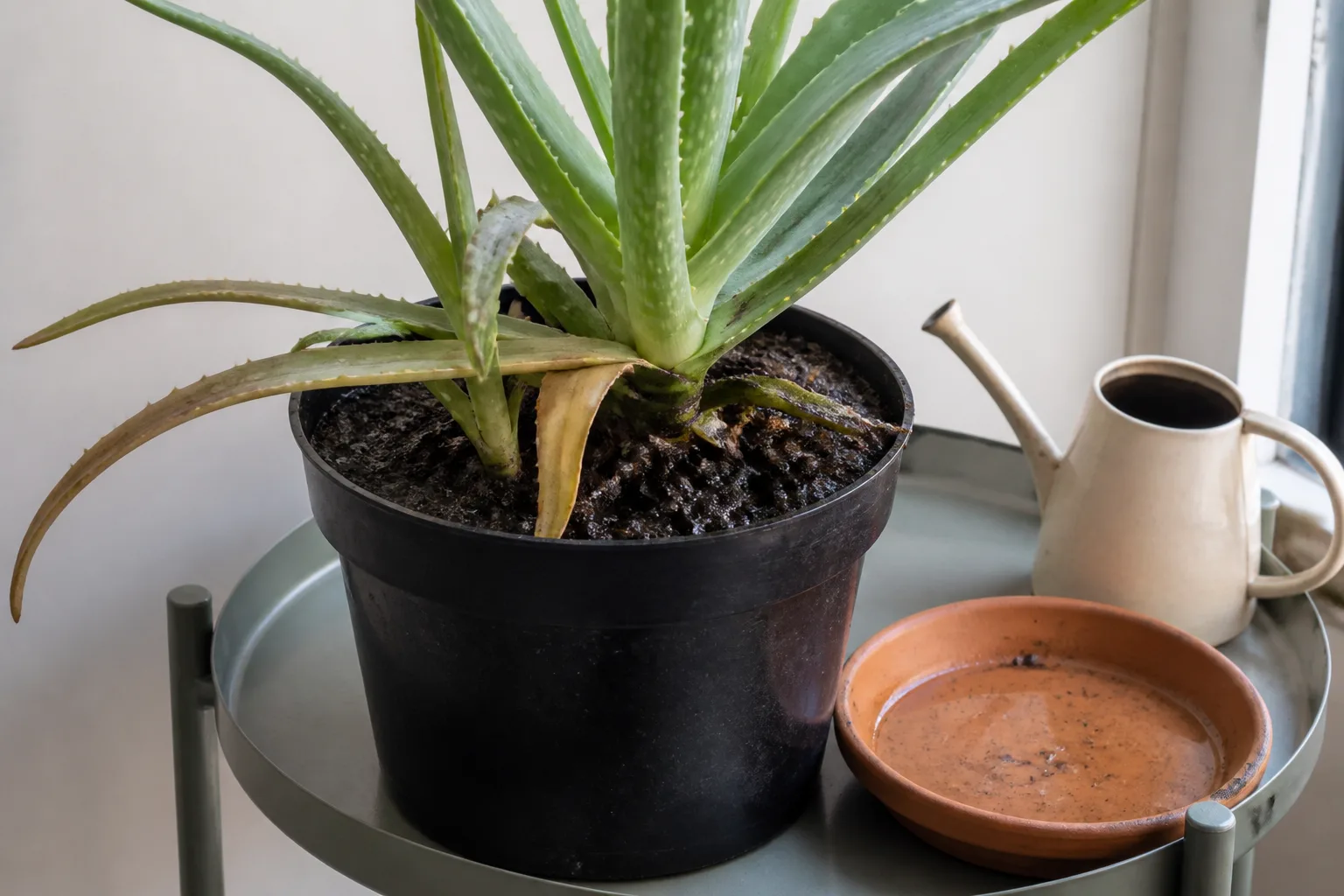
- Empty saucers after 10–20 minutes so roots never sit in cold stagnant water.
If watering logic still feels fuzzy, start with indoor plant watering basics and adjust downward for winter.
Tip 2: Move plants for light without trapping them on cold glass
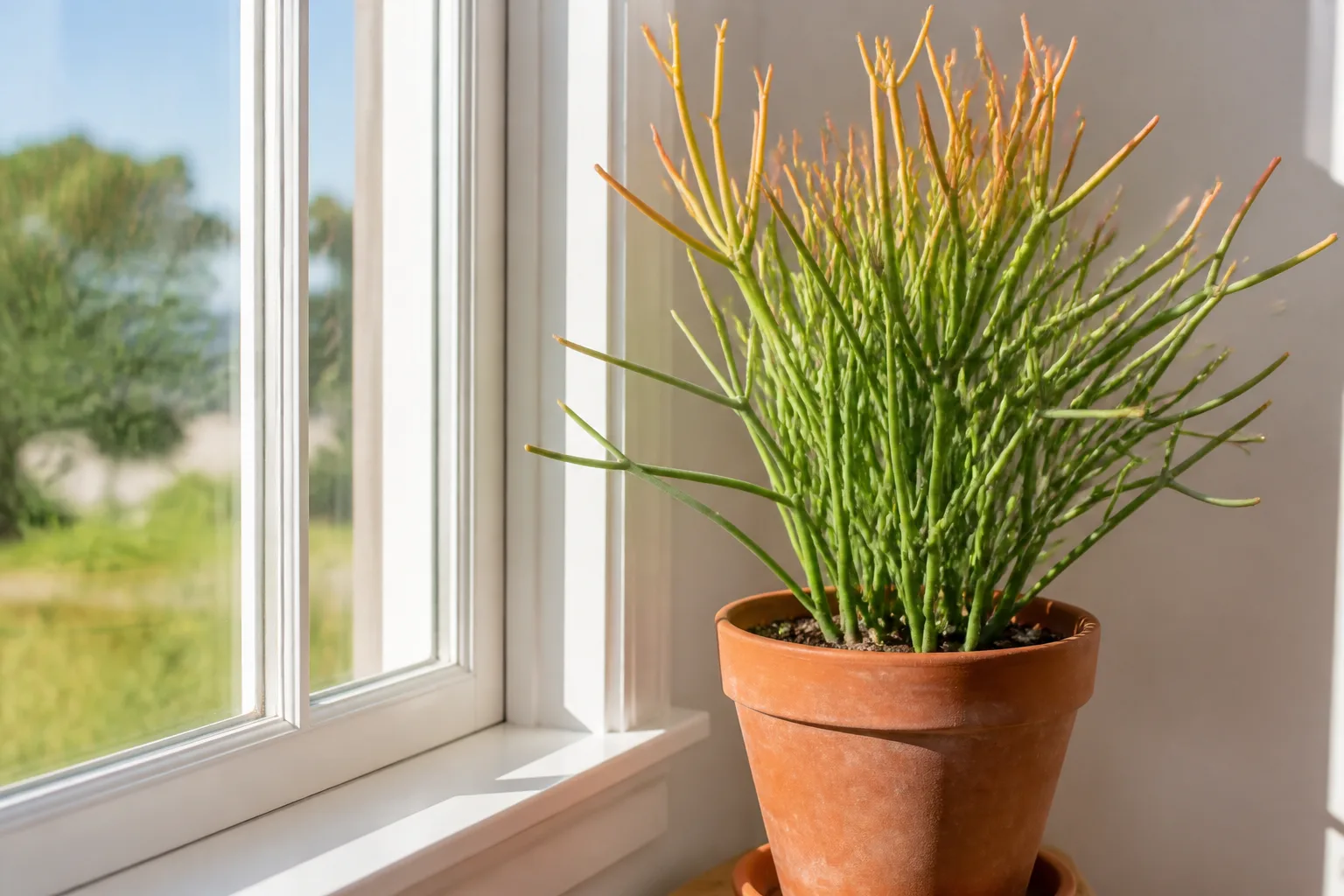
Maximize winter light by shifting plants one to two feet closer to the brightest window they can tolerate. South and west exposures deliver the most winter sun; east is moderate; north is lowest.
Critical nuance: leaves pressed against cold single-pane glass can scorch or chill overnight even when the room feels warm. Leave an air gap or use a sheer curtain as a buffer. Rotate pots weekly so growth stays even instead of leaning hard toward the glass.
Plants that prefer bright indirect light in summer can often handle a few hours of direct winter sun when rays are weaker — but watch for bleached or crispy patches and pull back if they appear.
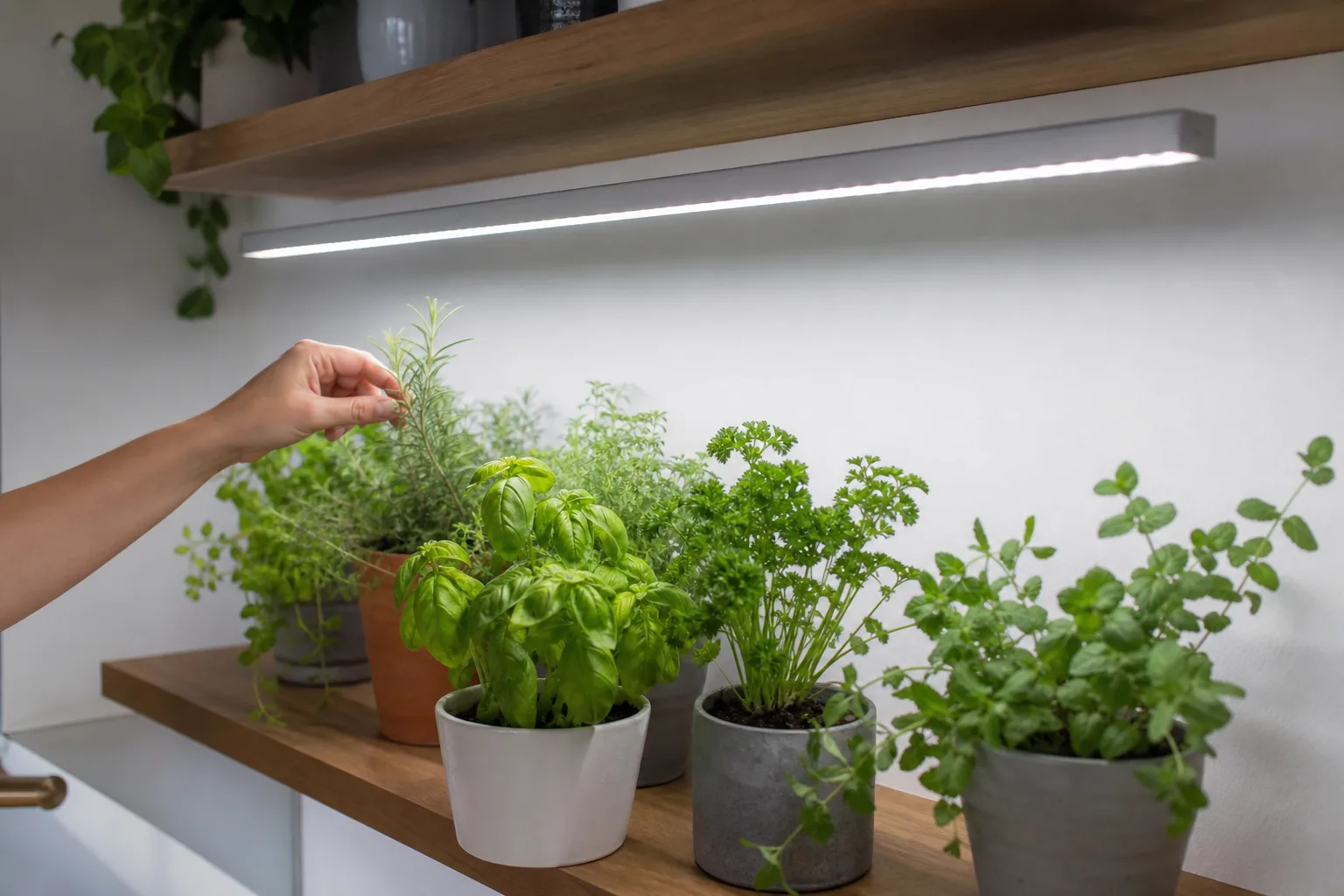
Tip 3: Add supplemental light when readings drop below plant needs
When a plant yellows, stretches, or stops producing new leaves despite a good window, light — not fertilizer — is usually the limiter.
Penn State Extension Master Gardeners augmented snake plants and pothos with LED full-spectrum grow lights when winter readings fell to 25 fc. (Penn State Extension)
Setup basics:
- Position a full-spectrum LED 12–18 inches above foliage.
- Run 12–14 hours daily on a timer to mimic useful day length.
- Prioritize light-hungry plants (fiddle leaf fig, succulents, flowering species) for the brightest real estate; keep snake plants and ZZ plants in lower-light zones if space is tight.
For wattage, distance, and PPFD detail, use the grow lights complete guide. If you are rebuilding a dim room plant list, cross-check low-light indoor plants for species that match your actual foot-candle budget.
Tip 4: Raise humidity where tropical leaves are crisping
Target 40–60% relative humidity at leaf height for moisture-loving tropicals. A $10 hygrometer on the plant shelf removes guesswork.
Methods ranked by reliability:
- Cool-mist humidifier near the plant grouping — most consistent for ferns and calathea.
- Grouping plants — shared transpiration raises local humidity a few points.
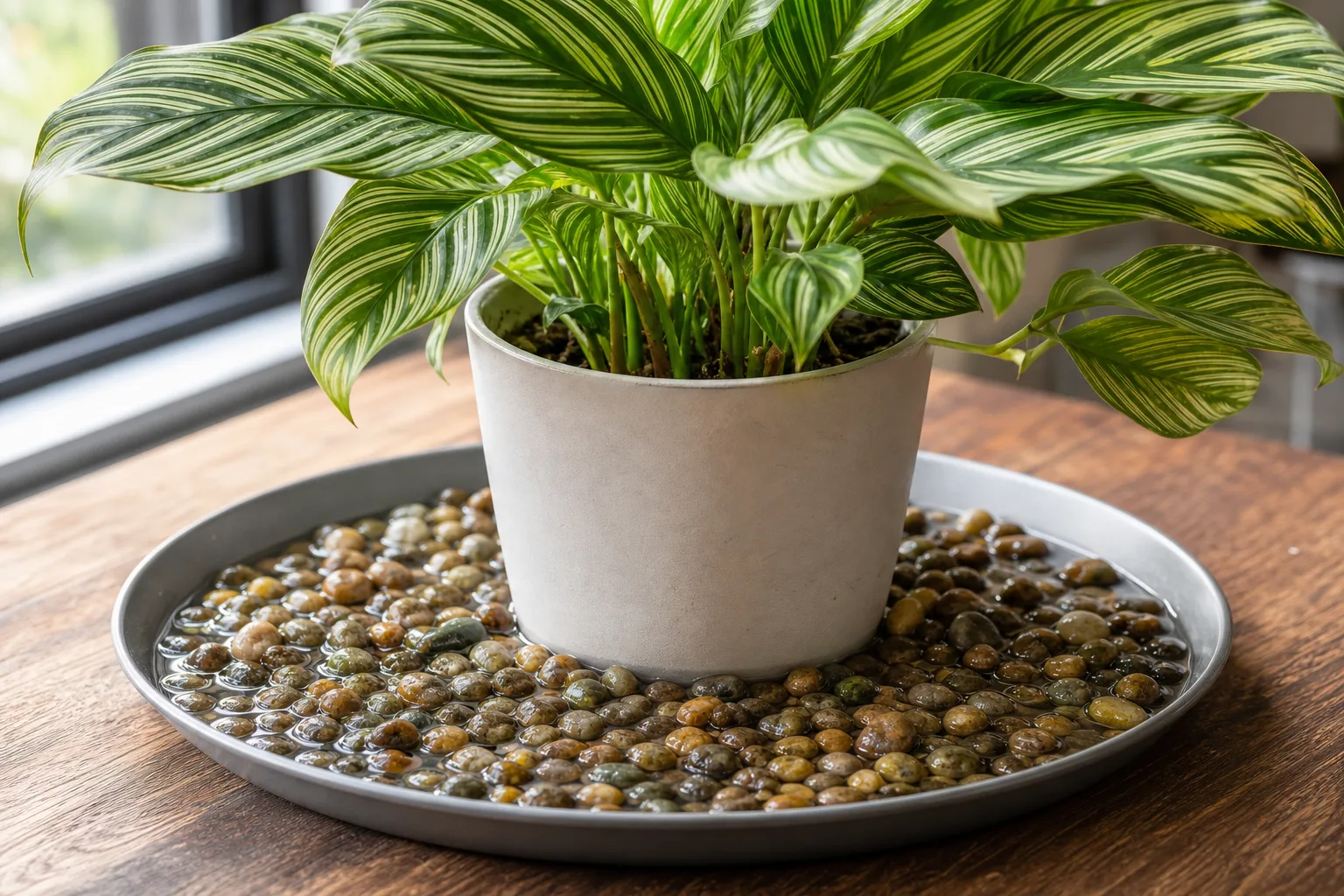
- Pebble trays — shallow water below stone tops, pot resting above the waterline. Helpful for single sensitive plants; not a whole-room solution. See DIY pebble tray for indoor plants for safe setup.
- Kitchen steam — opening a dishwasher after the rinse cycle releases a short humidity pulse; useful as a supplement, not a strategy alone.
Misting raises humidity for minutes, not hours. It can help rinse dust but will not fix chronically dry air. If edges are crispy, address the room — not just the spray bottle.
Tip 5: Pull plants away from vents, radiators, and draft paths
Most houseplants prefer 65–75°F (18–24°C) days with nights no colder than 50°F (10°C). Brief exposure below 50°F can cause leaf drop on true tropicals.
Move plants:
- Off radiator tops and away from floor vents — hot dry air cooks leaves.
- In from drafty doors — cold bursts shock roots in porous pots.
- Back from leaky windows — if the flame on a candle flickers near the sill, your plant feels that draft.
You still want light — so compromise with a shelf beside the window rather than jammed into the coldest air pocket.
Tip 6: Pause heavy fertilizer until new growth returns
University of Wisconsin–Madison Extension recommends fertilizing only during active growth — spring through fall for most houseplants — because container soil holds limited nutrients but dormant roots cannot use heavy feeds. (University of Wisconsin–Madison Division of Extension)
Winter fertilizer rules:
- Stop synthetic or high-NPK feeds November through February unless a species blooms in winter by design.
- Salt buildup from continued feeding on dry soil burns leaf margins — often mistaken for humidity problems.
- Optional: a quarter-strength organic liquid at watering time can support stressed plants without forcing weak leggy growth — skip entirely if the plant shows no roots activity or sits in wet soil.
Resume normal feeding when you see consistent new leaves — usually late February through March as days lengthen.
Tip 7: Wipe dust off leaves so limited winter light actually lands
Dust films block photosynthesis exactly when light is already scarce. Wipe broad leaves with a damp cloth monthly, or rinse smaller plants in the shower with lukewarm water. Clean both top and bottom surfaces where pests hide.
This is low effort with outsized return in dim rooms — think of it as clearing the window for the leaf.
Winter Symptoms Decoded: Worry Now vs Wait Until Spring
Cosmetic winter damage is common. Root death is urgent. Use this quick triage before repotting, fertilizing, or pitching a plant.
| Symptom | Likely winter cause | Action |
|---|---|---|
| Yellow lower leaves, mushy soil smell | Overwatering / root stress | Stop watering; check roots; improve drainage |
| Crispy brown leaf tips and edges | Low humidity + heat | Humidifier or grouping; move off vent |
| Leggy pale new growth | Insufficient light | Move closer or add grow light |
| Sudden leaf drop after a cold night | Draft or sub-50°F chill | Relocate; prune damaged leaves only |
| Overall wilt with dry soil | Underwatering (less common) | Water thoroughly once; then reset schedule |
| No new growth but firm stems | Normal winter rest | Wait; maintain stable care |
For step-by-step symptom sorting, run the houseplant symptom checker.
Yellow leaves, brown tips, leaf drop, and leggy stems
Yellow leaves in winter usually mean wet soil, not hunger. Roots in saturated mix cannot take up nutrients; leaves yellow from the bottom up. Confirm with a finger test before adding water or fertilizer.
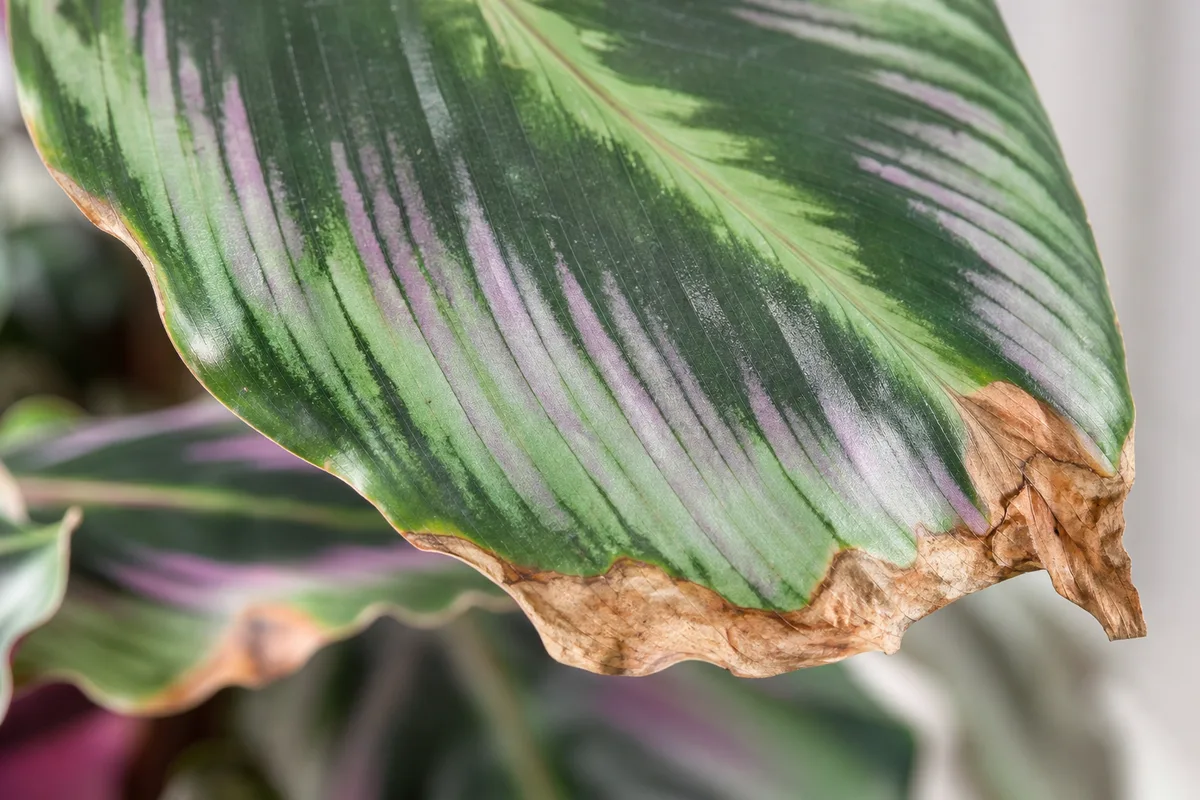
Brown tips often pair with dry air and salt buildup from summer feeding left in soil. Flush the pot once in early spring if white crust rings the pot rim.
Leaf drop on otherwise healthy wood can be normal acclimation — ficus and hoya shed leaves when light drops sharply. If stems stay green and firm, hold steady.
Leggy stems mean the plant is reaching for light. It is alive but underpowered. Add light before fertilizer.
Your First-Week Winter Houseplant Checklist
Run this once, then maintain monthly:
- Finger-test every plant — note which pots are still wet from last week.
- Measure light at leaf height on a cloudy day — add grow lights anywhere below ~100 fc for tropical foliage.
- Scan heat sources — relocate anything on a vent, radiator, or draft line.
- Check humidity at the shelf — humidifier on if below 40% where ferns and calathea live.
- Dust leaves on the top ten plants by window exposure.
- Pause fertilizer unless you have a winter-blooming species.
- Photograph each plant — compare in March so you know what “resting” looked like versus decline.
Do not repot in winter unless you are rescuing active root rot or a shattered pot. Repotting stimulates roots when the plant lacks light energy to recover — spring is the safer window.
Conclusion
Houseplants struggle in winter because the indoor environment changes while care routines often do not. Shorter days reduce energy. Heating systems drop humidity. Drafts and radiators add stress at the exact moment roots want less water, not more.
The winning mindset is rest, not rescue: check soil before watering, maximize and supplement light, raise humidity where leaves crisp, keep plants off heat blasts, stop heavy feeding, and clean dust off leaves so scarce light counts. Most yellowing, tip browning, and leaf drop are survivable if roots stay firm and you stop overwatering.
Hold the line until days lengthen. For deeper dives, pair this page with low-light plant picks, grow light setup, and dormancy vs death. Spring growth will tell you quickly which winter adjustments worked.