Is It Bad to Deter Wasps From Your Garden?
Wasps hunt caterpillars and pollinate flowers—but late-season scavengers crash picnics. Learn when deterring helps, when it hurts, and how to zone your yard.
A wasp cruising your zucchini leaves is not the same problem as a yellowjacket crawling into your soda can. Treat them like one enemy and you either lose free pest control in the beds or spend August dodging stings on the patio. Deterring every wasp from your entire garden is a bad idea. Deterring them from doors, dining areas, and nest sites you walk past daily is smart, seasonal, and exactly what extension services recommend when they say social wasps should usually be protected in low-traffic areas (UC IPM Pest Notes).
The useful mental model is simple: good visitors in the garden, bad neighbors on the porch. Wasps hunt the caterpillars and beetle larvae that would otherwise chew through your tomatoes. They also visit flowers for nectar and move pollen along the way—less efficiently than bees, but meaningfully on crops like figs, beans, and self-pollinating vegetables (Penn State Extension). The trouble starts when colonies grow large, food gets scarce, and defensive scavengers overlap with people, pets, and picnic tables. This page gives you a zone-based plan so you keep the benefits without pretending a nest under the deck rail is fine.
The Short Answer: Good Visitors, Bad Neighbors
No—do not try to keep all wasps out of your garden. Most social wasps are predators for much of the season, and UC IPM states plainly that they eliminate large numbers of plant-feeding insects and nuisance flies. Blanket spraying, indiscriminate nest destruction, or treating every flying insect as a target removes that service and often kills parasitic wasps—tiny, non-stinging species that are among the most effective natural enemies of caterpillars, aphids, and whiteflies (National Garden Bureau).
Yes—do keep wasps away from high-traffic zones where stings are likely: patio tables, play areas, doorways, garbage clusters, and any nest you cannot avoid. That is not “anti-wasp.” It is habitat management. Remove food attractants, hang traps on the property edge—not over your salad bowl—and treat or relocate nests that sit in human traffic paths. The goal is redirection, not eradication.
If someone in your household has a history of severe sting reactions, the calculation shifts. Medical risk outweighs ecological benefit near doors and seating areas even when the nest is technically “out in the yard.” Allergy does not mean you must poison the entire property, but it does mean zero tolerance for nests within striking distance of daily life—and professional help for wall voids or ground colonies you cannot isolate.
Why Wasps Get a Worse Reputation Than They Deserve
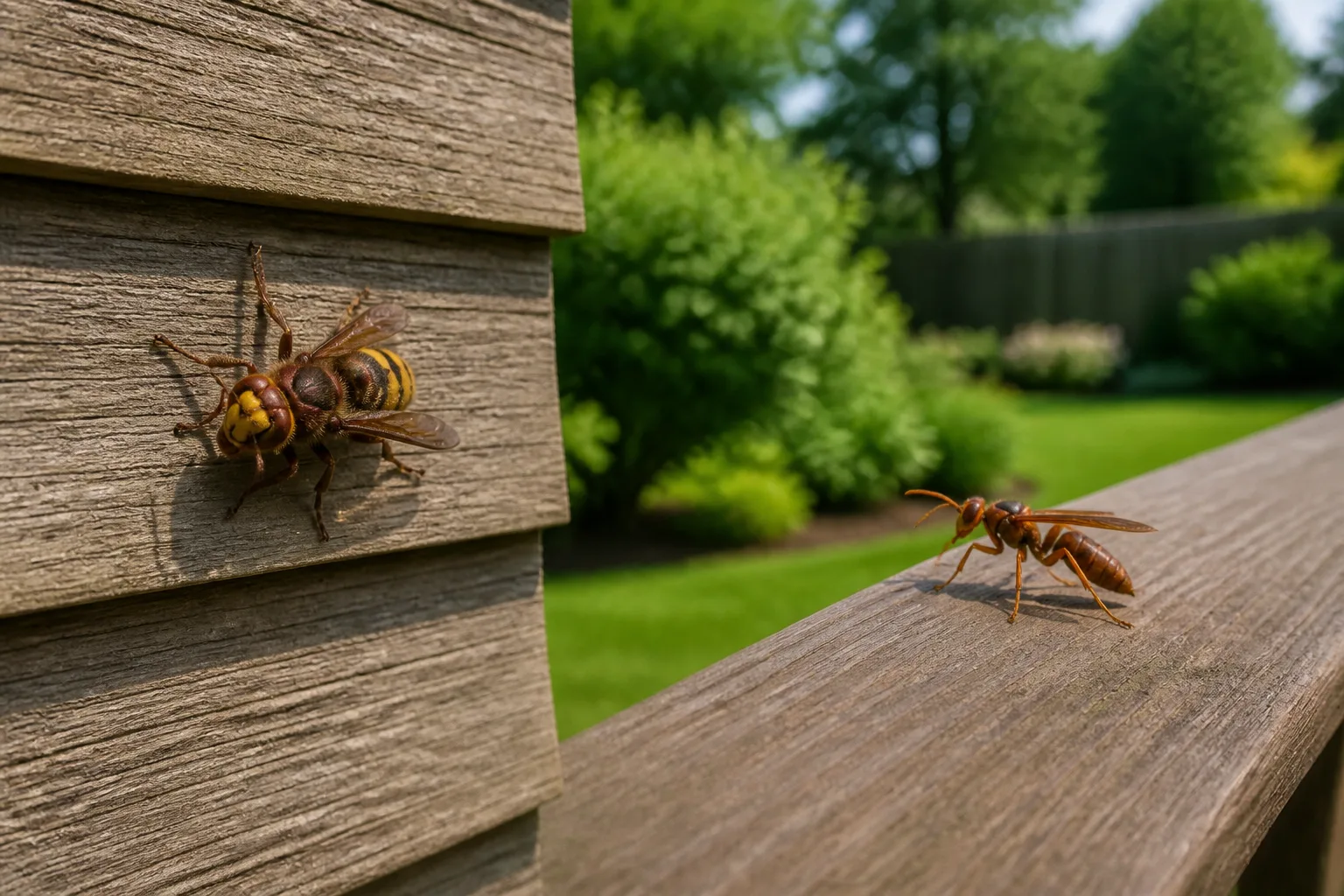
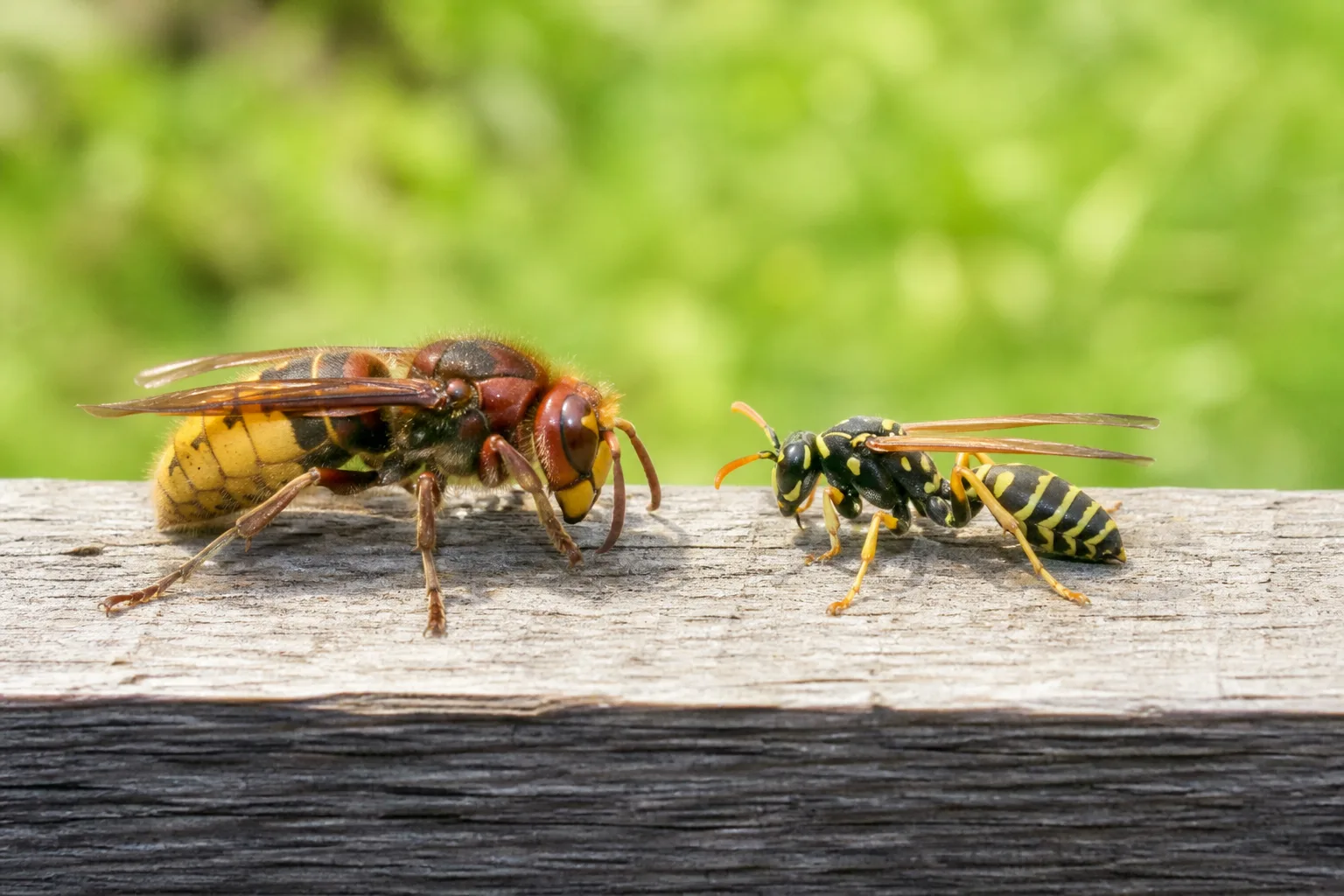
Wasps look like bees’ angry cousins because both are yellow and black and both fly. Behaviorally they are different animals. Bees are fuzzy pollen collectors focused on flowers. Social wasps are sleek predators with smooth bodies, narrow waists, and an omnivorous diet that shifts through the season—protein-heavy while raising larvae, sugar-heavy when colonies peak and prey is harder to find (UC IPM Pest Notes).
That seasonal switch explains the whiplash. In June, a paper wasp on your kale is probably hunting cabbage worms. In September, the same species—or more often a yellowjacket—may be inspecting your compost lid like a forensic accountant. The insect did not become evil; its colony demand changed. Gardeners who only notice wasps at picnics miss months of unpaid pest control.
Paper wasps and mud daubers sting far less often than yellowjackets because they are less defensive and rarely scavenge human food. Yellowjackets nest in rodent burrows, wall voids, and enclosed paper nests, defend aggressively, and become the primary stinging complaint by late summer. Knowing which wasp you are looking at saves you from the wrong fix—peppermint spray on a foraging hunter versus professional treatment for a ground nest.
Social Wasps vs Solitary Wasps—Why the Distinction Matters
When people say “wasp,” they usually mean social wasps—yellowjackets, paper wasps, hornets— that live in colonies and defend nests. They are the visible fraction. The majority of wasp species are solitary: each female raises her own offspring in a mud tube, sandy burrow, or tunnel in wood. Parasitic wasps lay eggs inside or on other insects; their larvae consume hosts from the inside. None of these build the football-shaped nest under your eave, and almost none sting people.
If your deterrence plan includes broad-spectrum insecticides on flowers or blanket “wasp killer” fogging, you hit the beneficial majority hardest. Parasitic wasps are sensitive to neonicotinoids and pyrethroids; losing them can trigger aphid explosions and hornworm outbreaks within weeks. IPM guidance consistently ranks protecting predators above convenience spraying (UC IPM Pest Notes). Tolerate solitary wasps and parasitoids in beds; manage social colonies only where they intersect with people.
What Wasps Actually Do for Your Garden
Before you chase wasps off every marigold, it helps to know what you are evicting. Social wasps are generalist predators with a high protein appetite during the colony growth phase. A single worker may collect dozens of caterpillars, flies, and soft-bodied pests per day to feed larvae back at the nest. Extension entomologists describe them as unsung heroes in vegetable and orchard systems precisely because they work without invoices (Penn State Extension).
Predators That Replace Pesticide Sprays
Wasps hunt many of the pests gardeners otherwise spray:
- Caterpillars on brassicas, tomatoes, and ornamentals—including hornworms and loopers
- Aphids, whiteflies, and leafhoppers when workers scout foliage
- Beetle larvae and flies in turf and compost interfaces
- Spiders (mud daubers specialize here) near structures
Yellowjacket workers have been documented carrying caterpillars as large as themselves back to the nest—visual proof of how seriously they take protein foraging. That hunting peaks spring through midsummer while larvae need meat. If you eliminate wasps in May because one buzzed your head, you may trade a moment of comfort for a July hornworm infestation that costs more time and money to fix.
This is not an argument against hand-picking pests or using targeted Bt on caterpillars. It is an argument against indiscriminate wasp hatred. Integrated pest management keeps predators on payroll and intervenes surgically when a pest crosses an economic threshold—not when an insect merely exists.
Incidental Pollinators on Flowers and Vegetables
Wasps are incidental pollinators. Their smooth bodies carry less pollen than bee fuzz, but they visit a wide range of flowers with shallow nectaries—think umbels, daisies, and many herbs—and transfer pollen while feeding (Gardenary). They matter most on crops that need physical flower tripping rather than heavy pollen loads: tomatoes, beans, peppers, and some fig varieties with specialized wasp relationships.
They will not replace native bees or managed honey bees for orchard pollination. They supplement pollination on kitchen-garden scale, especially on flowers bees visit less frequently. Pull every wasp out of a polyculture bed and you lose both pest control and a modest pollination backup—two reasons beds are poor places for zero-tolerance policies.
Soil Workers and the Hidden Majority
Ground-nesting digger wasps and many solitary species excavate burrows that aerate compacted soil along bed edges and paths. Effect is localized—not a substitute for core aeration on lawn scale—but it is one more ecological function erased when every hole gets filled or drenched “just in case.” UC IPM notes yellowjackets sometimes expand rodent burrows; not every ground hole is a threat, and filling active nest entrances is dangerous. Distinguish steady wasp traffic (probable nest) from single diggers (often solitary beneficials) before reacting.
When Deterring Wasps From the Garden Backfires
Blanket deterrence in vegetable and flower beds costs you pest control you cannot buy back cheaply. Wasp colonies are annual in most climates—one queen starts fresh each spring. Workers you kill midseason are not instantly replaced by mail-order lacewings. If you destroy every paper nest on the fence line in early June, you remove hunters patrolling your beans at the exact moment caterpillar pressure rises.
Broad repellent strategies backfire the same way:
- Essential-oil sprays on foliage may repel foragers—and pollinators you want
- Area foggers and yard sprays kill parasitic wasps and predatory beetles along with targets
- Early-season queen traps placed inside beds can reduce local hunting pressure without touching patio problems; traps belong on the perimeter, not over crops (UC IPM Pest Notes)
Deterring wasps from the whole garden also misunderstands flight range. Yellowjackets forage roughly a quarter mile from the nest. A nest in the neighbor’s oak still sends scavengers to your trash. Your mint border does not create a force field—it nudges behavior at the margin. Effective plans focus on attractant removal and nest location, not fantasies of a wasp-free biome.
Finally, killing nests without identifying species wastes effort. Mud dauber tubes on a shed wall rarely sting and hunt spiders. Open paper combs under a remote fence top are low risk. Treating them like ground yellowjackets creates empty ecological niches and sometimes invites worse next-year tenants as new queens scout the same pheromone-marked sites.
When Keeping Wasps Away Is the Right Call
Coexistence has limits. Location, traffic, and medical risk determine when removal beats tolerance.
High-Traffic Zones vs Remote Bed Edges
Use a simple traffic test:
| Location | Typical tolerance | Action |
|---|---|---|
| Remote bed edge, orchard row, compost far from house | High—leave foragers alone | Monitor only |
| Vegetable beds you harvest daily | Moderate—tolerate hunters; remove nests in bed frames | Knock down starter combs in spring; relocate activity with perimeter traps |
| Patio, grill, play structure, front steps | Low—deter and exclude | Seal food/trash, traps on property edge, remove nests |
| Wall void, soffit, ground hole by sidewalk | None—treat or call pro | Professional or labeled nest treatment at dusk |
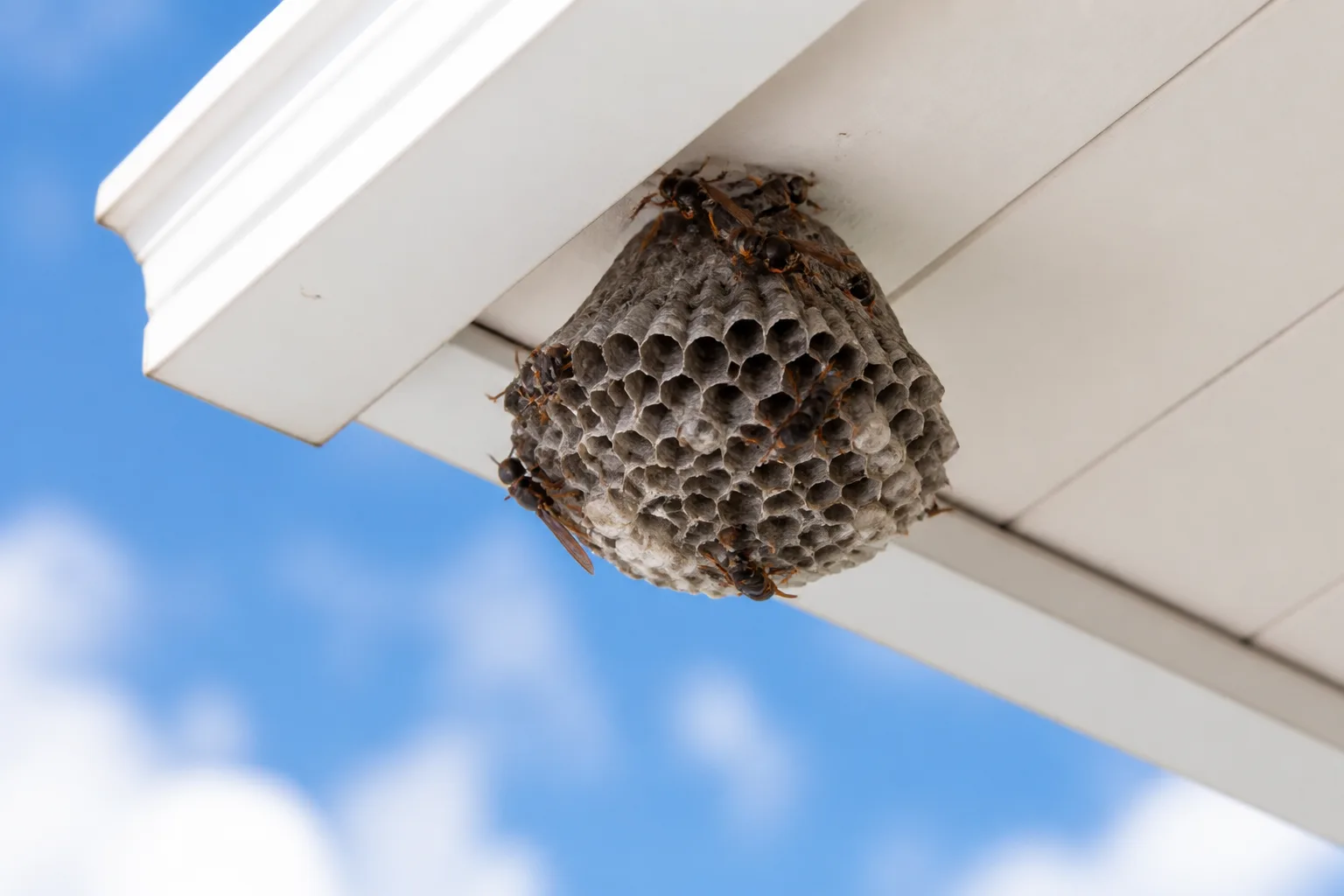
A paper nest six feet from your back door is not a gardening asset—it is a liability. The same species nesting on an unused fence corner thirty feet from paths may be worth keeping. Distance and defensive probability matter more than species alone, though yellowjacket ground nests in lawn traffic always fail the test.
Allergy Risk Changes the Calculation
For most people, stings hurt and swell locally. For a subset, venom triggers anaphylaxis—a medical emergency. If anyone nearby carries epinephrine, nests near seating areas are unacceptable regardless of ecological benefit. UC IPM’s sting guidance emphasizes avoidance and professional nest management when colonies sit where disturbance is inevitable (UC IPM Bee and Wasp Stings).
Allergy risk does not require scorched-earth pesticide on every flower. It requires zero nests in the human zone, aggressive food sanitation, and fast escalation when wasps nest in walls or ceilings—paths you cannot safely monitor from the garden.
The Zone-Based Coexistence Plan
Divide your property into three rings:
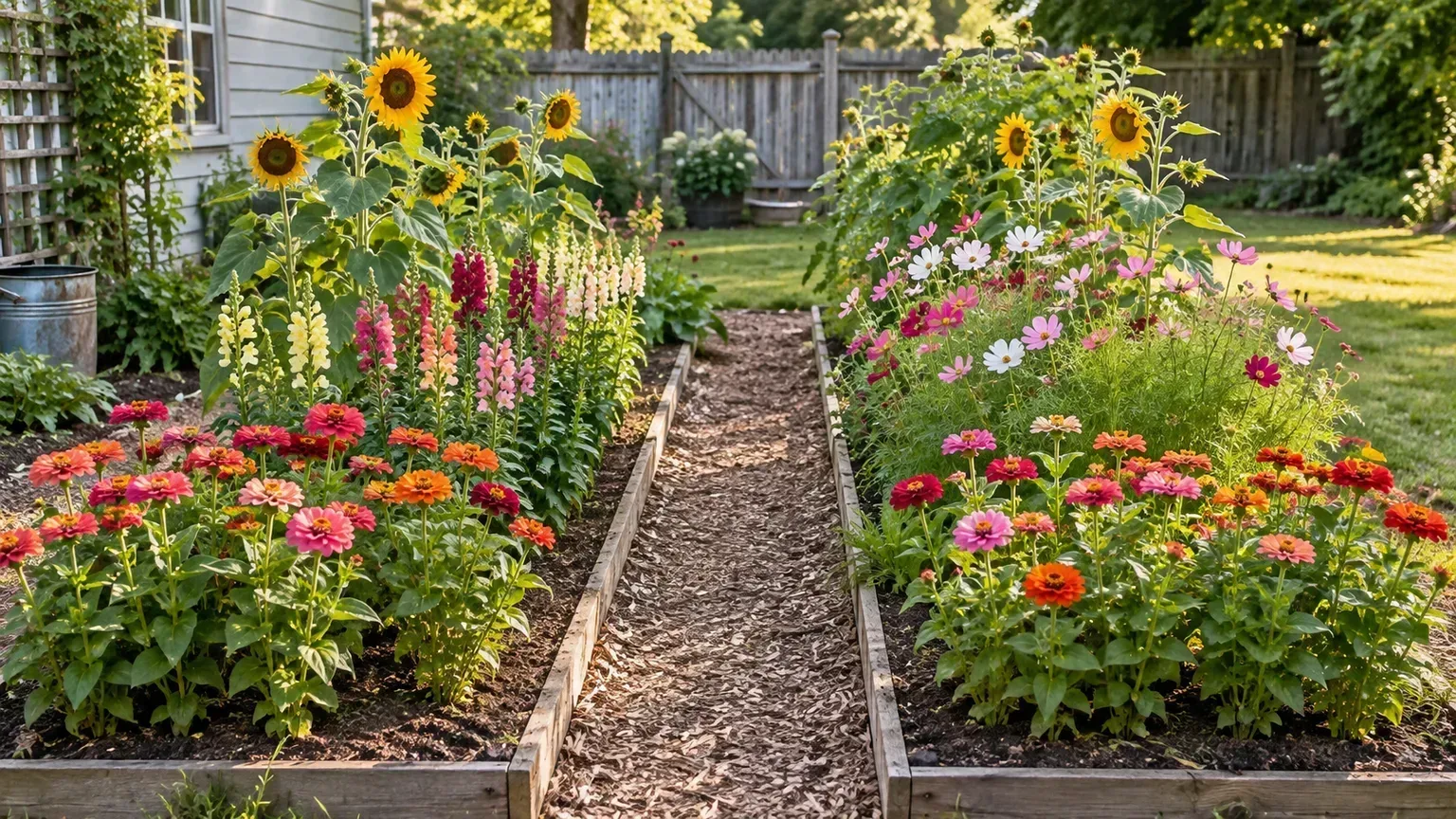
Ring 1 — Garden beds and borders (protect wasps): No blanket sprays. Hand-pick pest outbreaks when needed. Tolerate solitary and paper wasps hunting on foliage. Knock down new paper combs only if they attach to bed frames you touch daily.
Ring 2 — Property edge (steer wasps): Hang yellowjacket lure traps and water traps here—not on the patio. Plant peppermint, basil, and thyme in pots along the fence line as scent barriers. Run homemade wasp traps from late winter through early spring to intercept queens (UC IPM Pest Notes).
Ring 3 — Home and hardscape (exclude wasps): Sealed trash and recycling, rinsed bottles, fallen fruit picked daily, covered drinks outdoors, fake nest decoys under eaves in spring, and professional removal for void nests. Our complete wasp prevention guide covers Ring 3 in detail.
This ring model answers the title question directly: keep wasps in Ring 1, manage them through Ring 2, exclude them from Ring 3. That is not contradictory—it is how IPM separates conservation from human safety.
Spring: Let Queens Scout—Away From Doors
Overwintered queens emerge in late winter to early spring, feed on nectar, and scout nest sites. Colonies are tiny—sometimes a single comb the size of a quarter. Intervention now is low drama: knock down starter paper nests on porch ceilings, hang decoys before queens commit, and set queen traps along the property edge (UMaine Extension).
Do not panic at every wasp in the asparagus bed. Spring foragers are protein hunting for the first larvae—exactly when caterpillars hatch. A few workers on brassicas in April is a feature. Redirect your energy to sealing soffit gaps and filling inactive rodent burrows before yellowjacket queens claim them—prevention that protects people without emptying the garden of hunters.
Summer: Protect Harvest Zones, Not Every Wasp on a Marigold
Midseason colonies grow. Workers split time between hunting and nectar. Paper wasp nests stay relatively small—often hand-sized—with moderate defensiveness unless you poke the comb. Yellowjacket colonies can reach thousands of workers by August, with sharper defense near entrances.
During harvest, wear neutral colors, move slowly among plants, and avoid swatting—a swatted wasp releases alarm pheromones that invite backup (UC IPM Pest Notes). If a nest appears inside a raised bed frame or on the trellis you grab daily, remove it early rather than “waiting it out.” If hunters simply visit flowers while you pick beans, let them work.
Compare hornets vs wasps if you are unsure what you are seeing—hornets build large enclosed nests and defend fiercely; paper wasps are usually calmer neighbors.
Fall: Scavengers Are the Real Problem
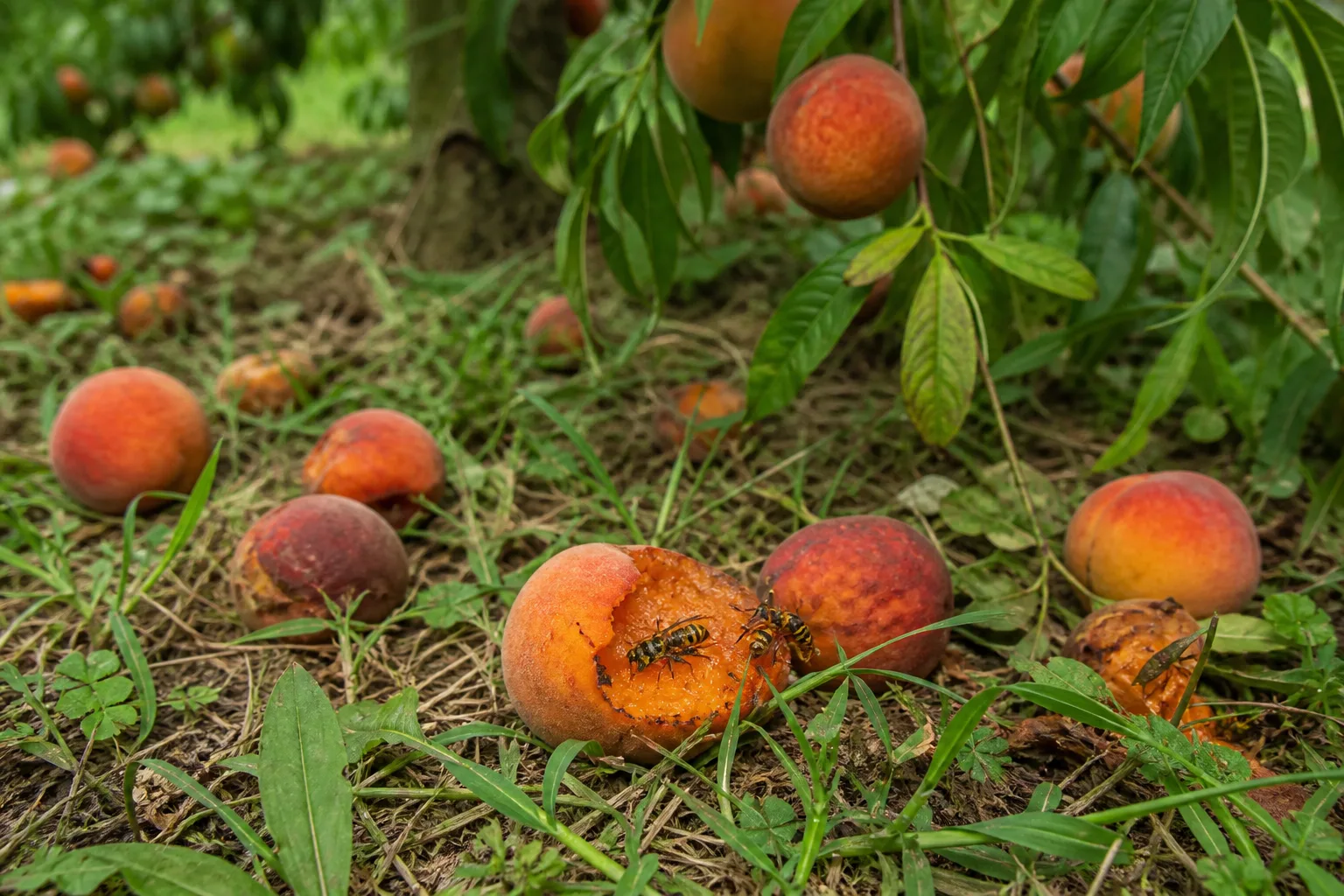
Late summer through fall is when gardeners ask whether wasps are “bad.” Yellowjackets switch to scavenging—garbage, grill drippings, soda cans, ripe fruit on the ground (UC IPM Pest Notes). The insect at your picnic is often the same species that ate caterpillars in June; the context changed, not the ecological role.
Fall management is about attractants, not bed spraying:
- Pick up fallen apples and stone fruit daily
- Keep compost bins closed and away from seating
- Rinse recycling; cover drink containers outdoors
- Move lure traps to the perimeter to pull foragers away from tables
See what attracts wasps for the full attractant audit. Removing food cues reduces scavenging pressure without touching hunters still patrolling beds for late-season worms.
How to Steer Wasps Without Wiping Out Beneficials
Steering beats slaughter. These methods nudge behavior across rings without wiping parasitic wasps from flowers.
Food and Trash Fixes That Work Better Than Sprays
Extension services rank sanitation first because scavenging wasps return to reliable food patches long after the source is gone (UC IPM Pest Notes). Sealed garbage lids, rinsed recyclables, covered pet food, and prompt fallen-fruit pickup change behavior faster than mint spray on a tomato leaf. Place bins 20–30 feet from doors when possible so foragers meet traps and scent barriers before they meet your kitchen.
Repellent Herbs and Scent Barriers at the Property Edge
Peppermint, basil, thyme, and other strong-scented herbs produce volatile oils that overwhelm wasp chemoreception—useful as perimeter nudges, not colony eliminators. Plant pots along fence lines and door paths; refresh essential-oil sprays every three to five days and after rain. Strong mint near the patio can help; drenching vegetable foliage daily may repel pollinators you need. Keep scent tactics in Ring 2 and Ring 3, not across entire beds.
Nest Decoys, Traps, and When to Call a Pro
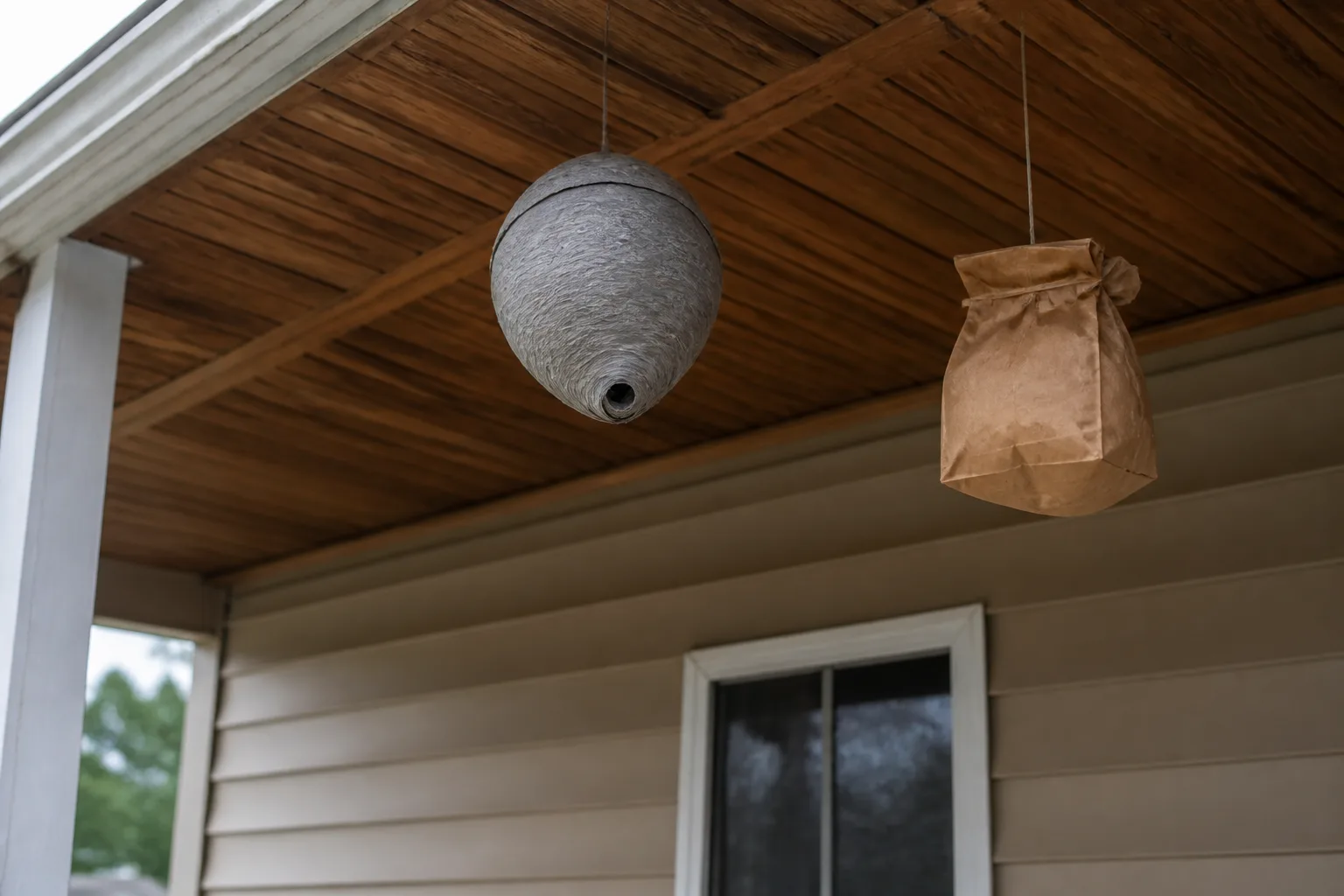
Fake nest decoys exploit territorial spacing—some paper wasps and hornets avoid nesting near existing colonies. Hang brown decoys under eaves in early spring before queens scout (UC IPM Pest Notes). They rarely deter ground yellowjackets and do nothing about active scavengers already hooked on your trash.
Lure traps with heptyl butyrate catch western yellowjackets well; species vary—add meat bait for German yellowjackets per label directions. Place traps on the property edge, spaced roughly every 150 feet on large lots, between nesting habitat and patio (UC IPM Pest Notes). Traps reduce local foragers; they do not eliminate distant colonies.
Call a professional when:
- Wasps enter a wall, ceiling, or soffit void
- A ground nest sits in lawn or garden paths you cannot avoid
- Multiple stings or continued traffic after a DIY dusk treatment
- Anyone nearby has severe allergy risk
Our wasp nest removal guide walks through decision rules; instant-kill methods are for emergencies—not routine garden deterrence.
Common Mistakes That Make Wasp Problems Worse
Swatting foragers in beds triggers alarm behavior and teaches nothing— the colony remains. Wait for them to leave or brush gently away (UC IPM Pest Notes).
Sealing active ground nests traps defenders and may drive them indoors through new holes.
Spraying flowers “preventively” kills parasitic wasps and bees; pest outbreaks follow.
Traps on the patio table attract wasps to food zones you wanted clear—perimeter only.
Destroying every nest in spring removes hunters before caterpillar season peaks—trade summer pests for comfort now.
Ignoring species ID leads to panicking over mud daubers while missing the yellowjacket hole by the sandbox.
Each mistake shares a root cause: treating wasps as uniform villains instead of seasonal neighbors with a job.
Conclusion
Keeping wasps away from your whole garden is a bad idea—you sacrifice predation and pollination support you get free from social wasps and cannot quickly replace from a bottle. Keeping wasps away from your patio, trash zone, and daily traffic paths is smart, especially in late summer when yellowjackets turn into scavengers.
Run the three-ring plan: protect hunters in beds, steer foragers at the property edge with traps and scent barriers, and exclude aggressively around the house with sanitation and timely nest removal. Tolerate the wasp on your kale in June; act on the nest under your deck rail before workers peak in August. Match the tool to the ring—food cleanup and perimeter traps for scavengers, professionals for voids and ground colonies in paths, tolerance for solitary hunters on flowers.
That is coexistence with boundaries—not war on wasps, and not surrender on stings either.